


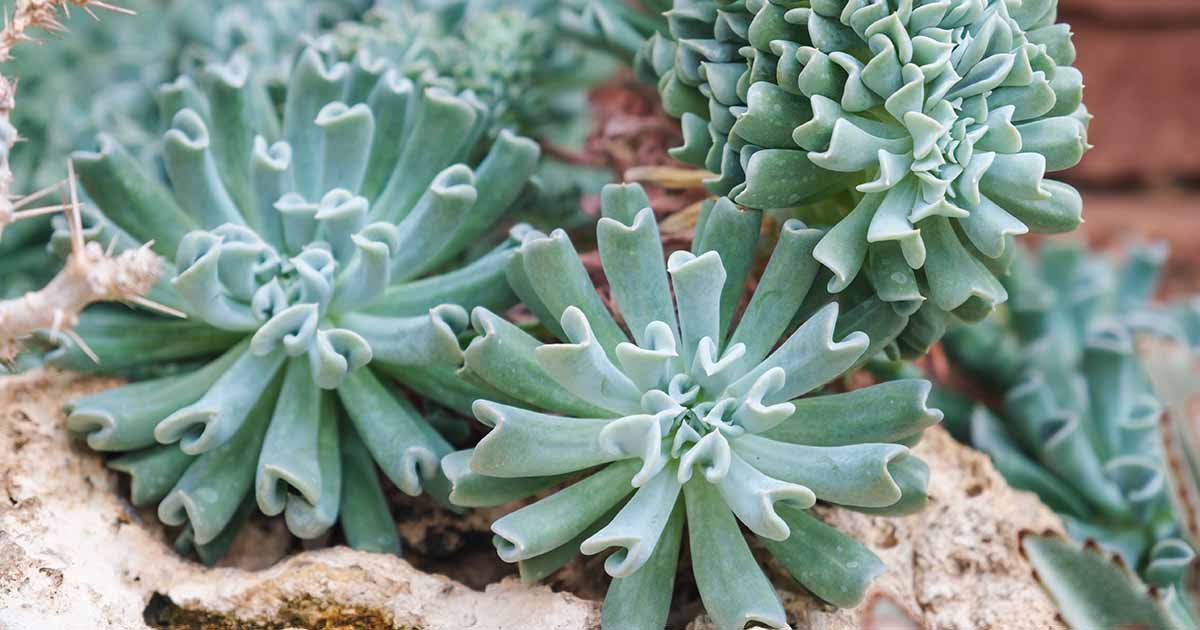
How to Grow
‘Topsy Turvy’ is easy to grow when we meet the following cultural requirements:
Climate
In its natural habitat in the Tamaulipas region of Mexico, E. runyonii thrives in arid, subtropical weather with extremes, such as triple-digit heat, drought, and heavy rainfall.
It tolerates brief temperature dips to 25°F, but is not frost-tolerant.
Growers in regions with cold winter temperatures should bring pots indoors as winter houseplants.
Light
‘Topsy Turvy’ prefers full sun. However, in the warmest Zones, morning sun and light afternoon shade are best to prevent the foliage from shading purple or suffering sunscald.
Potted specimens grown as houseplants thrive in bright, indirect sunlight. Avoid direct sunlight placements that may cause discoloration and overexposure.
Soil
Whether in-ground or potted, ‘Topsy Turvy’ echeveria needs a substrate that is airy, loose, and well-draining to oxygenate the roots and prevent oversaturation.
The ideal choice is sandy loam with a pH of 6.0 to 7.0.
If you’re growing in a container, choose a cactus and succulent potting mix that contains inorganic matter, such as gravel or perlite, and organic ingredients, like peat or bark.

Hoffman’s Cactus and Succulent Soil Mix
This potting medium from Hoffman’s contains compost, peat, sand, and limestone to regulate the pH. It’s perfect for growing echeveria and other succulents.
Hoffman Organic Cactus and Succulent Soil Mix is available via Amazon.
Water
The plump, fleshy foliage stores moisture to sustain the plant during dry periods.
Like most succulents, this cultivar is susceptible to rotting in overly wet conditions, so it’s best to water when the soil completely dries out. A little moisture stress is preferable to oversaturation.
If you have hard water that causes a white mineral salt buildup on containers and potting media, check out our guide to watering succulents for advice.
Fertilizer
In general, it’s not necessary to feed succulents when they are grown in suitable potting medium.
However, if you choose to provide supplemental nutrition, use a product formulated for cacti and succulents and to apply it at a quarter strength once in the spring.
This liquid plant food from Dr. Earth has a 1-1-2 NPK ratio to supply essential nutrients without excess nitrogen that may cause leggy growth.

Dr. Earth Succulence Pump and Grow Cactus and Succulent Plant Food is available from Dr. Earth via Amazon.
Where to Buy
When shopping, choose specimens with firm, fleshy, blue-green foliage. Avoid those with blemishes, discoloration, mushy leaves, and sodden pots.
Upon receipt of an online purchase, check the soil and water immediately if it is dry.
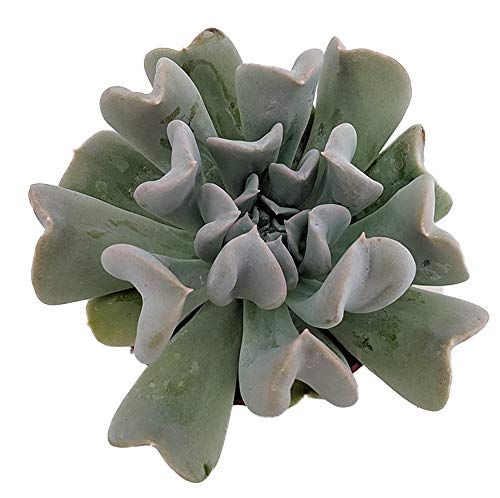
Place the pot in bright, indirect sunlight indoors or full sun outdoors. Wait at least a week to transplant to a decorative, well-draining container or the garden.
‘Topsy Turvy’ echeveria is available from Hirt’s Gardens via Amazon in two-and-a-half-inch starter pots.
Maintenance
If ‘Topsy Turvy’ echeveria doesn’t receive enough light, the stem holding the rosette elongates and produces fewer leaves as it stretches toward the sun, a response known as etiolation.
This makes it look “leggy” and less compact. Use clean pruners to remove the rosette, leaving a one-inch stem to regrow.

You can propagate a new plant from the top portion by allowing the cut end to callus off for a week in a location out of direct sunlight, dipping it in rooting hormone, and burying the stem half an inch deep in mounded soil as described in the propagation section below.
As the lower leaves age and weaken, gently twist them off and discard. Similarly, remove any foliage that is broken or otherwise damaged by pathogens, pests, or sunscald.
Because echeveria plants grow slowly, you won’t need to repot very often.

