


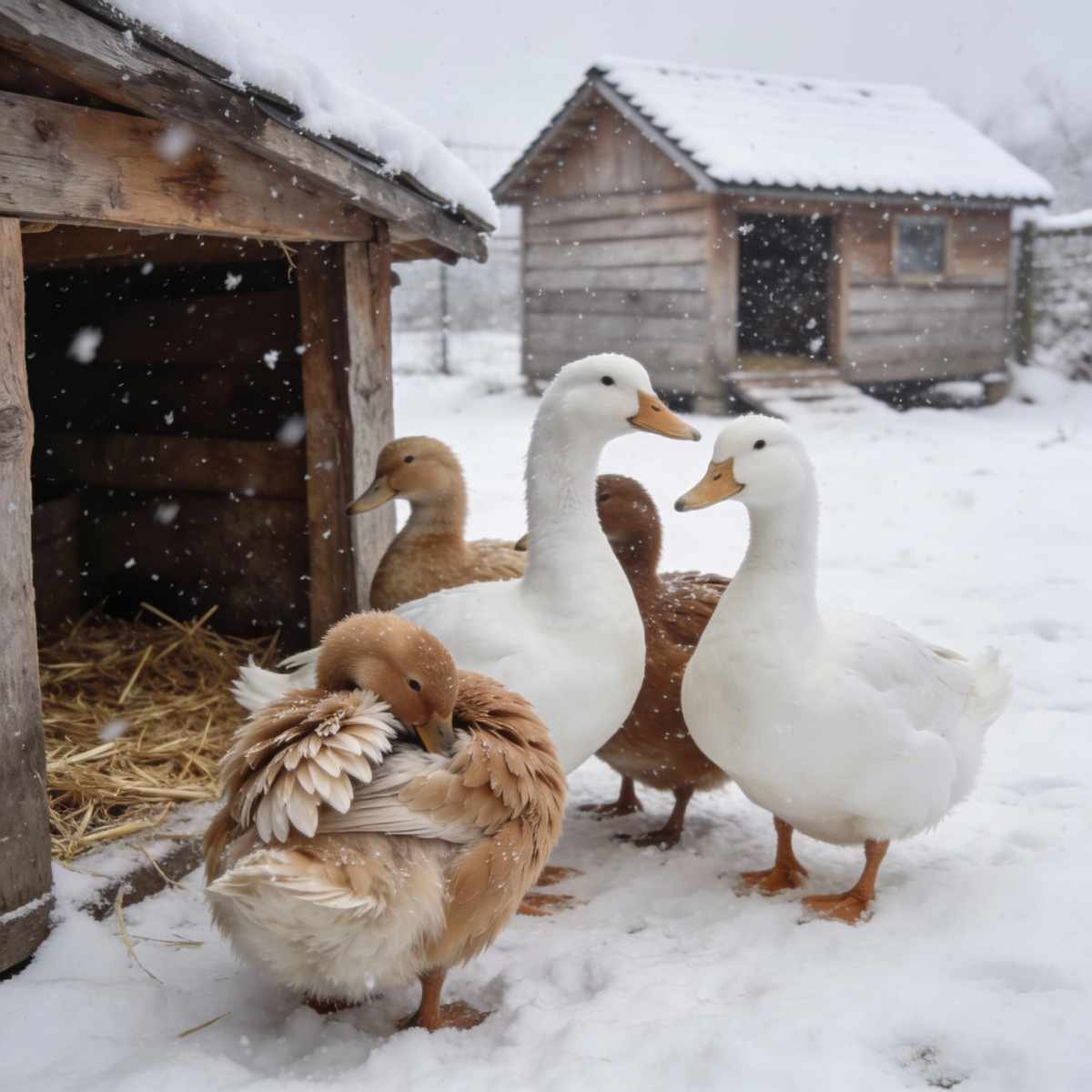
Raising ducks through winter can feel intimidating at first—especially if you’re staring at frozen water bowls, icy mornings, and temperatures that make you want to stay indoors. Naturally, the big question most duck keepers ask is: how cold is too cold for ducks?
The good news is that ducks are far tougher than they look. Thanks to their unique physical adaptations, they’re built to handle cold weather far better than many other backyard birds. However, even hardy ducks have limits.
When temperatures dip too low for too long—especially without proper shelter, water, and nutrition—ducks can experience stress, frostbite, and health issues.
Understanding duck cold tolerance helps you know when to relax and when to step in. This guide walks you through temperature limits, breed differences, winter shelter needs, feeding adjustments, water management, and warning signs to watch for—so your flock stays safe, comfortable, and thriving all winter long.
Understanding Duck Cold Tolerance and Temperature Limits
Ducks are surprisingly resilient in cold weather, often outperforming chickens when temperatures drop. Fully feathered, healthy adult ducks can tolerate freezing conditions that would stress many other poultry species.
Scientific observations and real-life experience from backyard duck keepers show that adult ducks can handle temperatures as low as -15°F for short periods—and sometimes even colder—when they have proper shelter and care.
Some flocks have safely endured temperatures between -20°F and -30°F (-29°C to -34°C) with extreme wind chills, as long as wind, moisture, and frozen water were managed properly.
One reason ducks handle cold so well is their high internal body temperature, which averages around 107°F (42°C). This higher baseline helps them retain warmth even when surrounded by freezing air or icy ground.
That said, cold tolerance isn’t unlimited. Prolonged exposure to harsh conditions without shelter, dry bedding, and unfrozen water can overwhelm even the toughest ducks. Knowing where the line is helps you provide support before problems arise.
Critical Temperature Thresholds
For most backyard duck keepers, 20°F (-6°C) is an important benchmark.
Above this temperature, healthy adult ducks generally manage well on their own. Below it, they begin to rely more heavily on human support to stay comfortable and healthy. This doesn’t mean ducks immediately suffer at 19°F—but it does mean you should start paying closer attention.
Once temperatures consistently fall below 20°F, ducks need:
- Draft-free shelter
- Dry, insulated bedding
- Reliable access to unfrozen water
- Extra calories to maintain body heat
Ducklings are an entirely different story. Baby ducks lack the feather development needed to regulate body temperature and cannot survive cold weather without heat.
Ducklings require brooder temperatures starting around 90–95°F (32–35°C) during their first week, decreasing gradually as they grow feathers. Until fully feathered, they must be kept indoors with supplemental heat.
How Cold Is Too Cold for Ducks: Breed Variations and Individual Factors
While ducks as a group are cold-hardy, not all breeds are equal. Some handle winter effortlessly, while others need extra help when temperatures dip.
Cold-Hardy Duck Breeds
Most domestic ducks tolerate cold well, especially breeds descended from mallards. These ducks evolved to survive seasonal changes and freezing conditions.
Cold-hardy breeds include:
- Rouen ducks, with their thick, heavy plumage
- Khaki Campbells, known for both productivity and resilience
- Blue Swedish ducks, which handle cold and damp weather well
- Pekin ducks, which adapt well to winter when sheltered properly
On the other hand, Muscovy ducks are less cold-tolerant than most domestic breeds.
Originating from warmer climates, Muscovies can become uncomfortable in freezing temperatures and are more prone to frostbite on exposed skin. They require extra dry, windproof shelter and close monitoring in cold regions.
Individual Health and Condition
Breed matters—but individual health matters just as much.
A well-fed, healthy duck with a full feather coat and good body weight will handle cold far better than a thin or stressed bird. Ducks rely on fat reserves for insulation and energy during winter. If a duck enters winter underweight or malnourished, cold weather becomes much harder to tolerate.
Feather condition is another major factor. Ducks depend on clean, waterproof feathers to trap warmth. Dirty, damaged, or poorly maintained feathers allow moisture in, which leads to rapid heat loss—even in moderately cold temperatures.
Ducks that can’t preen properly or don’t have access to water for cleaning may struggle much sooner than healthy flockmates.
Physical Adaptations That Help Ducks Survive Cold
Ducks are equipped with some impressive biological tools that make winter survival possible.
Waterproof Feather System
A duck’s feather system works like a high-performance winter coat.
The outer feathers are coated in oil from the uropygial (preen) gland near the tail. Ducks spread this oil through preening, making their feathers waterproof. This outer layer prevents snow and icy water from soaking through.
Beneath that lies a thick layer of soft down feathers, which trap warm air close to the body. This insulating layer is incredibly efficient and allows ducks to retain heat even in freezing conditions.
For this system to work, ducks must:
- Stay clean and dry
- Have access to water for preening
- Avoid prolonged exposure to damp conditions
Wet or matted feathers lose insulation fast, making moisture control critical in winter.
Counter-Current Heat Exchange System
One of the most fascinating adaptations ducks have is their counter-current heat exchange system.
Warm blood flowing from the duck’s core transfers heat to cooler blood returning from the feet. This minimizes heat loss and keeps the core warm while allowing feet to remain cool without freezing.
Duck feet also contain mostly tendons and bone, not muscle, which reduces heat demand. That’s why ducks can stand on ice or swim in icy water without immediate harm.
Still, duck feet are the most vulnerable part of their body. Standing on frozen, wet surfaces without dry bedding increases the risk of frostbite.
Winter Shelter Requirements for Ducks
Ducks don’t need heated coops—but they do need protection from wind and moisture.
Essential Shelter Features
A good winter duck shelter should be:
- Draft-free, especially at ground level
- Well-ventilated to release moisture
- Dry and sturdy, with a solid roof
- Large enough for ducks to move comfortably
Ventilation is especially important. Ducks produce a lot of moisture through breathing and droppings. Without airflow, condensation builds up, increasing frostbite risk even when temperatures aren’t extreme.
Bedding and Floor Management
Bedding is one of your most powerful winter tools.
Straw is the best bedding choice for ducks in cold weather. Its hollow stems trap warm air, creating natural insulation. Wood shavings can work but are best layered underneath straw.
Using the deep litter method—adding fresh layers over time instead of removing everything—helps generate warmth as bedding decomposes. This composting action creates gentle heat and keeps floors warmer.
Keep bedding:
- Several inches deep
- Dry and fluffy
- Changed or topped up regularly
Wet bedding equals cold feet—and cold feet lead to frostbite.
Water Requirements in Freezing Temperatures
Water is one of the hardest winter challenges—and one of the most important.
Why Ducks Need Deep Water
Ducks don’t just drink water. They need water deep enough to:
- Rinse their eyes
- Clean their nostrils
- Aid digestion
Without this, ducks are prone to eye infections and respiratory issues.
Preventing Water from Freezing
Options include:
- Heated water bowls or bases (effective to around 10–12°F)
- Black rubber tubs in tires to absorb solar heat
- Swapping frozen waterers multiple times daily in extreme cold
In very cold climates, rotating waterers is often the most reliable solution—even though it requires more effort.
Nutritional Needs for Cold Weather
Cold weather dramatically increases calorie needs.
High-Energy Foods
Ducks burn more energy staying warm, so winter diets should include:
- Cracked corn
- Scratch grains
- Whole grains
- Peanuts (in moderation)
Feeding these in the evening helps ducks generate heat overnight through digestion.
Protein and Supplements
Protein supports feather health, which supports warmth.
Continue feeding a quality duck feed and supplement with:
- Mealworms
- Greens like kale or cabbage
- Vitamin supplements if sunlight is limited
Healthy feathers equal better insulation.
Behavioral Adaptations and Management
Ducks naturally adjust their behavior in winter.
Natural Cold Weather Behaviors
Expect ducks to:
- Be less active
- Spend more time resting
- Huddle together for warmth
- Venture out mainly during warmer daylight hours
These behaviors are normal and healthy.
Monitoring for Cold Stress
Watch for warning signs like:
- Swollen or discolored feet
- Lethargy beyond normal winter rest
- Reluctance to move even during warmer hours
Address problems early to prevent serious injury.
Conclusion
So, how cold is too cold for ducks? For most healthy adult ducks, temperatures below 20°F signal the need for extra care—but not panic.
With proper shelter, dry bedding, unfrozen water, and increased nutrition, ducks can safely handle far colder conditions than many people expect.
By understanding duck biology, recognizing breed differences, and providing thoughtful winter support, you’ll help your flock not just survive—but thrive—through the coldest months of the year

Khaja Moinuddin, a computer science graduate, finds joy in gardening and homesteading. Join him on this blog as he shares his experiences in homesteading, gardening, and composting

