


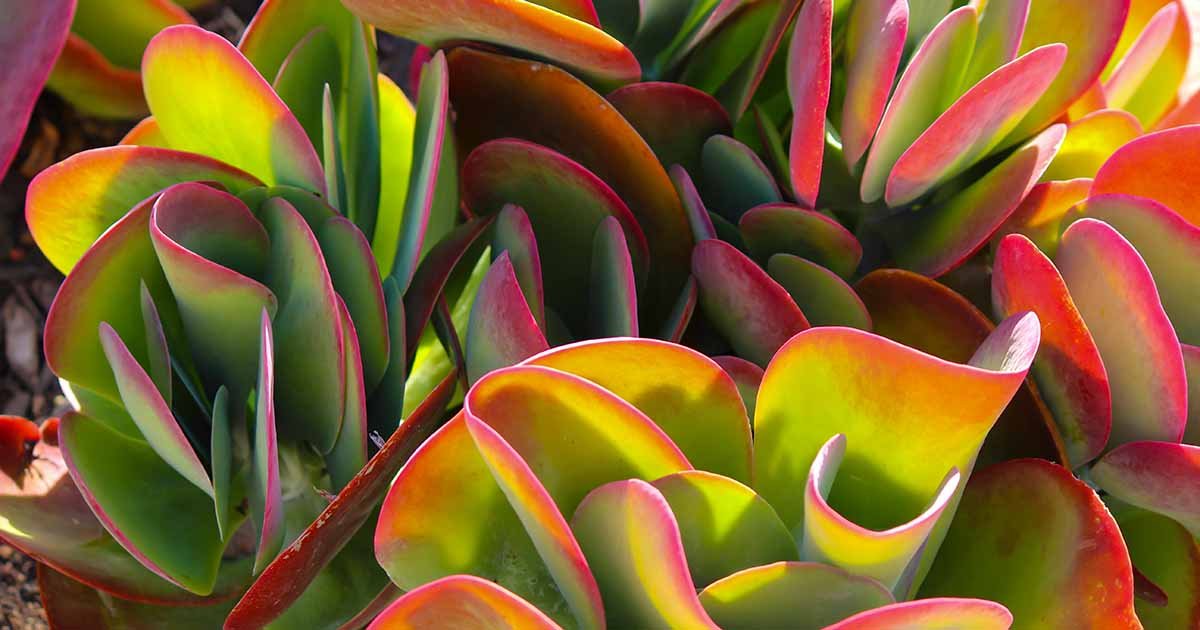
It is unlikely that an indoor specimen will bloom. However, you can try to mimic nature and encourage flowering.
Provide 12 hours of sunlight with the aid of a grow light, and less than 12 hours of darkness during the last six weeks of the dormant fall and winter period.
It is also essential to withhold fertilizer and water minimally during this time.
Soil
The ideal potting medium for flapjack paddle kalanchoe is gritty and well-draining. Cactus and succulent soil is appropriately formulated to meet the need for pH in the 6.5 to 7.5 range.
Hoffman Organic Cactus and Succulent Soil Mix is composed of organic compost and peat moss to provide optimal nutrition, inorganic sand for rapid drainage, and limestone to maintain a slightly acidic pH.

Hoffman Organic Cactus and Succulent Soil Mix
Hoffman Organic Cactus and Succulent Soil Mix is available from Hoffman via Amazon.
You can also make your own succulent potting soil following our recipe here.
Water
Because succulents are prone to rotting in overly wet soil, it’s best to let the pot dry completely before watering. Use a moisture meter as your guide.
During dormancy, moisture needs are greatly reduced as the flapjack plant is not actively growing.
You can learn more about watering succulents here.
Fertilizer
While it is not a heavy feeder, the flapjack paddle plant benefits from a monthly nutrient boost during the spring and summer growing season.

Use a balanced liquid houseplant food with an N-P-K ratio of 10-10-10, or similar.
Dilute it to half strength and apply when watering. Withhold fertilizer during the fall and winter dormant period.
See our guide to fertilizing succulents for more information.
Where to Buy
You can find flapjack paddle plants available at most nurseries that carry a good selection of succulents.
Upon receipt of a starter pot, assess its moisture needs. If the growing media is dry, water it until water runs out of the drainage holes.
Place the pot in a location with bright, indirect sunlight away from drafts.

Flapjack paddle plants are available from Planet Desert in four-inch, six-inch, and two-gallon pots.
In addition to the straight species, there is a variegated cultivar, ‘Fantastic,’ with multicolored green and cream leaves edged in red.

You can find variegated flapjack paddle plant ‘Fantastic’ available in two-gallon pots from Planet Desert.
Maintenance
Flapjack paddle plant prefers a snug-fitting pot with about an inch of space between the foliage and the container rim to accommodate a watering can spout.
When it spreads to fill the vessel completely and/or roots poke from the drainage holes, go up one pot size.

Whether or not you need to increase the size of the container, it’s beneficial to change the potting mix every two years or so.
This avoids soil compaction that adversely affects the ability of the roots to efficiently absorb nutrients and water.
Additional maintenance includes the removal of damaged or dead leaves, a prime breeding ground for common houseplant pests and diseases, which we discuss below.

