


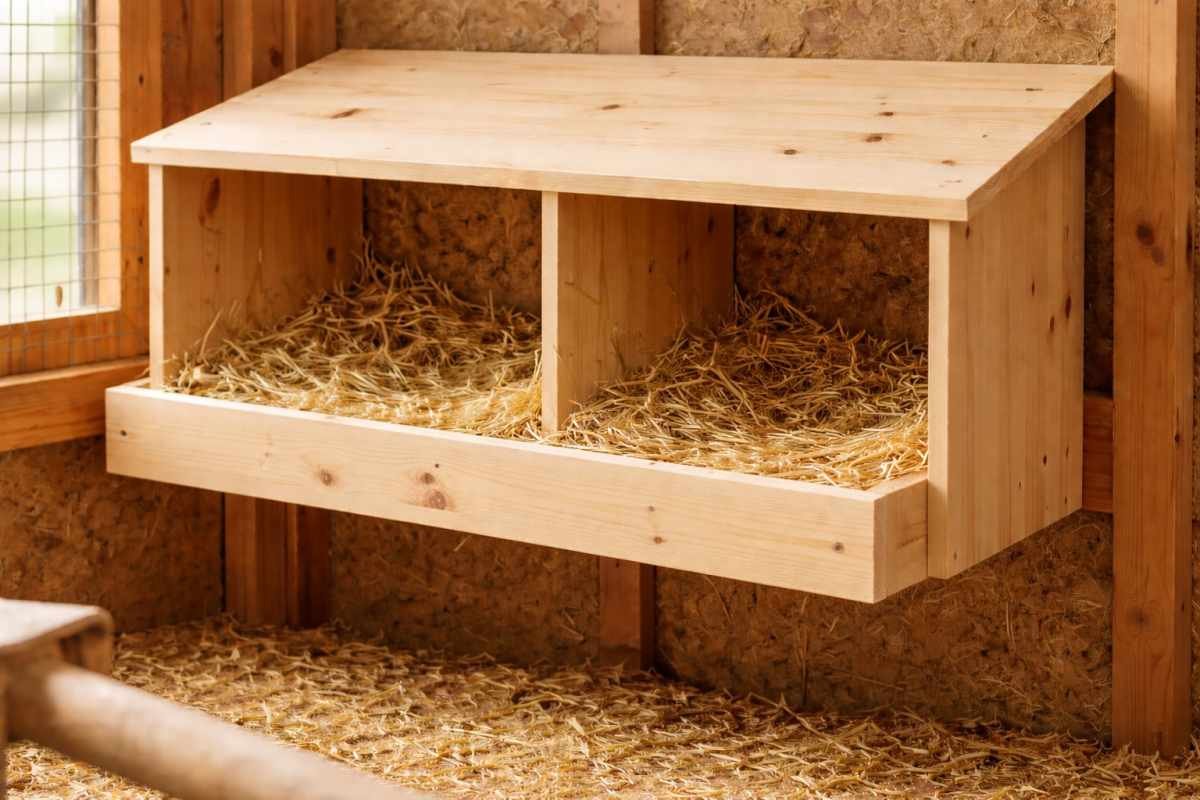
If you want to avoid bad laying habits of your hen, then building a budget-friendly nesting box is the perfect option.
It gives your hens a clean, comfortable, and safe space to lay eggs—something that keeps them happy and helps you collect clean, uncracked eggs with ease.
Plus, well-placed nesting boxes can reduce stress, discourage bad laying habits, and even help maintain overall coop hygiene.
The best part is that you don’t need fancy materials or advanced carpentry skills to make one.
Building a chicken nesting box at home is surprisingly simple and can be done with basic tools and a few pieces of wood—and even repurposed items.
Whether you’re a new chicken keeper or upgrading your existing coop, a homemade nesting box is a quick, affordable project that makes a big difference.
Best Material to Make a Nesting Box for Chickens
Building material plays a vital role in regulating temperature and durability of nesting boxes.
It will directly impact hen’s comfort, egg quality and thwart bacteria.
- Plywood Wood: Wood is the most common choice because it’s sturdy, easy to build with, and naturally insulated, helping hens stay comfortable year-round. But, if not sealed properly wood attracts mites. Occasional maintenance or repainting to stay in good shape.
- Plastic: Plastic nesting boxes are lightweight, non-porous, and extremely easy to clean, which helps keep the coop hygienic and reduces pest issues. They’re great for humid climates since they don’t absorb water or rot.
- Metal (Galvanized Steel or Aluminum): Metal boxes are strong, durable, and resistant to pests, but it can get too hot in summer and very cold in winter.
- Repurposed Materials (Buckets, Crates, Drawers, Barrels): Repurposed items make creative, budget-friendly nesting boxes and are perfect for quick DIY solutions. They’re environmentally friendly and customizable with minimal tools.
- Composite or PVC Board: Composite materials and PVC boards are weatherproof, rot-resistant, and extremely durable, offering a long-lasting, low-maintenance alternative to wood. However, it can be more expensive compared to other materials.
Check this: 70 Things Chickens Can Eat & 30 Food Items to Avoid
What Makes a Good Nesting Box Setup?
Chickens prefer dim, calm areas where they won’t be disturbed, so placing boxes away from the coop’s busiest spots helps encourage consistent laying.
Proper height and placement also matter. Nesting boxes should be off the ground—usually 12–18 inches high—to keep them clean and discourage rodents.
Just make sure they’re not higher than the roosting bars, or hens may sleep in them and cause mess.
Adding soft bedding like straw, pine shavings, or hemp keeps eggs cushioned and reduces breakage. Bedding also helps hens feel more relaxed, making them more likely to return to the same box.
Ventilation is important too. Good airflow keeps the boxes dry, prevents odor, and reduces the chance of mites. At the same time, avoid drafts directly hitting the boxes, especially in colder climates.
Also Read: How to Introduce New Chickens to a Flock?
How to Build Chicken Nesting Boxes?

You don’t need to be a carpenter to build a reliable chicken nesting box. A few pieces of wood, some screws, and the right measurements are all it takes to create a cozy spot your hens will love.
Step 1: Gather Your Materials
Start with basic supplies like plywood or solid wood boards, screws, a measuring tape, a saw, and bedding material. Make sure your wood is smooth and untreated, since hens will be in close contact with it.
Step 2: Measure and Cut the Panels
Cut your wood into six pieces for each box: a back panel, bottom panel, top panel, two sides, and a front lip. Follow the standard size of 12 x 12 x 12 inches unless you’re adjusting for large or small breeds.
Step 3: Assemble the Box Frame
Attach the sides to the bottom panel using screws, then secure the back and top pieces to form the box. A screwdriver or drill will make this step quick and sturdy. Make sure all corners are tight and flush so bedding won’t leak out.
Step 4: Add the Front Lip
Install a 3–4 inch front lip to stop bedding and eggs from rolling out. This small piece also gives hens a gentle “step” as they enter the box.
Step 5: Smooth and Finish
Sand all rough edges to prevent splinters. If you want, apply a coat of non-toxic sealant to help resist moisture and make cleaning easier—but avoid paints or chemicals inside the box.
Step 6: Mount the Boxes in the Coop
Place the nesting boxes 12–18 inches off the ground and away from busy areas of the coop. Make sure they are slightly lower than the roosting bars so hens don’t use them for sleeping.
Step 7: Add Bedding and Test Stability
Fill the box with soft bedding like straw, pine shavings, or hemp. Ensure the box is stable and doesn’t wobble when hens jump inside. Once everything is secure, your nesting boxes are ready to use.
Also Read: How Many Eggs Does a Chicken Lay Each Day?
Ideal Size and Dimensions for Chicken Nesting Boxes
The ideal nesting box size for most standard chicken breeds is 12 x 12 x 12 inches, which gives hens enough room to enter, turn around, and feel secure while laying.
Bantams can use slightly smaller boxes, while large breeds like Brahmas may need around 14 x 14 inches for comfort.
Aim for an entry opening of 8–10 inches high so hens can access the box easily without kicking out bedding, and ensure the box is deep enough to hold a few inches of straw or shavings to cushion eggs and keep them clean.
Tips to Keep Your Nesting Boxes Clean and Hygienic
Keeping nesting boxes clean starts with using the right bedding. Materials like straw, pine shavings, or hemp absorb moisture well and create a soft, sanitary surface for eggs.
Replacing bedding regularly—at least once a week—helps prevent odor, bacteria buildup, and broken eggs.
It also helps to check the boxes daily. Removing soiled bedding, feathers, or droppings keeps the area inviting for hens and reduces pests like mites. If the coop is dusty or humid, consider using a thin layer of food-grade diatomaceous earth under the bedding to deter insects naturally.
Good airflow is essential for cleanliness. Position nesting boxes in a well-ventilated but draft-free corner of the coop to keep moisture under control. Finally, deep-clean the boxes every few weeks with a mild, non-toxic cleaner to remove any hidden germs and keep your hens healthy and comfortable.
Also Read: How to Make a Cheap Chicken Coop ?
How to Encourage Hens to Use the Nesting Boxes?

Encouraging hens to use their nesting boxes starts with making the boxes feel inviting. Keep them in a quiet, dim part of the coop and add cozy bedding so the space feels safe.
Placing a few fake eggs or golf balls inside the boxes also sends a strong signal to hens that this is a good spot to lay, helping them develop the habit quickly.
Cleanliness and accessibility matter too. Make sure the boxes are easy for hens to reach and not too high off the ground.
Keep the area around the boxes free from clutter and ensure roosting bars are higher than the boxes so hens don’t sleep in them. With the right setup, most hens naturally choose the boxes over other random spots in the coop.
How Often Should You Clean Nesting Boxes?
Nesting boxes should be checked daily and cleaned as needed to keep them fresh and comfortable for your hens.
A quick daily look lets you remove any droppings, dirty bedding, or broken eggs before they attract pests or spread bacteria.
For most backyard flocks, replacing the bedding once a week is enough to maintain good hygiene and ensure hens always have a clean place to lay.
In addition to weekly upkeep, a deeper clean is recommended every few weeks. This means removing all bedding, scrubbing the box with a mild, non-toxic cleaner, and letting it dry fully before refilling.
Regular cleaning not only keeps your coop healthier but also encourages hens to consistently use the boxes, reducing the chances of hidden eggs or laying in unwanted spots.
Mistakes to Avoid When Making a Chicken Nesting Box
One of the biggest mistakes is building nesting boxes that are too large or too small.
Oversized boxes make hens feel exposed and encourage multiple birds to pile in, which leads to broken eggs.
Boxes that are too small feel cramped and may discourage hens from using them at all. Sticking to the standard 12 x 12 x 12 inches avoids these issues.
Another common mistake is using rough, untreated, or difficult-to-clean materials. Splintered wood can injure hens, while porous or unsealed surfaces hold moisture and attract mites. Always sand the wood smooth and, if possible, apply a safe, non-toxic sealant to make cleaning easier.
Placement errors are also frequent. Boxes placed too high can become sleeping spots, while boxes placed too low may draw rodents or feel unsafe to hens.
Keeping them 12–18 inches from the floor and below the roosting bars is ideal.
Lastly, forgetting to add a front lip is a simple but serious oversight—without it, eggs roll out easily, and bedding won’t stay inside.
Conclusion
Building the right nesting boxes doesn’t have to be complicated—what matters most is giving your hens a safe, comfortable place where they feel secure enough to lay.
By choosing the right materials, following proper dimensions, and keeping the boxes clean and well-placed, you create a setup that supports healthier, happier birds.
A little attention to detail goes a long way, and with a well-designed nesting box system, you’ll enjoy cleaner eggs, consistent laying, and a smoother chicken-keeping experience overall.

Khaja Moinuddin, a computer science graduate, finds joy in gardening and homesteading. Join him on this blog as he shares his experiences in homesteading, gardening, and composting

