


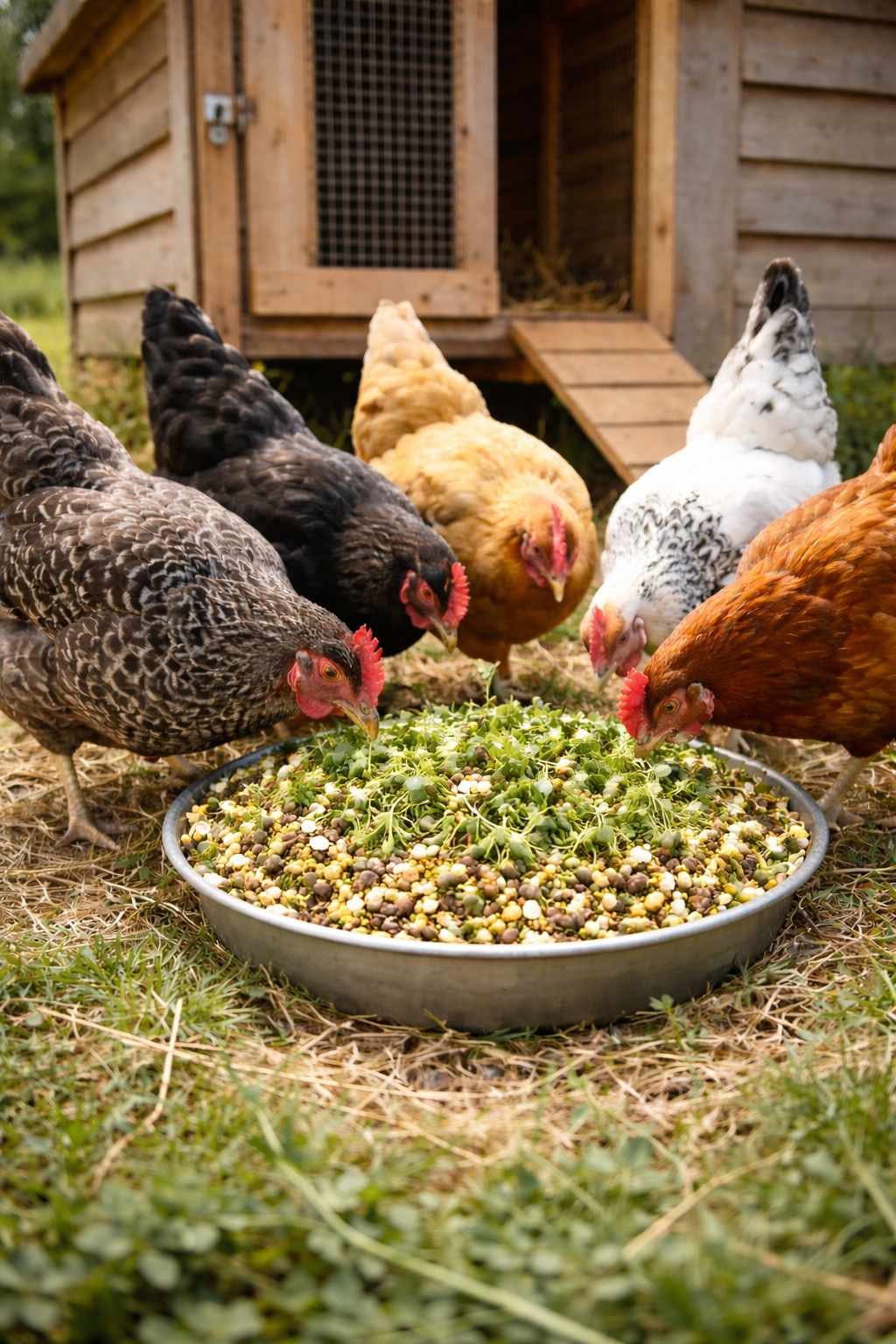
Microgreens are small but they are packed with abundant nutrients like protein, minerals and vitamins that improve the overall health of your feathered flocks.
Start mixing small amounts of microgreens in chicken feed gradually to prevent digestive upset.
Anecdotal reports claim that microgreens for chickens help to improve egg quality, strengthen the immune system and improve feather growth.
However, you should ensure that microgreens aren’t exposed to pesticides or mold.
In this write-up, I’ll share in detail about benefits and how you can effectively grow microgreens at home.
Nutrients in Microgreens for Chickens
Microgreens are young vegetable greens harvested just after their first true leaves appear. Though tiny, they are packed with concentrated nutrients.
Because they’re picked early, they often contain higher levels of vitamins, minerals, and antioxidants than mature plants. Fed in moderation, they can give your chickens a healthy nutritional boost.
Protein Content for Growth and Molting
Many microgreens, especially sunflower and pea shoots, provide plant-based protein that supports muscle growth and feather regrowth during molting.
Adding small amounts can help hens recover faster and maintain strong plumage, while chicks benefit from the extra amino acids for healthy development.
Improves Egg Quality and Yolk Color
Microgreens can help improve the overall quality of eggs laid by hens. The natural vitamins and minerals support healthier egg formation.
Greens rich in Vitamin A and other nutrients may deepen yolk color naturally. Many poultry keepers notice brighter, richer-looking yolks when fresh greens are included in the diet.
Calcium and trace minerals in microgreens can also support stronger eggshells. While not a replacement for layer feed, they add an extra nutritional boost.
Check this: Why Did My Chickens Stop Laying Eggs?
Supports Stronger Immunity
Microgreens contain antioxidants that help protect chickens from everyday stress. This includes heat, seasonal changes, and minor environmental challenges.
Vitamins like A, C, and E play an important role in strengthening the immune system. A well-supported immune system helps hens stay active and productive.
Regular small portions of fresh greens may help reduce the risk of common health issues. Healthy birds are more likely to lay consistently and maintain good energy levels.
Aids in Natural Foraging Behavior
Chickens naturally enjoy pecking and scratching for food. Offering trays of microgreens encourages this instinctive behavior.
Foraging keeps chickens mentally stimulated and physically active. This is especially helpful for birds kept in smaller or enclosed spaces.
Providing fresh greens can also reduce boredom and unwanted pecking habits. It adds variety to their routine while supporting natural behavior.
Also Read: How to Grow Microgreens Indoors?
Rich Source of Essential Vitamins
Microgreens provide several key vitamins that support overall flock health:
- Vitamin A supports vision, immune health, and vibrant egg yolk color.
- Vitamin C helps reduce stress, especially during heat waves or seasonal changes.
- Vitamin E acts as an antioxidant and supports reproductive health.
- Vitamin K contributes to proper blood clotting and bone strength.
These vitamins work together to maintain healthy hens that lay consistently and remain active.
Important Minerals for Strong Bones and Eggshells
Microgreens naturally contain minerals such as calcium, iron, magnesium, potassium, and phosphorus.
- Calcium is essential for strong eggshell formation.
- Iron helps maintain healthy blood and oxygen transport.
- Magnesium and phosphorus support bone development.
- Potassium assists in muscle and nerve function.
While commercial feed provides the primary mineral supply, microgreens can enhance and diversify nutrient intake.
Additional nutritional Value
Microgreens like broccoli, radish, and mustard are rich in antioxidants that help protect chickens from stress caused by heat, overcrowding, or illness. Regular intake may support stronger immunity and better overall vitality.
Fresh microgreens also contain natural enzymes that aid digestion and improve nutrient absorption. When introduced gradually, they can promote healthier gut function and better feed efficiency.
Potential Risks of Microgreens
Though it is safe to feed your chickens microgreens, it is essential to avoid moldy, contaminated, or chemically treated greens.
Microgreens grow in moist conditions and can develop mold quickly if overwatered or poorly ventilated. Always discard trays with fuzzy growth or a musty smell, as mold can cause serious health issues.
Use only untreated, food-grade seeds. Seeds coated with pesticides or fungicides are harmful to poultry. Growing your own microgreens with clean water and proper hygiene helps ensure safety.
Microgreens should be offered in moderation as a supplement, not a replacement for balanced feed. Introduce new varieties slowly and monitor your flock to prevent digestive upset.
How to Grow Microgreens for Chickens?

Chickens need a balanced mix of protein, vitamins, minerals, and essential amino acids for healthy growth and steady egg production. Proper nutrition supports strong bones, strong feathers, good immunity, and consistent laying.
As mentioned earlier, microgreens can supply many of these nutrients naturally. Growing them at home gives you fresh, chemical-free greens and ensures your flock gets safe and high-quality supplements.
1. Choose the Right Seeds
Always select untreated, food-grade seeds meant for sprouting or microgreen growing. Safe and popular options for chickens include sunflower, pea shoots, wheatgrass, barley, broccoli, and radish.
Do not use seeds meant for ornamental gardening if they are coated with chemicals. Treated seeds can be harmful to poultry, even in small amounts.
2. Gather Simple Supplies
You do not need expensive equipment to grow microgreens. A shallow tray, potting soil or coconut coir, clean water, and a spray bottle are enough.
Using trays with small drainage holes helps prevent water from sitting at the bottom. Good drainage lowers the risk of mold growth.
3. Prepare the Growing Tray
Fill the tray with about 1–2 inches of moist soil or coir. The growing medium should be damp but not dripping wet.
Level the surface gently so the seeds can spread evenly. This helps ensure uniform growth.
4. Sow the Seeds Properly
Spread the seeds evenly across the surface without overcrowding. A dense layer is fine, but seeds should not be piled on top of each other.
Press them lightly into the soil and mist gently with water. There is no need to bury them deep, as microgreens grow well on the surface.
5. Provide the Right Growing Conditions
Place the tray in a warm area with indirect sunlight. A bright windowsill works well.
Mist lightly once or twice a day to keep the surface moist. Avoid overwatering, as too much moisture can cause mold. Proper air circulation is very important.
6. Watch for Growth
Seeds usually sprout within 2–3 days. After that, you will see small green leaves growing quickly.
Most microgreens are ready to harvest in 7–10 days when they reach about 2–4 inches tall. Harvesting at this stage ensures maximum nutrients.
7. Harvest and Feed Fresh
Use clean scissors to cut the greens just above the soil line. Rinse lightly if needed and feed them fresh to your chickens.
Fresh microgreens contain the highest nutrient levels. Avoid feeding wilted or spoiled greens.
8. Introduce Gradually and Feed in Moderation
Start by offering small handfuls mixed into regular feed. This allows your flock to adjust without digestive upset.
Microgreens should act as a supplement, not a complete feed replacement. When offered in moderation, they provide a healthy, natural boost to your chickens’ diet.
How Often to Feed Microgreens for Chickens?

Microgreens should be fed as a supplement, not as a main feed. Chickens still need a balanced commercial feed to meet their daily nutritional requirements.
You can offer microgreens 2–4 times per week in small portions. A small handful per bird is usually enough to provide benefits without overfeeding.
If you are introducing microgreens for the first time, start slowly. Mix a small amount into their regular feed and observe your flock for any digestive changes.
During molting or stressful seasons, you may slightly increase the amount. However, always keep microgreens as an addition, not a replacement for their complete diet.
Also Read: 70 Things Chickens Can Eat
How Long Do Microgreens Take to Grow?
Microgreens grow very quickly compared to regular vegetables. Most varieties are ready to harvest within 7 to 10 days after planting.
Some fast-growing types like radish or mustard may be ready in as little as 6–7 days. Others, such as sunflower or pea shoots, may take 10–14 days to reach the ideal height.
They are usually harvested when they are about 2–4 inches tall and have developed their first true leaves. Harvesting at this stage ensures the best flavor and highest nutrient content.
With proper moisture, warmth, and light, you can grow fresh microgreens for your chickens almost every week.
7 Best Microgreens for Chickens
Choosing the right microgreens can make a big difference in your flock’s health, growth, and egg production.
1. Sunflower Microgreens
Sunflower microgreens are rich in plant-based protein and healthy fats. They support muscle growth and strong feather development.
They are also easy to grow and produce thick, juicy shoots. Chickens usually love their crunchy texture.
2. Pea Shoots
Pea shoots contain good levels of protein and essential vitamins. They help support healthy growth and recovery during molting.
They grow quickly and produce tender green leaves. Most chickens eagerly peck at fresh pea shoots.
3. Wheatgrass
Wheatgrass is packed with vitamins A, C, and E along with chlorophyll. It supports immunity and overall vitality.
It grows thick and lush within days. Chickens enjoy grazing on it like natural pasture grass.
4. Barley Microgreens
Barley microgreens provide fiber, enzymes, and important minerals. They can help support healthy digestion.
They are commonly used as fodder and grow well in trays. This makes them a practical choice for backyard flocks.
5. Broccoli Microgreens
Broccoli microgreens are rich in antioxidants and vitamins. They help strengthen the immune system naturally.
They have a mild flavor and soft texture. Feeding them occasionally adds variety to your flock’s diet.
6. Radish Microgreens
Radish microgreens grow very fast and are rich in vitamins and antioxidants. They can support overall health and energy.
They have a slightly spicy taste, so feed in moderation. Most chickens enjoy them as a fresh treat.
7. Mustard Microgreens
Mustard microgreens contain antioxidants and beneficial plant compounds. They may help support immune health.
Because of their strong flavor, offer them in small amounts. They are best used as an occasional supplement.
Also Read: 27 Herbs to Feed Chickens to Keep them Healthy
Conclusion
Microgreens are a simple and natural way to boost your chickens’ nutrition. Though small in size, they provide protein, vitamins, minerals, and antioxidants that support growth, immunity, and egg quality.
Feed microgreens in moderation by mixing small handfuls into their regular feed 2–4 times a week. Always introduce new varieties slowly to prevent digestive upset and observe how your flock responds.
Remember, microgreens should act as a supplement, not a replacement for balanced poultry feed. When grown safely and offered properly, they can become a healthy and affordable addition to your chickens’ diet.

Khaja Moinuddin, a computer science graduate, finds joy in gardening and homesteading. Join him on this blog as he shares his experiences in homesteading, gardening, and composting

