


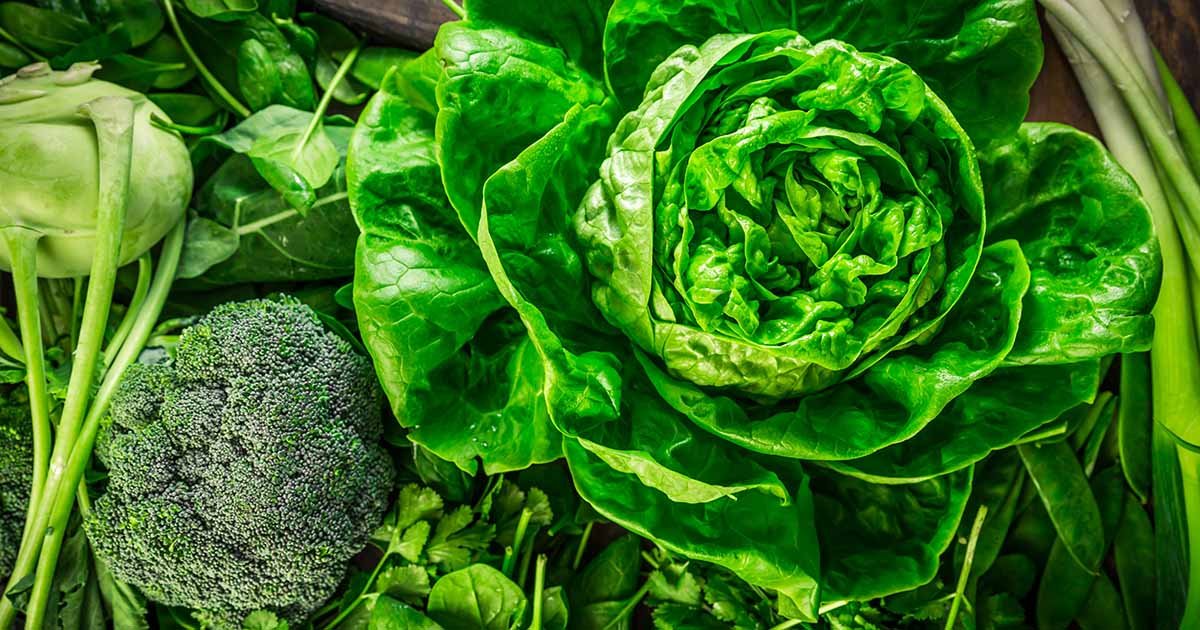
Every garden needs some greens to complement the root vegetables and juicy summer crops.
If you’re hoping to expand the leafy garden greens in your vegetable patch, there are so many different types you can grow whether your goal is health or simply variety.
You can easily fill your veggie patch with these nutritious plants, some of which may be brand new to you.

We link to vendors to help you find relevant products. If you buy from one of our links, we may earn a commission.
With the help of this article, you can expand your options by choosing from our list of 17 favorite types of leafy garden greens.
You’ll find both warm- and cool-season options, and plants that may be familiar to you or completely new.
For each vegetable, I’ll cover when to grow it, the flavor profile and culinary uses, and a cultivar of interest worth trying.
In addition, I’ll provide information about where to source seeds.
Ready to get started? Here’s what I’ll cover:
17 of the Best Leafy Greens for the Garden
1. Arugula
Also known as roquette, arugula (Eruca vesicaria) is a peppery green that tastes perfect in salads or sprinkled fresh over steaming hot pizza.
This member of the mustard family grows well in cool weather, but many types continue to produce harvests even in hot summers.

One of the best arugula varieties is ‘Rocky,’ a type of wild roquette that overwinters as a perennial in USDA Hardiness Zones 6 to 10. It’s ready to harvest in just one month.
You’ll find ‘Rocky’ wild arugula seeds available at Botanical Interests.
Learn more about growing arugula here.
2. Beet Greens
You may already love beets (Beta vulgaris) for their delicious ruby colored roots, but perhaps you tend to toss their edible tops into the compost.
Not so fast! Beet greens are well worth eating, with an earthy flavor very similar to that of Swiss chard.
This cool season crop can be served up with rice and beans, or incorporated into savory soups.
Most beet varieties will produce edible foliage but some are better known for their greens than others.

‘Lutz’ is one with a reputation for producing both scrumptious roots and greens. Count on a harvest in 65 days.
You can purchase ‘Lutz’ beet seeds in a variety of packet sizes at Eden Brothers.
Check out our guide to growing beets here.
3. Bok Choy
If you’ve never tried growing it, bok choy (Brassica rapa subsp. chinensis) deserves a spot in your garden.
This cool-season crop is perfect for making stir fries with tender leaves and a mild mustard flavor.

There are so many different types of delicious bok choy you can grow in your backyard, including ‘Shanghai,’ a variety that matures in 45 days.
You can purchase ‘Shanghai’ bok choy seeds in an array of packet sizes at High Mowing Seeds.
Learn more about growing bok choy here.
4. Cabbage
It may seem like a waste of garden real estate to grow cabbage (Brassica oleracea var. capitata) when it’s relatively cheap to buy, but you can grow many varieties at home that you’d never find even at a farmer’s market.
These versatile brassicas can be cooked into hearty stews or shredded into refreshing summer coleslaw.
And when you choose a cabbage variety like ‘Deadon’ you’ll also discover a gorgeous sight in the garden.

‘Deadon’ is a hybrid variety that bears striking purplish-green heads that grow to four or five pounds each, and are ready to harvest in 105 days.
Grab the pack size of your choice of ‘Deadon’ hybrid cabbage seeds at High Mowing Organic Seeds.
Learn more about growing cabbage.
5. Collards
No self-respecting southern garden should go without a patch of collards (Brassica oleracea var. acephala), a cool-season staple of country gardens long before kale stormed the gardening scene.
These leafy garden greens are delicious with beans and rice, and there are numerous health benefits of homegrown collard greens.

There are many different collard varieties to grow at home, and ‘Georgia’ is my of our favorites, thanks to its mild flavor and tender greens. ‘Georgia’ matures in 70 days.
You can find ‘Georgia’ seeds in several packet sizes available at High Mowing Organic Seeds.
Learn more about growing collard greens here.
6. Curly Endive
With earthy and peppery flavors already covered, it’s time to introduce a bitter flavor with endive aka escarole (Cichorium endivia).
This garden green is wonderful in fresh salads, but can also be sauteed and served hot.
Endive is a cool-season crop, but you can find varieties that hold up well in hot weather, such as ‘Curlesi.’

This ruffled-leaf variety matures in just 52 days.
You can find ‘Curlesi’ endive seeds in multiple packet sizes available at High Mowing Seeds.
Check out our guide to growing curly endive to learn more.
7. Dandelion Greens
When you select plants to grow for your edible garden, keep in mind that there are also some humble options you can choose from, such as dandelions (Taraxacum officinale).
This well-known yellow flower with globe shaped seed heads isn’t just a weed that interrupts your otherwise pristine green lawn, it’s also edible.
There are numerous ways to use dandelions for food and medicine.

The leaves have a distinctively pungent, slightly bitter flavor and can be used in sautes, salads, teas, and more.
You may already have some growing in your garden, but if you want to start a dedicated patch, you can purchase dandelion seeds in several packet sizes at True Leaf Market.
Learn how to grow and harvest dandelions for greens here.
8. Kale
Kale (Brassica oleracea var. acephala) is one of the staples of the healthy icebox, and it’ll add fiber and color to your meals whether you eat it raw in salads or cooked with other homegrown veggies.
It’s a cool season leafy garden green that pairs well with a selection of companion plants for a beautiful raised bed.
If you don’t yet have a favorite type of kale, consider ‘Dazzling Blue,’ a lacinato variety that has long blueish green leaves and is as gorgeous as it is tasty.

Plus, it is extra cold-tolerant and will be ready to start harvesting in just 30 days.
Grab a pack of ‘Dazzling Blue’ lacinato kale seeds in packets of 114 at Botanical Interests.
Our guide to growing kale has more information.
9. Leaf Lettuce
If you’re the type of gardener who hasn’t yet ventured much beyond growing tomato and squash transplants from your local nursery, it might be time to add some lettuce to your beds.
Leaf lettuce (Lactuca sativa) is a wonderful option for cut-and-come-again harvests, and will form the foundation of the freshest salads you’ll ever eat.
If you end up growing more than you can eat raw, keep in mind that leaf lettuce can be sautéed, steamed, or added to soups.

‘Black Seeded Simpson’ Leaf Lettuce
‘Black Seeded Simpson’ is a tried-and-true variety that produces ruffled green leaves on open heads that are ready to harvest in under 45 days.
You’ll find ‘Black Seeded Simpson’ leaf lettuce seeds available for purchase in a variety of packet sizes at High Mowing Seeds.
Read more about growing lettuce here.
10. Mache
If you’re looking for something new and exciting for your salad bowl beyond lettuce, give mache (Valerianella locusta) a try.
Also known as corn salad and lamb lettuce, is one of the best hardy salad greens for winter gardens.
Mache is a popular salad green in France, with plants forming small rosettes that have a mild, nutty flavor, and a crisp texture.
Few mache varieties are available in the US, but ‘Vit’ is one of the easier varieties to find.

‘Vit has a nutty flavor, and the same lovely textures fans of this vegetable adore. It’s ready to harvest in 50 days.
‘Vit’ mache seeds are available in a wide selection of pack sizes at High Mowing Seeds.
11. Malabar Spinach
Malabar spinach (Basella alba) is a welcome summer substitute for gardeners who miss spinach when the weather warms up.
It has a flavor similar to spinach and can be cooked in many of the same recipes: souffles, stews, or savory pastries.

Red stem Malabar spinach has beautiful violet-red colored stems that contrast with its green leaves, and it’s ready to harvest in just 60 days.
You’ll find red stem Malabar spinach seeds available at True Leaf Market.
Learn more about Malabar spinach in our growing guide.
12. Mustard Greens
If you don’t shy away from strong, bold flavors, you will love growing mustard greens (Brassica juncea) in your garden.
The ruffled leaves add a strong mustardy taste to soups and stir fries, or cook up a big pot and serve them as a side to rice and beans.
There are many varieties of mustard greens, and you can grow them all in your cool-season garden.

One favorite is ‘Red Giant,’ a cultivar with huge, purplish-red leaves, ready to harvest in just 45 days.
Pick up ‘Red Giant’ mustard seeds in various pack sizes at High Mowing Organic Seeds.
Learn more about growing mustard greens.
13. Napa Cabbage
Napa cabbage (Brassica rapa subsp. pekinensis), also known as Chinese cabbage, is a staple of Asian stir fries, but also tastes lovely chopped into fresh summer salads.
Its flavor is a bit milder than that of green cabbage.
This heading vegetable grows best in mild weather so you may want to choose a bolt-resistant variety, such as ‘One Kilo Slow Bolt.’

‘One Kilo Slow Bolt’ Napa Cabbage
This is one of the best napa cabbage cultivars to grow at home, and it will be ready to harvest in under 55 days.
You’ll find ‘One Kilo Slow Bolt’ seeds available in packets of 65 at Botanical Interests.
Consult our guide to growing napa cabbage to learn more.
14. Spinach
Love it or hate it, spinach (Spinacia oleracea) is a cool season garden staple.
Whether you pick the leaves young for spring salads or let them size up for cooked dishes, spinach delivers a distinctly earthy, slightly mineral flavor that intensifies when sautéed and mellows when eaten raw.
It’s equally at home in salads, soups, frittatas, and pasta.

‘Bloomsdale’ is one of the best spinach cultivars, so I highly recommend you start with this one. It produces savoyed, dark green leaves, and matures in about 48 days.
‘Bloomsdale’ spinach seeds are available at Eden Brothers.
Check out our guide to growing spinach for more information.
15. Swiss Chard
Chard, silverbeet, or Swiss chard (Beta vulgaris subsp. vulgaris), whatever name you call it, this cool-season crop is recognizable by its colorful crisp center stems surrounded by large, glossy green leaves.
If you’ve never eaten this leafy garden green, you can use it much as you would spinach. It mixes perfectly into soups, stews, fritters, and omelets.
There are so many beautiful varieties of Swiss chard, many with colorful stems.
Improved Rainbow Blend has green foliage with contrasting pink, orange, yellow, red, and magenta veins and stems, and is ready to pick in under 60 days.

Improved Rainbow Blend Swiss Chard
You can find Improved Rainbow Blend seeds in pack sizes ranging between 1/16 of an ounce to five pounds at High Mowing Organic Seeds.
And read our guide to learn more about growing Swiss chard.
16. Turnip Greens
Some plants offer up leafy garden greens when we grow them for another purpose, as is the case with turnips (Brassica rapa subsp. rapa).
So why not take advantage of some free food instead of sending it to the compost?
You can grow turnips for both roots and greens with your other cool-season crops.
The leaves have a mustardy flavor, and can be used similarly to mustard greens in sautes, omelets, or soups.
Feel free to eat the greens of any turnip plants you grow – but if you want to try a variety specifically for the foliage, ‘Seven Top’ is the cultivar you’ll want to reach for.

It’s all greens and no plump roots, and is ready to harvest within 60 days.
You’ll find ‘Seven Top’ turnip seed packets available at Eden Brothers.
Learn more about growing turnips here.
17. Watercress
Gardeners hoping to expand their leafy garden green options beyond what’s available at the supermarket should consider growing watercress (Nasturtium officinale).
This semi-aquatic plant produces peppery tasting leaves, ideal for use in flavorful salads or delicious sandwiches.
Watercress grows best in cool weather and is perennial in Zones 6 to 9.

You can even grow watercress hydroponically – either way, count 50 to 60 days until harvest.
You’ll find watercress seeds available for purchase in an assortment of packet sizes at True Leaf Market.
Our guide to growing watercress has more information.
A Group of Great Greens to Grow
Whether you’re choosing brassicas, lettuces, or greens from other plant families, there’s no shortage of different options to choose from, and you’ll no doubt find more than one type to include in your garden.

Did we leave out any of your favorite leafy garden greens? If so, let us know in the comments below. Have a favorite recipe for any of these? Feel free to drop your food prep tips there as well!
If you’d like to keep digging into the fine art of growing greens, we have more guides for you right here:

