Hi GPODers!
On Friday I made a call for early spring photos (It Is Time to Celebrate Spring!), and GPODers—as they always do—delivered! The floodgates have not completely opened, as spring has been slow to arrive in much of North America, but we had a lovely burst of spring photos land in the GPOD submission form over the weekend. One of those submissions came from a GPODer I featured in last week’s 2025 spring roundup, Gail Bromer in Black Mountain, North Carolina. On Friday I featured her submission of the volunteer work she does for her local gardening club (The Work of the Black Mountain Beautification Committee), but Gail has also shared her vibrant home garden several times (Gail’s Garden on the Side of a Mountain, The Light of Spring After a Dark Fall and Winter in North Carolina, A Perfect Addition to the Gray of Winter, Yearning for the Colors of My Garden, and more). Today she is back to share the color that has emerged in her garden so far this spring.
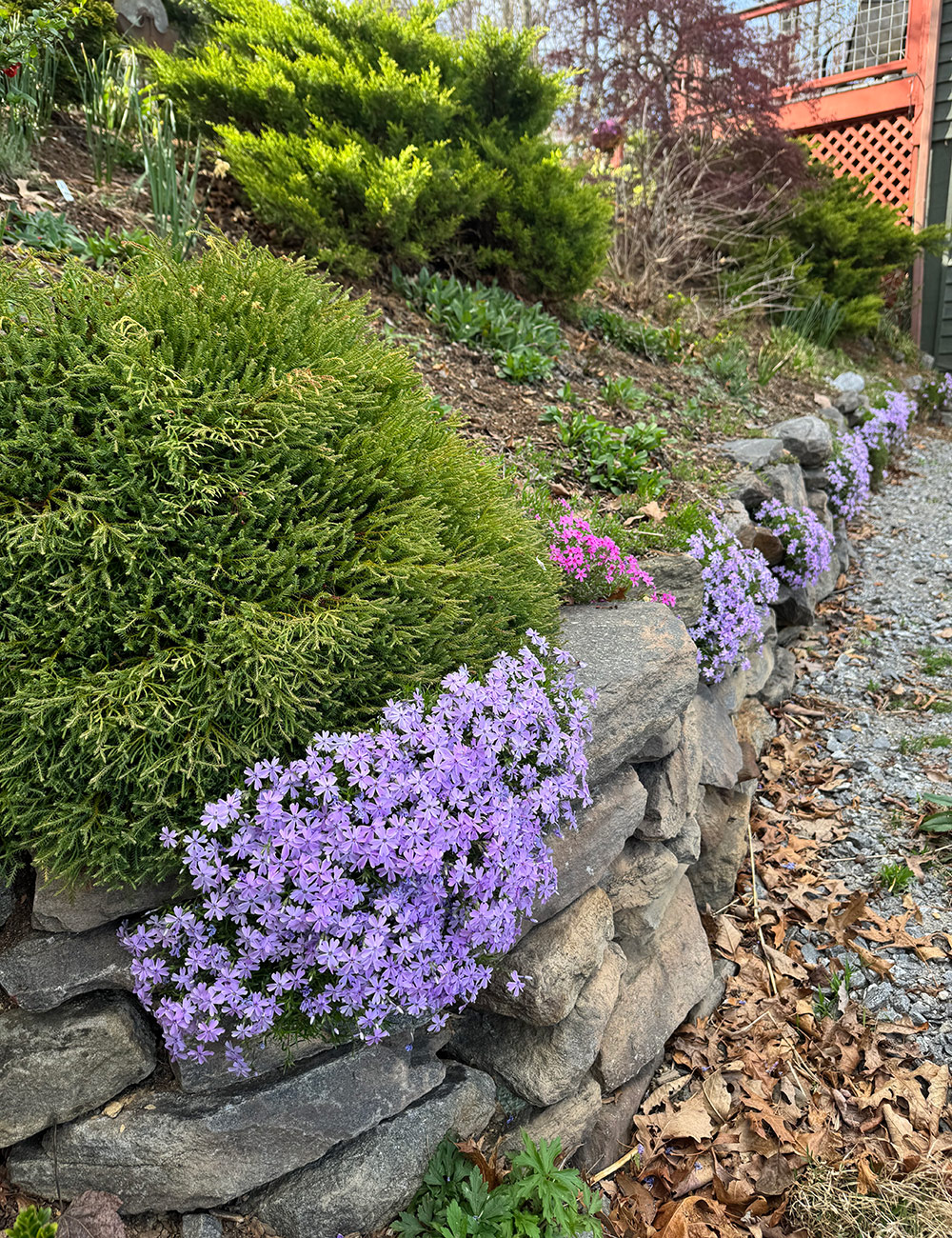
Started 9 years ago from a bare slate on the side of a mountain at 3300’. I generally plant hardiness 6. We have plenty of winter days at 20 degrees and it’s gotten to -5.
These phlox are at the bottom of the first garden you see when you drive up to the house. They help set the stage. Many of my gardens are on slopes. I mix in evergreens, trees, shrubs and perennials to hold the slopes. Annuals get added to the edges to add color later in the season. That way I abuse my knees only in the spring and fall when I’m doing my gardening chores.
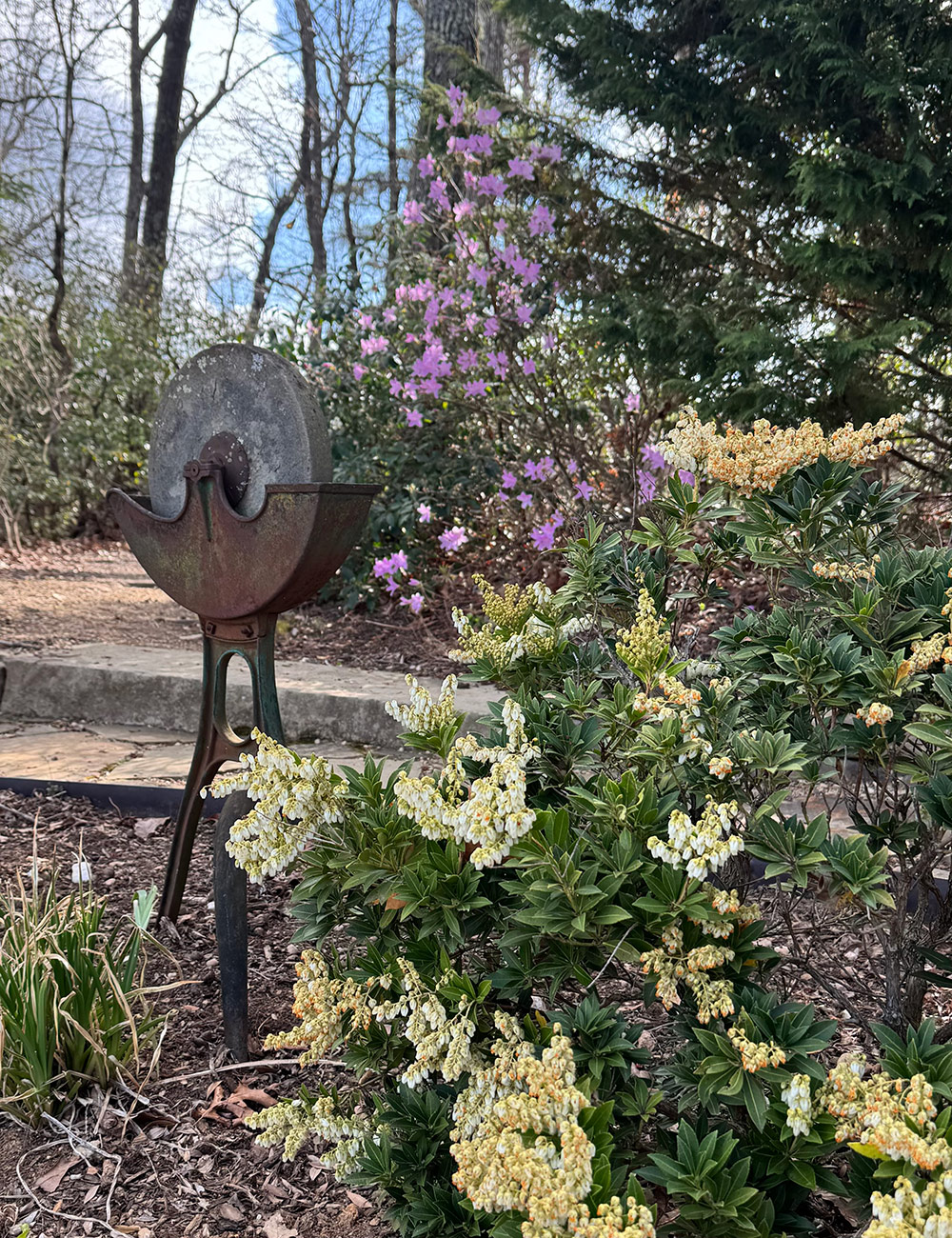 These Cavatine pieris (Pieris japonica ‘Cavatine’, Zones 5–8) have been among my most reliable plantings—no maintenance required and profuse blooms. They sit in front of an antique sharpening wheel and one of our earliest blooming azaleas. A step up to a wooded path is straight ahead on your left.
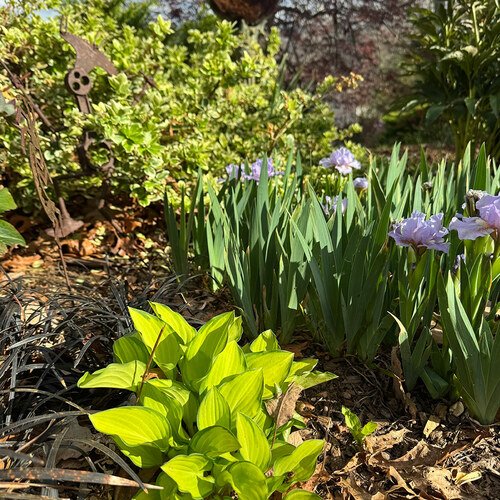
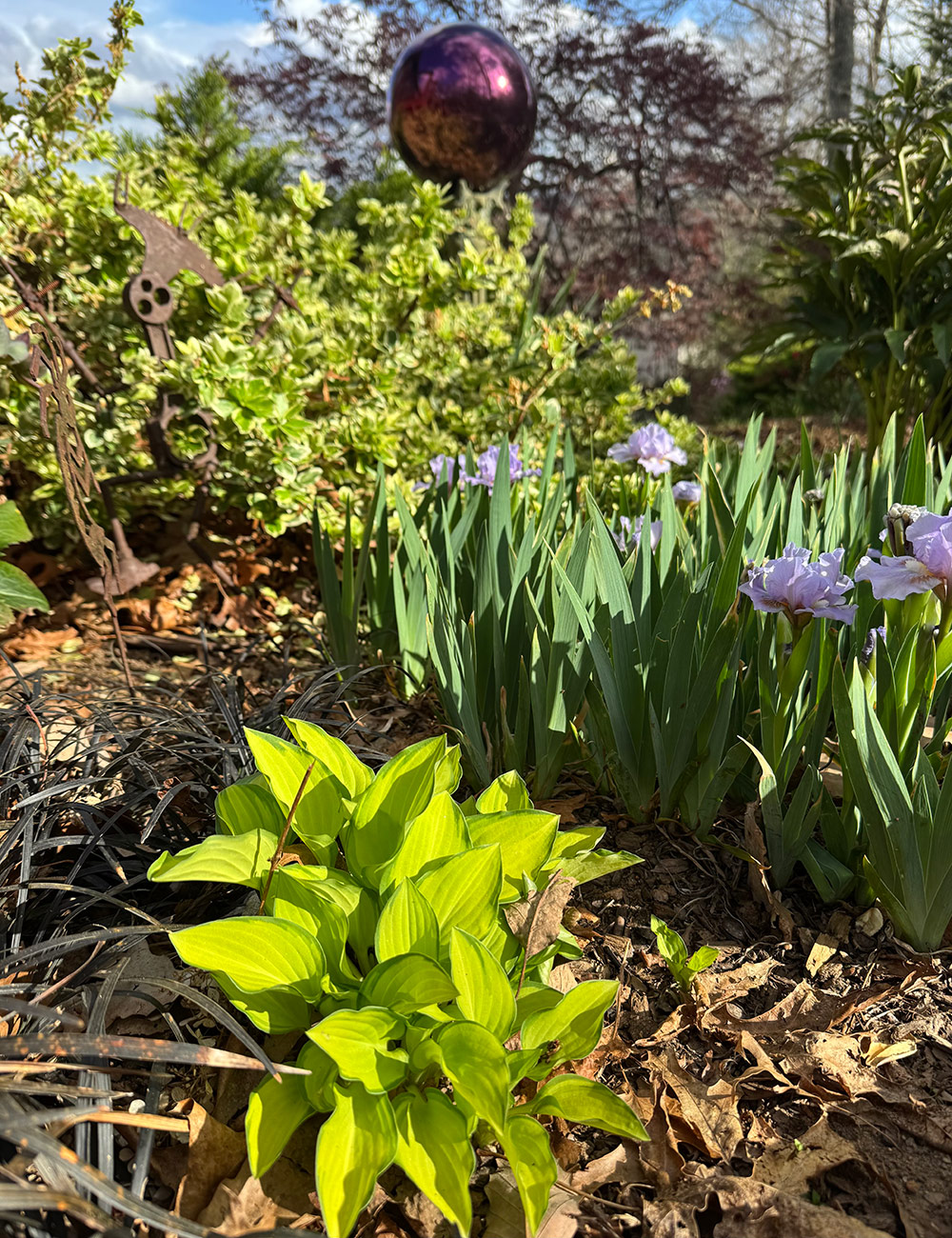 I love to pair different shapes and colors as well as other creative pieces that overwinter. Here’s a purple gazing ball, an iron Native American god made out of auto parts, black mondo grass (Ophiopogon planiscapus ‘Nigrescens’, Zones 5–10), a lime green hosta, a low iris, and ‘Emerald Gaiety’ euonymous (Euonymus fortunei ‘Emerald Gaiety’, Zones 5–8).
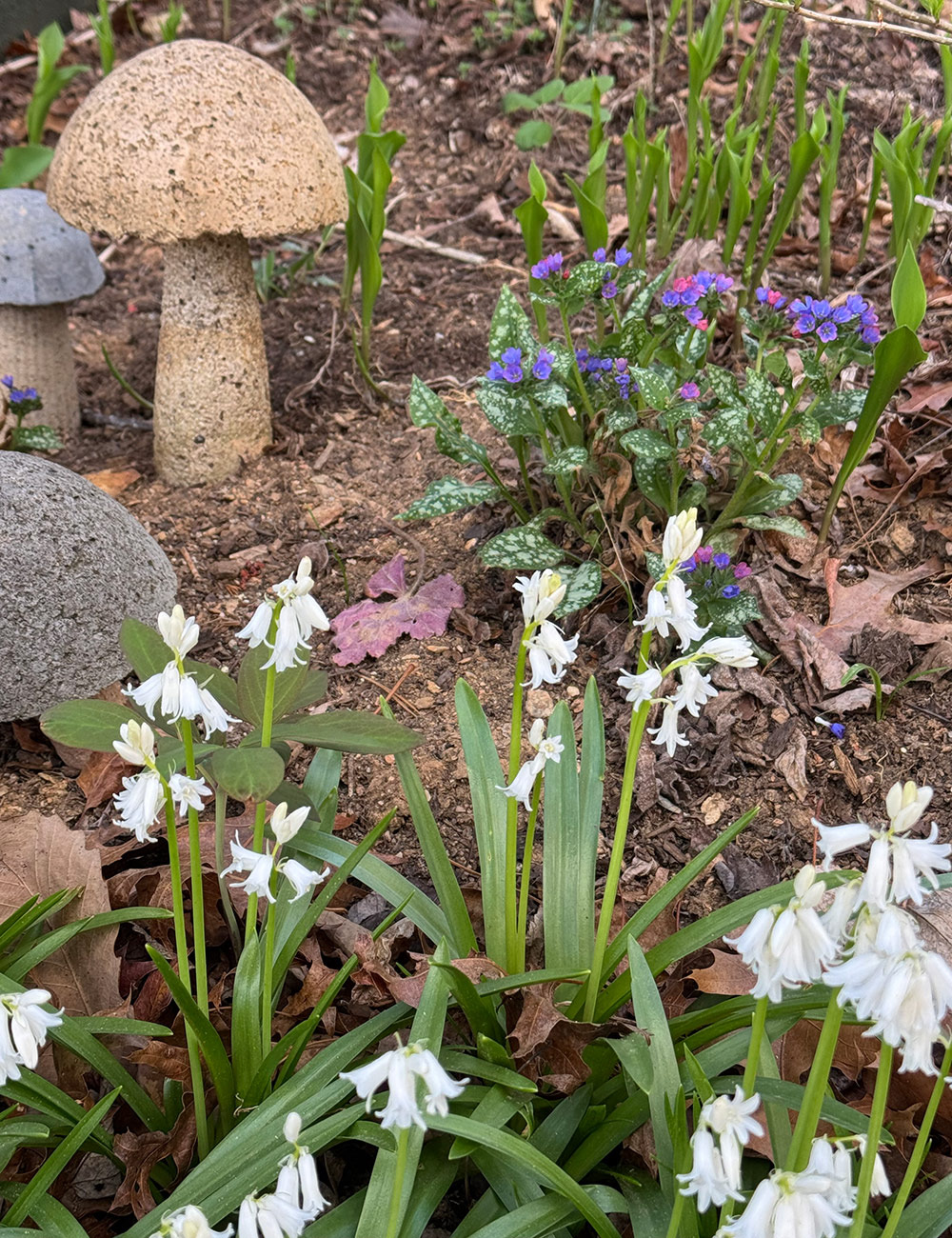 Pulmonaria, English wood hyacinth (Hyacinthoides non-scripta ‘Alba’, Zones 4–8), lily of the valley (Convallaria majalis, Zones 3–8) and 3 tufa mushrooms sit at the bottom of the garden on the north side of the house.
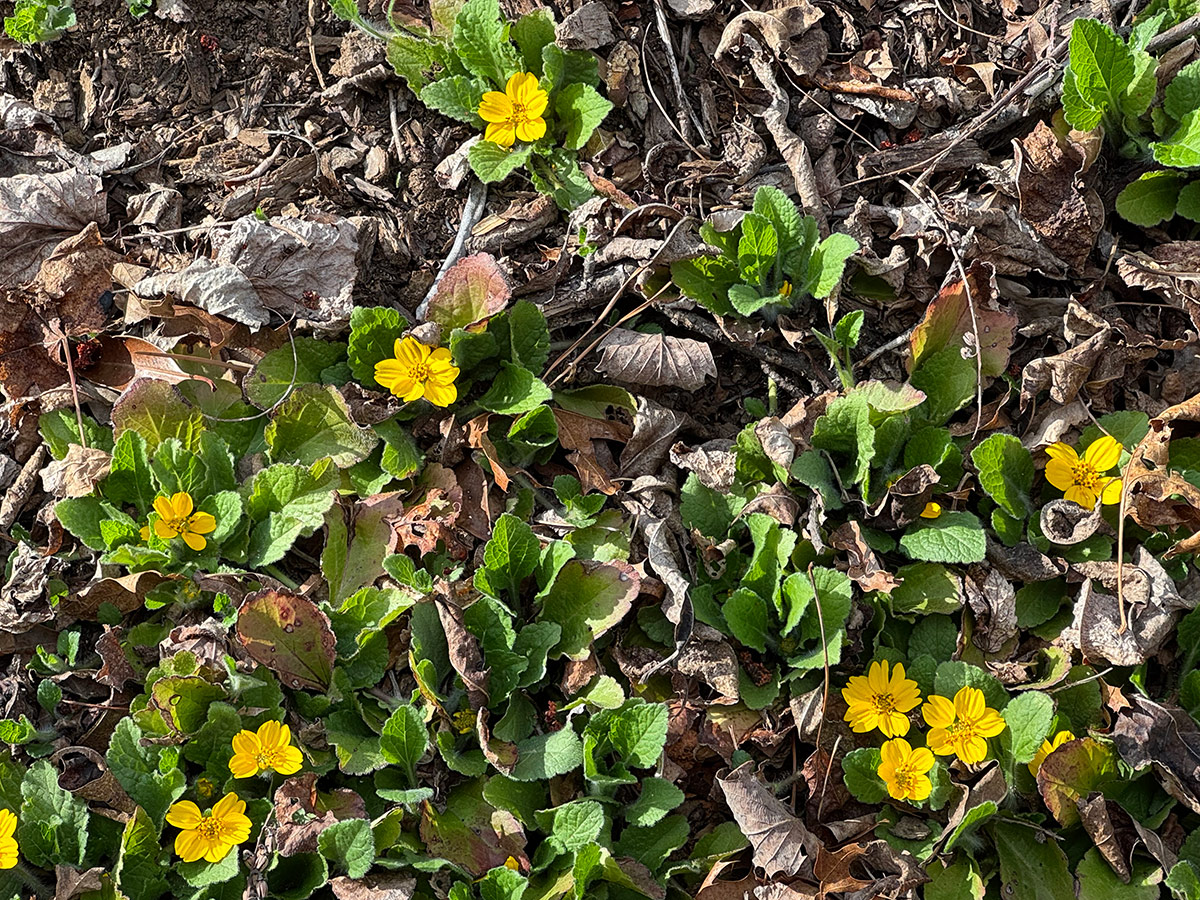 This green and gold (Chrysogonum virginianum, Zones 5–9) is relatively new to my garden but fills a great role on a bank in a mostly shaded area. They are along a path right next to the woods. I decided I needed to have some, but didn’t want them in my more “formal” garden areas. Despite my intention to have fewer gardens here in our retirement home I seem to be filling every space I can.
Thank you so much for sharing your colorful spring garden with us again, Gail! It’s a treat to see your garden continue to flourish, and I hope we see more updates as the growing season progresses.
And thank you so much to all of the GPODers who have shared spring garden photos over the past few days! Seasonal transitions can be tricky times on the blog as many gardeners, understandably, want to wait until their garden reaches its peak before snapping photos to share. But as the first flowers bloom and new leaves unfurl, please consider sharing your early spring photos with the blog. Follow the directions below to submit your photos to Garden Photo of the Day!
We want to see YOUR garden!
Have photos to share? We’d love to see your garden, a particular collection of plants you love, or a wonderful garden you had the chance to visit!
To submit, fill out the Garden Photo of the Day Submission Form.
You can also send 5–10 photos to [email protected] along with some information about the plants in the pictures and where you took the photos. We’d love to hear where you are located, how long you’ve been gardening, successes you are proud of, failures you learned from, hopes for the future, favorite plants, or funny stories from your garden.
Do you receive the GPOD by email yet? Sign up here
Fine Gardening Recommended Products
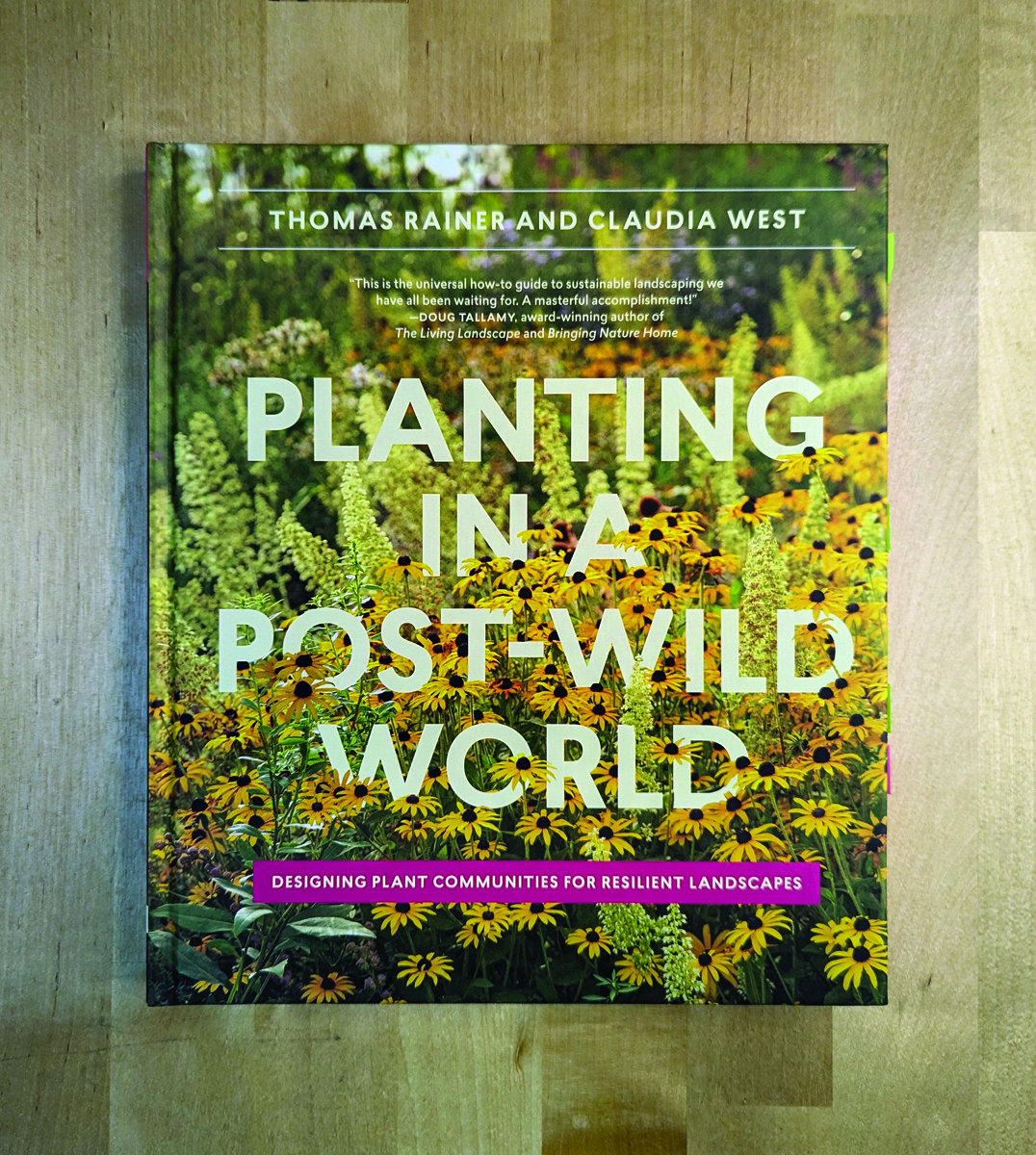
Planting in a Post-Wild World: Designing Plant Communities for Resilient Landscapes
Fine Gardening receives a commission for items purchased through links on this site, including Amazon Associates and other affiliate advertising programs.
Featuring gorgeous photography and advice for landscapers, Planting in a Post-Wild World by Thomas Rainer and Claudia West is dedicated to the idea of a new nature—a hybrid of both the wild and the cultivated—that can nourish in our cities and suburbs.
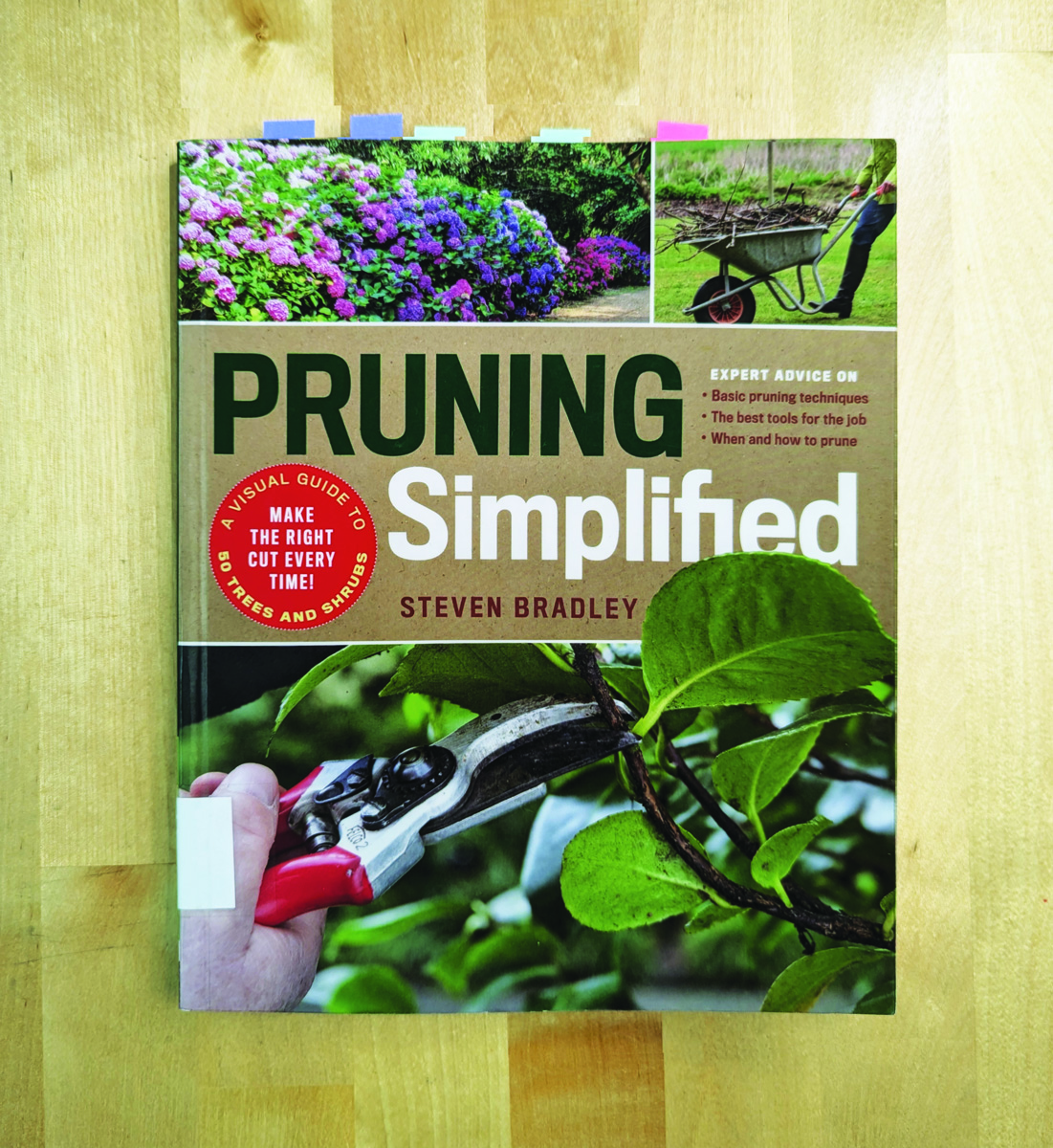
Pruning Simplified: A Step-by-Step Guide to 50 Popular Trees and Shrubs
Fine Gardening receives a commission for items purchased through links on this site, including Amazon Associates and other affiliate advertising programs.
Pruning Simplified shows you exactly how to do it. This must-have guide offers expert advice on the best tools for the job, specific details on when to prune, and clear instructions on how to prune. Profiles of the 50 most popular trees and shrubs—including azaleas, camellias, clematis, hydrangeas, and more—include illustrated, easy-to-follow instructions that will ensure you make the right cut the first time.
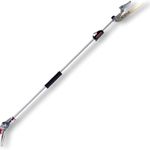
ARS Telescoping Long Reach Pruner
Fine Gardening receives a commission for items purchased through links on this site, including Amazon Associates and other affiliate advertising programs.
Telescopes from 4 to 7′. Cut and Hold (160) Blades. Drop forged blades for unsurpassed long lasting sharpness. Lightweight, 2.3 lbs., for continued use. Perfectly balanced for easy pruning.