


Perilla frutescens var. crispa
Basil and mint are staples of the summer herb garden, but if you want to add an exciting seasoning to your meals, shiso (Perilla frutescens var. crispa) deserves a spot in your garden.
This flavorful annual produces frilly leaves in shades of green, purple, or red that can be harvested to make knockout culinary creations or refreshing herbal teas.
This plant is easy to grow from seed, but hard to find at local nurseries, and you’ll probably never see fresh shiso herb at your local farmer’s market.
So, if you’re ready for a taste adventure, it makes good sense to grow your own!
We link to vendors to help you find relevant products. If you buy from one of our links, we may earn a commission.
Also known as perilla and beefsteak plant, you might mistake shiso for a basil variety if you see it growing in someone else’s garden.
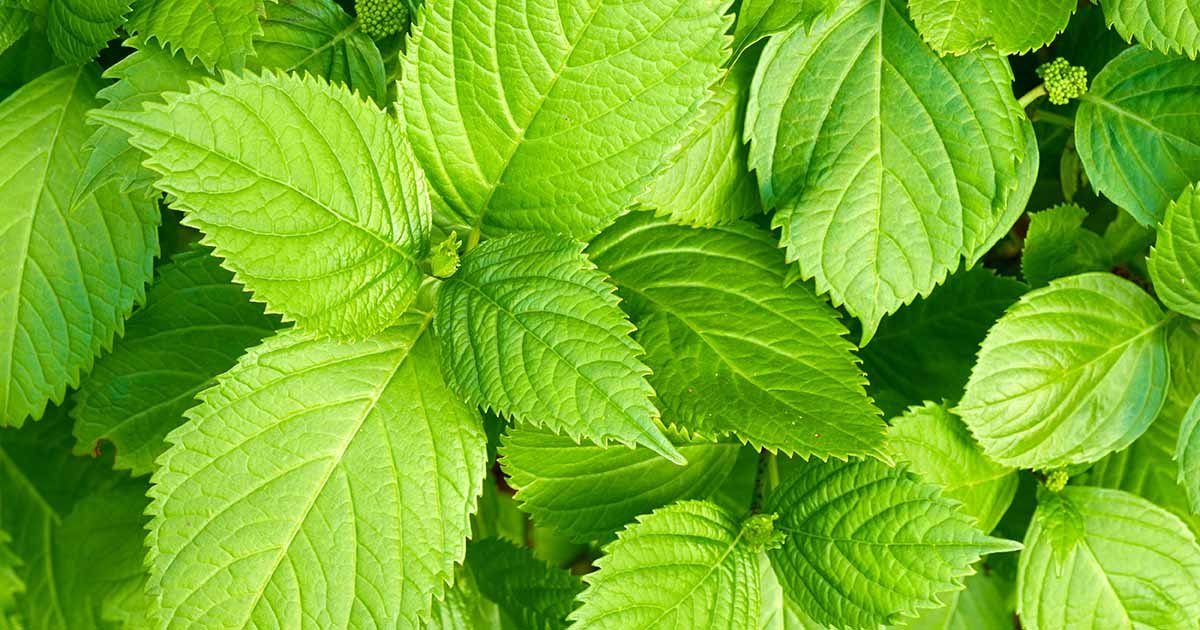
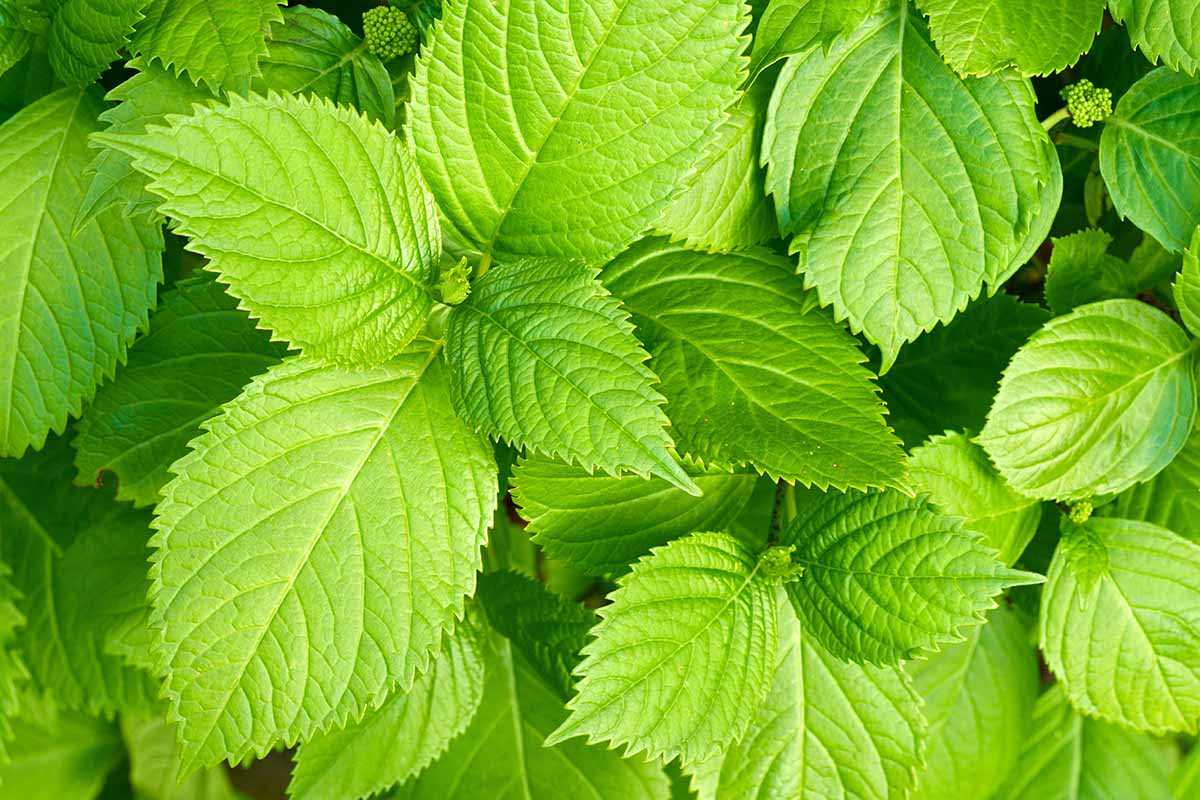
It produces upright, bushy growth with oval, serrated leaves, and sends up slender spikes of small flowers above the foliage as the season progresses.
If you’ve always wanted to grow a patch of your own perilla, in this article, we’ll cover every step of growing this delicious herb.
Here’s an overview of what’s ahead:
Shiso’s tasty leaves have multiple culinary uses, making the plant a welcome member of the herb garden or part of your edible landscaping.
The seed pods and flowers can also be used in cooking.
The flavor, which is featured in the cuisines of many Asian countries, is difficult to pin down – some say it is like a mix of basil and mint with citrusy notes.
Others recall notes of cinnamon, clove, or cumin. Once you’ve tasted it, perilla will take a unique place in your mind even if you can’t quite describe its taste.
This member of the mint family, Lamiaceae, has a branching growth habit and square stems like its relatives, spearmint and peppermint.
And the tiny, lipped flowers bear a resemblance to those of stinging nettle.
Don’t mistake it for coleus (Coleus spp.) though, another mint-family relative that is not considered edible.
Quick Look
Common name(s): Beefsteak plant, perilla, shiso
Plant type: Herbaceous annual or perennial
Hardiness (USDA Zone): 10-11 (perennial)
Native to: Asia
Bloom time / season: Summer
Exposure: Full sun, part shade
Soil type: Organically rich, well-draining
Soil pH: 5.5-6.5, slightly acidic
Time to maturity: 60-90 days
Mature size: 36 inches tall by 18 inches wide
Best uses: Herb garden
Taxonomy
Order: Lamiales
Family: Lamiaceae
Genus: Perilla
Species: Frutescens
Variety: Crispa
P. frutescens is native to a wide swath of subtropical Asia, ranging from India to Japan and southeast Russia. However, you shouldn’t eat the wild type, as parts of the plant can be toxic.
The edible cultigen P. frutescens var crispa is grown in most regions as an annual, but can be treated as a perennial in USDA Hardiness Zones 10 to 11.
The plants grow up to 36 inches tall with a spread of up to 18 inches.
In some states in the US, including Kentucky, North Carolina, Tennessee, Virginia, and West Virginia, perilla is considered an invasive species, so be careful to avoid breaching any local laws when growing this herb.
If you live in a region where it naturalizes easily, consider removing the flower spikes before they go to seed.
Propagation
Shiso is easy to propagate from seeds or by taking stem cuttings. Alternatively you can purchase nursery starts – if you can find them! – for transplant into the garden.
From Seed
You can sow directly outdoors after your last spring frost, or start seeds indoors four to six weeks earlier for a head start.
Soak the seeds overnight before sowing, and press them only lightly into the surface of the soil as they need light to germinate.
To direct sow:
- Prepare a planting area about 18 inches wide by removing weeds or other vegetation, mixing in a handful or two of compost, and moistening the soil.
- Press a group of three seeds into the surface of the soil, patting lightly to ensure good contact.
- Keep the soil evenly moist but not waterlogged.
Expect the seeds to germinate within three weeks. When the seedlings are two to three inches tall, thin so just one seedling remains.
To start indoors:
- Fill a seed or cell tray with moist seed-starting mix and sow three seeds per cell, pressing them gently onto the surface.
- Cover with a humidity dome and place on a heat mat set to 70°F.
- Remove the dome after germination. Keep the soil moist but not wet.
- When seedlings reach two to three inches tall, thin to one per cell.
Transplant outdoors after all danger of frost has passed, and nighttime temperatures are reliably above 45°F.
From Cuttings
Like other members of the mint family, perilla roots easily from cuttings, a useful option if you have access to mature plants.
- Choose a healthy stem that isn’t flowering and use a sterilized pair of garden snips to harvest a five-inch cutting, making your cut just below a pair of leaves.
- Remove the bottom leaves from the cutting, and poke it into a two- or three-inch nursery pot filled with moist potting soil.
- Cover the nursery pot with a transparent bag and place it in a warm location with bright, indirect light.
- Keep the soil moist, but not soggy.
Expect the cutting to root within three to four weeks. Once it has rooted, you can gradually transition the shiso plant into direct sunlight.
Transplanting
To transplant seedlings started indoors or nursery starts, make sure you harden off the plants before setting them outside.
If you prefer to grow in a pot, be sure to choose one that has drainage holes.
- Prepare your planting area by amending the soil with compost.
- Use a hori hori knife to make a hole the same depth as the nursery pot and twice as wide.
- Remove the perilla from the pot and gently loosen the root ball.
- Set the root ball into the hole and fill around it with soil, taking care not to cover the stems.
Water well immediately after planting and continue to water daily for the next few days to help the plant settle in.
How to Grow
You can grow shiso alongside lots of other garden herbs such as basil or mint, as well as many of your favorite garden vegetables since they share similar growing requirements.
Shiso is a tender herb that doesn’t hold up to freezing temperatures so be sure to plant out after all risk of frost has passed.
Light
This tasty herb needs direct sun to produce healthy, vibrant leaves for harvesting.
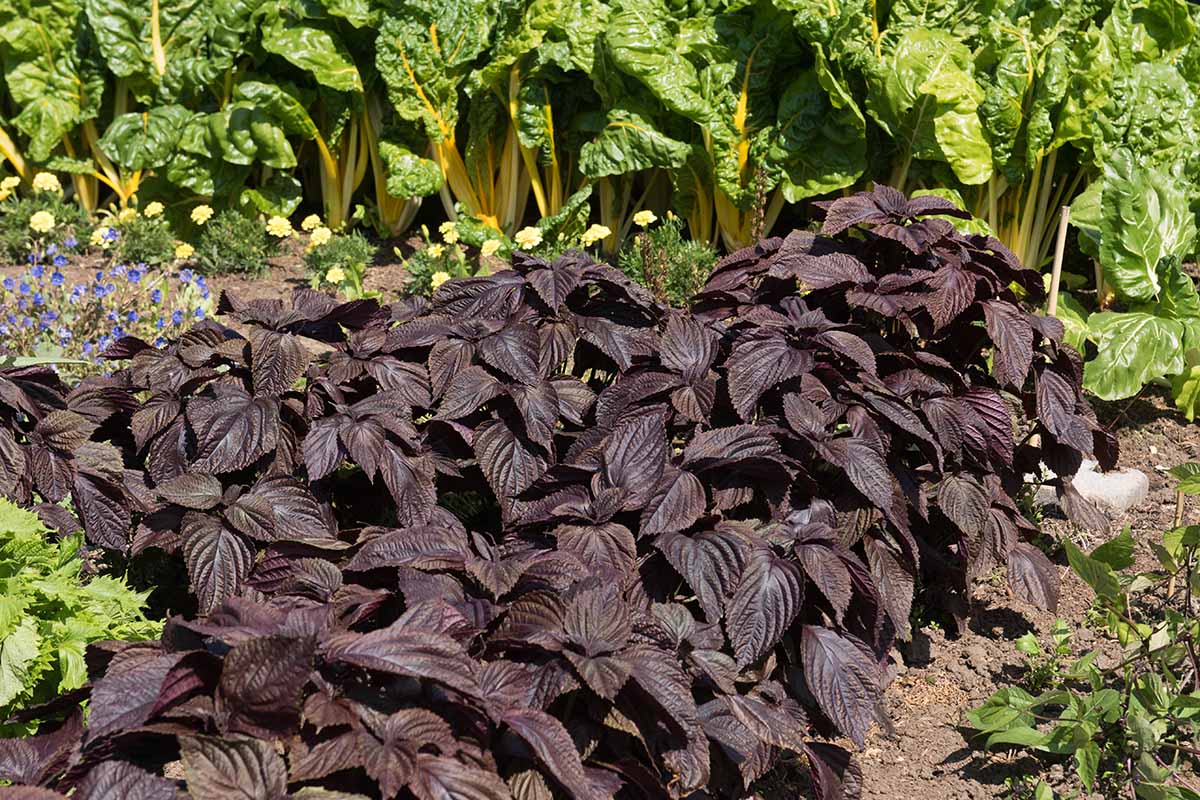
While full sun is best, you can also cultivate perilla in part shade, but it needs a minimum of two hours of direct sun per day.
Soil
Perilla is unfussy about soil as long as it drains well.
It grows in average to organically-rich conditions, tolerates sandy soils, and prefers a pH of 5.5 to 6.5.
Water
Once established, shiso is considered drought-tolerant, but young transplants need even moisture.
It’s adaptable to both moist and dry conditions.
Fertilizing
There’s no need to fertilize your patch of perilla. Mixing compost into the soil prior to planting should be all the feeding it needs for the season.
Where to Buy
There are several different varieties of perilla to choose from, based on your color and flavor preferences.
Bi-Color Beefsteak
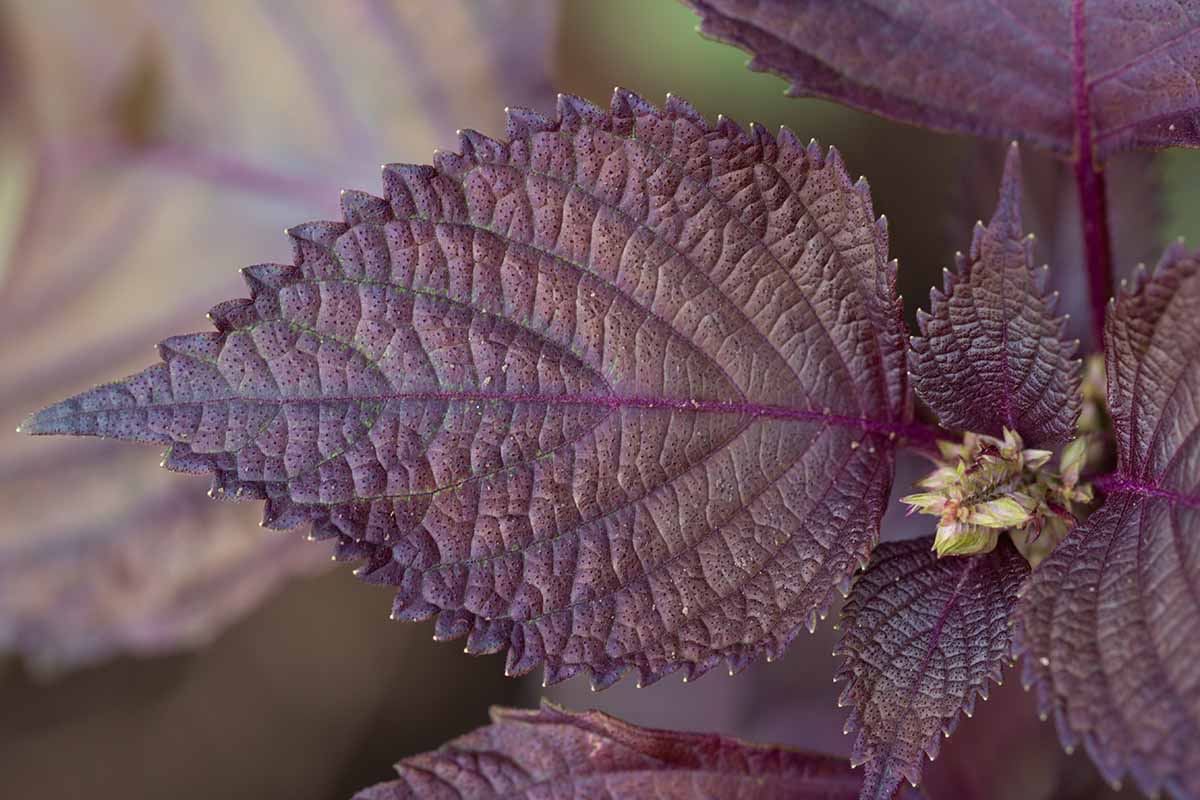
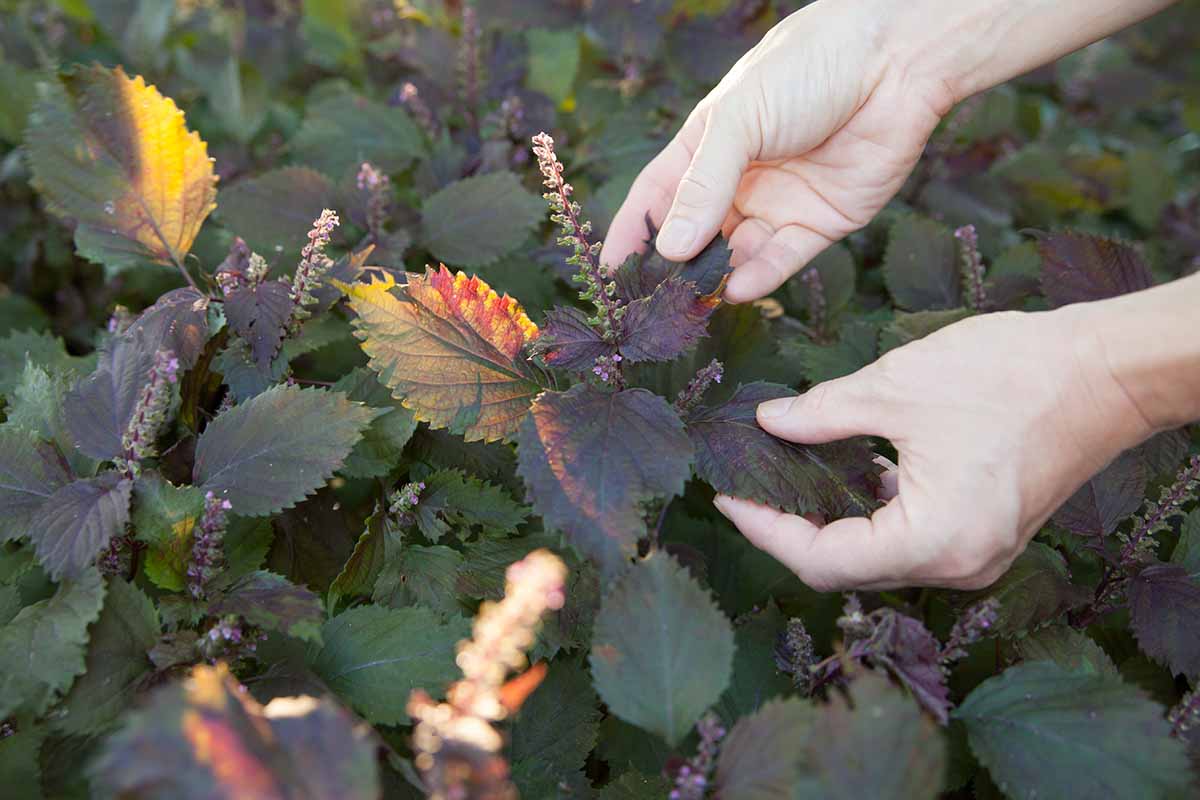
Bi-color shiso is a gorgeous variety with leaves that are green on the tops and purple on the undersides.
This type has a complex flavor profile with a depth that hints at licorice. This variety reaches maturity within 90 days.
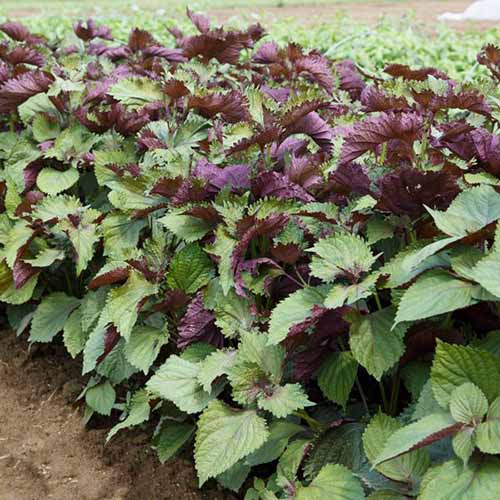
You can purchase organic, bi-color shiso seeds in a wide range of packet sizes from High Mowing Organic Seeds.
Korean Perilla
Korean perilla bears mostly green leaves and has a somewhat grassy flavor. This variety is fast growing, maturing in just 70 days.
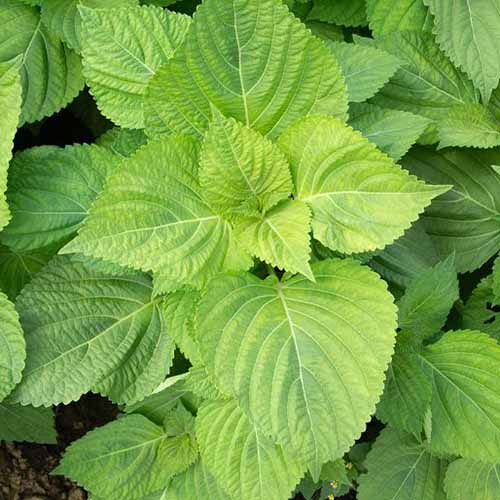
Pick up a pack of organic Korean perilla seeds in your preferred packet size from High Mowing Organic Seeds.
Purple
Purple shiso is a beautiful plant that visitors to your garden might mistake for ‘Dark Opal’ basil.
This heirloom variety has wine-colored foliage and is appreciated for its citrusy notes. This perilla matures as quickly as 60 days.
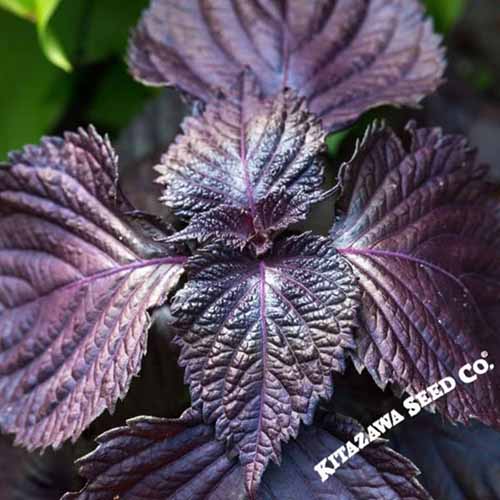
You can find purple perilla seeds in an array of packet sizes available at True Leaf Market.
Maintenance
To prevent moisture loss and protect the soil from erosion, spread a one-inch layer of mulch around the plant.
If perilla becomes leggy, you can prune it back to encourage bushier growth.
Pinch out flower spikes before they set seed to encourage continued leaf production and to prevent self-seeding, especially in regions where perilla tends to naturalize.
Pests and Disease
Shiso tends to be a carefree member of the garden and is not prone to pest problems, an attribute which contributes to its tendency to become invasive.
You can also add it to a list of deer and rabbit resistant plants to grow in your garden.
Pests
Occasionally gardeners report aphid infestations on their shiso plants, while others notice their perilla patch remains free of these sap-sucking insects while nearby plants are affected.
If you do notice aphids, you may be able to solve the problem by blasting them off with a jet of water from your garden hose.
Just one blast may not do the job, so repeat daily for a week or so until the bugs are gone.
Learn more about controlling aphids here.
Disease
There are a couple of diseases you’ll want to be aware of when growing this herb, since prevention is key.
Anthracnose
Anthracnose is a fungal disease that can pop up in the edible garden, including on perilla.
It shows up as dark brown or black lesions with a halo of yellow surrounding them.
Since it is impossible to control this disease once it has taken hold, prevention is your best defense.
Avoid overly damp conditions which can allow fungal pathogens to proliferate, and allow plenty of air flow by spacing plants generously.
Damping Off
Damping off is a risk when starting seeds in conditions that are too moist, causing seedlings to wither and collapse shortly after germination with no chance of recovery.
Learn more about damping off here.
Harvesting
Once the shiso is established, you can start to harvest the leaves. Just keep in mind to cut back no more than one-third of the plant in one go to keep it thriving.
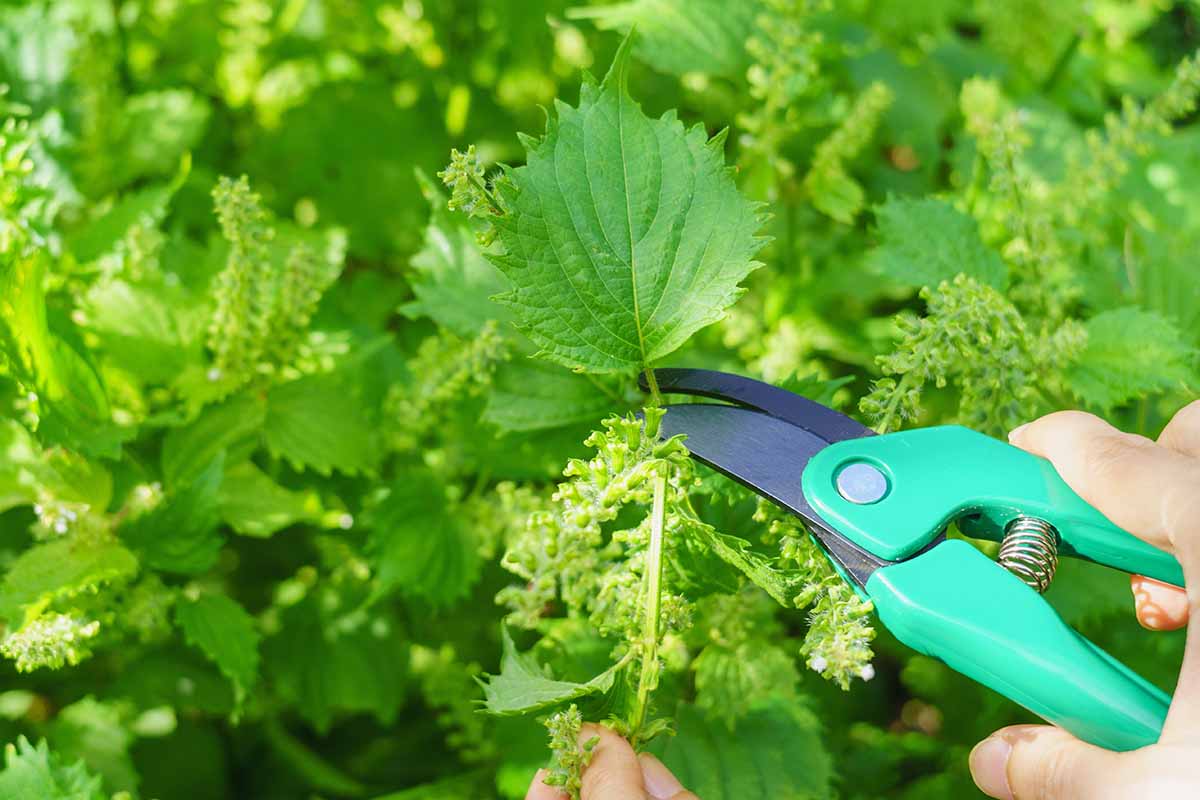
You might want to pluck off a single leaf before mealtime or if you need more shiso for your recipe, you can use a pair of snips to cut back a branch where it meets the main stem.
Since these leaves don’t stay fresh long after you pick them, harvest them as needed in small quantities.
The traditional method of preserving shiso leaves is to pickle them in a solution of vinegar, sugar, and salt.
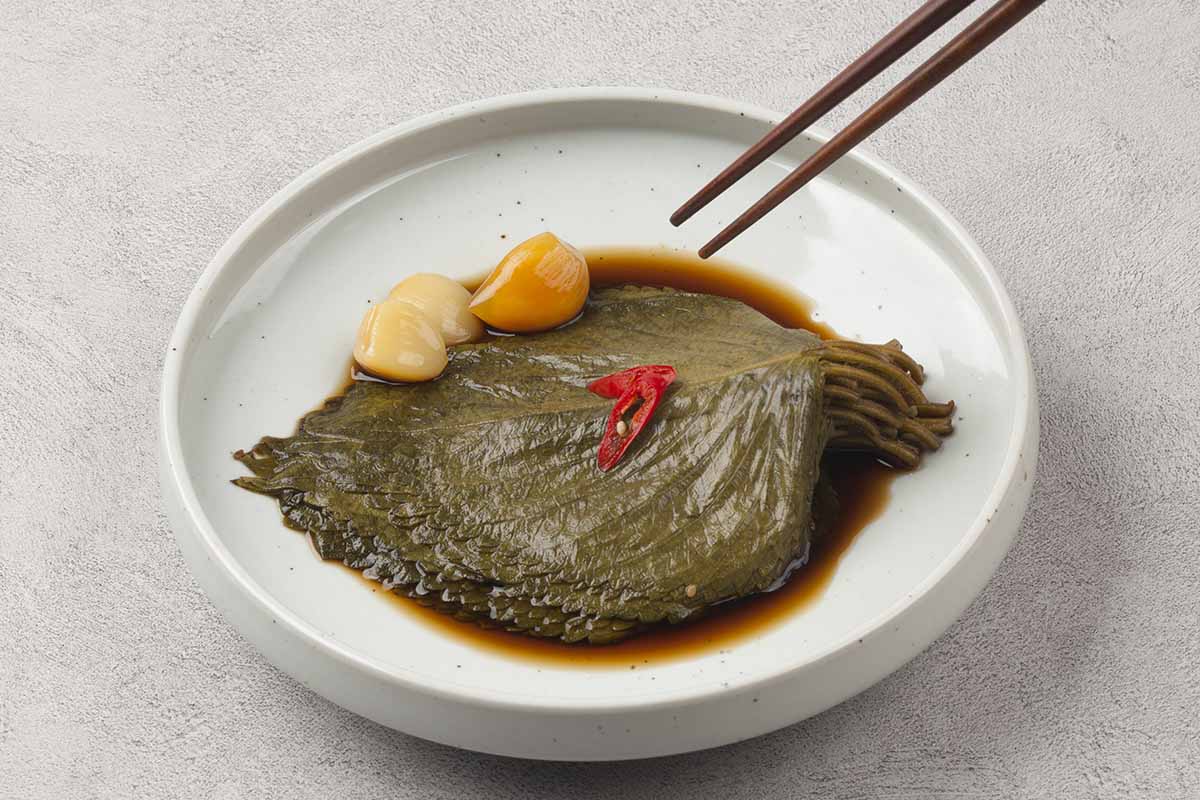
Clean perilla leaves are submerged in this solution and refrigerated for around 24 hours. The pickled leaves can then be used as a condiment.
Cooking Ideas
Shiso features prominently in the cuisines of China, Japan, Korea, Laos, and Vietnam, and these traditions offer plenty of inspiration for putting it to use in the kitchen.
Fresh perilla leaves can be mixed into salads or used to flavor soups and stir fries. You can also mince the leaves and serve them as a garnish for noodle dishes.
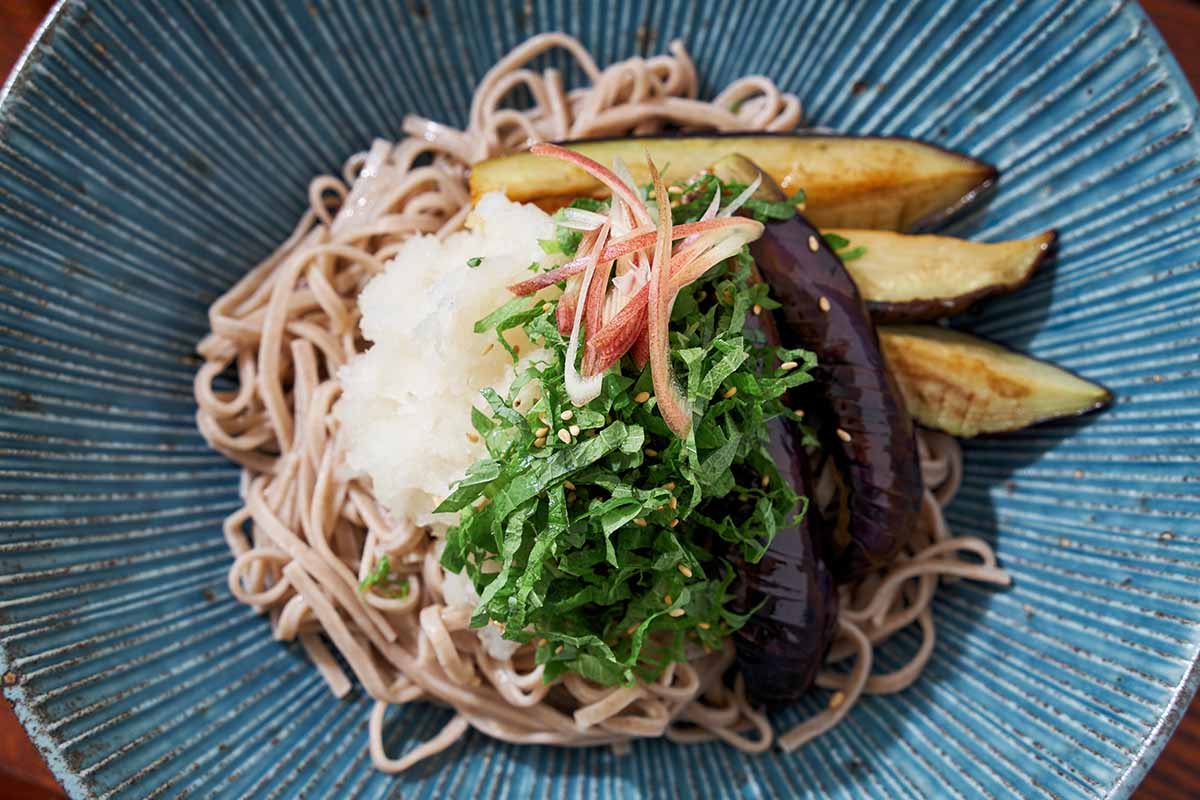
In Japanese cuisine, shiso is served with sushi and fried as tempura.
However, you don’t have to stick to Asian-inspired dishes. You might also try surprising your dinner guests by using it in place of basil on a pizza.
Another way some gardeners like to use this garden herb is to turn it into a refreshing lemonade.
Grow Beefsteak Plant to Spice Up Your Meals
This herb may inspire you to create new combinations in your kitchen, and it will be so easy to experiment with when you have a homegrown perilla patch in your garden.
Just remember to plant shiso in full sun with well-draining soil, and you’ll be on your way to a successful harvest.
And for more information about growing herbs in your garden, add these guides to your reading list next:

