


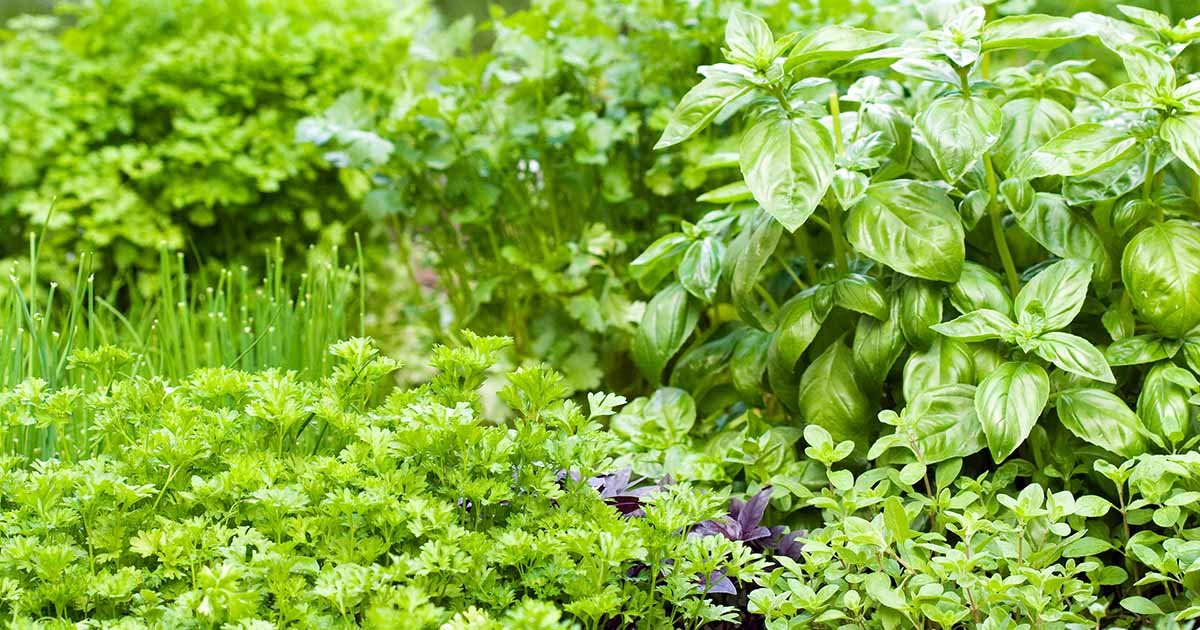
Well-draining soil is needed to prevent root rot – a deadly disease caused by roots sitting in overly moist or wet soil.
An alternative for heavy soil is to grow a selection in raised beds or containers.
Location
Some heat-loving perennials, like rosemary, will fare better if given a somewhat protected location, particularly if you have cold winters.
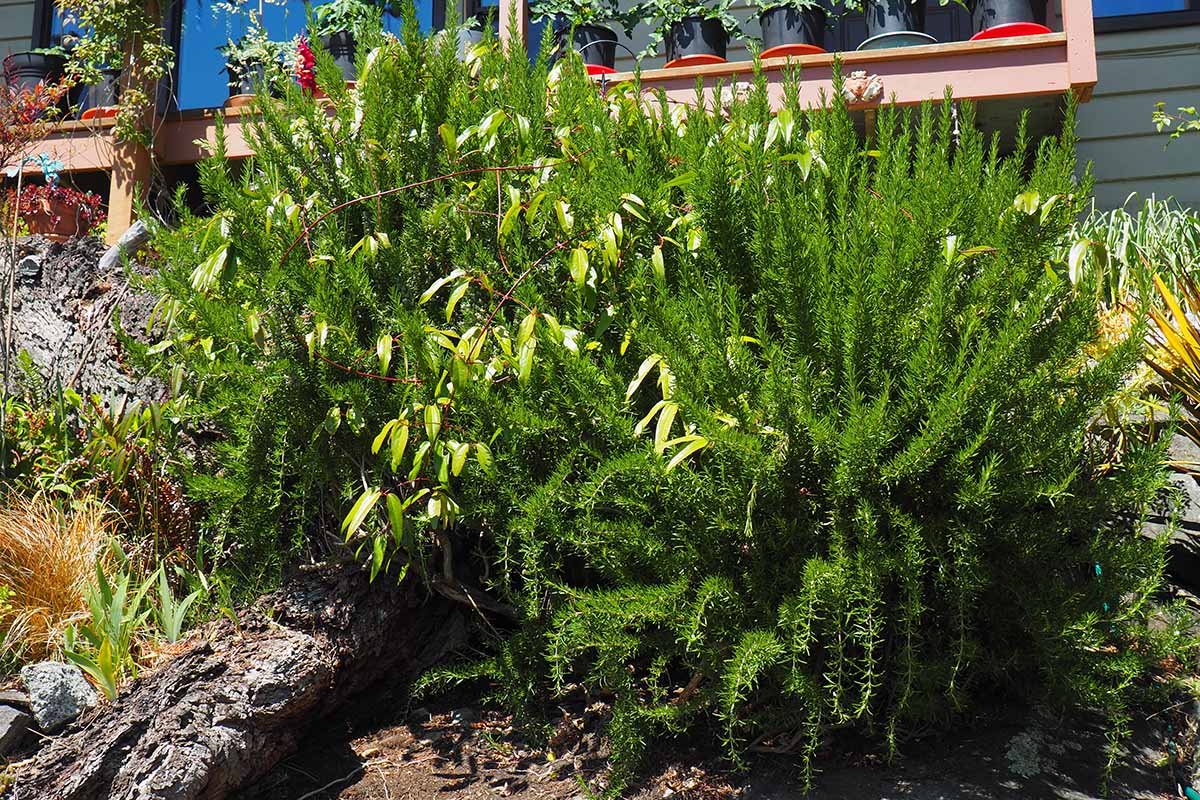
Create your own microclimate by giving them full sun in a warm, sheltered spot close to fences, foundations, retaining walls, or stumps.
These spots reflect heat to their back side and provide relief from winter’s cold temperatures and strong winds.
Watering Needs
Several species, such as oregano, rosemary, thyme, and sage, are drought tolerant once established.
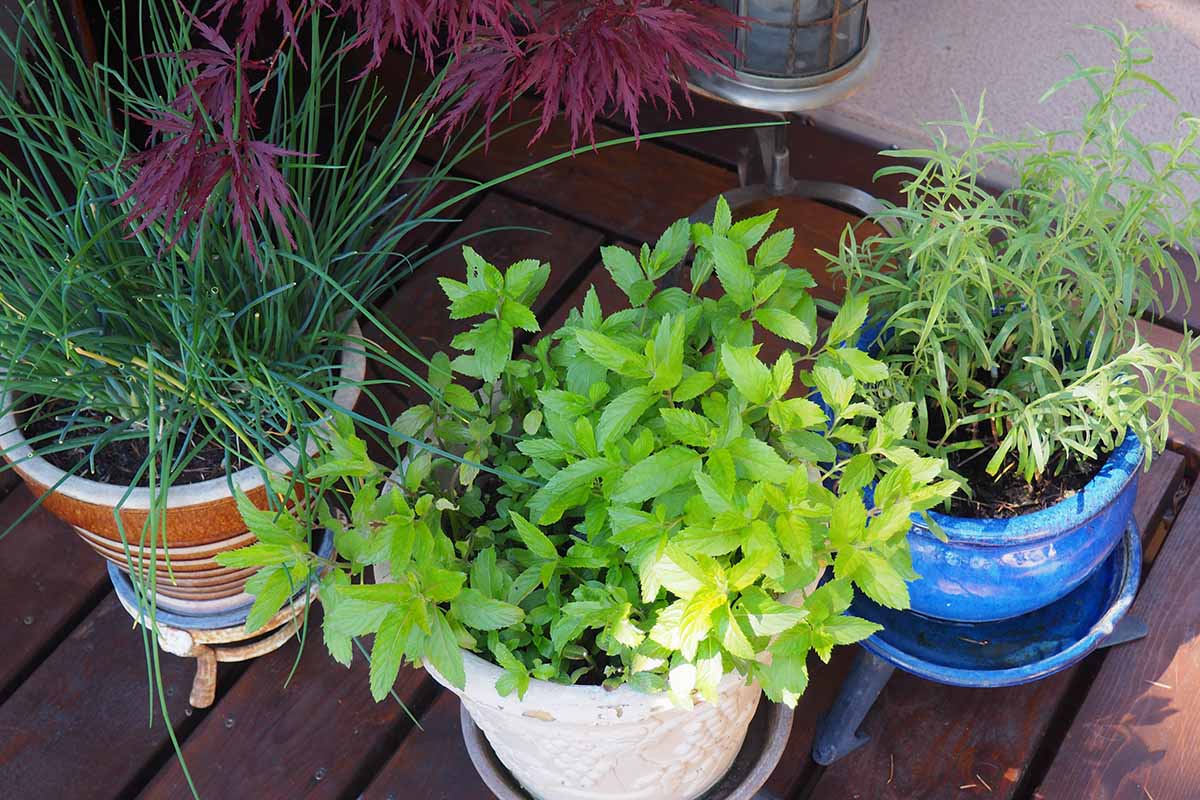
However, they still need some water, especially in hot, dry spells. But don’t kill them with kindness. Too much water can result in lush growth, but at the cost of weak, diluted flavor.
Those that prefer dry soil should be watered by soaking deeply, then allowing the top two inches of soil to dry out again before watering next.
Others, like basil, parsley, and stevia, require more consistent moisture, allowing only the top inch of soil to dry before watering deeply.
And some, like bee balm, meadowsweet, and mint, prefer evenly moist soil. A summer mulch of straw or leaf mold can help these plants to retain moisture.
When planning your garden, it’s helpful to group together like-minded herbs – those with similar moisture and sun requirements.
This makes it easier to ensure each plant gets the best conditions for optimal growth.
Fertilizers
Fertilizing herbs should be undertaken with a light touch.
As with watering, too many nutrients produce abundant growth but reduce the quality of aromas and flavor.
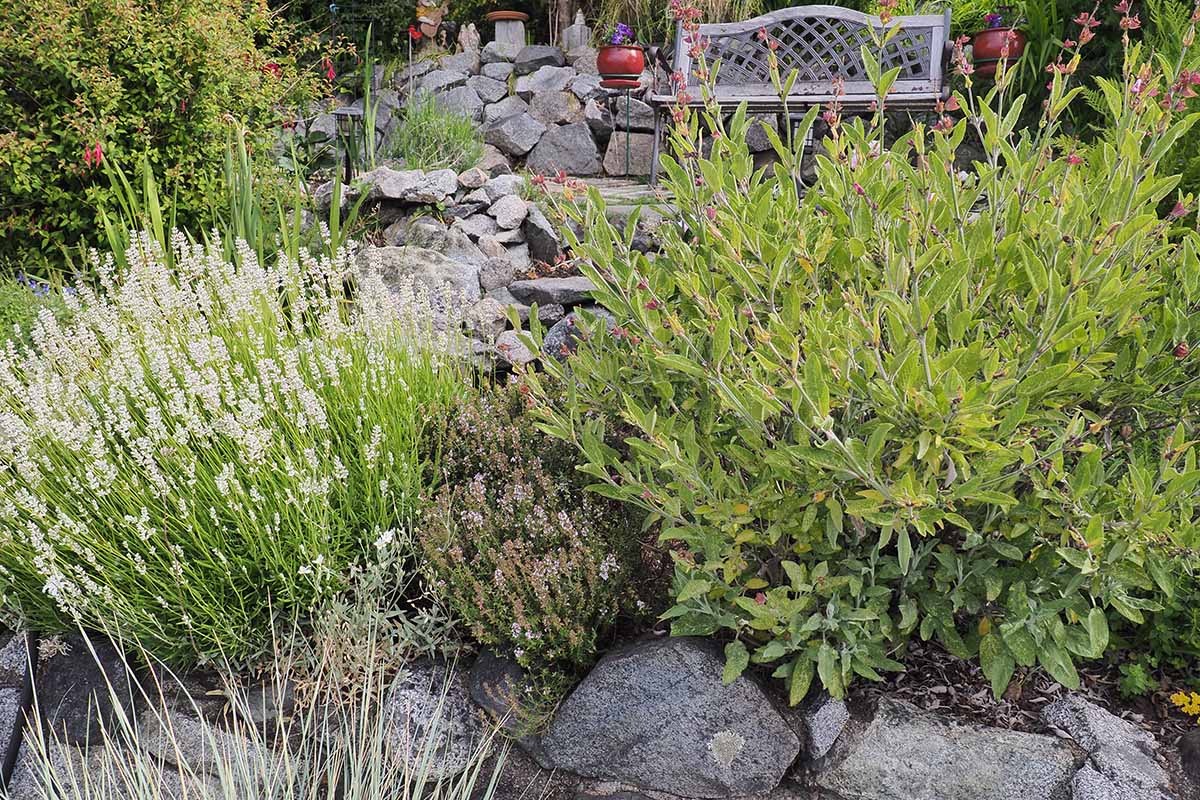
In their first year, most subshrubs or woody plants grown in the ground rarely require extra feeding if the soil was amended with compost or manure at planting time.
And for established plants, a top and side dressing of compost or well-rotted manure typically provides the nutrients needed for the entire season.
To side dress, liberally but gently work compost into the soil around the plant root zones in early spring, working out from the crown to the dripline.

