


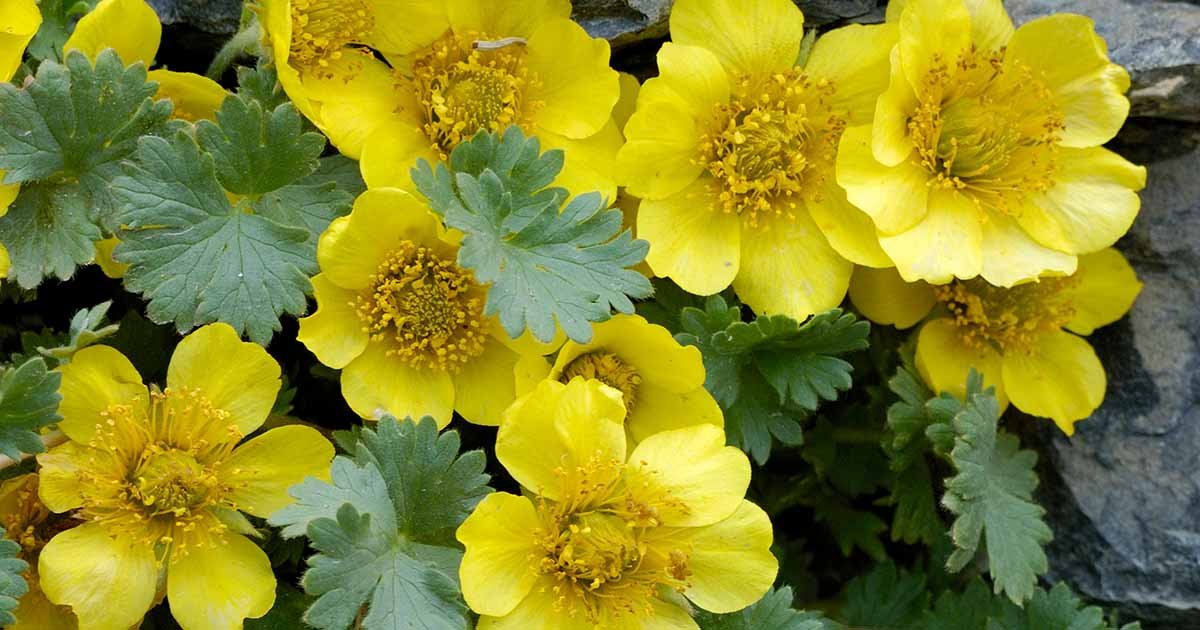
Geum reptans
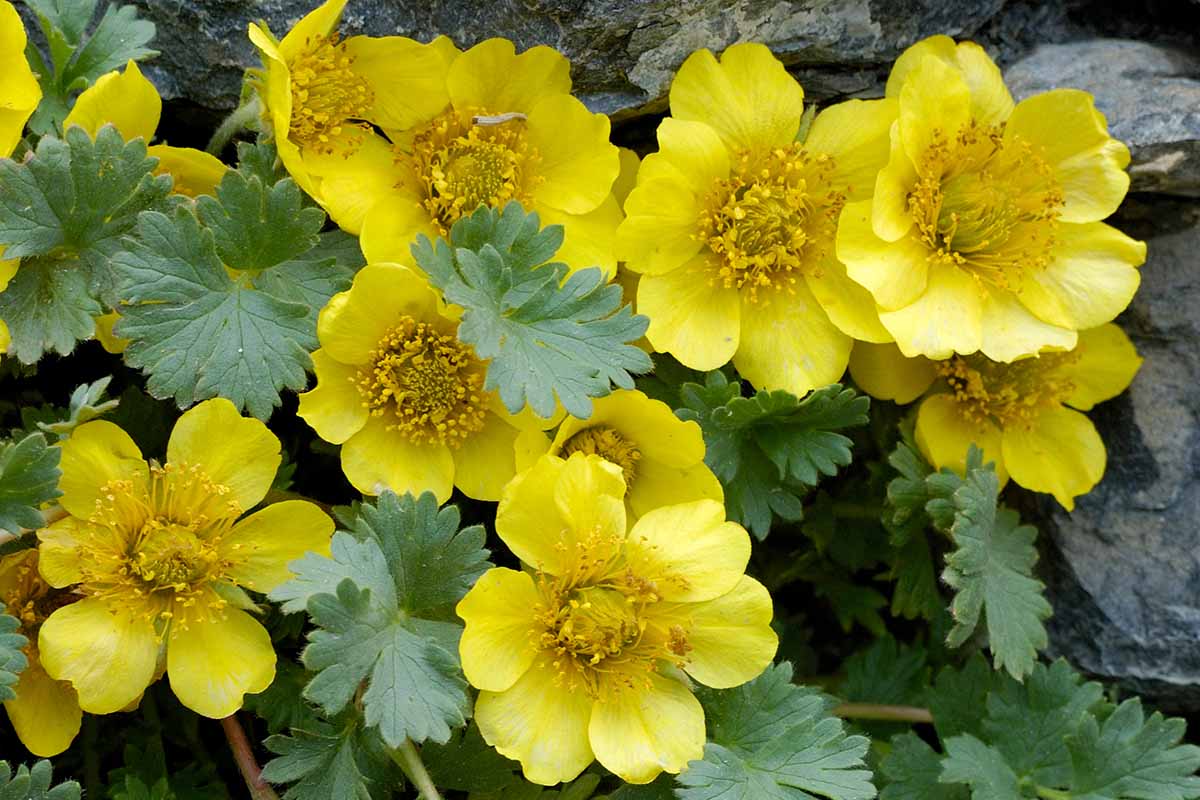
Creeping avens (Geum reptans) is a low-growing perennial with folded, frilly green foliage and sunny yellow flowers that blooms in late spring or early summer.
The cheerful yellow blooms make a charming, if understated, addition to the garden. But the seed heads that follow are truly something to sing about.
Many of the plants in this genus form seed heads that can be, shall we call them, clingy. Look at the seed heads on white avens (G. canadense).
They’ll attach themselves to just about anything. Creeping avens, however, have pink seed heads that look like a wisp of pink smoke or cotton candy.
We link to vendors to help you find relevant products. If you buy from one of our links, we may earn a commission.
The plants themselves grow six to 12 inches tall and spread via long, red runners, making for an excellent ground cover, especially in a cottage or rock garden.
Plus, they’re adaptable, and you’ll find them flourishing in USDA Hardiness Zones 4 through 8.
I love a good classic ground cover. Give me a sweet field of phlox, heaps of creeping thyme, or a blanket of sweet woodruff.
But some spots call for something a bit more unique. A plant that will turn heads while reducing erosion, protecting the soil, and adding low-growing color and texture.
Want to learn how to add creeping avens to your landscape? This guide will leave you feeling like an expert. Here’s what we are going to talk about:
Creeping avens might not look like much of a rose relative at first glance, but it shares the hallmark five-petaled flowers of members of the Rosaceae family.
This species grows all over Eastern Europe, and is indigenous to mountainous regions in central and southeastern Europe, including the Alps and Carpathian Mountains.
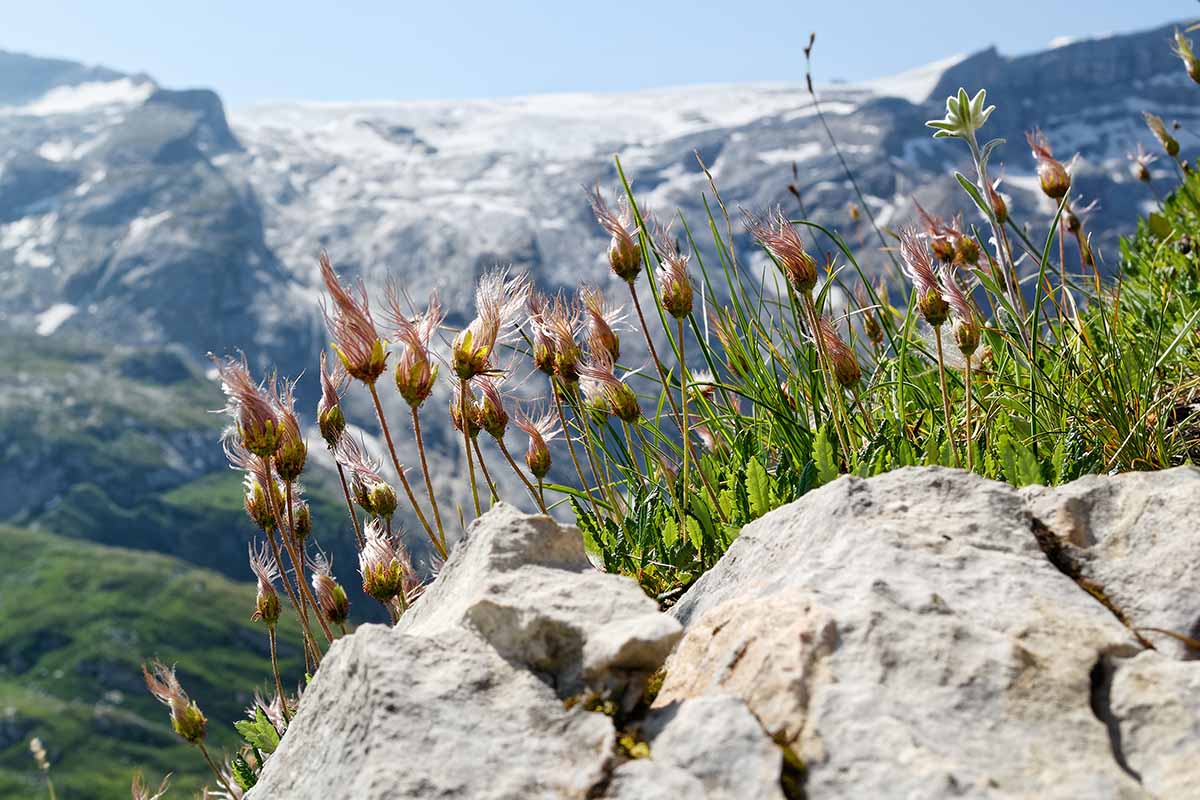
There, you’ll find creeping avens in rocky areas at elevations between 6,900 to 9,200 feet, though it can grow as high as 12,500 feet in some ranges.
It forms a central rosette, producing more and more leaves as the plant matures. Underground, it has a shallow root system anchored by a deep taproot.
Quick Look
Common name(s): Creeping avens, cure all, drooping avens, geum, yellow bedstraw
Plant type: Rhizomatous creeping herbaceous perennial
Hardiness (USDA Zone): 4-8
Native to: Eastern Europe
Bloom time / season: Summer
Exposure: Full to partial sun
Soil type: Loose, rocky, well draining
Soil pH: 6.0-8.0, neutral
Time to maturity: 4 years from seed
Mature size: 6 inches tall by 18 inches wide
Best uses: Ground cover, rock gardens, cottage gardens
Taxonomy
Order: Rosales
Family: Rosaceae
Genus: Geum
Species: Reptans
G. reptans is the most commonly grown ornamental in the genus and it is also known as cure all, drooping avens, and yellow bedstraw, but there are quite a few others out there.
Some are cultivated and others are considered weeds.
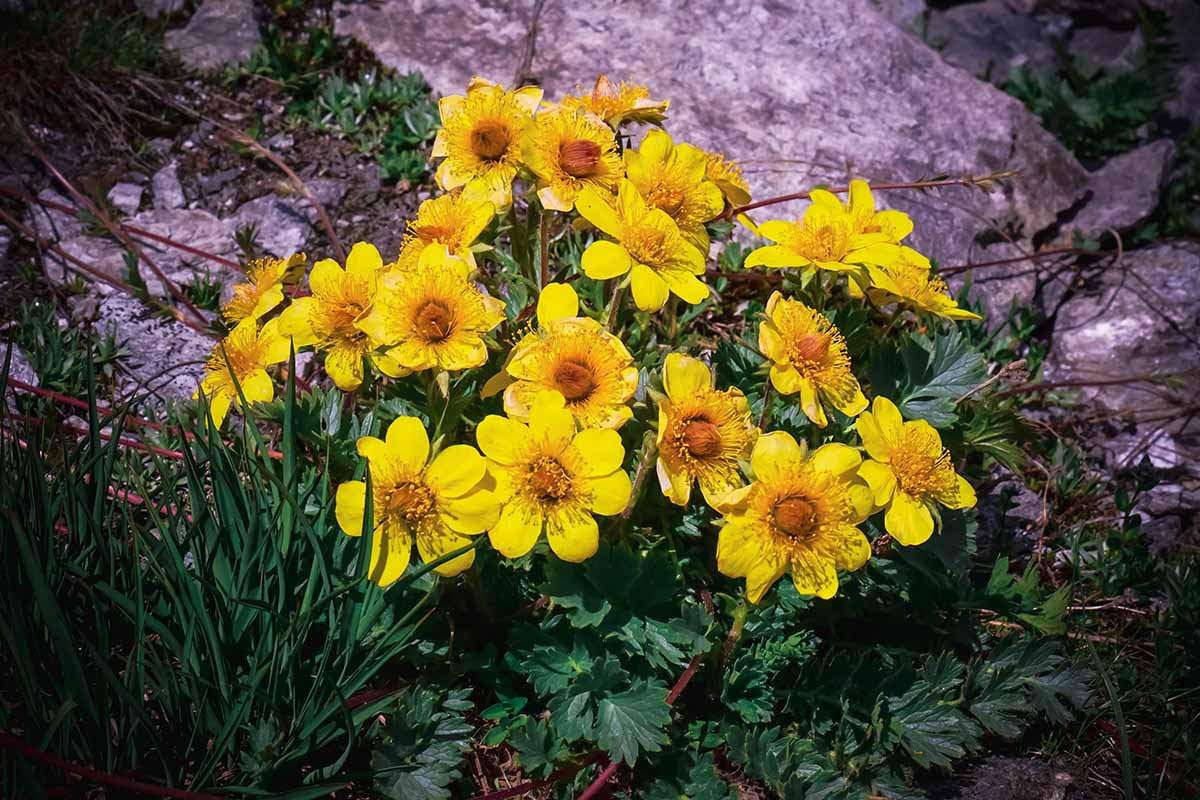
In the United States, most gardeners in the west are familiar with large-leaved avens (G. macrophyllum), usually disregarded as a weed, though some appreciate it as a medicinal plant.
Water avens (G. rivale) is a gorgeous cousin with nodding purple blossoms.
White avens (G. canadense) is another so-called weed that deserves more attention as a garden plant option thanks to its white blossoms, semi-evergreen leaves, and sturdy constitution.

