


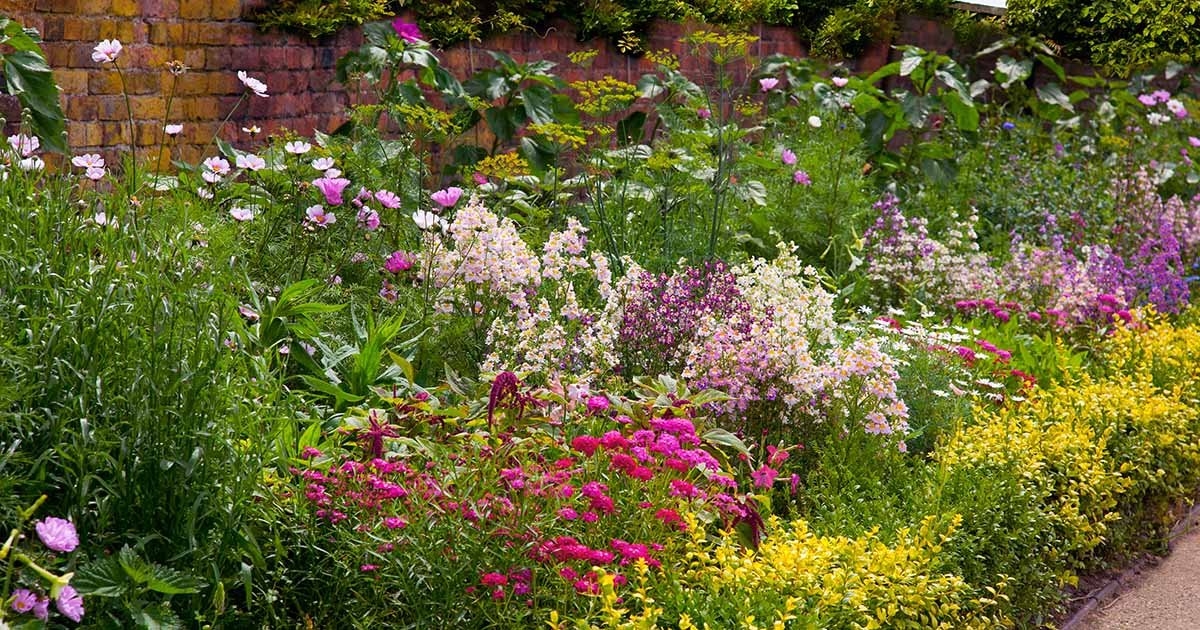
I like to place blue balloon flower beside red bee balm and white Montauk daisy for a patriotic July display.
White-petaled varieties also perform an essential function.
If you have an existing garden that contains a wide variety of colors, interplanting with white helps to unite and enhance such an eclectic mix.
Sow seeds or rootstock in early spring in Zones 3 to 8. If desired, deadhead to extend the bloom season.
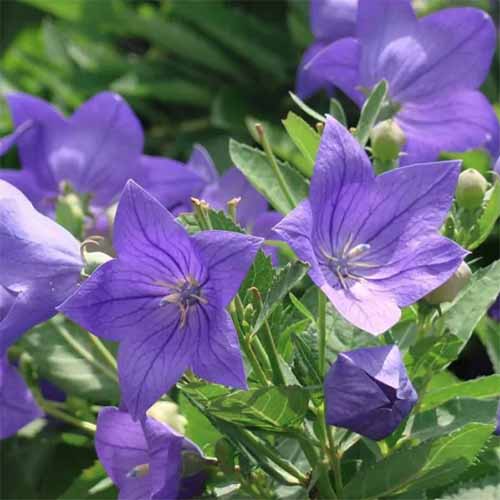
‘Sentimental Blue’ Balloon Flowers
Ready to add balloon flowers to your garden?
You can find ‘Sentimental Blue’ which sports delightful bluish-purple flowers available in #1 containers from Nature Hills Nursery.
Read our complete growing guide here.
2. Black-Eyed Susan
Black-eyed Susan (Rudbeckia) is a native wildflower that does best in full sun and organically-rich soil but tolerates average soil and even drought.
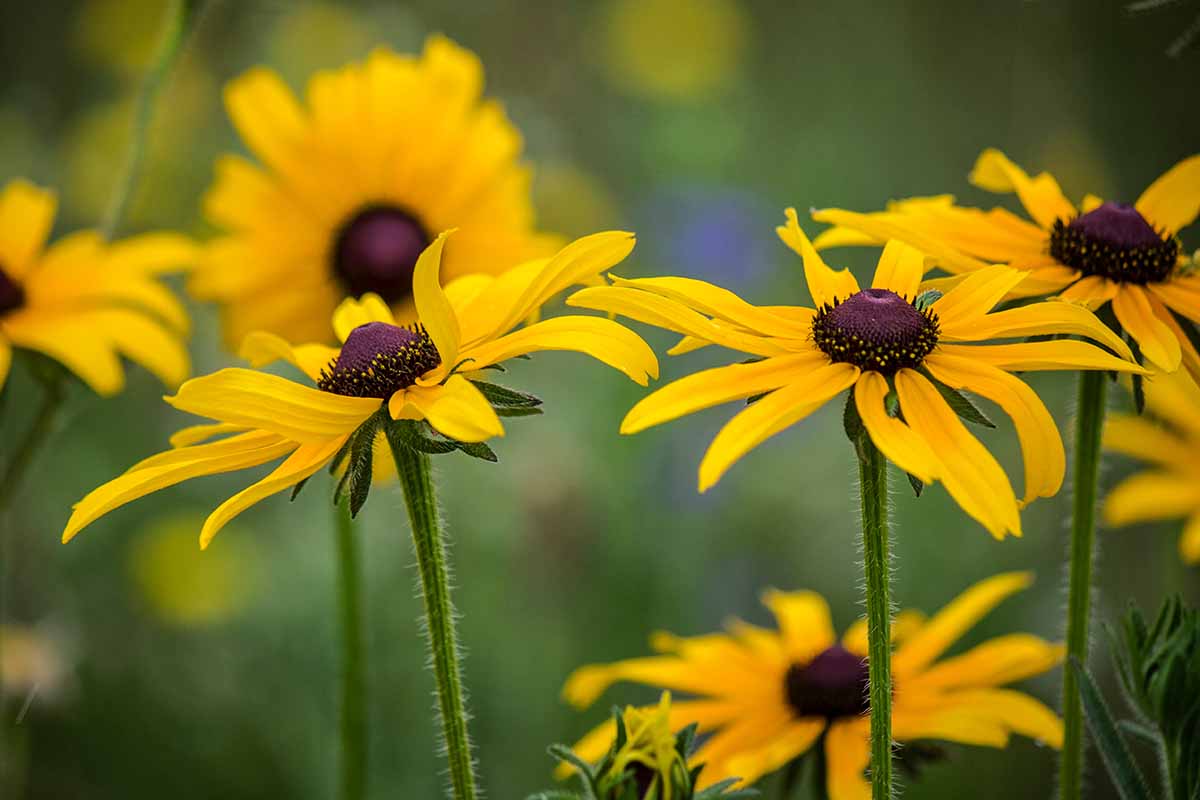
Varieties range from native Rudbeckia hirta, with its yellow-orange petals and dark brown centers, to hybrids in shades of deep orange and red.
This garden classic blooms from June to September on stalks of up to three feet tall.
Black-eyed Susan provides continuous medium-height color saturation throughout the summer months. It self-sows, so either deadhead, or be prepared for seedlings to sprout next season.
If you have a large space to fill, this can be a bonus. However, unless you have a native variety, your seedlings may not replicate the disease-resistance of their forbears.
Try alternating black-eyed Susan with Montauk daisy and coneflower for an interesting grouping of medium-height flora with similar sun and soil requirements.
Place it in the middle position of borders and beds, with ground covers in front, and tall, structural elements like giant allium in back. Sow seeds or plants in early spring in Zones 3 to 9.
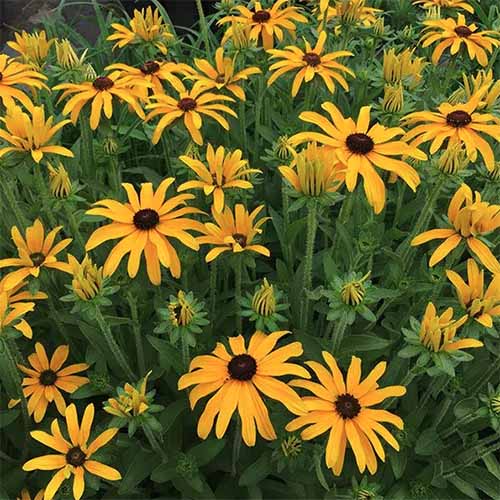
Rudbeckia x ‘Glitters Like Gold’
If you want to get a jump on the growing season, you can find ‘Glitters Like Gold,’ a hybrid cultivar, available in #1 containers from Nature Hills Nursery.
Or pick up seeds in your choice of packet sizes at True Leaf Market.
Read our complete growing guide here.
3. Blazing Star
Blazing star (Liatris spicata) is a native wildflower that attracts pollinators to the garden. It prefers moist, organically-rich, well-drained soil.
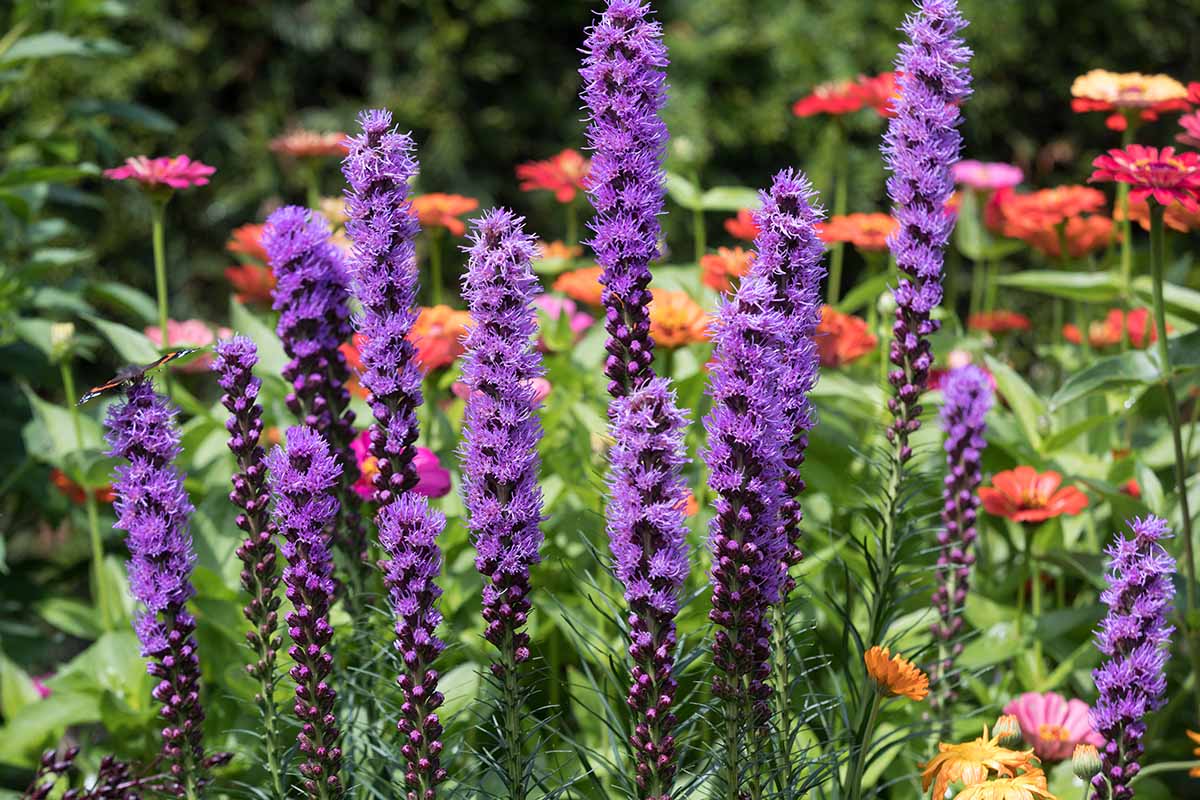
Spikes laden with blossoms of pink, purple, or white may reach four feet in height.
This linear design makes a bold impact from July to September. And, because it’s sturdy and blooms from the bottom up, it lasts a long time in vase arrangements.
Interplant blazing star at mid-story for unexpected vertical drama, or at the back of beds and border for structural definition.
Sow seed or plants in spring or fall in Zones 3 to 8. Divide over time as needed.
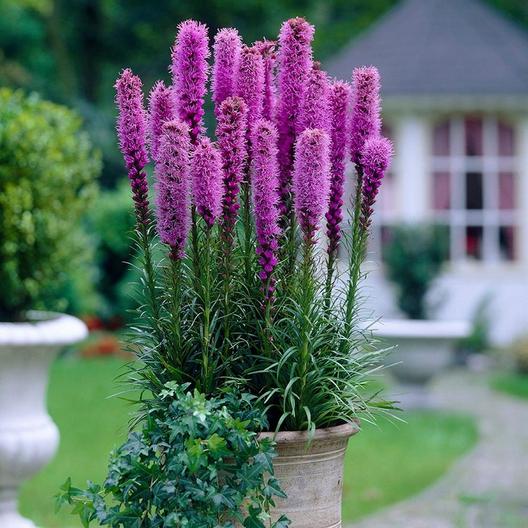
Blazing star (Liatris spicata)
You can find seeds available at Eden Brothers. Plants in #1 containers are available from Nature Hills Nursery.
Read our complete growing guide here.
4. Bugleweed
Bugleweed (Ajuga) is a fast-growing evergreen ground cover for sunny to partly shady areas with average to moist, well-drained soil.
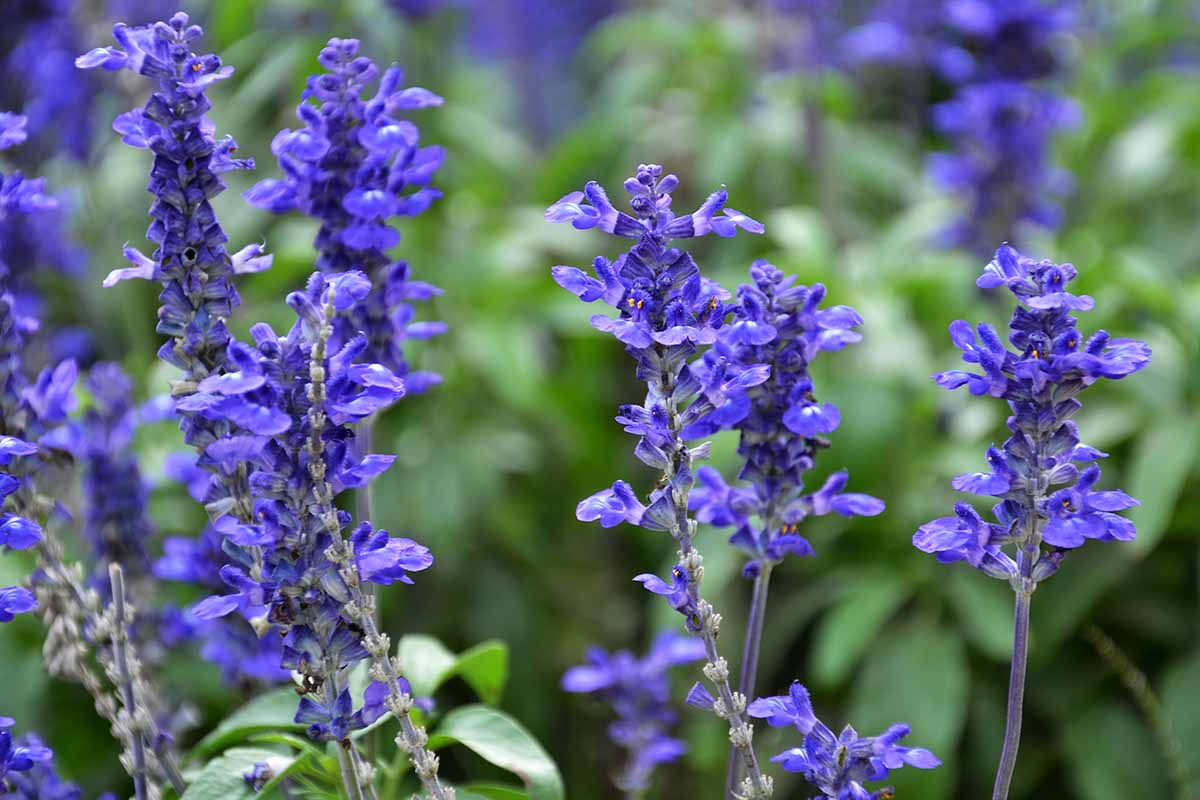
Varieties range from blue to white with shiny green, purple, and variegated foliage, upright blossom spikes, and a height about six inches.
Sow it right over your daffodils and hyacinths for low-profile May to June color. Use it along walkways and in troublesome areas where you can’t seem to get anything to grow.
Ajuga’s key characteristics are its year-round interest and weed inhibition.
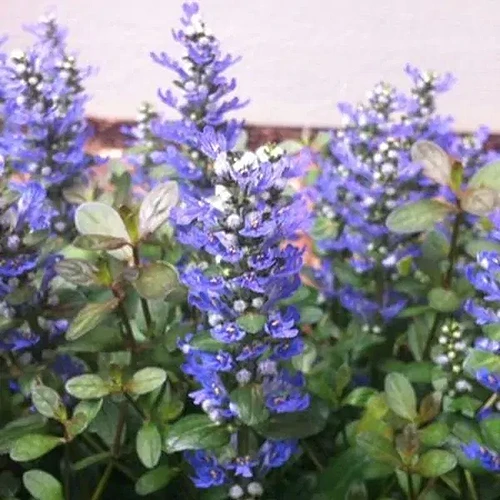
Sow seeds or plants in early spring in Zones 3 to 10.
You can find ‘Chocolate Chip’ Ajuga plants available at Nature Hills Nursery.
5. Clematis
Clematis is a non-invasive flowering vine that grows in full sun to part shade in moist, organically-rich, well-drained soil.
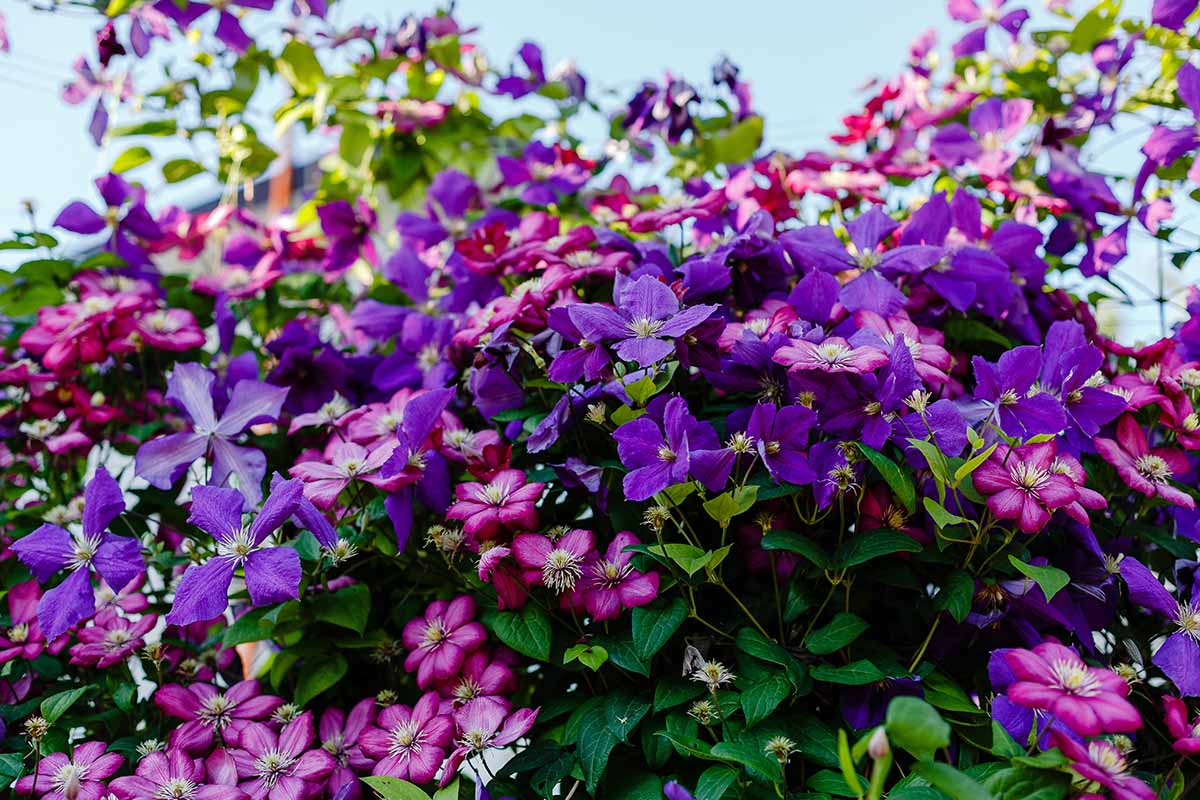
There are spring and summer bloomers, and some are fragrant.
Large, showy blossoms range from velvety burgundy to downy white, strewn along vines reaching over 12 feet long.
Clematis functions as “window dressing” in the garden. Train it up and over lattice frameworks, arbors, and fences to create privacy.
Train it up a lamppost, over a wall, or anywhere you want a mass profusion of blooms. Dress up that boring window-less garage wall with a foundation planting and decorative trellis.
Plant rootstock in spring or fall. Do not prune until fully established, and then only on varieties that do not produce new shoots on old wood.
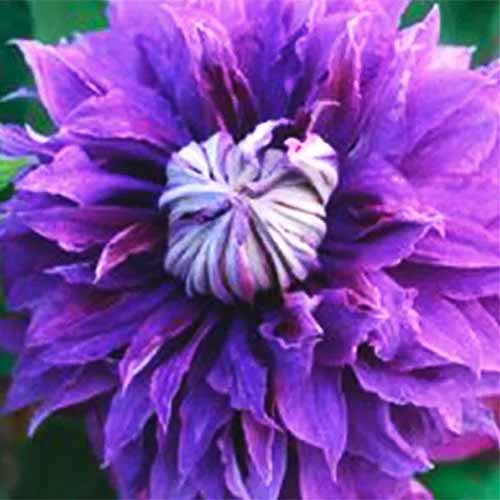
You can find Regal® Diamantina™ clematis plants available at Nature Hills Nursery.
Read our complete growing guide here, and to protect your vines from frost and freezing temperatures see our clematis winter care guide.
6. Coneflower
Coneflower (echinacea) is a garden staple in my family. It prefers full sun and organically-rich, sandy, well-drained soil.
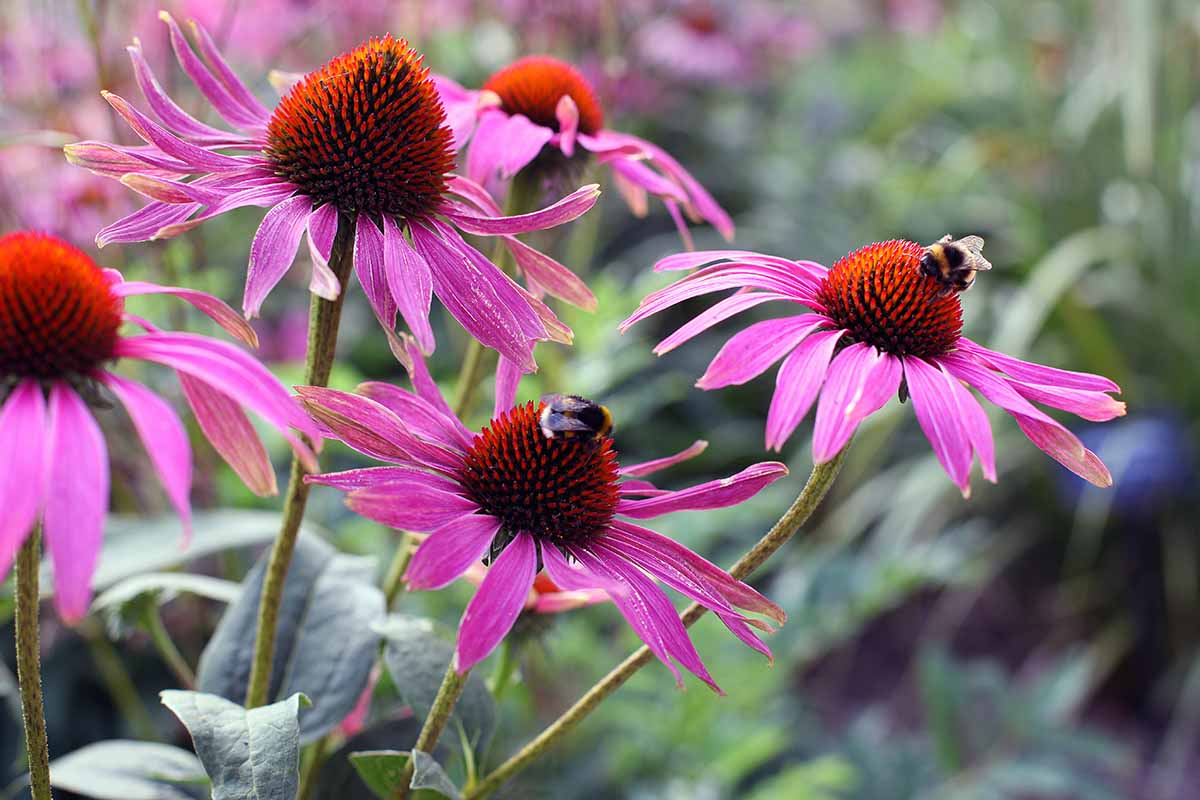
Native purple coneflower (Echinacea purpurea) and its cultivars often outperform today’s yellow and orange hybrids.
Prized for centuries for its medicinal qualities, coneflower blooms from summer to fall, and its seed heads attract songbirds like goldfinches.
Topping out at about three feet, its key feature is the ability to provide consistent, long-lasting mid-level color.
It is especially attractive interplanted with varieties of similar soil culture like black-eyed Susan.
Sow seeds or plants in Zones 3 to 9, in mixed beds, borders, or stand-alone drifts.
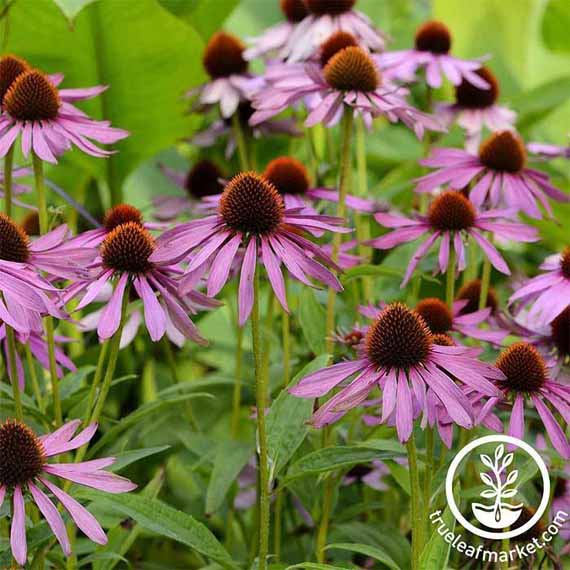
You can find coneflower seeds in a variety of packet sizes available at True Leaf Market.
Read our coneflower growing guide here.
7. Cranesbill Geranium
Cranesbill geranium, or hardy geranium, is a mounding species that thrives in full sun in average, well-drained soil.
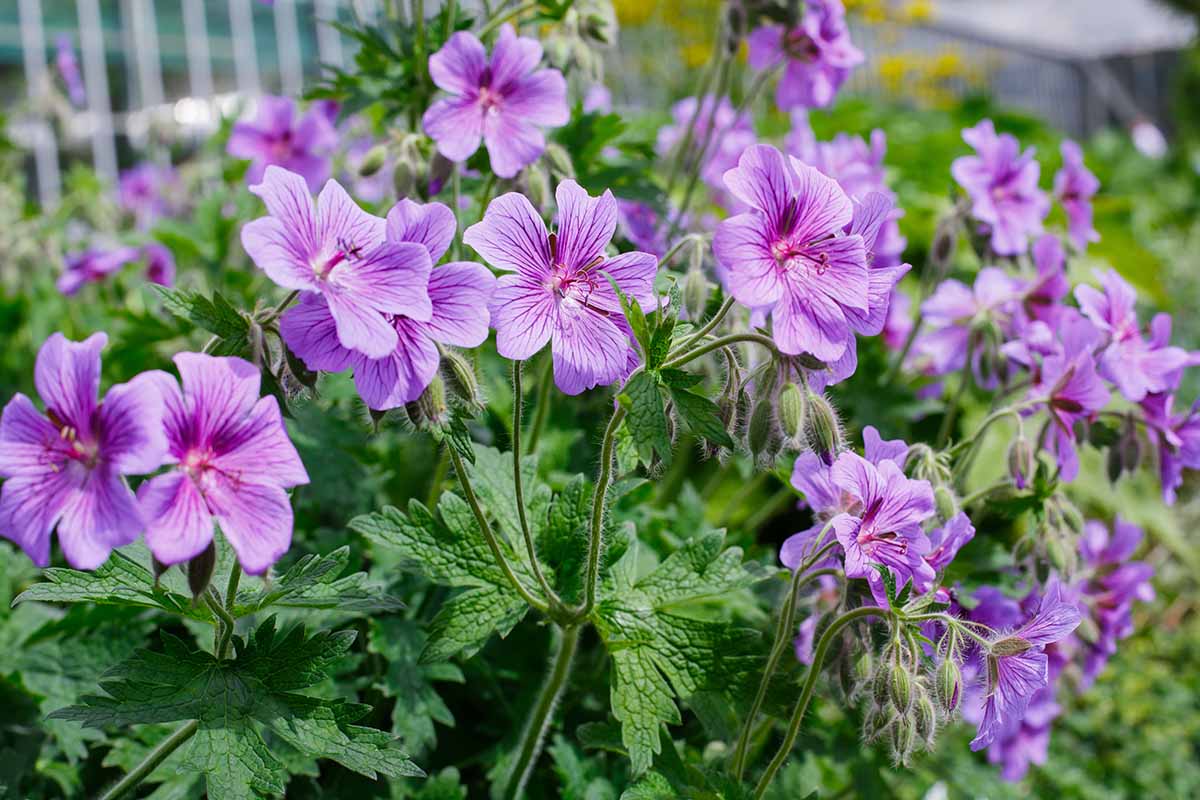
Reaching heights of up to three feet, it’s a good middle-position filler in beds and borders, with shrubs behind, and shorter flora in front.
This voluminous foliage makes it useful as a camouflage for unsightly faucets, hoses, utility meters, and other foundation eyesores.
In autumn, it adds gold and umber shades to the landscape.
Cranesbill blossoms are showy and appear continuously from spring until frost. Choose cultivars in shades of pink, purple, blue, and white.
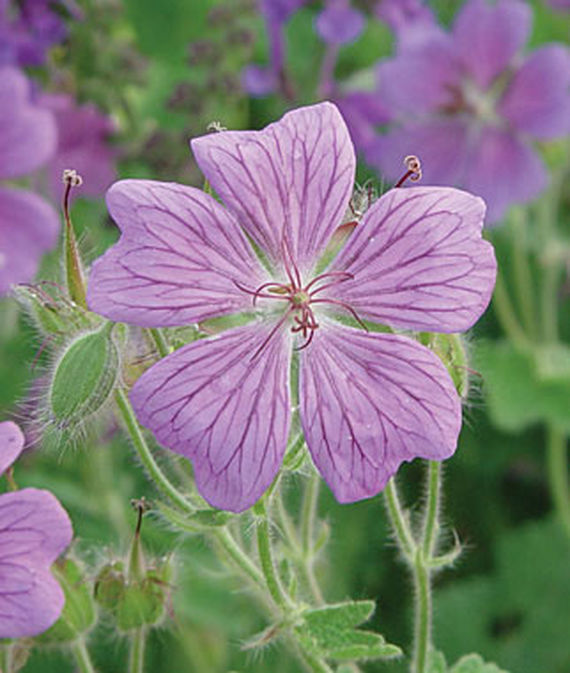
Sow seeds or plants in early spring in Zones 4 to 9. Divide as needed in spring or fall.
Want to add hardy geraniums to your flower garden? You can find ‘Rozanne,’ a delicate light purple cultivar available at Burpee.
Read our guide to growing cranesbill geraniums here.
8. Creeping Thyme
Creeping thyme (Thymus serphyllum) is a culinary herb that makes a stunning, color-saturated edible ground cover in full sun and average, well-drained soil.
Brushing past or stepping upon it releases a pleasant, minty fragrance.
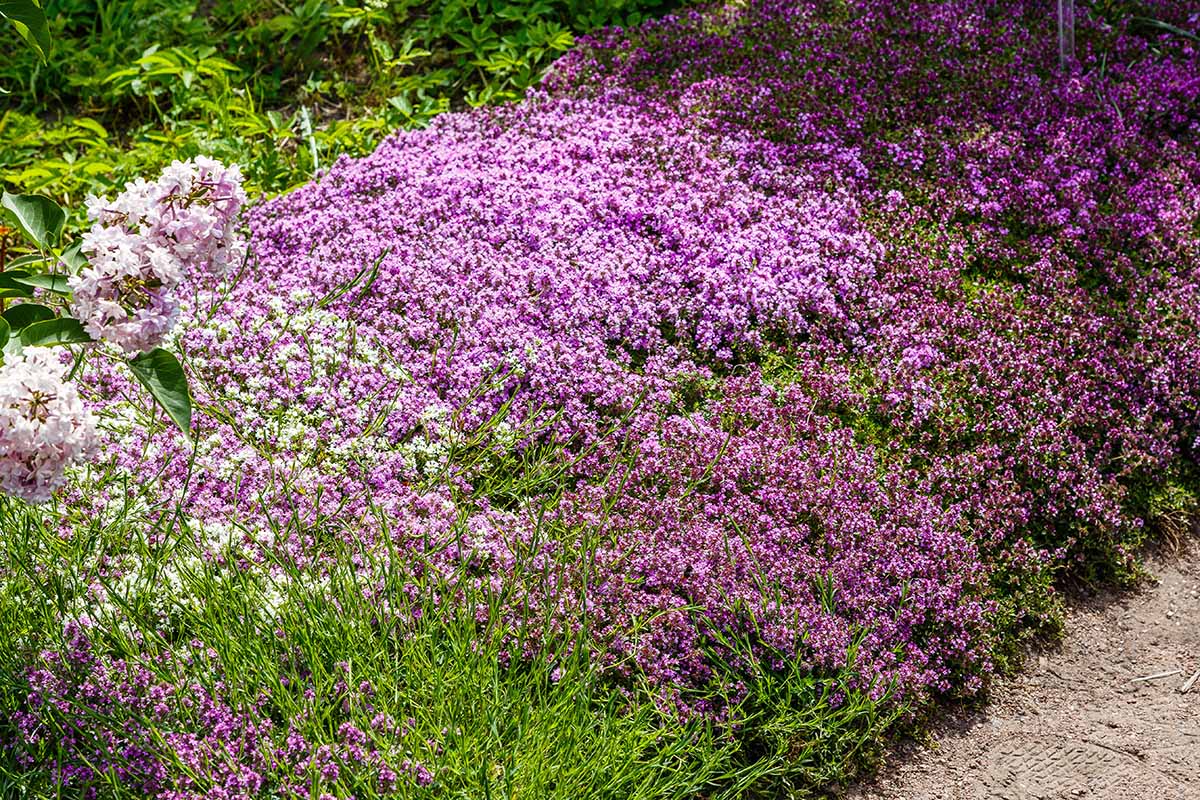
It’s drought tolerant and in mild climates, evergreen.
Topping out at about three inches, it’s tiny pink-purple blossoms form a rich carpet of color as summer gets underway.
Sow or plant it en masse along walkways and driveways, at the very front of beds and borders, and in a drift of its own, to show off its primary asset, vivid color.
Sow seeds or plants in early spring in Zones 4 to 8.
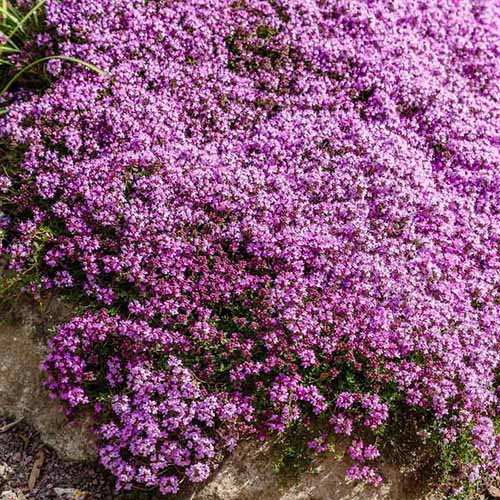
Find creeping thyme seeds in a variety of different packet sizes available at Eden Brothers.
If you prefer, you can buy plants ready for transplant in #1 containers from Nature Hills Nursery.
Learn more about creeping thyme in our growing guide.
9. Daylily
Daylily (Hemerocallis) is a clumping root plant with multiple bold, shapely blossoms per stem, each opening for just one day.
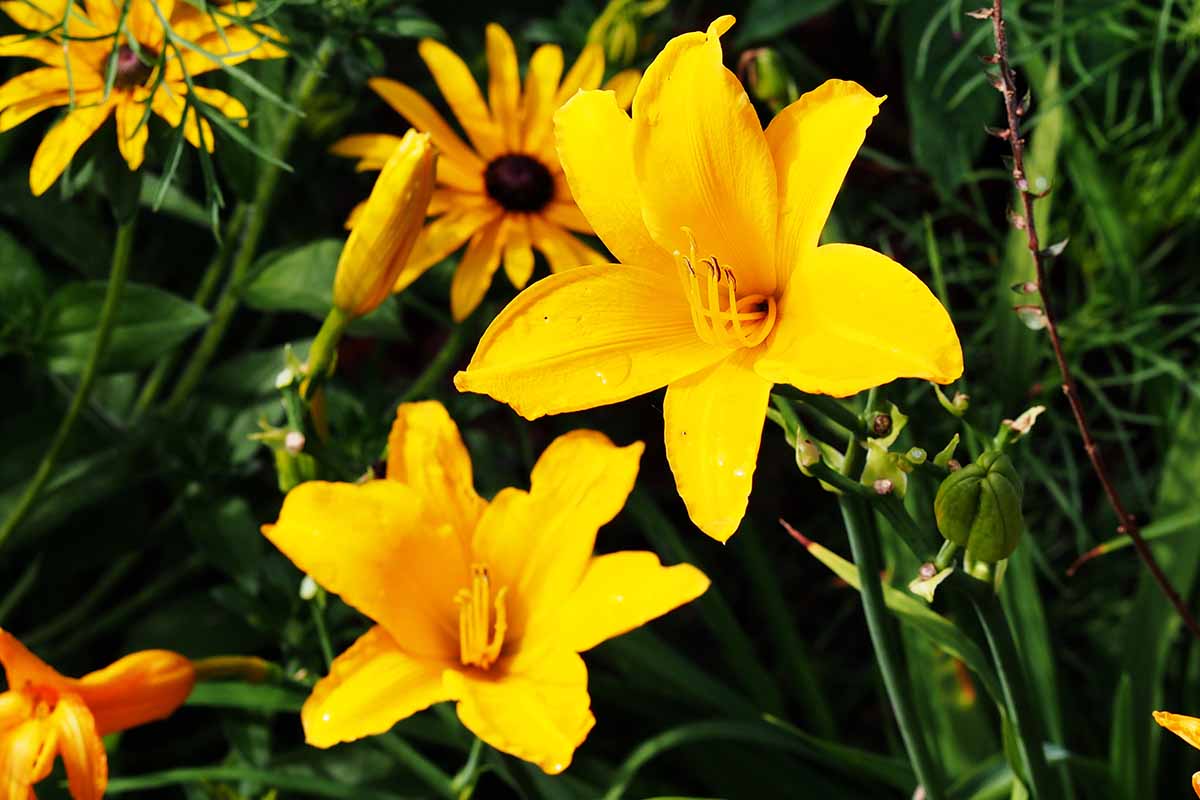
It grows heartily in full sun in organically-rich, well-drained soil. Cultivars are available in a vast array of colors including orange, pink, purple, red, yellow, and white.
The best features here are the elegant shape of the petals, and heights of up to four feet tall. It shows best en masse, with spring, summer, and fall bloomers for a continuous spring to frost display.
Use tall varieties to best advantage as standalones or back-of-border anchors in expansive beds with room for spreading
Shorter types may used to define border frontage with a swath of color. All types may be grouped en masse for vivid drifts.
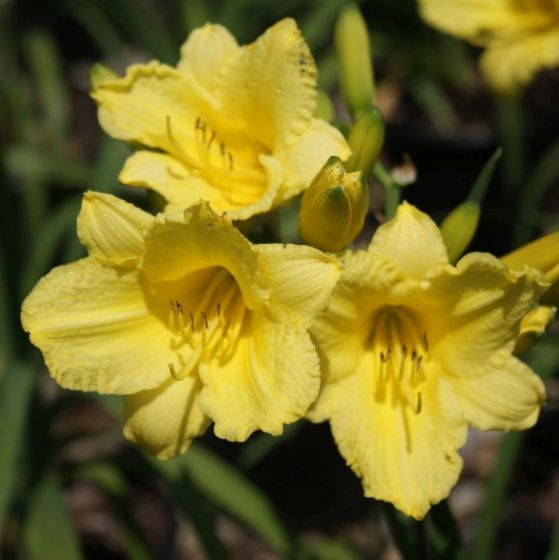
Bed plants in spring or fall in Zones 3 to 9. Deadhead spent blossoms to extend bloom time and divide as needed.
You can find Happy Returns daylilies in quart and #1 containers available at Nature Hills Nursery.
Read our complete growing guide here.
10. English Lavender
English Lavender (Lavandula angustifolia) is a shrubby herb used in medicinal and culinary applications.
If you have full sun and dry, sandy, somewhat acidic soil, this is the perfect choice for rockeries, beds, borders, and kitchen gardens.
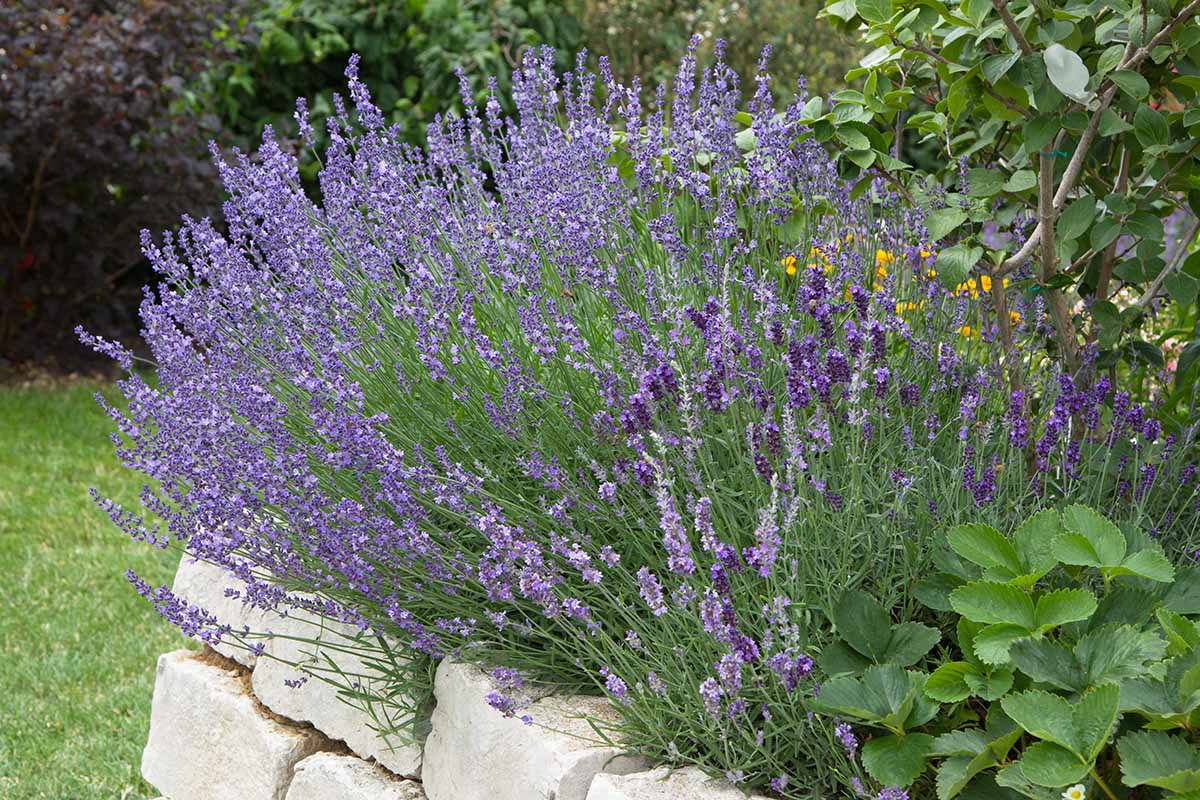
Lavender’s foremost asset is without a doubt its fragrance. Be sure to place it near bed and border perimeters to encourage brushing past and releasing its pungent aroma.
In addition to scent, the spikes of blue-purple blossoms add dramatic lines to the landscape.
With a compact form and one- to two-foot height, you may also use lavender to create a band of color and texture at the mid-story level.
Consider mingling it with yellow yarrow for an appealing contrast.
Sow seeds or plants in early spring in Zones 5 to 8. Enjoy color from June through August, and deadhead to promote optimal blooming.
Prune every few years to maintain a compact shape.
Lavender comes in several different species but the English variety and the French type are the two most common.
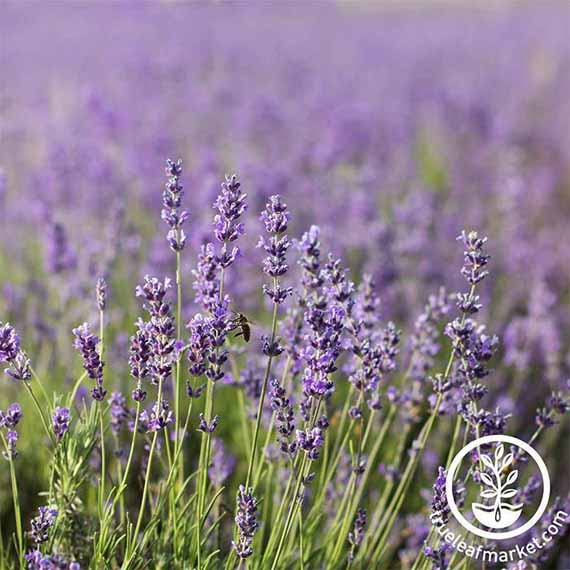
You can find English lavender seeds available at True Leaf Market in a variety of packet sizes.
Check out our guide to growing lavender for more information.
11. Siberian Iris
Siberian Iris (Iris sibirica) grows from a root structure called a rhizome, in full sun to part shade. It prefers organically-rich, moist but well-drained soil.
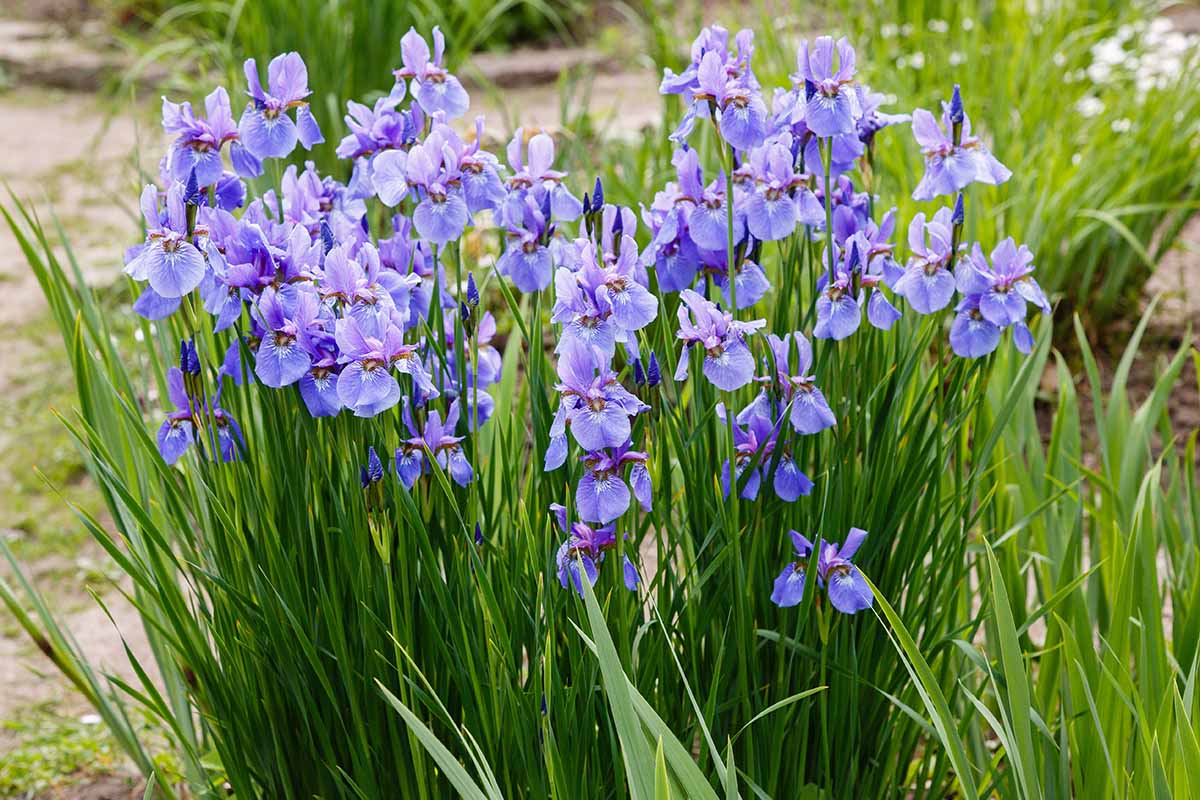
Cultivars are available in a rainbow of colors including blue, pink, purple, white, and yellow, with heights up to four feet.
Iris grows in showy clumps that takes center stage as a focal feature, naturalizing into dramatic drifts of color in the spring garden.
Some varieties like to have “wet feet,” making them perfect solutions for dampish trouble spots. Slender stems with showy blossoms appear in late spring.
When the blossoms wither, prune away the entire stems. Leave the ornamental grass-like leaves intact to feed the rhizomes and add linear interest to the landscape right through fall.
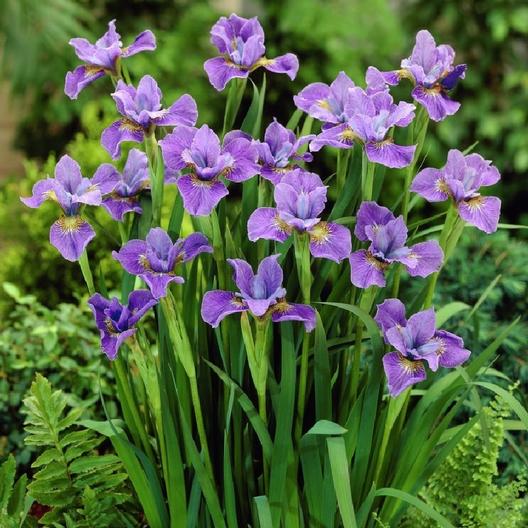
Siberian iris is suitable for Zones 3 to 8, where it may be bedded in early spring or fall. While you may sow singly, placing several together makes for an attractive clump.
Plan to dig them up in about four years to remove withered rhizomes.
Find Blue Moon Siberian iris roots available from Eden Brothers.
And read our guide to growing irises to learn more.
12. Giant Allium
Giant Allium (Allium giganteum) is a striking ornamental onion bulb that thrives best in full sun and moist, organically-rich, well-drained soil.
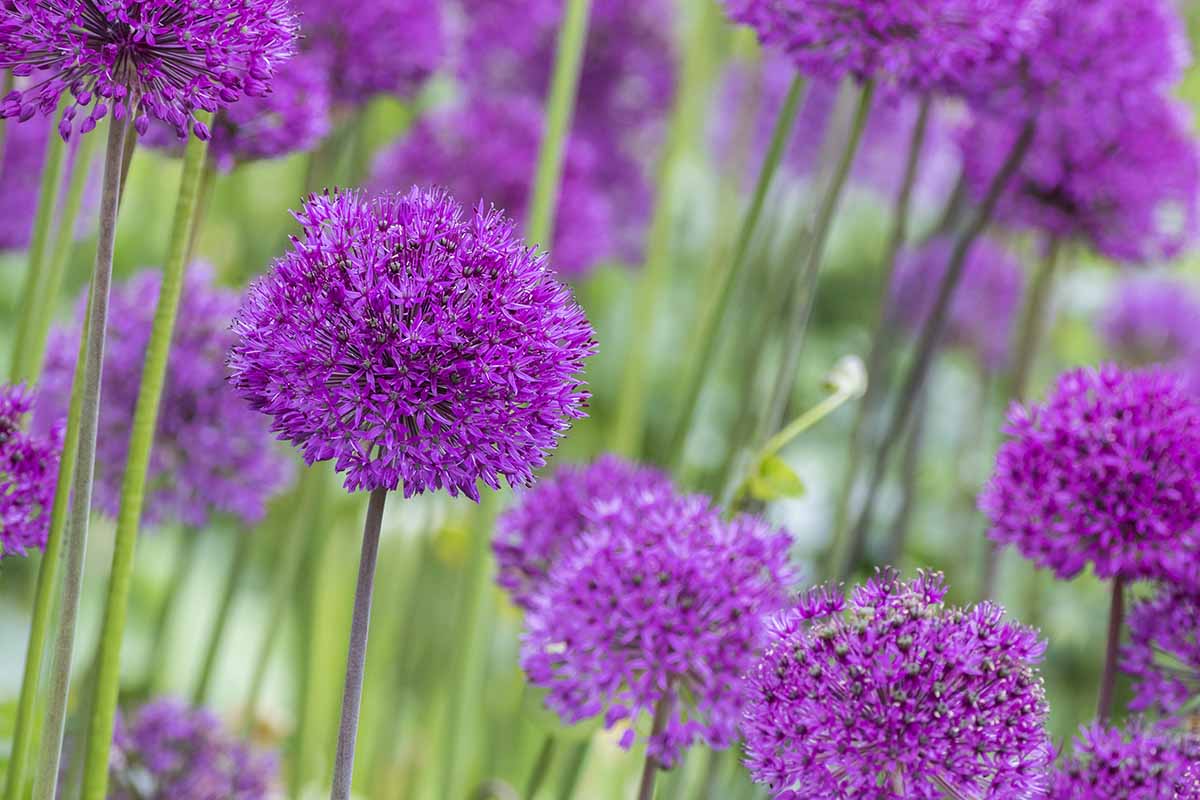
Large globes of purple blossoms perch atop bare stems that reach up to five feet in height.
This giant variety provides whimsical pops of color and texture that seem to float on air.
Sow it sporadically for a quirky accent, mass it in a drift, use it to define the back of a border, or make it a focal point in the center of a bed. Giant allium blooms in May and June.
Bed bulbs in fall in Zones 5 to 8. Excessive moisture or poor drainage may cause rotting.
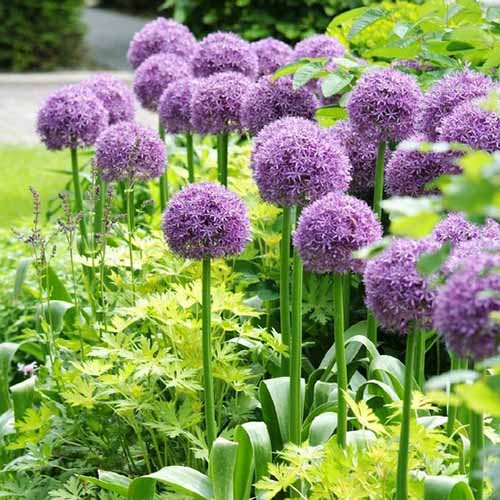
Pick up giant allium bulbs in packets of two, four, and 10 available at Eden Brothers.
Learn about growing ornamental alliums here.
13. Hellebore
Hellebore (Helleborus orientalis) is an rhizomous evergreen prized for appearing in the garden as early as January and lasting well into spring.
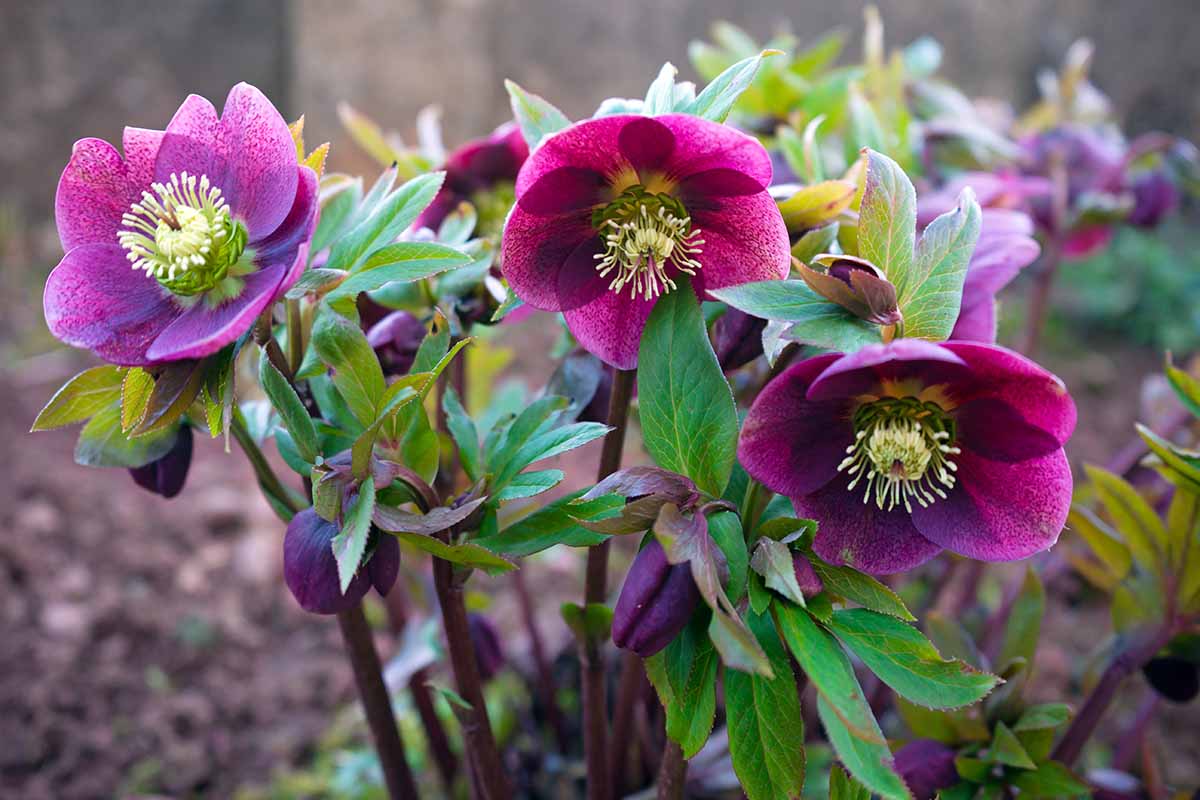
It likes organically-rich, moist, well-drained soil, and a little shade once the sun starts to heat things up.
Hellebore’s job in the garden is to usher in the springtime, and provide one-foot-high, texturally-rich, glossy green foliage throughout the year.
Cultivar colors include green, pink, red, and yellow.
Place beneath deciduous trees as a neutral ground cover, and the perfect companion to spring bulbs.
After the bulbs wither, simply tuck their stems out of sight beneath the generous-sized hellebore leaves.
Sow seeds, rootstock, or plants in early spring in Zones 4 to 9.
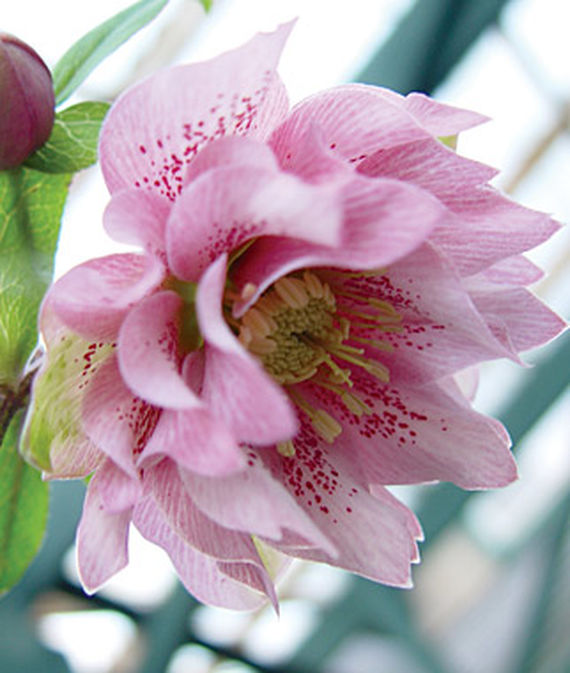
You can find ‘Phoebe,’ a delicate pink, double cultivar available at Burpee.
Read our complete hellebore growing guide here.
14. New England Aster
New England aster (Symphyotrichum novae-angliae) earns it keep in the landscape as a native that attracts pollinators, and a last blast of color in the summer-to-fall transition period.
It does best in full sun with average soil that’s moist, but well-drained.
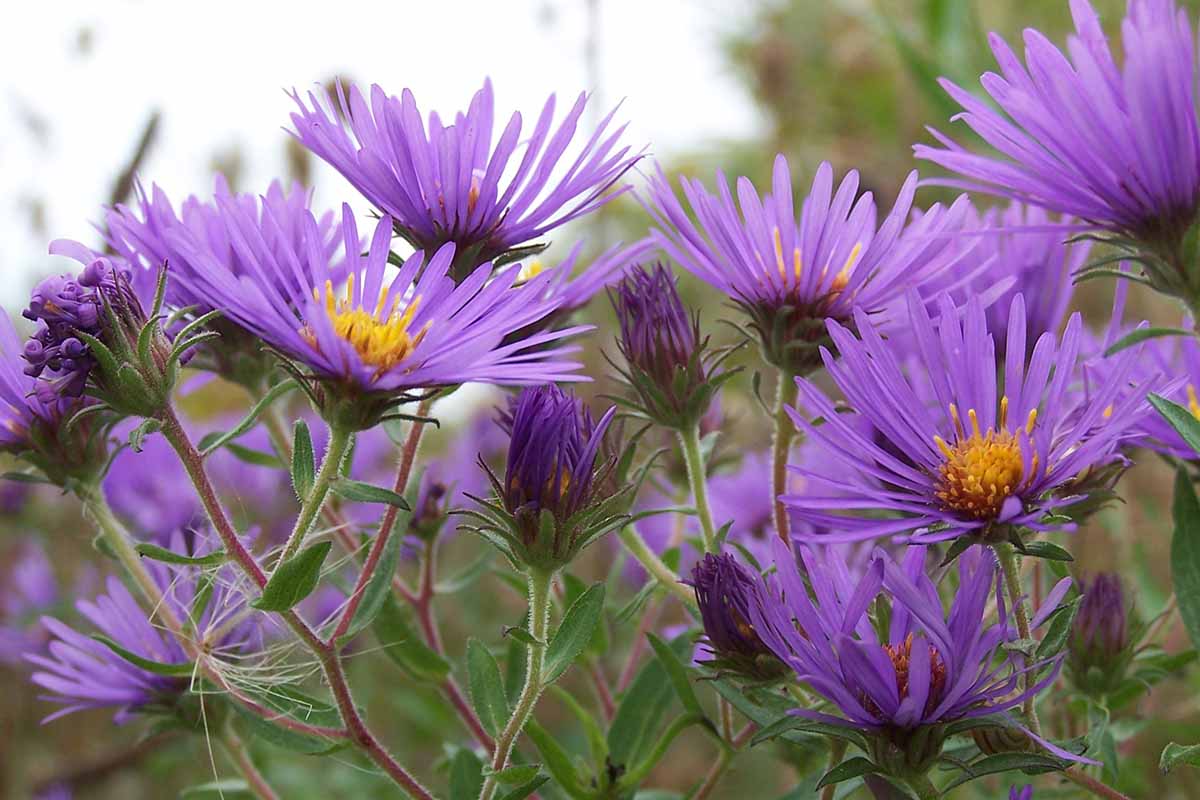
Once it gets going, this aster is more like a shrub.
Reaching heights of up to six feet, it’s a profusion of small, feathery purple blossoms that open continuously during August and September.
Left to its own designs, it may require support. Alternatively, you may prune early in the summer to minimize legginess.
In addition, you may prune at season’s end or leave withered stalks for habitat and winter interest. Self-sowing and naturalizing contribute to its proclivity for spreading.
Sow seeds or set out plants in early spring in Zones 4 to 8.
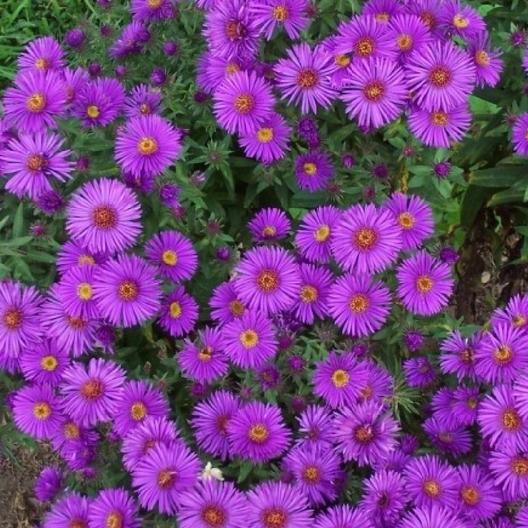
Eden Brothers carries heirloom New England aster seeds in a variety of packet sizes.
Live ‘Purple Dome’ plants are available in #1 containers from Nature Hills Nursery.
Read our complete growing guide here.
15. Montauk Daisy
Montauk daisy (Nipponanthemum nipponicum, formerly Chrysanthemum nipponicum), or Nippon daisy, requires full sun and average, well-drained soil.
It’s a clumping daisy with white petals and greenish centers that makes a showy entrance to the landscape in July and August.
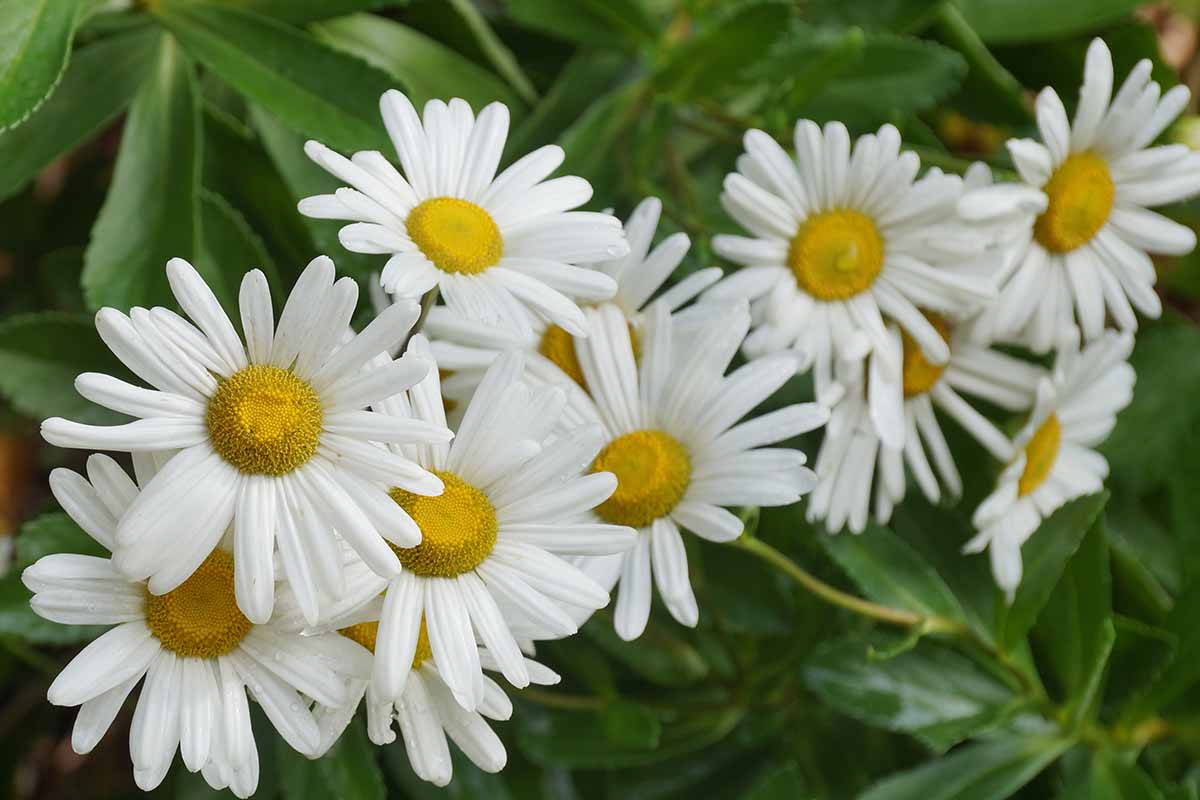
I like its shiny, succulent-like bright green leaves, and the fact that early in the summer, even before it blooms, it’s attractive. Some, I leave alone for color around July.
Others, I prune it back a few inches around Mother’s Day, and then again around July 4th, to put off blooming until autumn. I like this type of versatility.

