


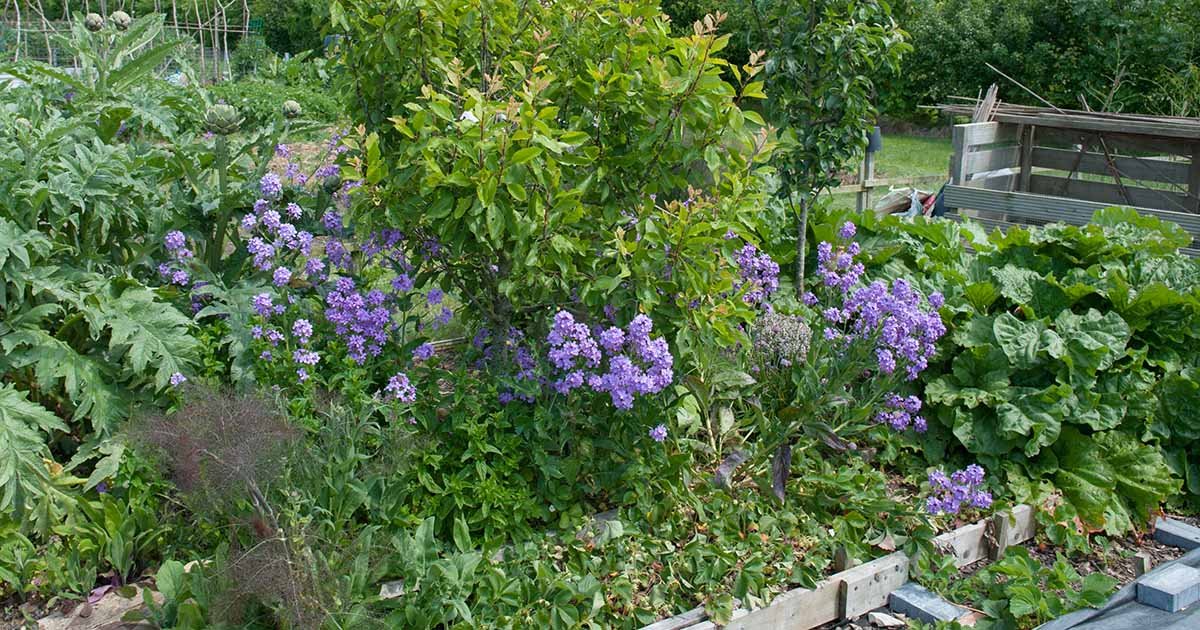
Herbs are the stars of the kitchen garden, adding strong tastes, aromas, potential health benefits, and overall zing to your cooking, homemade tea blends, and more.
They make good companion plants for your vegetables, too.

We link to vendors to help you find relevant products. If you buy from one of our links, we may earn a commission.
But if we thought about companion planting within your herb garden, a whole slew of questions might crop up.
Is it worth figuring out what types to plant beside or with what? Which plants work well together, and which don’t get along?
We have all the answers laid out for you below. Here’s what we’ll talk about in this article:
What Is Companion Planting and Why Bother?
Companion planting is the practice of intentionally planting certain plants together for the benefit of one or both.
You may have heard or read about companion planting in your vegetable garden.
Usually, one plant will help to repel a certain pest from another, attract a pest to itself and save the other via trap-cropping, provide shade, or any number of other benefits.

Herbs are well known to be powerful companions for vegetables. Plus, they can be delicious when picked and eaten together.
The trouble is, especially when plants with such strong scents and flavors get together, they don’t always use their power for good.
Some will potentially ruin the taste of others, or hinder their growth. The trick is to find the perfect combination that will enhance or benefit one or both parties.
When you get it right, the benefits are worth the trouble of figuring out which to plant together.
Some herbs, such as tarragon, may enhance the taste and aroma of others.
They can attract beneficial insects, repel pests, and enrich the soil, and planting a good variety of them results in a diverse garden.
Considerations
Before chucking a bunch of seeds out into your garden or container, consider the following to help you determine which will work best together.
Growing Conditions
In general, herbs that have a similar growth rate and like the same growing conditions – such as soil moisture, type, and pH, as well as temperature and light levels – will do best near each other.
There’s a simple reason for this: given the right growing conditions, a plant will flourish.
Herbs can be grouped in several ways. You can look at the plant family, for example.
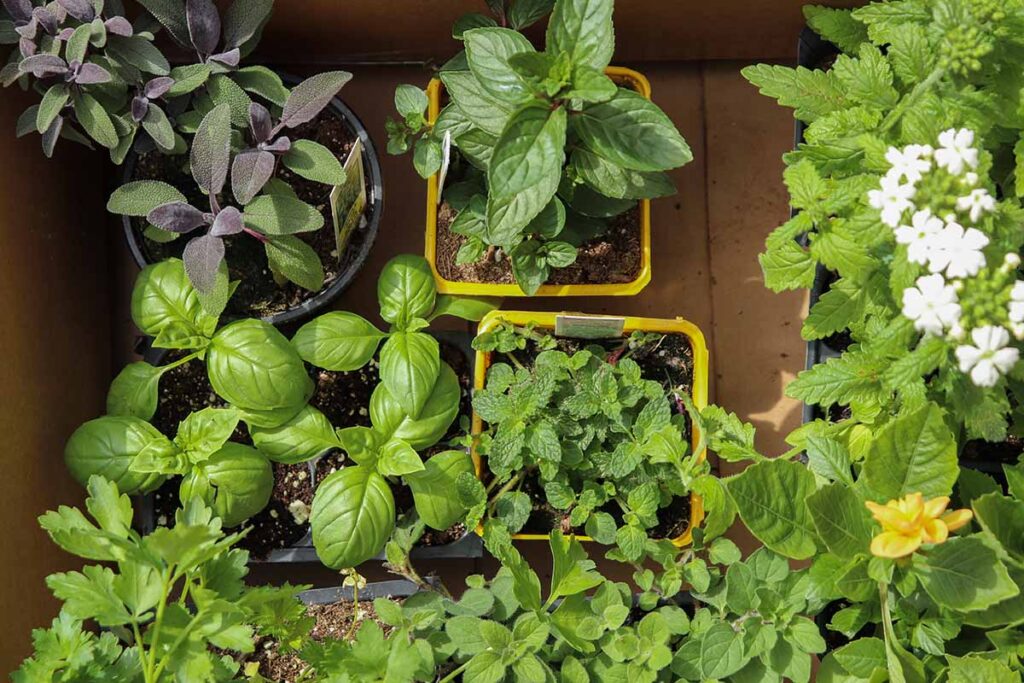
One such family is Lamiaceae, which includes a wide variety of plants with aromatic leaves like basil, oregano, thyme, sage, and lavender. These can tolerate some heat and drought.
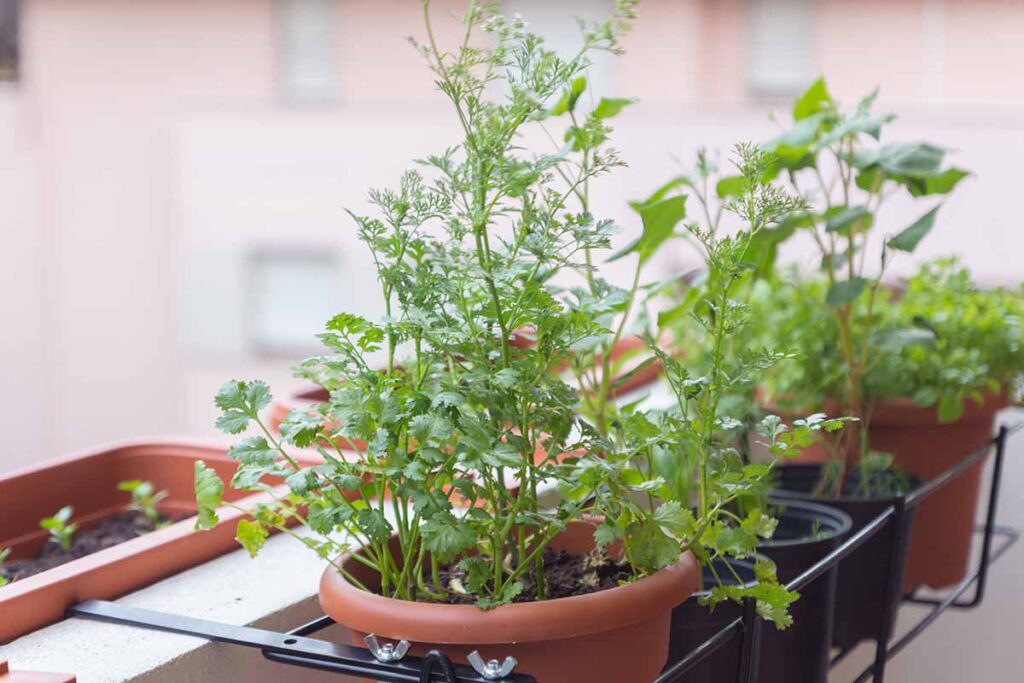
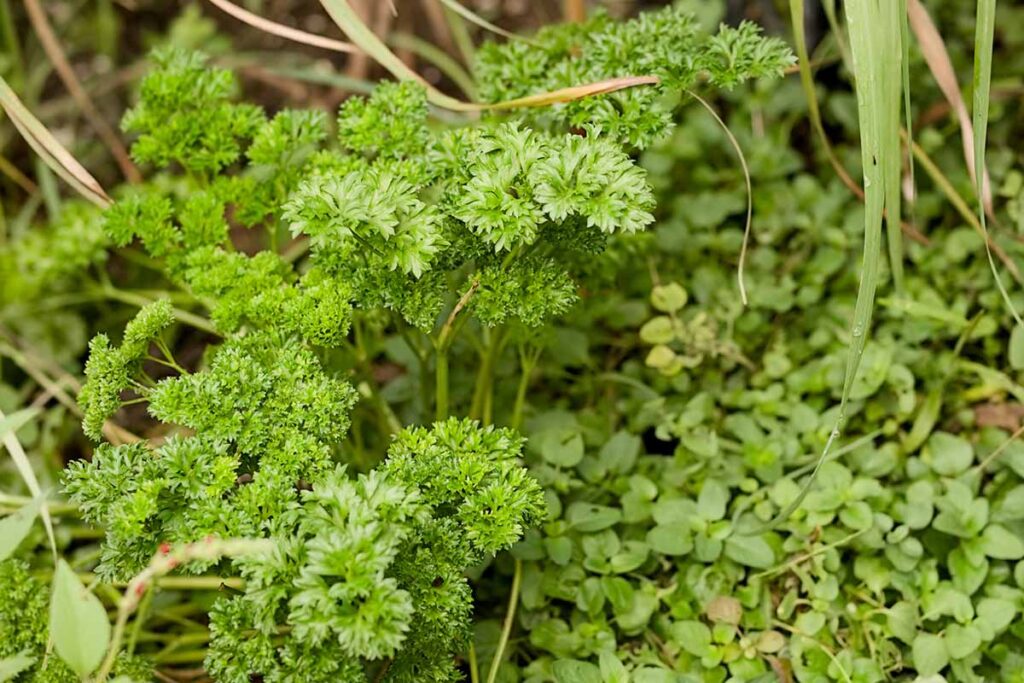
Compare that with Apiaceae members, which require moist, deeper, and looser soils, such as dill, cilantro, and parsley.
Some expert gardening sources name groups based on origin and growing preferences.
For example, Mediterranean herbs, including lavender, oregano, marjoram, rosemary, sage, and thyme, tend to do well together, as they require many of the same growing conditions.
So-called “damp” types, which include basil, cilantro, tarragon, and parsley, are good matches as well.
You might have noticed that there is some overlap in which herbs go well with which when grouped by family or preferred growing conditions.
Knowing which plants go well together in their native environments or based on their genetic similarities is helpful, as this information can be translated to suit your own local growing conditions.
But incompatibilities are an important consideration as well.
Compatibility
When I look at a companion planting chart or list, my head starts to swim with the wealth of information, and I don’t know where to start.
Sometimes it’s easier to plan the enemies’ and lovers’ placement in the garden first.
Simply put, there are many herbs that are just platonic friends, or in more scientific terms, compatible.
These can be filled in once you’ve got the incompatible feuding and super compatible herbs’ placement figured out.
Dill, for example, can attract pests that harm lavender.

