


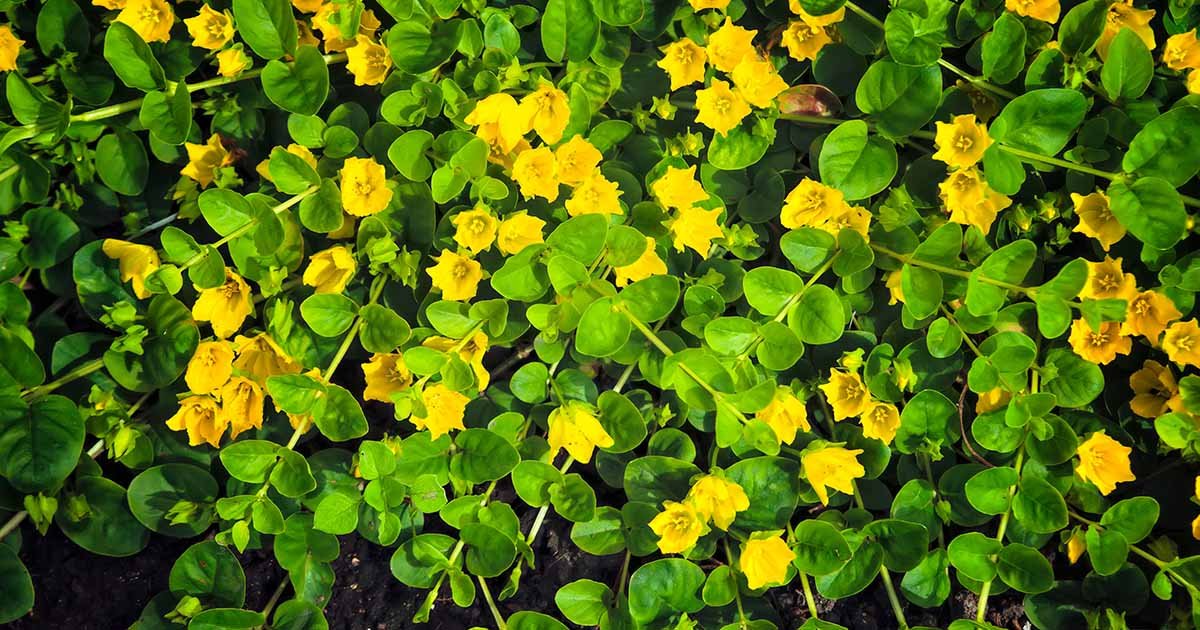
Fertilizer
Light feeders, creeping Jenny requires little additional fertilizing when planted in moderately rich soil.
If desired, apply a slow-release, balanced feed, such as 5-5-5 NPK in early spring.
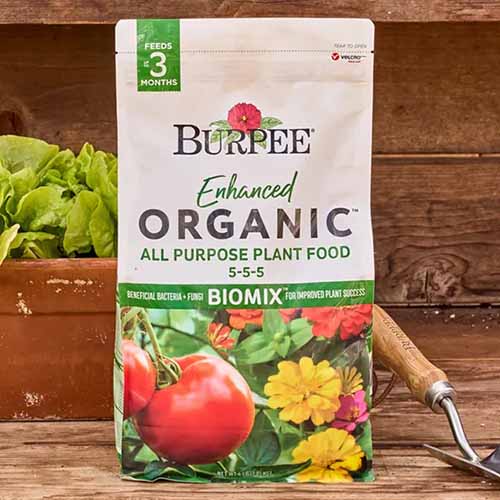
Burpee Enhanced All-Purpose Plant Food
I use Burpee’s Enhanced All-Purpose Plant Food. You can find it available for purchase at Burpee.
Containers
Containers can be any shape or size and should have one or more drainage holes to prevent waterlogged soil at the bottom of the pot.
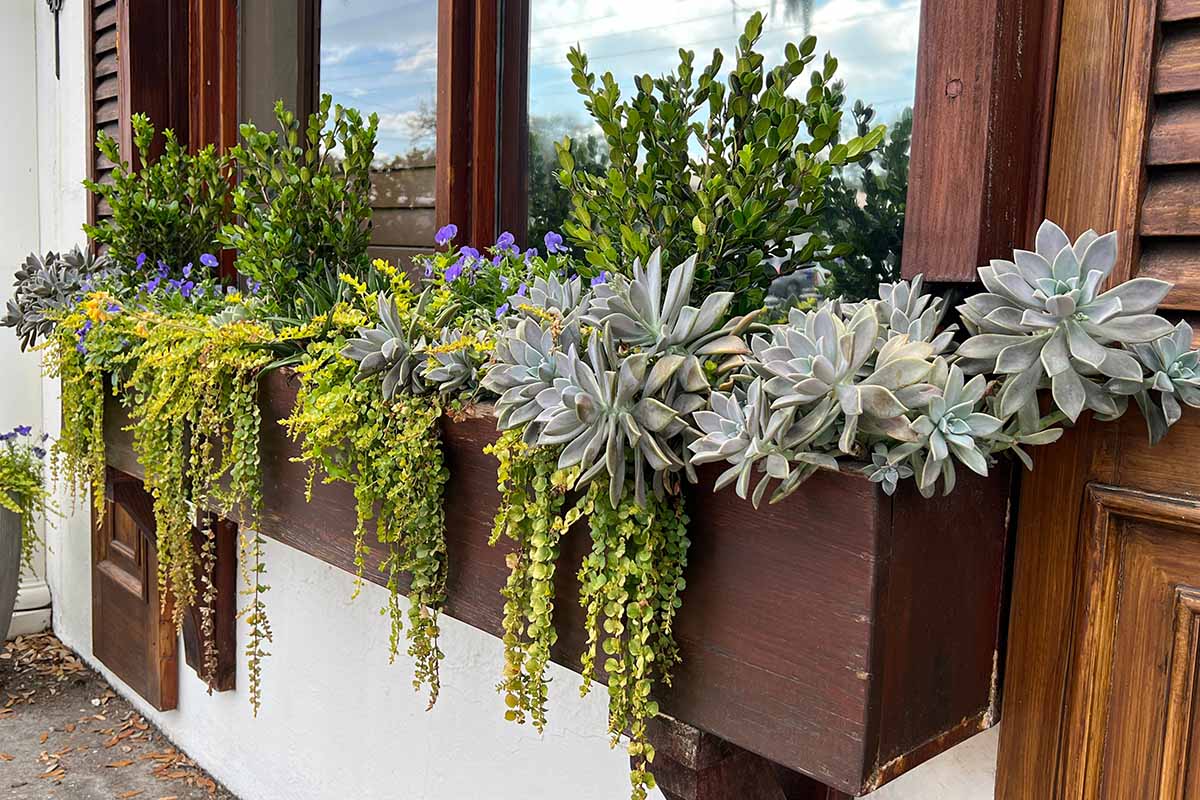
Use a fertile soil mix and amend with one part of moisture retentive materials to help keep the soil moist.
Materials such as compost, coir, peat moss, or vermiculite are good choices for holding water.
Water as needed to maintain moist soil and fertilize in early spring and again in early summer with a balanced, slow-release formula such as 5-5-5 NPK, mentioned above.
If you prefer to use a liquid or water-based fertilizer, feed container plants every month.
Cultivars to Select
Cultivar selection is limited, but the “golden” varieties that feature yellow-toned foliage are less invasive than species plants.
Species plants have foliage colors in a range of green tones plus chartreuse or gold, with a height of up to six inches and spread of 12 to 24 inches.
A beautiful choice for cascading from planters and hanging baskets, ground covers, and erosion control on wet banks or slopes.
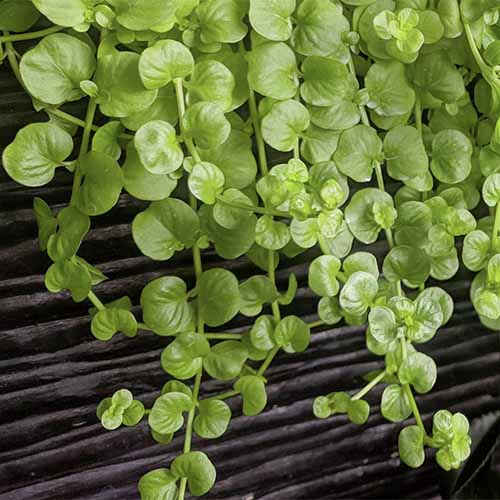
Plants in one-gallon containers are available through Walmart.
A couple of cultivars worth looking out for include:
Aurea
Vibrantly colored in kiwi green to chartreuse, ‘Aurea’ grows three to six inches tall with a spread of 12 to 24 inches.
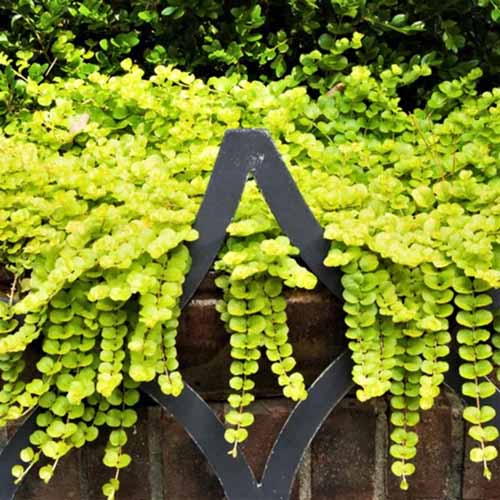
Flowering from late spring to midsummer, it works well as a ground cover, container plant, or in rain and water gardens.
Plants in #1 containers are available at Nature Hills.
Goldilocks
A compact variety, ‘Goldilocks’ is luminous with gold to acid green foliage that’s ideal for brightening pond fringes, shade gardens, hanging baskets, or window boxes.
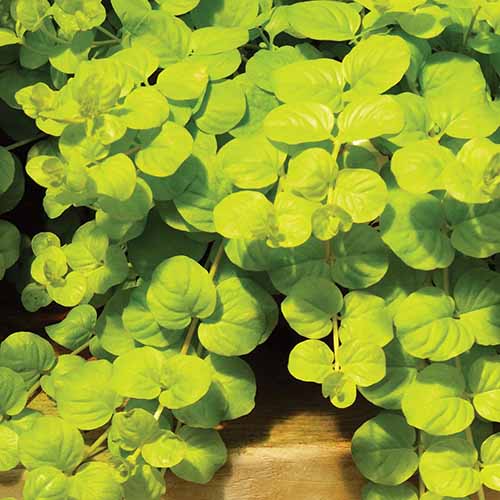
Plants have a moderate spread of 12 inches and height of up to four inches.
Four-packs of plants are available at Burpee.
Maintenance
To keep plants from encroaching where they’re not wanted, trim stems and root prune in early summer and again in fall, ensuring all roots are removed from the soil.
To prevent self-seeding, deadhead after flowering by shearing the top inch or two with clean, sharp garden shears.
In fall, cut back stems to reduce spread, reshape, and resize. Remove dead or damaged growth at this time as well.
Every three or four years, divide large, dense clusters to encourage new growth and prevent overcrowding.
Propagation
Creeping Jenny is easily multiplied by division and stem cuttings.
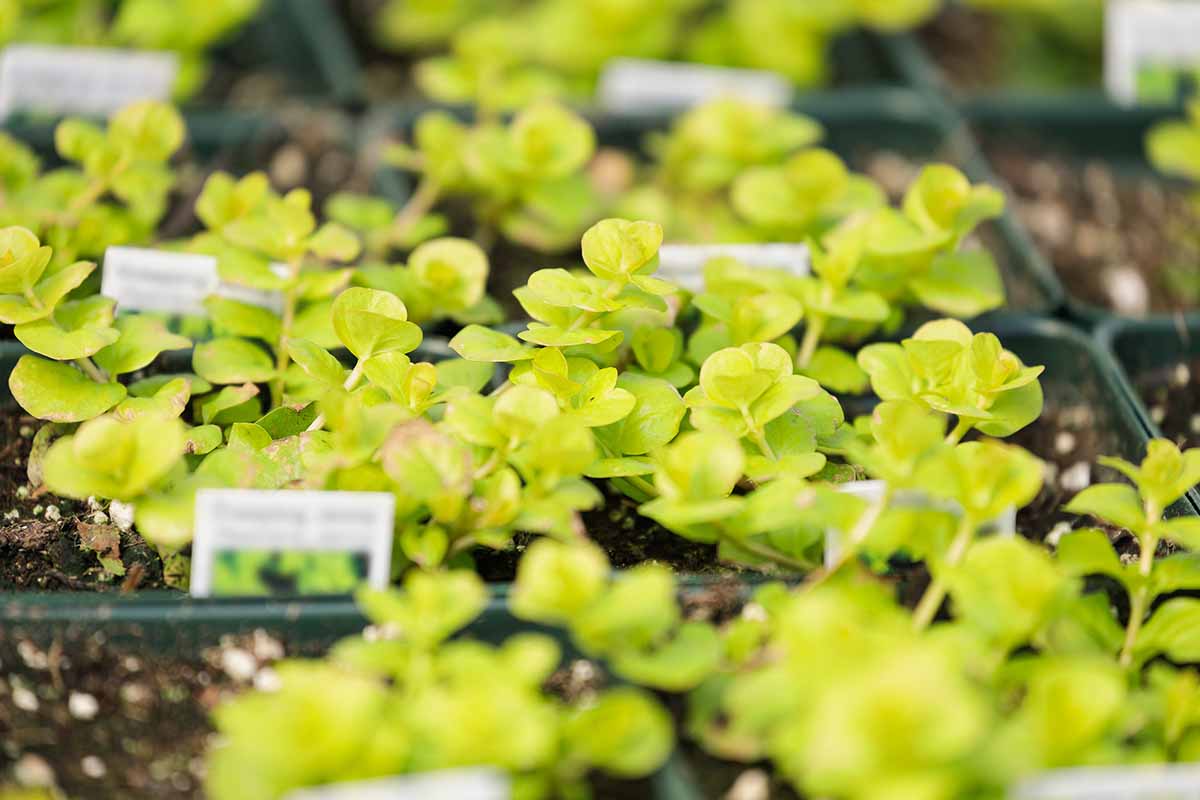
Sowing seeds is also an option, but those collected from cultivars may not produce plants identical to the parent and invasive growth can result.
By Division
Division provides the quickest and easiest route to vibrant new plants.
To propagate by division, use a clean, sharp trowel or small spade to dig up a section from an existing patch.
Use the tip to cut through the foliage and stems, then insert the blade three or four inches to lift a section with the root ball intact.
Cut large sections into smaller pieces, ensuring each section has healthy roots and stems.
Transplant to prepared sites, backfill with soil, and gently firm in place.
Water lightly to settle plants. Keep the soil lightly moist until established.
Stem Cuttings
If you don’t have an established patch of your own for cuttings, pinch a few stems from neighbors or friends.
Use clean, sharp scissors to take two-inch nonflowering cuttings, snipping below leaf nodes.
To start stem cuttings in water, place them in a clear glass or jar of filtered water.
Place the jar in bright, indirect light – like a windowsill – and change the water daily.
Roots should form within two weeks. Once the roots develop, pot up in moist soil.

