


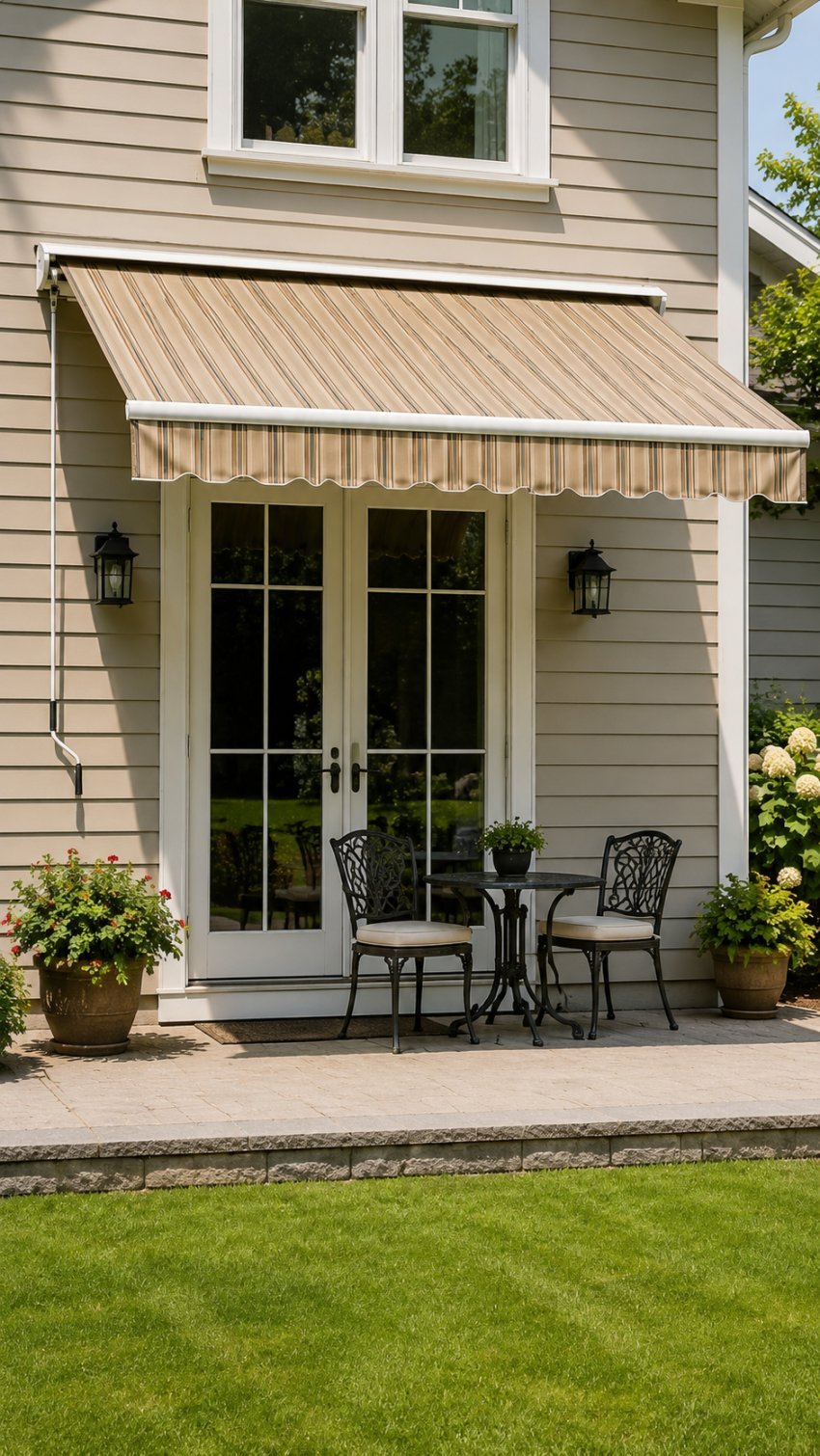
My backyard and plants are my go-to place to reduce stress and find peace, while I take the first sip of black coffee.
I wonder if it is coffee or plants that are soothing my brain. Or both.
But by noon? I’m back inside. Because without any shade, my deck turns into a sun trap fast. And that’s a shame, because it’s actually a really nice space.
That’s what got me thinking about awnings. Not the boring, roll-down kind from old storefronts. But real, good-looking options that actually make your deck feel like a place you want to hang out all day long.
The good news is there are a lot of great ideas out there. The not-so-great news is not all of them work for every space. A big pergola-style awning might look perfect on a large deck but feel way too heavy on a small one. And some styles that look amazing in photos are honestly more hassle than they’re worth.
This list is here to help you sort through all of that. Whether you’ve got a tiny deck or a big wraparound, you’ll find ideas here that actually fit your space, your budget, and the way you like to live outside.
27 Deck Awning Ideas for Your Outdoor Spaces
Not every space is the same, so to make things easier, I’ve grouped these ideas into five categories — fixed awnings, retractable awnings, sail shades, pergola-based covers, and creative budget-friendly options.
Fixed Awnings
Fixed awnings go up once and stay there. No moving parts, no setup, no fuss. They work best on decks that get direct afternoon sun and feel like a natural part of your home.
1. Classic Canvas Fixed Awning
Canvas awnings have been around forever and there’s a good reason for that. They’re simple, clean-looking, and come in enough colors and stripe patterns to match almost any home exterior.
A classic canvas awning slopes downward from the house, which helps rain run off easily. Just make sure the fabric is UV-treated and water-resistant. Regular canvas won’t hold up well after a few seasons of sun and rain.
2. Metal Corrugated Roof Awning
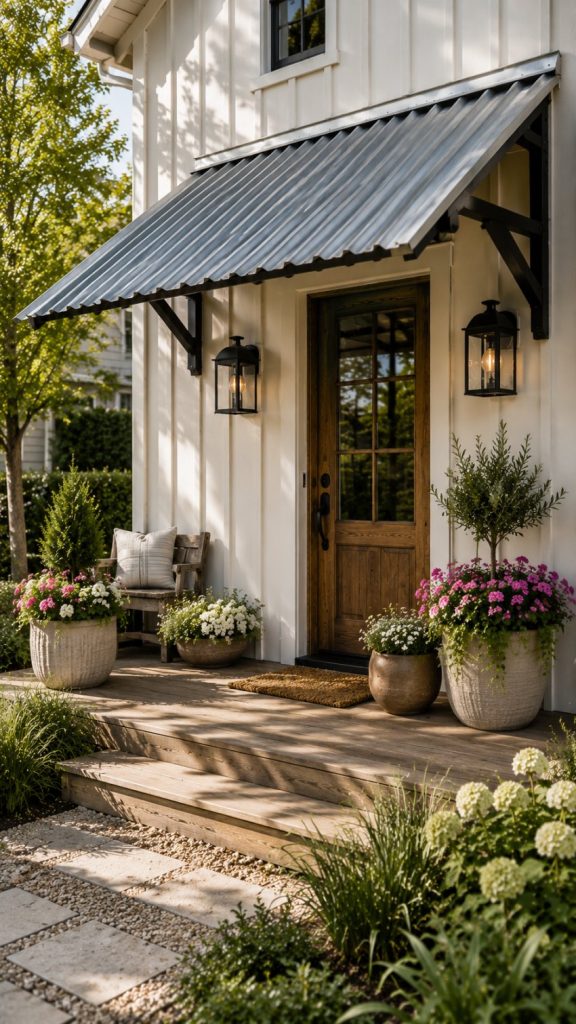
If you want something that truly lasts, metal corrugated awnings are hard to beat. They handle heavy rain, strong wind, and years of direct sun without much complaint.
They work really well with brick, wood, or concrete exteriors. The one downside is noise. Heavy rain on a metal roof can get pretty loud, though some people actually like that.
Also Read: 17 Summer Porch Decorating Ideas
3. Polycarbonate Panel Awning
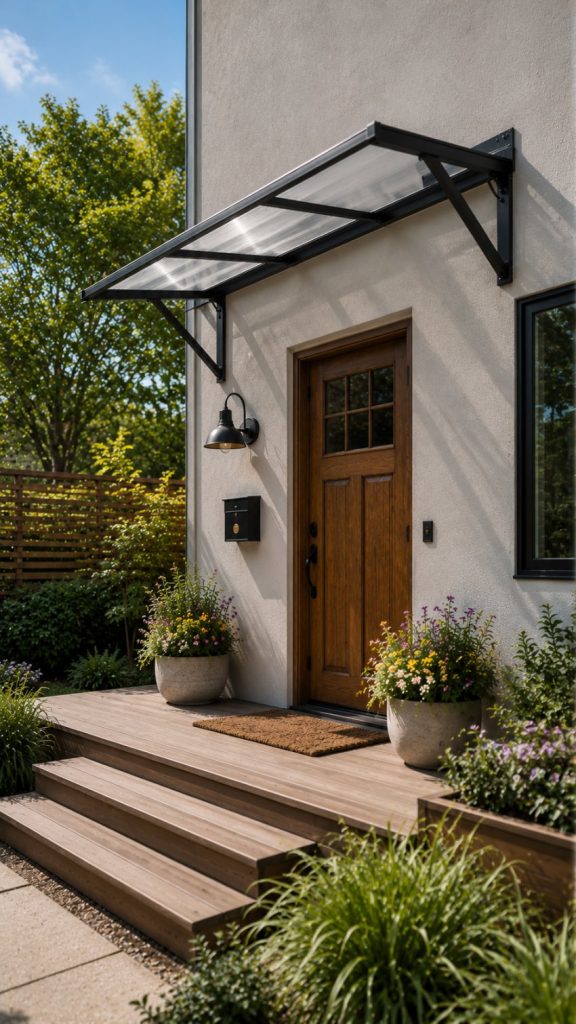
Polycarbonate awnings are a smart pick if you want shade without losing natural light. The panels are clear or lightly tinted, so your deck stays bright even when it’s covered.
On really hot days, clear panels can trap warmth underneath. A tinted or opal finish handles that better and still lets in plenty of light.
4. Dome-Style Fixed Awning
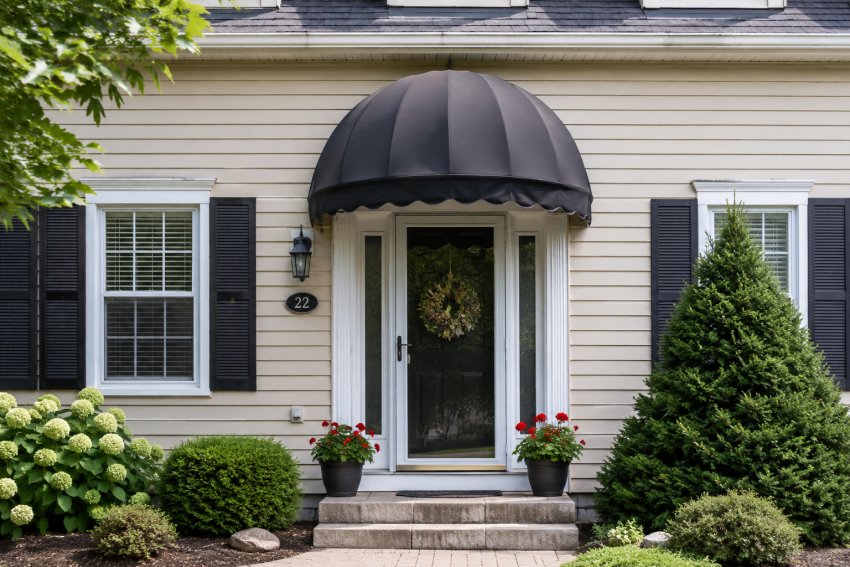
Dome awnings have a slight curve instead of a flat slope, and that small difference makes them stand out. They shed rain quickly and hold up better in wind since there’s no flat surface for gusts to push against.
They work best above a single door or a narrow section of deck. If your home has a traditional or cottage-style look, a dome awning fits right in.
5. Waterfall Drop Awning
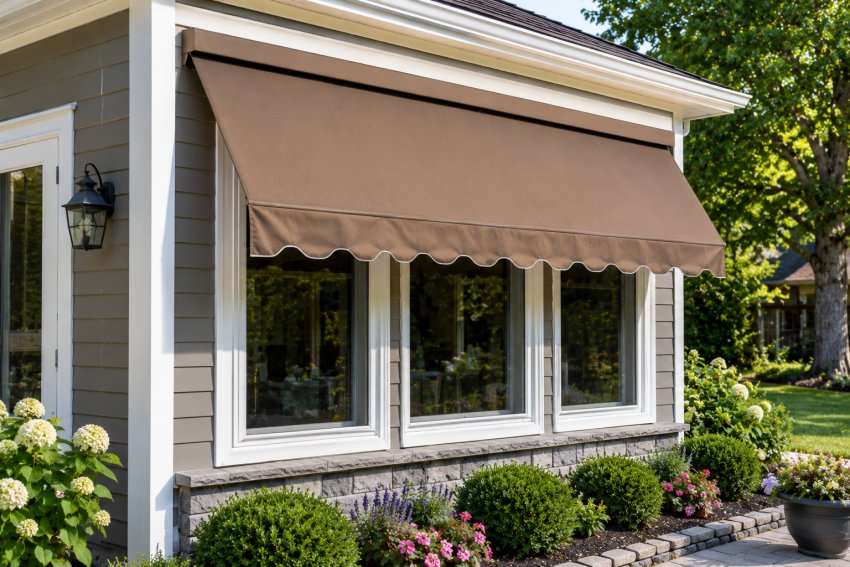
A waterfall awning has a front valance that drops straight down instead of stopping at an angle. That extra drop gives you more side shade and a bit more privacy, which a lot of people don’t think about until they actually need it.
It works well on decks that face a busy street or a neighbor’s yard. You can usually choose how long the drop is. Longer means more privacy. Shorter keeps things feeling open and airy.
Retractable Awnings
Retractable awnings give you the best of both worlds. Pull them out when the sun is beating down, roll them back when you want open sky. Perfect for people who don’t want permanent shade blocking their view on nicer days.
6. Manual Retractable Awning
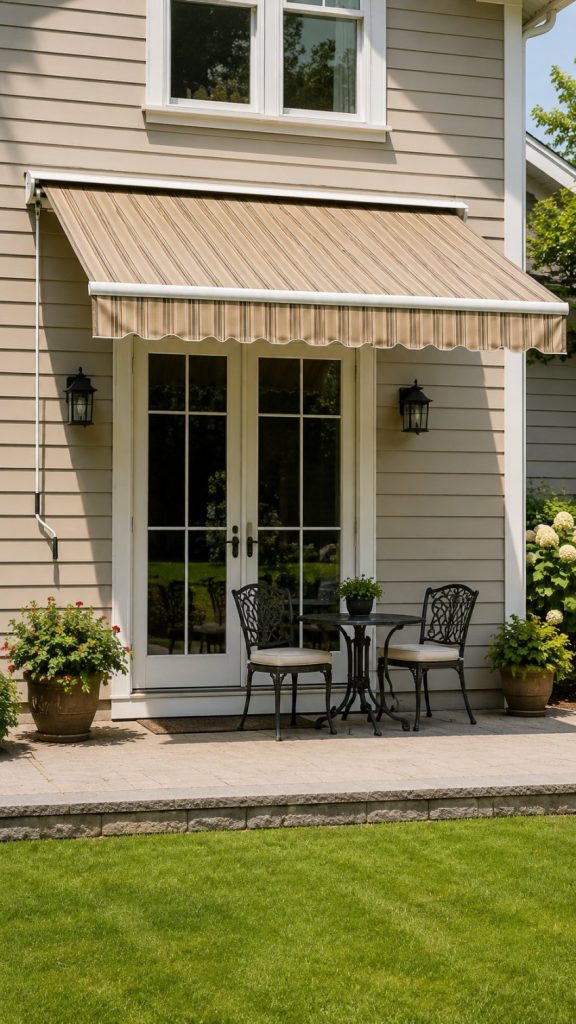
Manual retractable awnings are the no-fuss, no-electricity option. You crank a handle, the awning rolls out, and that’s it. They’re more affordable than motorized versions and just as reliable since there’s nothing mechanical to break down.
They work best on smaller to medium decks. Just don’t cheap out on the fabric. A good UV-resistant canvas will last years longer than a bargain option that fades and sags after one summer.
Also Read: 23 Inexpensive Patio Shade Ideas
7. Motorized Retractable Awning
Motorized awnings do the same job as manual ones but with a button press. If your deck is large or your awning is mounted high up, that makes a real difference in day-to-day use.
Some models come with wind and sun sensors that retract the awning automatically when conditions get rough. They cost more upfront, but the convenience is hard to argue with.
8. Freestanding Retractable Awning
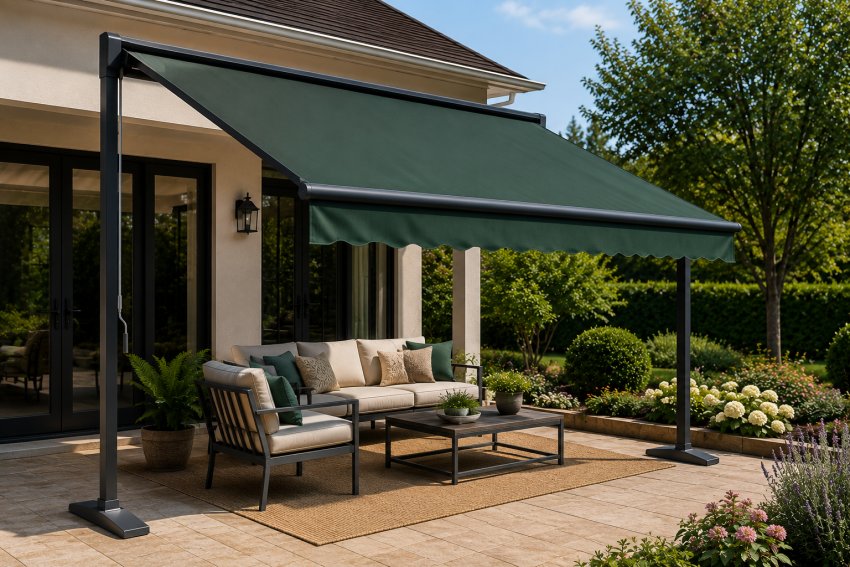
Freestanding awnings don’t attach to your house at all. They stand on their own posts, making them a great option for detached decks or if you simply don’t want to drill into your walls.
The tradeoff is stability. In strong wind, freestanding structures need to be properly anchored or they can shift. Make sure the base is weighted or secured before you rely on it.
9. Lateral Arm Retractable Awning
Lateral arm awnings extend outward using two folding arms instead of a straight roller. This lets them project further from the wall and cover more deck space without needing support posts underneath.
They need a solid wall mount since the arms put outward pressure on the attachment point. Make sure your wall can handle it before installation.
10. Pergola-Mounted Retractable Canopy
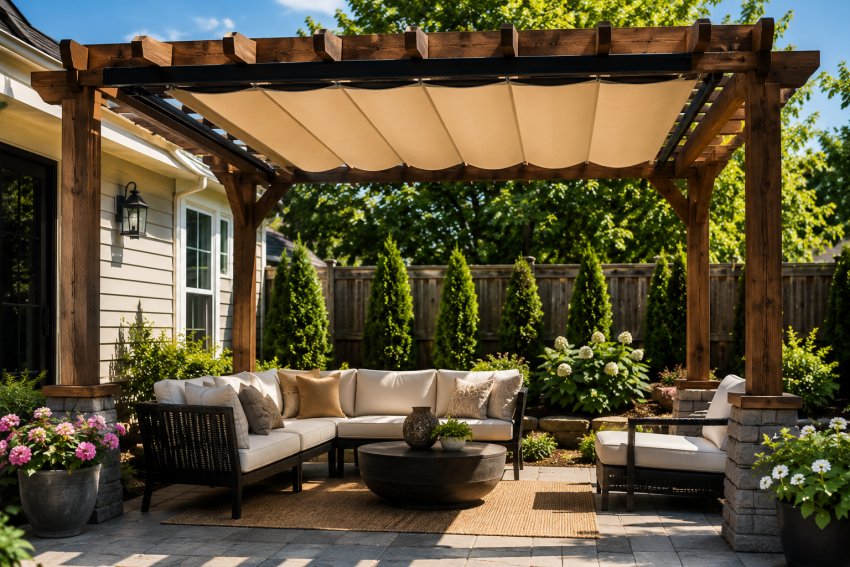
If you already have a pergola, adding a retractable canopy on top is one of the easiest upgrades you can make. It slides along tracks in the pergola frame and gives you shade exactly when you want it.
Just make sure your pergola frame is sturdy enough to support the weight and tension of the canopy system before you buy.
Check this: 22 Paver Edging Ideas for Your Backyard Garden
Sail Shades & Fabric Options
Sail shades look simple but can completely change the feel of an outdoor space. They’re lightweight, affordable, and come in enough shapes and colors to work with almost any deck style.
11. Triangle Sail Shade
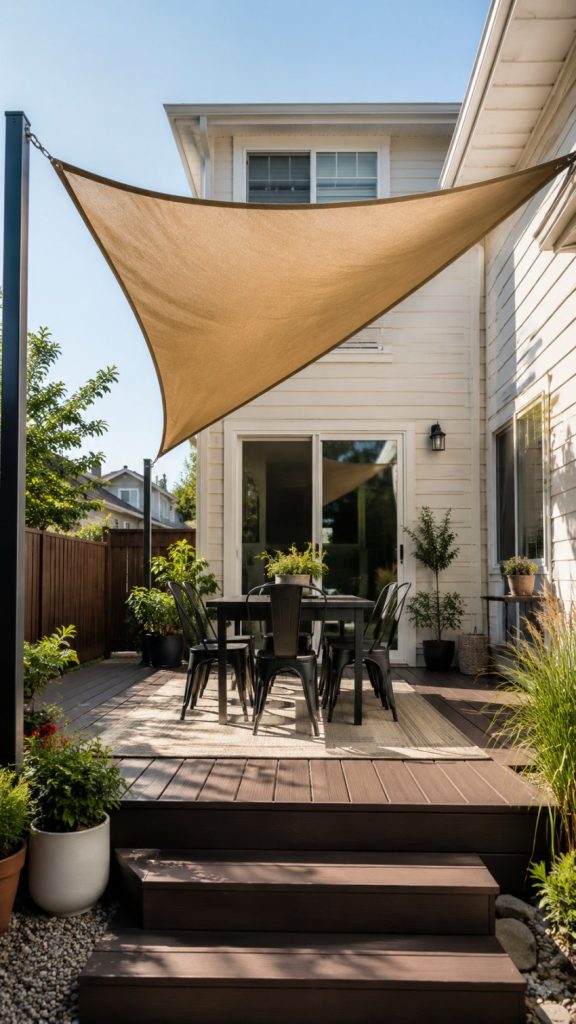
Triangle sail shades are easy to install, easy to take down at the end of the season, and give your deck a relaxed, casual look. You attach the three corners to posts, walls, or trees and the fabric stretches taut between them.
One triangle rarely covers enough ground on its own. Two or three arranged together can cover a surprisingly big area while still looking intentional.
12. Rectangle Sail Shade
Rectangle sail shades give you a cleaner, more structured look than triangles. They cover more ground with a single panel and sit flatter since they attach at four corners.
Water can pool in the center during heavy rain, so install them at a slight angle. That one small step makes a big difference.
Also Read: 19 DIY Pallet Garden Ideas for Your Backyard
13. Layered Sail Shades
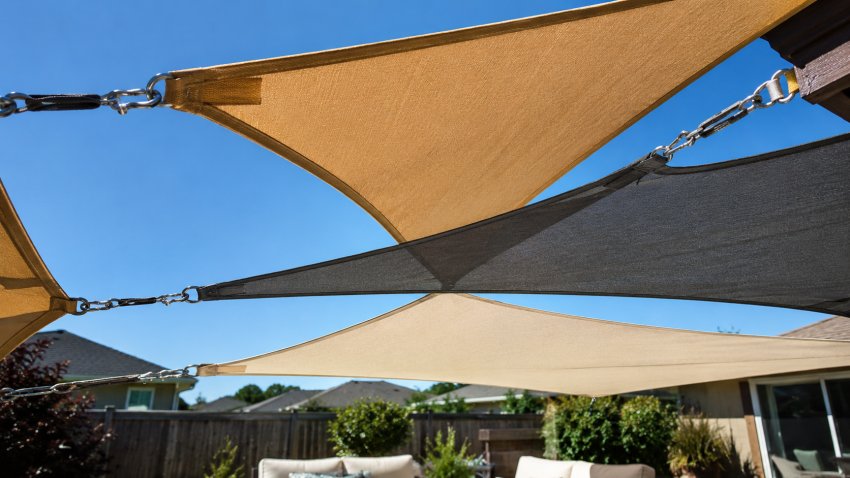
Layering multiple sail shades at different heights and angles looks like it took a lot of planning but is actually pretty simple. Mix sizes and overlap them until the coverage feels right.
Different heights add visual depth and break up the space in a way that feels intentional without spending a lot of money.
14. Waterproof Sail Shade
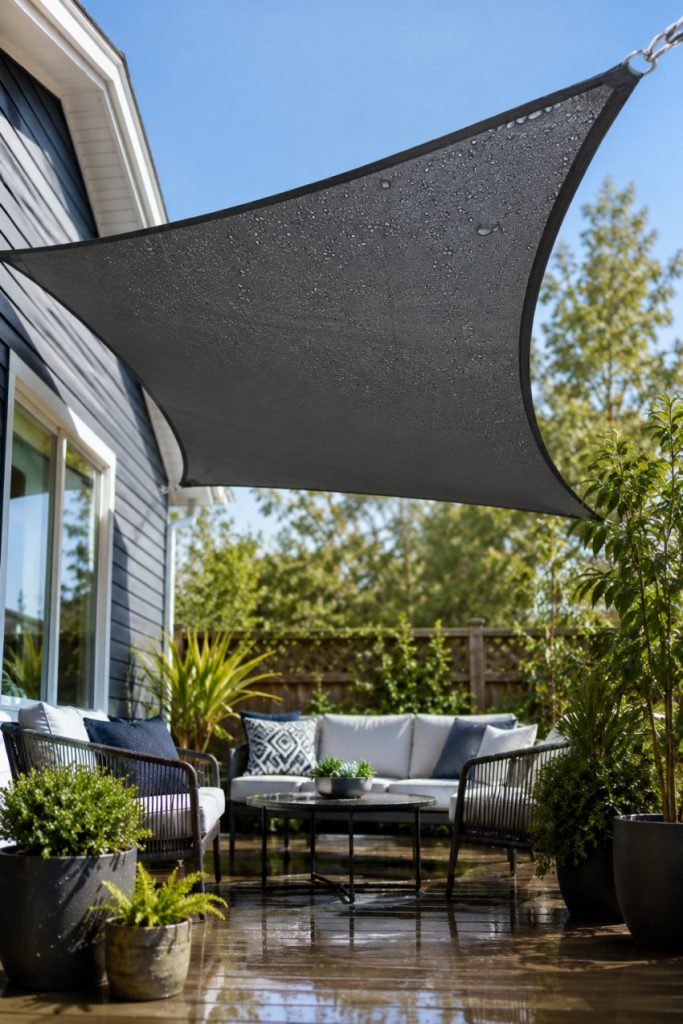
Most standard sail shades are water-resistant but not fully waterproof. If you live somewhere that gets real rain, a waterproof sail shade is worth the extra cost. They shed water completely instead of just slowing it down.
Waterproof fabrics are less breathable though, so a slight tilt during installation helps keep air moving underneath on hot days.
15. Colorful Fabric Canopy
A colorful fabric canopy is less about function and more about personality. A bold stripe or deep solid color can make a plain deck feel intentional and put together almost instantly.
Just keep in mind bright colors fade faster in direct sun. Look for solution-dyed fabric if you want the color to last more than a summer or two.
Also Read: 22 DIY Backyard Oasis Ideas on a Budget
Pergola & Structure-Based Awnings
Pergolas are more than just shade solutions. They turn your deck into a proper outdoor room. They cost more and take more effort, but the results are hard to beat.
16. Wooden Pergola with Canopy
A wooden pergola with a fabric canopy is the most classic combination on this list. The wood frame adds warmth, and the canopy fills in the shade where open slats let sun through.
It works best on medium to large decks where the structure has room to breathe. Cedar and redwood are the top wood choices since they naturally resist rot. Pressure-treated pine costs less but needs a good sealant to hold up long term.
17. Metal Pergola Awning
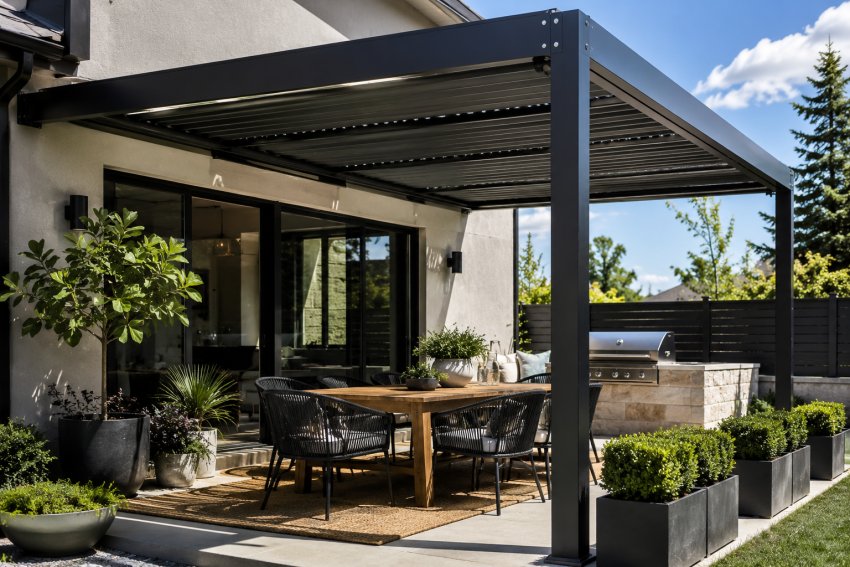
Metal pergolas look cleaner and more modern than wooden ones, and they’re much lower maintenance. No staining, no sealing, no rot to worry about.
Aluminum is the most popular choice since it’s lightweight and rust-proof. Pair it with a neutral canopy or retractable shade panels and you’ve got a sharp-looking setup that lasts for years.
18. Louvered Roof Pergola
A louvered pergola has adjustable roof slats you can open or close depending on how much shade you want. Close them on a hot afternoon, open them up on a cool evening.
They’re one of the pricier options, but they work year-round in almost any weather. Some motorized versions adjust automatically based on wind and sun sensors.
19. Bamboo Pergola Cover
Bamboo filters light softly instead of blocking it completely, which creates a warm, dappled shade that feels really pleasant to sit under. It’s also one of the more affordable cover options.
It works best in dry, warm climates. Bamboo can split and warp with repeated soaking, so it’s not ideal for areas with heavy or frequent rain.
20. Attached Pergola Awning
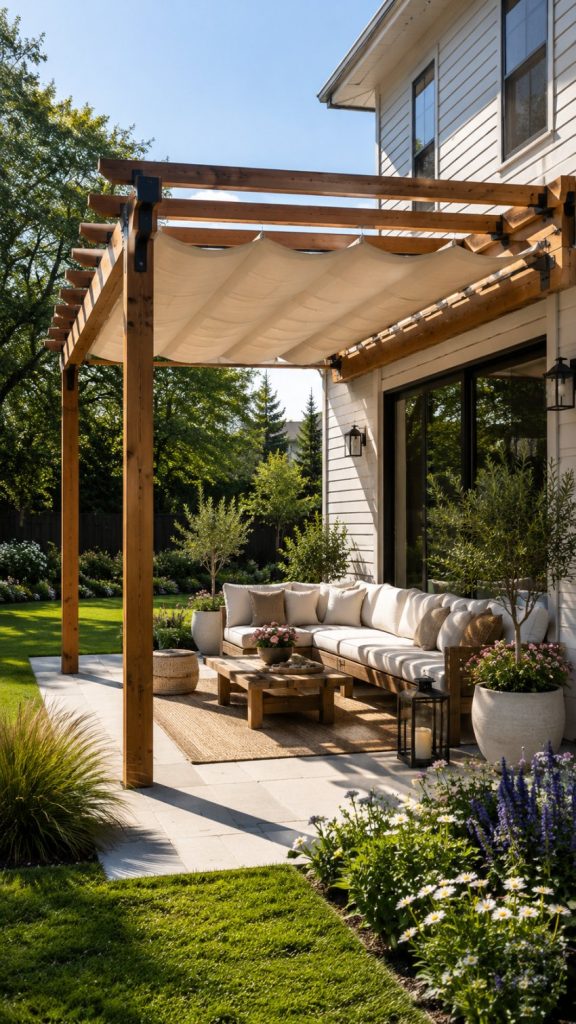
An attached pergola connects to your house on one side and stands on posts on the other. It feels like a natural extension of your home rather than a separate structure in your yard.
Just make sure the ledger board is properly sealed where it meets the wall. Water getting behind that connection is the most common problem with attached pergolas, and it’s much easier to fix before installation than after.
Also Read: 37 Beautiful Front Porch Flower Pots Ideas
Creative & Budget-Friendly Awning Ideas
Not every shade solution needs a big budget or a contractor. Some of the most charming deck setups are put together with simple materials and a little creativity. If you’re working with limited space or limited funds, this category is for you.
21. Outdoor Curtain Shade
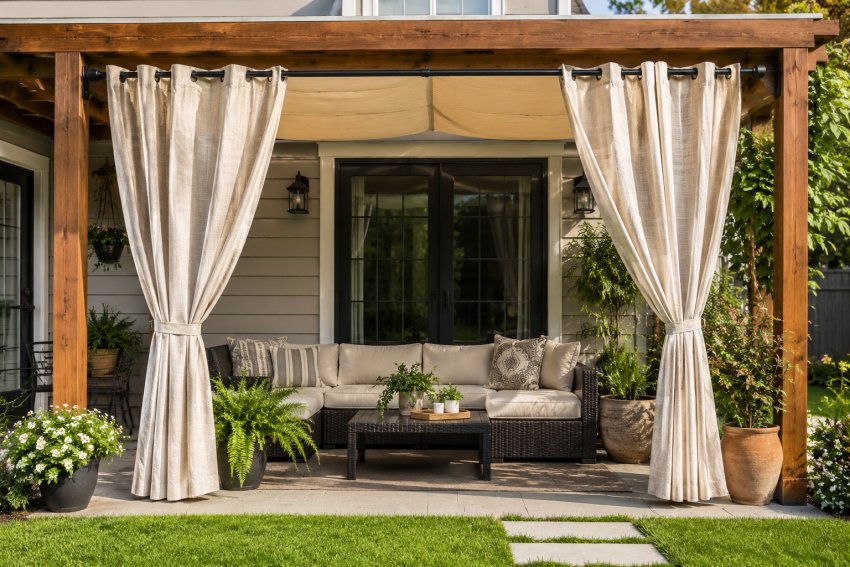
Outdoor curtains hung from a rod or wire give you shade and privacy without any permanent structure. They’re easy to install, easy to swap out, and surprisingly effective at blocking afternoon sun.
Use weather-resistant fabric and make sure the rod is securely anchored. Curtains catch wind easily, so a flimsy setup won’t last long.
22. Shade Cloth Cover
Shade cloth is one of the cheapest ways to cover a deck. It’s a knitted or woven fabric that blocks a percentage of sunlight while still letting air flow through freely.
You can stretch it over a simple frame or attach it to an existing pergola. It comes in different densities, so you can choose how much sun you want to filter out.
23. Wisteria-Covered Trellis Awning
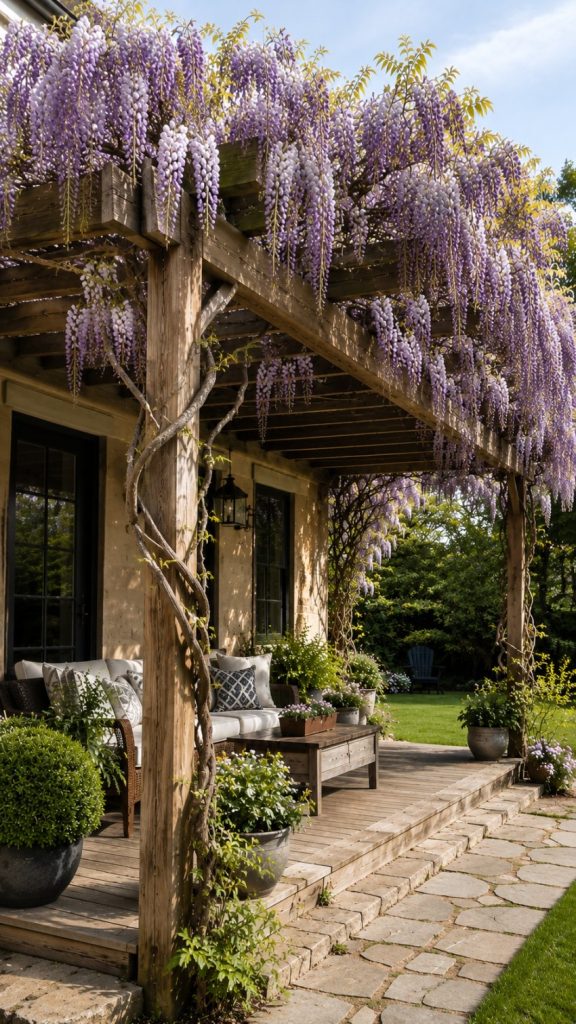
A trellis covered in wisteria or another climbing plant creates natural shade that gets better every season. It looks beautiful, smells amazing, and costs very little once the plant is established.
The tradeoff is patience. It takes a couple of growing seasons before you get real coverage. But once it fills in, it’s one of the most stunning shade options on this list.
24. Recycled Pallet Shade Structure
Old pallets can be turned into a simple overhead shade frame with a little effort and some basic tools. It’s rustic, budget-friendly, and surprisingly sturdy when built properly.
Sand them down well and treat the wood before use. Untreated pallets can splinter and don’t hold up well against moisture over time.
25. String Light Canopy Frame
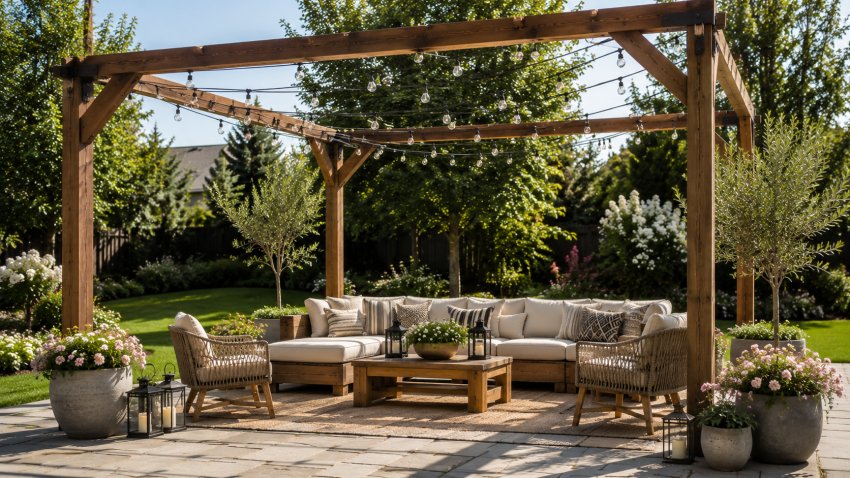
A simple frame built to hold string lights doesn’t block much sun, but it defines the space beautifully for evening use. Add a shade cloth or fabric panels on top and it works during the day too.
It’s one of those setups that looks way more expensive than it actually is.
26. Umbrella Cluster Shade
Grouping two or three large patio umbrellas together is one of the quickest shade solutions out there. No installation, no drilling, no permits. Just open them up and you’re done.
They work best on larger decks where you can space them out naturally. On a small deck, multiple umbrellas can feel cluttered fast.
27. DIY PVC Pipe Canopy
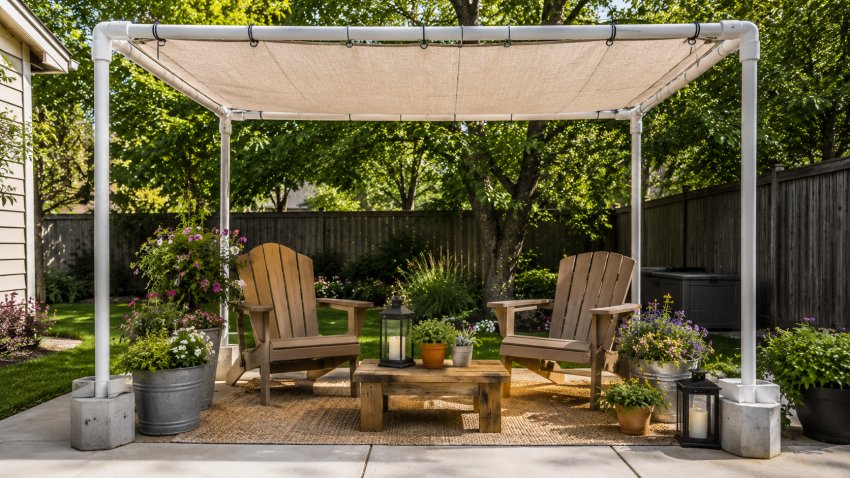
A PVC pipe frame covered with shade cloth or canvas is one of the most budget-friendly DIY awnings you can build. PVC is lightweight, easy to cut, and simple to assemble without any special tools.
It won’t win any design awards, but for a functional, affordable shade solution it gets the job done. Anchor it well though — a lightweight frame can shift in strong wind if it’s not secured properly.
Conclusion
There’s no single best deck awning. It comes down to your space, your budget, and how you actually use your deck.
Want something permanent and low maintenance? Go with a fixed awning or pergola. Like flexibility? A retractable awning gives you shade when you need it and open sky when you don’t.
Working with a tight budget? Sail shades and DIY options can do a surprisingly good job without spending much.
The biggest mistake most people make is rushing the decision. Take a little time to figure out where the sun hits hardest and how much coverage you actually need. Get that right and everything else falls into place.

Khaja Moinuddin, a computer science graduate, finds joy in gardening and homesteading. Join him on this blog as he shares his experiences in homesteading, gardening, and composting

