


Cultivars to Select
There are plenty of creeping juniper options out there and new ones are always coming onto the market.
Many cultivars are fairly similar, varying slightly in color and size, which is excellent because this allows you to find exactly what you want.
Here are a few good options:
Blue Forest
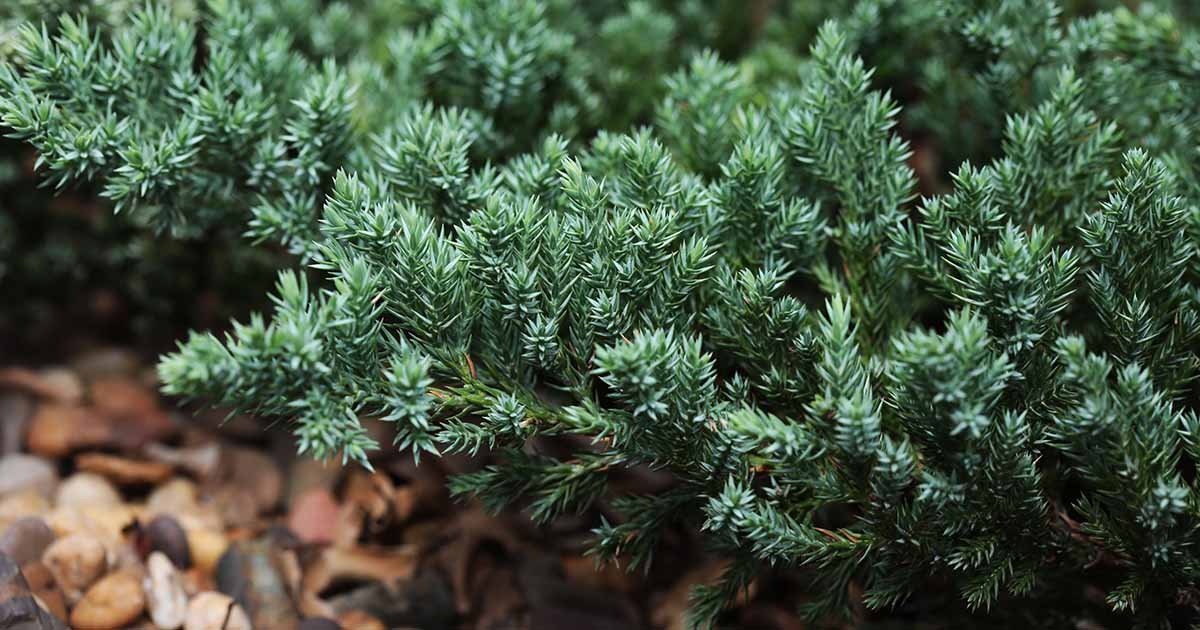
At just a foot tall once mature, ‘Blue Forest’ is better suited as a forest for fairies and elves than humans.
But if you hunker down at ground level to check this low-growing cultivar out, you can see where the name comes from.
Not only does the foliage have a distinct blue hue, but the branches grow upright with a conical shape, giving the impression of a tiny little forest of junipers.
Blue Rug
‘Wiltonii,’ also known as blue rug juniper, makes the perfect carpet for practically any spot in the garden.
At just a foot tall and stretching to six feet wide, it forms a dense rug that blocks out weeds and prevents erosion, all while providing year-round interest.
It will weep gracefully over rocks, walls, or pots. Or you can let it crawl over a challenging area where other plants struggle to gain footing.
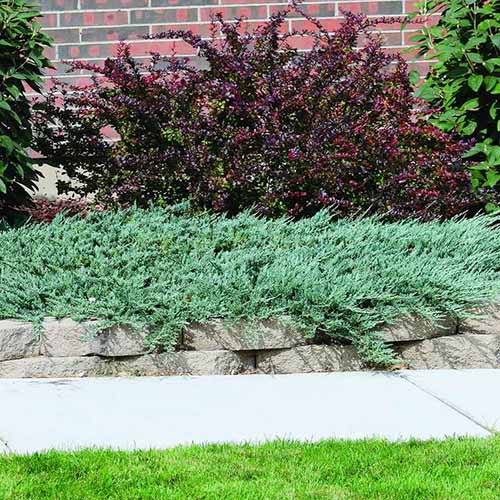
Roll out the red carpet for this gem and head to Fast Growing Trees for a live plant in a one-, two-, or three-gallon nursery container.
Hughes
With a classic, creeping form and lovely silvery-blue foliage, ‘Hughes’ is an excellent choice for rocky slopes and arid spots.
It’s a tough ground cover that won’t let any weeds poke their way through.
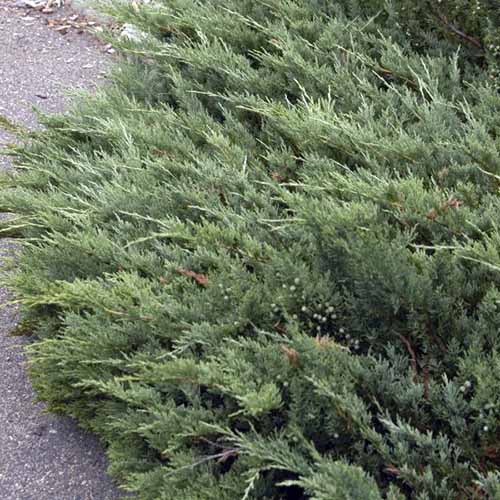
Bring home this bad boy from Nature Hills Nursery in a #1 or #2 container.
Lime Glow
‘Lime Glow’ is a low-growing, vase-shaped shrub that brings intense color to your yard with its chartreuse foliage.
In the winter, the show continues as the leaves transition to copper, purple, and orange.
While it will obviously make a charming ground cover, the long, arching branches make it particularly nice for gracefully tumbling over the edge of pots or extending down a rock wall.
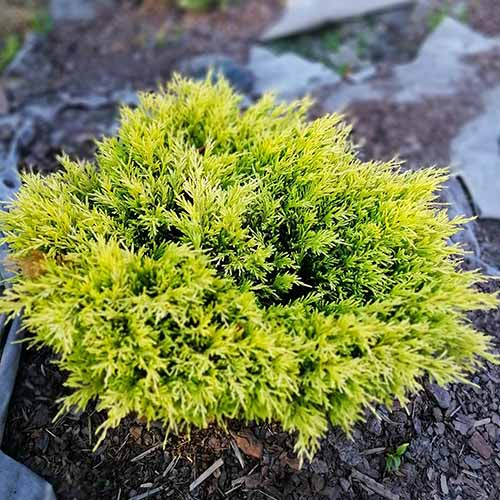
It can spread up to three feet wide but never grows more than a foot tall, and usually stays shorter than that.
You can find ‘Lime Glow’ in one-gallon containers available at Fast Growing Trees.
Mother Lode
Eureka! We’ve struck the ‘Mother Lode’ with this brilliant, gold-colored juniper.
Yes, the yellow-orange foliage is fabulous, but it’s not just the color that matters when you’re hunting for the goods.

It’s the quantity that counts, and this plant can spread up to 10 feet wide but stays a manageable five or so inches tall.
In the fall, the foliage turns purple and orange, adding interest to the winter landscape.
Maintenance
Don’t worry about pruning your junipers.

Just take off any dead or diseased branches when you see them, and let the shrub take on a natural shape.
Propagation
Because of its shape, with its long, slender branches, creeping junipers propagate well from cuttings. You can also purchase many different cultivars for transplanting.
Don’t bother with trying to start these plants from seed. It takes years and tons of knowledge, and even then you’ll probably struggle with low germination rates.
From Cuttings
J. horizontalis is popular as a bonsai option.
Most practitioners start new projects using cuttings, because it’s reliable and you can be certain that clones will reproduce the characteristics that you want.
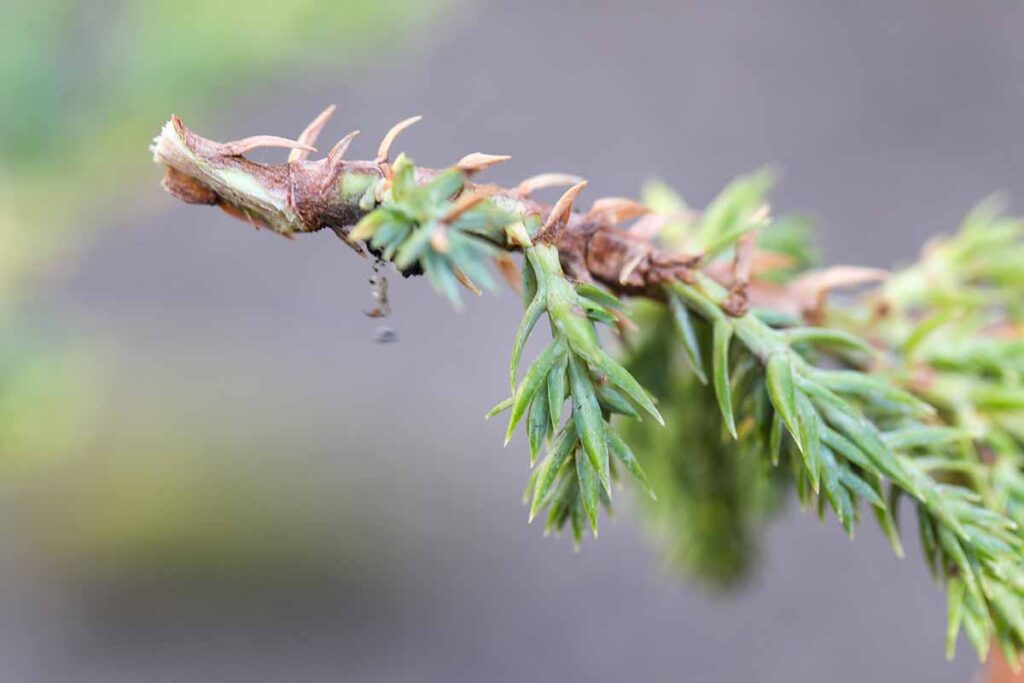
The best wood is young but firm, so new growth that has had the summer to mature is ideal. In the fall, look for wood that is pliable and still has a green hue to it.

Gently tear a six-inch length of stem off, pulling in the opposite direction from the growth.
If you took a bunch of excess bark off when you pulled, trim most of it away, leaving a heel of less than half an inch. Remove the leaves from the bottom half.
Dip the cut end in a rooting hormone.
Stick the cutting into a six-inch container filled with potting soil so it’s covered by half.
Firm the soil around the cutting and water so the soil feels moist, like a well-wrung-out sponge. Place it in bright, indirect light.
Allow the surface of the soil to dry out in between watering.
By spring, your cutting should have roots and new growth forming.

