Happy Monday GPODers!
Over time, no matter where you garden, you are bound to face condition changes. Landscapes evolve, climate changes, and what once thrived in your outdoor space will suddenly no longer survive. For an added challenge, some of us choose to move to new locations and face learning how to garden in a completely new environment. Jo Ann Sarlese in Tacoma, Washington (Zone 8) is one of those ambitious gardeners. We were first introduced to Jo Ann’s garden a couple of years ago (Check out that submission: A SoCal Gardener in the Pacific Northwest) and only four years after she made the move from Southern California. Today she is finally back to share how her landscape has evolved since then and how she continues to learn from her gorgeous new garden oasis.
It has been 6 years since we moved from Southern California to the Pacific Northwest and I am continually learning how to garden up here, more often by trial and error! The back yard is multi leveled, sloping downward from the house and from the left side to the right. There is a waterfall in the center which flows into three different ponds, with the largest pond being the last. The yard has several gardens, each defined by the pond, pathways and retaining walls. Every year is still new. After all this time there are still surprises. Something blooms that didn’t before. There are many iris plants that have been nothing more the a few sword leaves sticking out of the ground. This is the first time they have bloomed in all kinds of colors. This has been the best spring yet. I’m looking forward to seeing what surprises summer will bring.
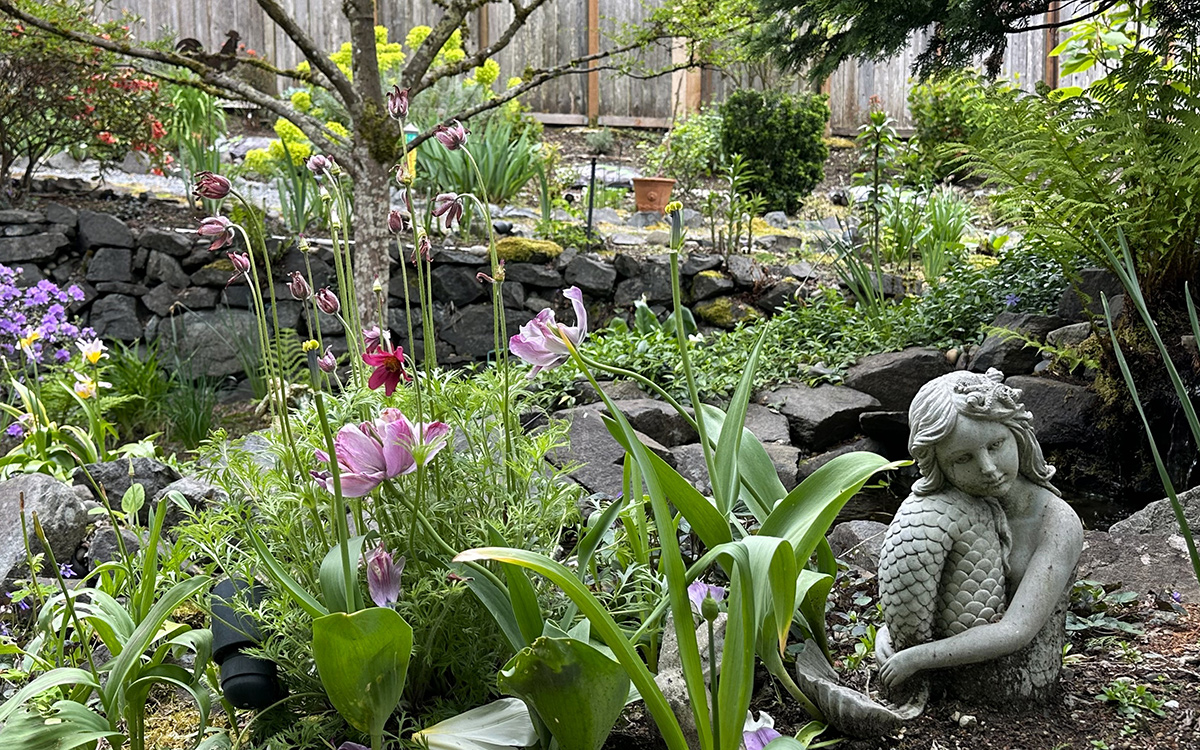
Mermaid garden had fading pink tulips and eastern pasqueflower (Pulsatilla patens, Zones 3–7), a pretty volunteer, overlooking the upper pond under the waterfall.
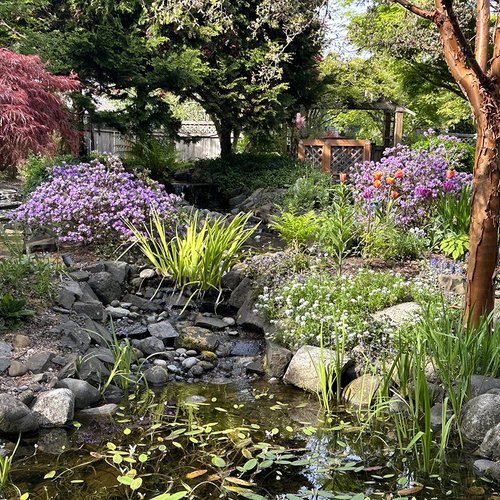
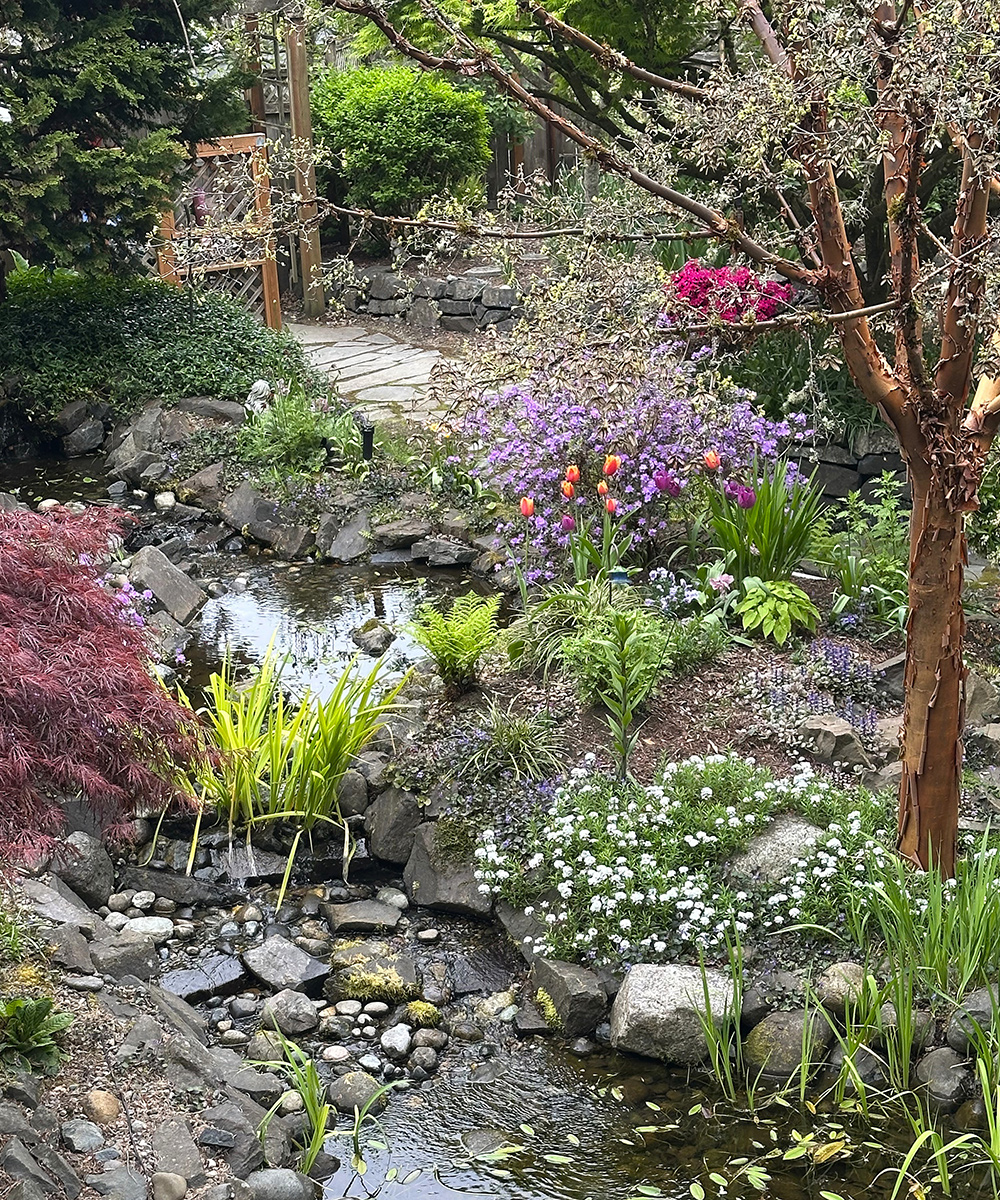 Pond overlook features the paperbark maple (Acer griseum, Zones 4–8) with candytuft (Iberis sempervirens, Zones 3–8) at the base, Japanese iris (Iris ensata, Zones 4–9), Waterfall maple (Acer palmatum var. dissectum ‘Waterfall’, Zones 5–8) to the left, and tulips and rhododendrons.
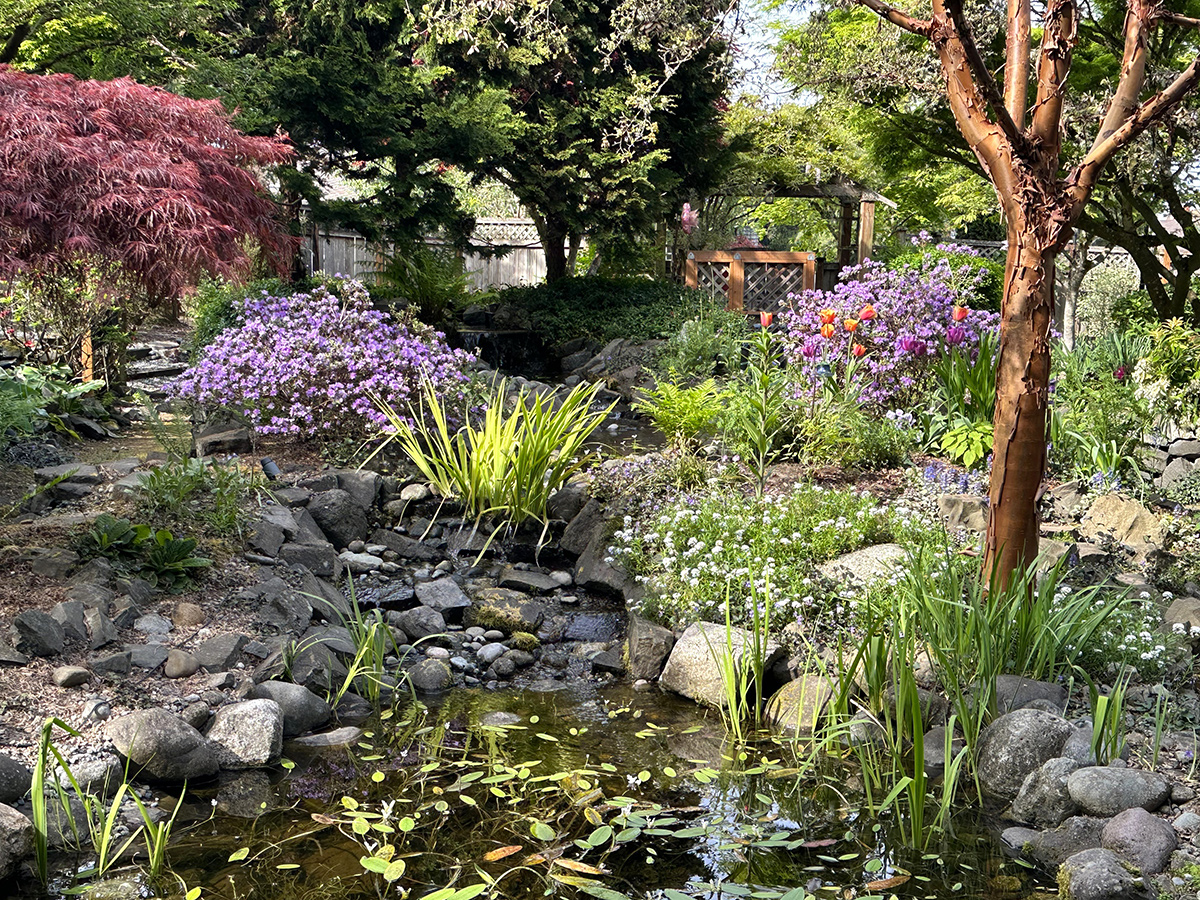 Another view of the larger pond. The waterfall is tucked in the space above under the Hinoki cypress (Chamaecyparis obtusa, Zones 4–8) above. The waterfall flows into 3 ponds: upper small shallow pond, middle pond and the lower large pond.
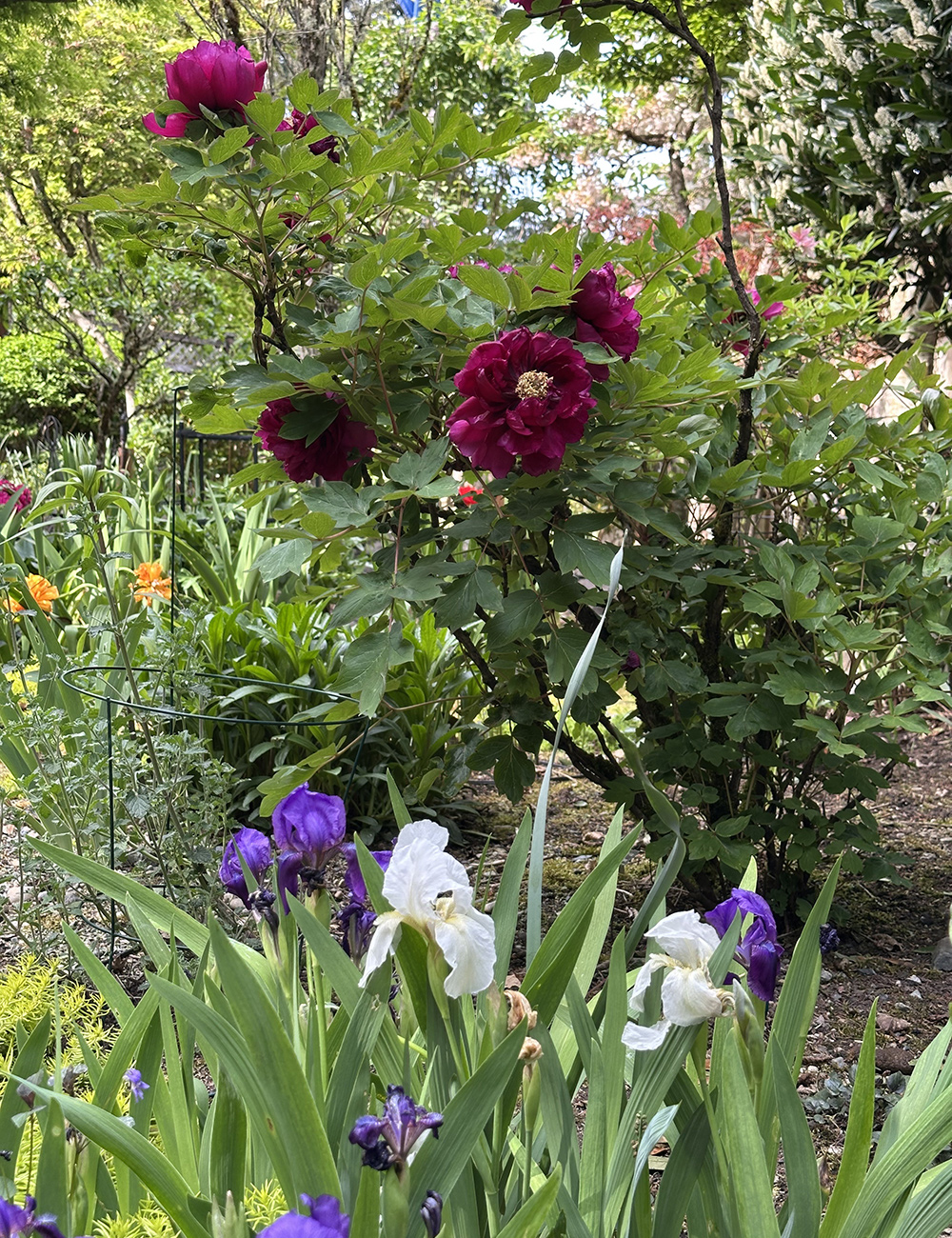 This red bloom tree peony (Paeonia suffruticosa, Zones 4–8) did not bloom the first 4 years we were here. In front are assorted irises.
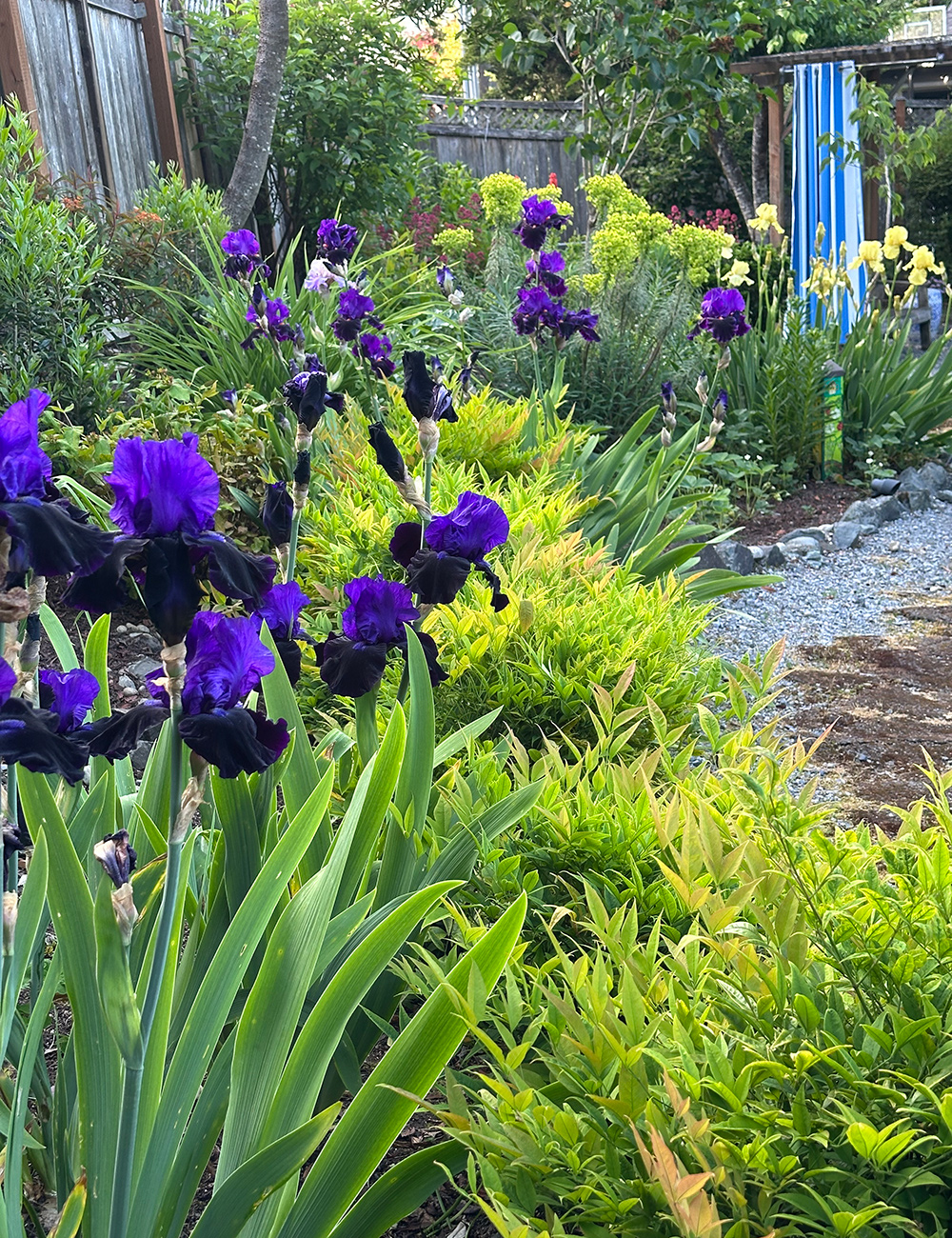 This side garden has been a work in process for a few years. Almost everything had been pulled after we moved in. The purple and yellow bearded irises (Iris x germanica, Zones 3–9) have been spectacular this year along side the heavenly bamboo.
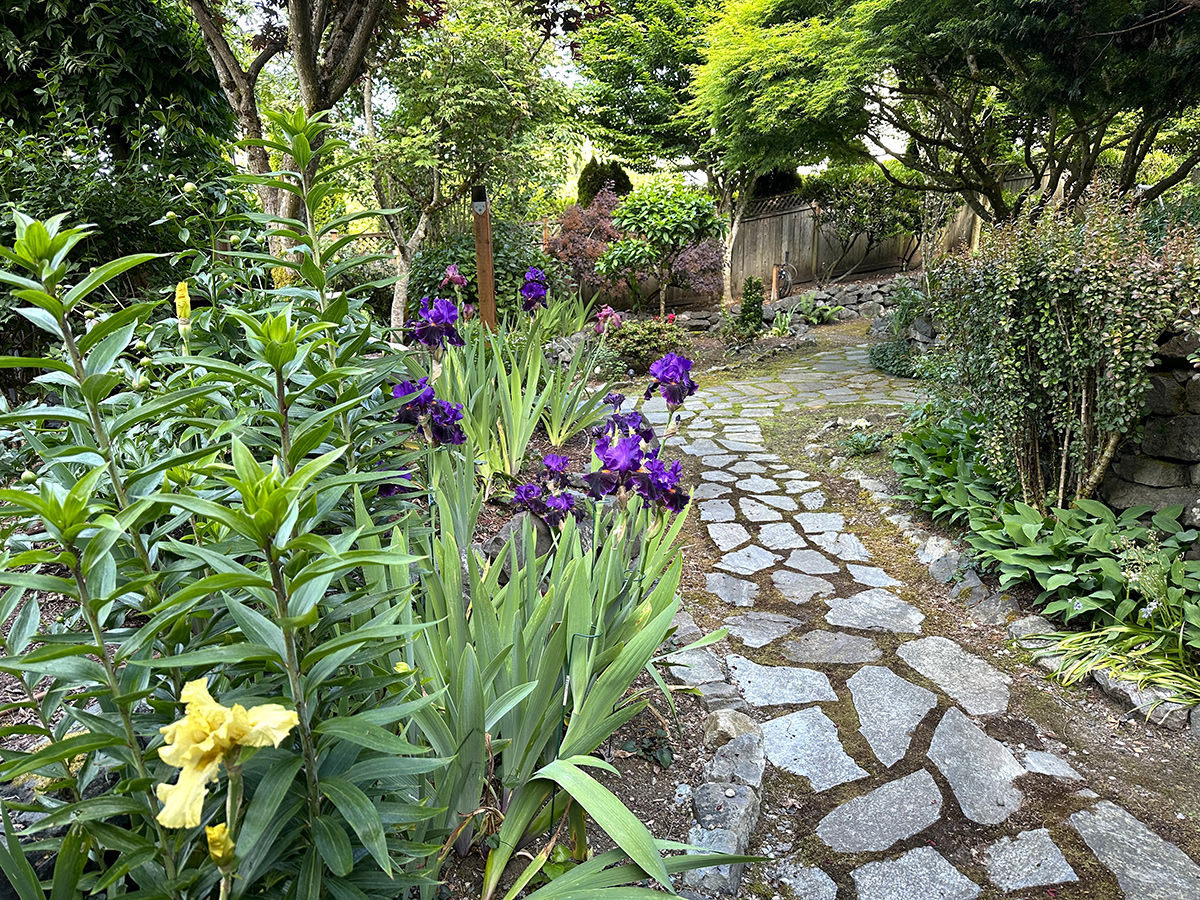 This is the back garden with giant lilies emerging between the bearded irises on the left and Helmond Pillar barberry (Berberis thunbergii f. atropurpurea ‘Helmond Pillar’, Zones 4–8) on the right side of the pathway that meanders around the yard.
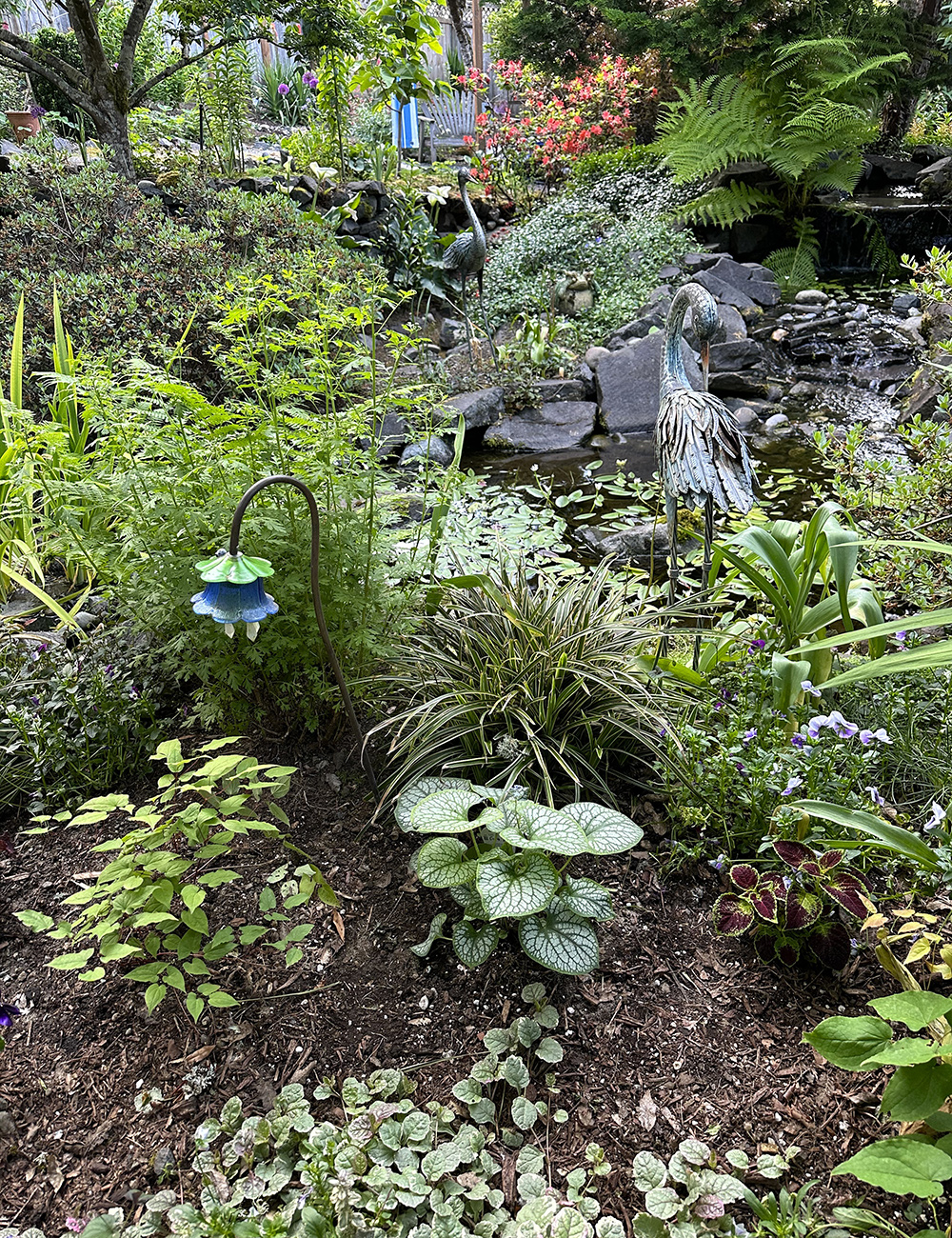 This is a view of the middle pond, where the frogs return every April through early July. The two heron decoys help repel other birds from disturbing the frogs and fish in the pond. Below are barrenwort (Epimedium sagittatum, Zones 6–8), Jack Frost brunnera (Brunnera macrophylla ‘Jack Frost’, Zones 3–8), coleus, lilyturf (Liriope muscari, Zones 5–10) and bachelor’s button (Centaurea cyanus, annual).
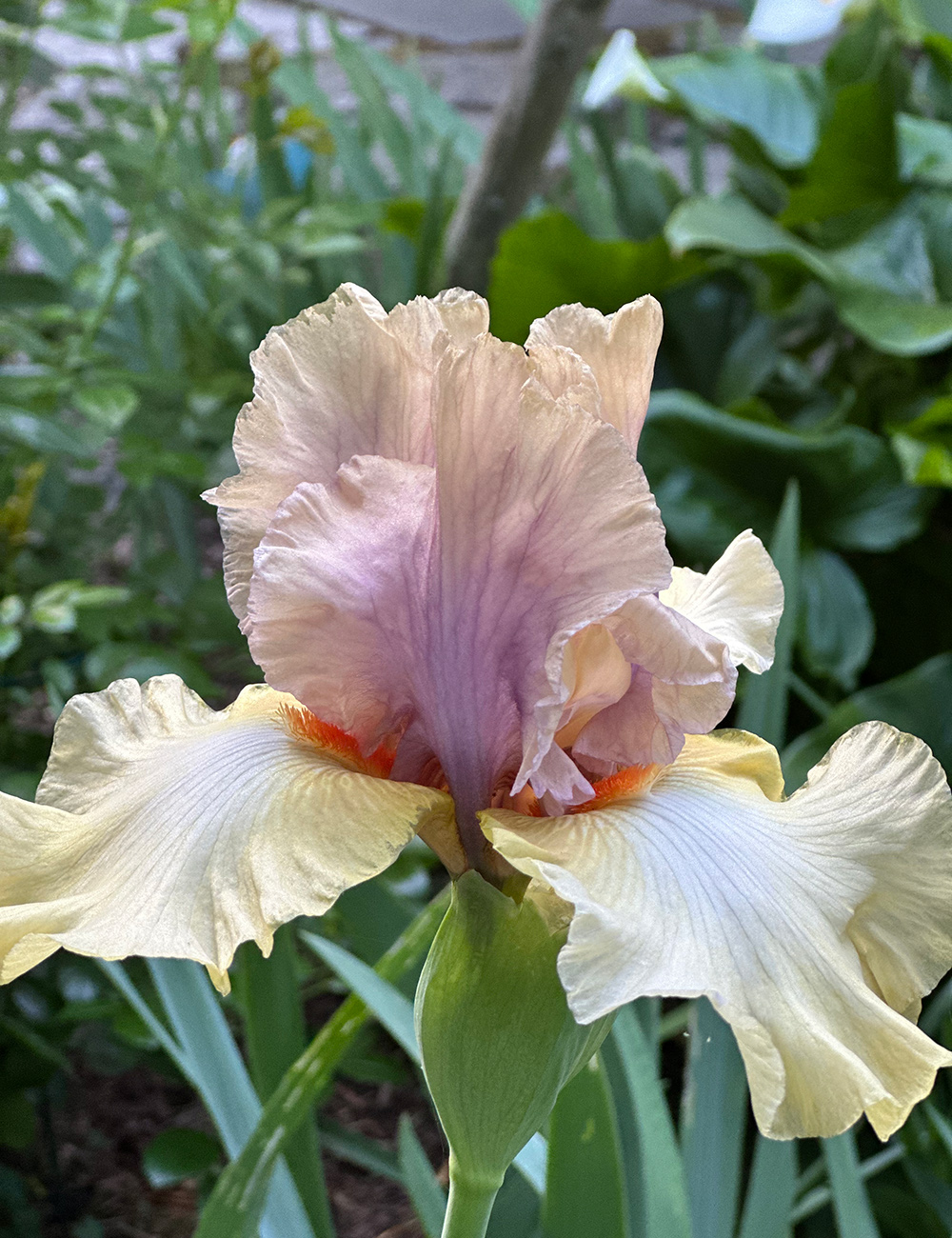 Just one of my favorite bearded iris.
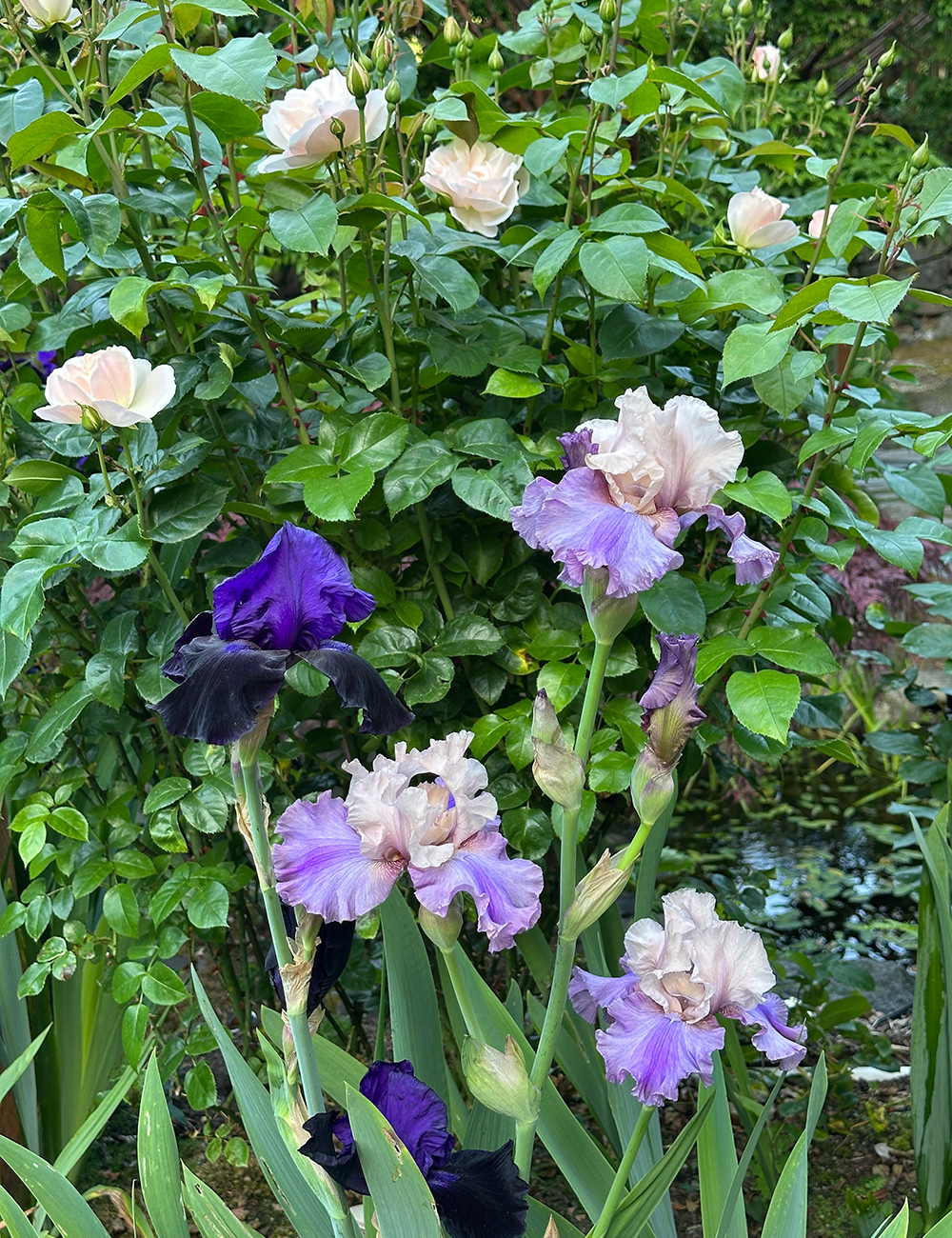 Bearded iris and Champagne Wishes white rose (Rosa ‘BAIcham’, Zones 4–7).
Thank you for sharing this gorgeous garden update with us, Jo Ann! Your space has gained even more interest since we saw it last, and I hope we can continue to see it evolve.
Have you had to change your gardening practice because of a change in conditions? It could be because of a major move, like Jo Ann, or because a tree removal caused your shade beds to be exposed to a lot more sun. These situations are tricky, but can cause exciting new plant possibilities. Consider sharing your story of garden changes with the blog. Follow the directions below to submit your photos to Garden Photo of the Day!
We want to see YOUR garden!
Have photos to share? We’d love to see your garden, a particular collection of plants you love, or a wonderful garden you had the chance to visit!
To submit, fill out the Garden Photo of the Day Submission Form.
You can also send 5–10 photos to [email protected] along with some information about the plants in the pictures and where you took the photos. We’d love to hear where you are located, how long you’ve been gardening, successes you are proud of, failures you learned from, hopes for the future, favorite plants, or funny stories from your garden.
Do you receive the GPOD by email yet? Sign up here
Fine Gardening Recommended Products
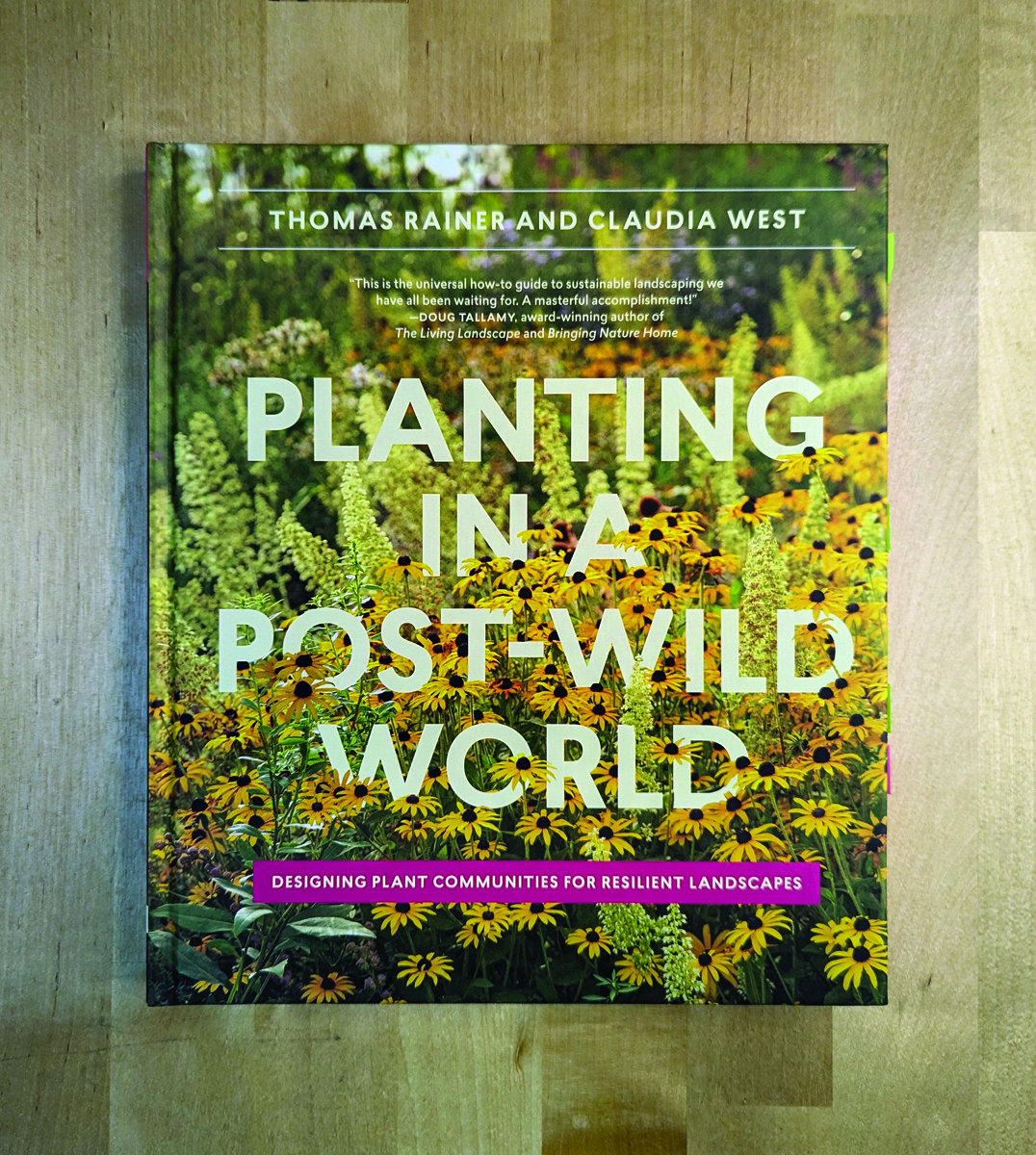
Planting in a Post-Wild World: Designing Plant Communities for Resilient Landscapes
Fine Gardening receives a commission for items purchased through links on this site, including Amazon Associates and other affiliate advertising programs.
Featuring gorgeous photography and advice for landscapers, Planting in a Post-Wild World by Thomas Rainer and Claudia West is dedicated to the idea of a new nature—a hybrid of both the wild and the cultivated—that can nourish in our cities and suburbs.

The Regenerative Landscaper: Design and Build Landscapes That Repair the Environment
Fine Gardening receives a commission for items purchased through links on this site, including Amazon Associates and other affiliate advertising programs.
2024 Nautilus Award Gold Medal Winner! This awe-inspiring guide weaves together permaculture design, food resiliency, climate adaptation, community organizing, and indigenous wisdom that you can implement in your own backyard.