


Iris pallida
Iris flowers are gloriously beautiful, but many have hardly any fragrance at all.
Sweet iris (Iris pallida), on the other hand, is so intensely fragrant that it’s the basis for some of the world’s best-known perfumes.
The flowers are no slack in the looks department, either. Sweet iris flowers are pretty enough that I. pallida was one of the primary species used in developing the bearded iris.
We link to vendors to help you find relevant products. If you buy from one of our links, we may earn a commission.
Oh, and have you ever heard of orris root?
You know, that magical ingredient used in medicine, food, and fragrance (not to mention magic)? Yeah, that comes from this charming plant, too.
Even if you aren’t interested in creating perfume, sweet iris is an incredible addition to the garden. Even when not in bloom, the variegated leaves add texture and interest.
If you like to use cut flower arrangements in your house, both the leaves and flowers are beautiful. Just imagine the smell, on top of the elegant display.
Plus, this species is hardy in USDA Zones 4 to 10 and adapts to a range of soils, so it’s not all that difficult to grow.
Ready to learn more about sweet iris? Here’s what we’ll cover:
Sweet iris originally hails from Northern Italy and eastern Mediterranean. It’s actually a natural hybrid of other unknown iris species that grow natively in the region.
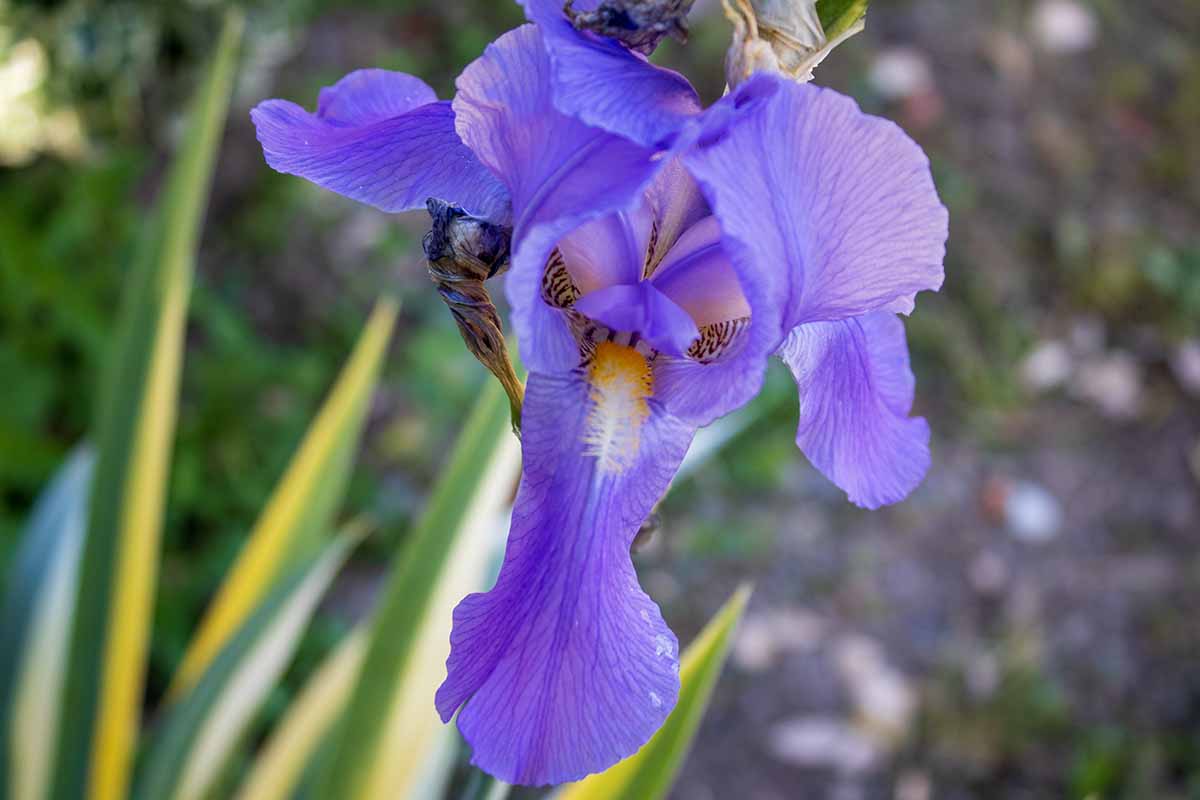
Originally, the sword-like leaves were entirely bluish-green, but nearly every single cultivar out there these days has variegated foliage with stripes of silvery-white, blue-green, cream, or yellow.
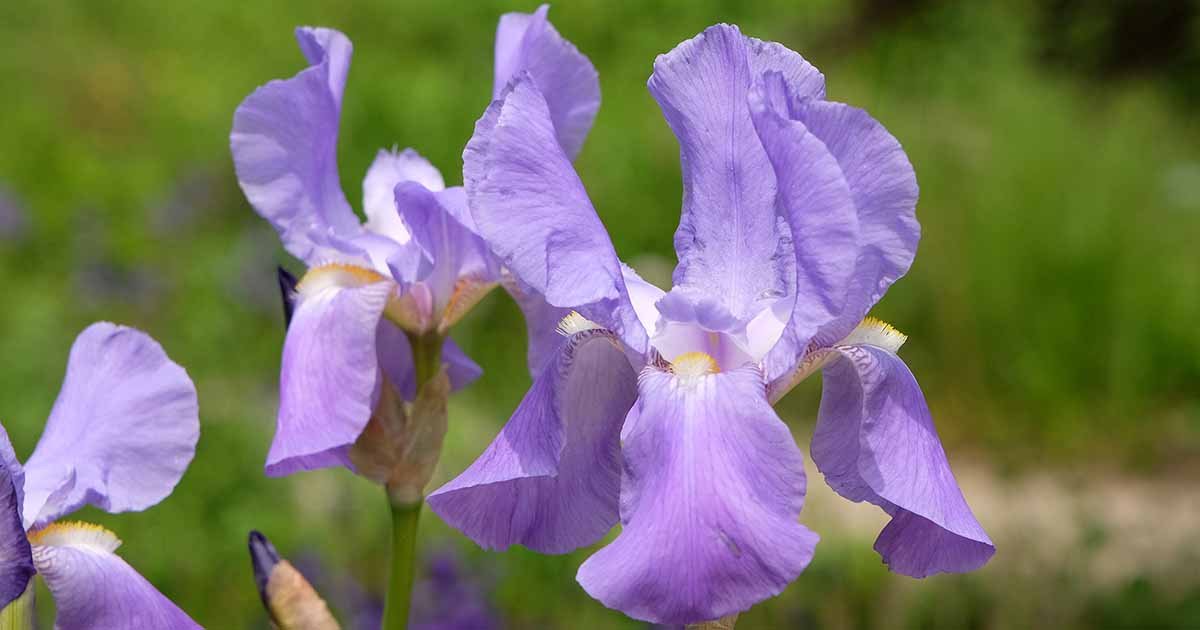
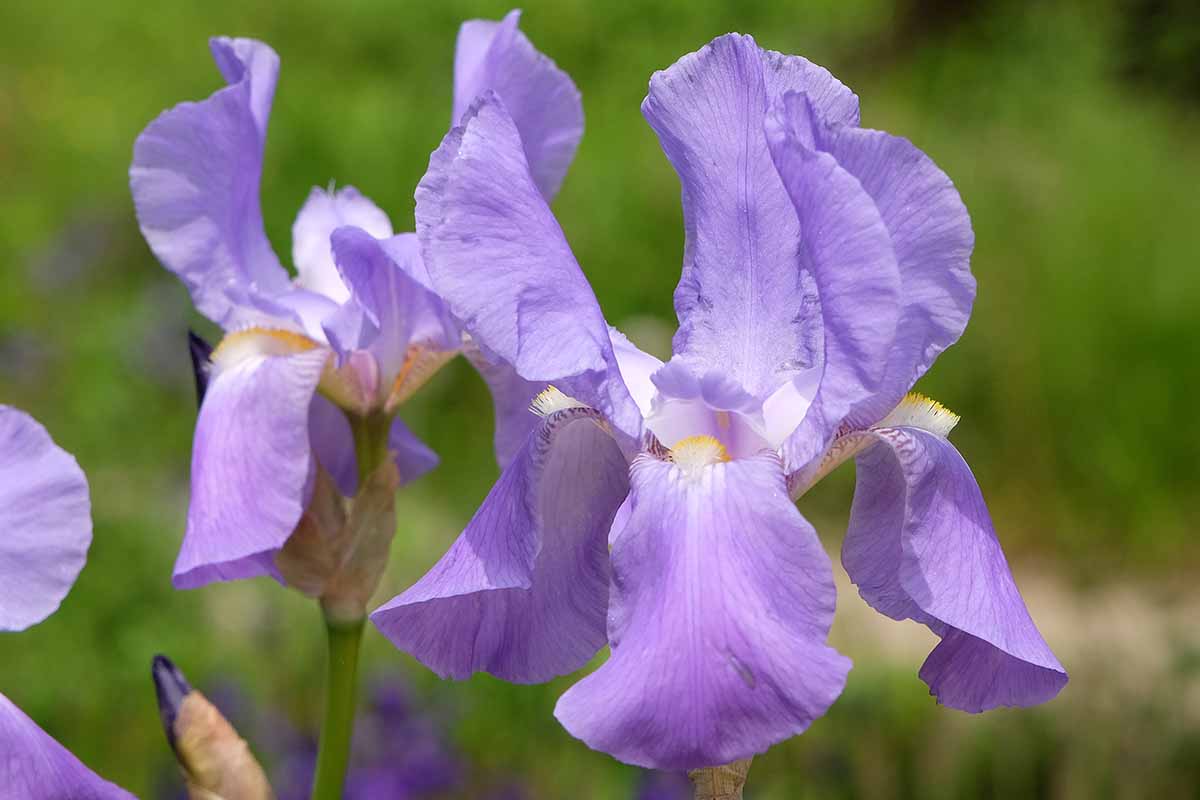
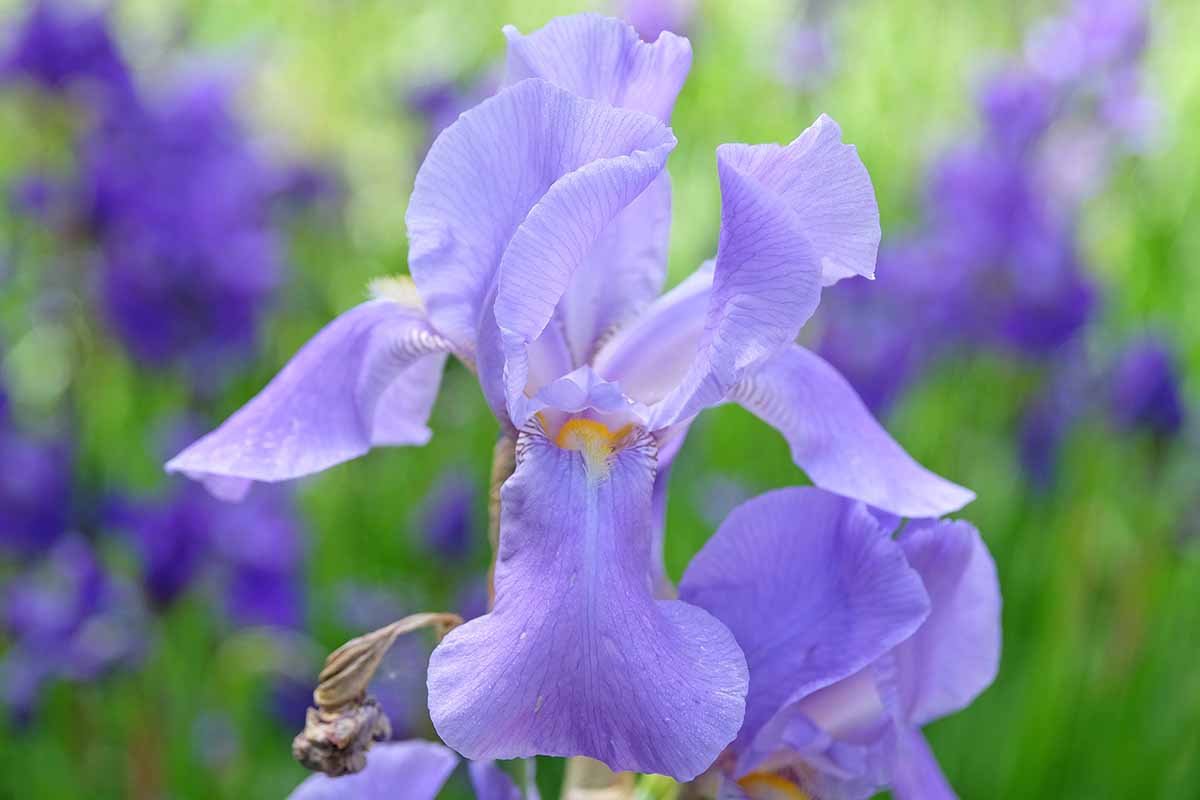
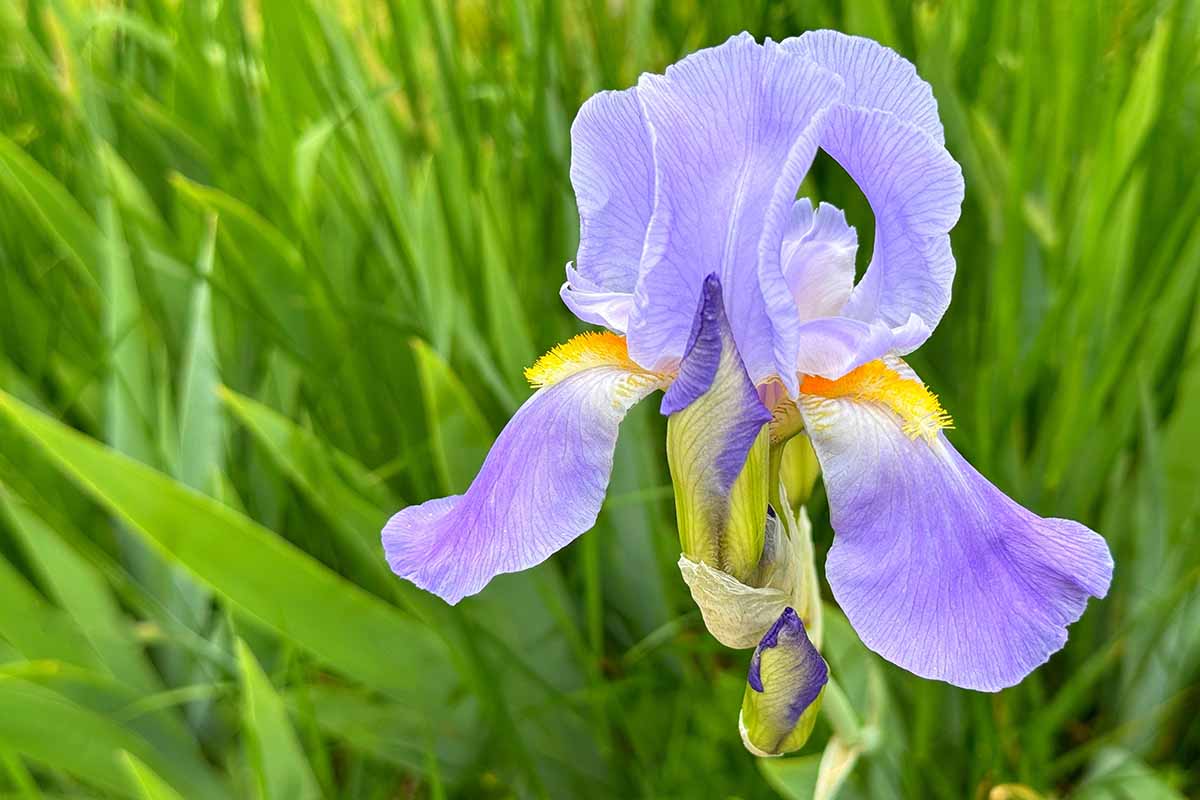
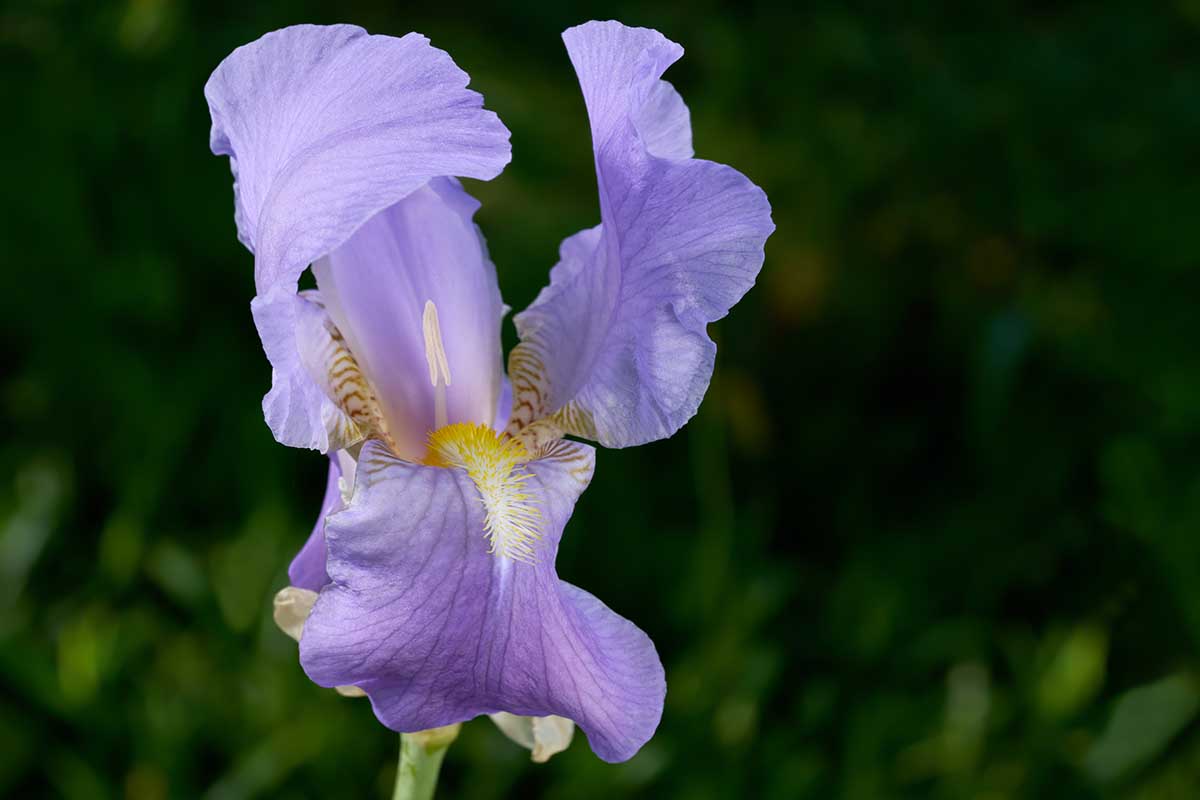
The flowers are lavender-blue or lavender with a hint of pink, and petite yellow beards, and they appear in spring.
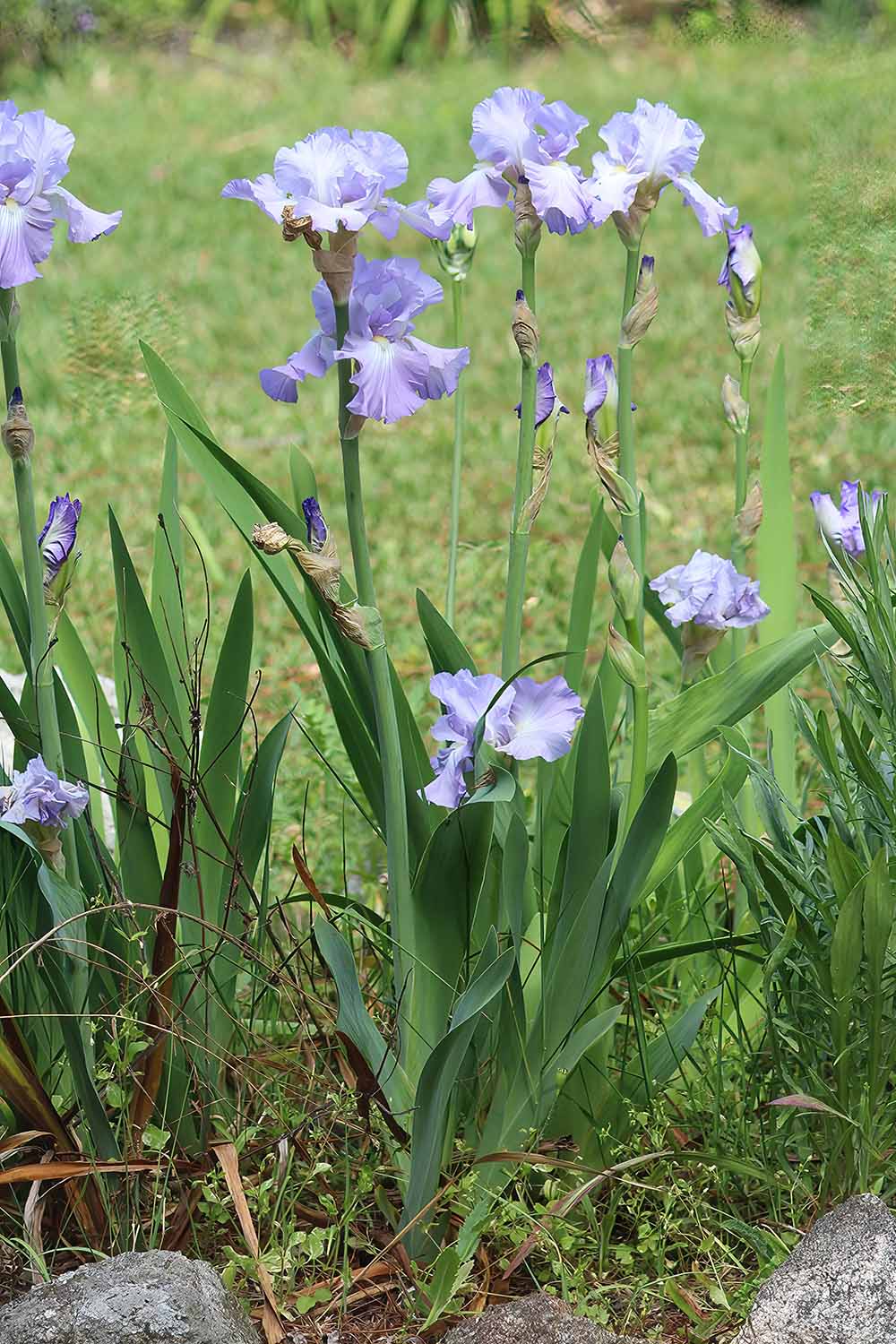
The flower stalks are about two to three feet tall when mature. Underground, you find rhizomes that are about three-quarters of an inch in diameter.
Quick Look
Common name(s): Dalmatian, orris, sweet, zebra iris
Plant type: Rhizomatous, herbaceous, flowering perennial
Hardiness (USDA Zone): 4-10
Native to: Mediterranean region
Bloom time / season: Spring, early summer
Exposure: Full sun to partial shade
Soil type: Sandy, humus-rich, some clay, well-draining
Soil pH: 6.0-7.5, slightly acidic to neutral
Time to maturity: 4 years
Mature size: 3 feet tall by 2 feet wide
Best uses: Borders, cottage gardens, cut flower gardens, pots
Taxonomy
Order: Asparagales
Family: Iridaceae
Genus: Iris
Species: Pallida
The flowers are highly fragrant. It’s hard to describe the aroma, other than to say it’s sweet, floral, fruity, and delicious.
I’ve seen it described as a combination of grape hyacinth and orange blossom.
Or grape soda meets violets. Or powdery floral with a hint of vanilla.
I don’t think any of those comparisons quite capture its complex essence, though grape soda is a pretty apt description.
Chanel, Lancome, Guerlaine, and Georgio Armani all use the fragrance in their perfumes.
How to Grow
When these plants are put in a spot that they like, they’re effortless to grow.
In fact, have you ever seen an abandoned property and observed the flowers that grow there?
These irises are often the ones that you’ll see naturalizing and sticking around long after their caregivers are gone.
Light
While this species prefers full sun, the species will still bloom even in partial shade. Some species fail to bloom in low light but not this one.
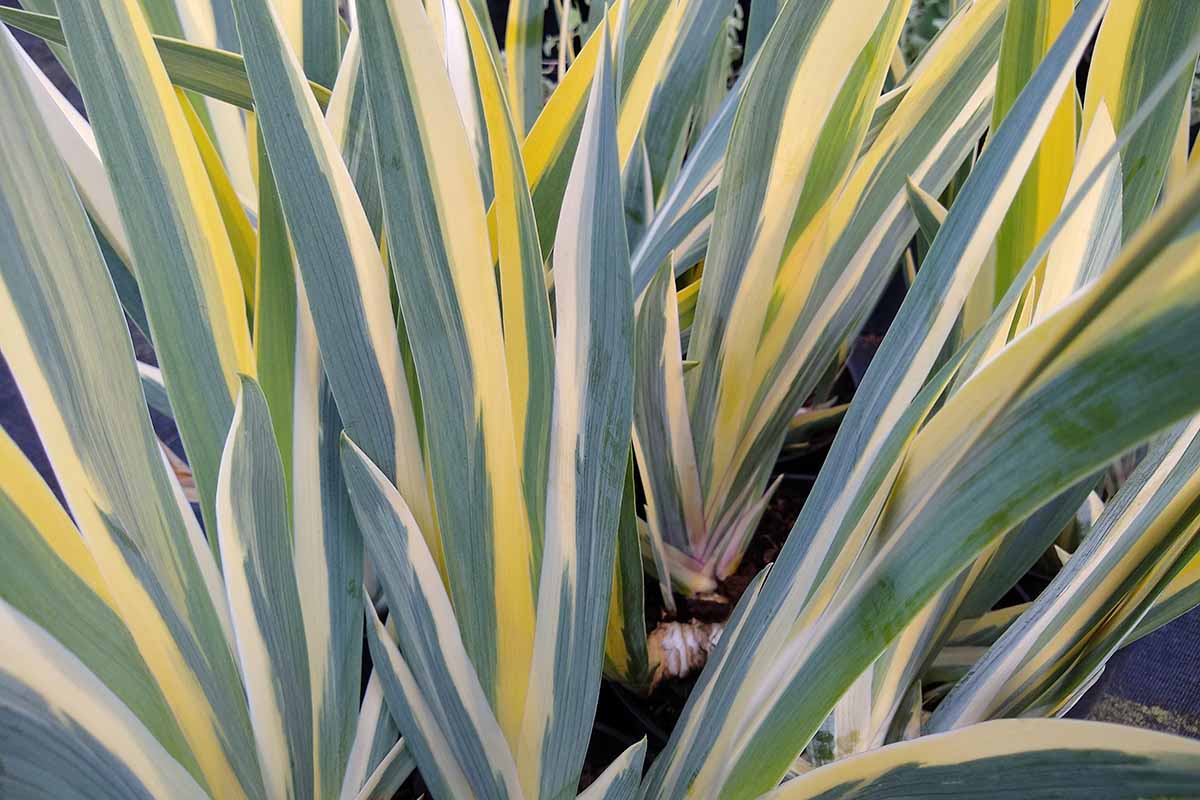
For best flowering, more light is better, and the variegation of the foliage is enhanced in full sun.
Soil
This species is incredibly adaptable, thriving in heavy clay, sand, or loam, but they prefer humus rich, loose soil.
It’s even fine in rocky soil, which isn’t the case for some of the other irises. The pH can be anywhere from slightly acidic to slightly alkaline, 6.0 to 7.5 is ideal.
Water
The soil should ideally be moist at all times. The plants can tolerate standing water or drought for short periods.
Younger plants need more careful management, but established clumps will tolerate conditions on the extreme ends.
Fertilizer
Sweet iris plants adapt to all kinds of soil conditions, including depleted earth.
However, you might still want to do a soil test just to see what’s going on with your ground and address it accordingly.
Reach out to your university extension office for advice on finding a local testing service.
A service local to your area will be able to give you tailored advice on how to address any nutrients lacking in your soil.
Cultivars to Select
When you’re out shopping, you’ll almost always find the white variegated type (I. pallida ‘Albo Variegata’). It has white and green striped foliage and purple flowers.
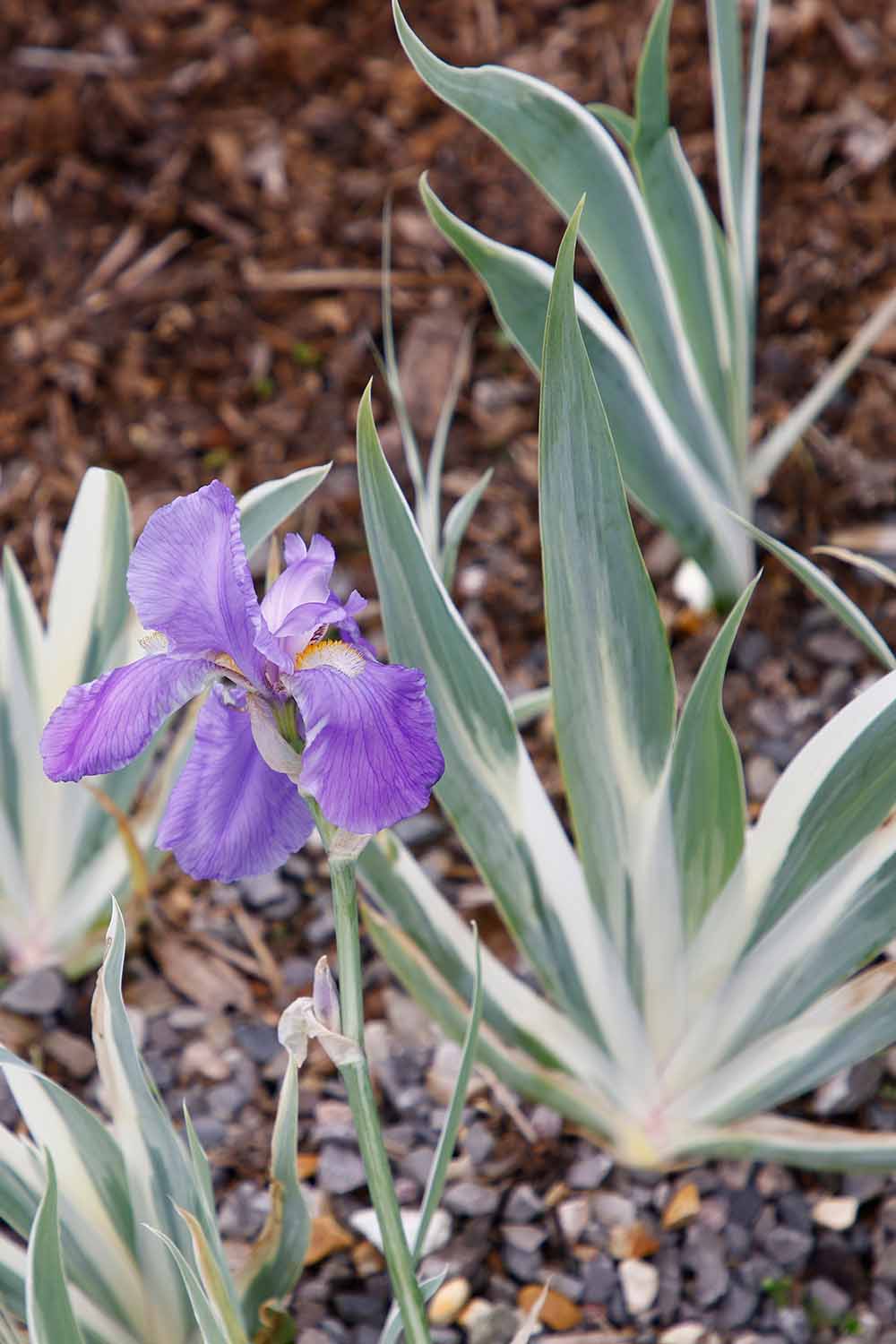
If you dig a little deeper, you can find yellow sweet iris (I. pallida ‘Variegata Aurea’).
It’s basically the same as white, but with yellow stripes on the leaves instead. The contrast between the yellow leaves and the purple flowers is striking.
If you’re really lucky, you might see I. pallida ‘Dalmatica,’ which is a cultivar developed in the late 1500s specifically to create orris root.
The gray-green foliage is topped with intensely fragrant lavender-purple flowers. While the foliage might not be as showy, the flowers make up for it.
You can find rhizomes for the species plant available via Walmart.
Maintenance
After flowering, the leaves will usually die back for winter dormancy. Remove the dead foliage in the spring before the new leaves start to grow.
If any foliage dies during the growing season, remove those leaves, too, by snipping them off at the base.
To encourage prolific blooming, divide the rhizomes every four years. Do this in the late summer after blooming. Crowded rhizomes won’t bloom as prolifically.
The tall flower stalks can blow over in heavy wind, so either plan to stake your plant when it’s flowering, or grow in an area that is sheltered from wind.
Propagation
Propagating sweet iris is simple. You can start by planting rhizomes you purchase or if you have an existing clump, by division.
From Rhizomes
Planting rhizomes is the easiest way to go about growing new plants.
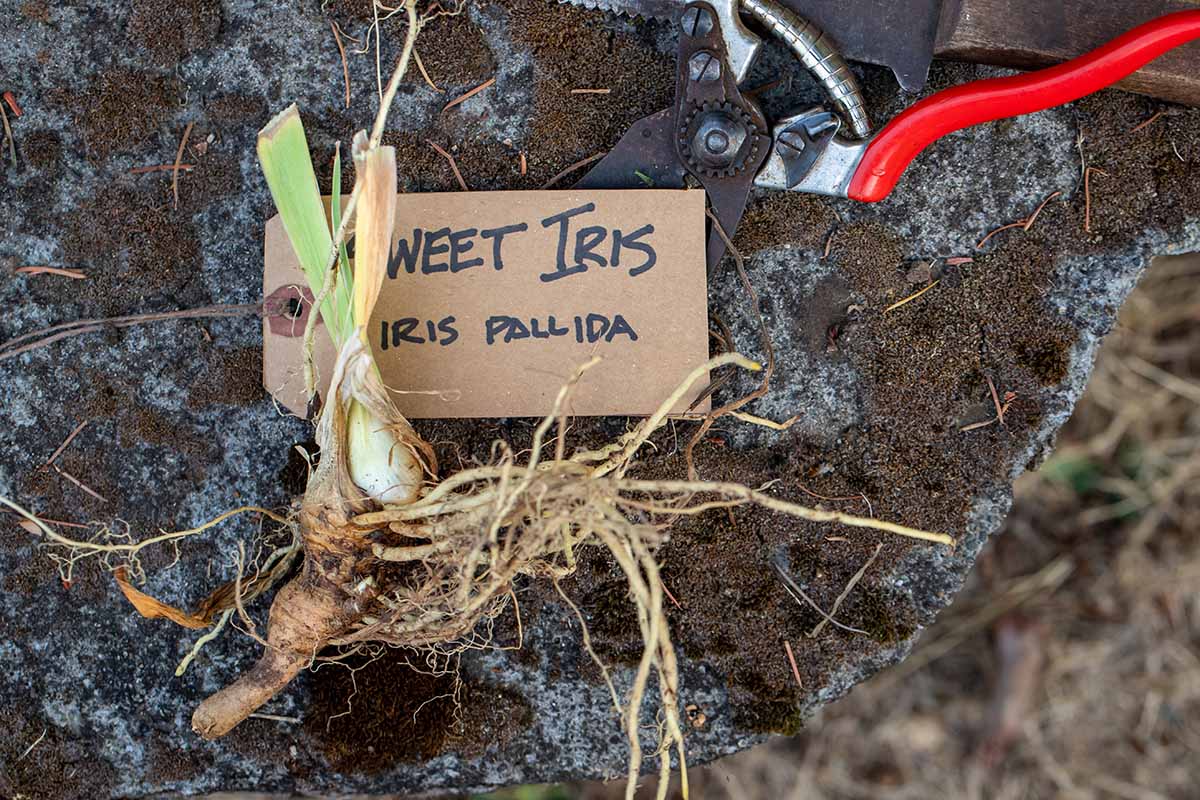
Dig a hole that is a bit larger than the rhizome itself.
Set the rhizome in the ground.
When you set the rhizome in the ground, make sure just a bit of the rhizome pokes out of the soil. You don’t want to bury it entirely or it will likely rot.
Cover the rest of the rhizome with soil and water well.
From Division
You should divide your plants every four years or so whether you want to propagate them or not. This encourages new growth and more abundant flowering.
There are two ways to do this. You can dig up the entire plant and then gently tease apart the rhizomes.
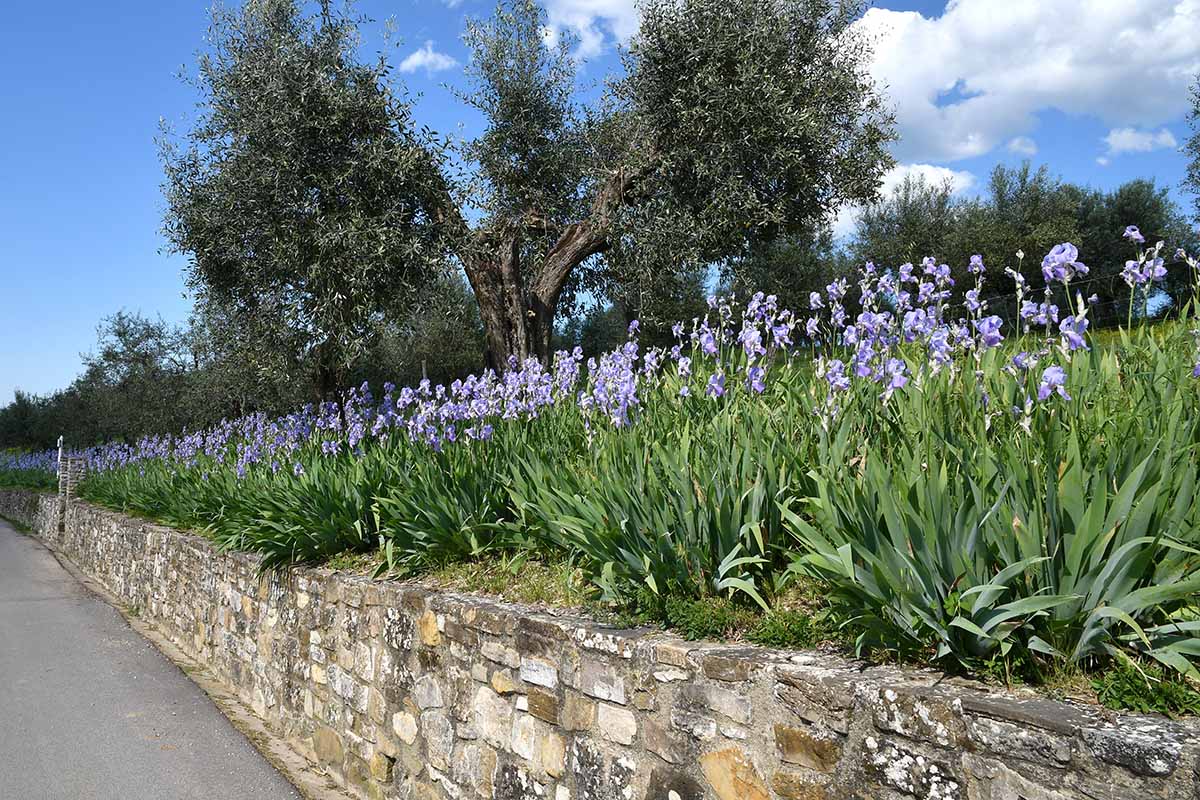
Or you can dig down into the middle of the clump and separate a part of the rhizome.
With the second method, you probably sever or break some of the rhizomes, but it’s really fine. They’ll come right back. If you want to avoid any potential damage, dig up the entire plant.
Dig just outside the spot where the leaves meet the ground, deep enough that you can lift the clump up and out of the soil.
Once you have all or part of the plant out of the ground, brush away the soil and gently tease apart the rhizomes.
Leave anything smaller than a thumb intact.
Once you’ve separated the rhizomes, cut the leaves down to about three inches tall and replant the rhizomes in a new spot, at the same depth.
Learn more about dividing irises here.
Transplanting
You can purchase live plants at many nurseries, particularly during the spring.
Once you bring home your plants, dig a hole about the same size as the pot.
Gently remove the plant from the container and lower it into the hole that you dug, making sure that the crown is just above ground level.
Fill back in around the root with removed soil. Water well.
Pests and Disease
Here’s a bit of excellent news: iris borers can be a devastating problem in some species, but they rarely bother this species.
If that’s not enough reason to celebrate, herbivores like deer and rabbits won’t bother sweet irises, either.
You mostly only need to worry about root or rhizome rot. Rot is a generic term for anything that causes the roots underground to turn mushy and rot away.
Typically, rot is either caused by oversaturated soil, depriving the roots of oxygen and essentially drowning them.
In some cases, it can also be caused by bacteria, typically Pectobacterium carotovorum.
This bacteria needs the presence of water to survive and breed, so the cause of either rot is the same: too much moisture. That’s why planting in well-draining soil is important.
The bad thing about rot is that you rarely know it’s happening until it’s pretty much too late to do anything about it.
By the time symptoms appear aboveground, the disease has progressed and the plant may not be redeemable.
Symptoms generally include yellowing, wilted, or browning leaves. Foliage might have large rotted or discolored areas or the entire specimen might be discolored and wilted.
You can dig down and try to save any rhizomes that haven’t started rotting, but any that have brown, stinky, or mushy areas should be thrown out.
Don’t compost them. Throw them in the garbage and clean your tools with hot water and soap or rubbing alcohol.
Rhizomes that aren’t rotting can be left out in the sun to dry out and then replanted using clean tools.
To prevent this disease, plant in well-draining soil and don’t overwater. It’s also best to water at the soil level to avoid splashing water from spreading the bacteria.
This One Couldn’t Be Sweeter
If it’s not clear by now, I’m a fan of sweet iris. The heady fragrance, variegated foliage, and delightful purple flowers make it a staple in my landscape.
What will you do with your plants? Will they be a part of a cut flower garden? Or fill in a semi-sunny spot where you yearn for something colorful? Share your plans with us in the comments section below.
As much as I love this species, there are many other plants in the Iris genus that can also make an impact in your garden. Here are just a few that I think you might love:

