


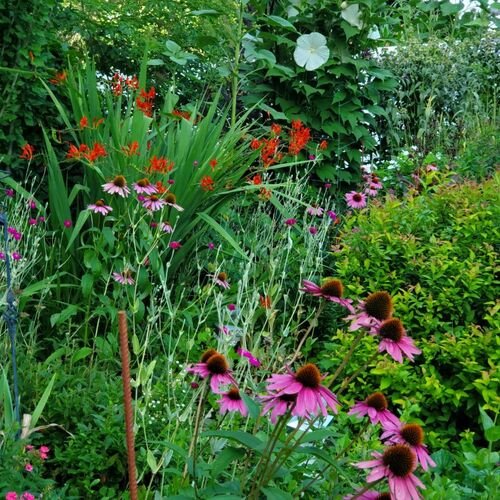
A garden can change quickly when the light around it changes. When nearby trees come down, beds that once received shade can suddenly be exposed to hours of direct sun, forcing both plants and gardeners to adjust. Today we’re visiting Candice’s garden in New Jersey, in Newton (Zone 6a), which went through exactly that kind of shift last fall.
I started these gardens in May 2018, when the property was pretty much a blank slate after removing a large five-trunk maple in the backyard. I tracked the sun for a year to see what would fit where.
Last fall, my next-door neighbor removed three unhealthy trees, including one that could have come down on my house, so the amount of sunlight in the garden changed dramatically. Some things burned, while others thrived. One thing about gardens—you need to be able to adapt to what nature brings.
This year, I shared my garden with the Sussex County Garden Club on July 16. The beds use several types of edging, including manufactured concrete block, branches, and a path made from tree-trunk rounds. It’s still a work in progress. Lots of work and lots of fun.
Volunteer sunflowers (Helianthus annuus, annual)—which Candice credits the goldfinches with planting—tower over this part of the garden alongside ‘Kwintus’ pole beans (Phaseolus vulgaris ‘Kwintus’, annual). The beans appear to continue up the archway in the background, drawing the eye deeper into the garden. It’s such an inviting view that I immediately want to know what’s waiting on the other side.
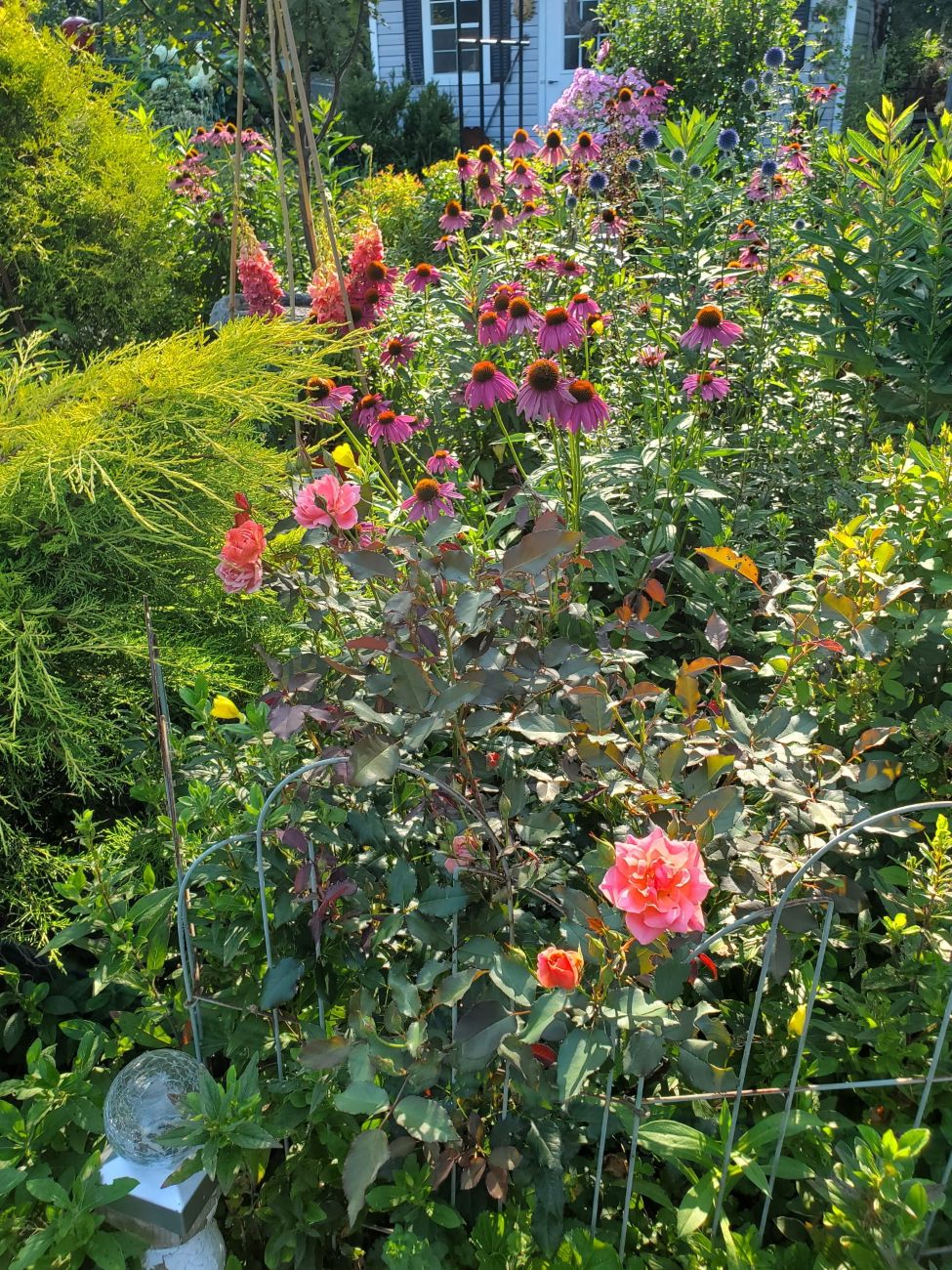
This densely planted border is packed with color, but the variety of textures and flower forms is what really makes it stand out. Purple coneflowers (Echinacea purpurea, Zones 3–9), roses (Rosa cvs., Zones 3–9), southern globe thistle (Echinops ritro, Zones 3–8), garden phlox (Phlox paniculata and cvs., Zones 4–8), and foxgloves (Digitalis purpurea and cvs., Zones 4–8) bring everything from rounded blooms to tall flower spikes. The spiky globes of the globe thistle and fine-textured ‘Mops’ Sawara false cypress (Chamaecyparis pisifera ‘Mops’, Zones 4–8) add even more contrast to this perennial bed.
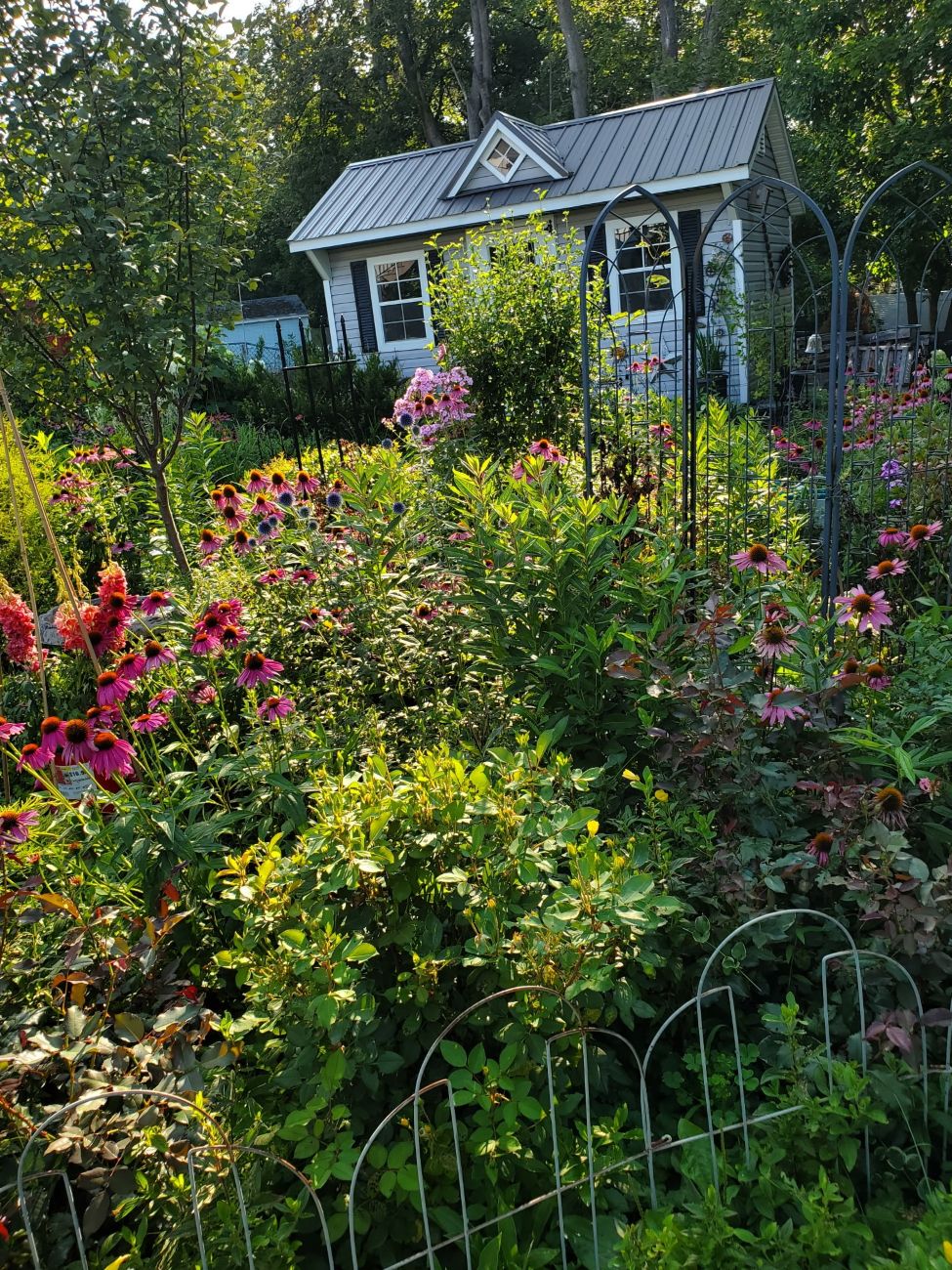
A wider view shows how the same mix of flower forms and textures carries through the garden around the shed.
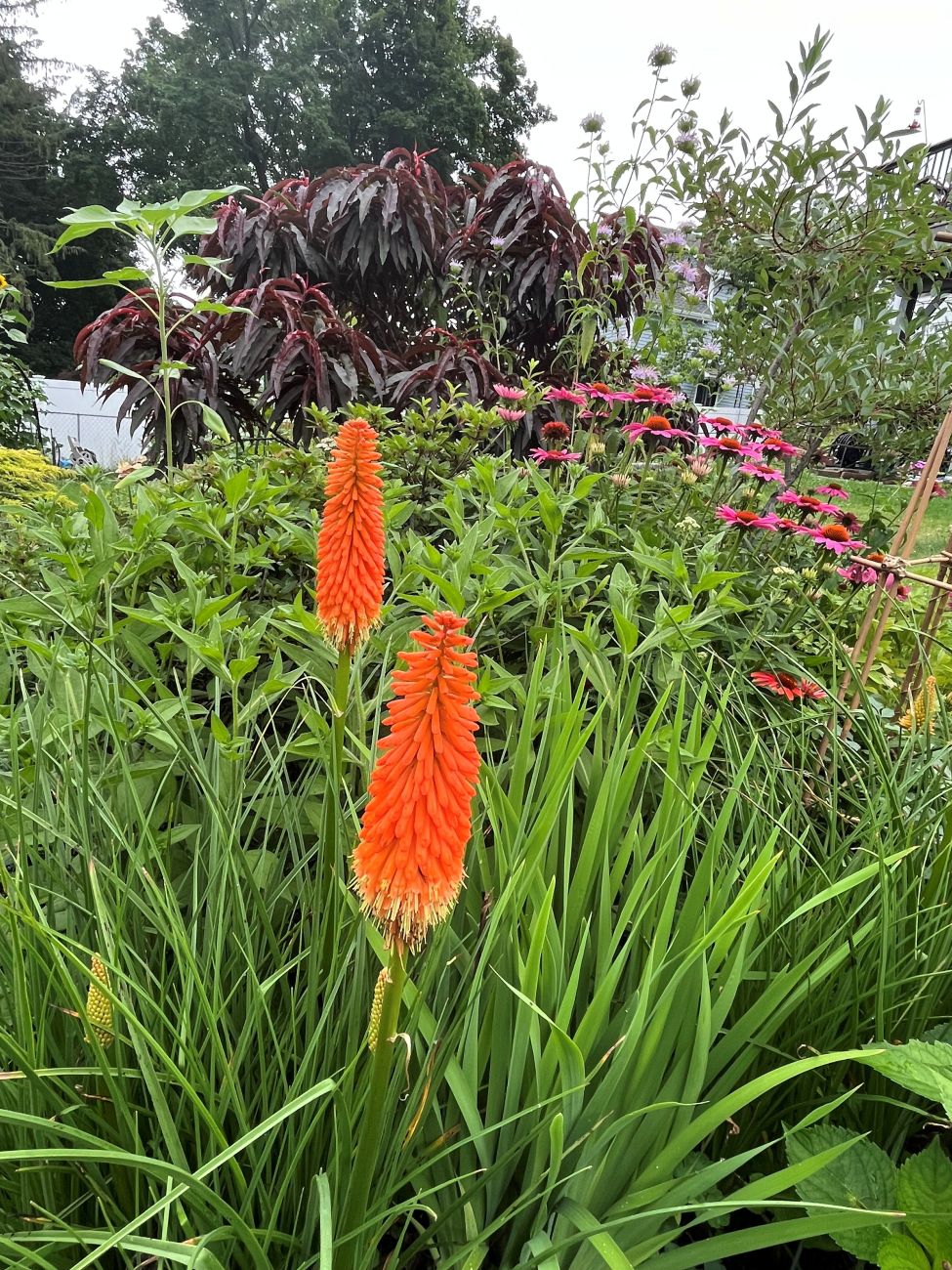
Red-hot poker (Kniphofia cvs., Zones 5–9) adds a vivid orange accent in the foreground, while Candice’s dwarf ornamental peach (Prunus persica, Zones 5–8) contributes deep burgundy foliage farther back in the planting.
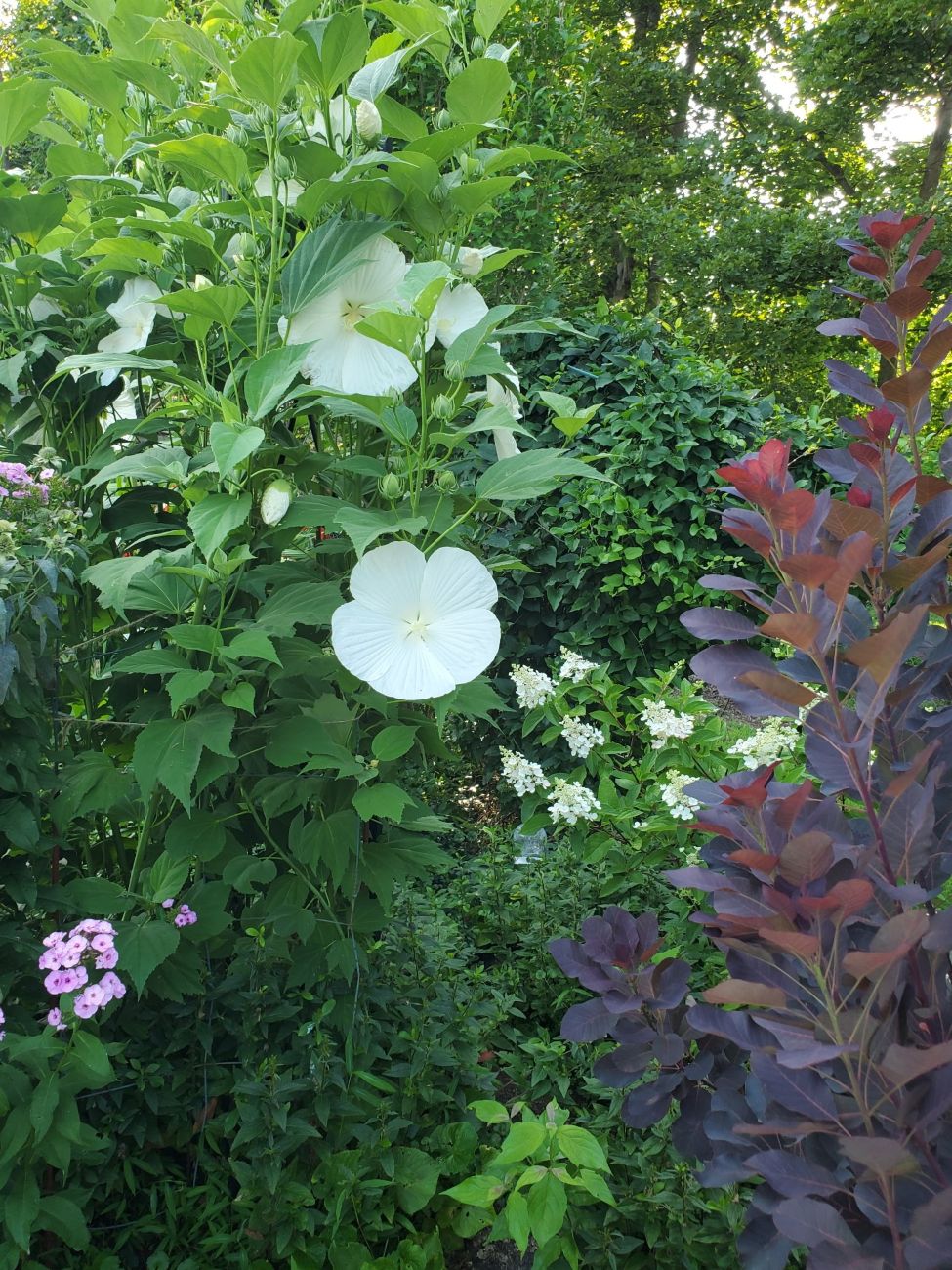
Candice’s heirloom white hardy hibiscus (Hibiscus hybrid, Zones 5–9) reaches about 8 feet tall, making the enormous white flowers especially dramatic. Nearby purple smoke bush (Cotinus coggygria cv., Zones 4–8) provides contrast with dark foliage.
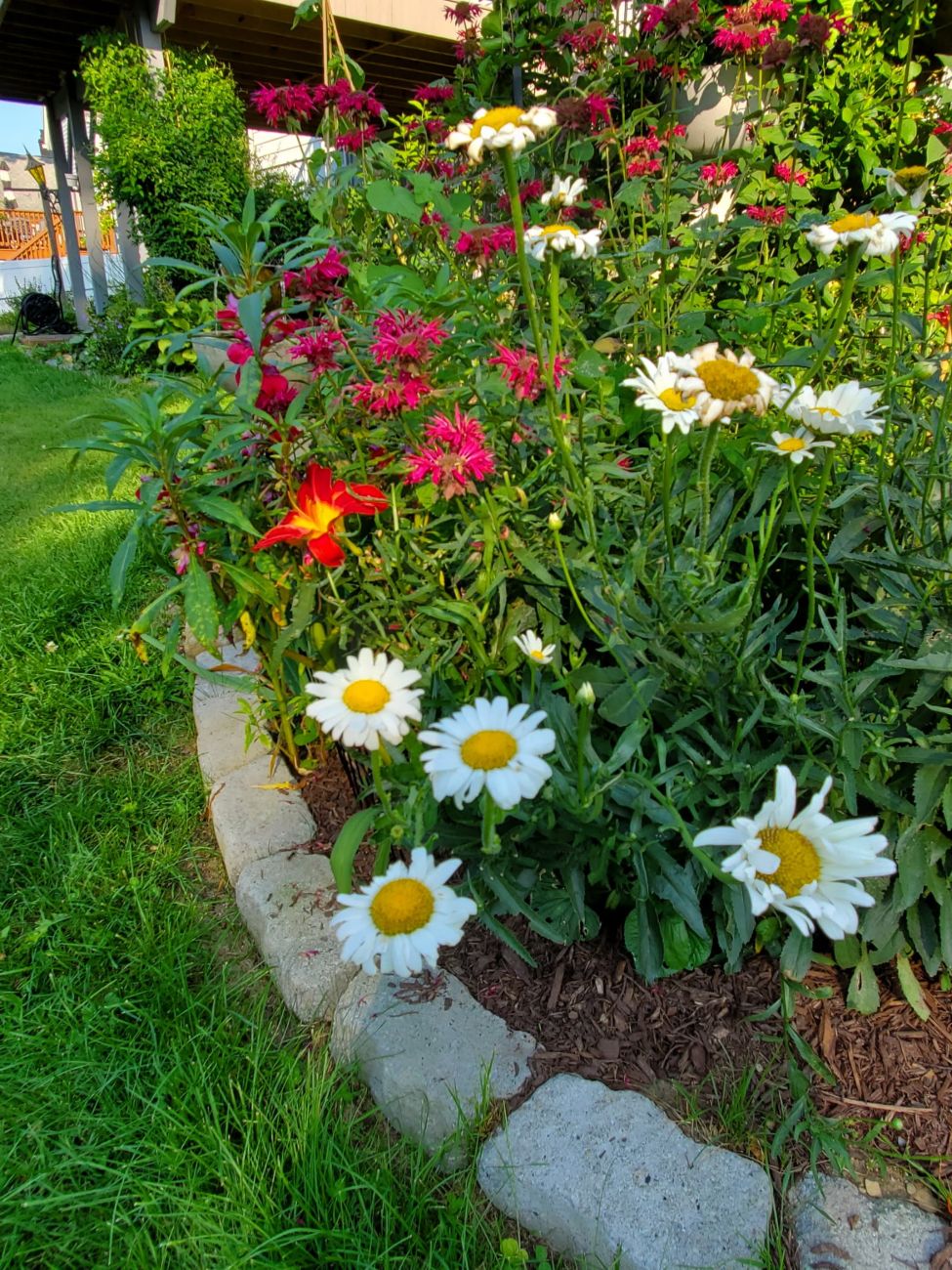
Bee balm (Monarda cvs., Zones 4–9), Shasta daisy (Leucanthemum × superbum and cvs., Zones 5–9), and red daylilies (Hemerocallis hybrids, Zones 3–9) carry the same red, white, and pink tones seen elsewhere in the garden. Repeating those colors in different flower forms helps the beds feel connected even as the plant combinations change.
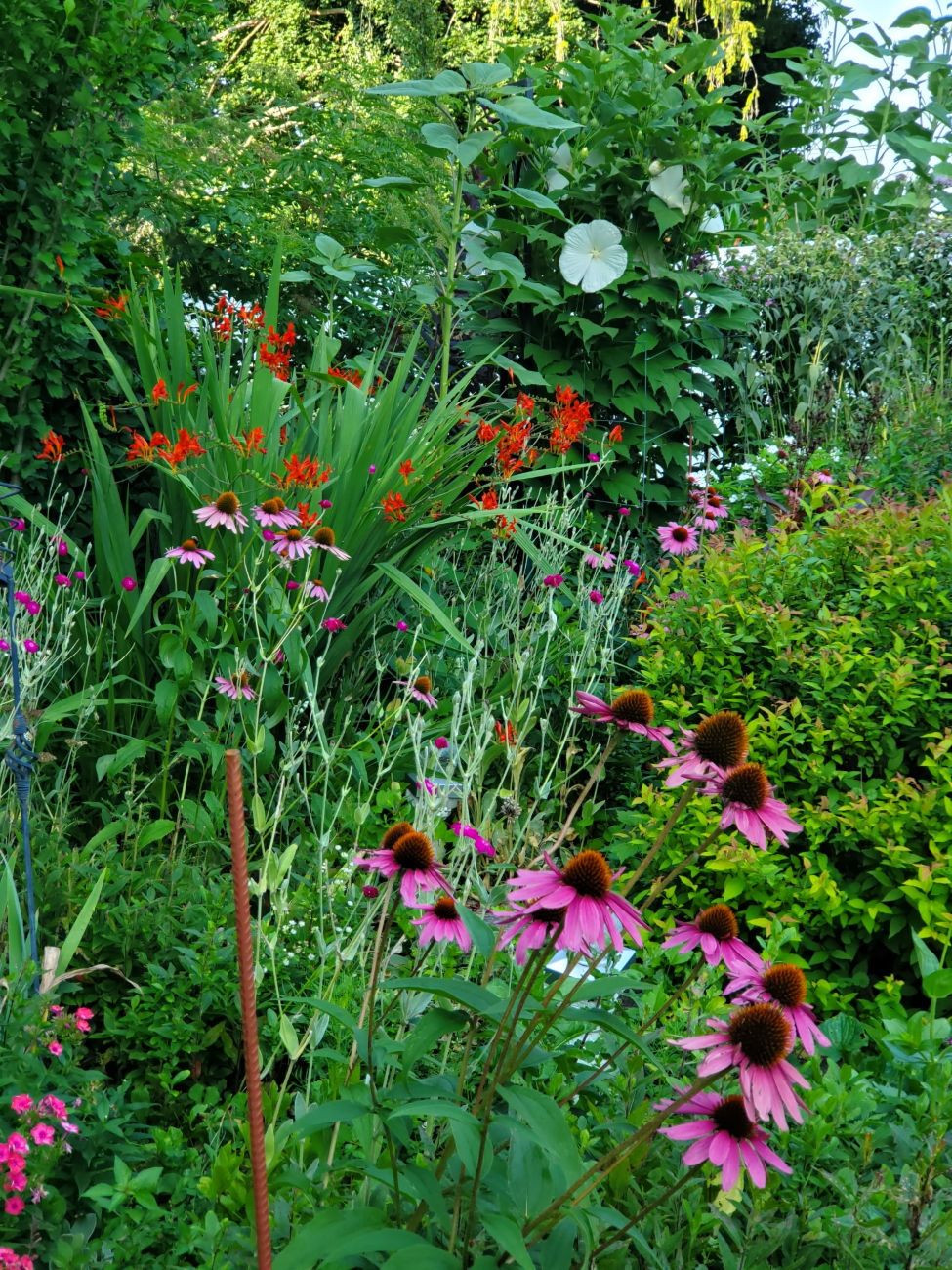
Crocosmia (Crocosmia cvs., Zones 6–9), coneflowers, and the towering white hardy hibiscus come together in another view of the garden’s midsummer abundance.
Thanks for sharing your garden with us, Candice! I love how much you’ve created from the blank slate you started with in 2018. It will be fun to see how the garden continues to evolve under its new light conditions. I hope you’ll send us another update!
We want to see YOUR garden!
Have photos to share? We’d love to see your garden, a particular collection of plants you love, or a wonderful garden you had the chance to visit!
To submit, fill out the Garden Photo of the Day Submission Form.
You can also send 5–10 photos to [email protected] along with some information about the plants in the pictures and where you took the photos. We’d love to hear where you are located, how long you’ve been gardening, successes you are proud of, failures you learned from, hopes for the future, favorite plants, or funny stories from your garden.
Do you receive the GPOD by email yet? Sign up here
Fine Gardening Recommended Products
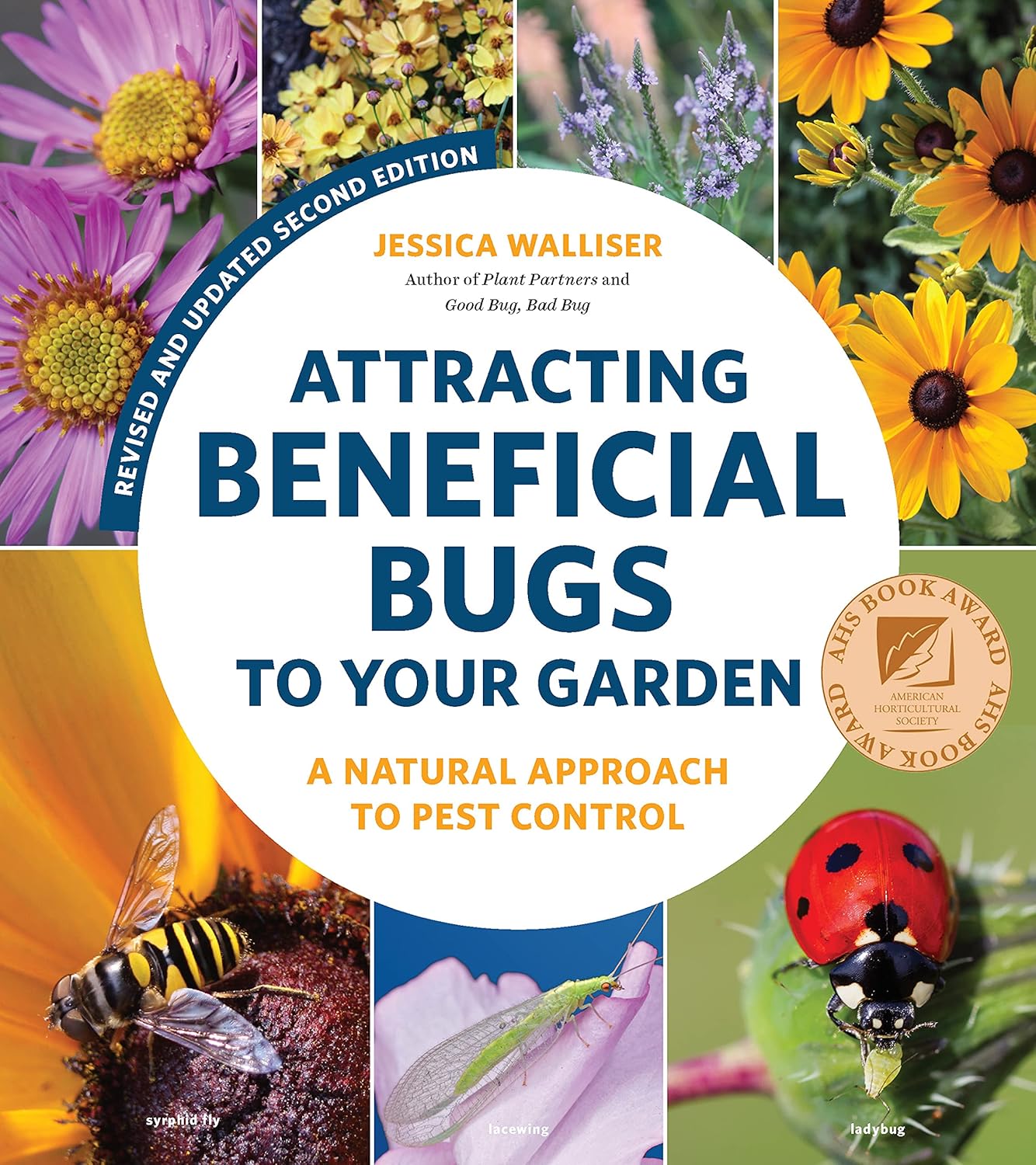
Attracting Beneficial Bugs to Your Garden, Revised and Updated Second Edition: A Natural Approach to Pest Control
Fine Gardening receives a commission for items purchased through links on this site, including Amazon Associates and other affiliate advertising programs.
This revised and updated edition of Jessica Walliser’s award-winning Attracting Beneficial Bugs to Your Garden offers a valuable and science-backed plan for bringing balance back to the garden. With this indispensable gardening reference—now updated with new research, insights, and voices—learn how to create a healthy, balanced, and diverse garden capable of supporting a hard-working crew of beneficial pest-eating insects and eliminate the need for synthetic chemical pesticides.
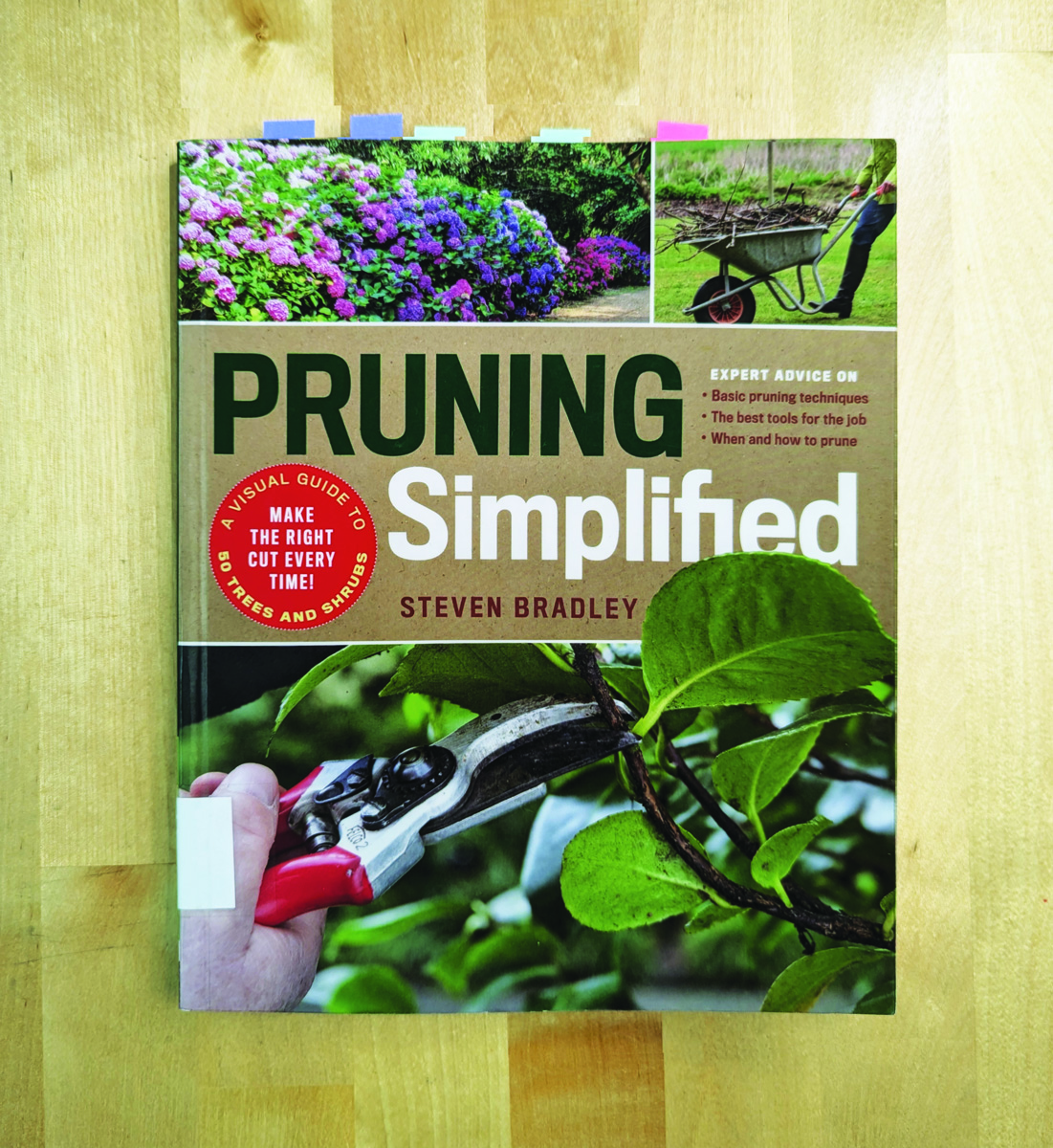
Pruning Simplified: A Step-by-Step Guide to 50 Popular Trees and Shrubs
Fine Gardening receives a commission for items purchased through links on this site, including Amazon Associates and other affiliate advertising programs.
Pruning Simplified shows you exactly how to do it. This must-have guide offers expert advice on the best tools for the job, specific details on when to prune, and clear instructions on how to prune. Profiles of the 50 most popular trees and shrubs—including azaleas, camellias, clematis, hydrangeas, and more—include illustrated, easy-to-follow instructions that will ensure you make the right cut the first time.
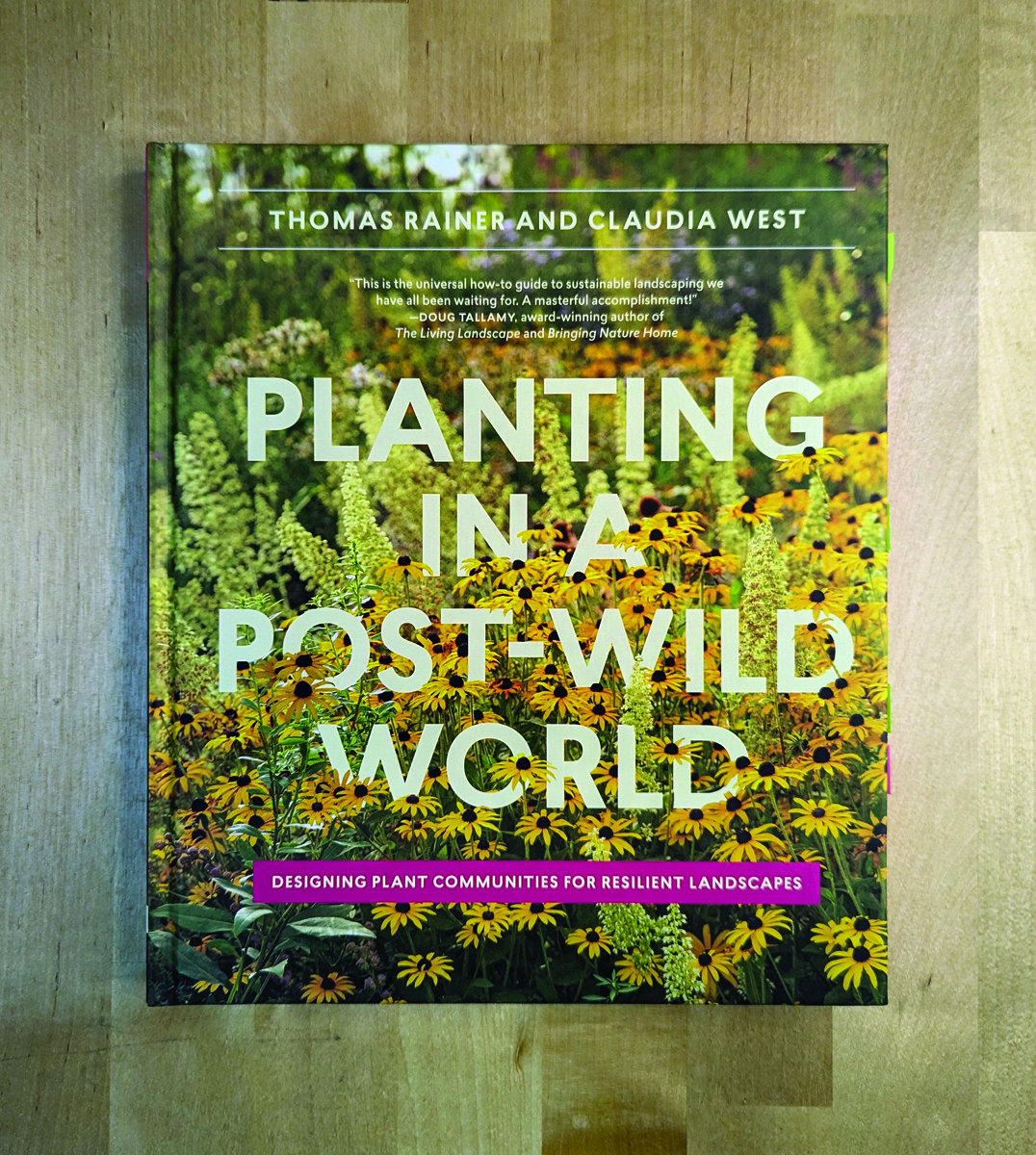
Planting in a Post-Wild World: Designing Plant Communities for Resilient Landscapes
Fine Gardening receives a commission for items purchased through links on this site, including Amazon Associates and other affiliate advertising programs.
Featuring gorgeous photography and advice for landscapers, Planting in a Post-Wild World by Thomas Rainer and Claudia West is dedicated to the idea of a new nature—a hybrid of both the wild and the cultivated—that can nourish in our cities and suburbs.

