


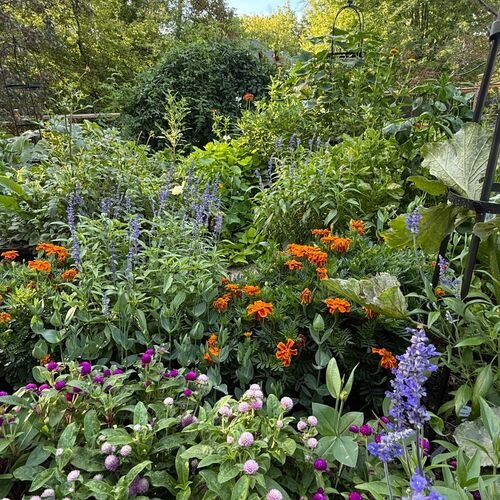
There’s a long-running garden debate over whether vegetables belong in their own tidy plot or can share space with flowers and ornamentals. But Amy’s (@roots.n.reps) edible and ornamental garden makes a pretty convincing case for another option: why not both?
Mixing vegetables with annuals, perennials, herbs, and cut flowers can make a garden feel more abundant, but there’s a practical benefit too. Flowers bring pollinators into the garden, and many fruiting crops benefit from those visits.
I’m Amy, a Master Gardener in the western suburbs of Minneapolis, Minnesota, and I’ve been gardening for more than 30 years. Even after all these years, I’m still experimenting, changing things and learning every season.
I’m an organic gardener and healthy soil is always where I start. I love growing densely and I’ve never been interested in planting everything in perfect rows or creating a cookie-cutter garden. I group plants together and weave them throughout the garden. Color, pattern and texture are a huge part of how I plant, and I love a garden that feels abundant, a little wild and very much my own.
Dahlias (Dahlia cvs., Zones 8–11) and zinnias (Zinnia elegans, annual), but one of the things I love most is watching the whole garden come together as the season progresses. I’m constantly trying something new. Some ideas turn out beautifully, some completely flop and I change them the next year. I think that experimentation is a big part of why I still love gardening so much after 30+ years. There is always something else to learn and grow.
This year I started sharing more of my garden through Roots N Reps. My hope is to encourage other gardeners to get creative, think beyond traditional garden rows and realize there isn’t just one “right” way to garden. I share my garden, projects, seasonal garden tours and the things I’ve learned along the way on Instagram, Facebook and YouTube under Roots N Reps. If there’s one thing I hope people take away from my garden, it’s pretty simple: grow what you love. Xo
Late-summer abundance in my Minnesota garden, where flowers, vegetables and herbs are planted together for layers of color, texture and movement.
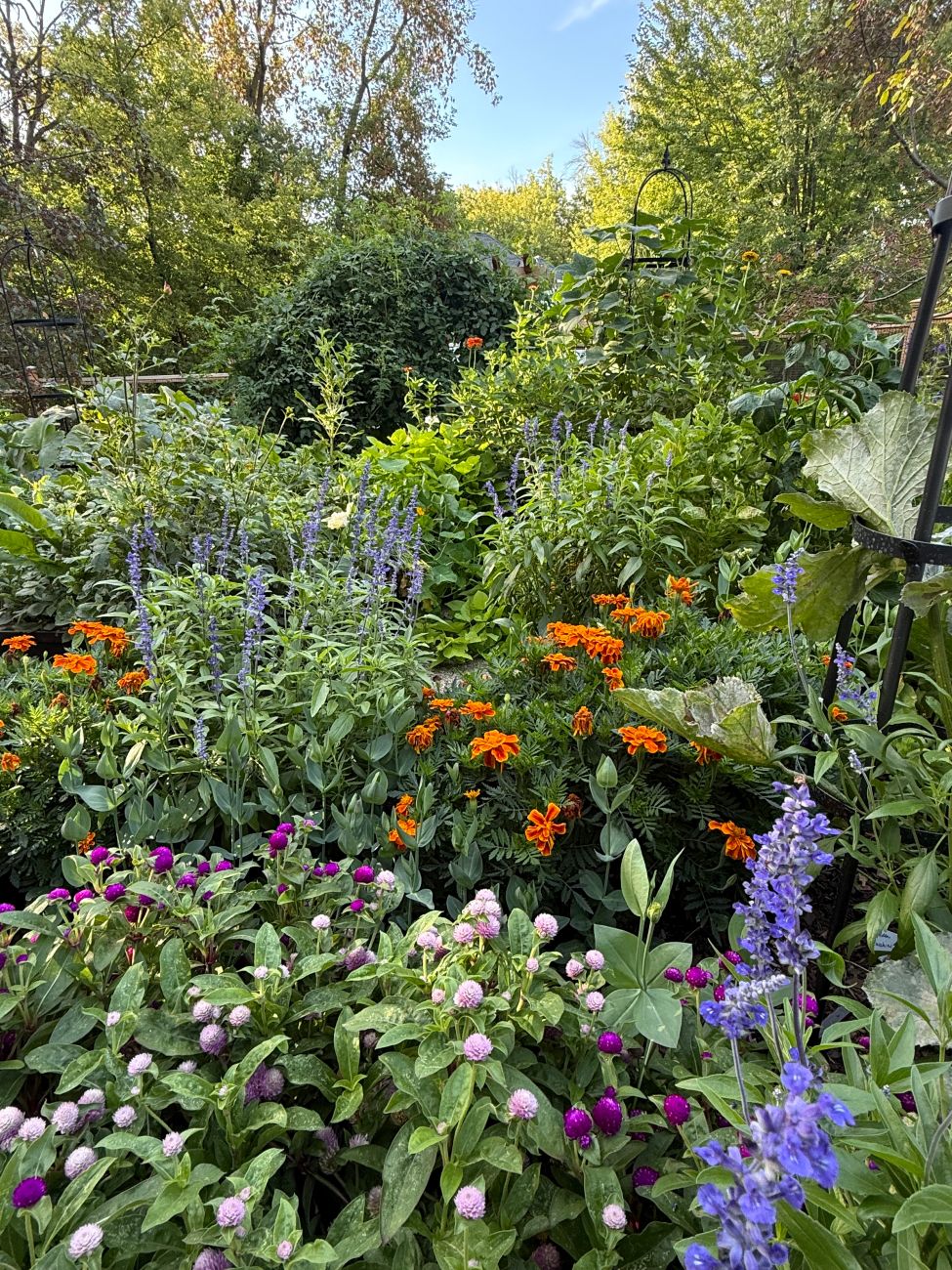
Dense planting creates a tapestry of color and texture, with flowers, herbs and vegetables woven together throughout my garden.
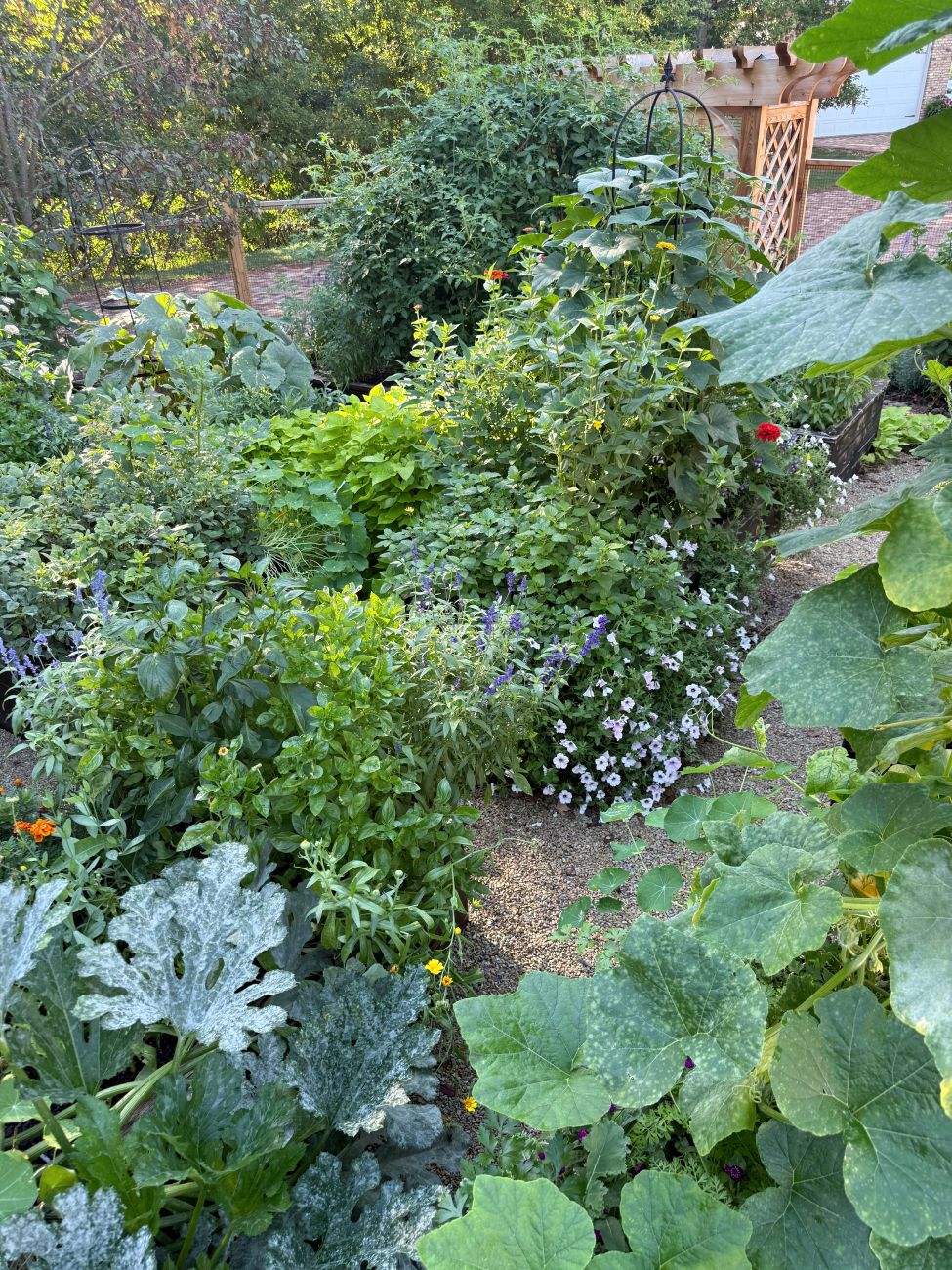
Edibles and ornamentals grow side by side, turning my vegetable garden into a space that’s as beautiful as it is productive, while gravel paths wind between overflowing raised beds and create little moments of discovery around every corner.
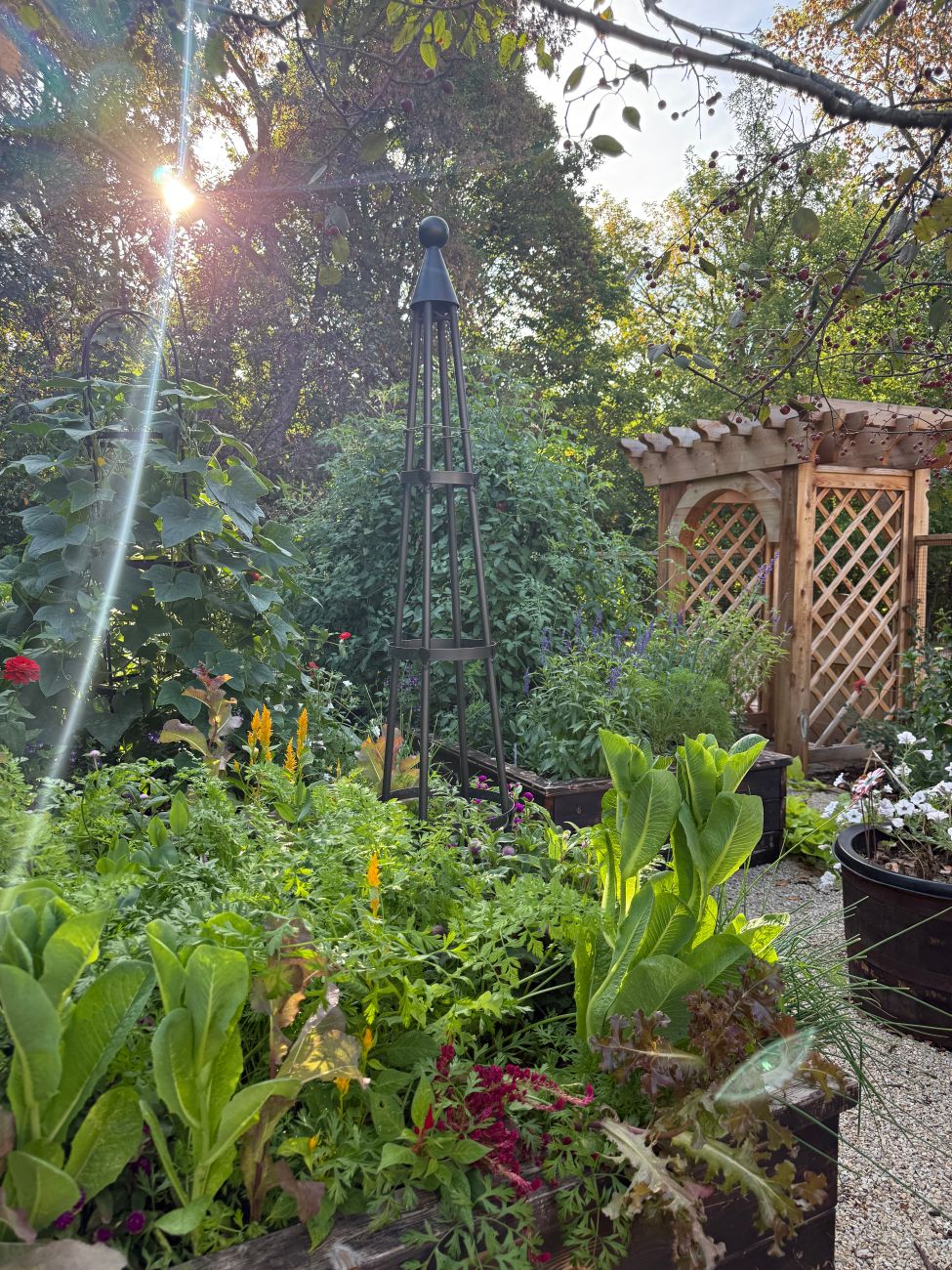
Garden structures add height and character while lush plantings soften the space and invite you to wander through.
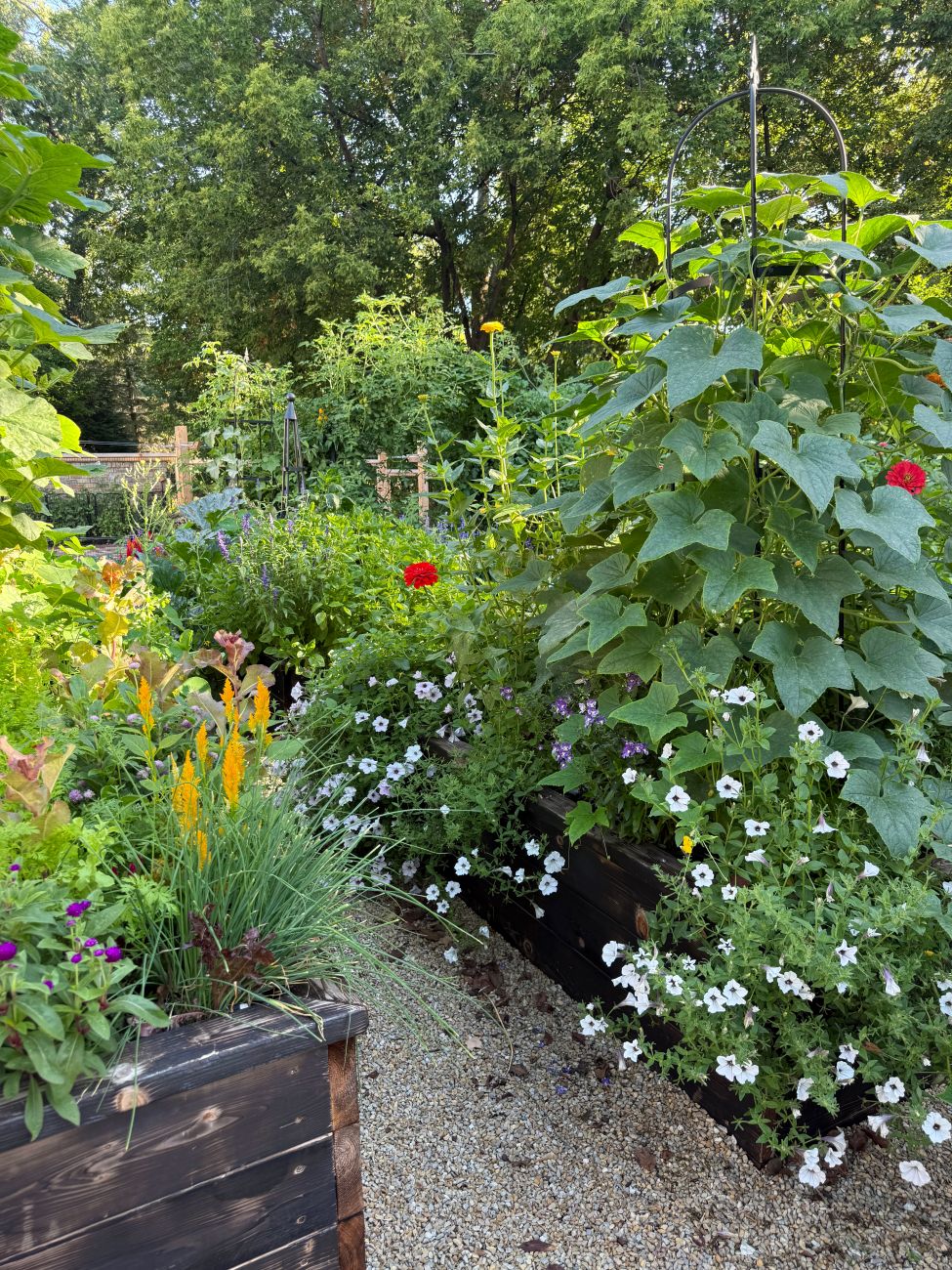
Growing vertically adds another layer to my garden, allowing vegetables and flowers to climb while making the most of every bit of space.
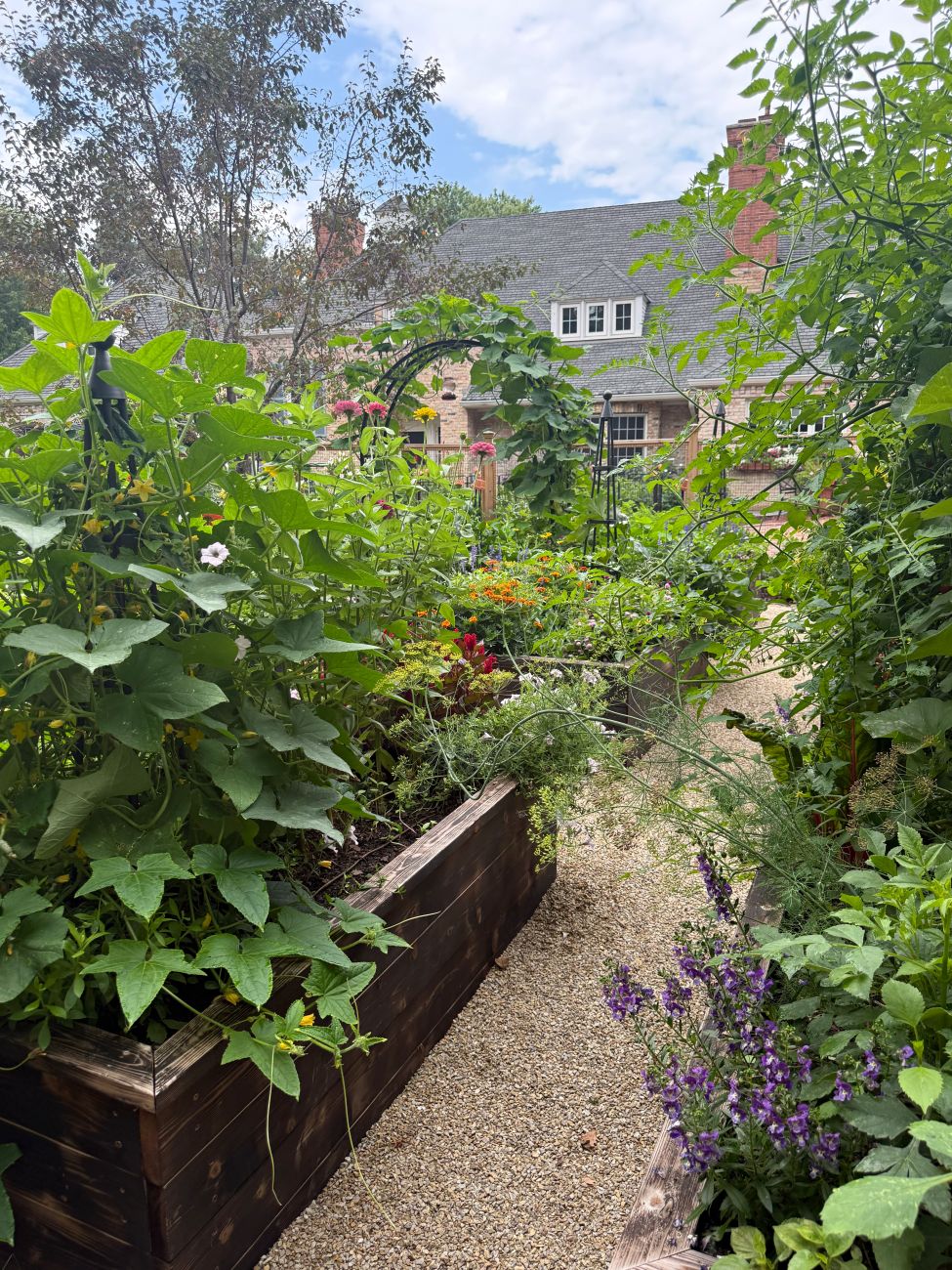
Gravel paths wind through overflowing raised beds, creating little moments of discovery around every corner.
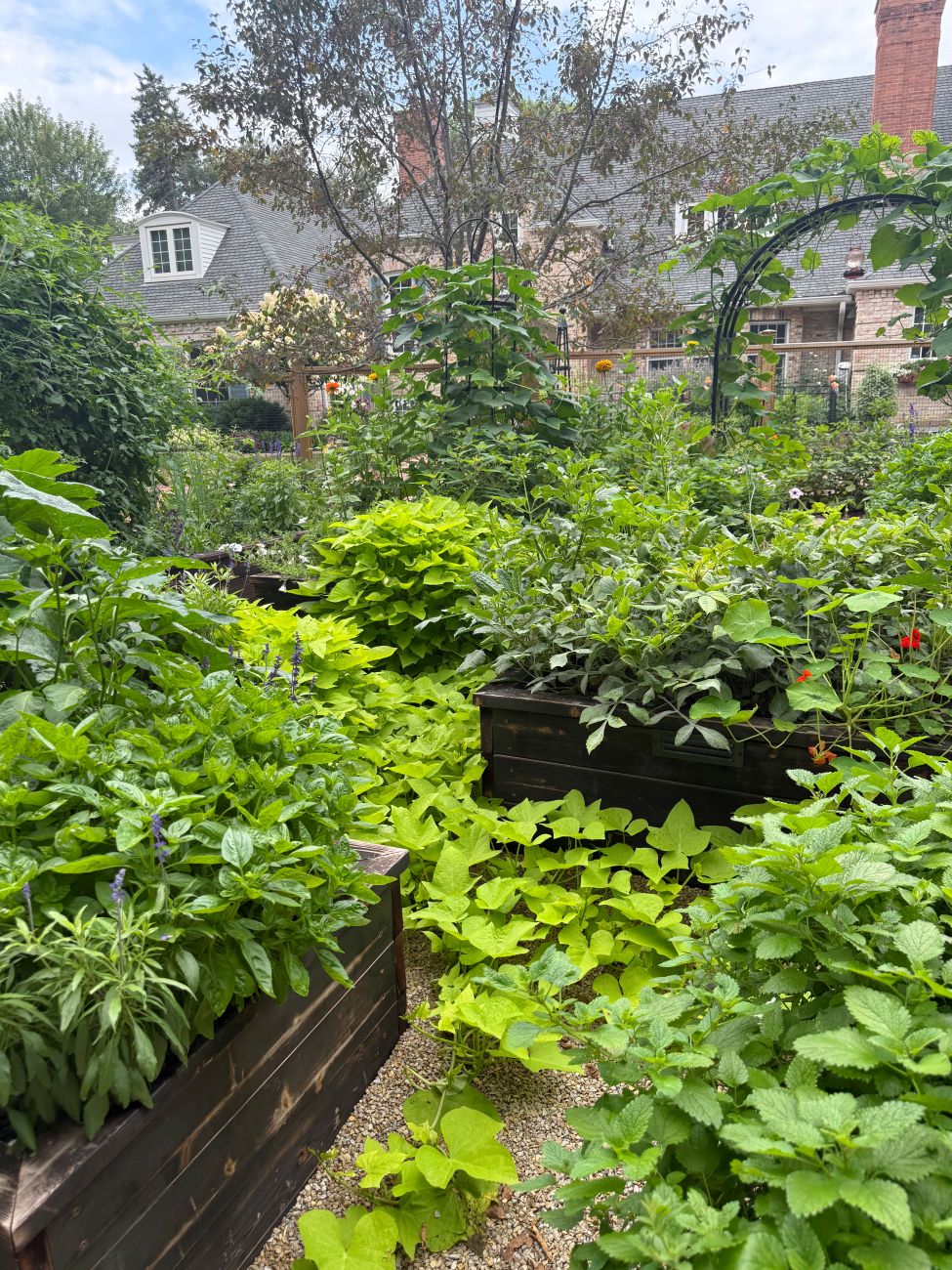
I love letting plants spill beyond the raised beds, blurring the lines between pathways and plantings and giving my garden a loose, abundant feel.
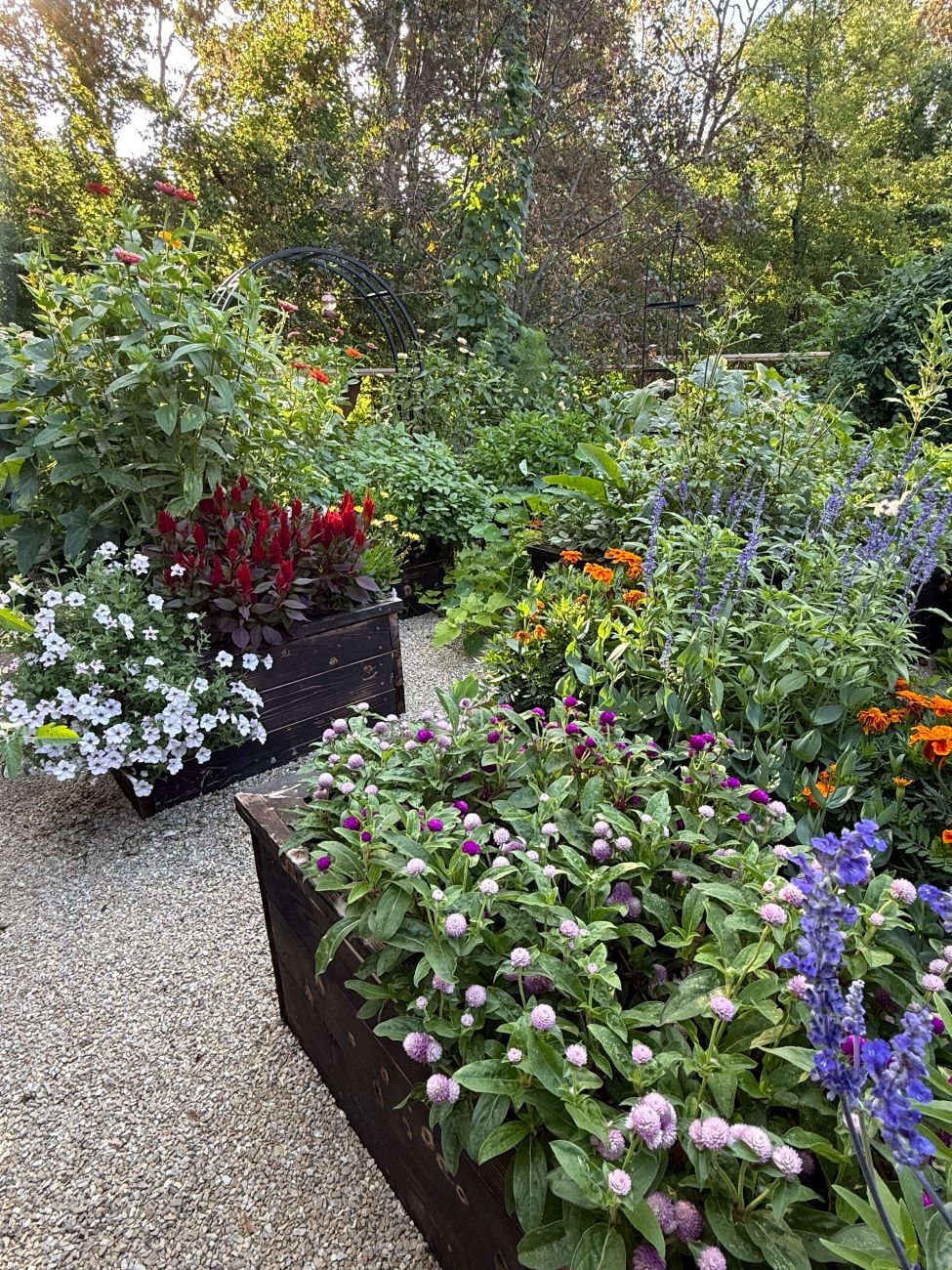
I repeat colors and plants throughout my garden, creating a sense of rhythm while letting everything feel loose, full and a little wild.
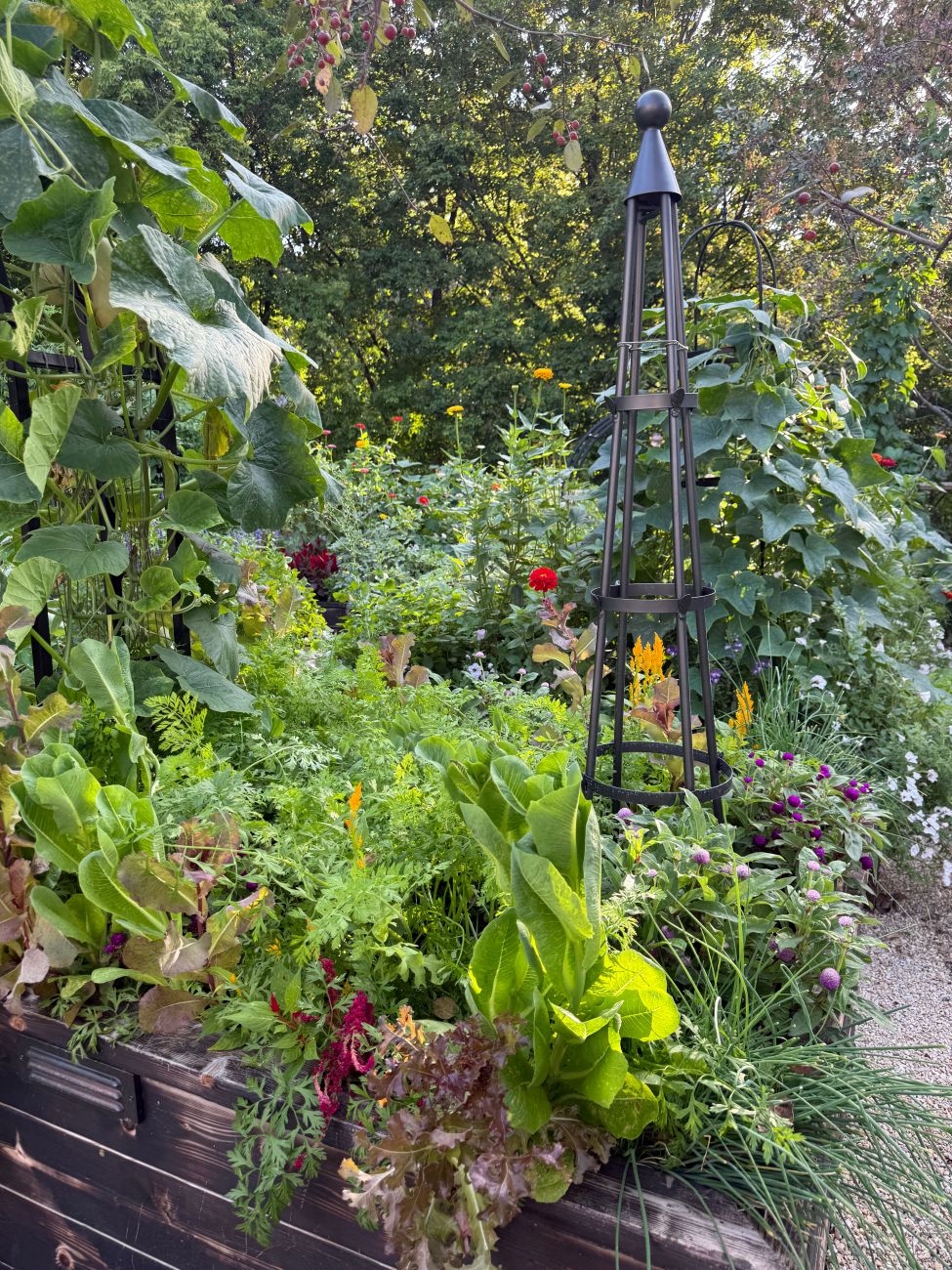
I use vertical elements throughout my garden to draw the eye up, add structure and give all that wild abundance a little balance.
Thanks for sharing your beautiful and well-maintained garden with us, Amy! I’m especially inspired by your planting combinations and love how you let the vines spill out of the beds and into the walkways. I hope you’ll share more with us!
We want to see YOUR garden!
Have photos to share? We’d love to see your garden, a particular collection of plants you love, or a wonderful garden you had the chance to visit!
To submit, fill out the Garden Photo of the Day Submission Form.
You can also send 5–10 photos to [email protected] along with some information about the plants in the pictures and where you took the photos. We’d love to hear where you are located, how long you’ve been gardening, successes you are proud of, failures you learned from, hopes for the future, favorite plants, or funny stories from your garden.
Do you receive the GPOD by email yet? Sign up here
Fine Gardening Recommended Products

Nesco Snackmaster Express Food Dehydrator
Fine Gardening receives a commission for items purchased through links on this site, including Amazon Associates and other affiliate advertising programs.
500-watt 4-tray food dehydrator dries in hours with adjustable thermostat that allows you to dry different foods at proper temperatures (95°F – 155°F). Four 13.5-inch BPA-free trays allow you to dry large quantities at once with no tray rotation needed. Includes 1 fruit roll sheet and 2 original-flavor jerky spice and cure packets.
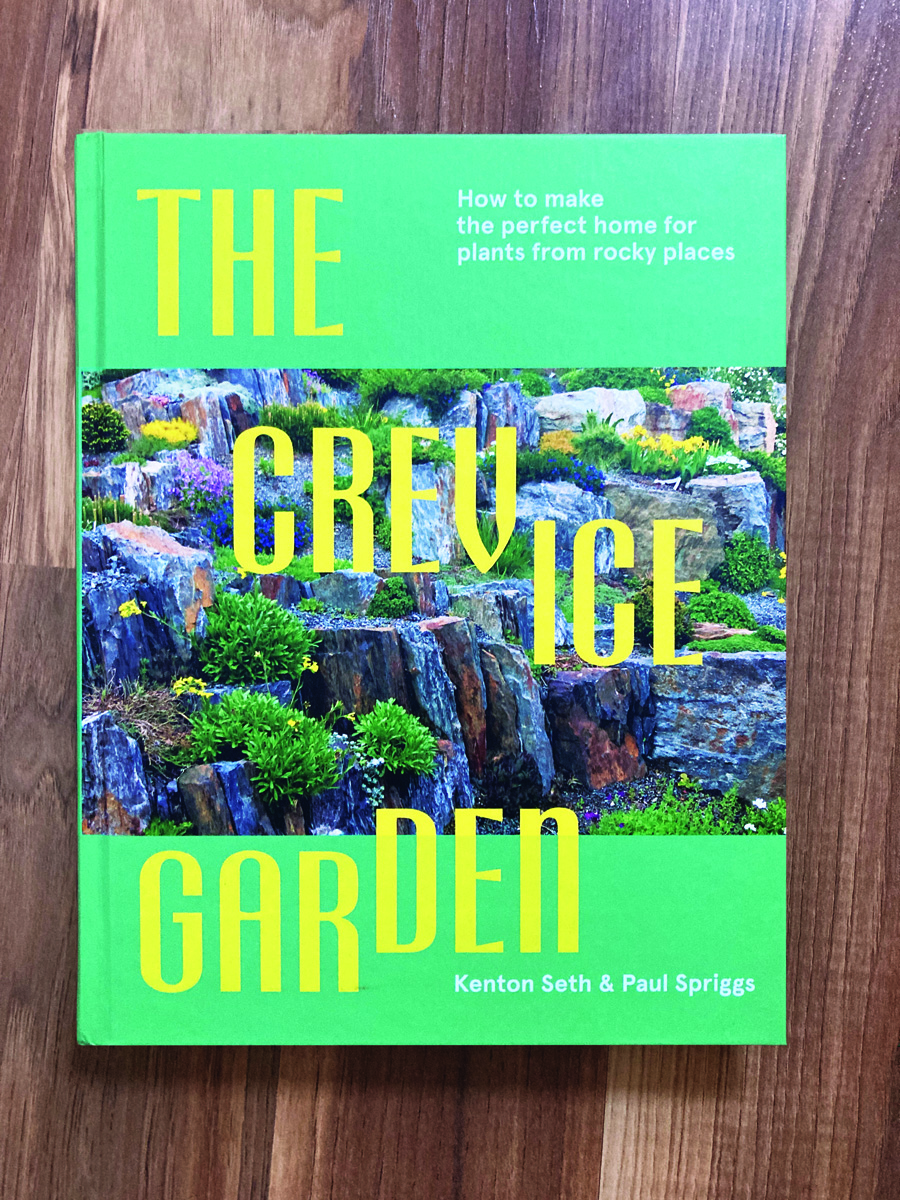
The Crevice Garden: How to make the perfect home for plants from rocky places
Fine Gardening receives a commission for items purchased through links on this site, including Amazon Associates and other affiliate advertising programs.
A crevice garden replicates the environmental conditions of mountain tops, deserts, coastlines, and other exposed or rocky places on earth. These striking garden features provide perfect conditions for the plants native to these far-off places, bringing the cultivation of these precious gems within everybody’s reach.
Niteangel Natural Wooden Insect Hotel, Garden Insect House for Ladybugs, lacewings, Butterfly, Bee, Bug
Fine Gardening receives a commission for items purchased through links on this site, including Amazon Associates and other affiliate advertising programs.
The insect nest box provide a safe environment where garden creatures can shelter, hibernate and lay their eggs, the insect house can also keep insects from entering your warm room. The insect hotel makes it easy to find and observe fascinating creatures. the butterfly, bees and ladybugs can use this product as habitat. Dry wood and Bamboo can be home to many insects such as ladybirds and lacewings which eat aphids and help keep your plants pest-free. the insect hotel improve the growth of plants in your yard by attracting beneficial insects. The iron design on the top can keep the insect house from rainwater. Let the insect house have a longer useful life and make the insects more comfortable. If you only have a balcony or yard, the hanging garden shelter is ideal as it provides a choice of suitable habitats in a small area.

