


If you want to keep snakes out of your garden, the first thing I’ll ask you is: why?
If you’re afraid of them, I totally get it. They can be scary. But snakes are one of those animals that are almost entirely beneficial.
They won’t dig big holes where your plants should be rooting, they don’t spread awful diseases to humans, and they don’t chew through crops that you’ve spent months nurturing.
If you want to avoid having to keep rats, voles, moles, mice, rabbits, and other small herbivores out of the garden, you might want to reconsider your desire to keep snakes away.
It’s not just herbivores, either. They will eat slugs and some insects, as well.
Now I get it. I’ve stumbled across an angry rattlesnake ready to strike, and I don’t think my heart rate went down for the rest of the day.
But that one wasn’t in my garden, and most venomous snakes won’t be in yours, either.
So with that caveat, if you really can’t stand having them around, we’ll help you achieve your goals.
We’re going to look at the real science behind using snake-repellent plants, which ones work, and what you can do to keep those nope ropes at bay.
Here are the topics we’ll cover in our journey:
Common Snake Species in the Garden
In North America, by far, the most common garden varieties are garter (Thamnophis spp.), rat (subfamily Colubrinae), king (Lampropeltis spp.), and racers (Coluber spp.).
In Europe and Russia, you’ll see a lot of whipsnakes, ratsnakes, and racers (subfamily Colubrinae), while pythons (family Pythonidae), flying (Chrysopelea spp.), wolf (Lycodon spp.), rat, and keelbacks (Rhabdophis spp.) make their homes in Asia, which has the most diversity.
Usually, it’s the non-venomous or mildly venomous species that stick close to our homes and gardens.
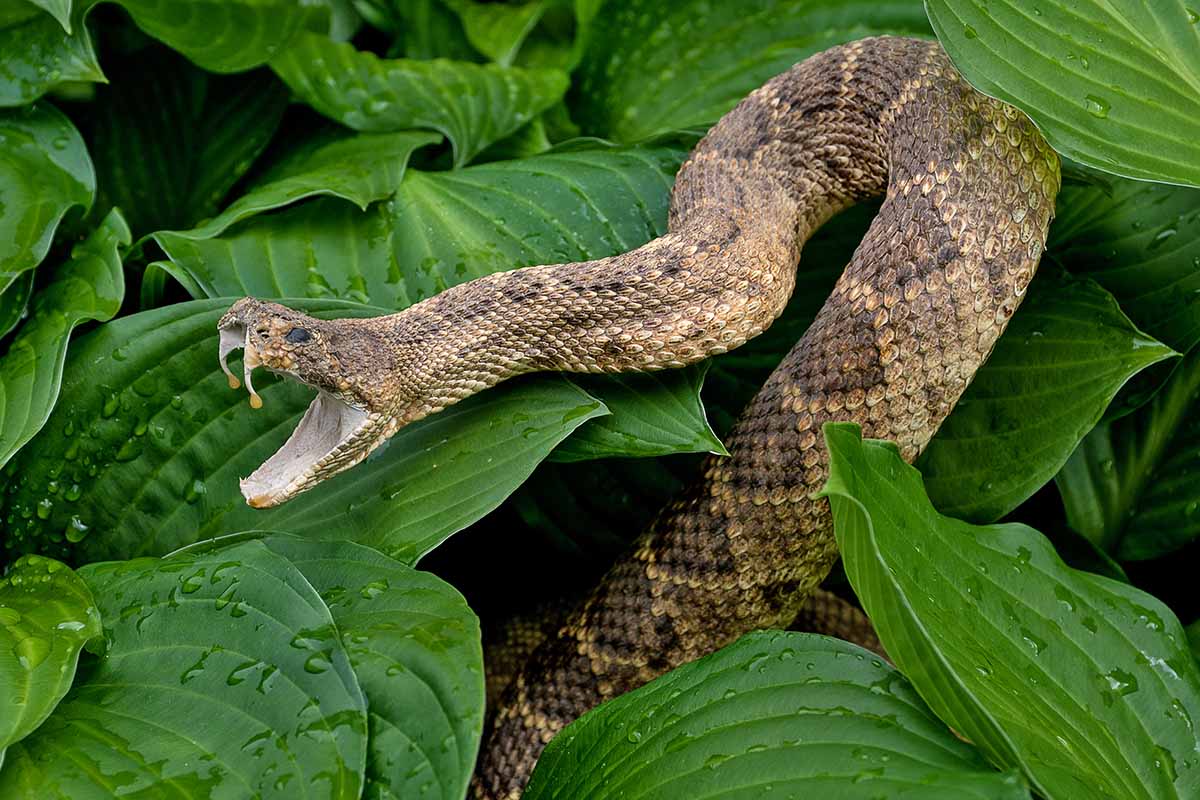
However, venomous types like rattlesnakes and sidewinders, copperheads, and coral snakes do exist in most parts of North America.
Vipers and adders live in Europe. Various vipers, sea, coral snakes, and cobras inhabit the broad range of Asia.
And let’s not even talk about the various death adders, vipers, taipans, coral snakes, and mambas of Australia. Australia, are you okay?
But in most cases, none of these want to hang out in cultivated gardens.
They don’t like humans and they mostly tend to avoid us.
They also hunt mammals, for the most part, and when we create our lovely gardens, we don’t create the ideal space for critters like rats and voles.
So venomous snakes don’t have much motivation to stick around in our gardens. You will find them in rural areas with large fields and the like.
Non-venomous (or mildly venomous) types often feed on smaller prey that they can subdue without the assistance of venom.
They prefer food like insects and slugs, although they will take a chance at small mice if they have the opportunity. Gardens tend to be full of bugs and slugs.
Regardless of the species, almost all will avoid humans as much as possible. They typically only strike if they feel cornered or are startled.
Identification
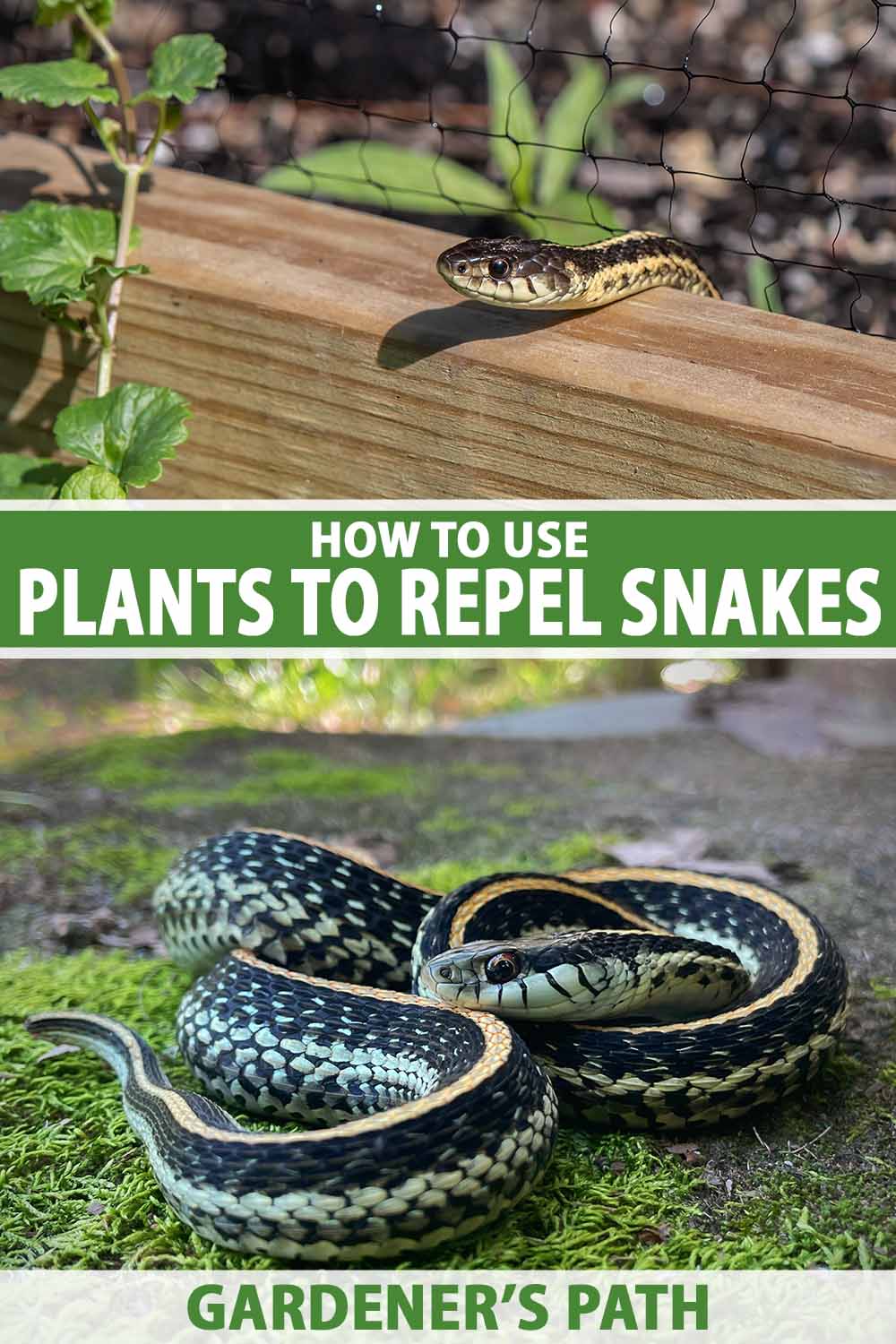
It’s nearly impossible to cover all the various different types, but broadly speaking, the average garter snake is pretty petite compared to their more frightening cousins.
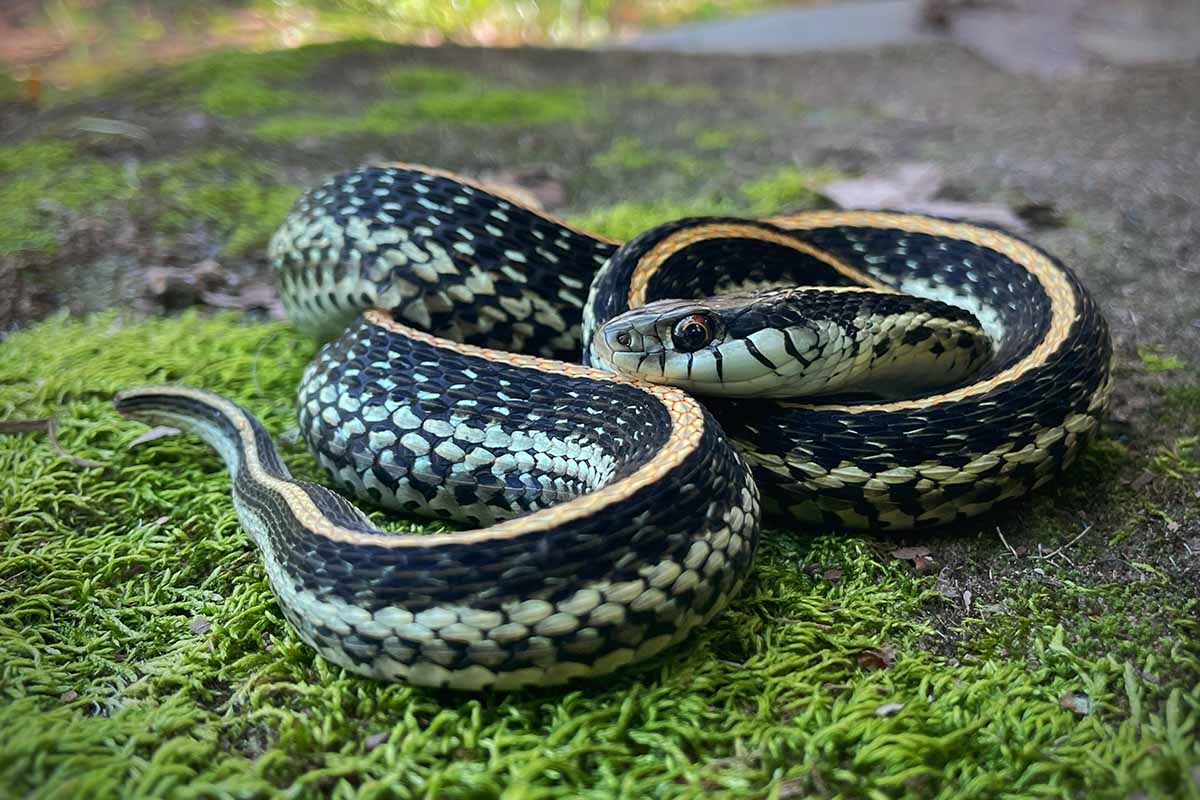
They usually stay under three feet in length. They tend to be slender with big, round eyes.
Fun fact alert! Redworms, like those we try to encourage in our compost bins, are toxic to garter snakes, so they won’t eat them.
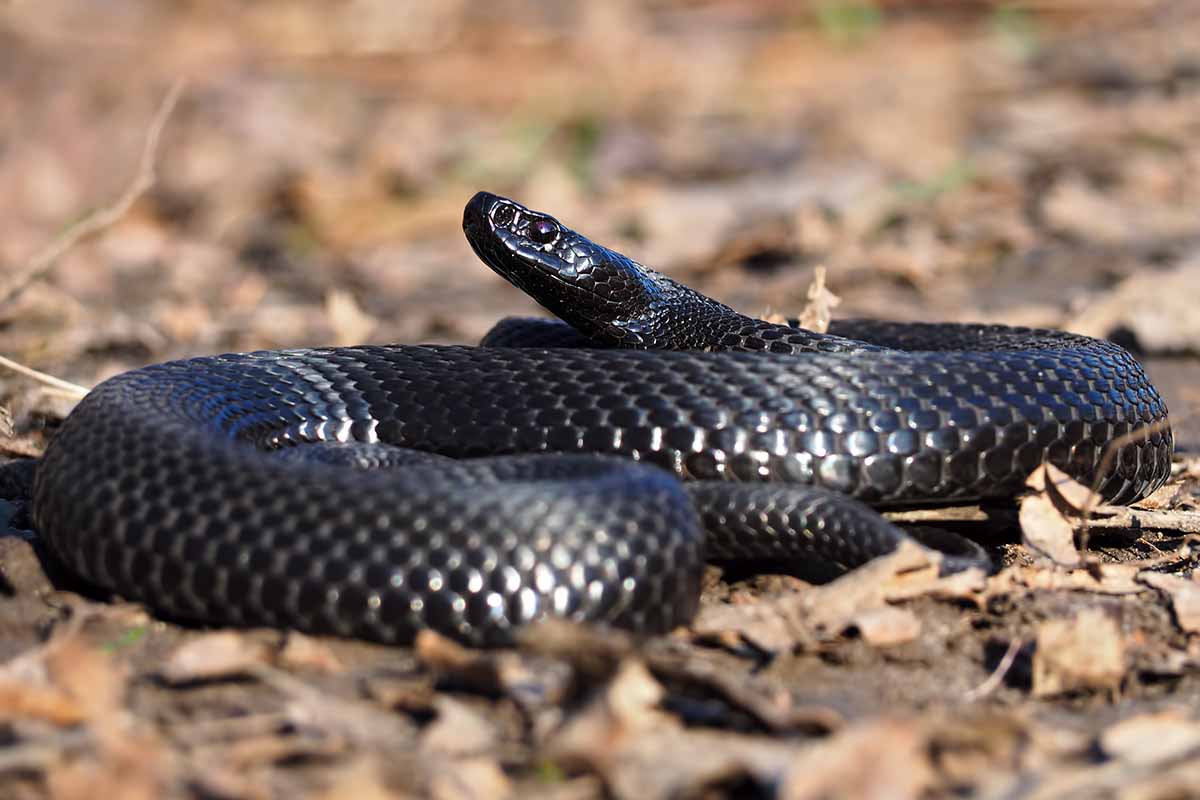
Racers or runners grow to about five feet long at most (with a few record-breaking exceptions), and most are solid without stripes or patterns.
These talented hunters are actually quite curious and will lift their heads to check out things with their acute vision.
They’ll sometimes try to mimic the rattle of a rattlesnake to scare off predators, but mostly they just race away as fast as possible – and they can move pretty fast.
They are also slender, with narrow heads.
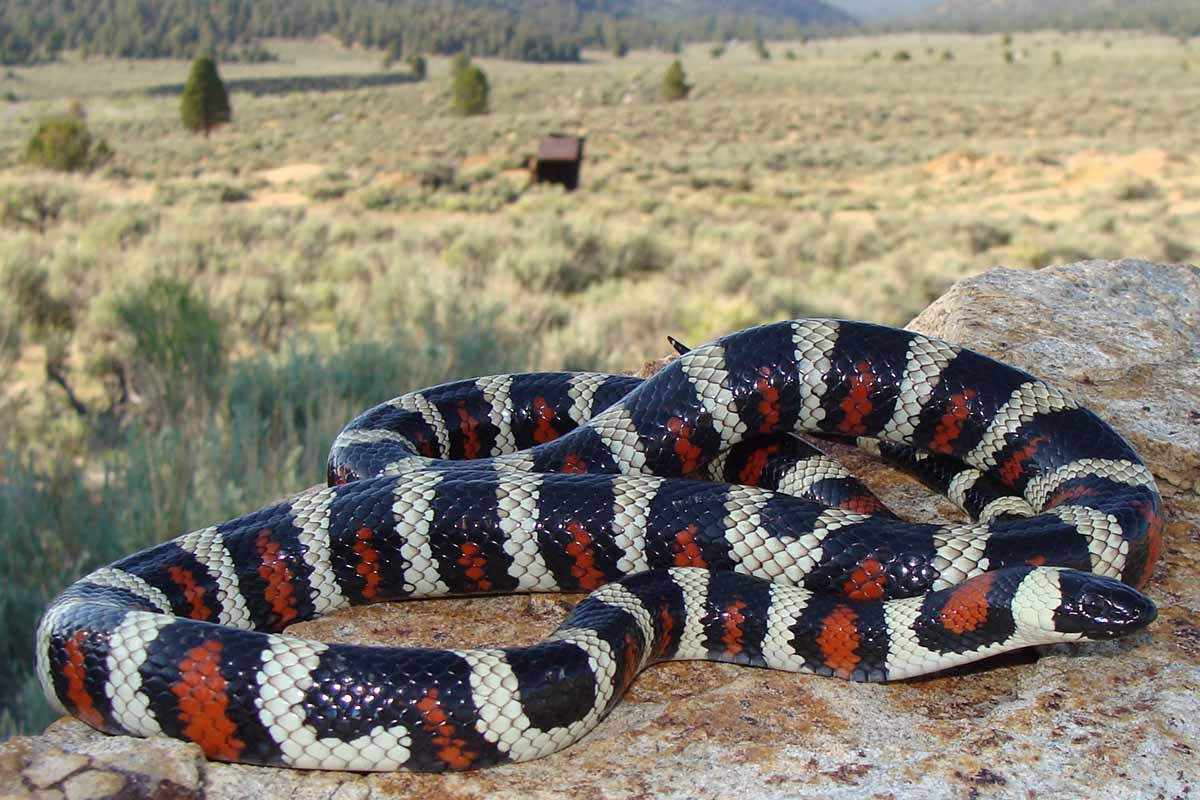
Kingsnakes vary from two to five feet and some have bright bands on their bodies.
If you’ve ever heard the poem “red touch black, poison lack, red touch yellow, kill a fellow,” it’s a device to help you distinguish kingsnakes from deadly coral snakes.
By the way, this mnemonic device only works in North America.
Kingsnake banding will be red, white, yellow, gray and even purple, though some species are solid or only muted in color. They are generally slender with narrow heads.
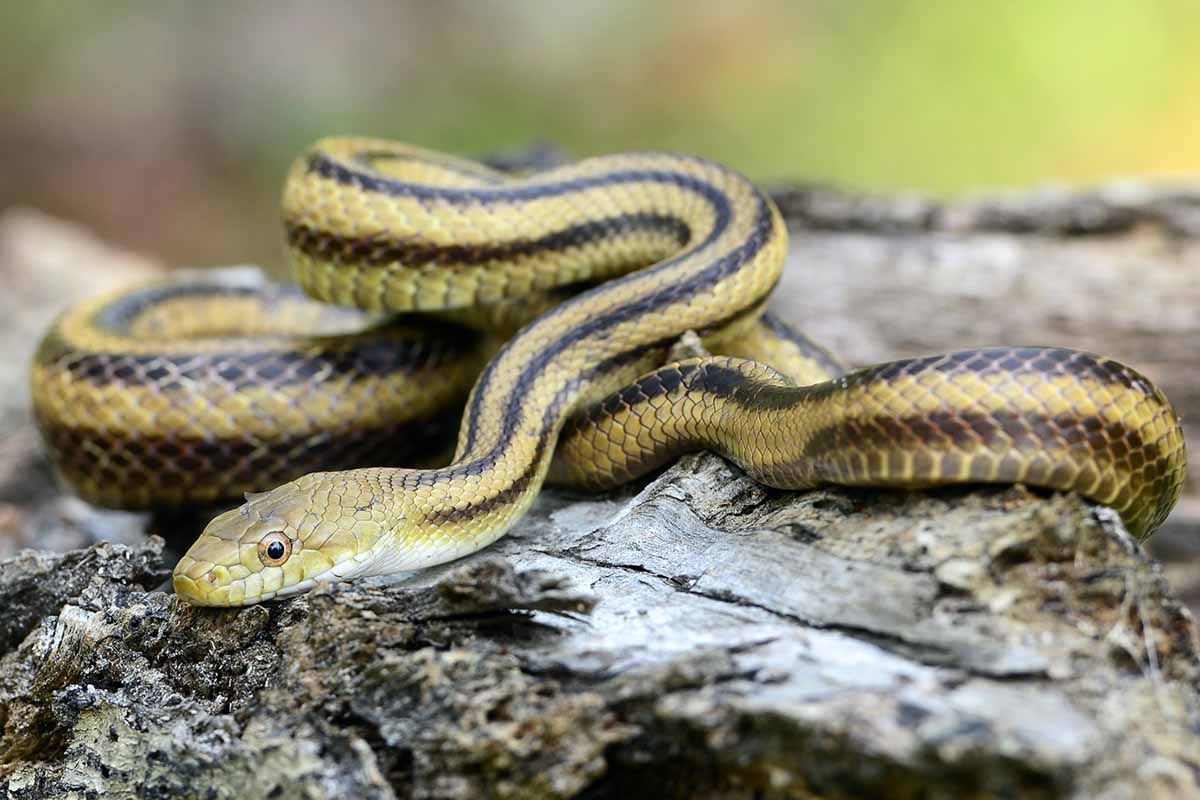
Rat snakes vary wildly in appearance. You may have seen a red rat (Pantherophis guttatus), also known as corn snake, as they are the most common of the pets in captivity.
It looks like a copperhead at first glance, but isn’t dangerous to humans. They grow up to six feet long and have orange, red, and brown bodies.
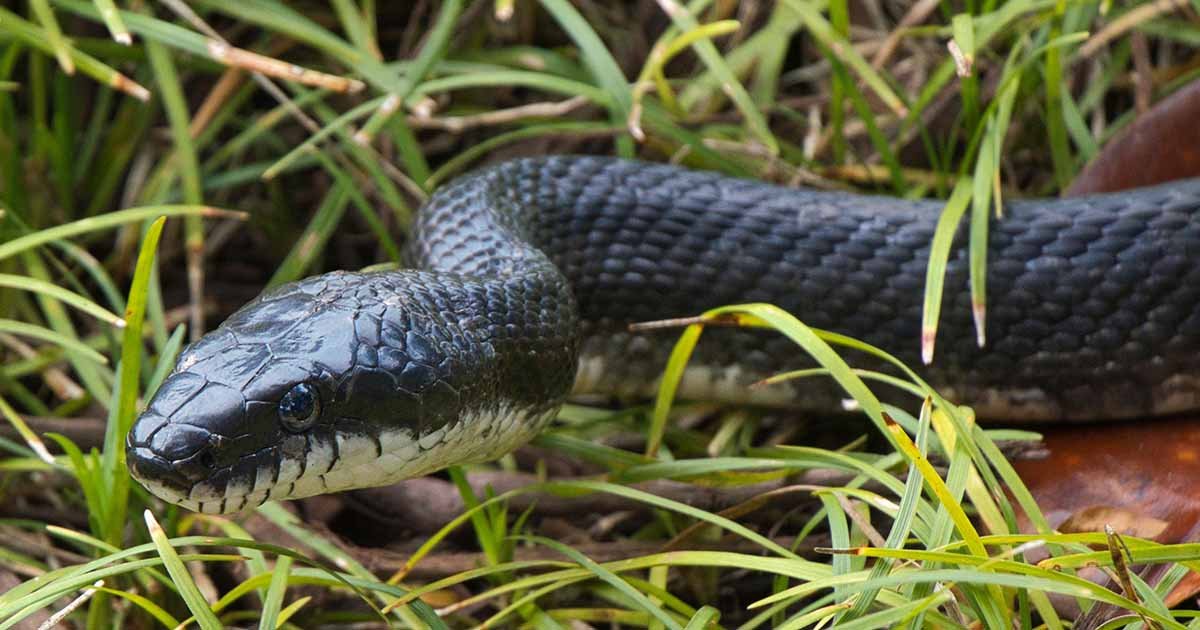
Western rat snakes (Pantherophis obsoletus) are black with patches of lighter color and can grow up to seven feet in length.
Most of the venomous types in North America have a head larger than their neck, and often their heads are diamond or triangle shaped, and they tend to be much larger than non- or low-venom species.
They have heavier, thicker bodies and grow to a length of six feet or more. Of course, there are exceptions. A Great Basin gopher snake looks just like a rattler at a glance.
Let’s say you don’t care what types you have visiting your garden, you just want them out of there. Let’s talk about your options.
Control Methods
You will find lots of articles on the internet with long lists of plants that are guaranteed to keep out snakes. I’d be skeptical of most of these claims.
There are no reliable studies out there that I could find showing that plants can repel snakes.
There are a few studies that used plant oils as a potential repellent, but you have to remember that oils are highly concentrated.
Plants growing in the garden won’t be nearly as strong. But that’s all irrelevant anyway, because even the concentrated oils didn’t always reliably deter those nope ropes.
There are a few exceptions.
One study in the journal Ecology and Management of Terrestrial Vertebrate Invasive Species in the United States, showed that cinnamon oil, clove oil, and eugenol, in combination with other ingredients like sodium lauryl sulfate, can be an effective spray deterrent for invasive brown treesnake (Boiga irregularis) in Guam.
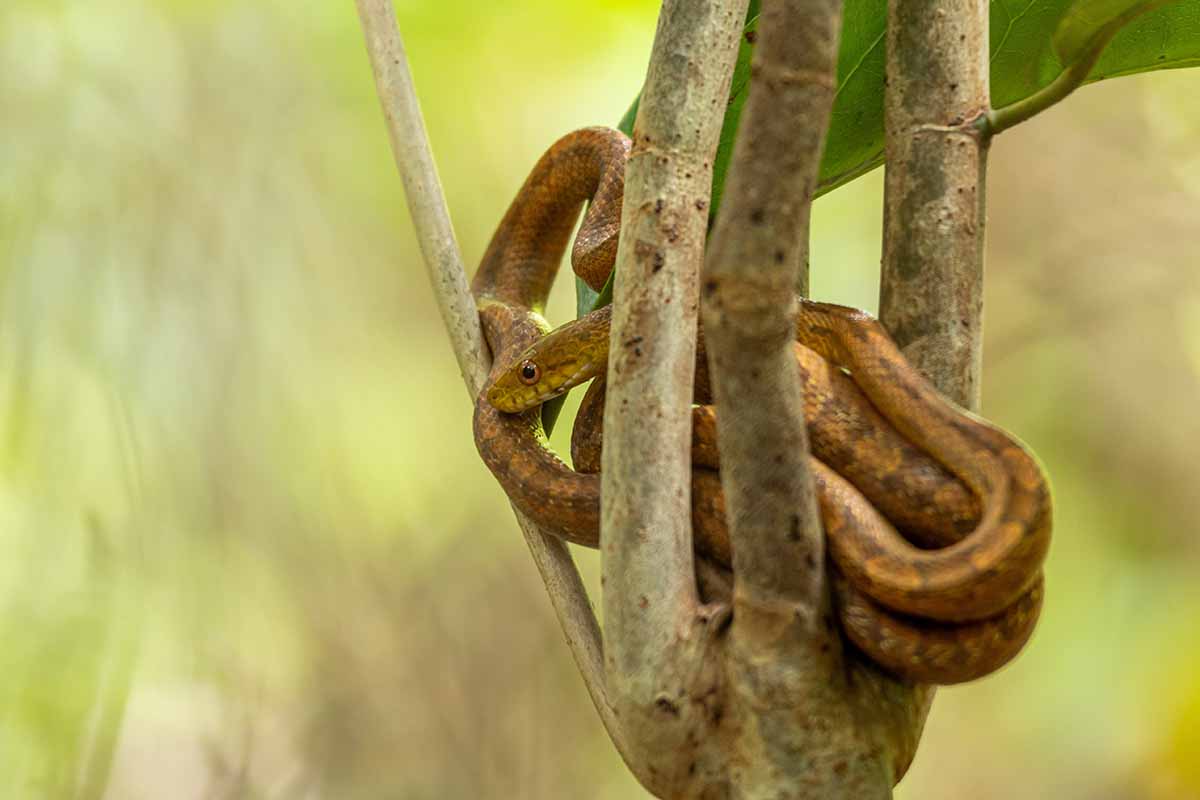
Shane R. Siers and Larry Clark of the National Wildlife Research Center and USDA APHIS Wildlife Services, and Craig S. Clark with the USDA APHIS Wildlife Services found that these oils were effective at driving out brown treesnakes that had hitched a ride in cargo arriving in previously snake-free Pacific Islands.
We have no idea if the repellant would work on other species, though it stands to reason that it could.
However, aiming intense spray where a snake is known to be hiding is not the same as having a few basil and bay leaf plants, which contain eugenol, in the garden.
It couldn’t hurt, though, so feel free to grow away and just enjoy the bounty if nothing else.
Another older study by researchers at the Department of Zoonosis at the Haffkine Institute in Bombay found that calamus extract and pine oil could be effective.
Many cultures have certain plants that they swear help repel snakes, though I can’t find any evidence to support any of these claims, and on the chance that they do work, there’s no guarantee that it will work on your local species.
For example, let’s say you grow bitter melon (Momordica charantia) in India as a repellent against the India cobra (Naja naja). You tell your cousin in Utah who spotted a rattler to try it out.
But they don’t have western rattlesnakes (Crotalus oreganus) in India, so who is to say that growing bitter melon in Utah would help, since different species might be deterred by different plants.
Looking at studies, the plants that kept popping up as repellents were alliums like garlic and onions, tobacco, basil, and chilis.
Again, there’s no good evidence that these work, just that they’re commonly used.
All this is to say that it’s perfectly fine to try growing something with the goal of deterring them, but I definitely wouldn’t count on this method as your sole form of control.
So what do we know that actually works? Making your garden unappealing so they don’t try to visit in the first place. Here’s how:
Remove Food and Water Sources
Snakes are attracted to water sources that they can easily access, and an abundance of food.
If you have a rat or mouse problem in your garden, snakes are sure to follow.
Now, you could let them take care of your rodent problem, or you can use control methods like traps or removing their food sources.
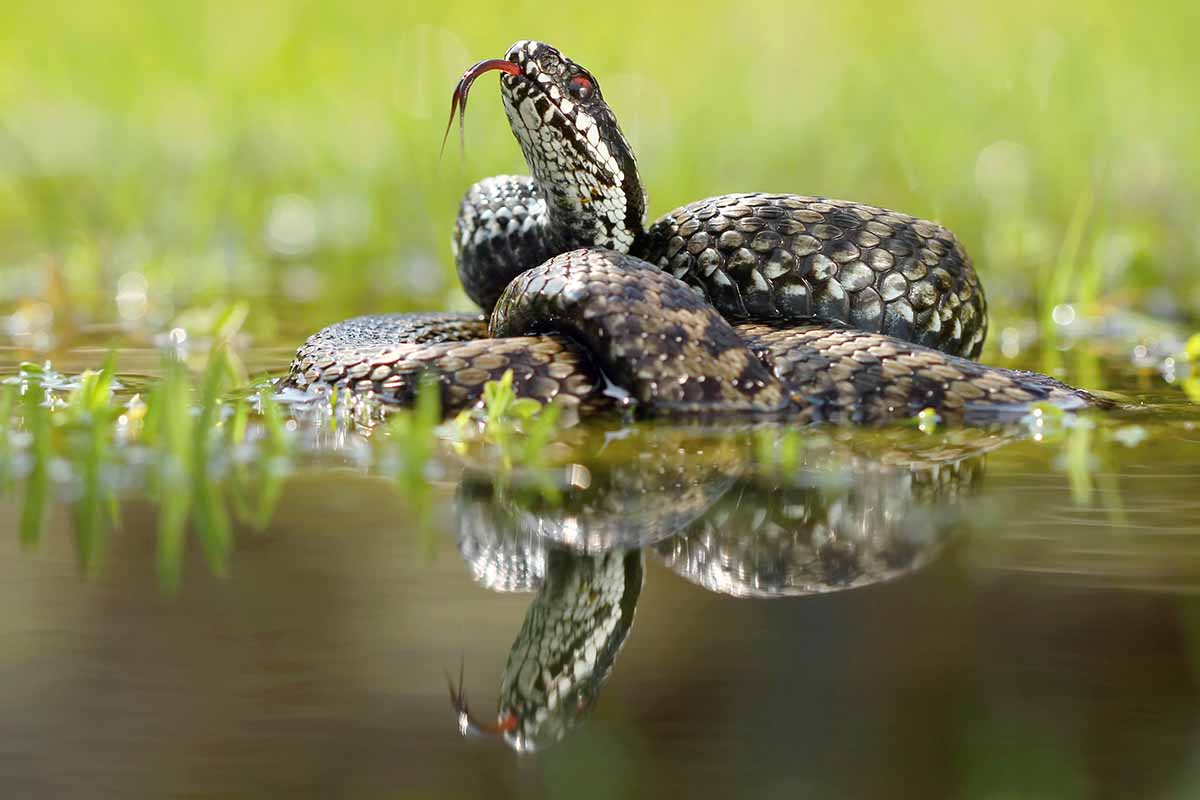
Similarly, standing water in accessible areas should be removed.
Remove any fallen fruit from trees, which attracts rodents.
Don’t keep birdhouses around, either as some species love to feast on birds. The same goes for ponds where frogs or fish live. Or any environment that encourages lizards or toads.
Mulch is often cited as a way to repel snakes because jagged bark or rocks can keep them away.
Not only have I seen them slither across some really rough terrain, but mulch also creates safe spaces for insects and even small mammals, and those will bring all the snakes to your yard.
I land on the side of seeing mulch as more of a negative than a positive if your goal is elimination.
Eliminate Hiding Spots
Yes, they are hunters, but they’re also hunted. I mean, just look at the flag of Mexico if you want to see proof.
Birds of prey, mongooses, wolverines, badgers, big cats, and other snakes all feast on serpents when they can get them.
So they rely on hiding spots to keep themselves safe. If you take these away, they’re far less likely to visit.
I’ve probably hiked past a billion nope ropes in my time, but the few that I’ve seen were either shaking a rattle at me or they were somewhere very obvious like crossing a stretch of plantless desert or sunning on rocks.
They don’t like being exposed, so aren’t likely to make a home and hunt in an area where they can’t hide.
The kind of environment where a snake likes to live and hide depends on the species.
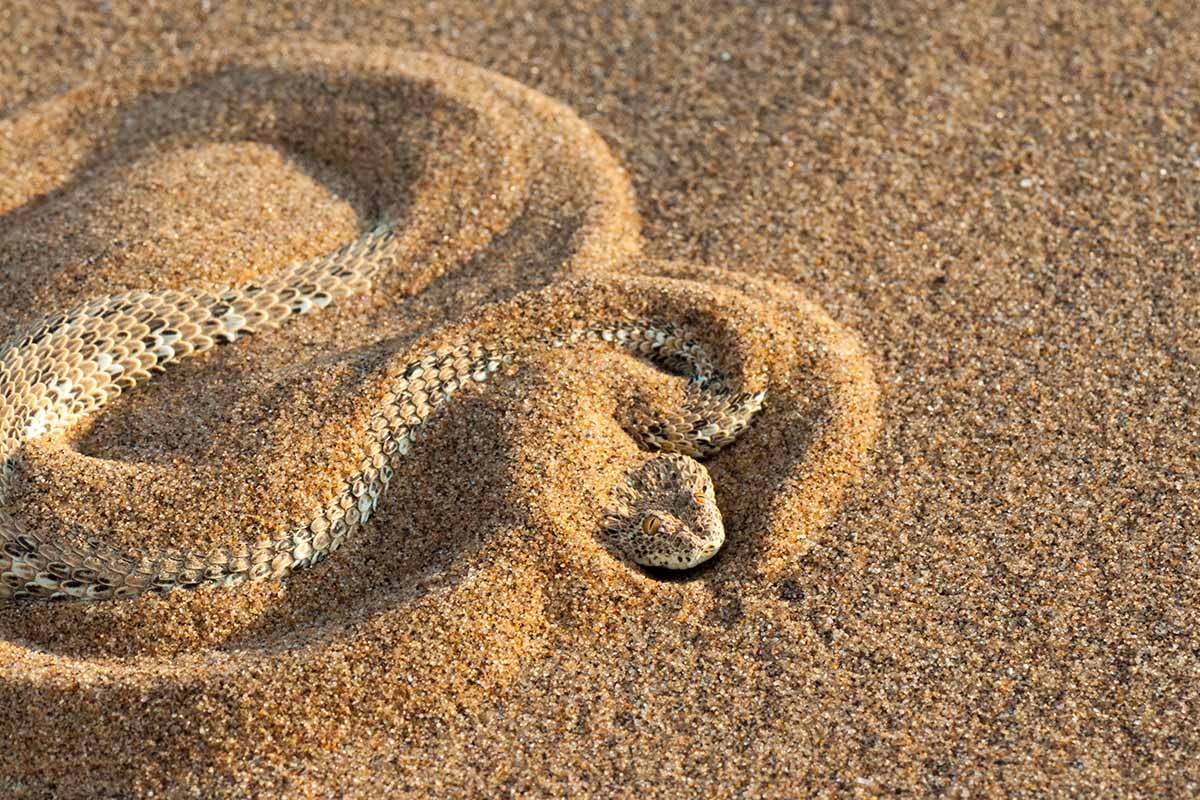
If you live in the desert where sidewinders (Crotalus cerastes) inhabit, you definitely don’t want to have any deep sand because they love to bury themselves to hide and cool down.
Boa constrictors, on the other hand, are excellent swimmers and climbers.
If you want to keep them away, you want to create an exposed area without dense, tall trees and ponds or streams for hunting in.
Deep sand exposed to the sun would be the perfect foil.
In general, dense brush or trees, rocks with undercroppings, and burrows or ground holes should be avoided.
Do some research about local species to figure out what they prefer, and they do the opposite in your garden.
Keep your lawn trimmed, place your firewood stack far, far away from garden areas, and keep your trees and shrubs tidy.
Barriers
Believe it or not, fencing can work.
You need a completely solid material (they can move through tiny openings) that is buried a few inches deep and is tall enough that a snake can’t crawl over it.
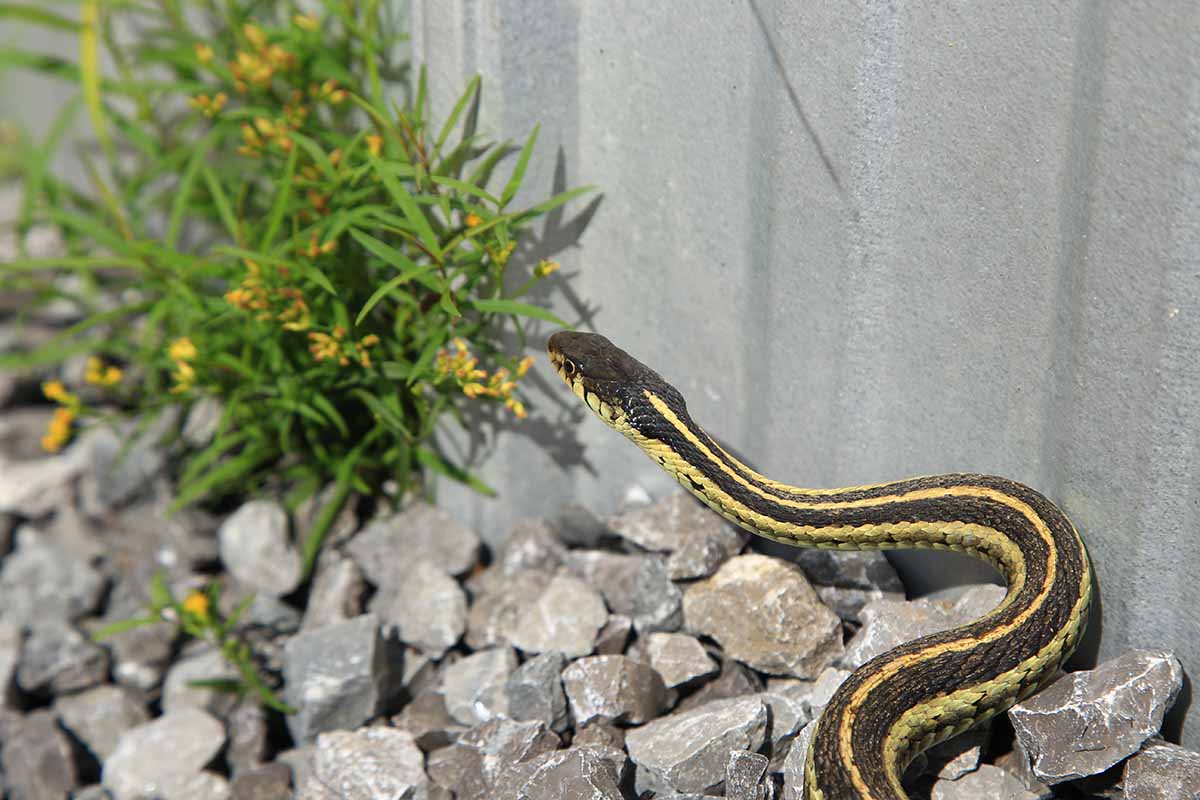
Bonus points of the material is slick like plastic.
If you have an area you absolutely must keep snake-free, this might be the most reliable – if challenging to create – option.
Again, I don’t find mulch to be a good barrier and it might even attract snakes by providing hiding places for food like insects and small mammals.
Chemical Repellents
If you do a quick search on the internet, you will be inundated with chemical repellents that all claim to be completely effective. Once again, use caution.
There’s little evidence that they are effective, some are downright harmful, and others, if they do work at all, might only work for certain species.
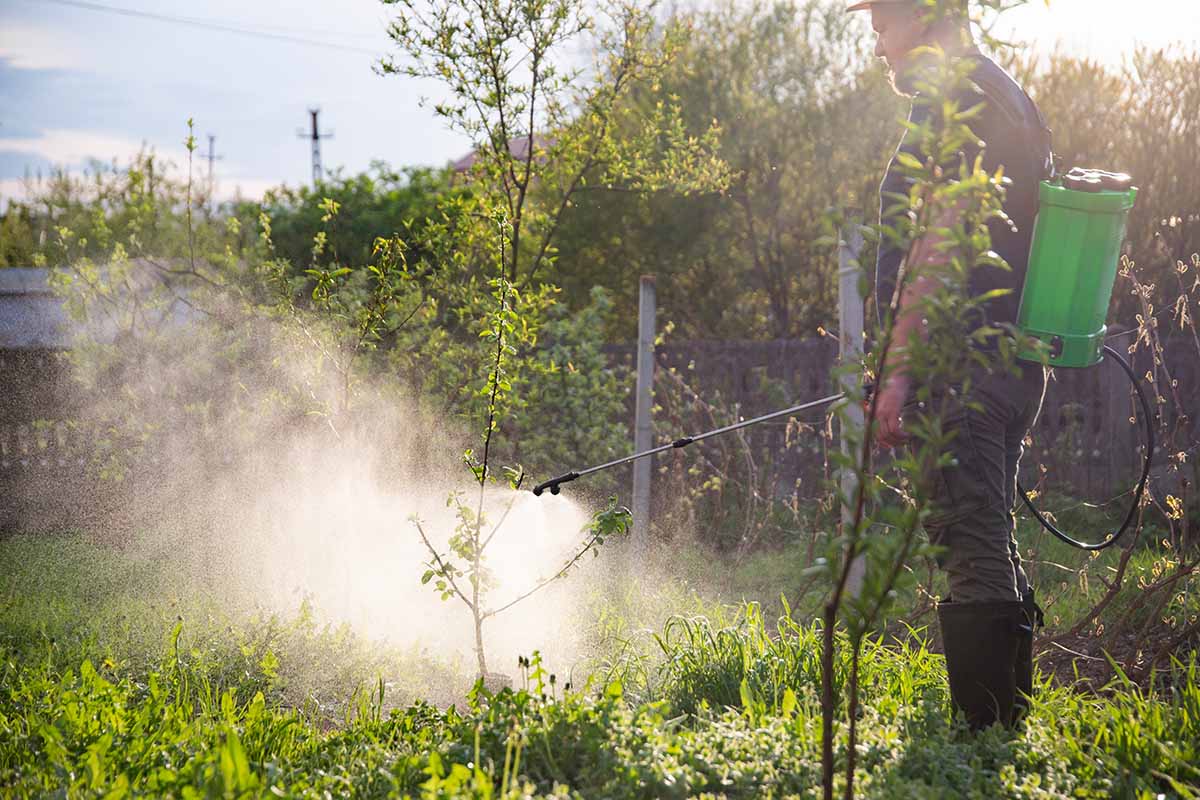
For example, you’ll find a ton of deterrents that use naphthalene (which you find in moth balls) and/or sulfur for garden snakes.
Naphthalene is usually made using coal tar and is banned throughout the world, including China and Europe, for serious health concerns. So you might not want to use it even if it does work.
But it probably doesn’t.
Dennis M. Ferraro, a conservationist and herpetologist at the University of Nebraska-Lincoln studied the use of naphthalene and sulfur to deter the plains garter snake (Thamnophis radix).
He concluded that “the substances tested did not elicit avoidance behavior in the plains garter snake.”
Most chemical repellents contain some combination of essential oils purported to keep serpents away.
You’ll usually see cinnamon, geraniol, castor, peppermint oil, clove, cedar, garlic, and thyme, along with maybe some sulfur.
But as we discussed above, there isn’t much evidence that these work, and that’s especially true if the spray isn’t fresh. Essential oils dissipate rapidly into the environment.
Remember, when gardeners use the cinnamon oil, clove oil, and eugenol method we discussed above, it is sprayed fresh as a way to flush out the snakes. It isn’t sitting for weeks.
Ultrasonic Repellents
You may have heard of ultrasonic repellents that emit vibration and sound to scare off serpents. These fall firmly in the bunk category. There is no evidence that they work.
Encourage Predators
Snakes aren’t likely to feel safe in an area where predators like to hang out.
So you can install a perch pole to encourage owls, hawks, and eagles to come visit.
That said, if you’ve done your best to eliminate their food source, you are also eliminating the food sources that these raptors rely on, so they’ll be less inclined to visit.
You might be better off asking if you can borrow your neighbor’s pet mongoose. Or their clever hunting dog or cat.
Serpents Be Gone!
I clearly don’t mind snakes. In fact, even though I have a healthy fear of rattlesnakes, I like them.
They are such a vital part of the ecosystem that I can put aside my ick.
Snakes are one of the best forms of rodent control you will ever find, they help maintain biodiversity, and they spread seeds (yes, really).
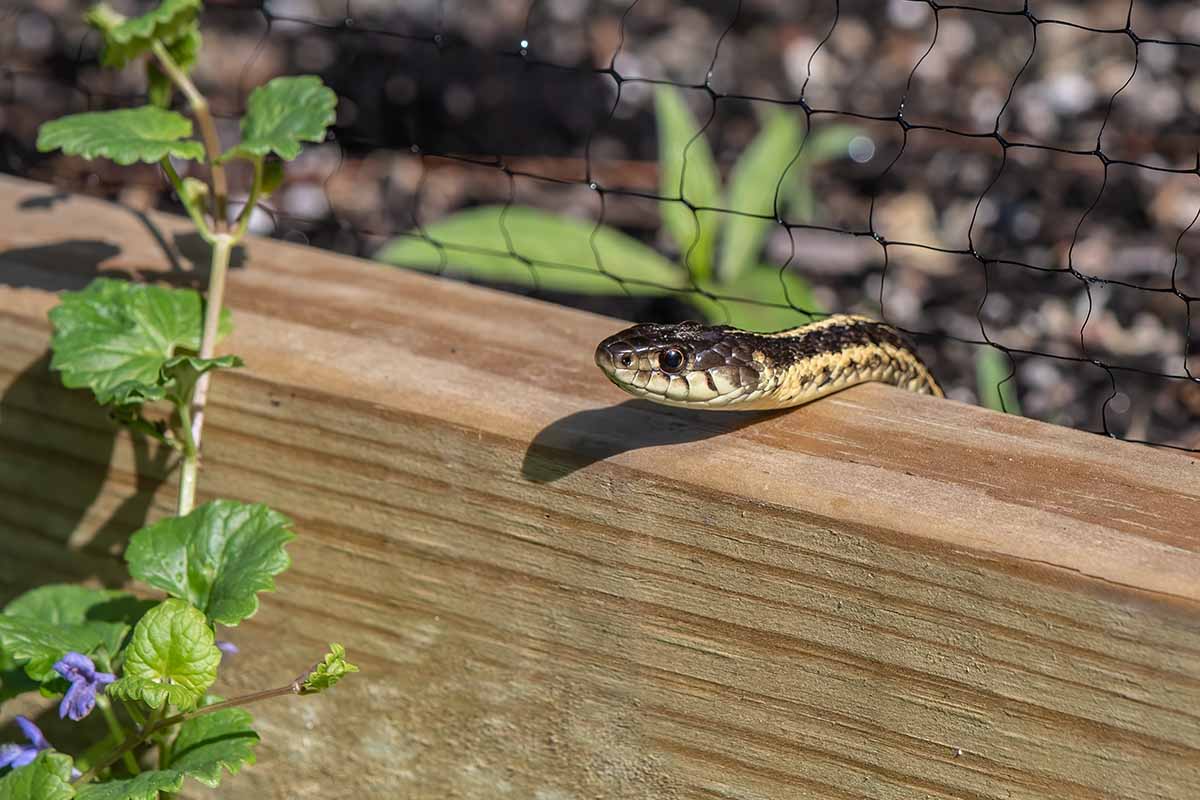
But if you just can’t stand the idea of them, there are ways to help keep your garden safe.
Keep in mind that there is absolutely no way to keep your garden or even your home 100 percent snake-free. Nature finds a way.
A garter snake once entered my grandparent’s home through the shower drain.
I hope this article provided you with some useful information, even if that just came in the form of busting through some myths.
If you’d like to read more about wildlife in your garden, add these guides to your reading list next:

