


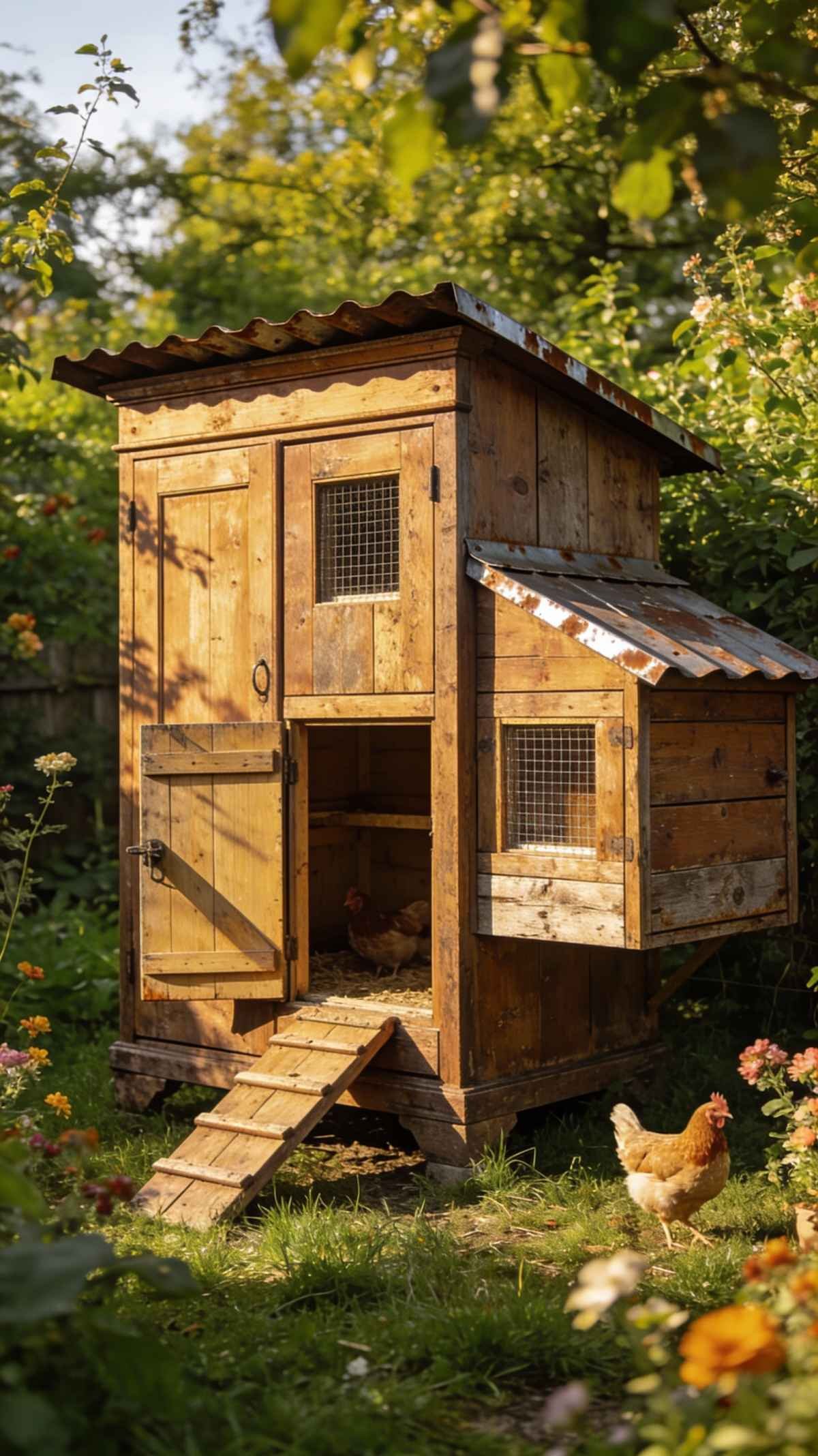
If you’re thinking of raising chickens in your backyard and want to make a perfect home for them by yourself, then this is the right place.
Building a chicken coop with reusable and leftover things can be fascinating.
This idea of making your own things helps to build a strong bond with the flocks. You can easily add or remove things according to climate change.
Believe me, you’ll learn more about chickens this way.
You must consider space, climatic conditions and number of chickens before building a budget friendly chicken coop.
Best Cheap Material to build Chicken Coop
The most budget-friendly chicken coop materials are usually things you can get free or cheaply locally, like pallets, scrap wood, bamboo, and old roofing, combined with bought items like wire mesh and screws.
Pallets
Pallets are one of the cheapest ways to build coop walls and sometimes floors because many shops and warehouses give them away for free or at very low cost.
They are strong enough to form wall sections, but you should choose safer, non‑chemically treated pallets and screw them to a simple wooden frame for stability.
Also Read: How to Build Chicken Coop Out of Pallets?
Scrap Wood and Old Furniture
Old doors, window frames, bed frames, and leftover lumber can be cut and reused to make walls, doors, and framing.
This is a good way to save money and also make large access doors for cleaning or egg collection without buying new timber.
Bamboo
In India, bamboo is very budget‑friendly and easy to find, which makes it excellent for light coop frames or movable chicken tractors.
Bamboo poles can be used for the main structure, roosts, and supports, but they should be tied or screwed firmly and kept off wet soil to last longer.
Roof Sheets and Tarps
Old corrugated metal or other roofing off‑cuts give a strong, waterproof roof that protects chickens from sun and heavy rain.
If you cannot find metal, a wooden frame covered with a good‑quality tarp or thick plastic sheet can work as a low‑cost temporary roof, though it needs regular checking for leaks.
Wire Mesh and Hardware
Tight wire mesh (hardware cloth) is one of the few things worth buying new because it keeps out dogs, rats, and snakes better than loose chicken wire.
Basic hardware like screws, hinges, and latches is also essential, since strong doors and secure latches stop predators from opening the coop at night.
How to Build a Cheap Chicken Coop Using Old Furniture?

Turn a solid old cupboard, wardrobe, or cabinet into the main coop body, then add ventilation, a secure door, roosts, and a small run around it.
1. Choose and Prepare the Furniture
Pick a sturdy wooden wardrobe, cupboard, or large cabinet that is tall enough for roosts and wide enough for a few hens.
Remove shelves and drawers you do not need, scrape off loose paint, and repair any rotten or broken panels with scrap wood.
2. Plan Doors and Access
Use the existing cabinet doors as your main access door; add strong hinges and a latch if they are weak.
Cut or open a smaller “chicken pop door” at the bottom front or side so chickens can go in and out easily.
Must Read: How to Heat Chicken Coop without Electricity?
3. Add Ventilation and Windows
Cut openings high on the sides or back and cover them from the inside with tight wire mesh for ventilation.
If you have an old window or glass panel, mount it on one side or door for natural light, making sure it is firmly fixed and predator-proof.
4. Build Nesting Boxes from Drawers
Use old drawers or small shelves as nesting boxes by reinforcing their bottoms and fixing them to the inside wall about 30–45 cm above the floor.
Add straw or other soft bedding and make an access flap or openable door behind them if you want easy egg collection from outside.
5. Install Roosts and Floor
Screw a couple of strong wooden poles or branches across the coop, higher than the nests, to make roosting bars.
Leave the furniture base if it is solid, or add a simple wooden or pallet floor; cover with dry bedding like wood shavings or straw.
6. Weatherproof and Predator-Proof
Raise the furniture slightly off the ground on bricks or blocks to avoid rot and make it harder for pests to enter.
Paint or seal the outside with exterior paint, close any gaps with scrap wood, and use wire mesh to cover holes so rats, dogs, and snakes cannot get in.
7. Add a Simple Run
Attach a small wire-mesh run to the pop door using bamboo, scrap wood, or old metal pieces as a frame.
Make sure the run has shade, a dry area, and a secure top so predators cannot jump or fly in.
9 Cheap DIY Chicken Coop Ideas
There are many creative ways to build a cheap chicken coop using materials you already have or can get very cheaply. Below are 9 detailed, budget‑friendly ideas you can turn into DIY projects or blog posts.
1. Brick Base with Lightweight Top
If you have access to leftover bricks or concrete blocks, this method creates one of the strongest low-cost chicken coops. Build a short base about 30–45 cm high to protect against moisture, flooding, and rodents.
On top of the brick base, add a lightweight frame made from bamboo, scrap wood, or metal piping. Finish it with tin sheets, plastic panels, or recycled roofing material. This design works especially well in rainy or windy areas.
Extra tip: Painting the brick base with leftover exterior paint or lime wash can improve durability and help repel insects while giving the coop a cleaner look.
2. Old Furniture Coop
Old wardrobes, cabinets, or dressers can be turned into surprisingly sturdy chicken coops. Remove internal shelves, reinforce weak joints, and cut a small pop door near the bottom for chicken access.
Add ventilation holes near the top and cover them with mesh. Old drawers work perfectly as nesting boxes, and wooden poles or branches make excellent roosts. Raising the entire unit on bricks helps prevent rot and keeps pests away.
Extra tip: Choose solid wood furniture instead of particle board, as it lasts longer outdoors and holds screws more securely.
3. Bamboo Frame Chicken Tractor
A bamboo chicken tractor is ideal if you want a movable, low-cost coop. Bamboo is lightweight, strong, and easy to source in many regions. Build a simple rectangular or A-frame structure tied together with wire or rope.
Cover the sides with wire mesh and use a tarp or plastic sheet for the roof. Inside, add a small raised sleeping box with a ramp. This movable design lets your chickens graze fresh ground regularly.
Extra tip: Treat the bamboo with used engine oil or natural sealants to slow down rotting and extend its lifespan outdoors.
4. Recycled Door and Window Coop

Old doors and windows can become the backbone of a sturdy and attractive chicken coop. Use a door as the main access point for easy cleaning and feeding, and add a window to allow natural light inside.
Frame everything using scrap wood or pallets, then fill the remaining spaces with boards or plywood. Add wire mesh behind the window so it can stay open safely during warm days.
Extra tip: Hinged windows make temperature control easier, allowing you to open or close ventilation depending on the season.
5. Pallet Wall Coop
Wooden pallets are one of the easiest and cheapest building materials to find. Arrange them vertically or horizontally to form the coop walls, reinforcing weak sections with extra boards.
Line the interior with cardboard, plastic sheets, or thin plywood to block drafts. Use metal sheets or old tiles for the roof, and leave one or two mesh-covered sections for airflow.
Extra tip: Always sand rough pallet edges to prevent injuries to both chickens and yourself during cleaning or maintenance.
6. Cabinet or Kitchen Unit Coop
Old kitchen cabinets work surprisingly well as small chicken coops. Their compartments naturally create nesting and resting areas, making setup quick and efficient.
Cut ventilation holes in the back or sides, add removable trays for easy cleaning, and install roosting bars inside. Raising the unit off the ground helps protect it from dampness and pests.
Extra tip: Lining the interior with vinyl flooring scraps makes cleaning droppings much easier and keeps odors under control.
7. Scrap Wood A-Frame Coop
The A-frame design is simple, strong, and economical. Scrap wood from broken furniture or leftover construction materials can be easily shaped into a triangular frame.
Cover one side with solid boards for shelter and the other with wire mesh for airflow. The sloped sides allow rain to run off naturally and reduce water damage.
Extra tip: Adding small wheels to one end of the frame makes it easier to move the coop for fresh ground access.
Check this: 70 Things Chickens Can Eat
8. Temporary Tarp and Crate Coop
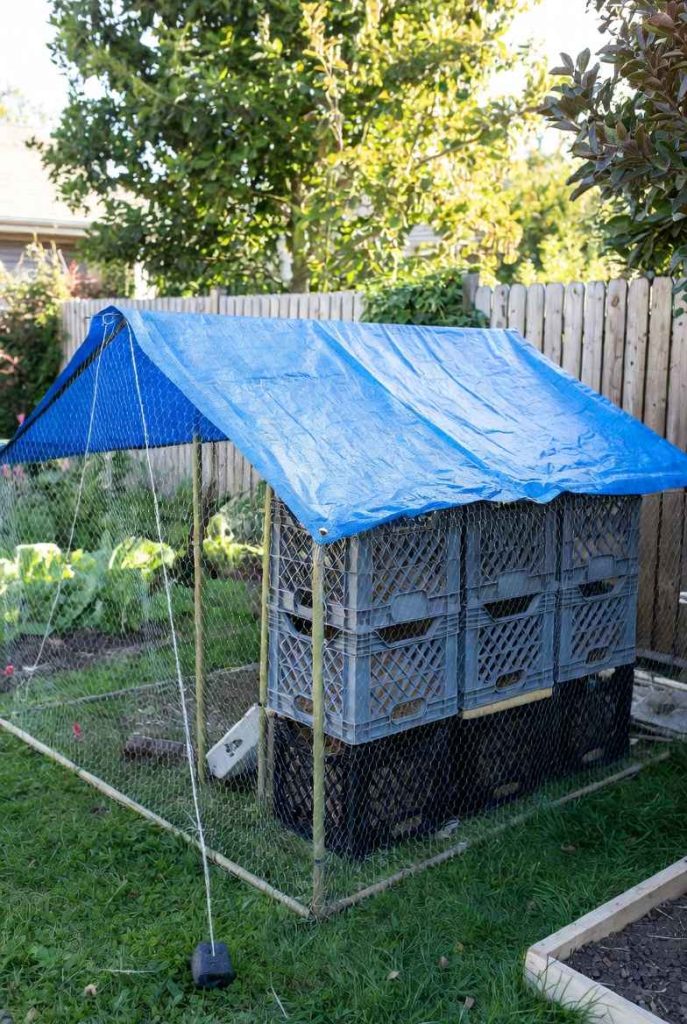
This setup works well for emergencies, short-term housing, or quarantine spaces. Use wooden crates or plastic boxes as sleeping areas and raise them off the ground with bricks.
Stretch a heavy-duty tarp over a simple frame and secure all edges tightly. Surround the area with wire mesh to protect against predators and wandering pets.
Extra tip: Check the tarp regularly for tears, as even small holes can let rain in and make the interior damp.
9. Hybrid Greenhouse-Style Coop
This coop combines chicken housing with greenhouse features by using clear panels or old windows to trap warmth and light. It works especially well in cooler or rainy climates.
Pair transparent panels with solid walls on the wind-facing sides, and add ventilation near the roof to prevent moisture buildup. The bright interior keeps chickens active and comfortable.
Extra tip: During hot months, shade part of the clear panels with cloth or shade netting to prevent overheating inside the coop.
Also Read: How to Make Chicken Coop Smell Better?
Final Wrap
Building a chicken coop doesn’t have to be expensive or complicated. With a bit of creativity and some recycled or low-cost materials, you can create a safe, comfortable home for your flock while saving money and reducing waste.
From repurposed furniture and pallets to bamboo frames and greenhouse-style designs, each option proves that functionality matters more than fancy construction.
The key is choosing a design that suits your space, climate, and flock size while ensuring proper ventilation, protection from predators, and easy cleaning.
No matter which style you choose, a well-planned DIY coop not only keeps your chickens healthy and happy but also adds a sense of satisfaction knowing you built it yourself. With the right approach, even the simplest materials can become a sturdy and practical chicken home.

Khaja Moinuddin, a computer science graduate, finds joy in gardening and homesteading. Join him on this blog as he shares his experiences in homesteading, gardening, and composting

