



When you’re planning your garden, you have to know how much space to give to each plant.
Sure, the seed packets usually recommend how far apart to grow, but how deep will the roots reach?
Is my raised bed deep enough? What about the leaves? Will they grow so tall that they shade the neighbors?
Beets (Beta vulgaris) are typically considered a fairly small crop, but as with many things in life, there are exceptions.
Big, giant, huge exceptions. They can actually grow quite large. Or super small. Totally confused?

We link to vendors to help you find relevant products. If you buy from one of our links, we may earn a commission.
Most table beets are similar in size, but sugar beets and mangelwurzel can be massive.
And there are some table beets that can be downright petite. And then there are the leaves aboveground.
So, if you’re interested in learning about beet sizes in all their varying glory, stick around. We’re going to cover the following:
Beet Root Sizes
So, how big can beets be? I know it’s the most frustrating answer, but “it depends.” Let’s look at the details:
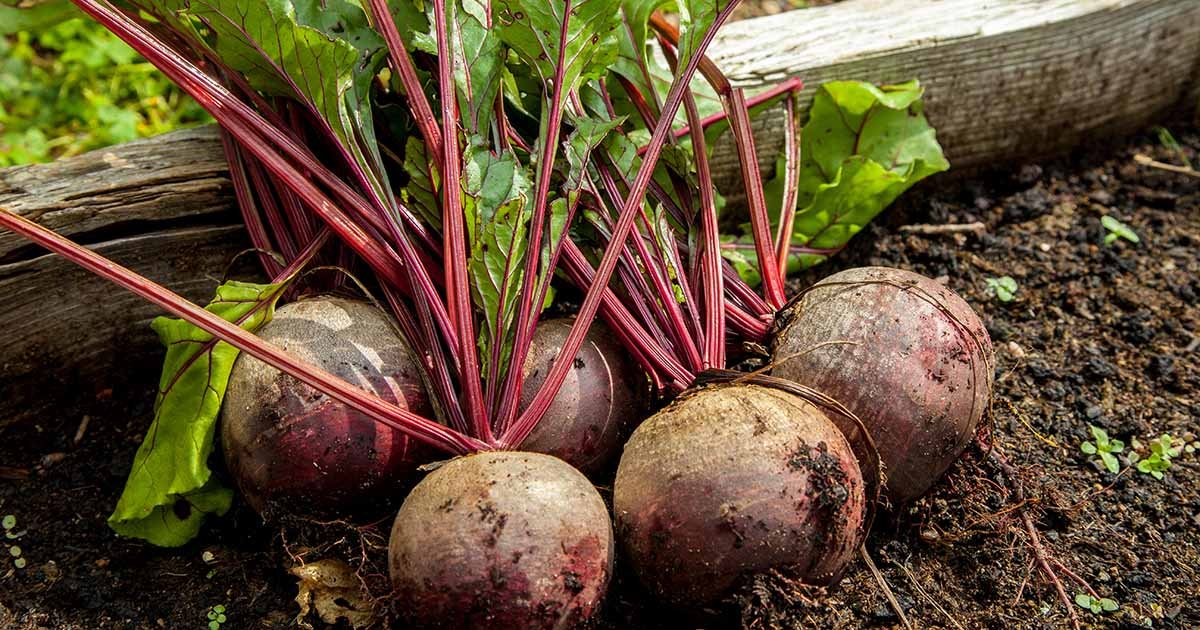
For most home gardeners growing standard varieties, you can expect roots to reach one to three inches in diameter and two to three inches long for round varieties.

The leafy tops typically grow 12 to 18 inches tall with a spread of six to eight inches wide. But as you’ll see, there’s quite a range depending on variety and growing conditions.
Sugar beets and mangel are, by far, the largest of the beet family.
The Guinness Book of World Records states that the heaviest sugar beet weighed in at 52 pounds 14 ounces, though growers have reportedly grown larger ones without having been certified by Guinness.
Some accounts claim the largest ever at 156 pounds! That’s larger than many adult humans!

The longest variety, including the spindly taproot and not just the main part, was reportedly recorded at 322 inches. That’s longer than four mattresses laid end to end.
Mangelwurzel regularly grows up to 40 pounds and six feet long. I’ve had them grow nearly that large myself, so it’s not an unusual occurrence.
The bottom line is that beets are capable of growing exceptionally large.
But let’s talk about the average size in the garden, particularly for gardeners growing table beets. While these can grow pretty large as well, most of them are more of a medium size.
The long-time favorite ‘Detroit Dark Red’ grows to about three inches in diameter.
By the way, if you want to grow this particular cultivar, the roots are super dark red and deeply flavorful. I always end up coming back to it.

Grab a pack of about 100 seeds at Botanical Interests.
‘Early Wonder,’ which matures quickly, is more like two-and-a-half inches in diameter, while ‘Bull’s Blood’ can top three inches in diameter.
‘Baby Ball’ is a delightful inch in diameter at maturity.

Of course, plants that are given extra space, rich soil, and ample water might grow larger than the standard.
The general answer is that most common table varieties are somewhere within the one- to three-inch diameter range.
When we consider length, things become less consistent.
‘Early Wonder’ are about two to three inches long, as are many round cultivars. But then we move onto the more cylindrical-shaped options.
The appropriately named ‘Cylindra’ are a mere one to two inches in diameter, but up to eight inches long.

It’s such a nice option if you want to grow lots in a small space and the shape always draws comments from farmer’s market shoppers and diners.
You can snag various packet sizes of seeds at High Mowing Seeds.
Learn more about beet varieties here.
Leafy Top Height
Okay, so that covers the root, but what about the leafy tops? How big these grow also depends on the cultivar.
Generally, you can assume the larger the root, the larger the leaves will be, but that’s not always the case.

Let’s go back to chunky ‘Bull’s Blood.’ The leaves on the mature plant can grow up to 18 inches tall. At the same time, petite ‘Early Wonder’ has greens about the same size.
With the exception of larger sugar and mangelwurzel greens, which can grow up to two feet tall, expect most greens to be about 16 to 18 inches tall at maturity.
You can influence this a bit by fostering green growth at the expense of root growth through careful fertilizer applications and pruning.
Some gardeners grow B. vulgaris primarily for the nutritious greens rather than the roots. Varieties like ‘Bull’s Blood’ are particularly suited to this purpose.
Space Requirements for Planning
Now that you know how big beets can get, let’s talk about how much room they actually need to reach those sizes.
Most table beets need eight to 12 inches of loose, friable soil depth for proper development.

If you’re growing in raised beds, aim for at least 10 inches of depth to give them adequate room to expand underground.
Cylindrical varieties like ‘Cylindra’ appreciate the extra depth even more.
Your planting density is one of the easiest ways to control final size. If you want to harvest baby beets for pickling, plant them two inches apart.
For medium-sized roots perfect for roasting, stick with three to four inches. And if you’re going for those impressive, large roots, give them a full five to six inches of space in all directions.
The mature foliage spreads six to eight inches wide, so keep this canopy spread in mind when planning rows.
As a practical example, a standard four-by-four raised bed can comfortably hold 16 to 25 beet plants depending on whether you’re growing compact varieties or larger ones.
If you are growing beets in containers, choose pots at least 10 to 12 inches deep and eight to 10 inches in diameter for individual plants.
How to Influence Growth
To encourage root growth, give the plant what these vegetables need to be happy, like full sun, consistent water, and a bit of food. You can learn more about how to grow beets here.
As mentioned above, give them adequate spacing for the size you want.
Make sure the soil is super loose and rock-free. I grow my beets in raised beds to maximize the size, since I have heavy clay soil.
But if you haven’t been cursed by the soil fairies with heavy clay like I have, you can loosen up your soil adequately using lots of well-rotted compost.

Actually, even if you do have heavy clay, you can loosen it up with well-rotted compost, but plan to do so every year to maintain the looseness, since once the fairies curse you, the curse never lifts.
If you really want to encourage growth and go for super big ones, you’ve got to discourage the plant from focusing on the tops.
To do this, prune back the tops a bit to thin them out. You want to remove about a third to a half of the tops by cutting them down at the base.
Then, feed with bone meal. This encourages root growth rather than leaf growth.

Snag some bone meal from Down to Earth in five-pound boxes at Arbico Organics.
Or, if you want to go the other direction and encourage leaf growth, feed with a nitrogen-heavy food.
Feather or blood meal is a good option, but I like bat guano because it also includes a bit of phosphorus and potassium.

Arbico Organics carries Down to Earth bat guano in four ounce, two pound or 10 pound compostable containers.
Either way, feed right around the time you first plant and then again a month later.
Grow Big, Beefy Beets and Greens
Whether you’re after heaps of greens or piles of roots, or maybe you’re just curious about what to expect when growing these plants, I hope we were able to shed some light on the subject.

Let me know how big your beets are in the comments section below!
If you’re curious to learn more about growing B. vulgaris in your vegetable garden, have a read of these guides next:

