


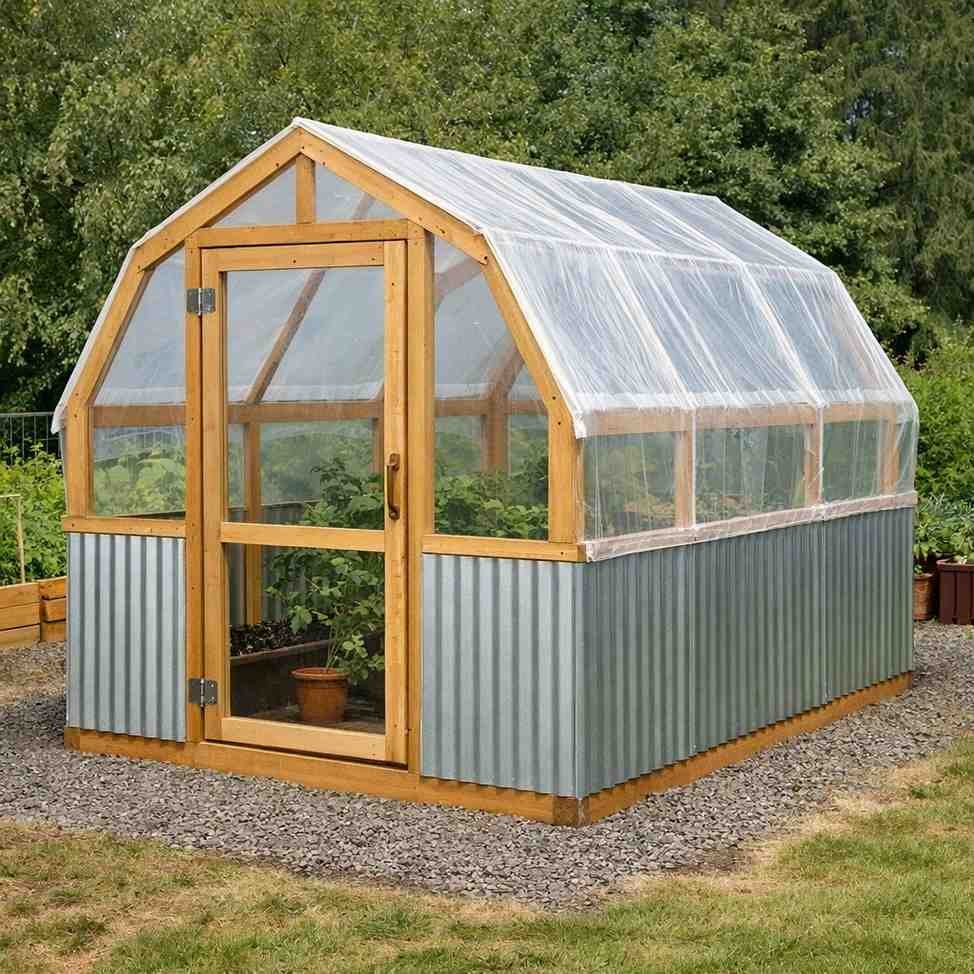
If you’re looking to extend your growing season, then you must have a small greenhouse in your backyard.
While you can construct it from a store bought kit, I personally recommend building DIY greenhouse. Apart from being low cost, the process of making can be fascinating.
Most gardeners use wood and corrugated metal to build the frame and cover it with greenhouse plastic or polycarbonate panels to keep the warmth during winter.
Regardless of size, a DIY greenhouse is simple to build, and you can choose from the free greenhouse plans listed below.
Things to Consider Before Building a DIY Greenhouse
Before you start building, a little planning can save time, money, and frustration. Keep these key points in mind to choose the right greenhouse plan for your space and needs.
Available Space
Take a good look at your backyard or garden area. Measure the space and decide whether a small lean-to greenhouse or a larger freestanding structure makes more sense.
Sunlight Exposure
Most plants need plenty of light to thrive. Place your greenhouse where it can receive at least 6–8 hours of direct sunlight daily, ideally facing south or southeast.
Climate & Weather
Your local climate matters. In colder regions, stronger frames and better insulation are important, while warmer areas may need good ventilation to prevent overheating.
Budget & Materials
Decide how much you want to spend and what materials you already have. Pallets, scrap wood, old windows, or PVC pipes can significantly cut costs.
Purpose of the Greenhouse
Think about how you’ll use it—starting seeds, growing vegetables year-round, or protecting plants in winter. Your goal will influence the size, layout, and covering material.
Skill Level & Tools
Choose a plan that matches your DIY skills and available tools. Simple designs are perfect for beginners, while advanced builds may require carpentry experience.
Materials You Can Use for a Low-Cost DIY Greenhouse
Building a greenhouse doesn’t mean you have to buy everything new. With a little creativity, you can put together a sturdy and effective structure using affordable or recycled materials—many of which are easy to find locally.
Wood & Pallets
Wood is one of the most popular choices for greenhouse frames. Pallets, scrap lumber, or leftover fence boards are often free or very cheap. They’re easy to cut and customize, making them ideal for beginners. Just be sure the wood is treated or sealed to protect it from moisture.
PVC Pipes & Metal Frames
PVC pipes are lightweight, flexible, and perfect for small hoop-style greenhouses. They’re inexpensive and quick to assemble. Corrugated metal or old metal frames offer more durability and are better suited for areas with strong winds or heavy snow.
Covering Materials
Greenhouse plastic film is the most budget-friendly covering option and allows plenty of light to pass through. It’s easy to replace but may need changing every few years. Polycarbonate panels cost more upfront but last longer, provide better insulation, and hold up well in harsh weather.
Recycled Windows & Doors
Old windows and doors are excellent for cold frames and permanent greenhouse builds. They trap heat effectively and give your greenhouse a charming, rustic look. You can often find them at salvage yards or renovation sites.
Also Read: How to Make a Greenhouse from Old Windows?
Fasteners & Extras
Don’t forget screws, nails, hinges, and latches—these small items keep everything secure. Vent openings, shelves, and raised beds can often be made from leftover materials.
17 Low-Cost DIY Greenhouse Plans You Can Build
Now that you know what to consider and which materials to use, it’s time for the fun part—choosing a greenhouse plan.
Below are 17 budget-friendly DIY greenhouse ideas that range from simple beginner builds to more sturdy, long-term structures.
Many of these plans use recycled or free materials, making them ideal for gardeners who want to extend the growing season without spending a lot of money.
Whether you’re working with a small backyard, a patio, or a larger garden space, you’ll find a greenhouse design that fits your needs and skill level.
1. DIY Barn-Style Greenhouse Plan
A DIY barn-style greenhouse combines classic barn charm with practical growing space, making it both functional and eye-catching.
Its tall walls and pitched roof provide extra headroom, better air circulation, and plenty of space for hanging plants or shelves.
Built with wood framing and covered in greenhouse plastic, polycarbonate, or salvaged windows, this style is perfect for gardeners who want a sturdy, low-cost greenhouse with a rustic look.
2. DIY Geodesic Dome (GeoDome) Greenhouse Plan

A DIY geodesic dome (GeoDome) greenhouse is a strong, efficient design that stands up well to wind, snow, and harsh weather.
Its dome shape evenly distributes weight and captures sunlight from all angles, creating a stable, warm growing environment.
Made from lightweight struts and covered with greenhouse plastic or polycarbonate panels, a GeoDome greenhouse is ideal for gardeners who want a unique, durable structure with excellent heat retention.
(Source)
3. DIY Baby (Mini) Greenhouse Plan
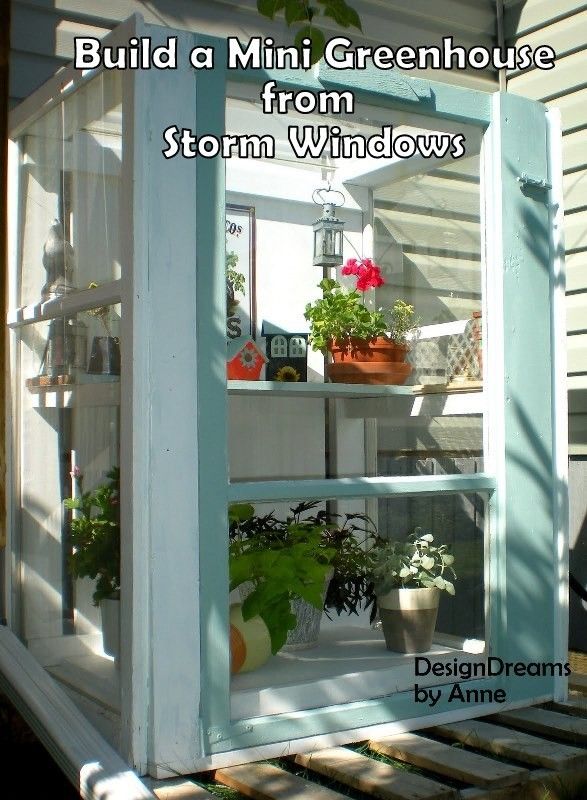
A DIY baby (mini) greenhouse is perfect for small gardens, patios, or starting seedlings early. It’s compact, lightweight, and easy to build using wood, PVC, or recycled frames with clear plastic or poly panels.
Build a simple low-profile frame and cover it tightly to trap warmth. This mini greenhouse protects young plants from cold nights and extends the growing season without taking up much space.
(Source)
4. Greenhouse From Old Windows
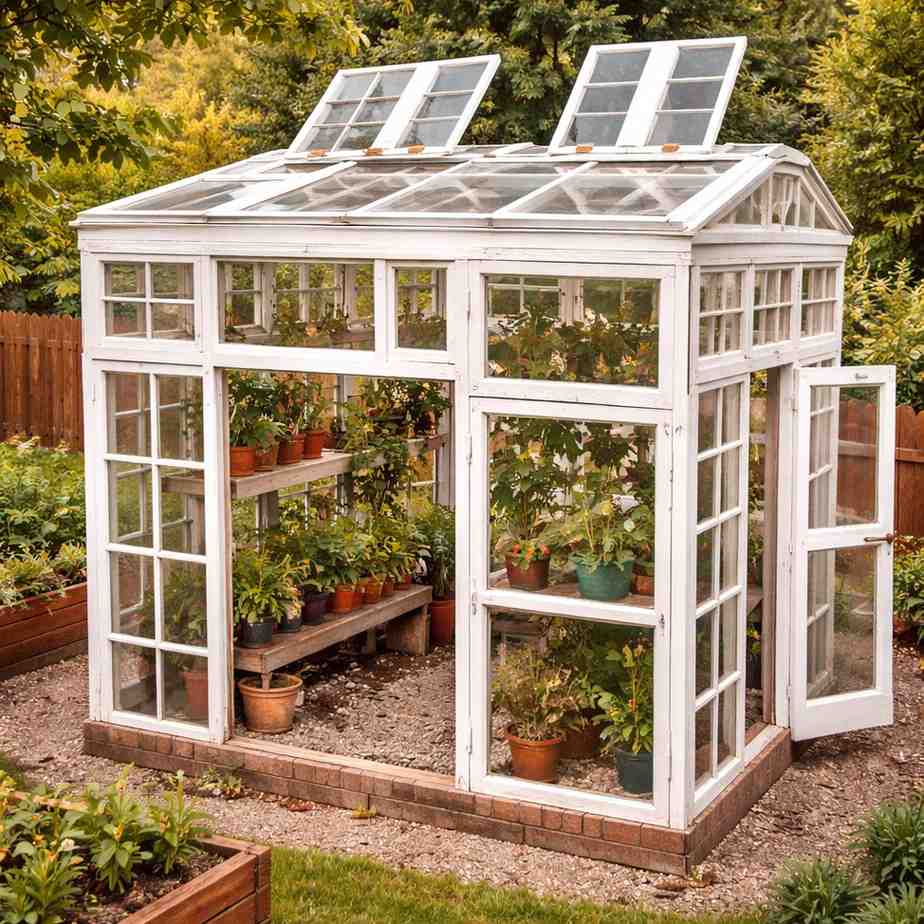
A greenhouse made from old windows is a great way to recycle materials while adding vintage charm to your garden. The glass panes let in plenty of sunlight, creating a bright growing space for plants.
Build a sturdy wooden frame sized to fit your collected windows, securing them tightly for stability. Angle or hinge the roof windows for ventilation to prevent overheating.
This budget-friendly greenhouse works well for herbs, seedlings, and potted plants, especially in small yards, while adding a unique, eco-conscious focal point.
(Source)
5. DIY Greenhouse Plan

Overview & Size
This plan describes a simple 8 ft × 10 ft wooden greenhouse with a peak height of 8 ft 6 in. It uses common 2×4 lumber, includes optional doors at both ends, and has two roof windows for ventilation. It’s designed for mild winter frost areas.
Location & Materials
Place the greenhouse in a sunny, well-drained spot. Materials include treated or decay-resistant wood, 4×4s for the base, plywood gussets, fascia boards, and UV-resistant polythene for covering. Measurements are given in both imperial and metric.
Frame Assembly
Build a level, square base first, then assemble the side walls. Five angled roof sections are built separately and fixed on top, with fascia boards and bracing added to strengthen the structure.
Doors, Windows & Cover
Doors and roof windows are built to fit snugly and allow airflow. The structure is finished by stretching UV-resistant polythene over the frame and securing it with wooden battens.
6. DIY Plastic Bottle Greenhouse
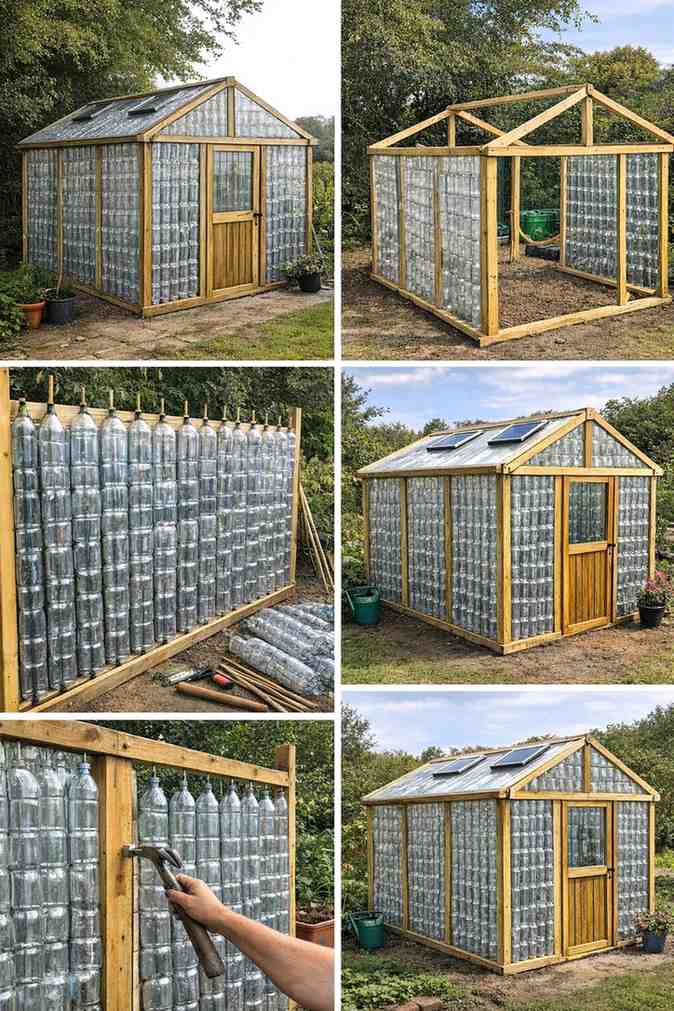
A plastic bottle greenhouse is an eco-friendly structure made by reusing clear plastic bottles to trap heat and protect plants. It functions much like a traditional greenhouse but is far cheaper to build and helps reduce plastic waste. It works best for small gardens and mild climates.
To build one, you’ll need clean plastic bottles, wooden posts or a simple frame, wire or bamboo rods, screws, and basic tools. Choose a sunny, well-drained spot and start by constructing a strong frame to support the bottle walls.
Cut the bottoms off the bottles and slide them onto rods or wire to create long columns. Attach these columns tightly to the frame, keeping them close together to minimize heat loss while still letting in plenty of light.
Finish by adding a basic roof, a door, and small vents for airflow. Secure any loose bottles and seal gaps. The finished greenhouse will hold warmth, shield plants from wind, and provide a sustainable growing space.
7. CD Case Greenhouse
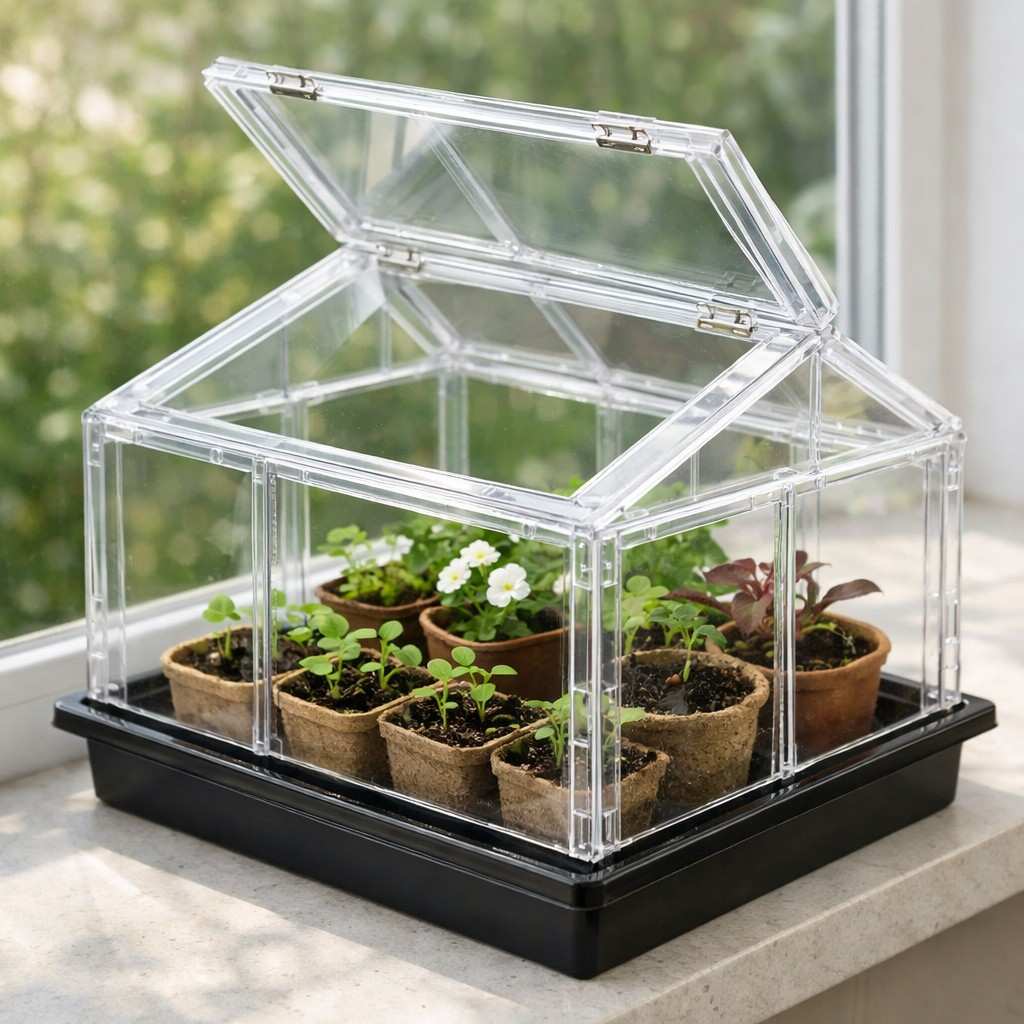
A CD case greenhouse is a creative way to reuse old CD jewel cases while building a small structure for seedlings or delicate plants. The clear plastic panels allow sunlight in while helping retain warmth, making it ideal for windowsills, balconies, or small gardens.
To get started, collect identical CD cases, remove the discs and paper inserts, and clean the plastic thoroughly. You’ll also need strong glue or tape, a cutter, a base tray, and optional hinges if you want an opening lid or door.
Build the walls by carefully joining the CD cases edge to edge, forming square or rectangular panels. Attach these panels to each other and secure them onto the base, making sure everything is aligned and stable before moving on.
Finish the greenhouse by adding a simple roof, sealing gaps, and placing it in a bright location. With proper airflow and regular watering, a CD case greenhouse provides an attractive, low-cost way to protect young plants while recycling unused materials.
8. Cheap DIY Greenhouse Plan

A cheap DIY greenhouse is an easy way to protect seedlings and extend your growing season without spending much. Using recycled or low-cost materials like plastic bottles, old windows, pallets, or CD cases keeps costs down while still allowing plenty of sunlight to reach your plants.
Start by choosing a sunny location such as a windowsill, balcony, or garden corner. Build a simple frame from wood, wire, or sturdy cardboard, then cover it with clear plastic, bottles, or panels. Make sure the structure is stable and sized to fit seed trays or small pots.
Ventilation is important, even for small greenhouses. Add a lift-up lid, removable panel, or small gaps to prevent overheating and mold. A shallow tray at the base helps catch excess water and keeps the area tidy.
Once finished, place your seedlings inside and monitor moisture and temperature regularly. With minimal investment and a bit of creativity, a cheap DIY greenhouse can effectively protect young plants and support healthy early growth.
9. DIY Fold-Down Greenhouse
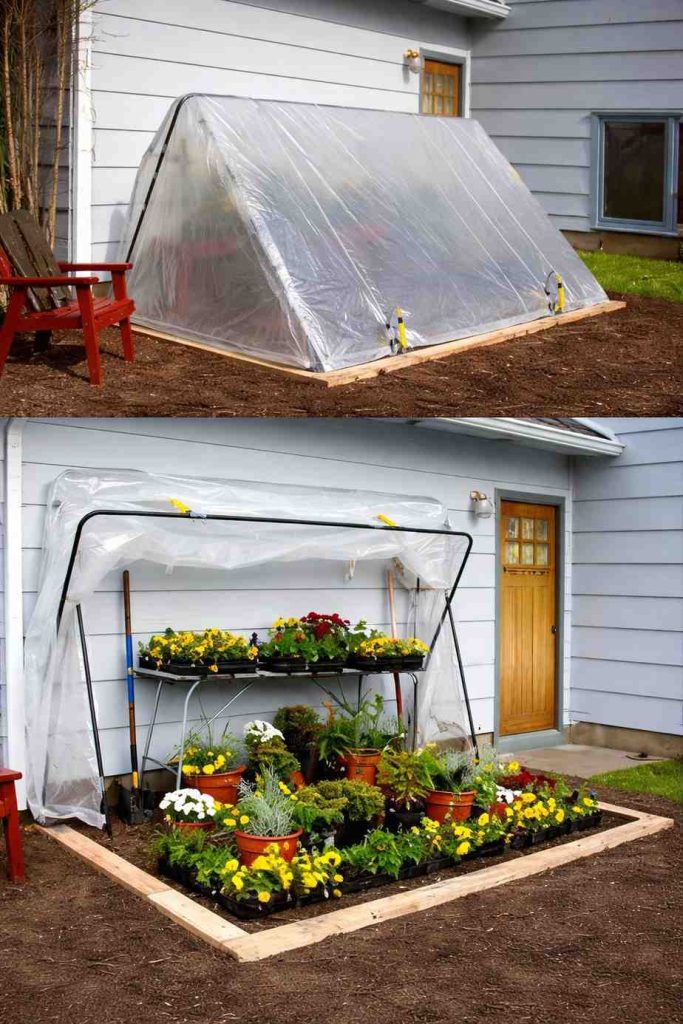
A DIY fold-down greenhouse is a smart, space-saving solution for gardeners who want plant protection without a permanent structure. It’s designed with a hinged top or front panel that folds down easily, making it simple to access plants while also allowing ventilation on warmer days.
This type of greenhouse is usually built from a basic wooden frame covered with clear plastic, polycarbonate, or recycled window panels. When closed, it traps warmth and shields plants from frost, wind, and heavy rain, making it ideal for early spring or late fall growing.
One of the biggest advantages is flexibility. You can fold the cover down flat when the weather improves, turning the bed into an open growing space. This also makes watering, harvesting, and maintenance much easier.
Because it uses minimal materials and a simple hinge system, a fold-down greenhouse is affordable and beginner-friendly. It works especially well for raised beds, patios, or small backyard gardens where space and budget matter most.
10. Instant Cloche

An instant cloche is one of the quickest and cheapest ways to protect young plants from cold, wind, and pests. It’s perfect for gardeners who need fast protection without building a permanent structure. You can make one in minutes using everyday household items.
Common materials include clear plastic bottles, large jars, food containers, or even transparent storage bins. Simply place the clear cover over individual plants or small groups, making sure it’s pressed slightly into the soil so it stays secure.
The clear material lets sunlight in while trapping warmth, creating a mini greenhouse effect around the plant. On sunny days, lifting the cloche or adding small air holes helps prevent overheating.
11. Super-cheap Hoop-house for Winter

A super-cheap hoop house is easy to make using simple, everyday materials.
Start by bending flexible PVC pipe, bamboo, or thick wire into arches and pushing the ends into the soil along both sides of a garden bed.
Space the hoops about 2–3 feet apart so the structure stays sturdy in wind and light snow.
Next, drape clear plastic sheeting, old greenhouse plastic, or even thick painter’s plastic over the hoops.
Secure the edges with bricks, stones, soil, or scrap wood to trap heat and prevent cold air from sneaking in. If needed, add a stick or string along the top as a ridge to keep the plastic from sagging.
On sunny winter days, briefly open one end for ventilation to avoid overheating and excess moisture. This low-cost hoop house can protect greens, seedlings, and cold-tolerant crops from frost, extending your growing season with almost no expense.
Also Read: How to Keep a Greenhouse Warm in Winter?
12. Trampoline Greenhouse
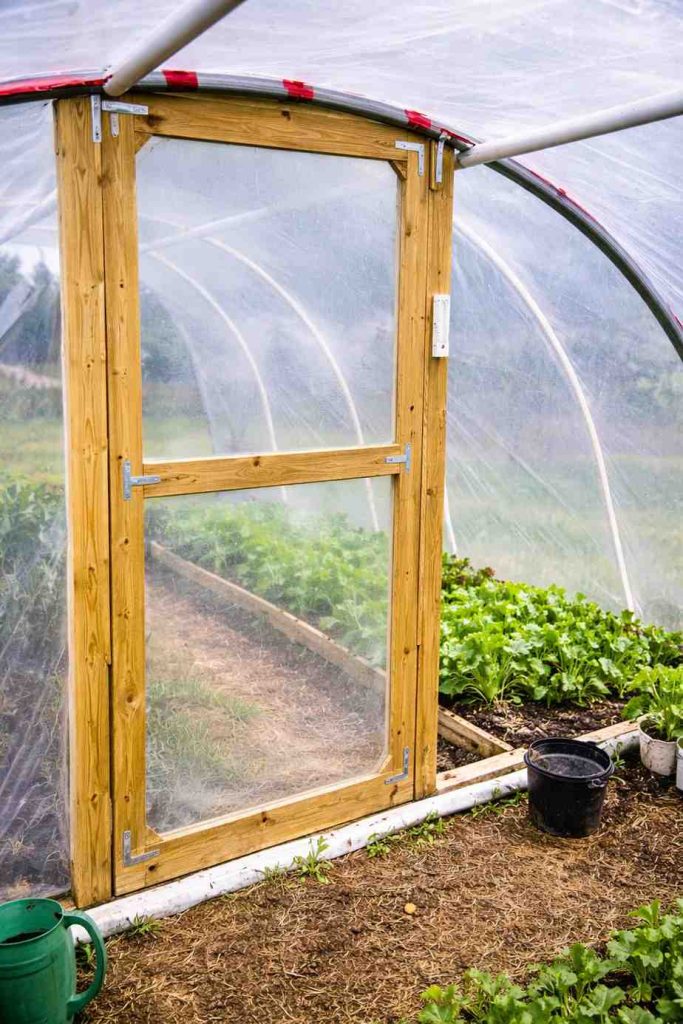
A trampoline greenhouse is a smart way to reuse an old trampoline frame while creating a sturdy growing space on a tight budget. The round or oval metal frame already provides a strong structure, making it ideal for holding greenhouse plastic through wind and light snow.
To build one, remove the jumping mat and netting, then wrap clear greenhouse plastic or heavy-duty poly sheeting around the frame. Secure it tightly using zip ties, clips, or rope, and leave a simple flap or zip opening for easy access and ventilation.
Inside, the circular shape traps warmth efficiently, making it great for seedlings, greens, or overwintering tender plants. It’s an eco-friendly, low-cost greenhouse that turns discarded backyard equipment into a productive garden feature.
13. Greenhouse from Recuperated Windows

A home-made glass greenhouse built from free recuperated windows is one of the most budget-friendly ways to create a large, light-filled growing space. Old house windows provide excellent insulation and maximum sunlight, making them perfect for year-round gardening without the high cost of new materials.
Construction usually starts with a simple wooden or recycled timber frame, designed around the sizes of the collected windows. Since reclaimed windows rarely match, the slightly mismatched look adds character while keeping costs extremely low. A solid base and good sealing are key to keeping the structure stable and weather-tight.
Once finished, this big DIY greenhouse is ideal for starting seedlings, growing vegetables, or overwintering plants. It’s a practical, eco-friendly project that turns discarded materials into a productive garden feature—proof that a functional greenhouse doesn’t have to be expensive.
Also Read: 9 Tips for Growing Vegetables in a Greenhouse for Beginners
14. Mini Hothouse
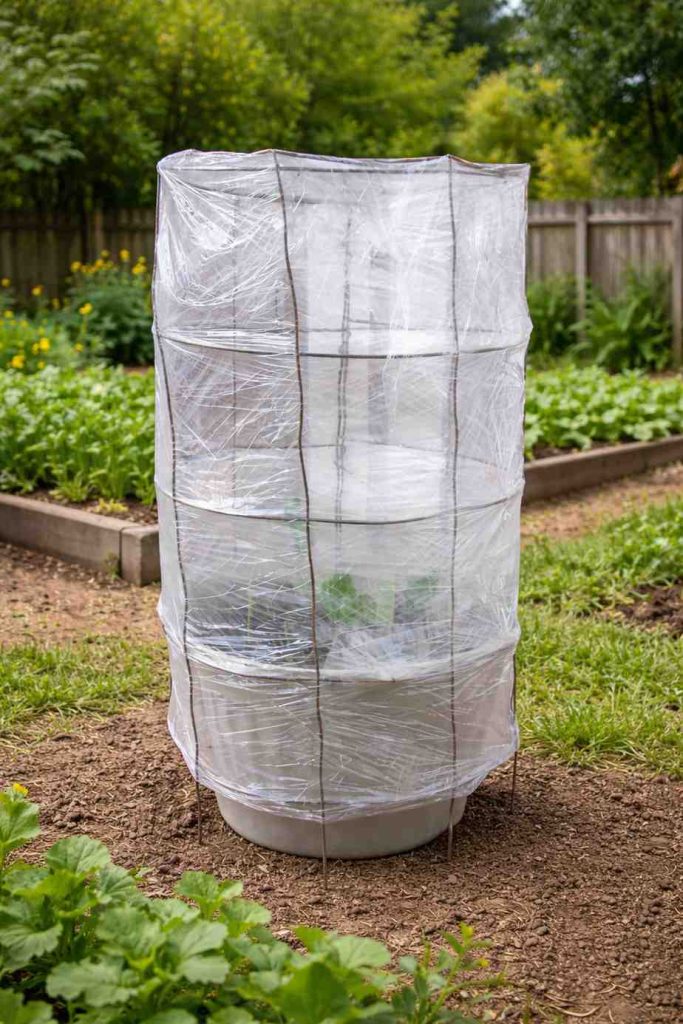
A mini hothouse greenhouse is a compact solution for protecting young plants and extending the growing season in small spaces.
It’s usually made with a lightweight frame and clear panels or plastic, allowing maximum sunlight while trapping warmth inside.
This type of greenhouse works perfectly on patios, balconies, or raised beds where space is limited.
Despite its small size, a mini hothouse keeps seedlings, herbs, and tender plants safe from frost, wind, and sudden temperature drops.
15. Cedar Greenhouse

A cedar greenhouse just feels right in the garden — warm, natural, and built to last.
Cedar naturally fights rot and insects, so it holds up well outdoors without needing a lot of upkeep.
Add glass or poly panels, and you’ve got a cozy, good-looking space that keeps plants happy while blending in beautifully with the backyard.
16. DIY Bamboo Greenhouse
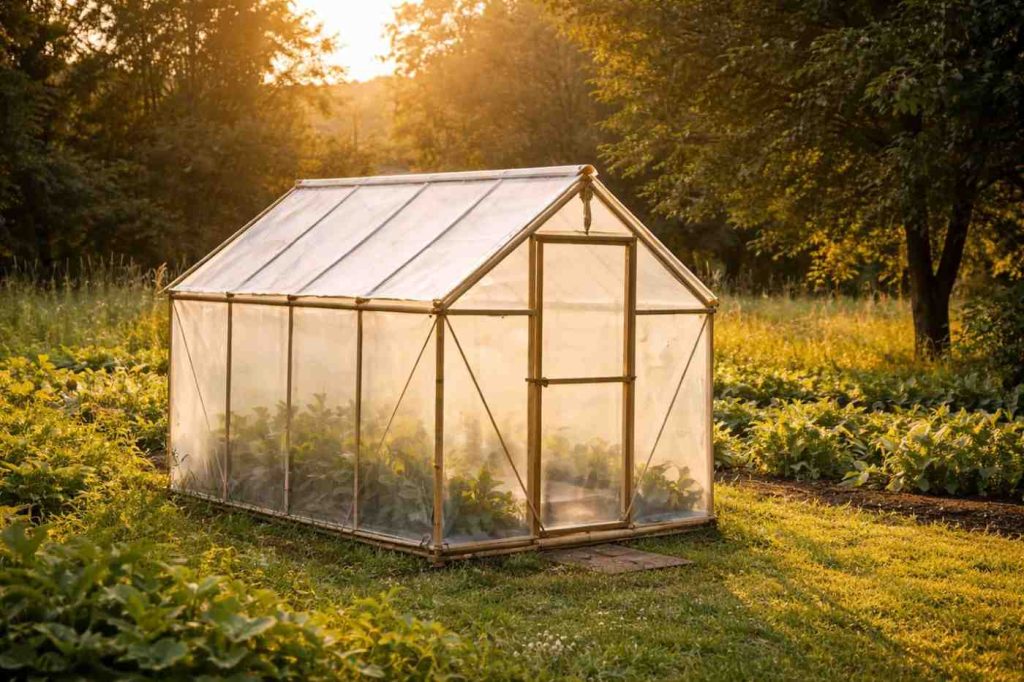
A DIY bamboo greenhouse is a simple, eco-friendly option that’s perfect if you want something lightweight and affordable.
Bamboo is surprisingly strong and flexible, making it easy to build frames for small to medium greenhouses without heavy tools.
Covered with greenhouse plastic or clear sheets, a bamboo structure traps warmth well while giving your garden a natural, rustic look that blends right in.
17. DIY Pallet Greenhouse
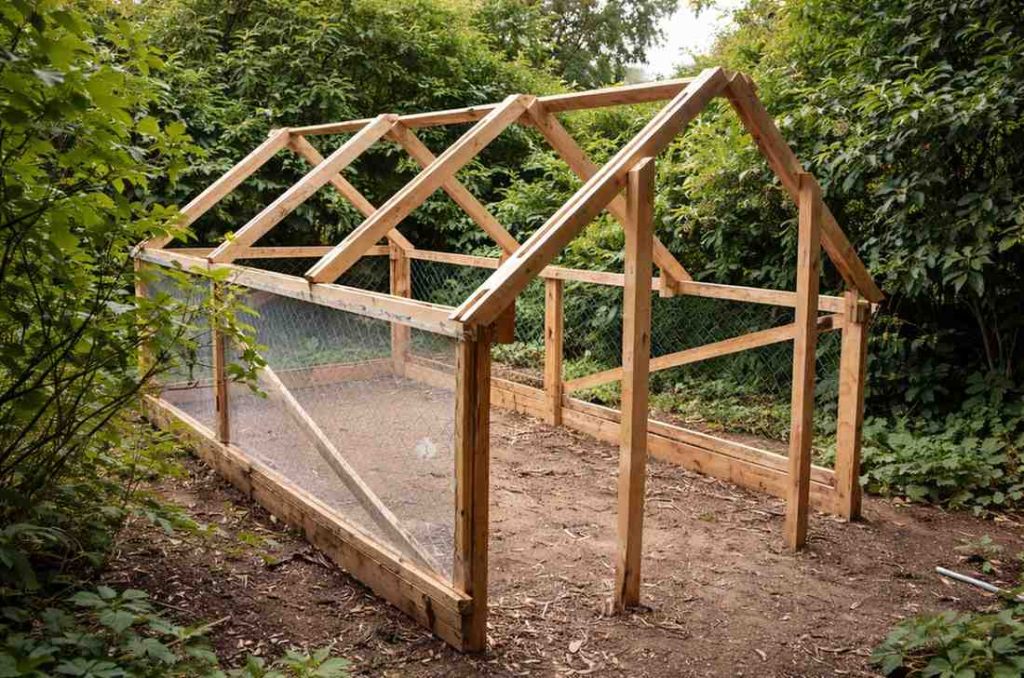
A pallet greenhouse is a budget-friendly way to build a solid growing space using reclaimed materials.
Wooden pallets form a sturdy frame and can be easily modified to fit windows, plastic panels, or greenhouse film.
It’s a great DIY project for gardeners who want something functional, rustic, and eco-conscious without spending much money.
Conclusion
Building your own greenhouse—whether from pallets, bamboo, cedar, old windows, or simple plastic—shows that you don’t need a big budget to grow successfully.
With a bit of creativity and reused materials, you can create a space that protects plants, extends the growing season, and fits your garden perfectly.
The best greenhouse is the one that works for your space, climate, and style—so start simple, experiment, and let your garden grow.

Khaja Moinuddin, a computer science graduate, finds joy in gardening and homesteading. Join him on this blog as he shares his experiences in homesteading, gardening, and composting

