


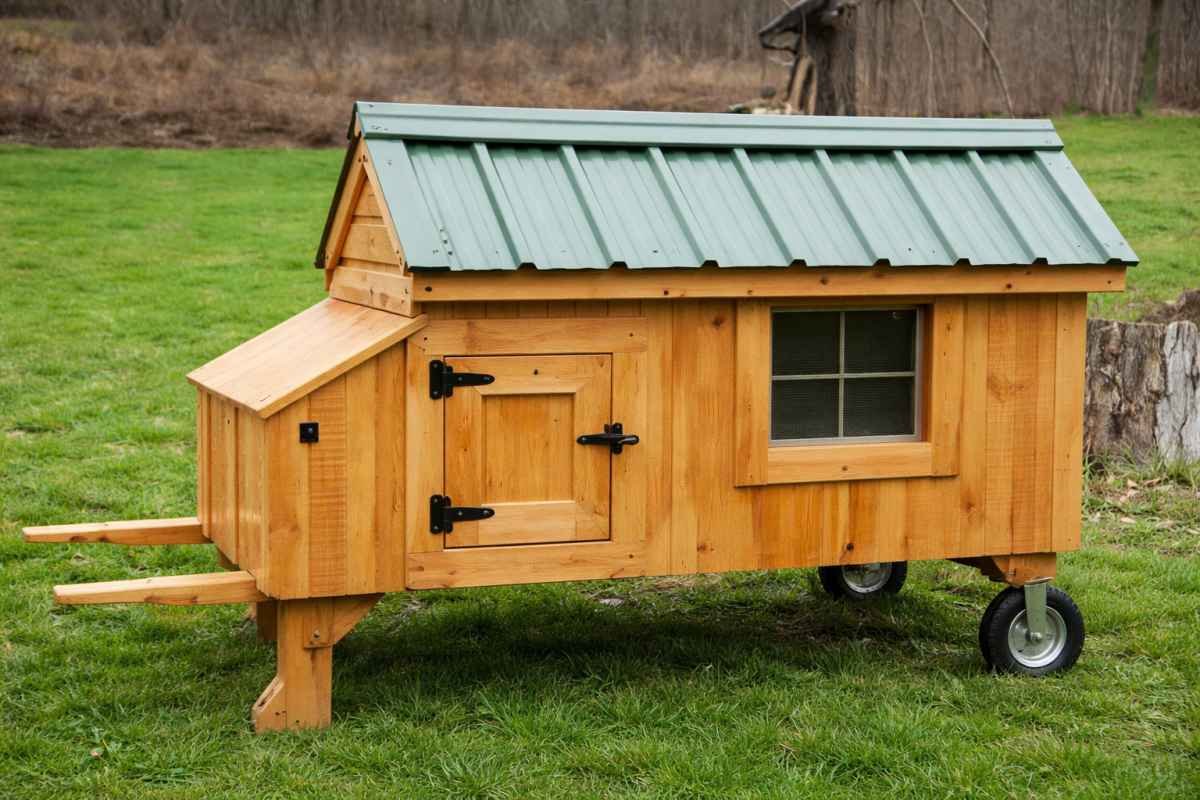
Small chicken keepers with limited space can benefit from movable chicken coops on wheels. Apart from being easy to clean, your flocks get more opportunities to forage and stay healthy.
Choosing the right material and a smart design is key to build a sturdy and durable mobile chicken tractor.
In this write-up, you’ll learn benefits and steps to make your own movable chicken coop.
What are Benefits of a Movable Chicken Coop?
A movable chicken coop allows you to shift your flock to fresh ground regularly. This gives chickens access to new grass, bugs, and seeds, keeping them active, healthier, and less stressed compared to staying in one fixed spot.
Since the coop can be moved, cleaning becomes much easier. Waste doesn’t build up in one area, which helps control odors, flies, and harmful bacteria. This also reduces the risk of disease in your flock.
Movable coops help protect your lawn and soil. By rotating the coop, chickens naturally fertilize different areas instead of destroying a single patch of ground. Your yard benefits while your birds enjoy better foraging.
These coops are also great for small or limited spaces. You can position them based on sunlight, shade, or weather conditions, giving your chickens a more comfortable and flexible living environment.
Finally, a movable chicken coop can save money over time. Healthier chickens, lower cleaning effort, and reduced need for bedding or repairs make it a practical and efficient choice for backyard chicken keepers.
Also Read: 9 Ways to Winterize Chicken Coop
How to Build a Portable Chicken Coop on Wheels?
A portable chicken coop on wheels—often called a chicken tractor—is an excellent option for backyard chicken keepers who want flexibility, cleaner ground, and healthier birds.
Unlike fixed coops, a wheeled coop can be moved easily, allowing chickens to forage on fresh grass while preventing mud, odor, and pest buildup.
With careful planning and the right materials, you can build a strong, long-lasting mobile coop that works in both small and medium-sized spaces.
Choosing the Right Materials
The key to a successful portable coop is using materials that are sturdy but not too heavy.
For the frame, pressure-treated lumber or exterior-grade wood is ideal because it resists moisture and rot. Avoid overly thick or bulky wood, as it can make the coop difficult to move.
For walls and enclosed areas, exterior plywood, reclaimed wood panels, or lightweight boards work well.
Use galvanized hardware cloth (not chicken wire) for ventilation openings and run areas, as it provides better protection from predators.
For roofing, corrugated metal sheets, polycarbonate panels, or asphalt shingles are reliable and weather-resistant options.
Wheels are especially important. Choose wheelbarrow, lawnmower, or cart wheels that can handle uneven ground.
Along with wheels, gather exterior screws, bolts, hinges, strong latches, roofing screws, and a weatherproof sealant or non-toxic paint to protect the coop from rain and sun.
Designing a Functional and Mobile Coop
A good design should balance mobility, comfort, and safety. Start by determining how many chickens the coop will house, then size it accordingly.
Each chicken needs enough floor space to move comfortably, plus room for roosting and nesting.
Position the wheels at one end of the coop or partially recessed into the base. This allows you to lift the opposite end slightly and roll the coop forward, much like a wheelbarrow.
Keeping the coop low to the ground improves stability while still allowing airflow underneath.
Plan for easy access points, including a human-sized door or panel for cleaning and egg collection, and a chicken door or ramp for daily use.
Adequate ventilation near the top of the walls is essential to prevent heat buildup and moisture problems.
Check this: How to Build a Chicken Coop for 20 Chickens?
Step-by-Step: Building the Base and Frame
Begin construction by assembling a rectangular base frame using wooden beams.
Secure all corners tightly with exterior screws or bolts to prevent shifting. This base supports the entire structure, so make sure it is square and level.
Attach vertical posts at each corner of the base to form the wall supports. Once these are in place, install cross braces along the sides and back to add rigidity.
Next, mount the wheels using heavy-duty brackets or a metal axle rod, ensuring they are firmly attached and aligned evenly.
Test the frame at this stage by gently lifting and rolling it. If it feels unstable, add extra bracing before moving on.
Installing Walls, Roof, and Ventilation
Once the frame is solid, attach wall panels to the enclosed sections of the coop.
Leave designated openings near the top for airflow, and cover these openings securely with hardware cloth. Good ventilation helps reduce ammonia odors and keeps chickens cool in warm weather.
Install the roof with a slight slope or pitch so rainwater can drain off easily. Make sure the roofing material overlaps the edges to prevent leaks.
Seal any gaps with exterior caulk or weatherproof trim to keep moisture and predators out.
Adding the Interior Features
Inside the coop, install roosting bars higher than the nesting boxes, as chickens naturally prefer to sleep off the ground.
Use rounded wooden poles or smooth boards for comfortable perching. Nesting boxes should be placed in a quieter, darker area of the coop to encourage egg laying.
Ensure the interior layout allows for easy cleaning. Removable droppings trays or hinged panels can save time and effort during regular maintenance.
Final Touches and Safety Checks
Finish the coop by installing secure latches on all doors and access panels. Paint or seal the exterior wood to protect it from weather damage and extend its lifespan.
Before introducing chickens, check the entire structure for sharp edges, loose screws, or gaps that predators could exploit.
Finally, move the coop across your yard to test its balance and mobility. A well-built portable chicken coop on wheels should roll smoothly, stay stable, and provide a safe, comfortable home for your flock. With regular upkeep, it will serve you well for many seasons to come.
21 DIY Movable Chicken Coop Plans
Movable chicken coops let you match your setup to your space, budget, and flock size. Some designs focus on simplicity and low cost, while others prioritize comfort, protection, or long-term durability.
Below are 21 DIY movable chicken coop ideas, and each plan includes three short, clear paragraphs explaining how it works, what it’s best for, and why you might choose it.
1. Classic Chicken Tractor
A classic chicken tractor is a simple, ground-level movable coop designed to give chickens constant access to fresh grass. As it’s shifted regularly, birds can forage, scratch, and fertilize the soil naturally without damaging one spot.
This type of tractor is usually built with a lightweight wooden frame, hardware cloth sides, and a small covered shelter for roosting. The open-bottom design improves airflow and keeps construction costs low.
Classic chicken tractors work best for small flocks on flat ground. With regular movement, they help maintain cleaner conditions while keeping chickens active and healthy.
2. A-Frame Movable Coop

The A-frame movable coop features a triangular shape that adds natural strength and stability. Its sloped sides help rain run off easily, making it suitable for different weather conditions.
This design is typically built with a wooden frame and wire mesh panels, keeping it lightweight and easy to move. Chickens stay protected while still enjoying access to fresh ground.
A-frame coops are ideal for beginners and small flocks. They work especially well in compact yards where simple movement and durability matter.
3. Wheelbarrow-Style Coop
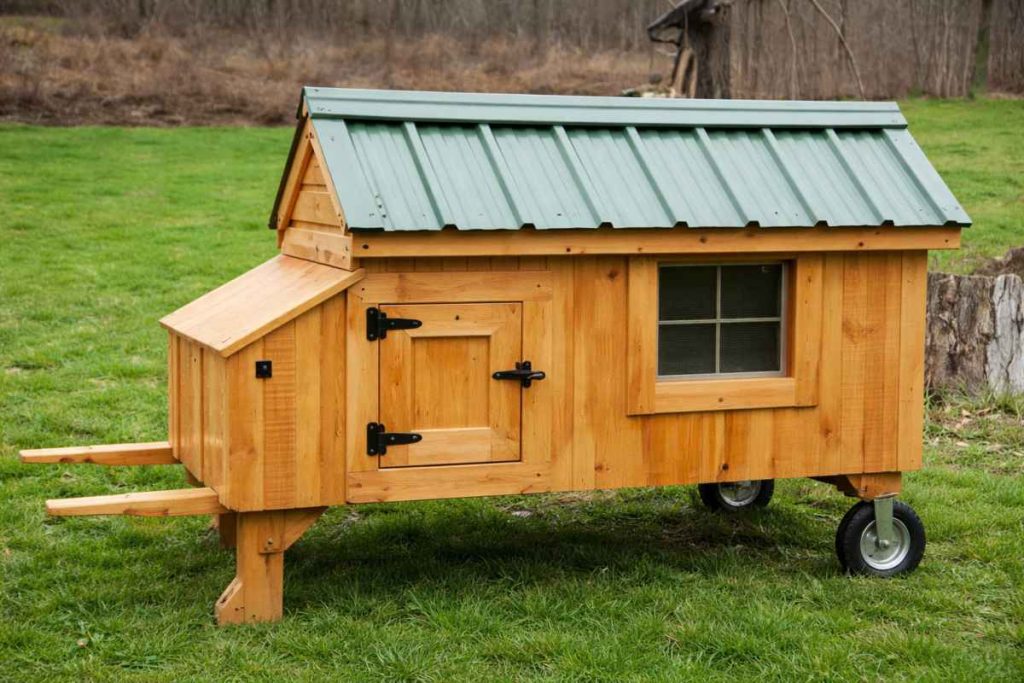
A wheelbarrow-style coop is designed with wheels on one end and handles on the other. This setup allows you to lift and roll the coop smoothly across the yard.
It usually includes a small enclosed sleeping area with open sides for ventilation. Moving the coop frequently helps keep the ground cleaner and healthier.
This style is perfect for chicken keepers who want easy mobility with minimal effort, even in limited spaces.
Also Read: What Should Be Inside a Chicken Coop?
4. PVC Pipe Chicken Tractor
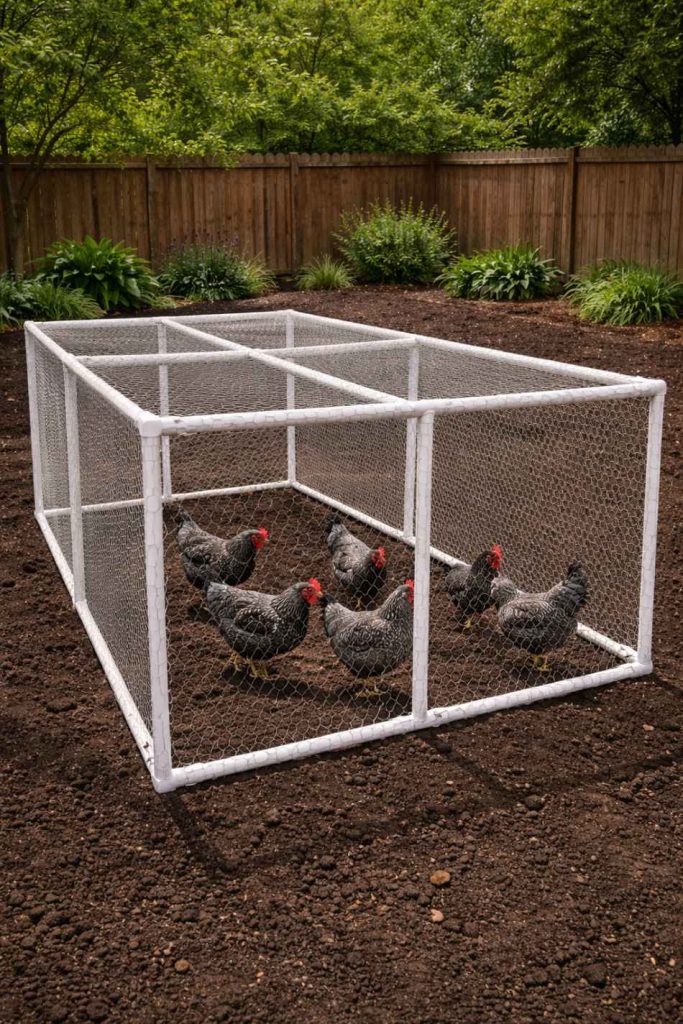
The PVC pipe chicken tractor is a lightweight and budget-friendly option. It’s quick to assemble using PVC pipes, netting, and simple connectors.
While not as sturdy as wood, it’s easy to repair and modify. The open design provides excellent airflow for chickens.
This tractor works best for temporary setups or mild climates where portability is a priority.
5. Reclaimed Pallet Coop

A reclaimed pallet coop is built using recycled pallets, making it an affordable and eco-friendly choice. Each build can be customized based on available materials.
Because pallets are heavier, adding wheels improves mobility. Proper sanding and sealing help extend the coop’s lifespan.
This design suits DIY builders who enjoy repurposing materials while keeping costs low.
6. Hoop-Style Mobile Coop

Hoop-style mobile coops use bent PVC or metal hoops covered with wire and tarp. The curved shape allows for good airflow and natural light.
They’re easy to move and expand in length if needed. Shade covers can be added in hot weather.
This design is well suited for warm climates and daytime foraging setups.
7. Mini Backyard Mobile Coop
A mini backyard mobile coop is designed for small, neat spaces where appearance and function both matter. It provides a safe, compact home for chickens without taking over the yard.
These coops usually include nesting boxes, roosting space, and small wheels for easy movement. The layout makes daily care and egg collection simple.
This style works best for 2–3 chickens and is ideal for urban or suburban backyards.
8. Raised Coop with Wheels
A raised coop with wheels keeps chickens off damp ground while improving airflow underneath. This helps maintain a drier, cleaner living space.
Droppings fall directly onto the soil, spreading natural fertilizer as the coop is moved. Wheels make repositioning easy and efficient.
This design is especially useful in areas with wet or muddy conditions.
9. Tractor Coop with Covered Run
A tractor coop with a covered run combines mobility with added protection. Chickens can move safely within the enclosed run throughout the day.
The structure is heavier than open designs, so strong wheels and a solid frame are important. It’s usually moved less frequently.
This coop is a good choice for locations with predators or limited free-ranging options.
10. Metal Frame Mobile Coop
A metal frame mobile coop is built for strength and long-term durability. Unlike wood, metal resists rot, moisture, and pest damage over time.
Wire panels and roofing sheets are attached directly to the frame, creating a solid but open structure. Once built, it requires very little maintenance.
This design works well for keepers who want a long-lasting movable coop for regular use.
Also Read: How to Heat Chicken Coop without Electricity?
11. Old Trailer Conversion Coop
An old trailer conversion coop uses a small utility trailer as its base, making movement smooth and effortless. The existing frame provides excellent balance and support.
A coop structure is built on top, offering more interior space than most mobile designs. Chickens stay comfortable and secure.
This option is best suited for medium to large flocks and spacious yards.
12. Folding Chicken Tractor
A folding chicken tractor is designed for easy storage and transport. It can be collapsed when not in use, saving space.
Lightweight materials make it simple to move, though it’s not meant for heavy-duty use. It works well for short-term grazing.
This design is ideal for temporary setups or rotating chickens between areas quickly.
13. Low-Cost Scrap Material Coop
A low-cost scrap material coop is built using leftover wood, wire, and wheels you already have. It’s a practical option when budget matters most.
The design depends entirely on available materials, allowing for creativity and flexibility. Basic framing and secure mesh are usually enough.
This style is ideal for beginners who want to experiment without spending much.
14. Tractor Coop with Solar Door
A tractor coop with a solar door adds convenience to a movable setup. The automatic door closes at dusk and opens at dawn.
The coop itself follows a simple tractor design with a secure sleeping area. The solar feature reduces daily chores.
This option suits busy chicken keepers who want extra peace of mind.
15. Skid-Style Movable Coop
A skid-style movable coop rests on wooden runners instead of wheels. It’s dragged to new spots when needed.
With fewer moving parts, maintenance stays minimal. The structure remains strong and simple.
This design works best on grassy or soft ground in rural areas.
16. Lightweight Bamboo Coop
A lightweight bamboo coop uses bamboo poles for the main frame, keeping the structure strong yet easy to move. It’s a natural and eco-friendly option.
Wire mesh and simple roofing are added for protection, while proper treatment helps bamboo last longer outdoors.
This design works best in warm, dry climates where bamboo is easily available.
17. Chicken Ark Design
A chicken ark design features a curved roof and compact shape that makes it easy to roll. The rounded top also helps shed rain and debris.
Inside, it offers just enough space for roosting and nesting while staying lightweight. Movement is smooth and controlled.
This style is popular for small flocks and tidy backyard setups.
18. Mobile Coop with Integrated Feeder
A mobile coop with an integrated feeder keeps food and water attached to the structure. Everything moves together when the coop is relocated.
This setup helps keep feed clean and reduces daily handling. The coop may be slightly heavier.
It’s ideal for chicken keepers who value efficiency and convenience.
Also Read: How to Make a Cheap Chicken Coop?
19. Garden Bed Chicken Tractor
A garden bed chicken tractor is designed to sit directly over raised beds. Chickens naturally prepare the soil as they scratch and fertilize.
This controlled foraging helps remove weeds and pests before planting. The coop is moved once the bed is ready.
It’s a great choice for gardeners who raise chickens.
Conclusion
Movable chicken coops offer a practical and flexible way to raise healthier chickens while keeping your yard cleaner and more productive.
With so many DIY designs available, it’s easy to find an option that fits your space, budget, and flock size.
Whether you prefer a simple ground-level tractor or a more advanced mobile coop with added features, the key is choosing a design that’s easy to move and comfortable for your birds.
With the right plan, a DIY movable chicken coop can make chicken keeping more efficient, enjoyable, and rewarding.

Khaja Moinuddin, a computer science graduate, finds joy in gardening and homesteading. Join him on this blog as he shares his experiences in homesteading, gardening, and composting

