


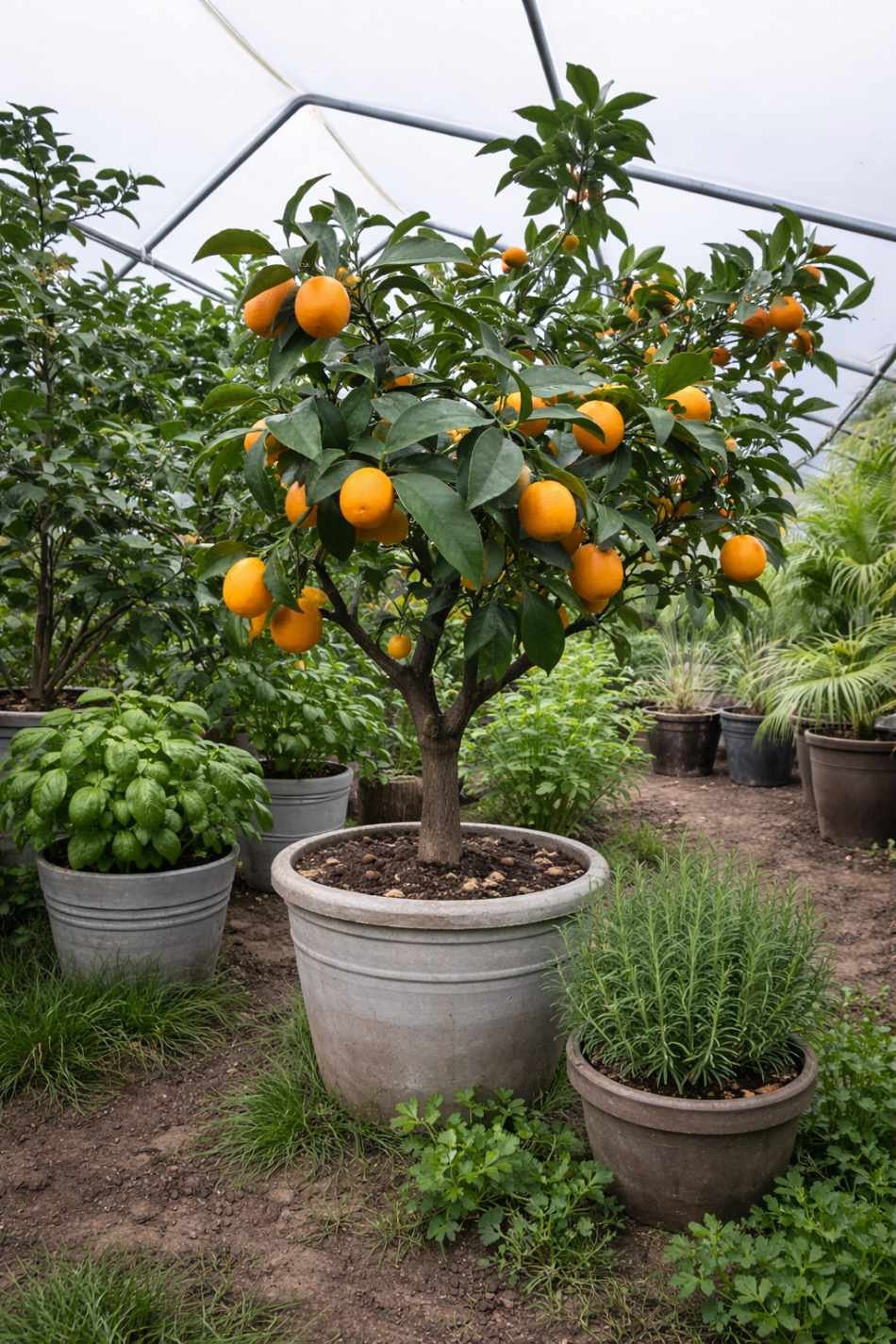
If you’re too worried about the climatic conditions in your region and want to have a controlled environment, then growing citrus in a greenhouse is an ideal solution.
A greenhouse lets you manage temperature, humidity, light, and airflow—creating the warm, sunny conditions citrus trees naturally love, no matter what’s happening outside.
You’ve actually got plenty of options when it comes to growing citrus in a greenhouse. Lemons, limes, sweet oranges, mandarins, and even grapefruits can all do really well, especially dwarf varieties that stay compact.
Ideal Climatic Conditions to Grow Citrus Plant
Citrus plants love warmth, sunlight, and steady conditions. When you grow them in a greenhouse, your goal is to mimic a mild, subtropical climate where they can grow actively without stress.
Getting the temperature, light, and humidity right makes all the difference in healthy growth and fruit production.
- Temperature: Citrus trees prefer daytime temperatures between 65–85F. At night, try to keep it above 50F. Sudden drops in temperature can stress the plant, especially during flowering and fruiting.
- Sunlight: They need at least 6–8 hours of bright light daily. A sunny greenhouse spot works best, and during darker months, supplemental grow lights can help maintain steady growth.
- Humidity: Moderate humidity levels around 50–60% are ideal. Too much moisture can encourage fungal problems, while very dry air may cause leaf drop or poor fruit set.
- Air Circulation: Good airflow is important to prevent pests and diseases. Use vents or small fans to keep fresh air moving without creating strong, cold drafts.
- Frost Protection: Citrus plants are sensitive to frost. Even light frost can damage leaves and blossoms, so maintaining a stable, frost-free environment inside the greenhouse is essential.
How to Grow Citrus in a Greenhouse?
Growing citrus in a greenhouse gives you control over the environment, which makes a huge difference in plant health and fruit production.
With the right setup and a little consistency, you can enjoy steady growth, fragrant blossoms, and homegrown citrus almost year-round.
Here’s a detailed step-by-step guide to help you do it right.
1. Choose the Right Variety

Not all citrus trees grow the same way, so choosing the right variety is the first important step. In a greenhouse, compact or dwarf varieties are much easier to manage and maintain.
Dwarf lemons, limes, mandarins, and oranges adapt especially well to container growing. They stay smaller in size but still produce full-sized fruit.
Look for grafted plants from a reliable nursery. Grafted citrus tends to fruit earlier and grows more predictably compared to seed-grown plants.
Also Read: How to Grow Strawberries in Greenhouse?
2. Select a Suitable Container
Citrus plants grow best in containers that give their roots enough room to expand. Start with a pot that is large and sturdy, especially if you’re growing indoors or in a greenhouse.
Make sure the container has multiple drainage holes at the bottom. Citrus roots are sensitive to waterlogging, and poor drainage can quickly lead to root rot.
As the plant grows, you may need to repot it into a slightly larger container every few years. Gradual upsizing keeps the plant healthy without overwhelming it.
3. Use Well-Draining Soil
The soil mix you choose plays a major role in citrus health. These plants prefer loose, airy soil that drains quickly while still holding some moisture.
A mix of quality potting soil, perlite, and a bit of sand or bark works well. This combination improves drainage and prevents compacted roots.
Avoid heavy garden soil inside containers, as it can retain too much water. Good drainage encourages strong root development and steady growth.
4. Provide Plenty of Sunlight
Citrus trees love sunshine and need at least 6–8 hours of bright light daily. Position your plant in the sunniest part of your greenhouse.
If your region has short winter days, growth may slow down. In that case, adding supplemental grow lights can help maintain healthy foliage and flowering.
Rotate the pot occasionally so all sides receive equal light. This encourages balanced growth and prevents the plant from leaning toward one direction.
5. Maintain Consistent Temperature
Citrus plants thrive in warm, stable conditions. Try to keep greenhouse temperatures between 65–85F during the day.
At night, temperatures should stay above 50F. Sudden drops in temperature can stress the plant and affect flowering or fruit development.
Using a thermometer and simple greenhouse heater during colder months helps maintain a steady environment, especially in winter.
6. Water Properly
Citrus plants prefer deep watering but don’t like constantly wet soil. Allow the top 2–3 inches of soil to dry out before watering again.
When you water, do it thoroughly until excess drains from the bottom. This ensures the entire root system gets moisture.
Overwatering is one of the most common mistakes. Always check the soil first instead of watering on a fixed schedule.
7. Feed Regularly
Citrus trees are heavy feeders and require consistent nutrition to produce healthy leaves and fruit. Use a fertilizer specially formulated for citrus plants.
Feed during the active growing season, usually spring through early fall. This supports flowering, fruit set, and steady growth.
In winter, reduce feeding as growth slows down. Too much fertilizer during dormancy can stress the plant rather than help it.
8. Prune and Monitor

Light pruning helps maintain shape and improves air circulation inside the plant canopy. Remove any dead, weak, or crossing branches.
Pruning also encourages better light penetration, which improves fruit quality and overall plant health.
Keep an eye out for common greenhouse pests like aphids, spider mites, or whiteflies. Early detection makes treatment much easier and prevents bigger problems later.
Check this: DIY Wood Frame Greenhouse Plans
FAQs About Growing Citrus in a Greenhouse
1. Can citrus grow year-round in a greenhouse?
Yes, citrus can grow year-round if the greenhouse stays warm and bright. Growth may slow in winter, but the plant will stay healthy with stable conditions.
2. How long does it take for citrus to bear fruit?
Grafted citrus plants can start fruiting within 1–3 years. Seed-grown plants usually take much longer and are less predictable.
3. Do citrus plants need pollination in a greenhouse?
Most citrus varieties are self-pollinating. However, gently shaking the plant or hand-pollinating can improve fruit set indoors.
4. Why are my citrus leaves turning yellow?
Yellow leaves are often caused by overwatering or nutrient deficiencies. Check drainage first, then adjust feeding if needed.
5. Can I move my citrus plant outside in summer?
Yes, you can move it outdoors during warm months. Just acclimate it gradually to prevent shock from sudden sunlight exposure.
Also Read: 12 DIY Greenhouse PVC Plans to Build on a Budget
Conclusion
Growing citrus in a greenhouse is a smart way to enjoy fresh, homegrown fruit without worrying about unpredictable weather. By controlling temperature, light, and watering, you create the warm, stable environment citrus trees naturally thrive in.
With the right variety, proper care, and a little patience, your greenhouse can reward you with fragrant blossoms and juicy harvests year after year. It’s a simple setup that brings a touch of the tropics right into your backyard.

Khaja Moinuddin, a computer science graduate, finds joy in gardening and homesteading. Join him on this blog as he shares his experiences in homesteading, gardening, and composting

