Happy Monday GPODers!
We had a wonderful little excursion around the world last week, but the amazing “On the Road” submissions haven’t stopped, so we are starting this week with a few more outstanding garden destinations and the gorgeous plants that our contributors saw on their recent visits. Today we’re heading to Chicago Botanic Garden with Cindy Strickland, who has shared bright blooms from her garden in the windy city (Cindy’s Top Summer Blooms Northwest Chicago) as well as from some of the fascinating gardens she has travelled to over the years (Sissinghurst Castle Garden in Late May, Sydney, Australia, and Smallhythe Place). With this world-renowned garden institution in her backyard, she was able to plan a visit that coincided with the first flowers of the year.
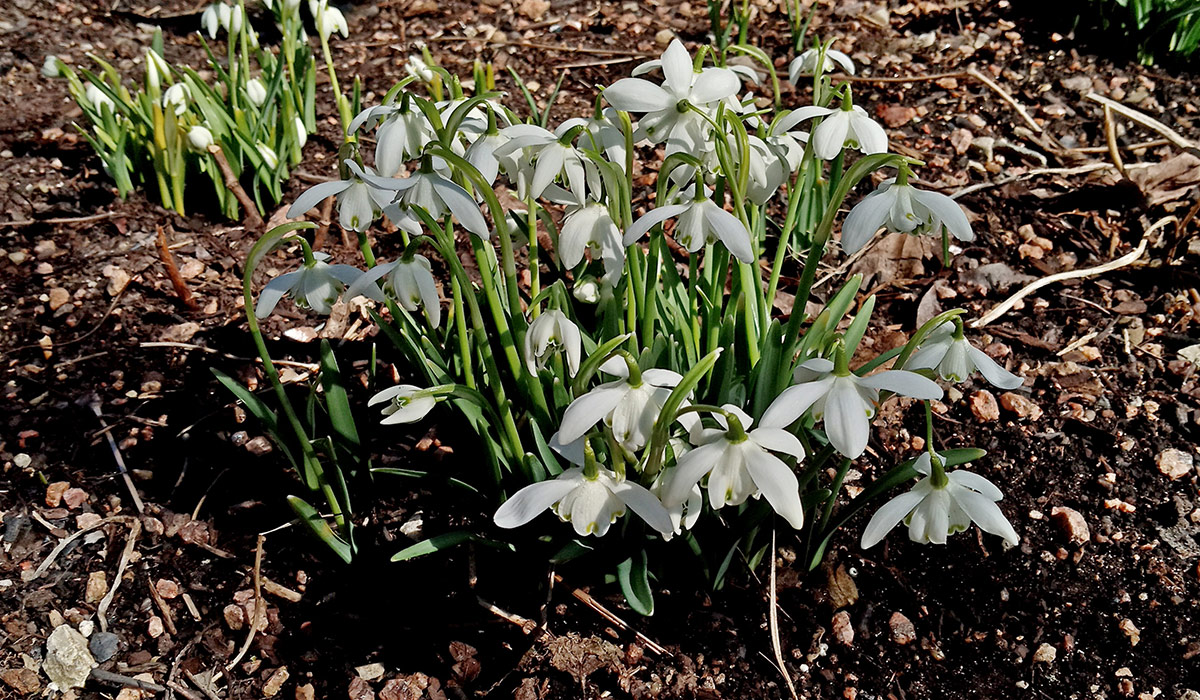
Hello, Cindy in Chicago here. Just wanted to share a few early bloomers I found at Chicago Botanic Garden on March 8, 2026. I was mainly looking for the white and pendulous galanthus—also known as snowdrops. I enjoyed noting the details of the different markings on the flowers. A nodding flower that looks similar to galanthus is summer snowflake (Leucojum aestivum, Zones 4–8), which blooms later than galanthus but is also in the Amaryllis family.
‘Flore Pleno’ (G. nivalis ‘Flore Pleno’, Zones 3–7) is a “double” snowdrop—the inner perianth segments are usually marked with green.
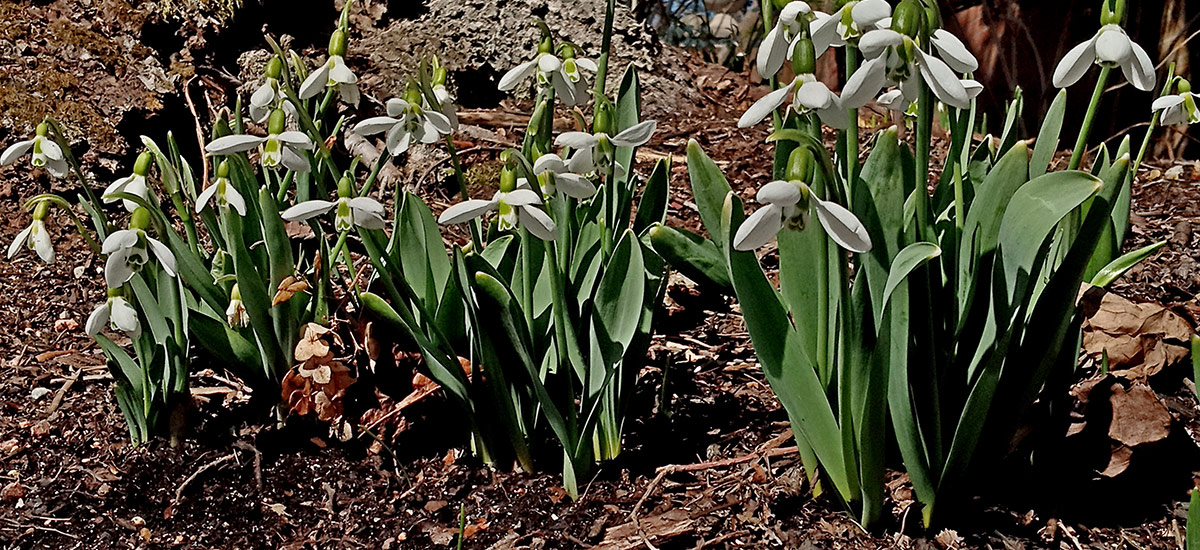 Giant snowdrop (G. elwesii, Zones 4–7) is a larger a variety described as a good one for naturalizing and, like other galanthus, it likes to grow in well drained soil under deciduous trees that will provide some shade after blooming.
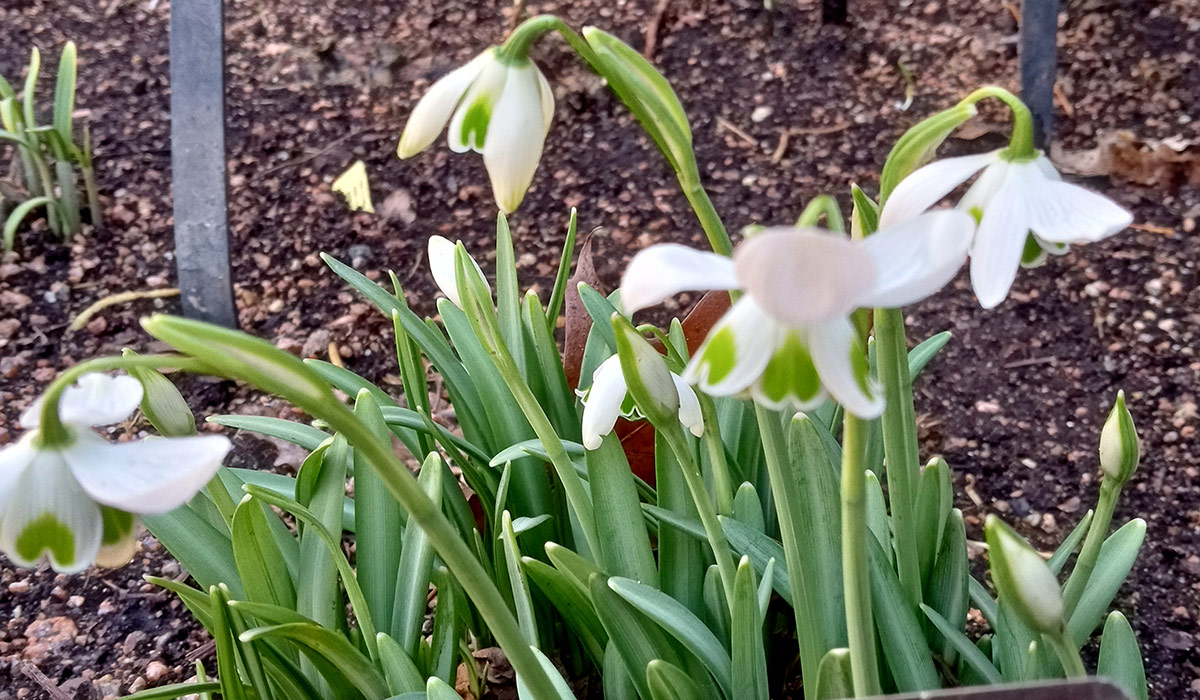 ‘Sam Arnott’ (G. nivalis ‘Sam Arnott’, Zones 3–7) is a noticeably bigger variety with larger flowers.
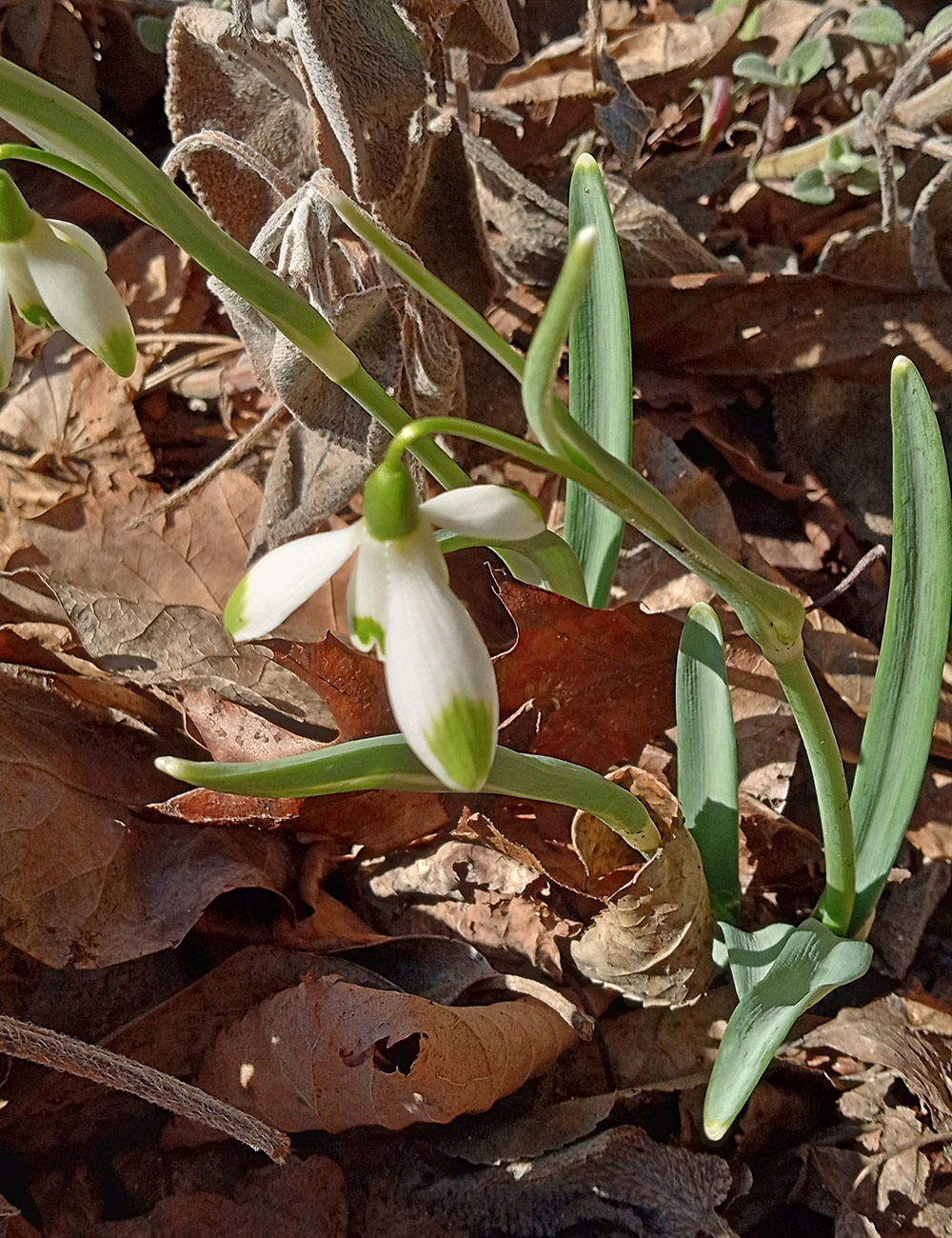 ‘Viridi-Apice’ (G. nivalis ‘Viridi-apice’, Zones 3–7) also known as the green-tip snowdrop is the only cultivar with a green spot near the tips of the outer whorl of tepals.
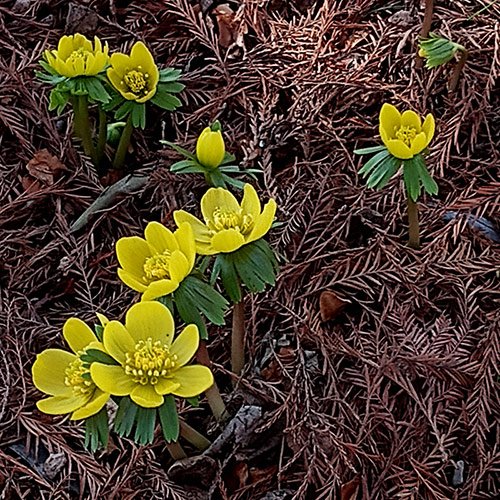
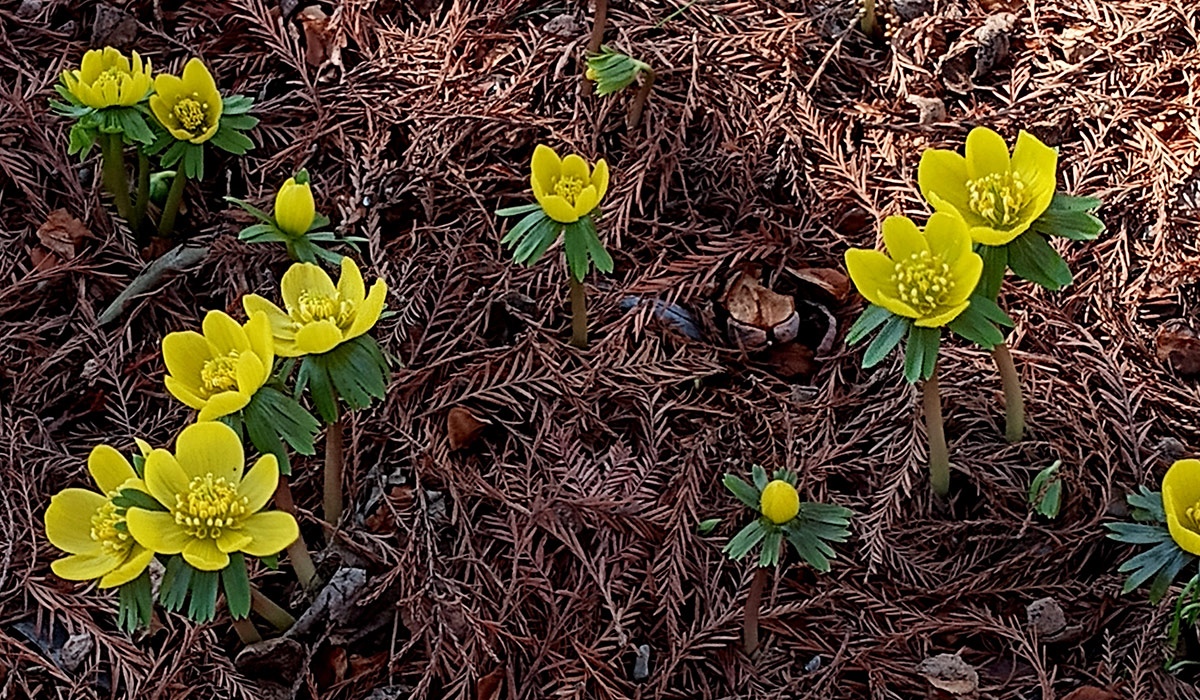 Winter aconite (Eranthis hyemalis, Zones 3–7) is also an early bloomer.
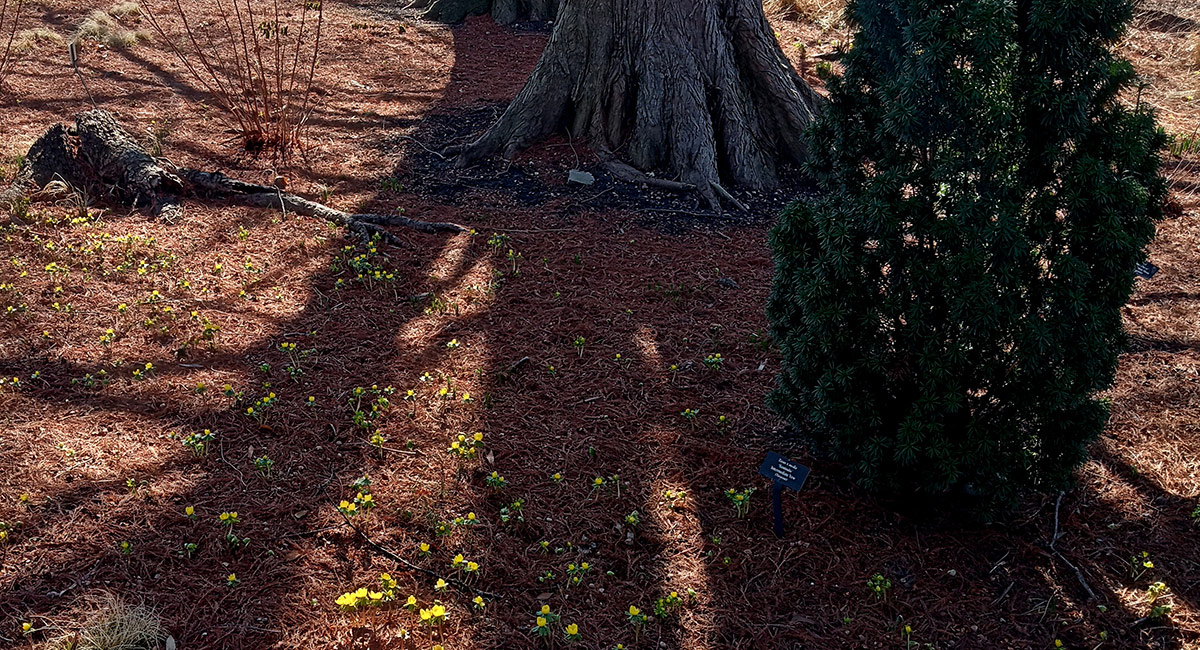 Winter aconite in a wide shot. Like galanthus, winter aconite prefers well-draining soil with organic material, medium moisture, and full sun to part shade.
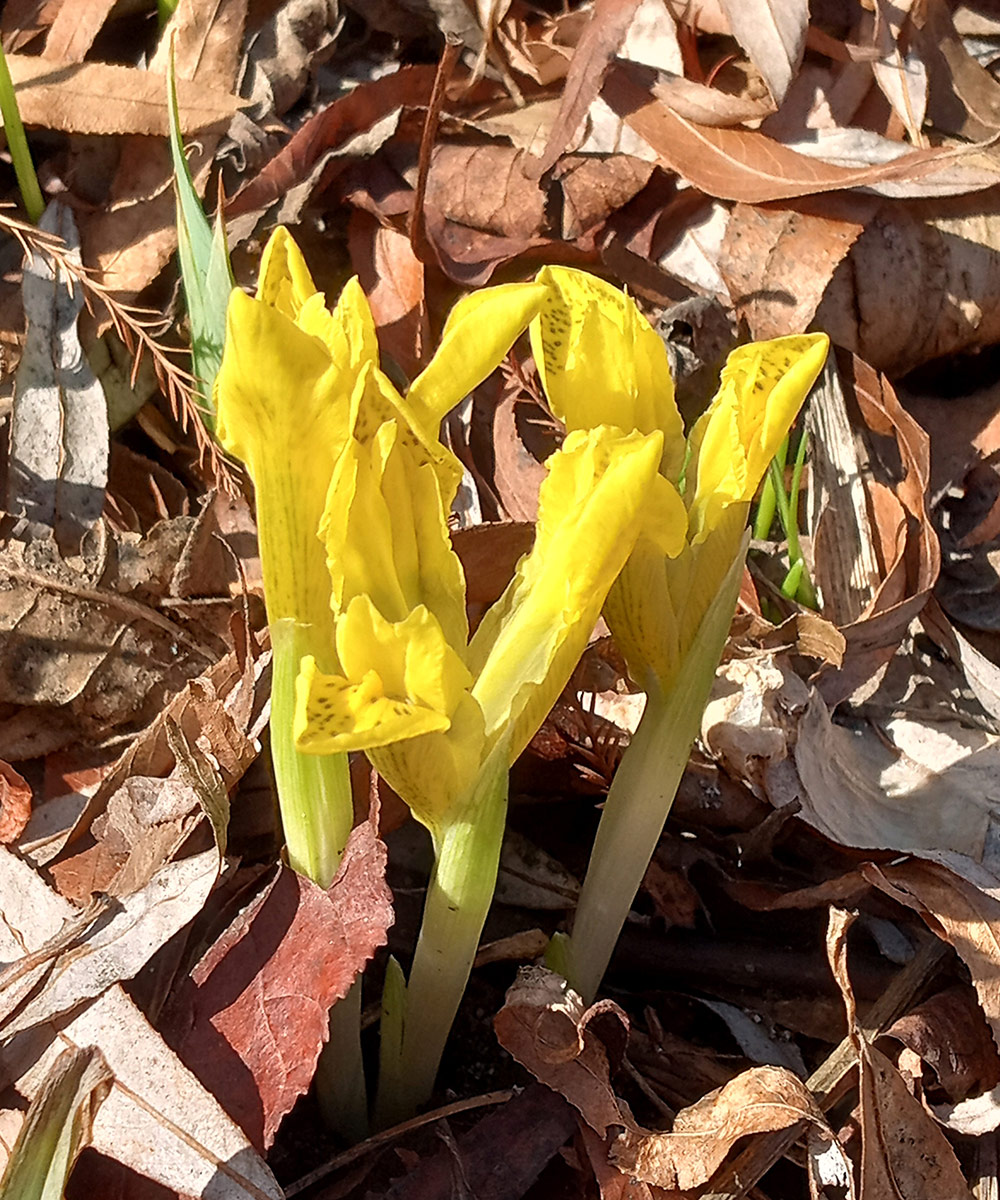 ‘Sunshine’ reticulated iris (Iris reticulata ‘Sunshine’, Zones 3–7)—according to the Chicago Botanic Garden website, this cultivar is smaller than most reticulated iris and is a modern cross between the blue sophenensis iris (I. sophenensis, Zones 4–8) and the yellow Danford iris (I. danfordiae, Zones 5–9).
 Alexandrina saucer magnolia (Magnolia × soulangeana ‘Alexandrina’, Zones 5–9) is the large tree in the foreground with early flowers blooming below.
Thank you so much for sharing these early season stars with us, Cindy! It might feel like any kind of color is a blessing this time of year, but botanical gardens are a great place to be reminded that we have more plant options than we sometimes imagine.
Do you have any late winter and early spring blooms emerging from your garden yet? It is time to chase those winter blues away and embrace even the smallest pops of color that we see growing in our landscapes. Please help GPOD celebrate the start of spring by sharing your garden photos with the blog. Follow the directions below to submit your photos to Garden Photo of the Day!
We want to see YOUR garden!
Have photos to share? We’d love to see your garden, a particular collection of plants you love, or a wonderful garden you had the chance to visit!
To submit, fill out the Garden Photo of the Day Submission Form.
You can also send 5–10 photos to [email protected] along with some information about the plants in the pictures and where you took the photos. We’d love to hear where you are located, how long you’ve been gardening, successes you are proud of, failures you learned from, hopes for the future, favorite plants, or funny stories from your garden.
Do you receive the GPOD by email yet? Sign up here
Fine Gardening Recommended Products
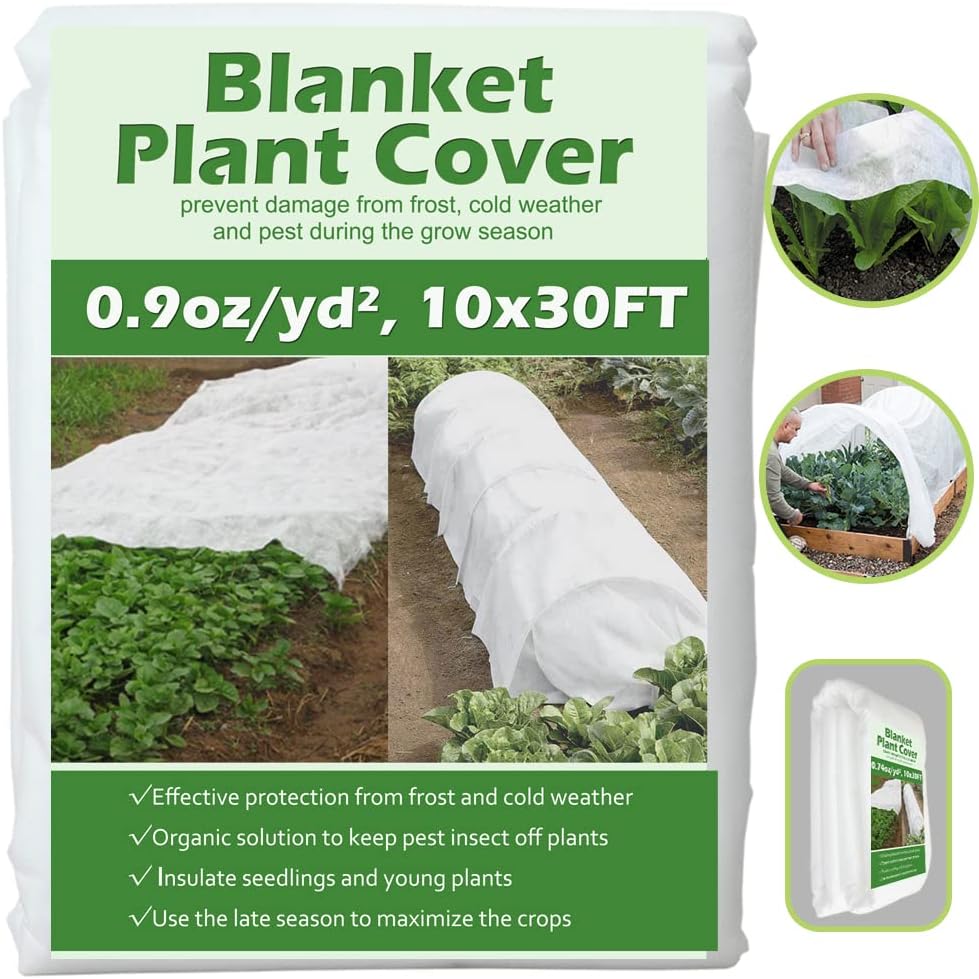
Plant Covers Freeze Protection 10 ft x 30 ft Floating Row Cover 0.9oz/yd²
Fine Gardening receives a commission for items purchased through links on this site, including Amazon Associates and other affiliate advertising programs.
Lightweight and Breathable MATERIAL Good for protecting Plant: the plant frost cover material is 0.74 oz/sq non-woven polypropylene fabric, which is lightweight, breathable, and durable. The plant blanket frost protection allows sunlight reach the plants, perfect for protecting plants from the damage of freeze or frost. Wide Application In your Garden Work. The plant row cover not only can work as a barrier against frost, but also can be a great tool for germination and good for rapid seedling growth. By using the fabric plant covers over your plant, you can start the plant earlier in the spring and extending the growing season of your plants. How to Use the Plant Covers: you can cover the plant covers for freeze over your the plants loosely directly and then secure the plant frost blanket with soil, stones or staples. You can also support the floating row covers with a hoop, make enough room for plants to breath and grow. You could also cut the plant covers into different sizes for different purposes.
ARS Telescoping Long Reach Pruner
Fine Gardening receives a commission for items purchased through links on this site, including Amazon Associates and other affiliate advertising programs.
Telescopes from 4 to 7′. Cut and Hold (160) Blades. Drop forged blades for unsurpassed long lasting sharpness. Lightweight, 2.3 lbs., for continued use. Perfectly balanced for easy pruning.
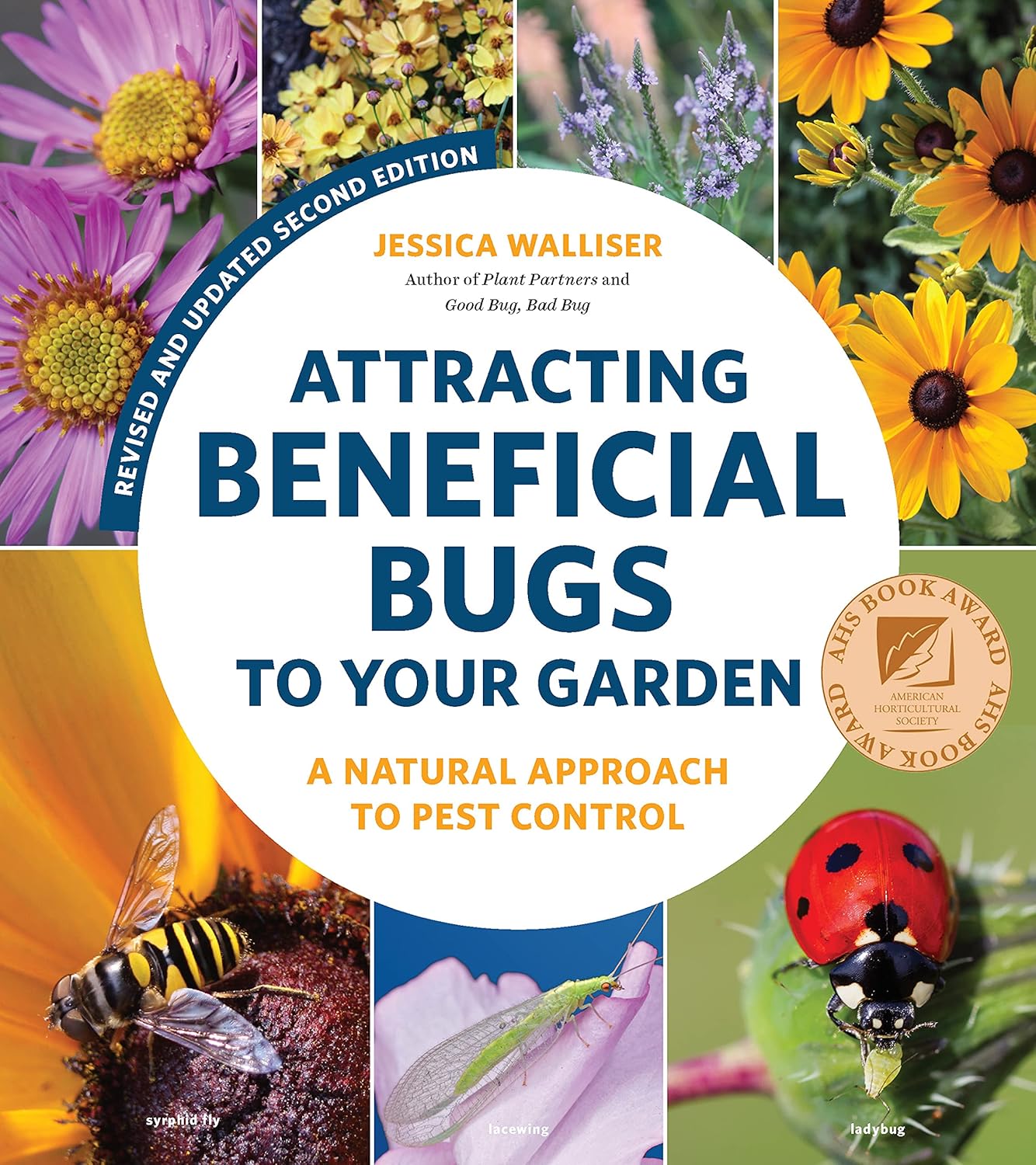
Attracting Beneficial Bugs to Your Garden, Revised and Updated Second Edition: A Natural Approach to Pest Control
Fine Gardening receives a commission for items purchased through links on this site, including Amazon Associates and other affiliate advertising programs.
This revised and updated edition of Jessica Walliser’s award-winning Attracting Beneficial Bugs to Your Garden offers a valuable and science-backed plan for bringing balance back to the garden. With this indispensable gardening reference—now updated with new research, insights, and voices—learn how to create a healthy, balanced, and diverse garden capable of supporting a hard-working crew of beneficial pest-eating insects and eliminate the need for synthetic chemical pesticides.