


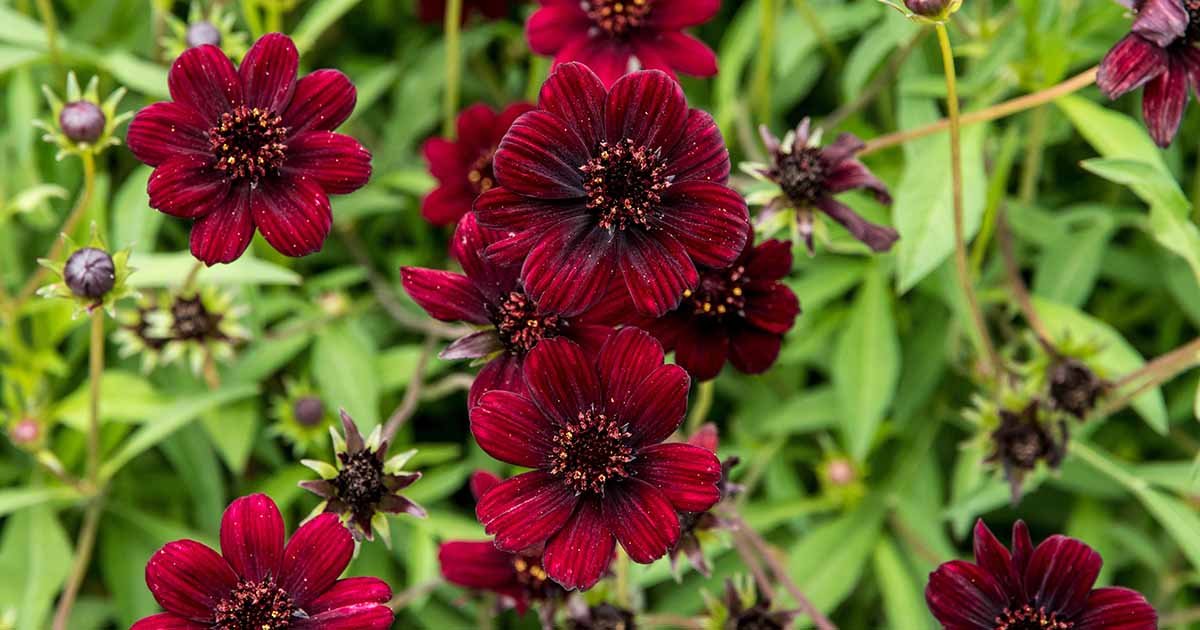
Chocolate cosmos also makes an outstanding addition to cottage and cutting gardens where the flowers can be mass-planted and the sturdy stems cut and used in vase arrangements.
Read on to learn how to care for these versatile tubers in your region.
How to Grow
Successful cultivation begins with an understanding of cultural requirements, the conditions that support a species in its native habitat, and how to replicate them in the home landscape.
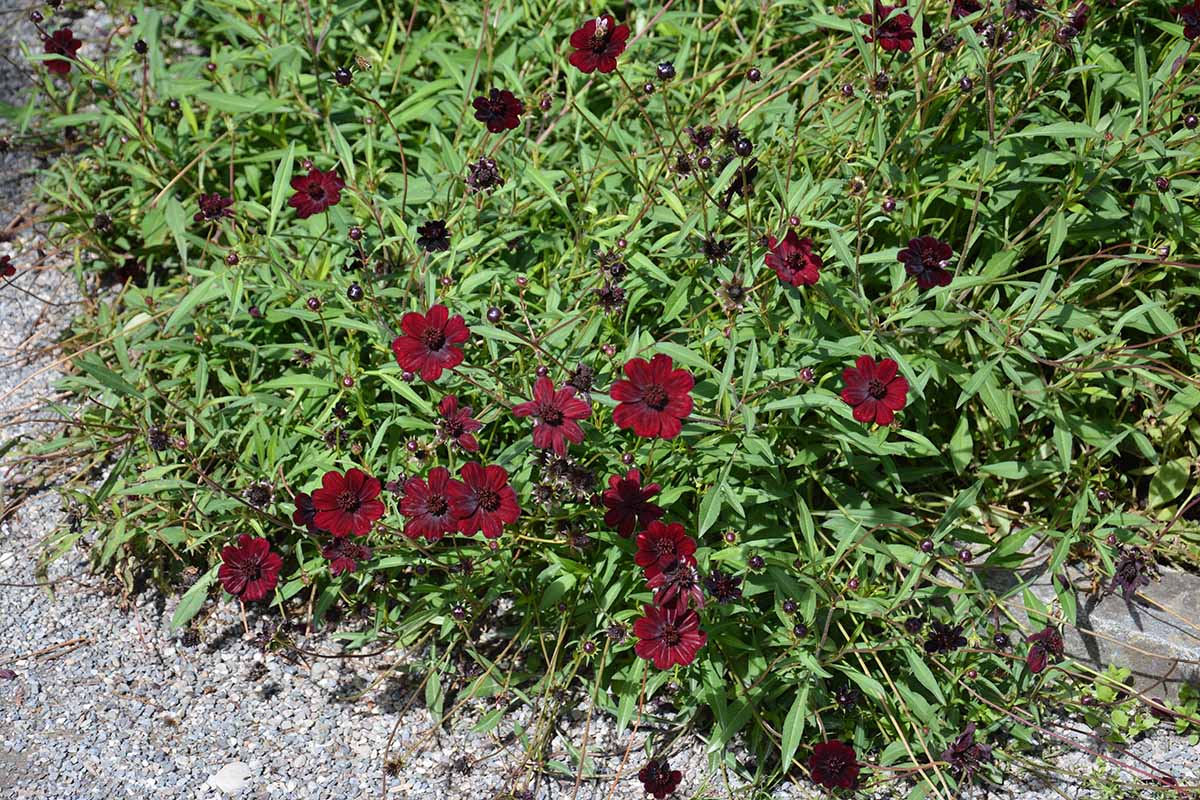
C. atrosanguineus is native to the forested mountain regions of Mexico, including Hidalgo and Guanajuato.
Summer temperatures may exceed 90°F and there is ample humidity and rainfall. Winters are cold and dry, dipping into the 40°s, with occasional high elevation frost.
As mentioned, gardeners in Zones 9 to 11 can keep the tubers in-ground year-round, those in Zones 7 to 8 can experiment with mulch for frost protection, and those in Zones 2 to 6 can grow annuals with the option of storing the tubers for the winter.
Light
Accustomed to the sunny clearings of oak and pine forests, chocolate cosmos requires a full-sun placement for at least six hours of exposure daily.
Soil
Average, well-draining soil with a pH of 6.0 to 8.0 is ideal. Cosmos are light feeders and do not require fertile earth to thrive.
Water
During the propagation phase, keep the soil evenly moist but not soggy.
Once in the garden or a permanent pot, if it doesn’t rain, water deeply when the top one to two inches of soil dry out.
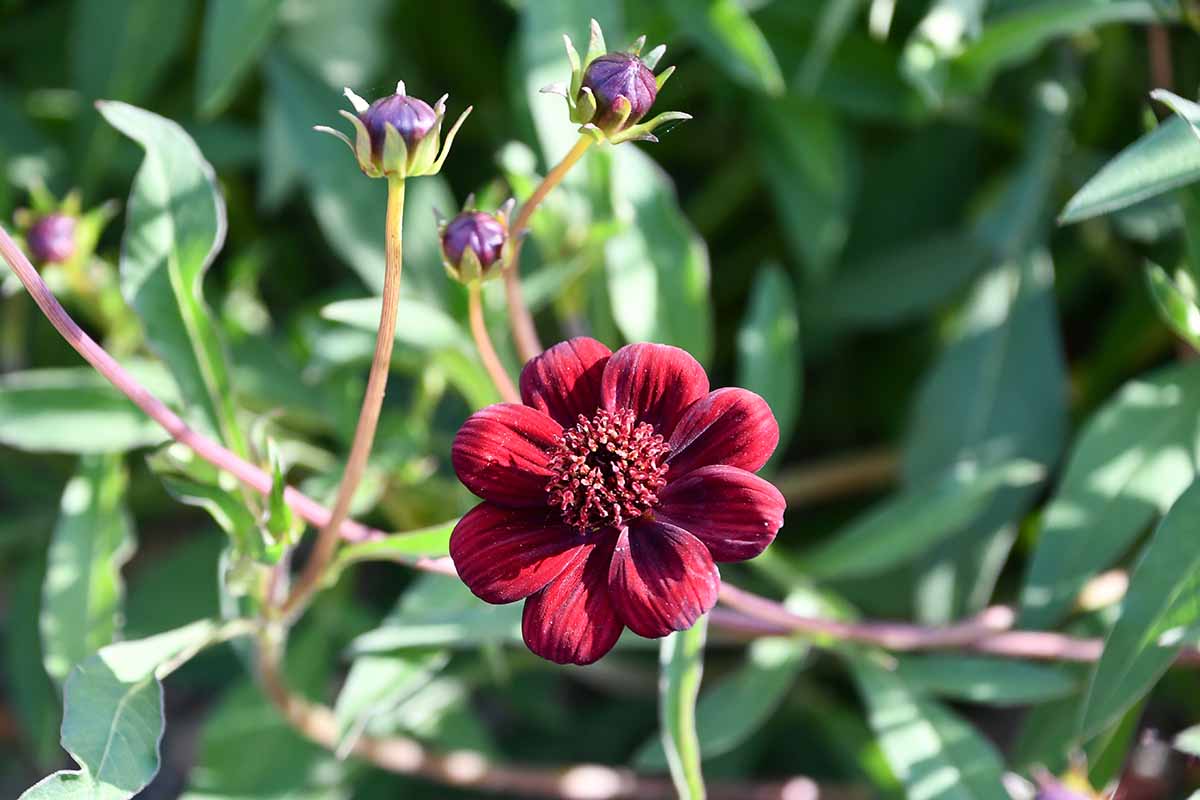
Maintain this care for the first growing season. Discontinue watering when the flowers finish blooming.
Perennial C. atrosanguineus is drought-tolerant once established and requires watering only during prolonged dry spells.
Fertilizer
As light feeders, cosmos do not require fertilizer.
If you choose to feed them, select a slow-release granular product with a low nitrogen content to avoid promoting an overproduction of leaves and few blossoms.
In early spring, apply it very lightly around but not touching the emerging foliage.
You can read more about fertilizing cosmos here.
Support
Cosmos have an upright growth habit, but the wiry stems may require support.
It’s tempting to mass plant closely so they can be self-staking, but overcrowding can lead to damp conditions and fungal infection.
Instead, consider staking trellis string netting horizontally over your plants to support them. As they grow, you won’t even notice it.
Heavy-duty netting such as this product from Vivosun measures five feet by 30 feet and has six- by six-inch mesh squares, appropriate for cutting garden flowers like cosmos.

Vivosun Trellis Netting is available from Vivosun via Amazon.
Cultivars to Select
When shopping, you are likely to find both species plants and cultivated varieties. There may be options for nursery starts, seeds from fertile cultivars, and tubers.
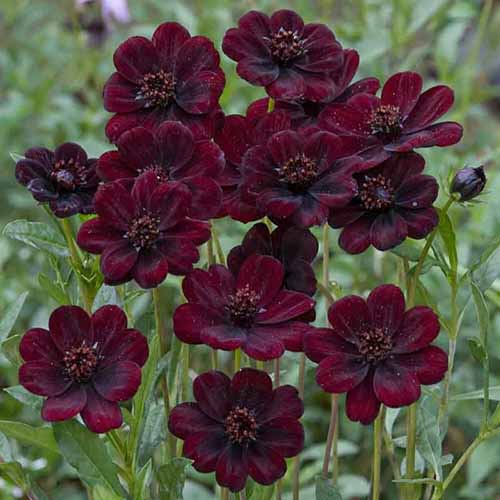
Chocolate cosmos tubers are available from Eden Brothers.
Black Magic
‘Black Magic’ is a cultivated variety developed by renowned plant breeder Dr. Keith Hammetten of New Zealand.
It enhances natural characteristics with a deeper burgundy-black petal color and more uniformly upright stems.
Topping out at approximately two feet, this option is compact and well-suited to garden placements.
In addition, unlike the native species, this cultivar is fertile and produces a small quantity of viable seeds.
Choco Moca
‘Choca Moca’ is a compact cultivar with mature dimensions of 10 to 12 inches tall and wide and the rich maroon shading of the wild species.
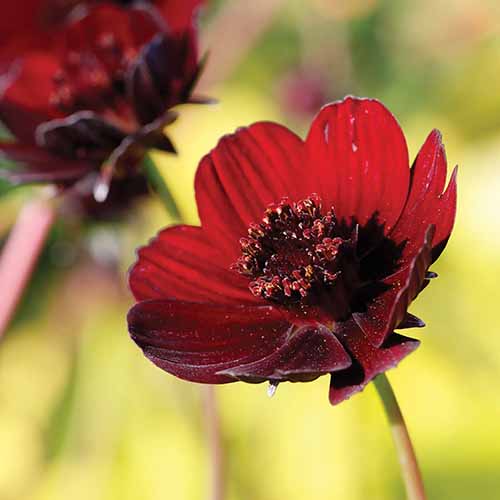
It’s well-suited to containers and small-space gardens.
‘Choca Moca’ plants are available from Burpee.
Additional cultivars, including ‘Cherry Chocolate’ and ‘Pinot Noir’ may be available.
Notably, these are protected by Plant Breeder’s Rights (PBR) and strict regulations prohibit their unauthorised propagation and sale.
Maintenance
Once the plants reach 10 to 12 inches tall and have multiple leaves, use your fingers or clean pruners to pinch back three to four inches of the growing tip of each stem.
This will promote lateral branching and abundant blooms.
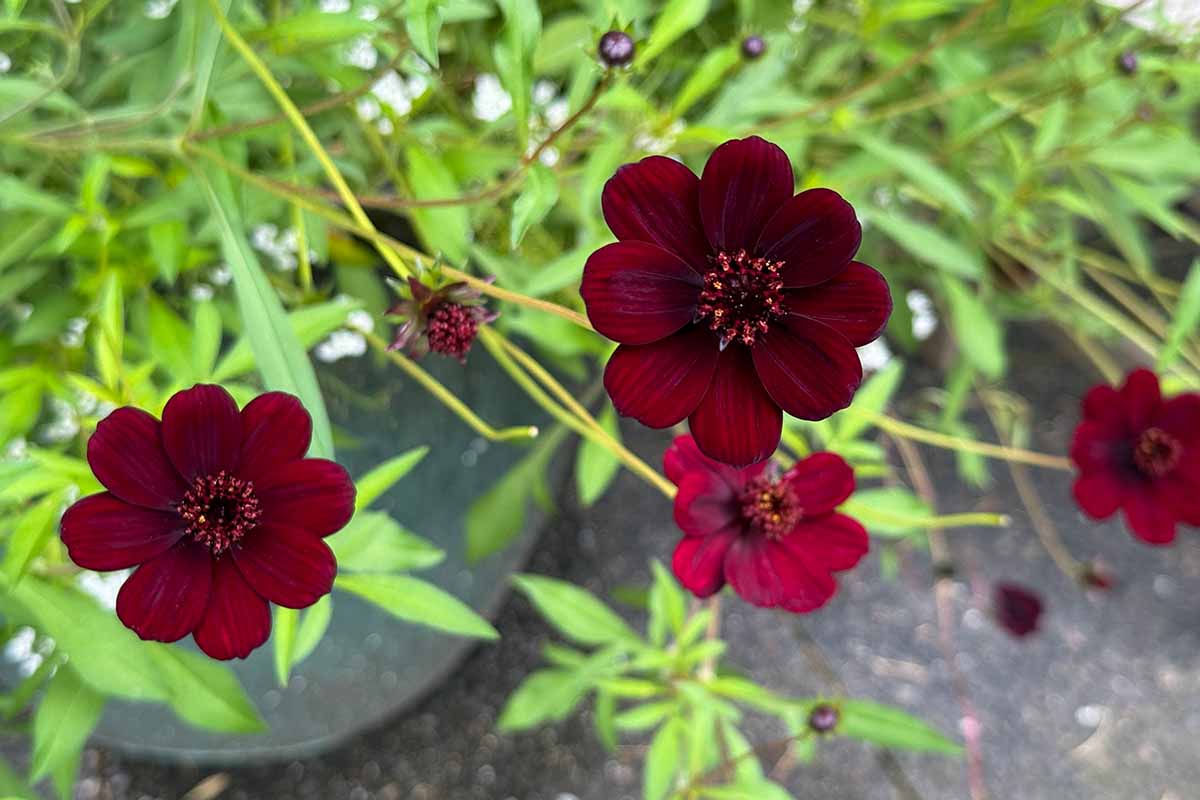
Deadhead spent flower stems before the petal color completely fades to restore vigor and promote more blooming.
Cut the stems just above a growing point, either a bud, flower, or leaf pair. Remove diseased or pest-damaged foliage as needed.
Discontinue supplemental watering once all flowers have finished blooming. Allow the foliage to wither naturally and then cut it down to a height of two inches in early fall.
If you are gardening in Zones 2 to 6, you can lift the tubers in fall before the ground freezes and store them for the winter.

