


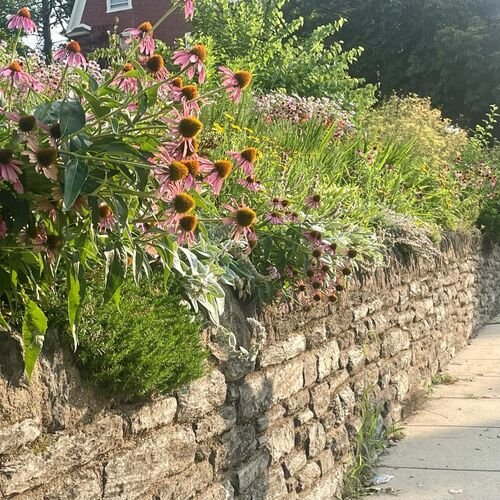
Today we’re visiting the gardens at Houston Elementary School in Northwest Philadelphia, Pennsylvania. Created over many years through community support and careful plant selection, these vibrant borders provide beauty, habitat, and welcoming outdoor spaces for students, staff, and neighbors. Here’s what Patrick has to say:
I am sharing photos of gardens I have planted on the grounds of Houston Elementary School (K–8) which was constructed over a long-abandoned reservoir for the West Mount Airy neighborhood in Northwest Philadelphia. Plantings were donated by neighbors, and grants were awarded to plant native species to support bees, other insects, and birds.
A 4-foot wall of local Wissahickon schist borders the site where children walk or are bussed to school. Perennials were well chosen to provide interest throughout the Mid-Atlantic growing season.
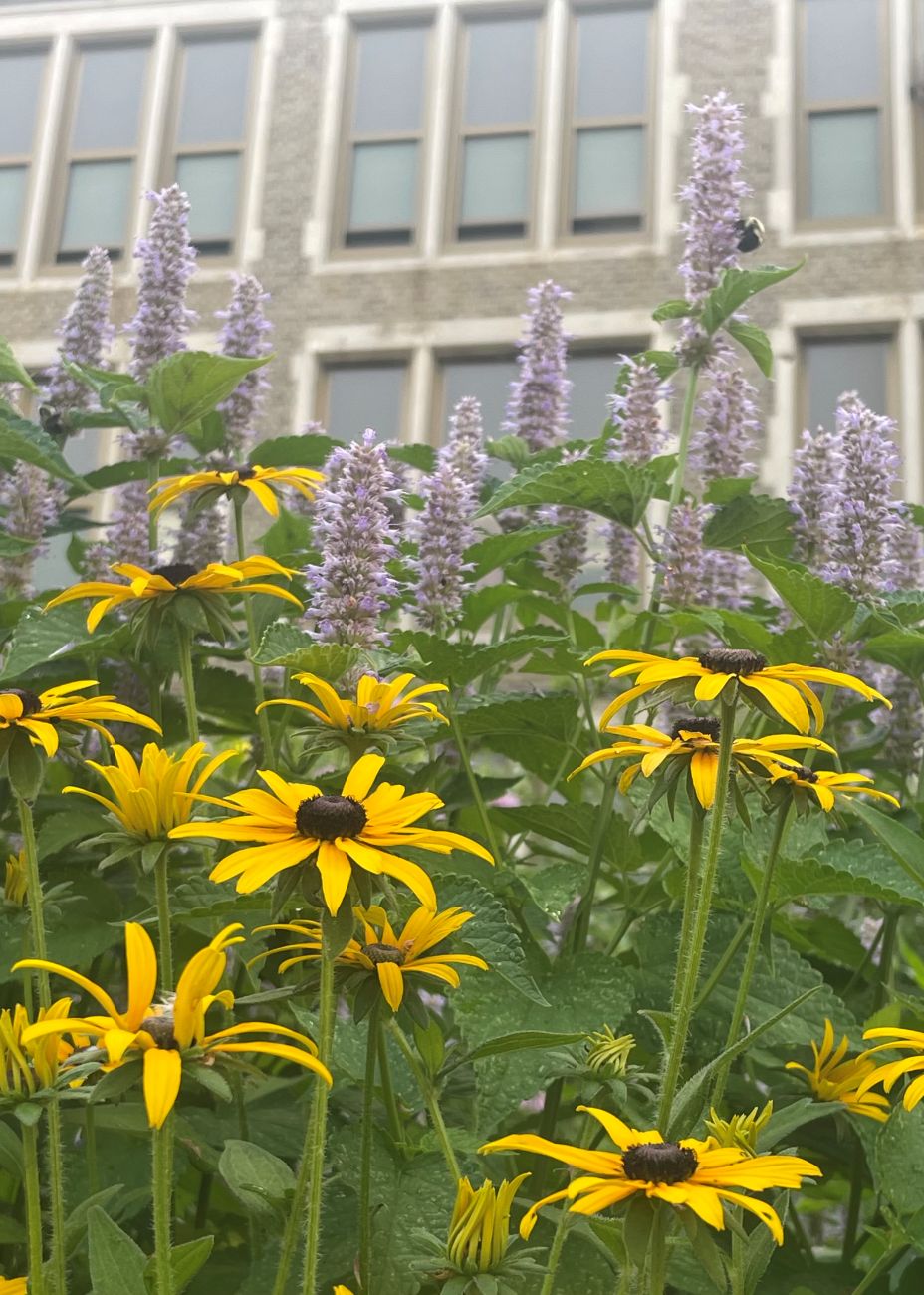
Black-eyed Susan (Rudbeckia hirta, Zones 3–9) and native blue giant hyssop (Agastache foeniculum, Zones 3–8) provide a steady source of nectar for bees and other pollinators throughout the summer.
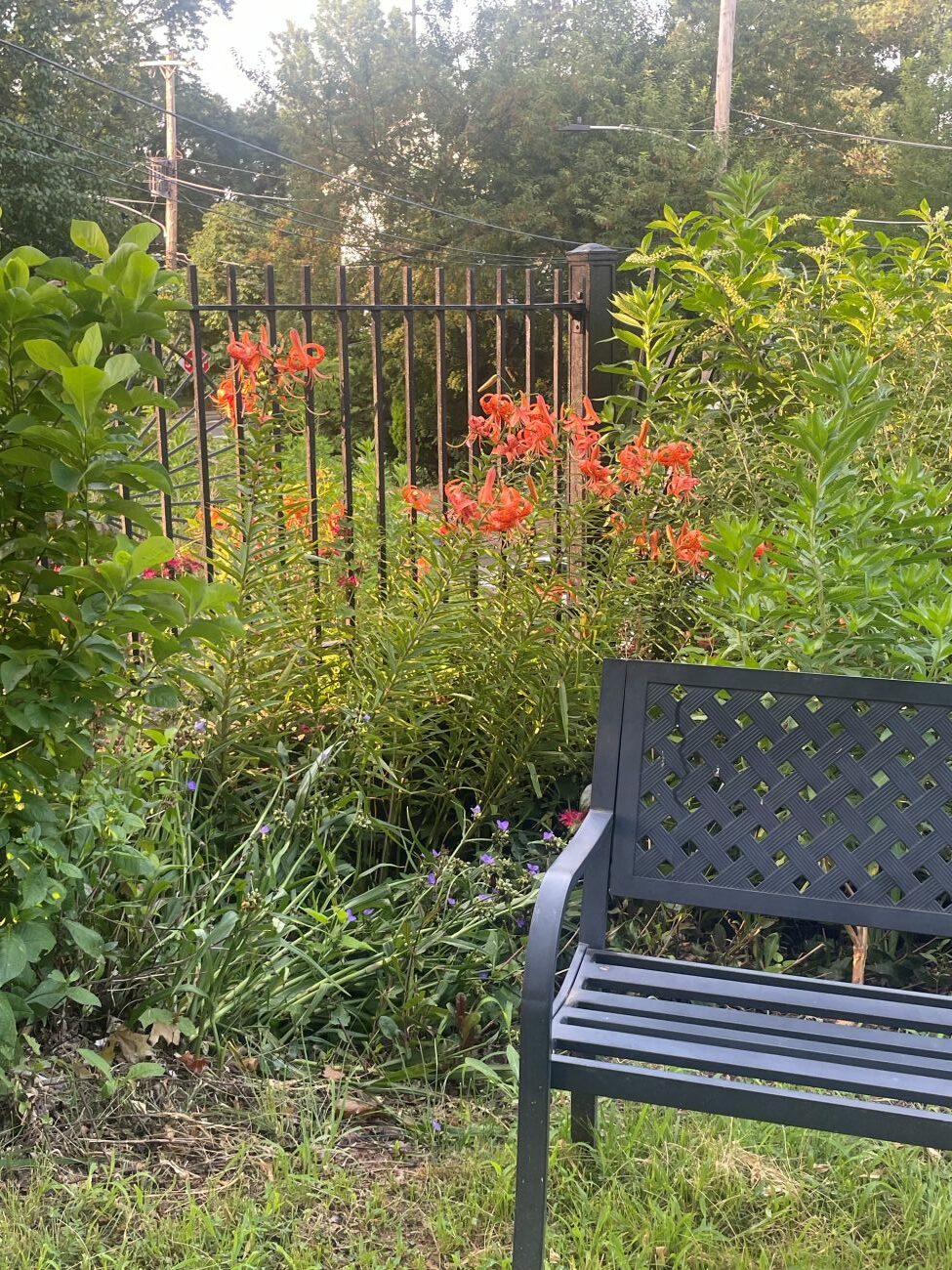
Here’s a seating area in front of tiger lilies (Lilium lancifolium, Zones 3–9) at the edge of a spot with many fixed tables/benches for students and staff at lunchtime.
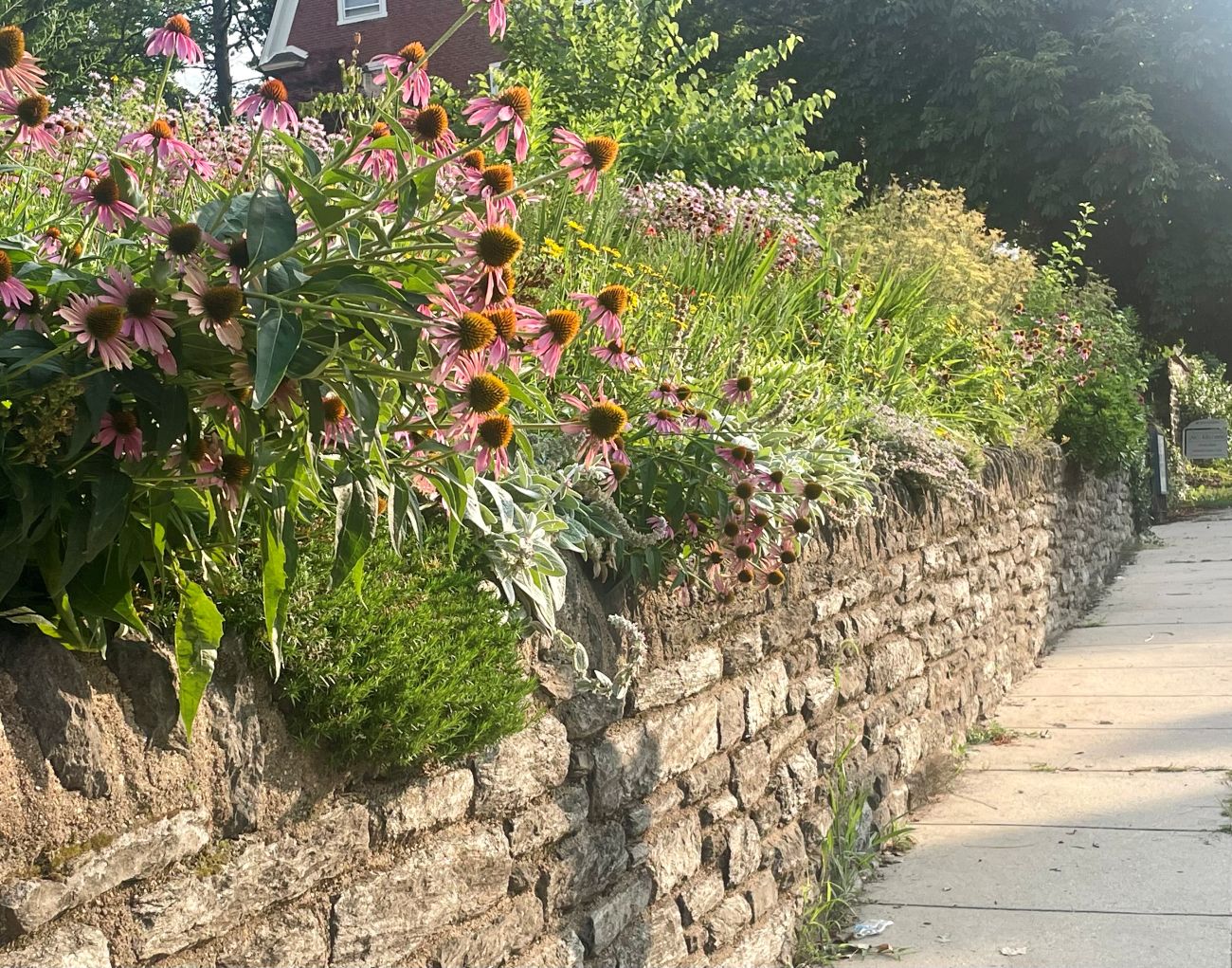
Here’s a billowing bed of perennials with purple coneflower (Echinacea purpurea, Zones 3–9), lamb’s ears (Stachys byzantina, Zones 4–8), creeping phlox (Phlox subulata, Zones 3–9), bronze fennel (Foeniculum vulgare ‘Purpureum’, Zones 4–9), and catmint (Nepeta spp., Zones 3–8). This sidewalk is the path to and from school and is on a street full of neighbors in 100-plus-year-old row houses.
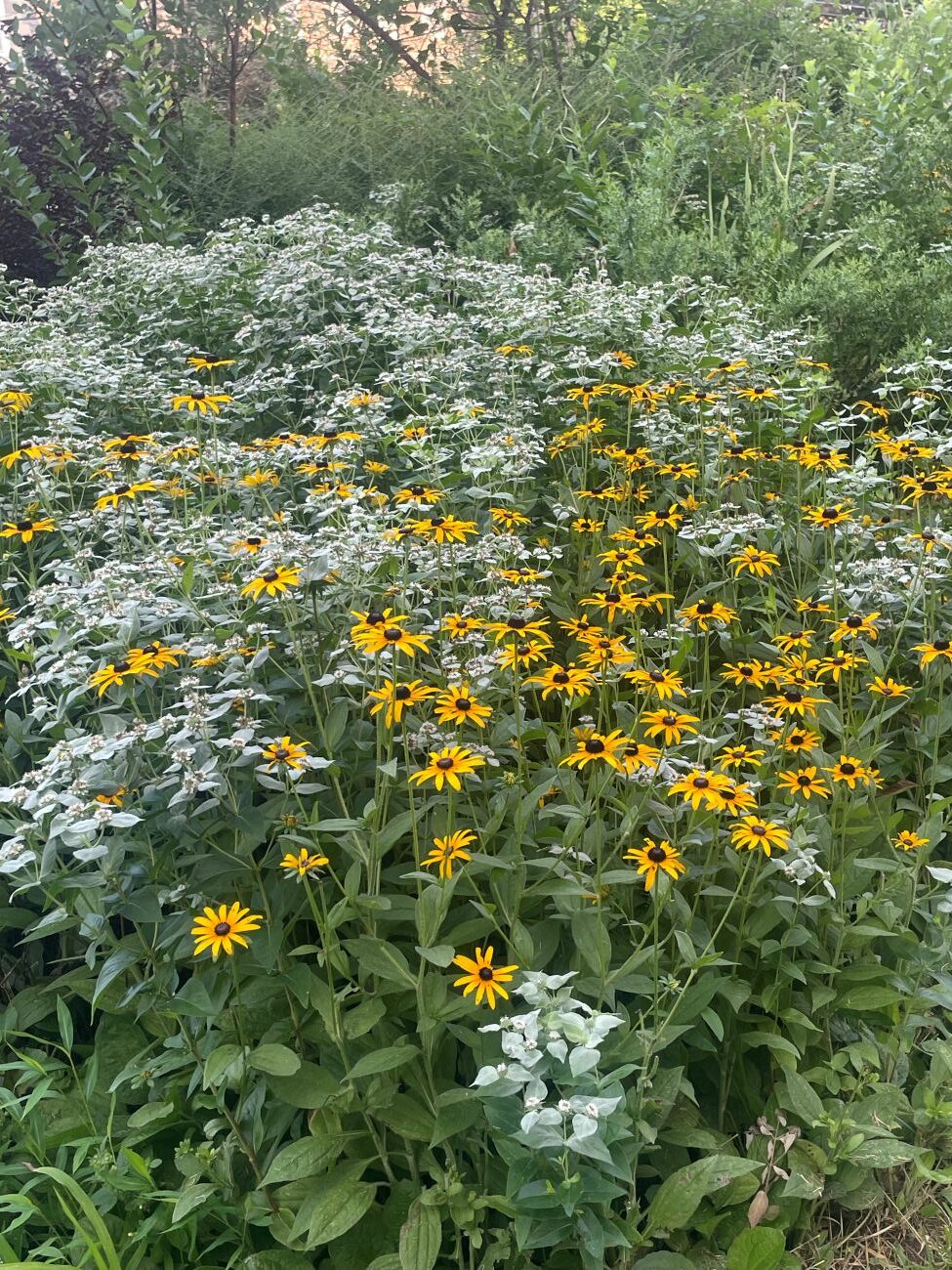
Another cultivar of Rudbeckia is interspersed with Mountain Mint (Pycnanthemum muticum, Zones 4–8), a fragrant treat for pollinators.
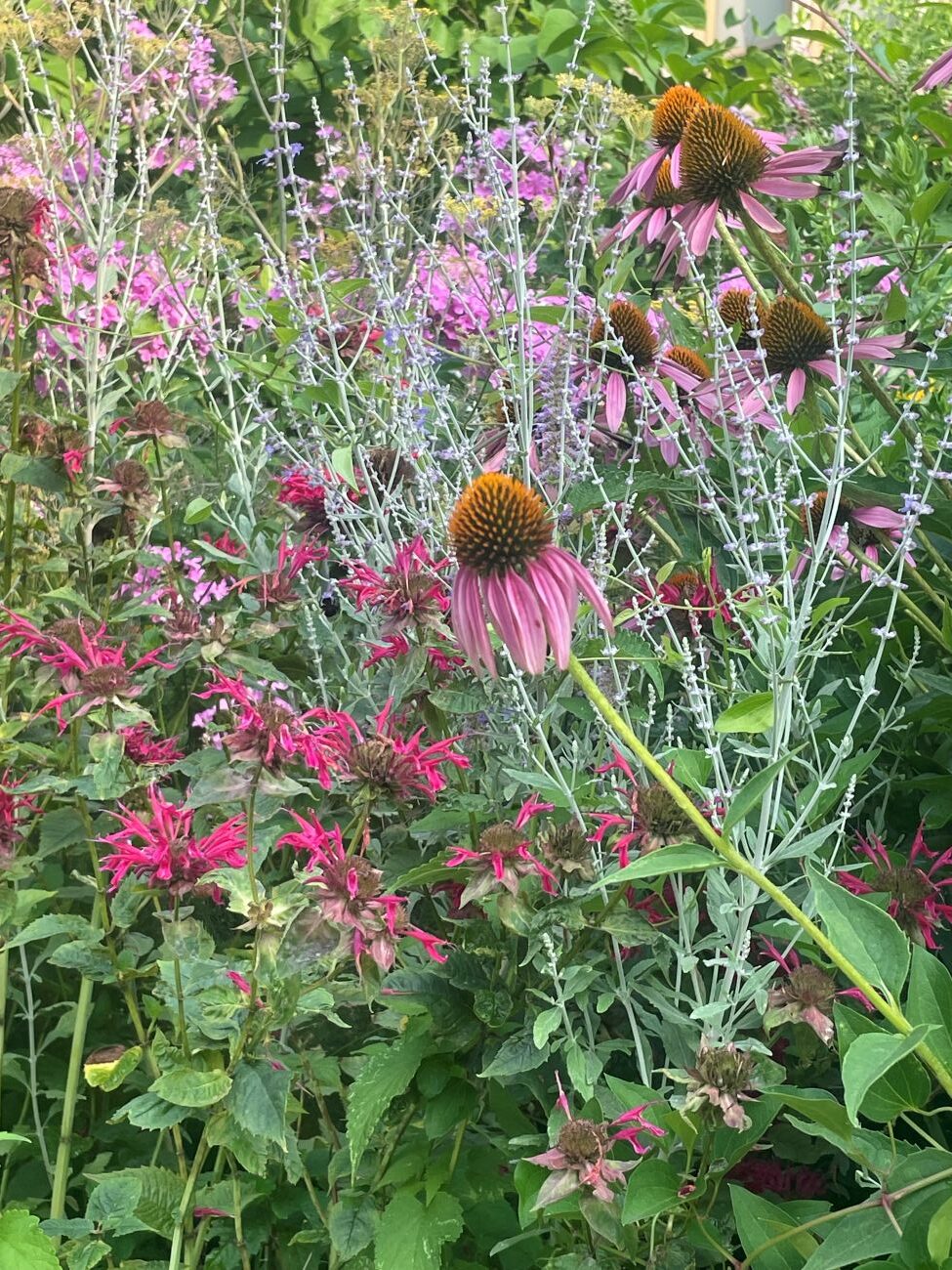
Bee balm (Monarda cvs., Zones 4–9), Russian sage (Salvia yangii, Zones 4–9), and purple coneflower create another colorful combination that buzzes with pollinator activity during summer.
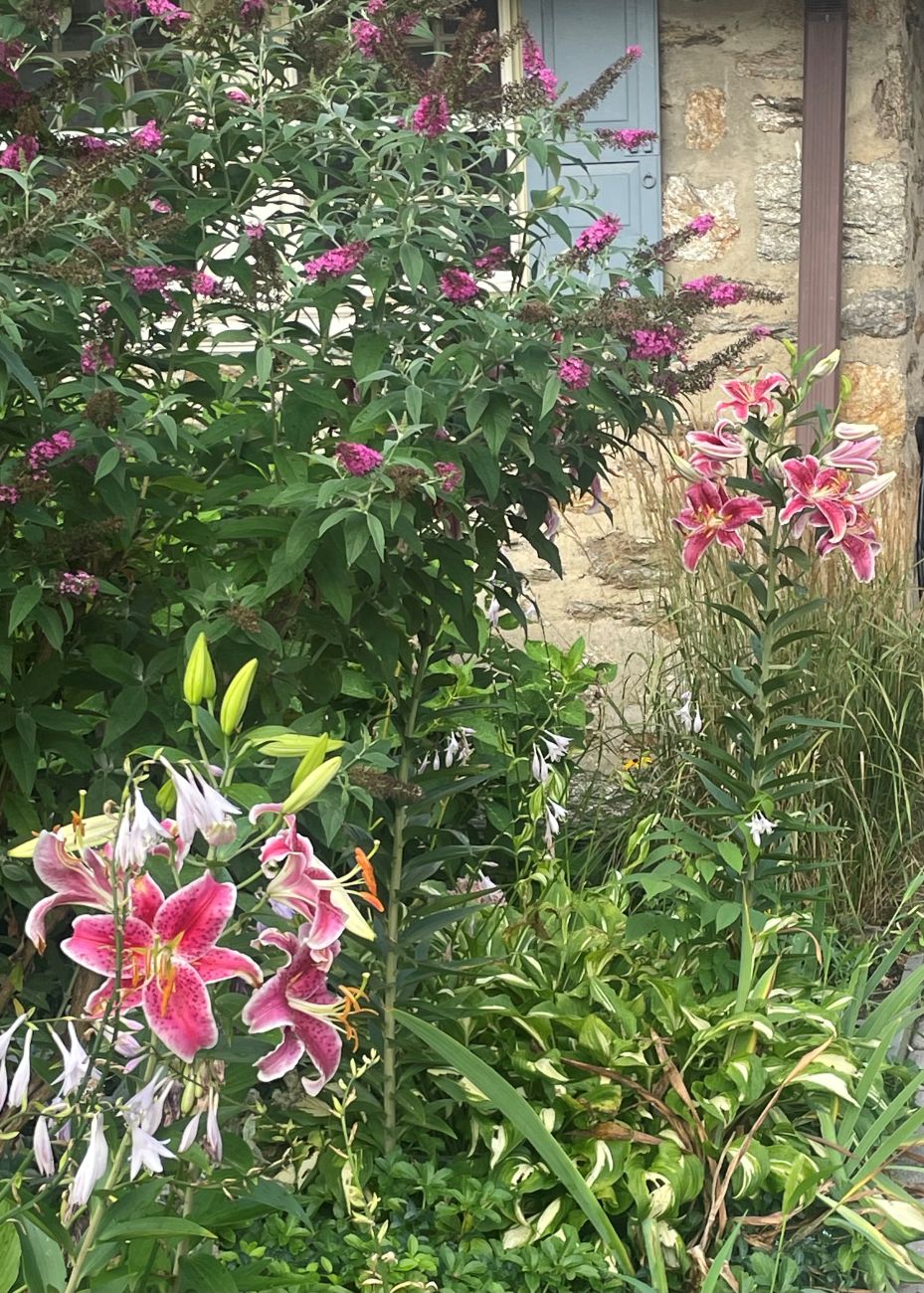
Across from the school, stargazer lilies, blooming hostas, and butterfly bush ‘Miss Molly’ (Buddleja hybrida ‘Miss Molly’, Zones 5–9) continue the colorful display in Patrick’s home garden overlooking the campus.
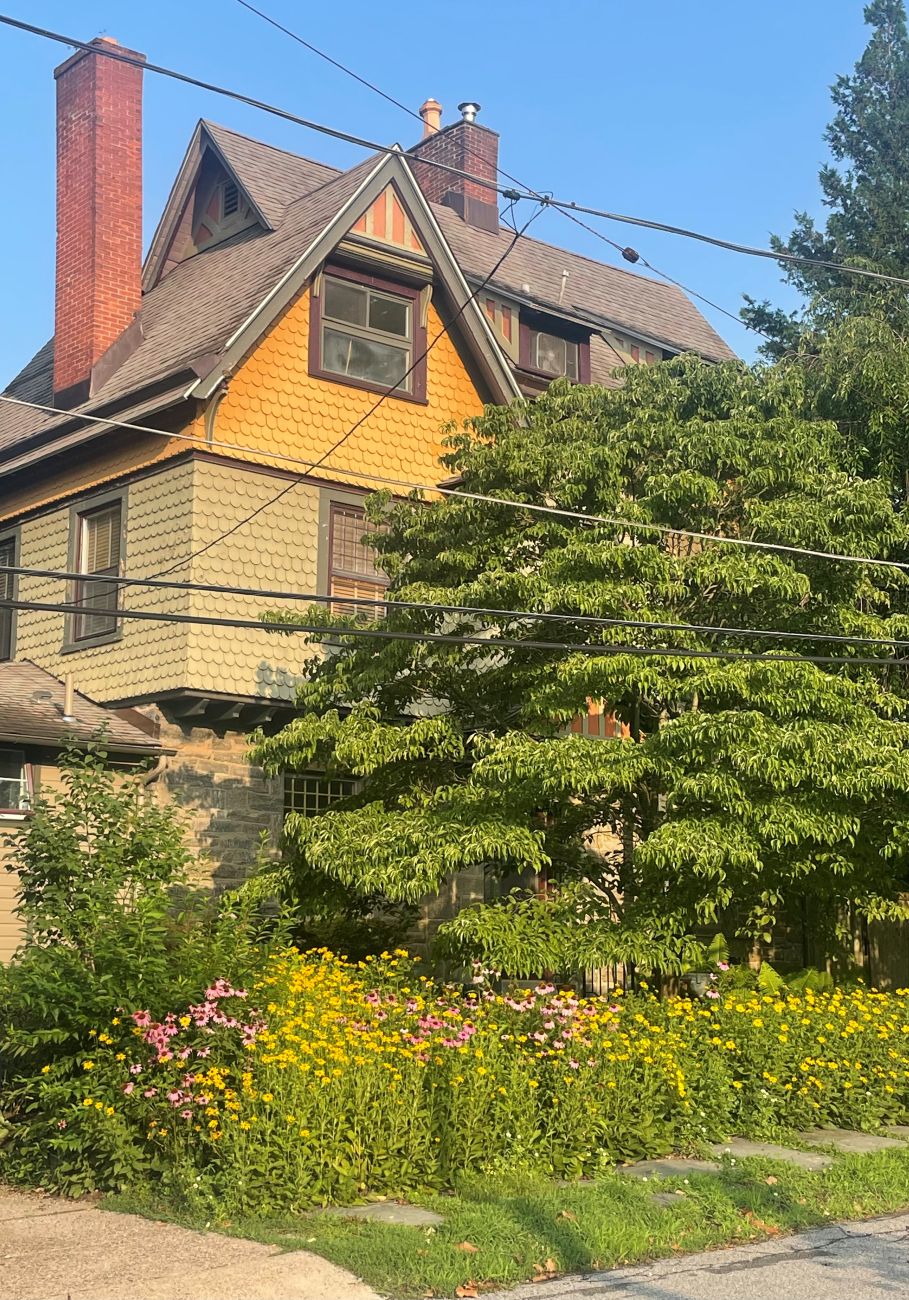
Patrick’s late Victorian home, built in the 1880s, sits directly across from Houston Elementary School. Its close proximity allows him to spend spare moments weeding, planting, labeling, and caring for the gardens that have become such an important part of the school landscape.
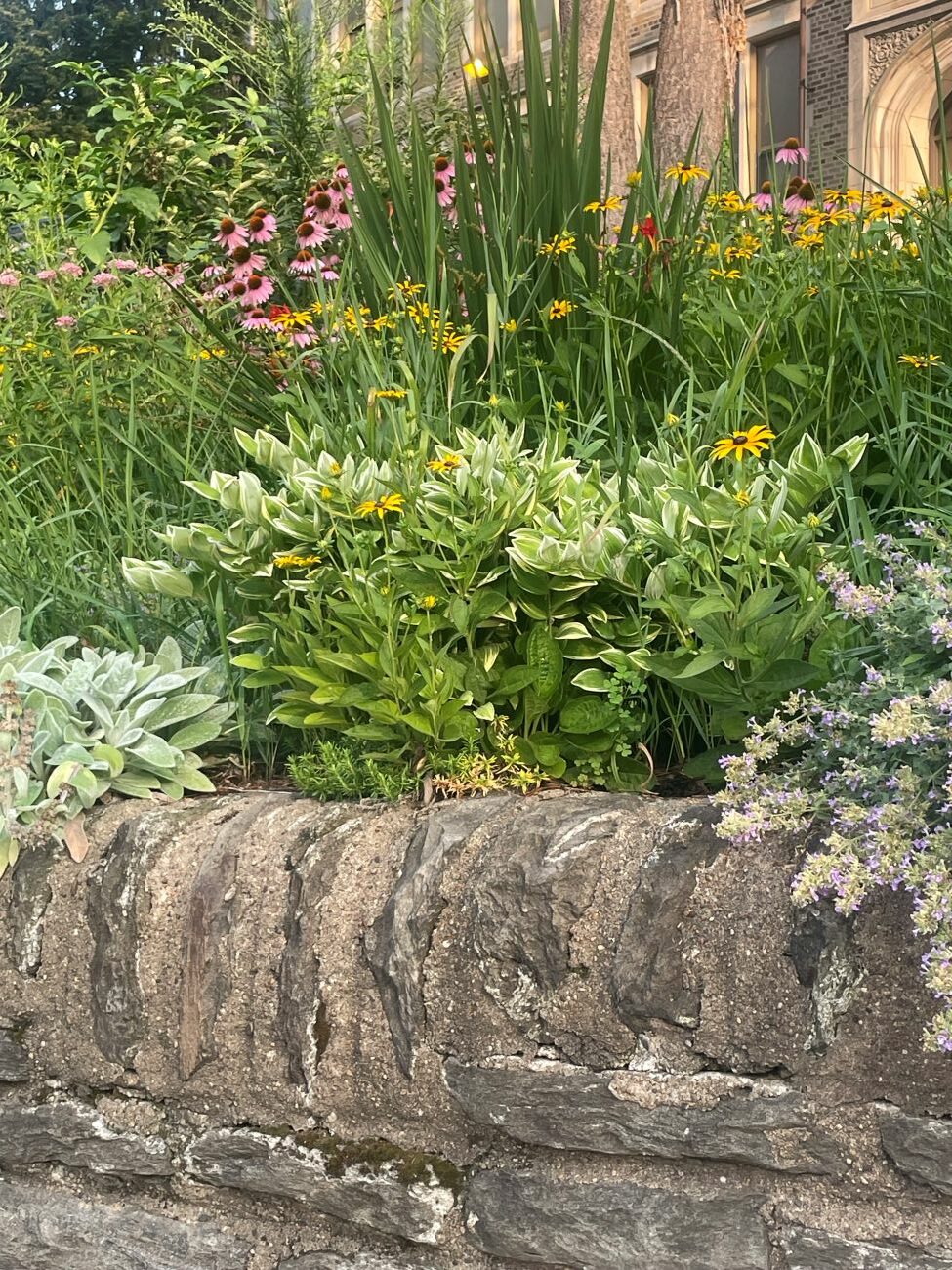
Lamb’s ears, variegated Solomon’s seal (Polygonatum odoratum var. pluriflorum ‘Variegatum’, Zones 3–8), and catmint spill over the old stone wall, where mosses and lichens have naturally established themselves.
Thank you, Patrick, for sharing how years of dedication, community support, and thoughtful plant choices have transformed the grounds of Houston Elementary School into a beautiful space for students, neighbors, and pollinators alike.
We want to see YOUR garden!
Have photos to share? We’d love to see your garden, a particular collection of plants you love, or a wonderful garden you had the chance to visit!
To submit, fill out the Garden Photo of the Day Submission Form.
You can also send 5–10 photos to [email protected] along with some information about the plants in the pictures and where you took the photos. We’d love to hear where you are located, how long you’ve been gardening, successes you are proud of, failures you learned from, hopes for the future, favorite plants, or funny stories from your garden.
Do you receive the GPOD by email yet? Sign up here
Fine Gardening Recommended Products
VegTrug Classic Cold Frame
Fine Gardening receives a commission for items purchased through links on this site, including Amazon Associates and other affiliate advertising programs.
Provide a natural growing habitat for your plants with VegTrug’s durable and versatile Cold Frame. A spacious and visually attractive cold frame provides the perfect microclimate environment to extend your growing season. The wood frame has 6mm double insulated and shatterproof polycarbonate that safeguards your plants from extreme weather conditions.
Lee Valley Large Gardener’s Wash Basket
Fine Gardening receives a commission for items purchased through links on this site, including Amazon Associates and other affiliate advertising programs.
This basket was designed to be used by gardeners to wash freshly harvested vegetables before taking them inside. You can gather your vegetables and then hose them off right in the same basket. However, you can also use it for fruit or add a cloth liner for serving bread or other baked goods. Measuring 16″ long, 11″ wide and 4″ deep, it is made of chrome-plated steel to resist rust.
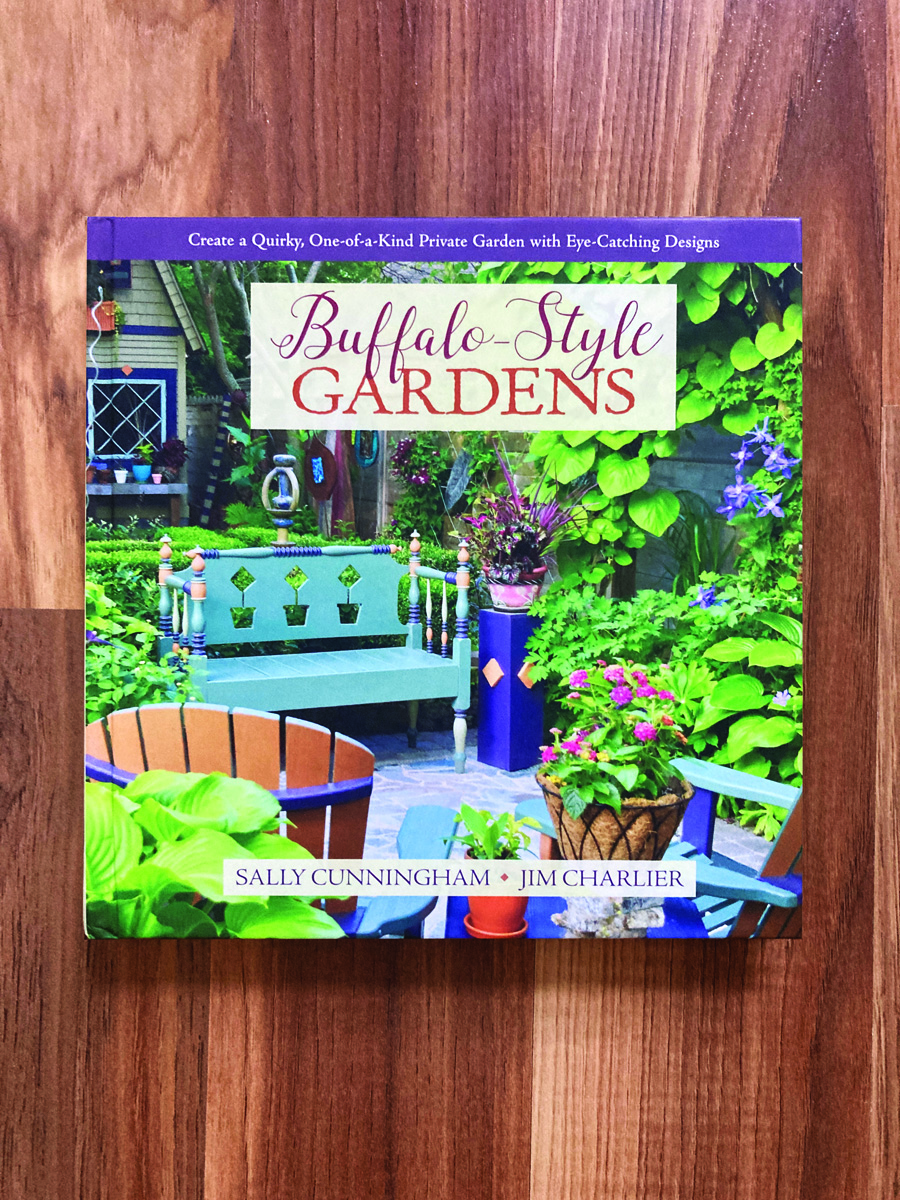
Buffalo-Style Gardens: Create a Quirky, One-of-a-Kind Private Garden with Eye-Catching Designs
Fine Gardening receives a commission for items purchased through links on this site, including Amazon Associates and other affiliate advertising programs.
Buffalo-Style Gardens is a one-of-a-kind, offbeat garden design book that showcases the wildly inventive gardens and gardeners of Buffalo – and offers readers “the best of the best” ideas to use in their own small-space gardens.

