


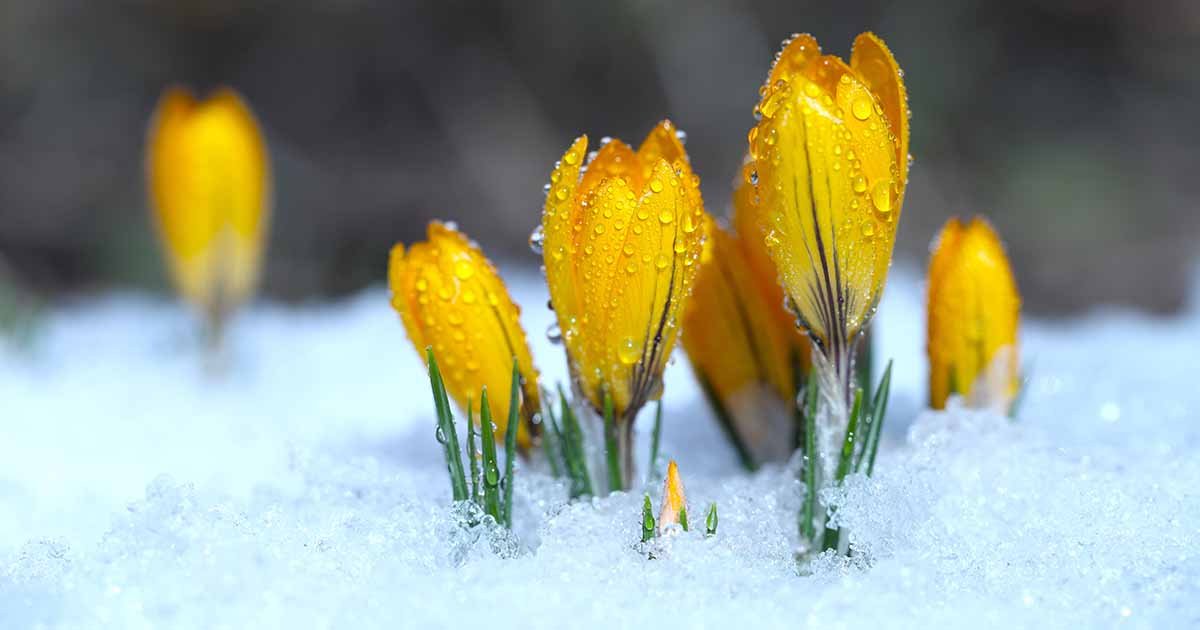

When I first moved into my little Alaskan house, it was newly built and knee-deep in a muddy, mostly barren yard.
The first thing I did that spring was plant 11 trees – including three apple trees that have survived moose attacks, subzero temperatures, and high winds.
I wanted to sow a field of wildflowers to go with the trees, but the mixed seed bag I bought at the nursery produced blooms that just didn’t look wild enough for me.
So I planted grass instead.
But I’ve since learned that there’s a flower to satisfy my desire for something wild-looking.
We link to vendors to help you find relevant products. If you buy from one of our links, we may earn a commission.
Best of all? It pairs well with grass, and you can plant these all over your lawn for a field of early spring or autumn blooms.
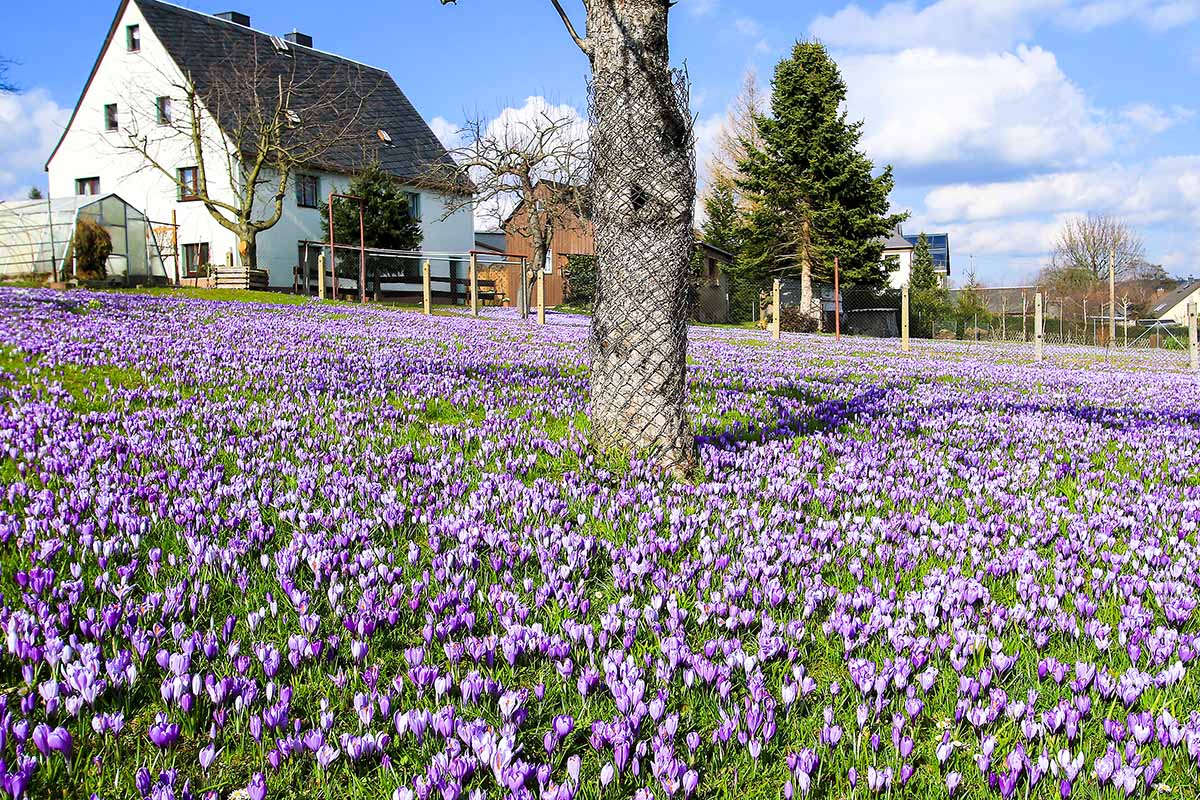
Even better, these particular flowers become established amazingly well, providing a flower-carpeted lawn once a year with little effort from you.
I’m talking about the dainty yet tenacious crocus.
All a crocus needs is sunlight, well-drained soil, and a healthy dose of cold in order to thrive.
You can grow both snow crocus, Crocus chrysanthus, and the larger Dutch crocus, C. vernus, in USDA Hardiness Zones 3 to 8.
Which means I’ve planted these showy members of the iris family, Iridaceae, all over my lawn.
This got me wondering, though: just how hardy are crocuses? Can you plant them in the winter? Do the buried corms stay alive in deep freezes?
Let’s find out.
Crocuses and Cold Soil
Most crocus corms need to go in the ground six to eight weeks before the first frost because – and here’s the really neat thing about them for gardeners who live in colder climates – they need the cold.
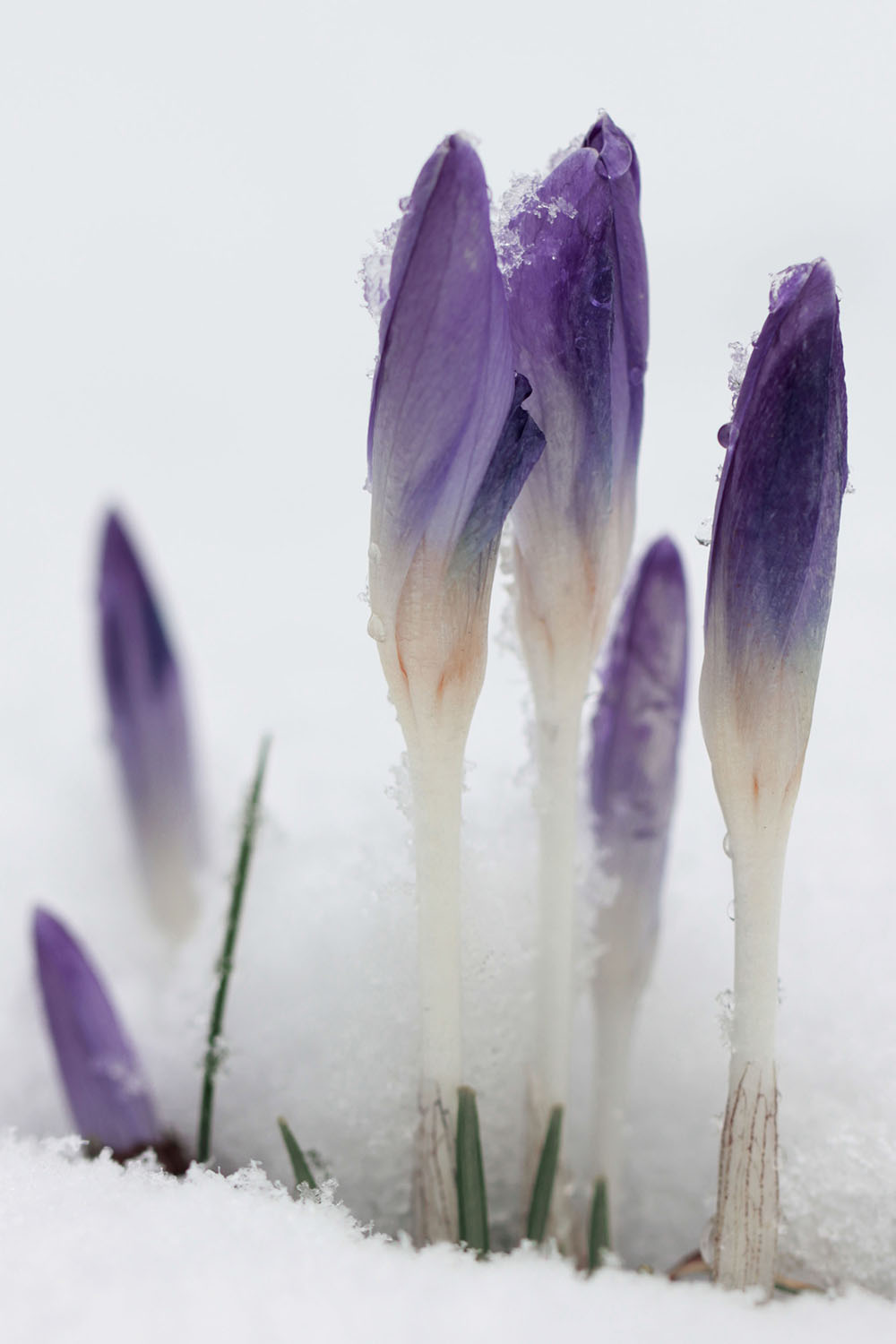
You can even grow them in Zone 9 – if you put the corms in your refrigerator for at least four months before planting them out in the spring.
Crocuses are native to areas with chilly winter temperatures, so they actually need to stay cold – in soil 35°F or below – for about four months in the wintertime.
Without this chilling period, they won’t bloom.
Can Crocuses Survive Deep Freezes?
The amazing thing about them is that temperatures can go way, way below 35°F and the corms will be just fine.
In Zone 3, the extreme low is -40°F. Should it get that cold in your area, your bulbs will remain happily nestled in the soil until the earth warms up enough for them to bloom in early spring.
You can do something to help your crocuses stay warm if you live in Zone 3 or 4, though: plant your corms four inches deep in the soil instead of the usual three inches.
This will help keep them insulated throughout the winter chill.
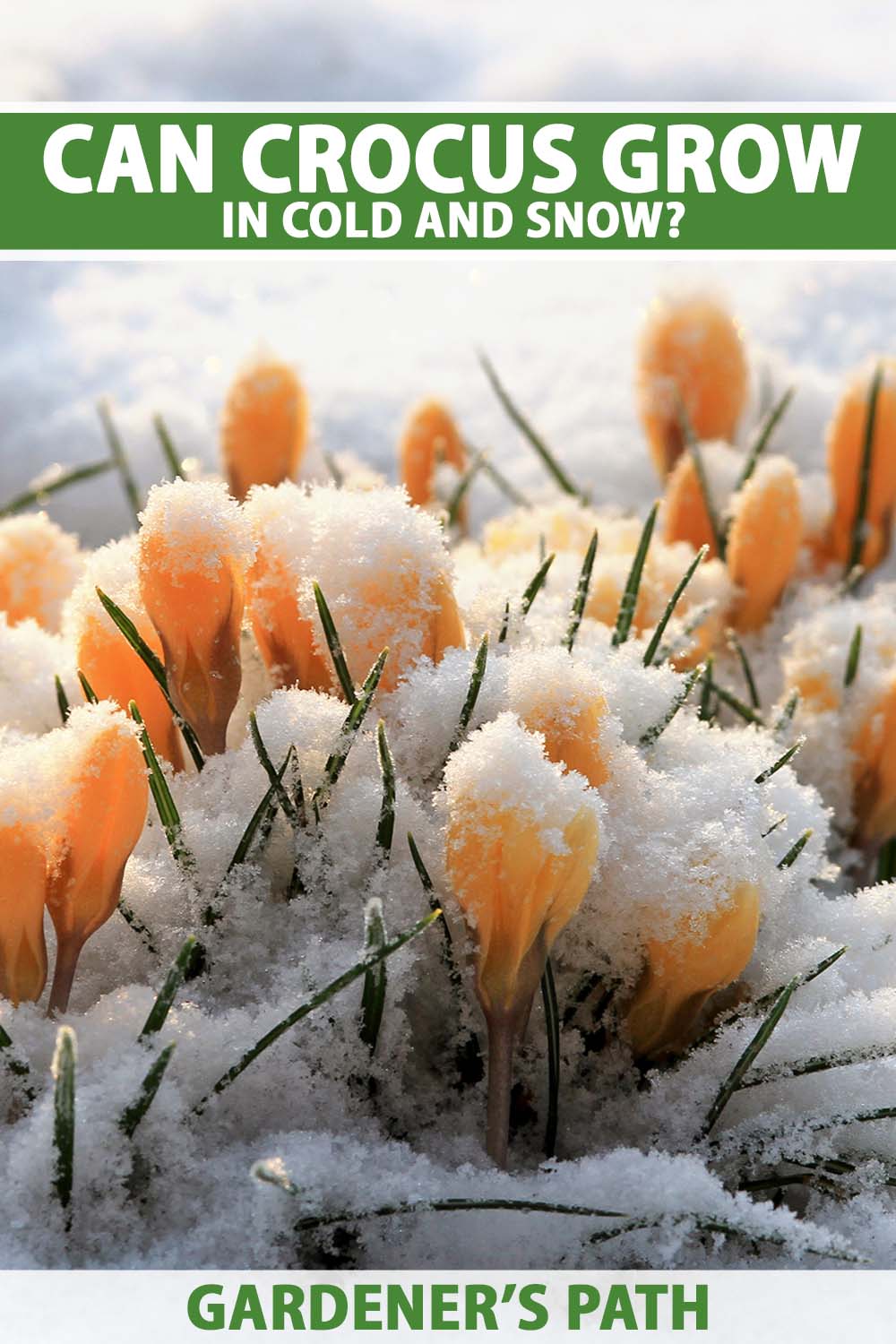
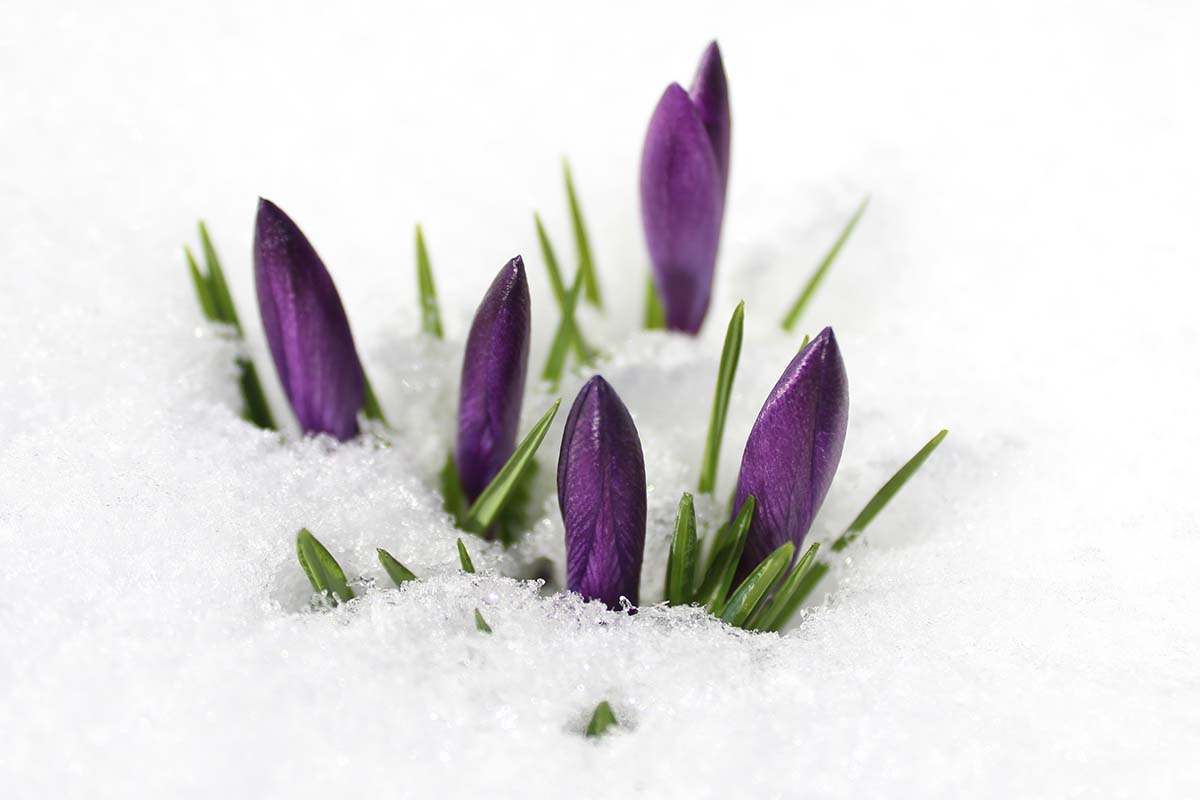
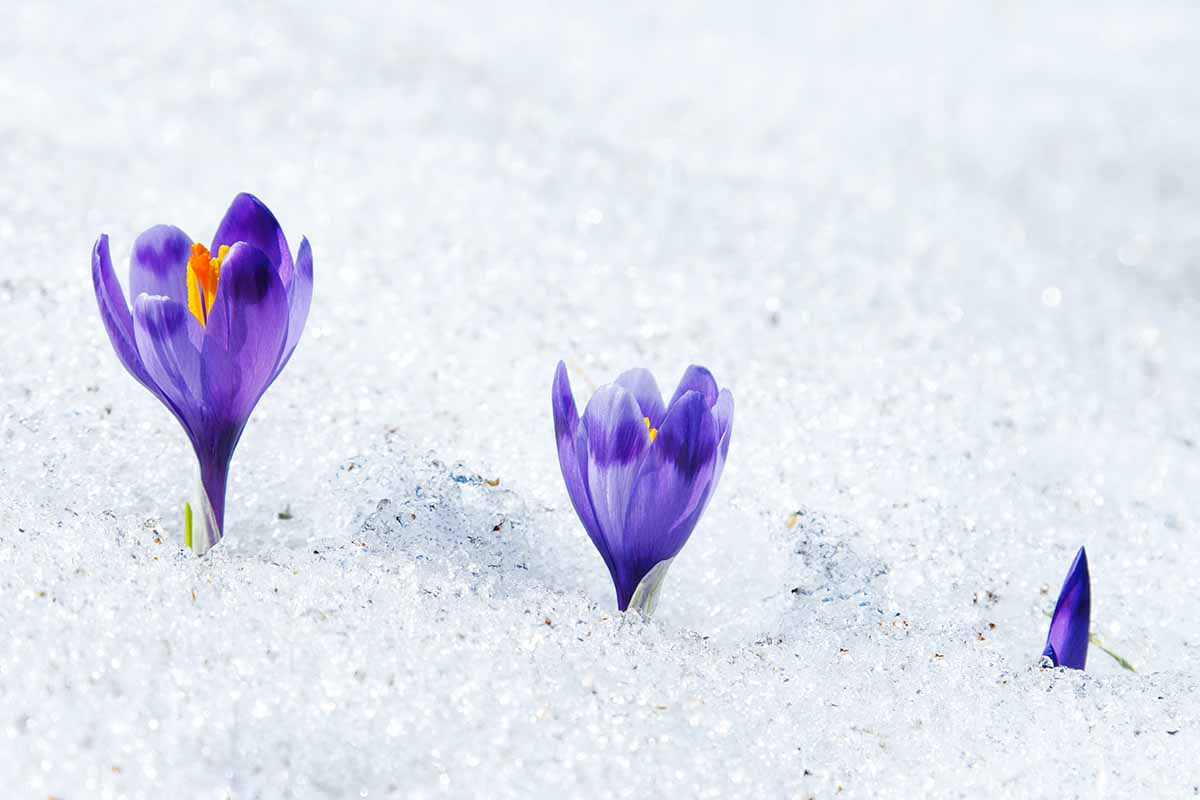
Crocuses are patient, hardy flowers, and there’s no reward quite like watching them bloom through a layer of snow, heralding the arrival of spring.
Why Do Crocuses Need the Cold?
Here’s the reasoning behind their wintry needs, according to a paper published in 2015 by Helmut Kerndorff, Erich Pasche, and Dörte Harpke for the Austrian botanical journal, Stapfia:
While home gardeners almost always propagate crocuses from their corms, the plant originates from a seed that grows into a mature corm over several years.
Because the seeds take a long time to germinate, it’s easiest for home gardeners to propagate the blooms by buying corms.
But the life cycle of a crocus gives us a hint as to why it loves the cold.
When the seed germinates, it grows just one spiky leaf and puts all its energy into producing the corm. This happens in midwinter or early springtime.
Like the opposite of a bear who hibernates all winter, this corm then goes dormant during the hot summer.
As soon as the soil temperature drops to 60°F, the corm wakes up and begins growing roots and shoots. This is the beginning of its new life cycle.
When the soil temperature drops to 35°F or below, the corm enters a rest period, not to be confused with its summer dormancy.
Unlike hot weather, the freezing temperatures trigger a biochemical response in the plant that tells it to bloom in the spring.
The crocus keeps its tender new roots and shoots tucked in the ground all winter long, where the cold temperatures prompt the starches in the plant to break down into glucose.
According to an article from the Netherlands Bulb Council, published in Horticulture Update by Texas A&M University, this keeps the moisture inside the plant from freezing.
The insulation from the earth helps keep the corm cozy and moist, until temperatures warm back up just enough for the plant to quickly push its flowers and leaves up into chilly springtime lawns.
In the second season of its life, a secondary corm called a “daughter” develops at the base of the flowering stalk, on top of the original corm.
Roots develop from this secondary corm and it eventually replaces the “mother” corm. This will happen every year thereafter.
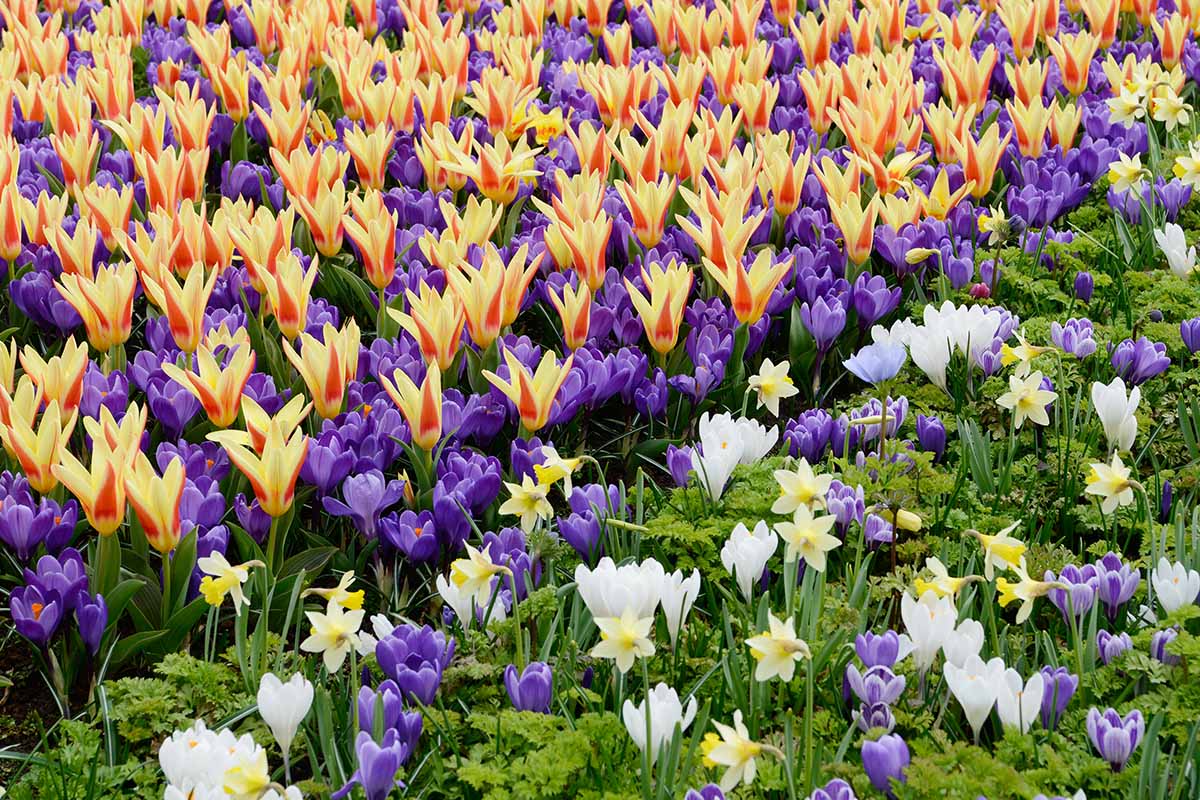
And the crocus can push flowers up within hours of a favorable temperature change – anything above about 59°F.
That’s why you might see nothing on your lawn one day and then wake up to the purple, white, yellow, or pink blooms popping cheerfully through the snow the next morning.
Without a chilling period, the crocus might still grow, but the blooms and leaves would be stunted and weak.
Sadly for me, you can’t actually plant crocus corms in the winter. It’s clear that the bulbs need plenty of time to grow and chill in order to get ready for their vibrant debut in the spring.
Nurseries generally offer bulbs for sale starting in the springtime, like these beauties from Eden Brothers.

So, you can plan your crocus garden all year long and be ready to plant as soon as the time is right.
Will Snow Hurt My Crocuses?
Far from hurting your crocus bulbs, snow acts as an insulator to keep your corms from drying out in the wintertime.
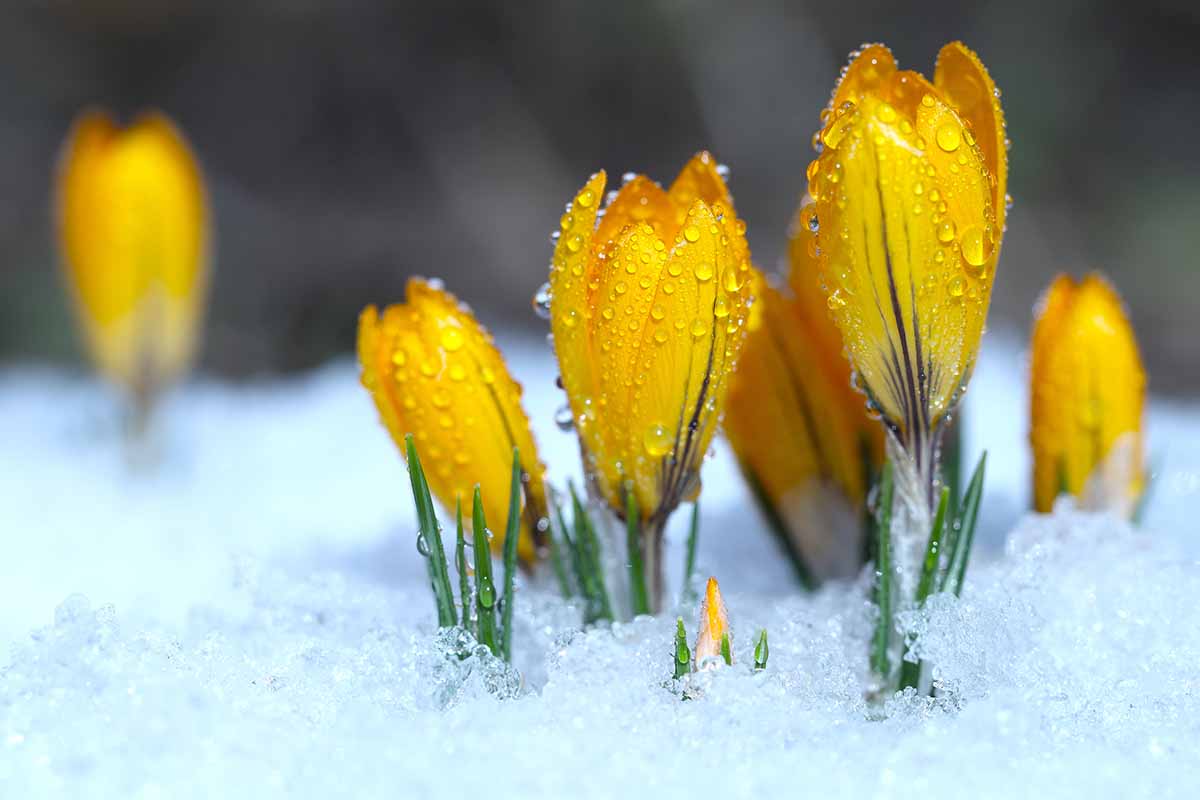
And of course, the pretty blooms will often poke up through late-winter snow – often just at the moment when it begins to feel like spring will never arrive.
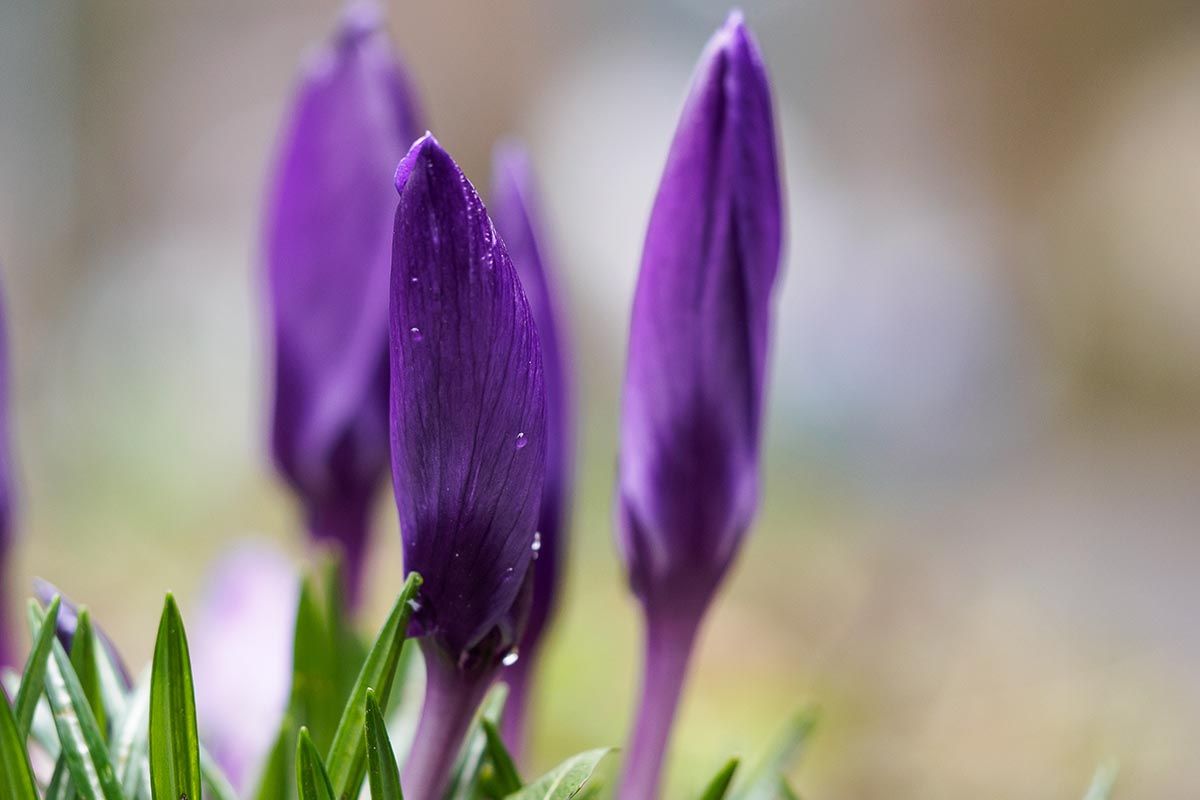
Even better? Once that snow melts, it provides much-needed water to the thirsty roots.
If it snows again after your crocus blooms are above the ground, the blooms will close like they do at night and on rainy days.
You may want to protect the blooms with a frost barrier cover, or floating row cover, to prevent them from getting crushed.
But most of the time, even if they do flop over, the flowers will spring back up after the snow melts.
What if there’s a cold snap after they have budded or bloomed?
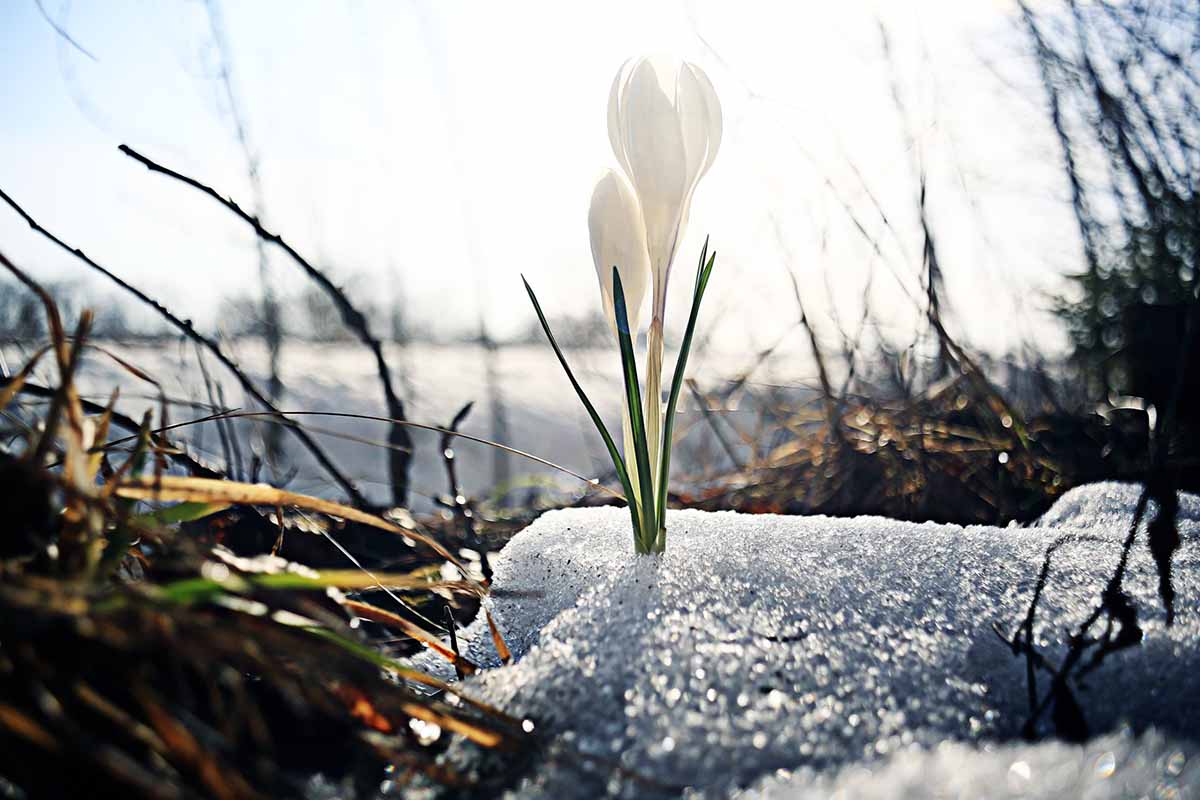
Most varieties will keep their flowers even through frigid late-winter weather, as long as it warms up to over 32°F during the day.
This means that it’s warm enough for the roots to get water, whether you water the plants yourself or the melting snow does it for you.
If daytime temperatures hover below 32°F though, the cold might dry the flowers out, especially if there’s a snapping wind to go along with it.
This can cause dry wilt, resulting in the death of the blooms.
You can cover the flowers to help them stay warm and moist through bad weather, or you can even spray the petals and leaves with water to create a film of ice on the plants.
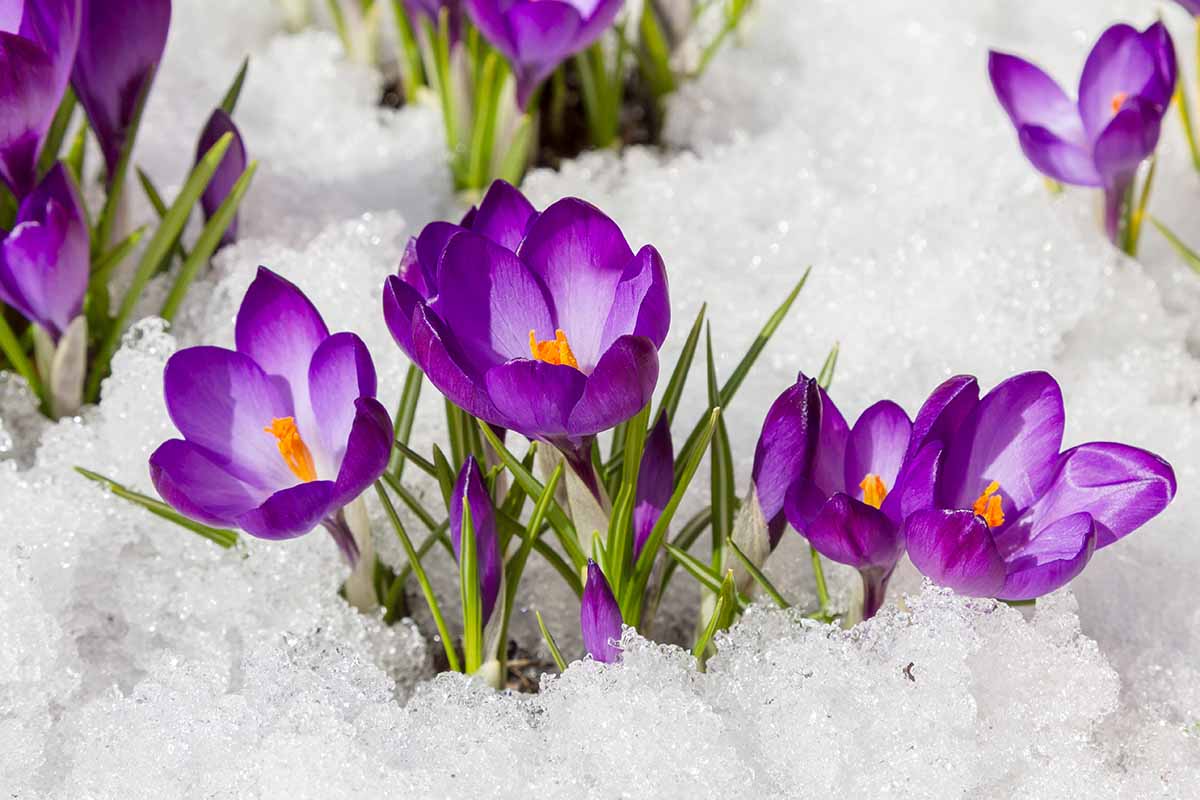
The ice will keep the cold, dry weather from draining the plants’ moisture.
Apparently, this is what gardeners for Holland, Michigan’s annual Tulip Time Festival do to keep their tulip buds and blooms safe through cold stretches, and it will work with these flowers too.
If the blooms do die from the cold, however, don’t despair. And don’t cut away any of the dead foliage until it’s completely brown.
Your crocus will bloom again the following year.
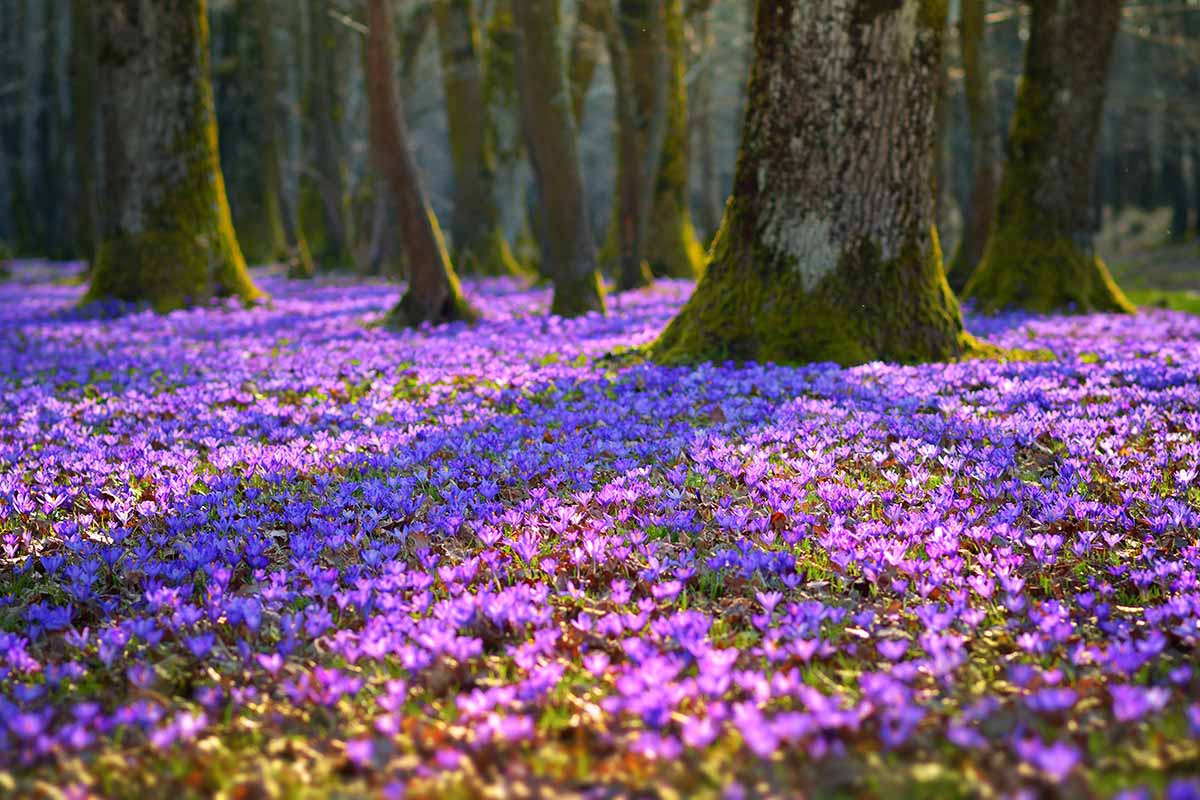
Even better, the blooms are pollinated and fertilized each spring, inducing the growth of new seeds that begin their own life cycles so that within a few years, with a little luck, you’ll have a field of gorgeous crocuses.
What About Saffron Crocus?
Unlike snow or Dutch varieties, saffron crocus (C. sativus) blooms in the fall and is hardy in USDA Hardiness Zones 6 to 10.
This variety needs planting in early August, and it typically blooms within two months.
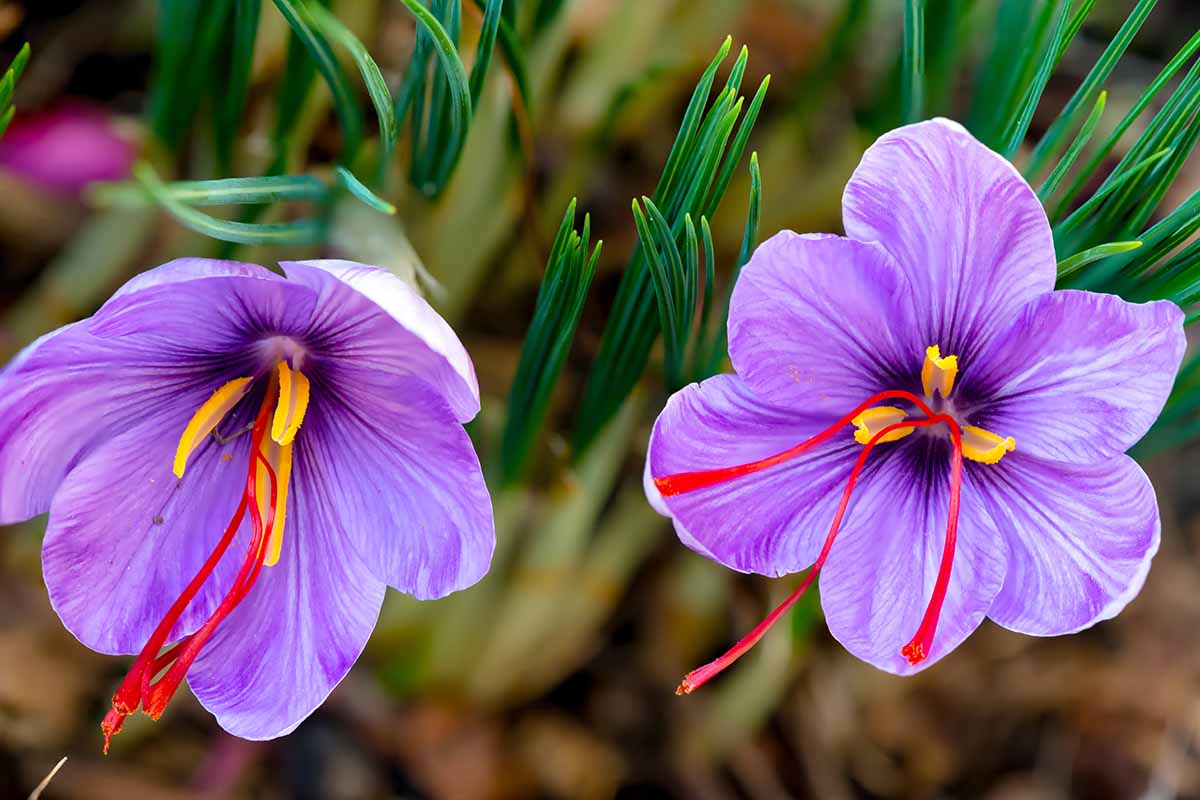
To keep saffron crocus corms warm through the winter, you’ll have to dig them up and bring them indoors after the blooms die back, and replant them the following summer.
You can find saffron crocus corms available for purchase from Eden Brothers.
Crocuses Were Made for Lovers of Snow
As you can see, spring-blooming crocuses are the perfect flower for those who live in cold, northerly climates (like me).
See this field of snow that is my backyard right now?

It would be the perfect insulator for a field of crocuses.
And next winter, that’s exactly what’ll be waiting for me beneath those glittering snowflakes.
If you want a sweet reward for enduring months of winter, plant crocuses in your yard.
You can even plant them alongside tulips, snowdrops, and daffodils for a stunning mixture of cold-hardy blooms to brighten your springtime yard.
Do you have any questions, comments, or tips to share? If so, let us know in the comments below!
And for more crocus growing tips and techniques, be sure to check out these guides:

