


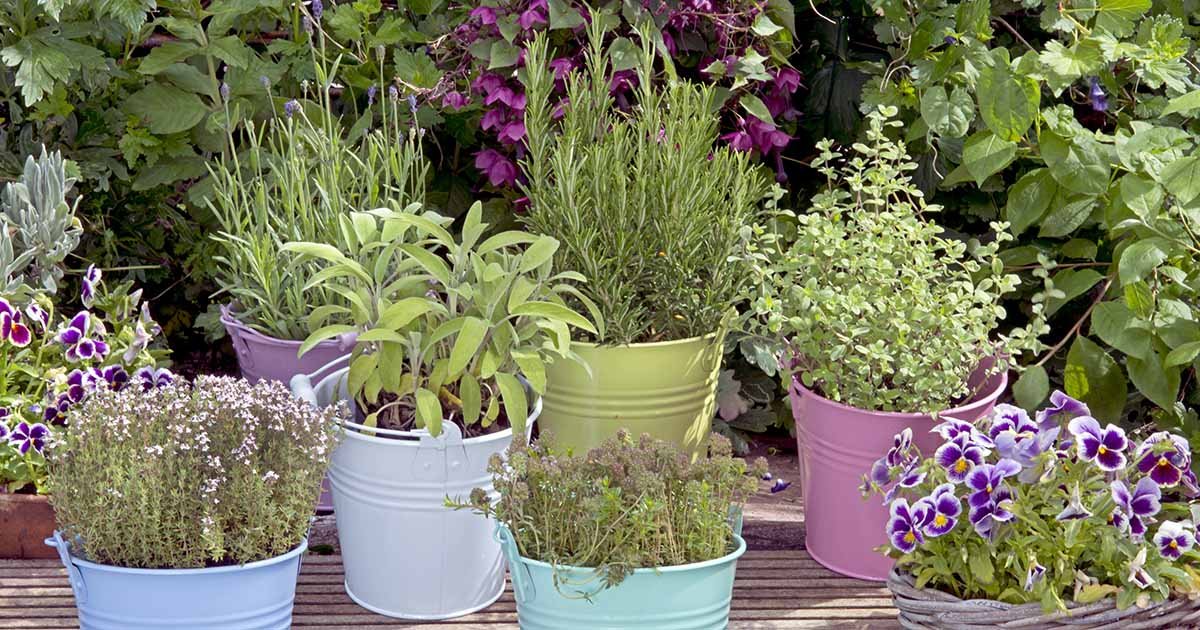
Container herb gardens are among the easiest and most rewarding of garden projects.
A must-have for cooks, herbs add wonderful flavor and fragrance to cooked foods and salads. But they provide many more benefits that go beyond their use in cooking.
Many release their intense fragrances in the warmth of the afternoon sun or when you brush up against their leaves.
And most have enchanting, aromatic flowers that pollinators adore, and make an excellent addition to cut flower arrangements.
We link to vendors to help you find relevant products. If you buy from one of our links, we may earn a commission.
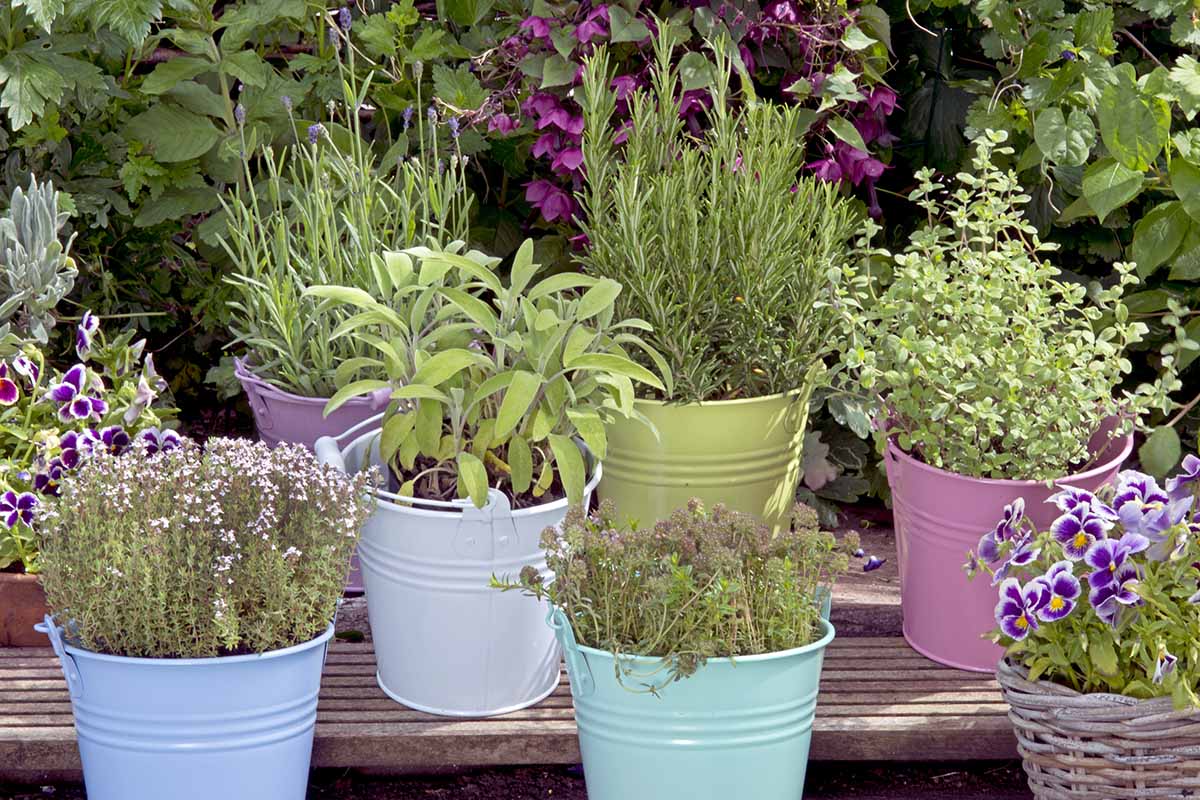
Herbs are just as easy to grow in containers as they are in the garden. So you can enjoy them growing near the kitchen for convenience, or placed around decks and patios.
Plus, growing your own is an economical alternative to those pricey little packets at the market – and your pots of green gold have a garden-fresh flavor that can’t be beat!
Most herbs are robust plants that don’t like to be fussed over, and many are drought tolerant once they are established.
Now, let’s get on with those tips to ensure your container herb garden thrives all summer! Here’s what I’ll cover:
Which Herbs Should You Choose?
With such a large variety of herbs available, the best place to start is to choose what you’ll use on a regular basis.
From there, you can ask friends and neighbors for recommendations, browse seed catalogs, and check out our herb growing guides.
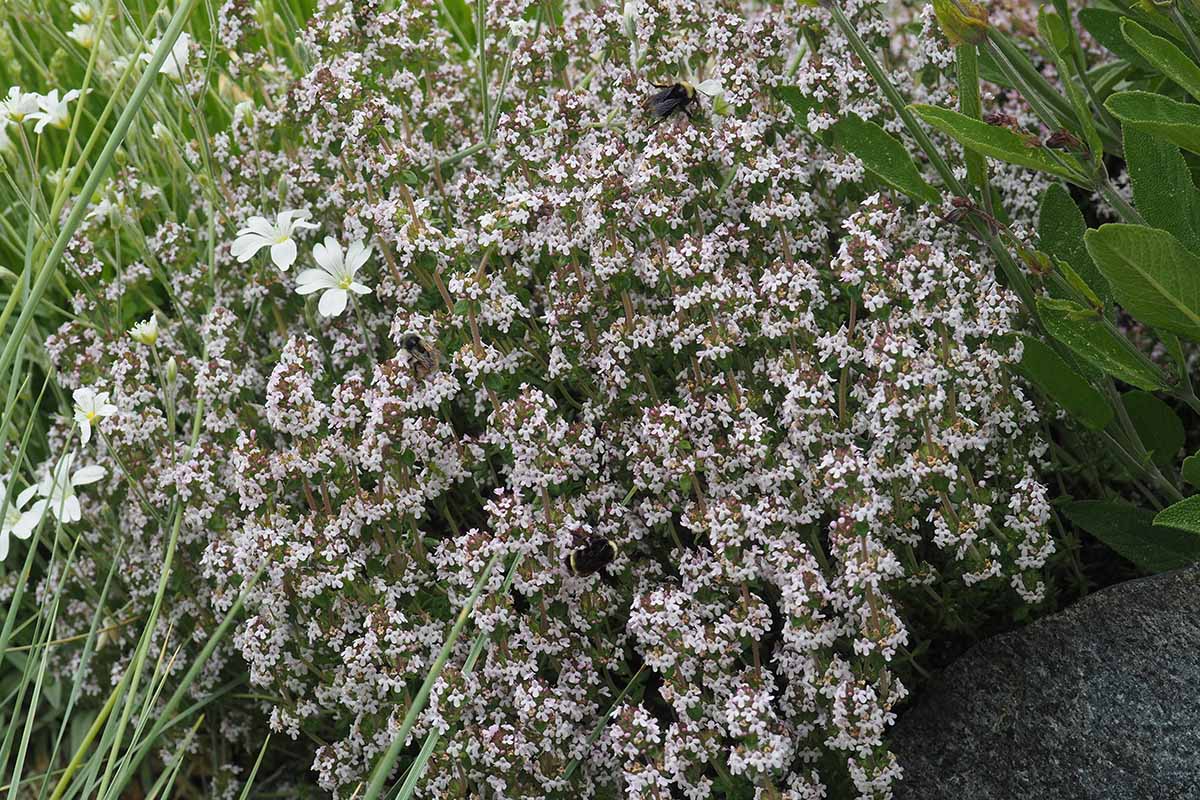
Or, if you tend to cook a lot of a particular type of cuisine, choose plants based on that theme.
- French cuisine favors bay, chervil, chives, fennel, garlic, marjoram, parsley, rosemary, tarragon, and thyme.
- Making pizza, or an Italian theme, would include basil, bay, fennel, garlic, oregano, parsley, rosemary, sage, and thyme.
- For a taste of Mexico, cultivate chili peppers, cilantro, mint, oregano, parsley, and thyme.
- Asian-inspired cuisine would feature Thai basil, coriander (cilantro seeds), garlic, ginger, lemongrass, hot peppers, and star anise.
- If you put up a lot of preserves and pickles, plant a bay tree and sow celery, coriander, dill, and mustard for their seeds.
The foundation of your container garden should begin with herbaceous and woody perennials.
Chosen wisely, some of these plants can provide a year-round harvest – provided they’re hardy in your climate and region.
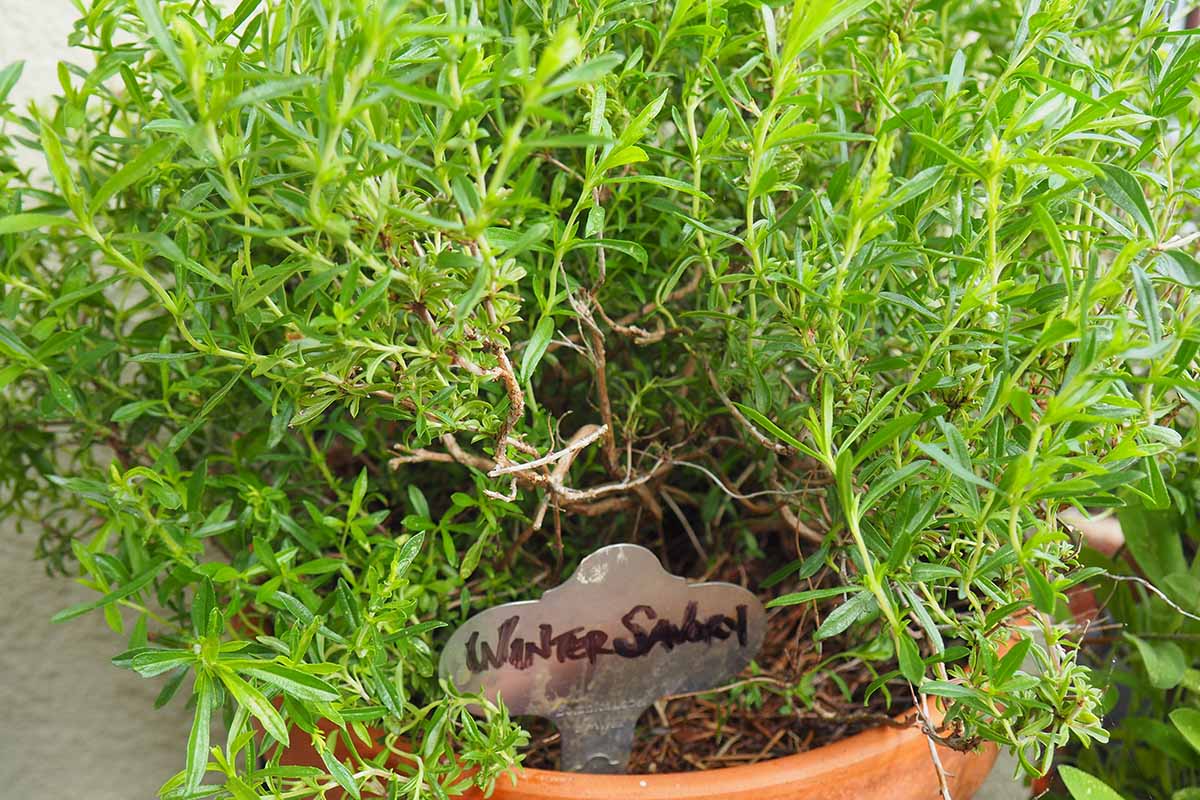
These include evergreens like bay, lavender, rosemary, sage, thyme, and winter savory.
Parsley, a biennial, can also grow through the winter if pots are brought under cover or tucked into a sheltered site.
And many herbaceous ones – like chives, marjoram, mint, oregano, and tarragon – are among the very first plants to emerge as the days begin to lengthen, often well before winter is officially over.
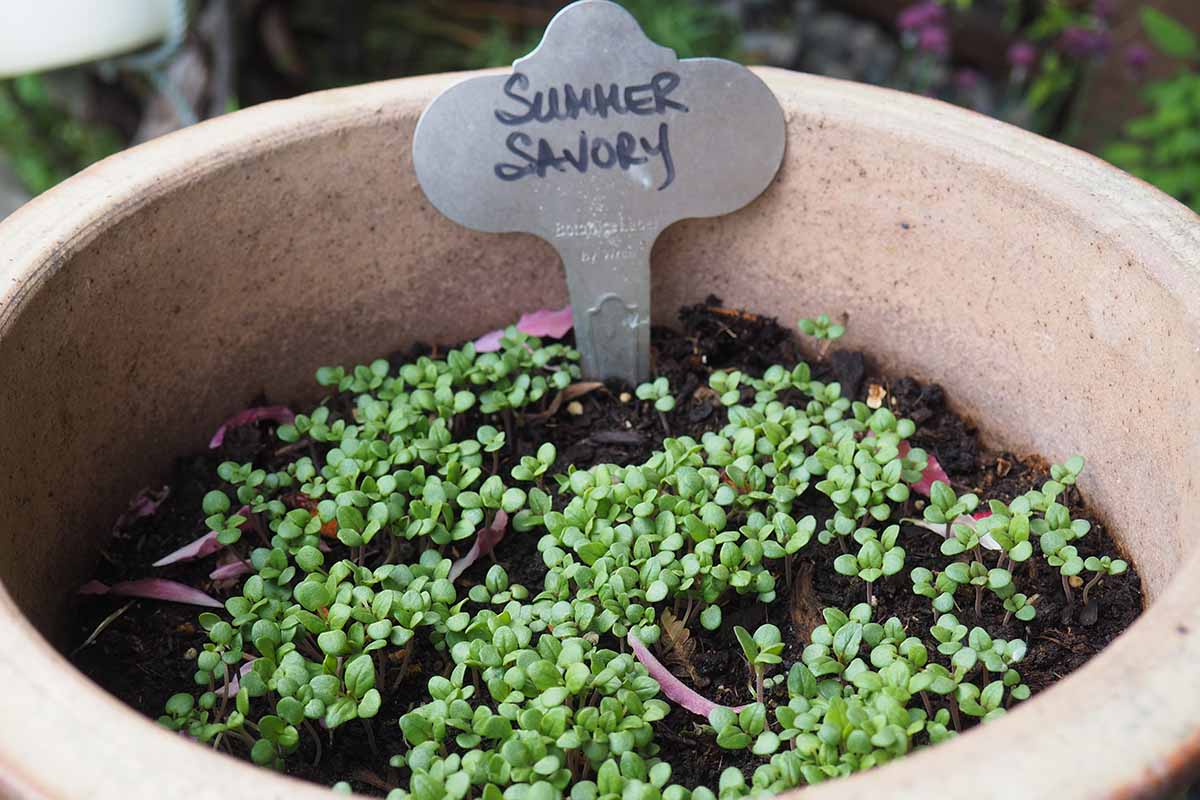
Annuals, such as basil, cilantro, and summer savory, are quick-growing and can be direct sown in pots once temperatures warm up in spring.
Or you can start seeds indoors about six weeks before your last frost.
Learn more about which seeds to sow indoors and outdoors in this guide.
Site Selection
One of the best things about container gardens is that they’re portable.
Aside from the really jumbo-sized pots, you can lift, move, and rearrange them so they have optimal growing conditions available all year long.
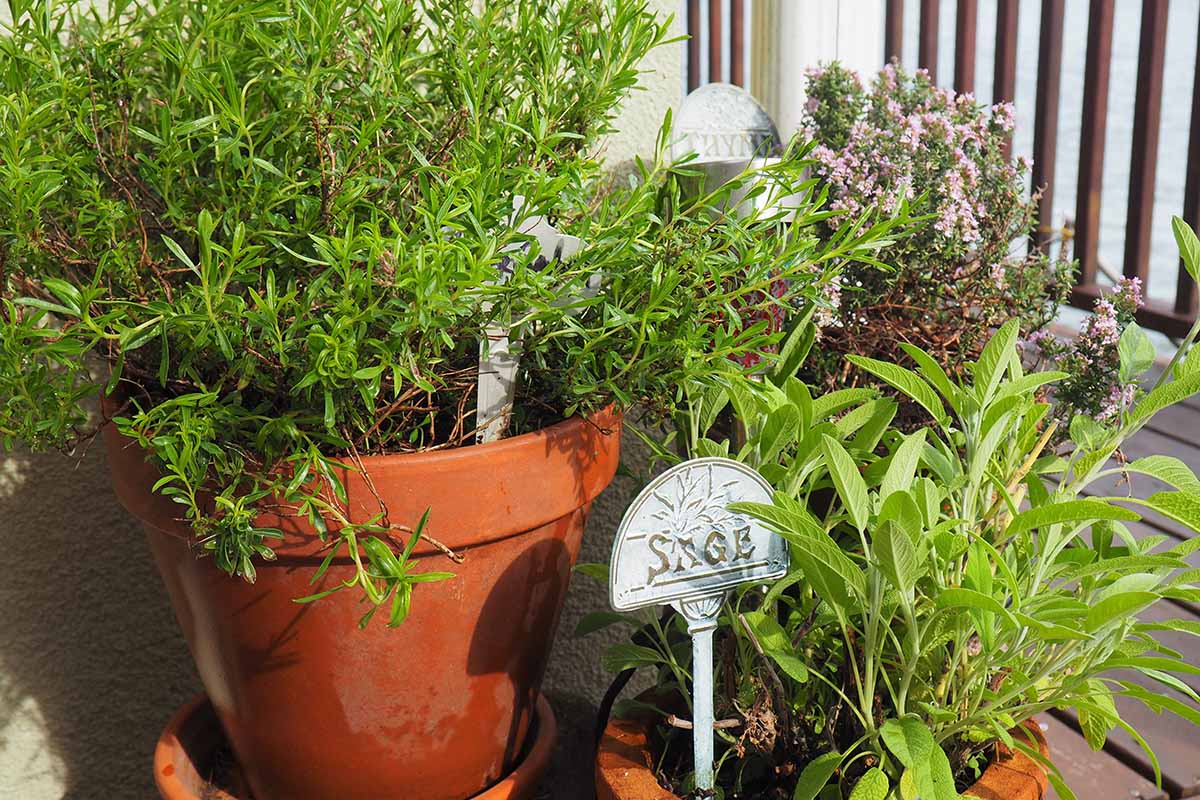
Position some close to the kitchen for quick convenience, if desired.
They can be placed anywhere for you to enjoy their beauty and fragrance, and look terrific arranged on the deck, doorsteps, edging pathways, patios, and in window boxes.
But not all enjoy the same growing conditions.
Some prefer arid, hot conditions while others like to keep cool and moist with afternoon shade. However, they should all receive a minimum of six hours of sunlight each day.

