


Soil
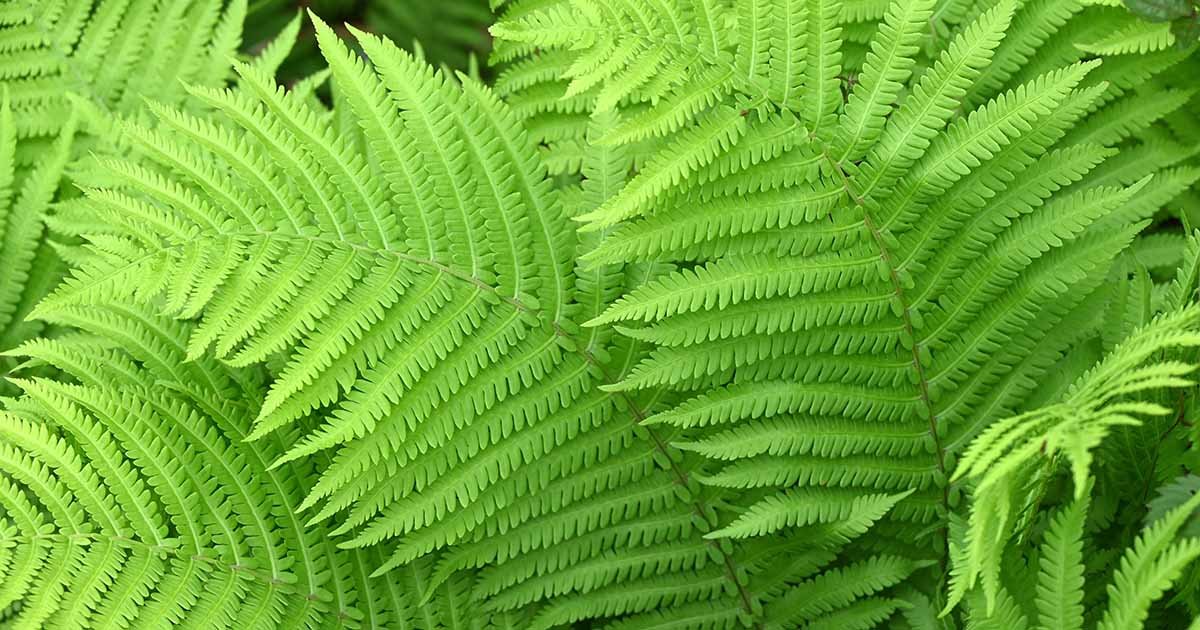
The soil doesn’t need to be anything special. So long as it isn’t pure clay or pure sand, pretty much anything in between will do.
Slightly acidic to neutral is ideal. A pH between 6.0 to 7.0 is about right. But again, these plants are adaptable.
Water
These plants need moisture at all times. They’d rather the soil be too wet than too dry, so take this into account when choosing a planting spot.
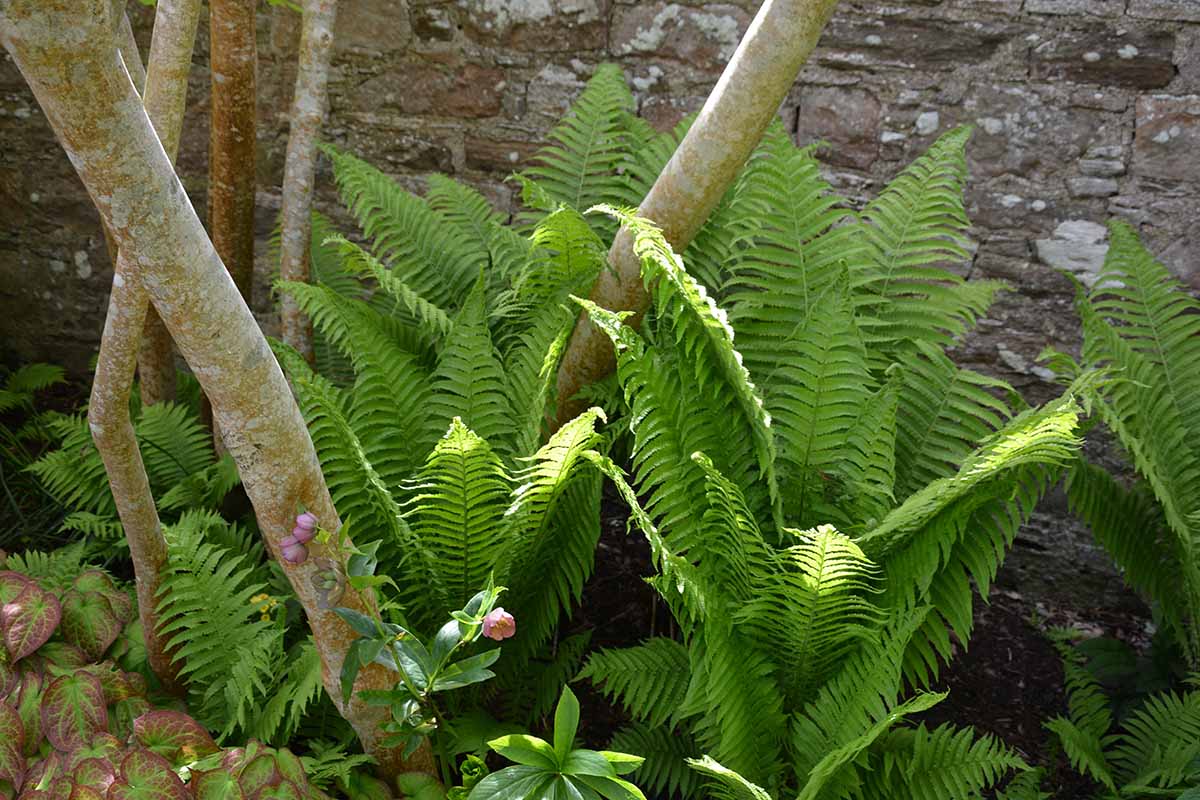
In the wild, they thrive in soil that is shaded by trees and dries out slowly. You’ll also find them in cool locations near streambeds.
Maintain consistent moisture in the soil at all times and don’t allow it to fully dry.
Fertilizer
The best way to feed our frondy friends is to mimic their natural environment.
In the forest, leaves and other organic matter is constantly falling from the canopy and biodegrading into the soil.
Heap well-rotted compost around your plants (but not touching the plant itself) in the spring.
There’s no need to apply additional fertilizer as this can cause the fronds to grow fast, making them weak.
Where to Buy
There are a few cultivars out there, but they aren’t extremely common.
‘The King’ aka ‘Jumbo’ is one of the most well-known. It looks just like the species except it’s a bit larger at up to seven feet tall and more heat-tolerant.
Beyond that, you’ll usually find the species itself listed for sale.
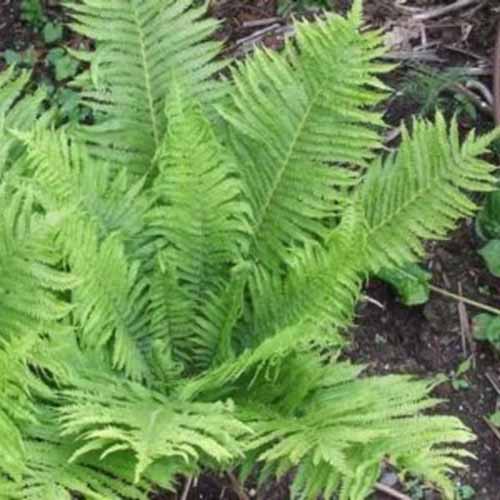
For example, Nature Hills carries plants available in #1 containers.
Maintenance
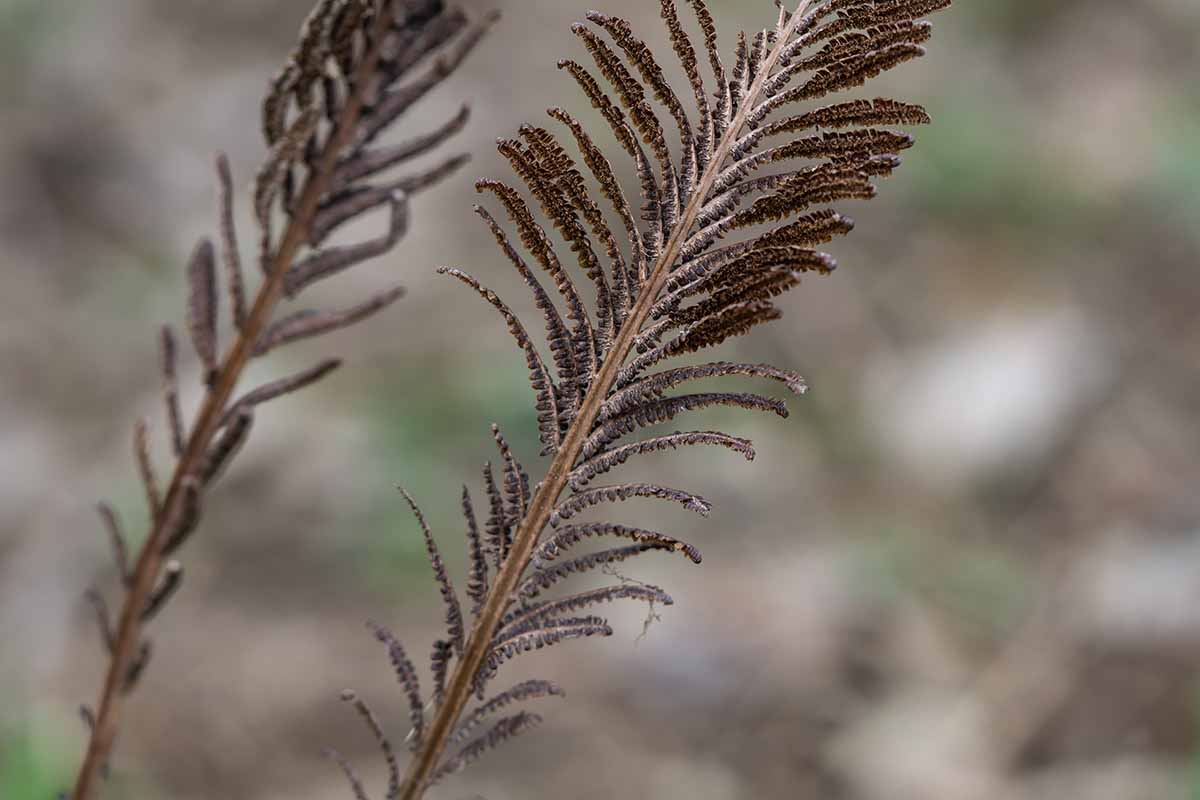
The fronds are going to start looking sad by the end of the summer or early fall. By winter, they will die back to the ground.
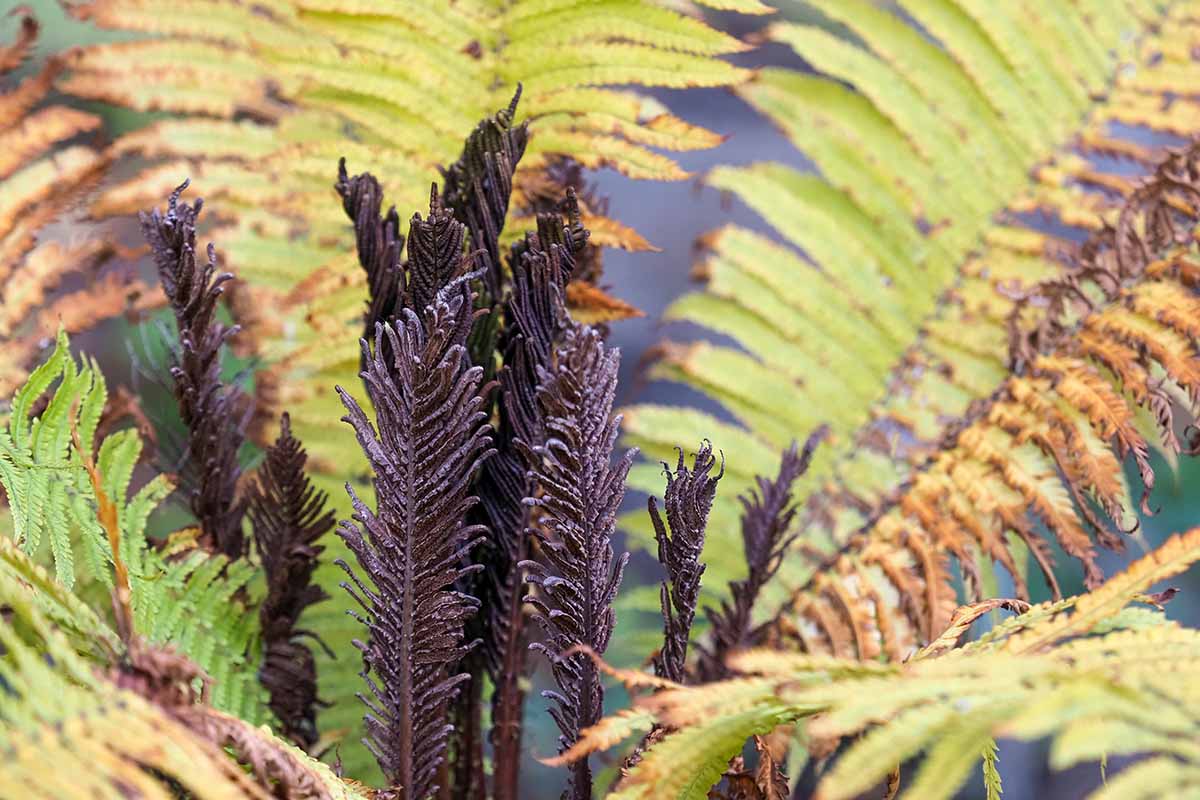
You can mitigate this by keeping the soil moist throughout the season and by protecting the plant from wind, but you can’t always prevent it from happening.
Resist the urge to trim off the ragged leaves. The plant needs these to feed nutrients into the roots to help it grow the following year.
Let them die to the ground naturally.
Propagation
While they have different reproductive parts, ferns can be propagated in the same ways as other plants. Namely: by division, from plantlets, spores (seeds), and cuttings.
If you want to start from spores you’ll need special equipment and it takes some careful work, but it’s so rewarding.
Division and digging up plantlets are the easiest and quickest methods. Underground, the roots will often form rhizomes and you can dig these up and replant them.
You can also divide up the fibrous root mass and move a section of the plant somewhere else.
Plantlets are little individual plants that can develop and you can tuck these into the soil where you want them.
Cuttings work pretty well, too. They take a little longer, but it involves taking a piece of a frond and setting it in some soil.
Whichever method you divide to go for, read our guide to propagating ferns for more information.
Pests and Disease
After a summer of dealing with problems on my roses (is that more black spot forming!?), all I want is a plant that isn’t full of drama.
And ostrich ferns fit the bill. They have no serious common pest or disease problems.
Plus, these plants offer a lot more for wildlife than you may realize. Birds make their nests in them, deer will hide their fawns in patches, and moths and birds feed on them.

