


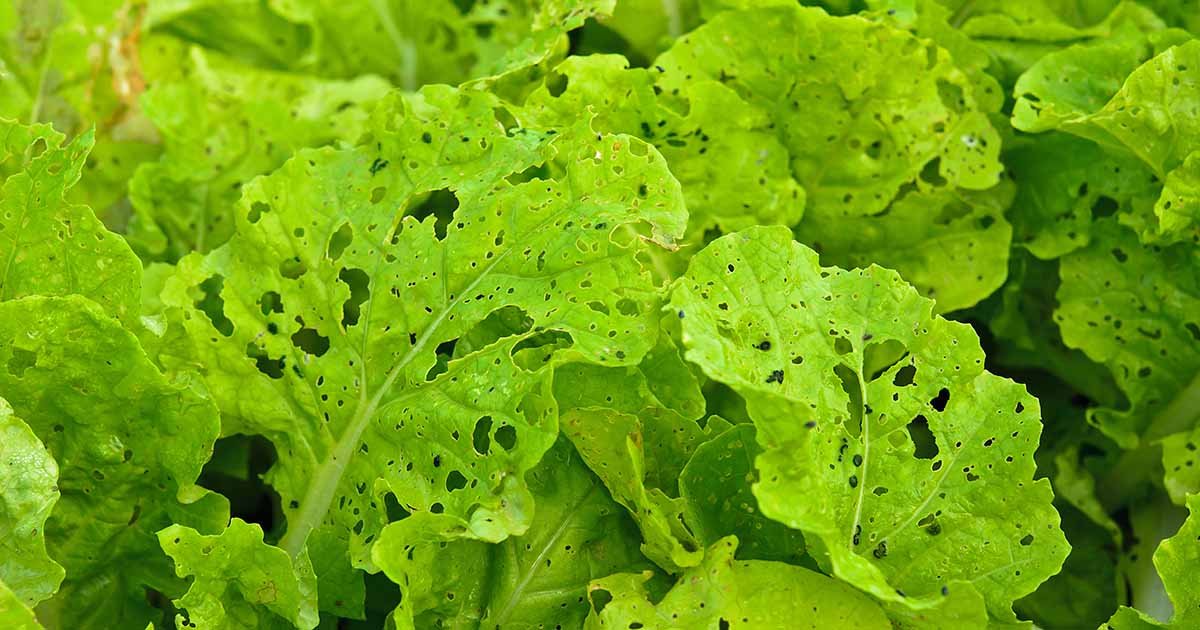
As a gardener, you’re undoubtedly familiar with that perpetual question when you find that something has been nibbling on your greens:
Are they safe to eat?
In many cases, yes, they are perfectly edible and you need not worry. However, at other times, the answer is absolutely not.

We link to vendors to help you find relevant products. If you buy from one of our links, we may earn a commission.
In this guide, will walk you through these different scenarios, so you will know whether or not you can eat the damaged greens in your garden.
Here’s what’s ahead:
Are Greens with Holes in Them Safe to Eat?
If you pick the leafy vegetables that you so lovingly tended through the season, and you discover that something – or someone – has been enjoying their own feast before you had a chance to harvest your crops, are they safe to consume?
Fortunately, there’s good news!
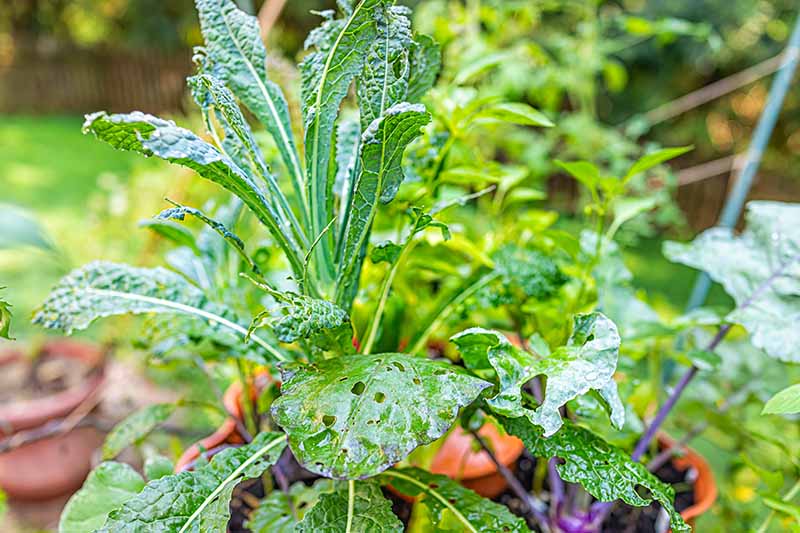
Greens with holes in them that were created by feeding insects or slugs should be fine to eat, if you cut away the damaged parts.
However, there are times when you do want to avoid produce that has been damaged by the local wildlife. Let’s take a look.
When to Avoid Greens That Have Holes
If you are particularly unlucky, it is possible to become gravely ill from eating damaged greens.
In your vegetable beds, check the ground nearby to look for signs that a mammal may have been nibbling on the leaves.
If you find piles of deer or rabbit poop in the vicinity, do not eat the greens.
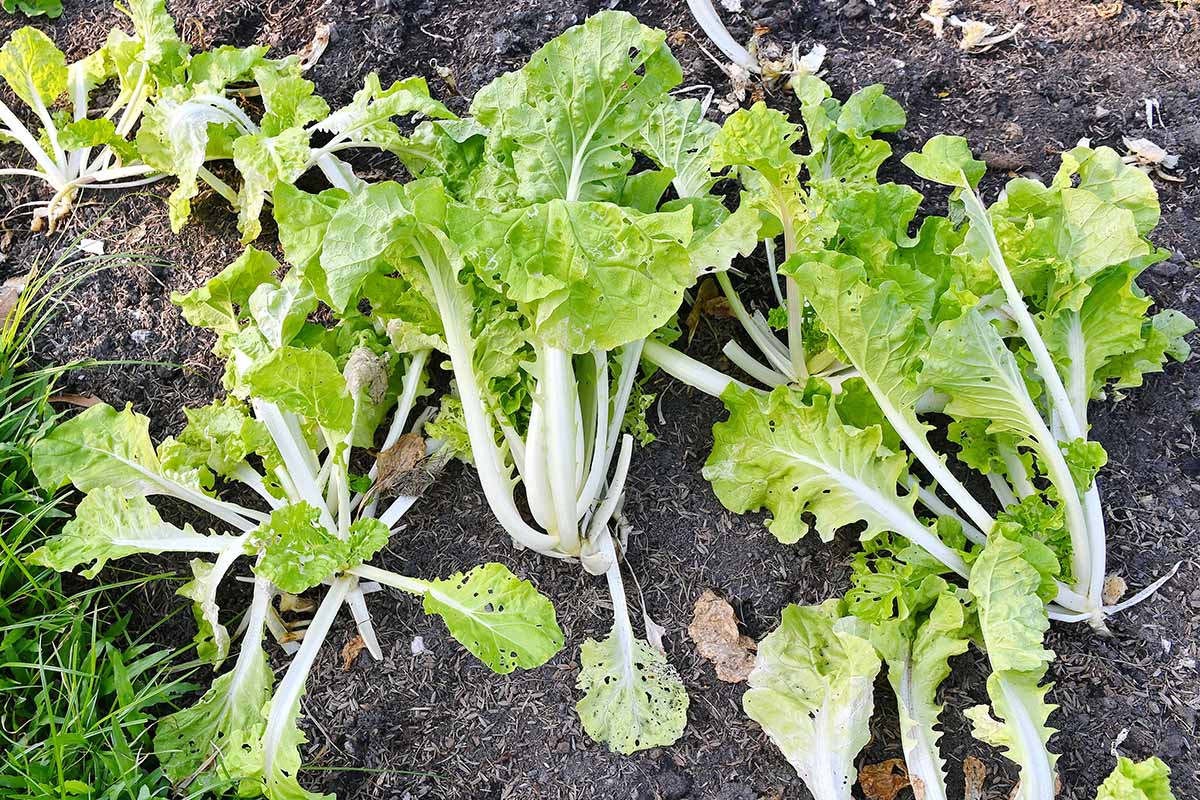
These animals can spread dangerous strains of E. coli (the “lab rat” of bacteria and a common ingredient in feces), as well as Salmonella.
While most strains of E. coli are harmless, there are strains that produce a toxin that can prove fatal to susceptible individuals like young children and the elderly.
Deer can be carriers of these strains. The toxin that these bacteria produce can be inactivated by heating food to 158°F, but why take a chance?
I think it’s far better to forego part of your crop than it is to risk your health.
Cat droppings can also pose a health hazard. They can spread the parasite that causes toxoplasmosis.

