


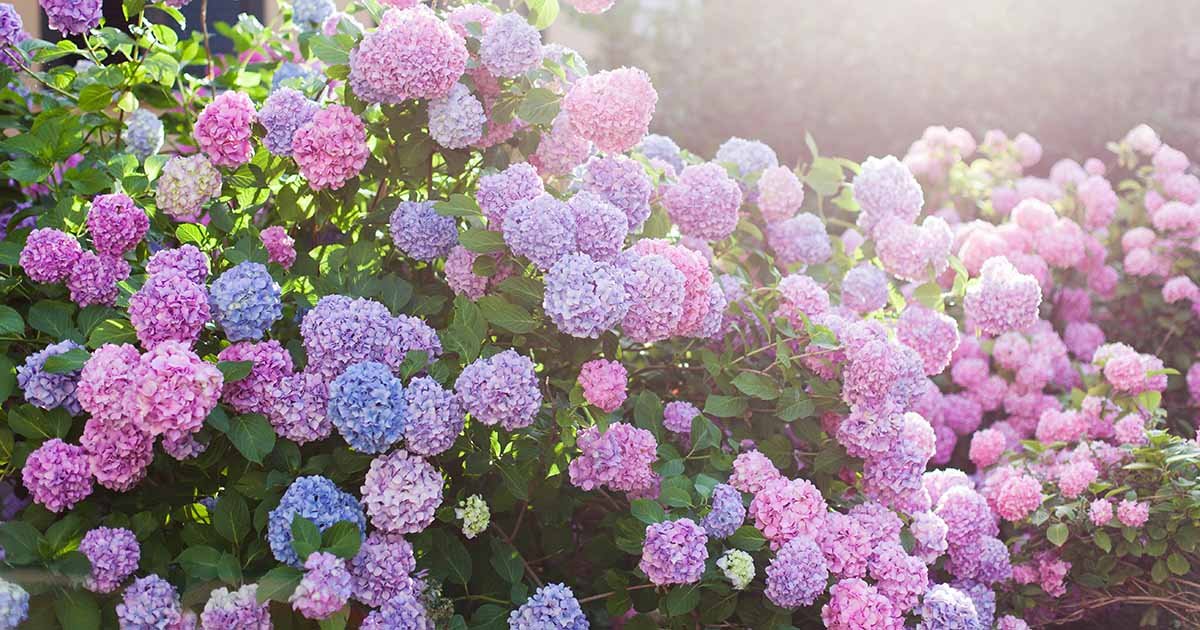
All of which are comprised of small, densely packed, star-shaped blooms.
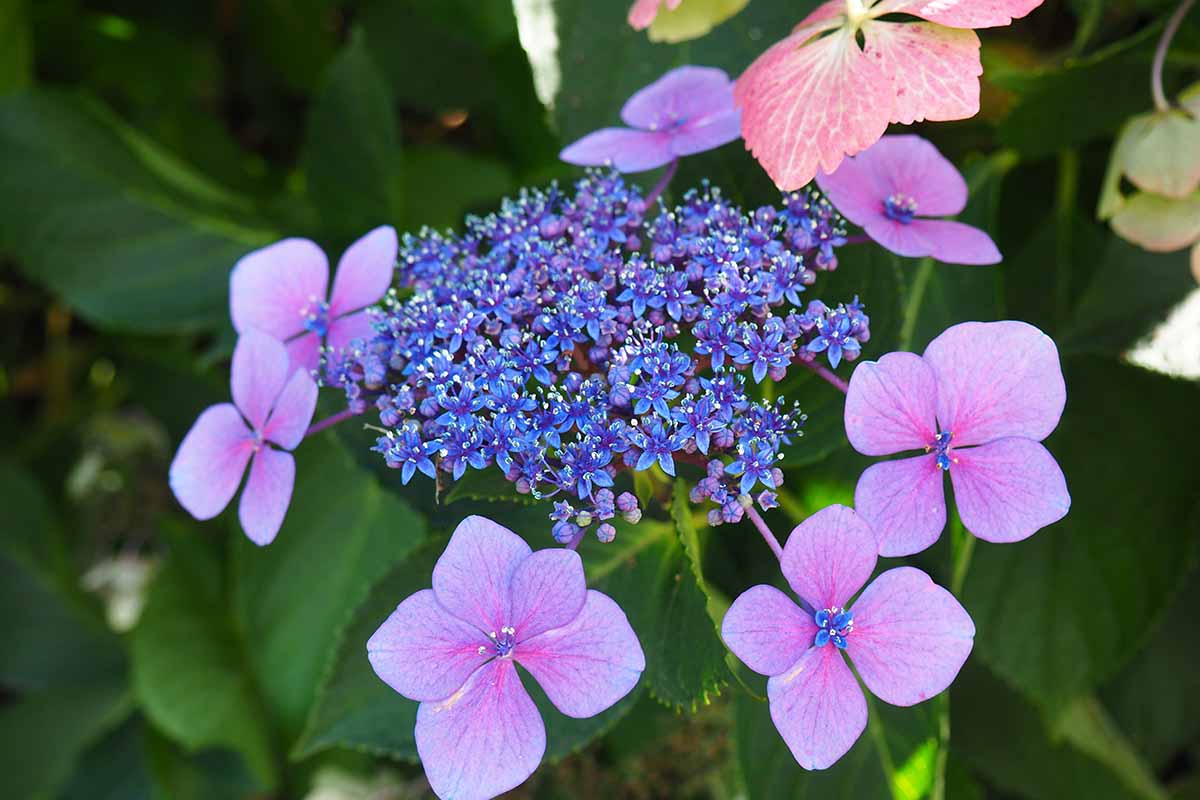
There are evergreen species, but those commonly sold in garden centers are deciduous and lose their leaves in late autumn.
Some cultivars have a light fragrance, although most do not.
Ancient hydrangea fossils dating to the early Cenozoic era (65 million years ago) have been found all along the length of western North America – a good indicator of their longevity!
First cultivated in Japan, they didn’t arrive in Europe until the early 18th century – and arrived from North America when a colonist sent a native varietal home to England.
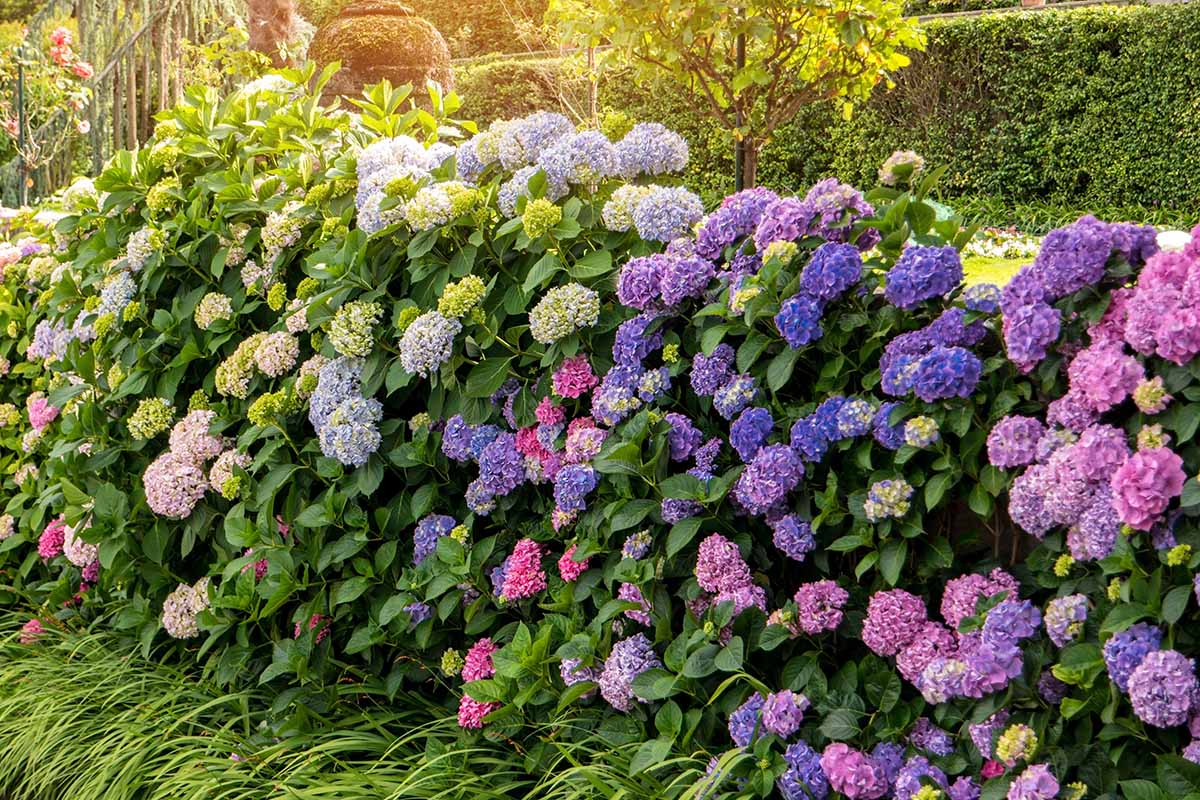
In Japan, they’re thought to be a sign of gratitude or apology because an emperor once gifted them to the families of ladies he fancied.
On the flip side, the Victorians assigned them the meaning of boastfulness or vanity due to their big, showy flowers – very immodest!
And Victorians also used them to politely tell a suitor of their disinterest.
Native Americans successfully employed the roots and bark of native species as a diuretic and for pain relief.
But please don’t try this at home – many commercial garden species are toxic to animals and humans and can cause mild to severe stomach upset.
How to Grow
Hydrangeas prefer a full sun to part shade location, but can only handle hot, full sun locations if the soil is kept consistently moist.
Because they have big leaves, they transpire a lot of moisture. And if exposed to hot afternoon sunshine without adequate moisture, leaves will wilt and droop.
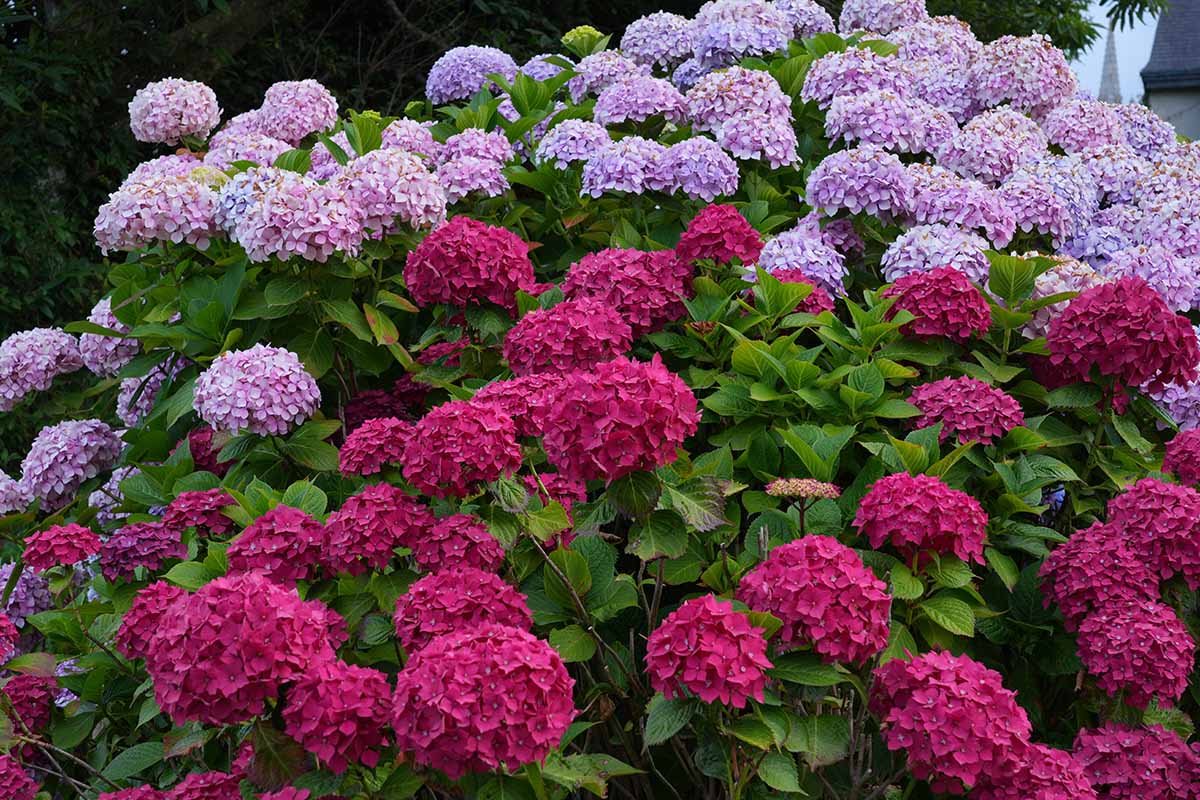
They enjoy rich soil amended with organic material and require a well-draining site.
The planting hole should be two to three times the width of the root ball and of an equal depth.
Add some bone meal to the amended soil, loosen any bound or twisted roots before setting in place. Backfill with amended soil and water thoroughly to settle.
When planting, choose a site to accommodate the plant’s full size and avoid locations prone to strong, gusty winds.
Those grown in containers may need to be watered daily, and a four-inch layer of mulch will help to retain moisture.
Feed with a slow release, balanced fertilizer, with a 10-10-10 (NPK) ratio, in early spring.
For container growth, ensure your pots have an adequate layer of drainage material and most importantly, holes in the bottom.
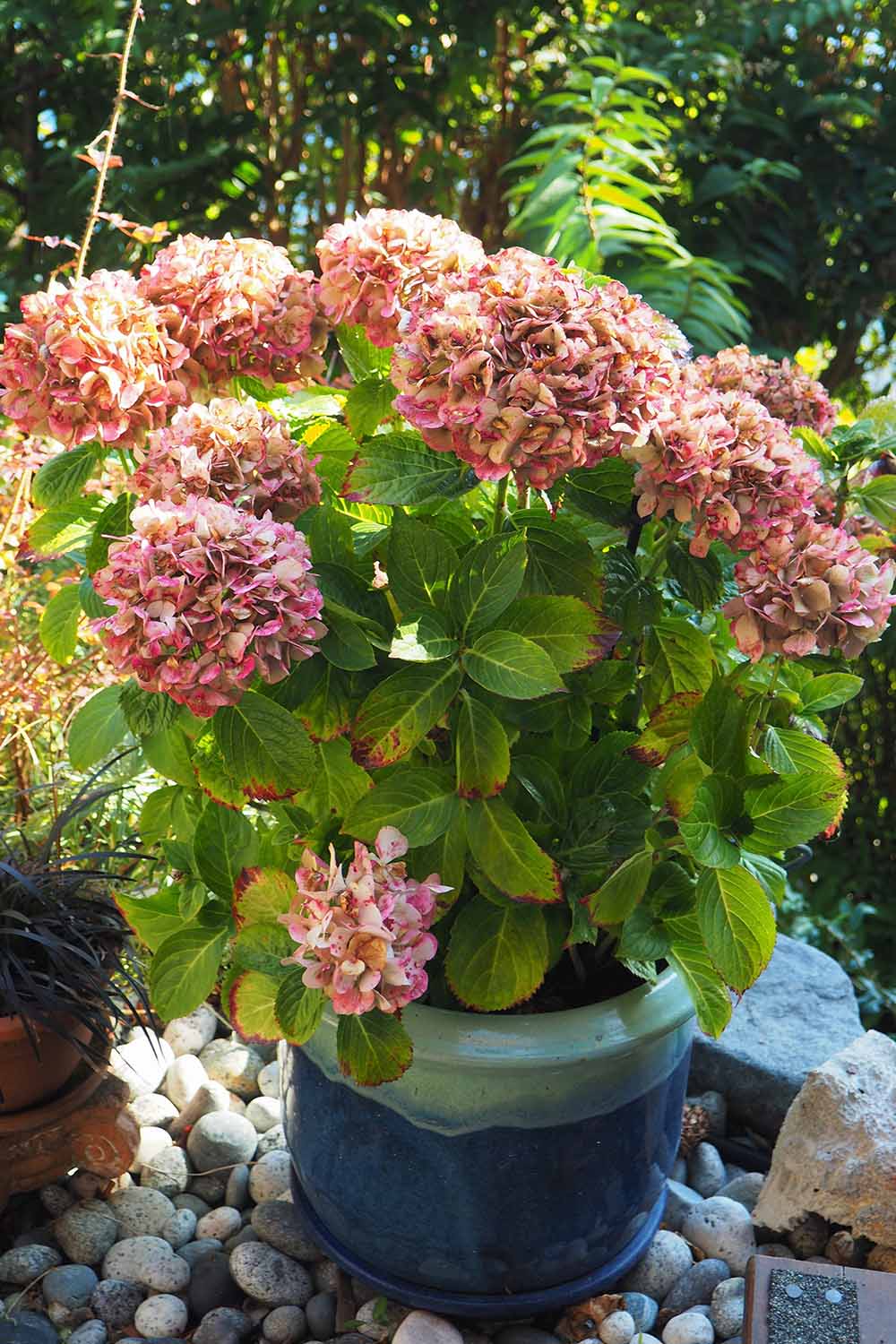
And use a potting mix with plenty of moisture-retentive material such as peat moss, perlite, or vermiculite.
After planting, mix in a slow-release fertilizer and water well.
In Zones 5 and cooler, plant in sheltered locations and provide extra winter protection if needed.
To minimize bud loss and protect from dieback, wrap with burlap or landscape fabric to protect against cold snaps and extreme winter temperatures.
You can read more about growing hydrangea in containers here.
Adjust Your Soil pH
One of the most interesting aspects of hydrangea is that some varieties have flowers that can change color.
The color is influenced by soil chemistry, with pH levels able to affect the flower color of bigleaf and mountain species, H. macrophylla and H. serrata.
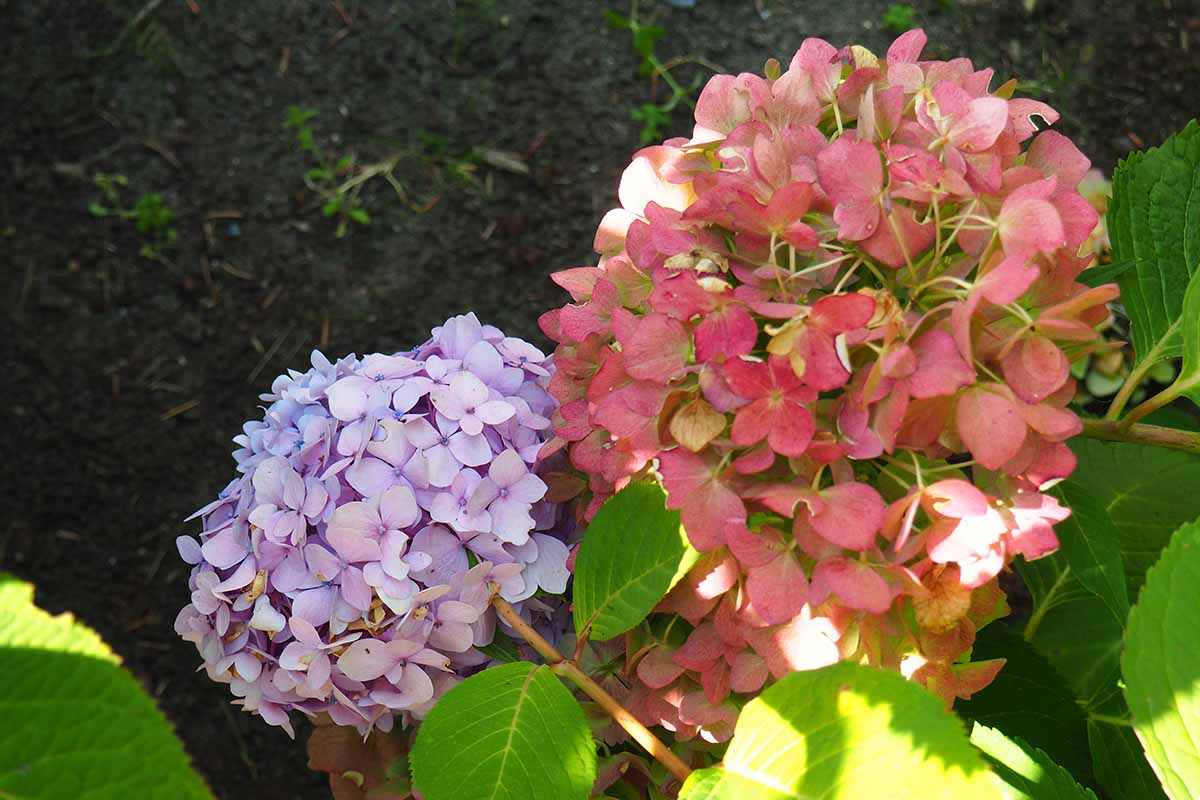
Typically, flowers are blue in soil of high acidity, and mauve to pink in alkaline soil. Some shrubs will even show all three colors at once!
If unsure of your soil’s pH, it’s wise to test before planting.
To alter pH levels and manipulate flower color, treat the soil well before flowers bloom, starting in late summer and continuing the following spring.
To encourage blue blooms, grow in acidic soil with a pH of 5.2 to 5.5.
Incorporating naturally acidic materials such as coffee grounds, peat moss, pine needles, oak leaves, or sawdust will increase levels slightly and slowly.
Or, you can increase soil acidity by adding aluminum sulfate, ammonium sulfate, or a soil acidifier.
For mauve to pink blooms, a more alkaline soil is needed with a range of pH 6.0 to 6.2.
Garden lime is the easiest way to raise the soil pH (making it more alkaline). Apply at the rate outlined in package specifications.
Retest your soil periodically to monitor the effects of any soil amendment – over time, the pH will revert back to original levels.
And if you’re want to maintain a certain pH level, soil should be tested annually.
Also, it should be noted that species with true white or cream flowers, like the oakleaf, H. quercifolia, will stay their original color regardless of the soil’s chemical composition.
Species and Cultivars
These are the most commonly grown garden species in North America:
- Bigleaf – H. macrophylla
- Climbing – H. petiolaris
- Mountain – H. serrata
- Oakleaf – H. quercifolia
- Panicle – H. paniculata
- Smooth – H. arborescens
Let’s take a look at each of these in a bit more detail:
Bigleaf
The original Endless Summer® hydrangea bigleaf variety (H. macrophylla ‘Bailmer’) is a garden favorite prized for its uniform, rounded growth.
It reaches about three to five feet tall with a similar spread and produces large mophead flowers in colors of pink to sapphire.
Blooming profusely from June to September, large, dark green leaves add to the color display, turning shades of burgundy and scarlet in autumn.
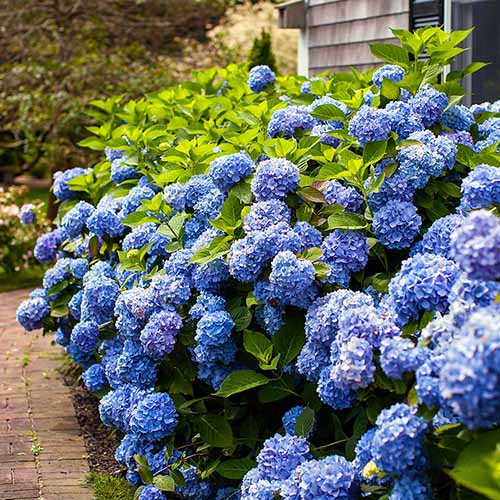
H. macrophylla ‘Bailmer’ (Endless Summer®)
Flowers form on new and old wood and should be pruned in late summer as for old wood. Hardy in Zones 4 to 9.
Bigleaf makes a terrific foundation or specimen plant and works well in hedges, perennial beds, and privacy screens – it definitely rates a space where it can be admired from your patio or windows.
The big, beautiful blooms attract butterflies and are wonderful in dried or fresh flower arrangements as well.
You can find Endless Summer® plants in one- and two-gallon containers available at Fast Growing Trees.
Climbing
A bold, rambling species, climbing hydrangea (H. petiolaris) features large, fragrant white blooms in a lacecap style that flower in late spring to mid-summer.
As they age, flowers turn a deep brick red – the same color as the attractive, peeling bark. And the rich, dark green foliage gives a show of autumn yellow.
Easy to grow, it clings to brickwork, up tree trunks, or wooden walls without support and is happy in either shade or sun.
Lateral branches develop as the plant grows, giving a deep, layered look. Hardy in Zones 4-8, plants can grow up to 60 feet with a spread of five to six feet.
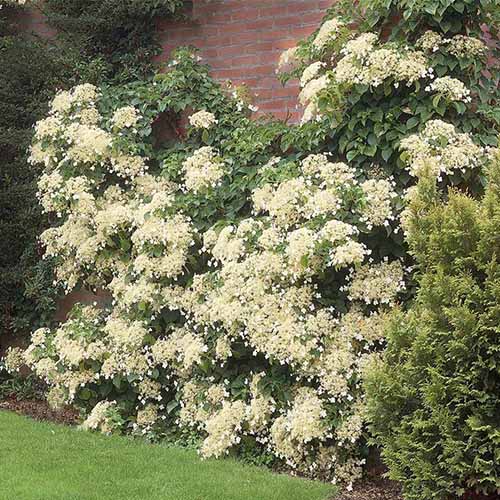
Use this handsome climber against buildings and other structures, such as arbors, fences, and up large tree trunks.
Or as a ground cover to sprawl over embankments, low rock walls, rock debris, tree trunks, and shady areas.
You can find climbing hydrangea plants in one-quart and five-gallon containers available at Fast Growing Trees.
Mountain
H. serrata, aka mountain hydrangea, is compact species, reaching a mature height of about two to three feet with a similar spread.
The plants have a dense, branching habit, and the bright green, heart-shaped leaves turn shades of burgundy and magenta in fall for additional late season color.
‘Tiny Tuff Stuff’ is an exceptionally cold-hardy, reblooming cultivar, producing flowers almost nonstop from early summer into mid-autumn.
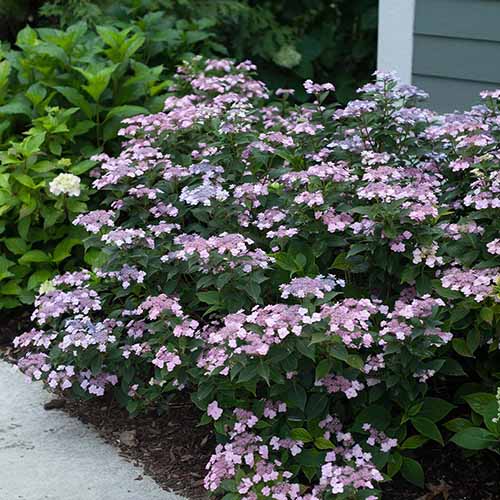
Tiny Tuff Stuff™ Mountain Hydrangea
Semi and fully double blooms in cerise or lavender blue open in a classic, airy lacecap pattern.
Mountain species flower on both old and new wood and should be pruned as for old wood varieties.
Hardy in Zones 5 to 9, the small size makes it ideal for containers, low foundation beds, edging, low hedges, and mixed into perennial beds.
You can find Tiny Tuff Stuff™ in quart-sized containers at Fast Growing Trees.
Oakleaf
Handsome, oak-shaped leaves lend the common name of oakleaf hydrangea (H. quercifolia) and turn vibrant shades of burgundy and red as temperatures drop.
It has a height of six to eight feet and a similar spread and is hardy in Zones 5 to 9. Flowers bud on old wood so prune after flowers are finished in late summer.
‘Gatsby Pink’ is a striking large oakleaf cultivar with large, dramatic florets of coral pink blooms perched atop tall stems from mid-summer right into autumn.
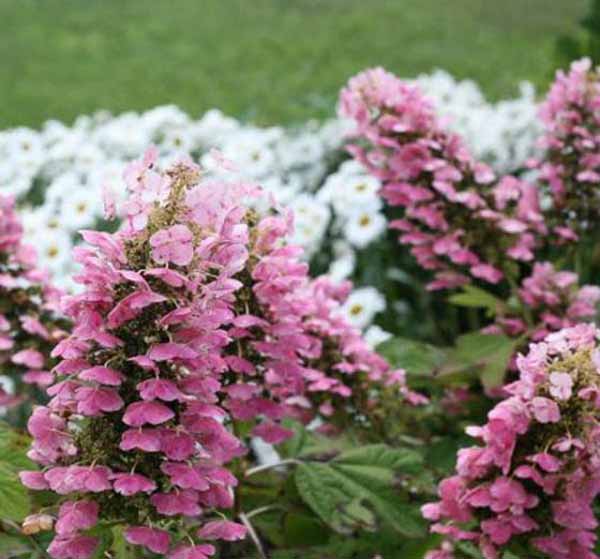
‘Gatsby Pink’ Oakleaf Hydrangea
Adaptable and easy to grow, ‘Gatsby Pink’ appreciates some afternoon shade in hot southern climates.
Use as a foundation or specimen plant, in hedges or privacy screens, and massed in woodland settings. And the long-lasting flowers are good for fresh cut arrangements and for drying.
You can find ‘Gatsby Pink’ available in quart-sized containers from Nature Hills Nursery.
Learn more about growing oakleaf hydrangea here.
Panicle
Panicle (H. paniculata) varieties have flower towers, some densely packed with individual blooms while others have a looser form.
Strawberry Sundae® (‘Rensun’) has fantastic, two-tone panicles that give a big splash of color on a compact plant, growing four to five feet tall with a spread of three to four feet.
Flowers first appear as creamy white in mid-summer, change to pink from the bottom up as they age, and finish with flair as they change to bright strawberry red.
Flowers appear on new wood and should be pruned in spring. Cut back to the ground or one to three feet for taller growth.
Hardy in Zones 3 to 8, colors last well into autumn and flowers are attractive to butterflies and other pollinators.
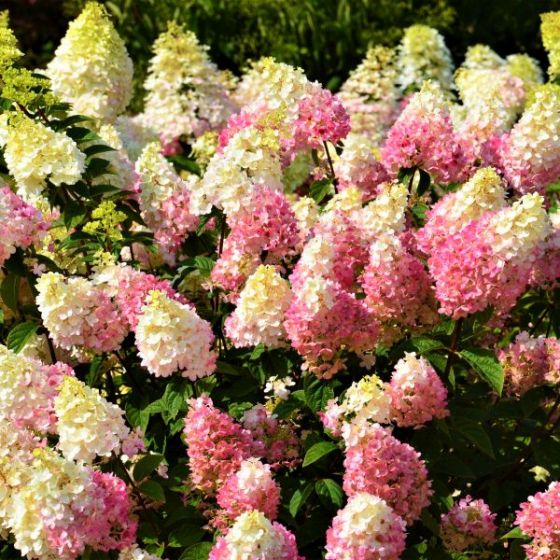
The compact size of this cultivar makes it ideal for large containers, small gardens, hedges, or as a striking middle layer in mixed perennial beds.
You can find the stylish Strawberry Sundae® online at Nature Hills Nursery in #2 containers.
Or read more about growing panicle hydrangea here.
Smooth
H. arborescens aka smooth hydrangea is an outstanding ornamental shrub that features the massive flower clusters.
Attractive to butterflies and other pollinators, it grows four to five feet tall with a three- to four-foot spread and is one of the hardiest: suitable for Zones 3 to 9.
Blooms appear on new wood and stems can be pruned in winter. Cut back to the ground or to one to three-feet for taller growth.
‘Annabelle’ makes an outstanding foundation or specimen plant but really shines when grouped in hedges, privacy screens, or planted en masse.
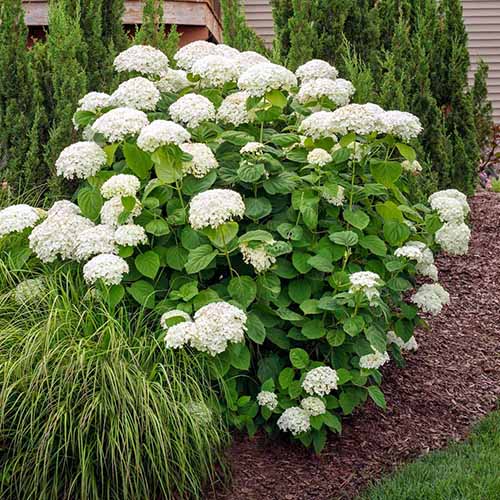
Huge, symmetrical corymbs made of multiple, bright white blooms cover the plant all summer and are perfectly showcased by the deep green leaves that turn vivid yellow in fall.
You can pick up ‘Annabelle’ in one-quart and one-gallon pots from Fast Growing Trees.
Or read more about growing it here.
Want More Selections?
If you’re planning a perennial flower garden and want more selections of hydrangea to choose from, don’t miss perusing our selection of favorite 25 cultivars to help you weed through the hundreds that are available.
Maintenance
Generally, plants require little pruning.
As flowers fade, they dry on the stem adding interest to the fall garden. However, varieties that rebloom benefit from regular deadheading to encourage re-flowering.
But before you do any cutting, it’s important to determine if your plant flowers on new or old wood.
Prune for Flowers on Old Wood
Many varieties of H. macrophylla and H. quercifolia flower on old wood, typically the classic big leaf, lacecap, and mophead types.
These plants form buds in late summer, just as the current year’s flowers are finishing.
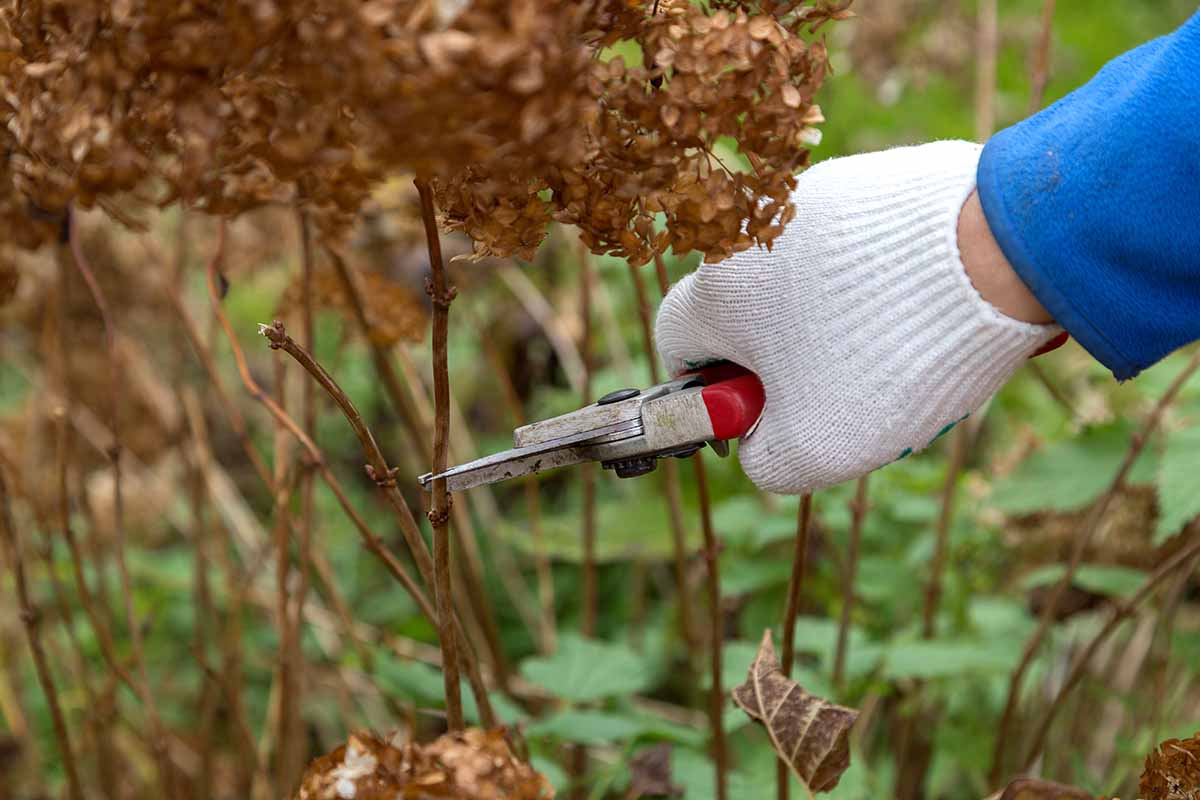
They require only a light trim immediately after flowering, cutting stems to just above a pair of healthy leaf nodes.
Avoid an “overall” pruning in winter or early spring because this removes many of next year’s flowers.
Prune for Flowers on New Wood
Others, like smooth and panicle species, H. arborescens and H. paniculata, flower on new wood. These form sets of buds in spring.
These varieties should be cut back in late winter or very early spring and can take a hard pruning when needed.
Cut back liberally to one to two feet to encourage new growth and flower production.
This also produces a full, strong plant that will stay upright under the weight of their profuse summer blooms.
Prune for Flowers on Both Old and New Wood
There are also mopheads that bloom on both old and new wood. They display early flowers that grow on old wood, and a second flush of blooms that appear on new wood.

