


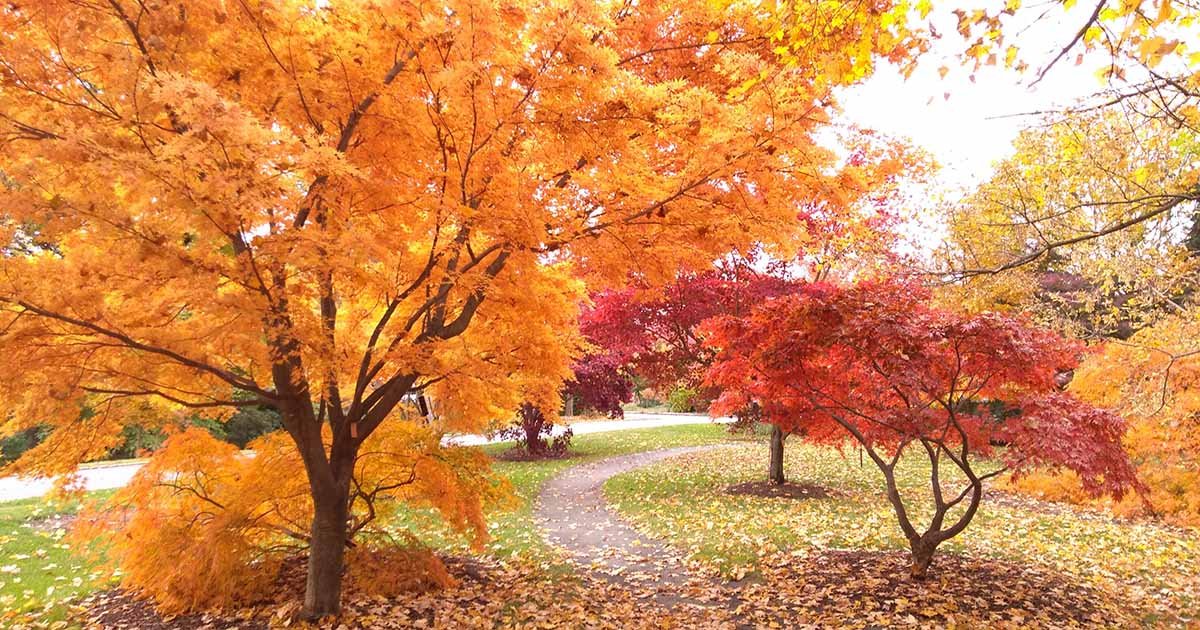
Please see our crabapple growing guide for more information.
10. Katsura
Katsuras, Cercidiphyllum japonicum, grow in Zones 4 to 8. Mature dimensions are 40 to 60 feet tall with a spread of 25 to 60 feet, and they may have one or more main trunks.
These trees prefer full sun to partial shade and require well-draining soil. In the early years, they do best with consistent moisture.
The foliage is almost round with a slight teardrop shape and stunning yellow in the fall.
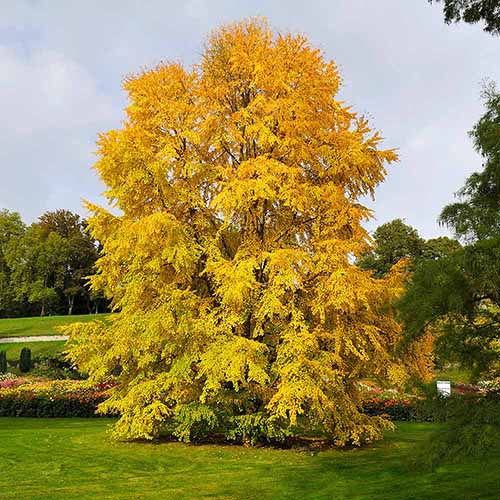
These trees tolerate pollution and are noteworthy for having a shallow root system that does not disturb underground pipes or cause sidewalk buckling.
Katsuras are available from Fast Growing Trees.
11. Lombardy Poplar
Lombardy poplars, Populus nigra ‘Italica,’ are suited to Zones 3 to 9. They have a columnar shape that makes an excellent privacy screen when multiple specimens are planted in a row.
Mature dimensions are 40 to 60 feet tall with a spread of 10 to 15 feet. These hardy poplars prefer full sun, grow well in various soils, and are drought tolerant.
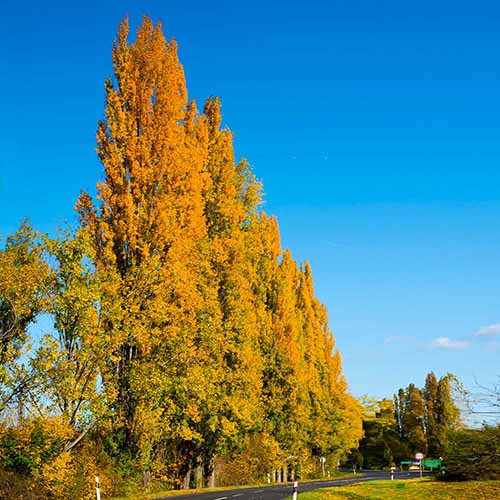
The triangular leaves rustle pleasantly when a breeze passes through them. In autumn, they blaze yellow like summer sunshine.
Lombardy poplars are available from Fast Growing Trees.
12. Niobe Weeping Willow
Niobe or golden weeping willows, Salix alba ‘Tristis,’ grow in Zones 4 to 8, reaching heights of 50 to 60 feet with a spread of 30 to 40 feet. They prefer full sun and moist soil of any variety.
Weeping willows have finely serrated narrow leaves with golden autumn hues and light, airy branches that cascade gracefully downward, often sweeping the ground with passing breezes.
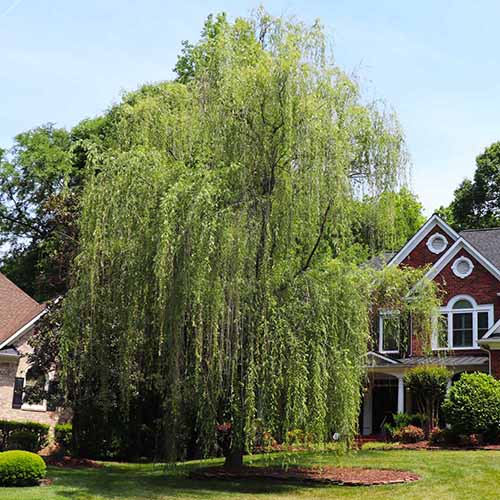
It’s best to plant away from underground sewer pipes, as willow roots grow invasively and may clog them.
Niobe weeping willows are available from Fast Growing Trees.
Please see our weeping willow growing guide for more information.
13. Paper Birch
Native paper birches, Betula papyrifera, grow in Zones 2 to 7.
Their statuesque trunks have highly ornamental white, peeling bark and a loosely pyramidal shape, making them attractive stand-alone or clumped focal points.
Heights reach 40 feet with a spread of 30 feet.
They prefer full sun to partial shade and grow in most soil types. They require moderate moisture and do not tolerate drought.
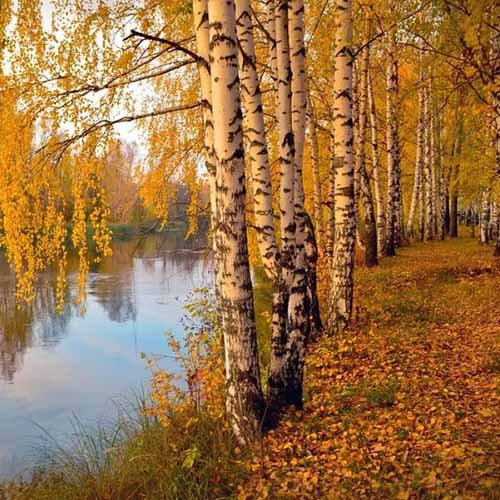
The teardrop-shaped leaves are serrated and bright yellow in the fall.
Paper birches are available from Nature Hills Nursery.
14. Patmore Green Ash
‘Patmore’ green ashes, Fraxinus pennsylvanica ‘Patmore,’ are suited to Zones 3 to 9.
They have a rounded, lollipop shape that makes them eye-catching stand-alone specimens. Mature heights are 50 to 70 feet with a spread of 35 to 40 feet.
Pest and disease resistant, they prefer full sun and moist soil but tolerate various soil types and some drought.
Note that if you live in a region where the emerald ash borer beetle is prevalent, you may wish to avoid new plantings, or follow a preventative integrated pest management program.
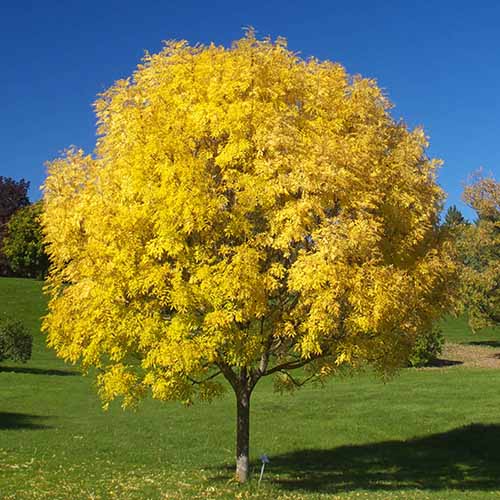
Fast-growing, green ashes put on approximately two feet per year through to maturity. The foliage consists of shiny, lance-shaped leaflets that turn a bright, sunny yellow hue in the fall.
Ashes generally produce “samaras,” narrow, tan, papery seed pods. But with the ‘Patmore’ cultivar, you’ll have no messy seeds to rake up.
‘Patmore’ green ashes are available from Fast Growing Trees.
15. Princeton Elm
‘Princeton’ elms, Ulmus americana ‘Princeton,’ grow in Zones 4 to 9.
Mature dimensions are 60 to 80 feet tall and 40 to 60 feet wide, making them excellent stand-alone specimen shade trees.
The overall shape is like a vase, with dense, upwardly arching branches. The foliage is elliptical and serrated, and flushes yellow at season’s end.
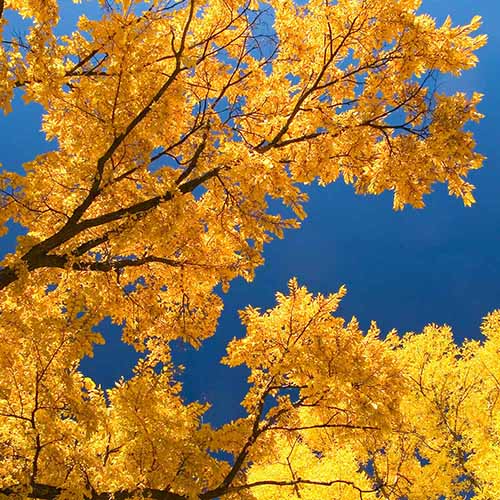
Unlike many elms, ‘Princeton’ is highly resistant to Dutch elm disease. These prefer full sun placements and adapt to most soils.
‘Princeton’ elms are available from Fast Growing Trees.
Please see our guide to growing elms for more information.
16. Quaking Aspen
Native quaking aspens, Populus tremuloides, grow in Zones 2 to 6, where they rise to heights of 40 to 50 feet with a spread of 20 to 30 feet.
They thrive in full sun in a range of soils and add the calming sound of gently rustling leaves to the landscapes they adorn.
Tall trunks and a pyramid shape show the crisp, white bark to the best advantage, especially in an impressive stand of multiple trees in a row.
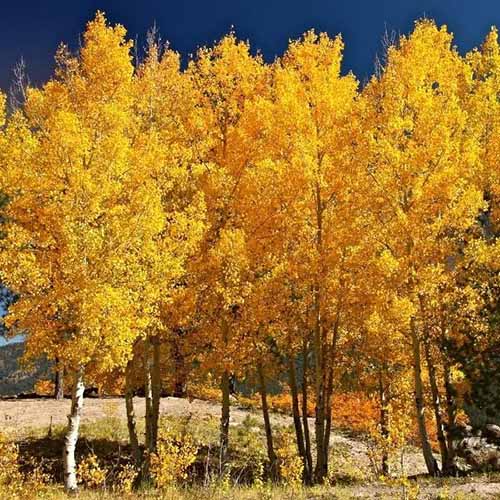
The foliage is near heart-shaped with serrated margins. The leaves are golden in the fall and sometimes surprise with red tones.
Quaking aspens are available from Nature Hills Nursery.
Find our guide to growing quaking aspen here.
17. River Birch
River birches, Betula nigra, are stunning in Zones 3 to 9.
In addition to their brief but glorious fall display of buttery, serrated, diamond-shaped leaves and dangling reddish-green catkins, they sport cinnamon-brown exfoliating bark.
Mature heights are 25 to 50 feet tall and 25 to 35 feet wide. As they age, they transition from a pyramid to a rounded shape.
These trees prefer full sun to part shade and tolerate drought, various soils, and wind.
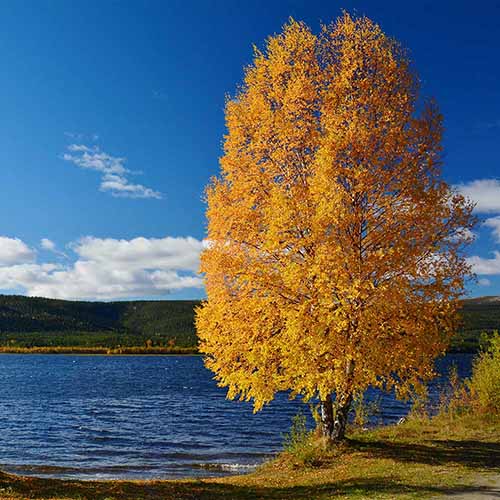
Plant them in naturalized areas and clump to create privacy. Avoid planting near buildings, as branches will likely fall into rain gutters.
River birches are available from Fast Growing Trees.
18. Shagbark Hickory
Shagbark hickories, Carya ovata, are suited to Zones 4 to 8. They are large shade trees with a rounded crown and an irregular shape that mature to 70 to 90 feet tall and 50 to 70 feet wide.
The foliage is lance shaped, slightly serrated, and golden yellow in the fall.
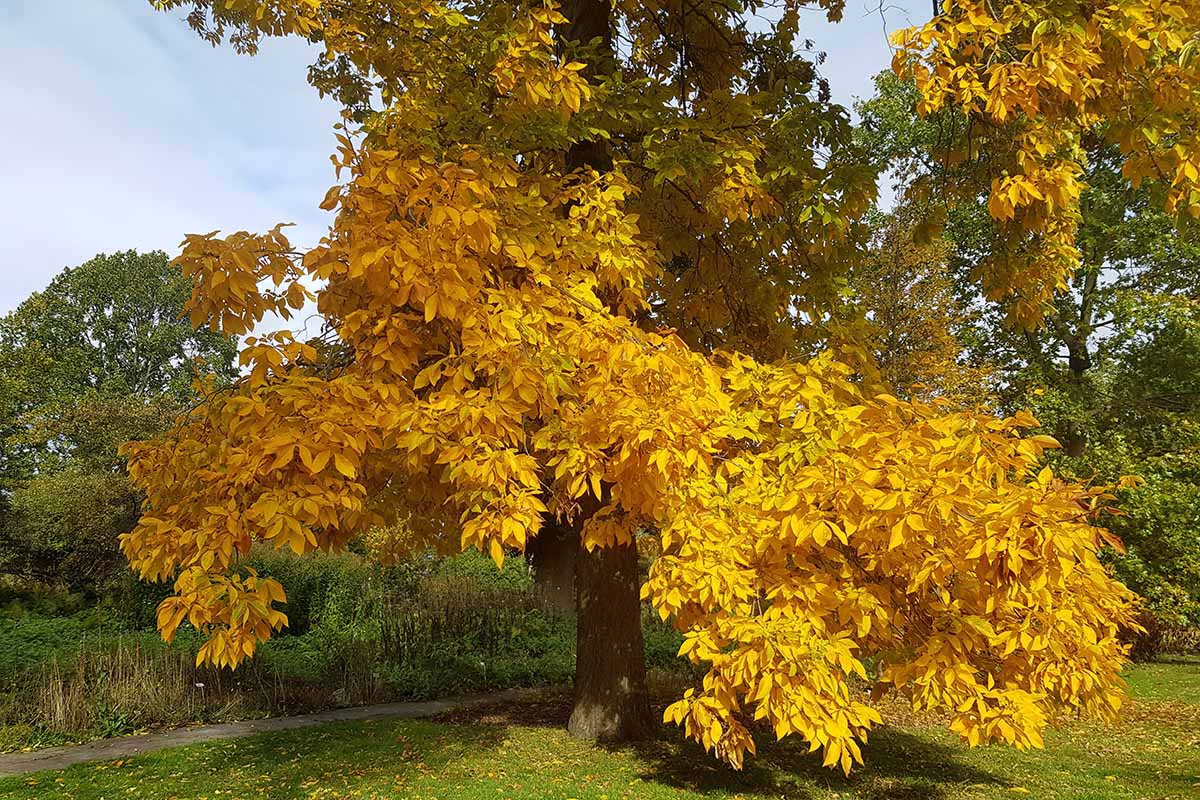
Mature specimens produce round nuts, have gray, exfoliating bark, and make impressive stand-alone trees in expansive settings.
They prefer full sun to part shade and organically-rich, well-draining soil. They tolerate clay and black walnut juglone toxicity and are not prone to pests or diseases.
Check out our guide to growing hickories for more information.
19. Silver Maple
Vase-shaped silver maples, Acer saccharinum, grow in Zones 3 to 9.
They reach heights of 50 to 80 feet with a spread of 35 to 70 feet, adding approximately three feet per year to their landscape footprint until they reach maturity.
These trees prefer full sun to part shade and medium to wet soil. However, they tolerate drought well.
They have deeply lobed leaves that are characteristic of maple trees. Winged seed pods called “samaras” disperse in the spring. The fall color is pale lemon yellow.
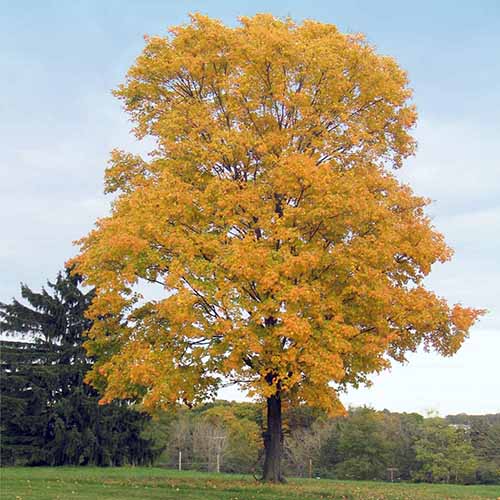
The best placements are moist areas like streambeds and riverbanks away from buildings and cars, as silver maple limbs are susceptible to breakage in high winds and ice storms.
Silver maples are available from Fast Growing Trees.
Read more about growing maples here.
20. Thornless Honey Locust
Fast-growing, native, thornless honey locusts, Gleditsia triacanthos var. inermis, are suited to Zones 4 to 9.
They reach 50 to 70 feet tall with a spread of 40 to 50 feet, adding approximately two feet per year until maturity, and lack the long thorns found on the branches of the thorned variety.
These trees prefer full sun to part shade and moist, loamy soil. They will also tolerate other soils, dryness, wetness, and road salt.
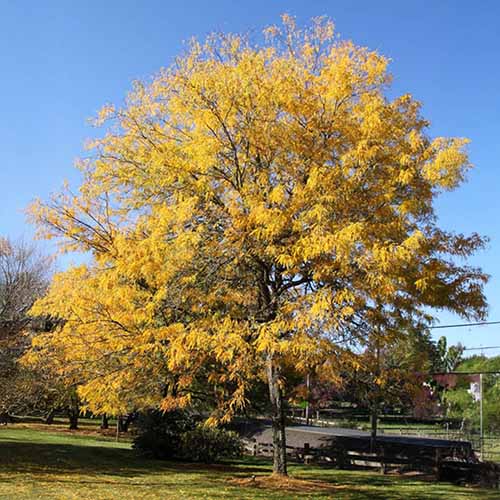
The overall shape is upward arching and oval, with foliage consisting of pinnate leaflets with narrow, oblong foliage.
Spring brings fragrant, nondescript blossoms and long, reddish-brown seed pods. In the fall, the leaves are golden.
Honey locusts make a bold statement and provide ample shade in large yards.
Thornless honey locusts are available from Fast Growing Trees.
21. Tulip Poplar
Native tulip poplars Liriodendron tulipifera, grow in Zones 4 to 9. Mature dimensions are 60 to 90 feet tall and 30 to 50 feet wide. They require full sun with loose, loamy, well-draining soil.
Also called tulip trees, they are in the magnolia family and are unrelated to tulips or poplars.
They have tulip-like flowers that bloom high in the canopy in the spring in shades of orange, yellow, and green.
Tulip poplars show well in wooded, naturalistic settings where they are somewhat sheltered from potentially damaging winds.
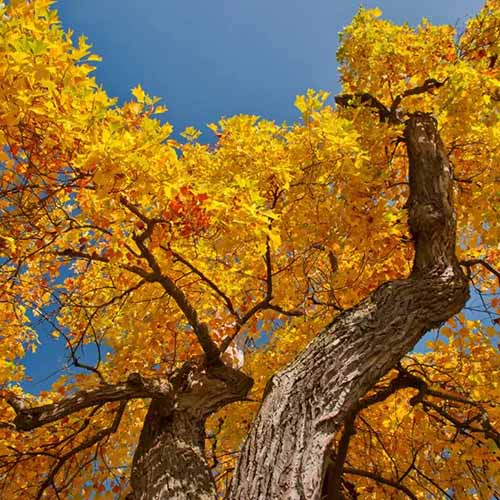
These trees have a pyramid shape when young and mature to an oval form. The palmate or hand-like leaves also resemble tulips. Fall foliage is golden.
Tulip poplars are available from Nature Hills Nursery.
Get tips on caring for tulip poplars here.
The Backbone of a Vibrant Fall Display
With 21 landscape trees that offer exciting yellow hues, it’s time to pick your favorites and add them to your garden planner.
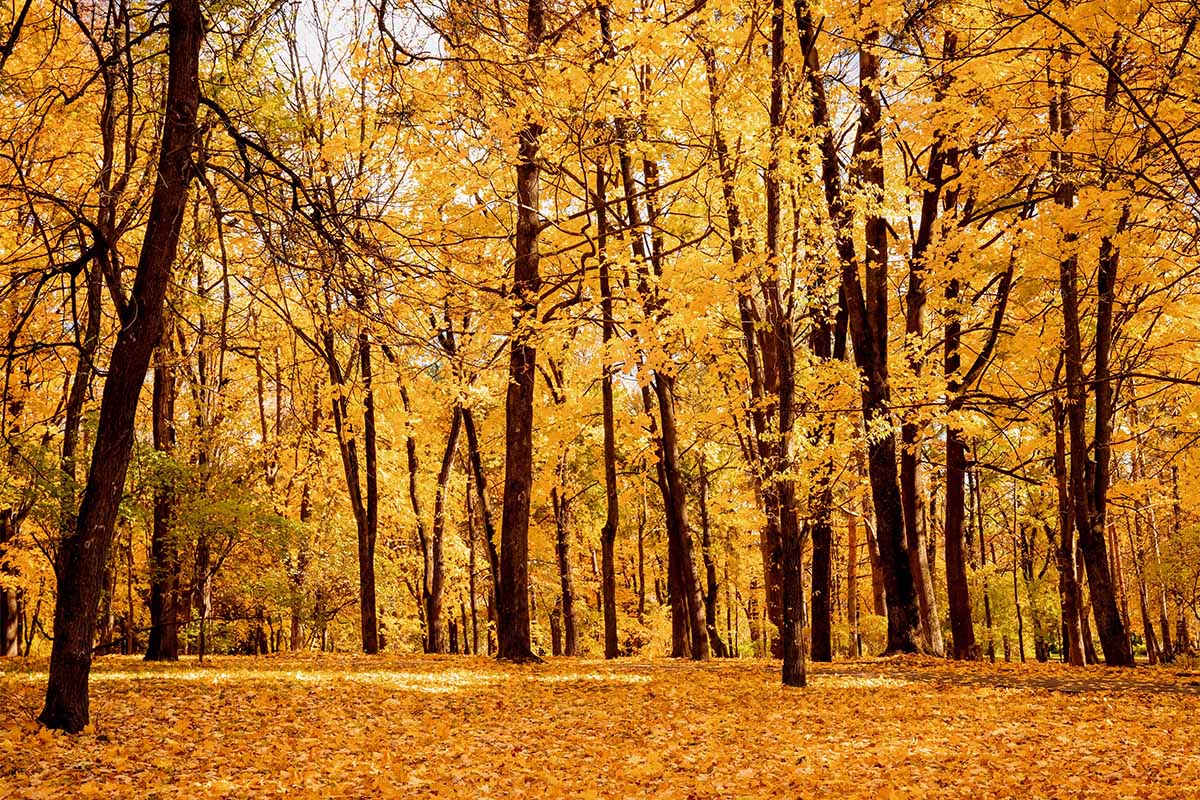
When cool, crisp days arrive, you’ll be glad you chose landscape trees with yellow fall foliage.
Yellow hues are the backbone of a late-season display punctuated by oranges, russets, and scarlets.
What yellow-leafed trees grow in your outdoor living space? Tell us about them in the comments section below.
And for more information about growing trees in your landscape, add these guides to your reading list next:

