


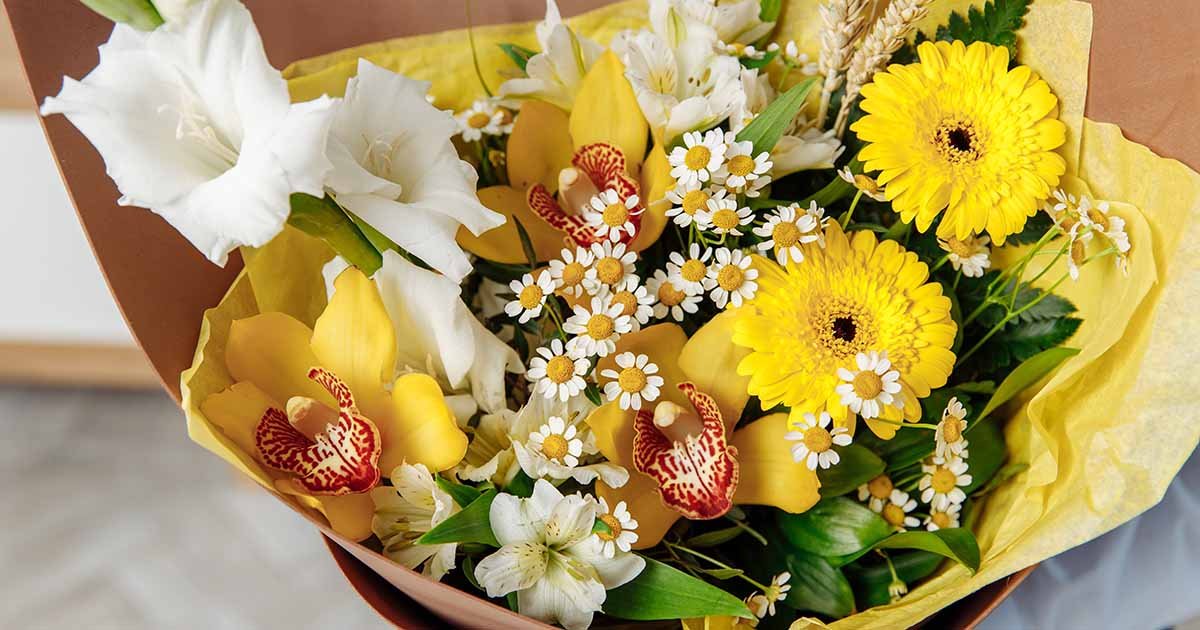
4. Trim Daily
Cut foliage holds up well when the stems get a fresh cut every day.
For vase arrangements, simply lift out the entire bouquet, and hold the stem ends under running tap water.
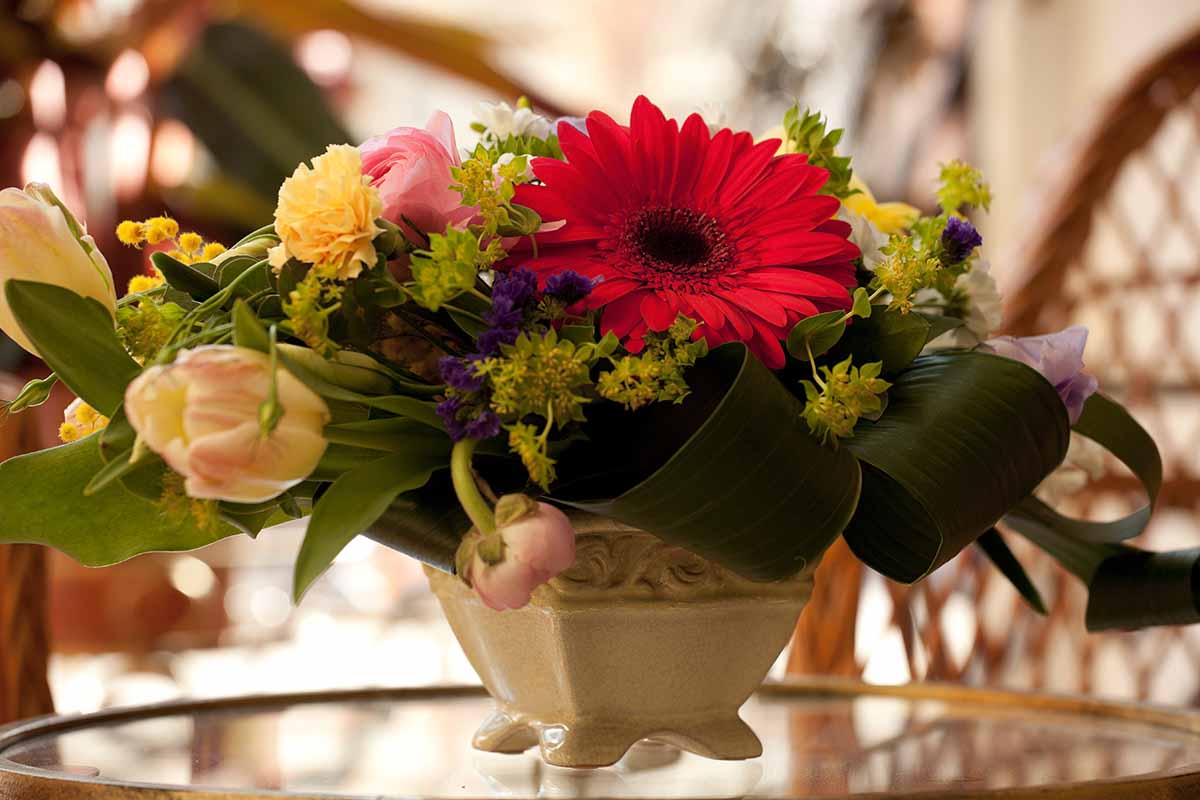
Using a sharp pair of pruners, snip off half an inch from the bottom of each stem. Hold your shears at a 45-degree angle to maximize the surface area for the stem to draw liquid.
Intricate container arrangements in florist’s foam are best left intact.
You may be able to refresh simpler ones by carefully removing individual stems, trimming as above, and gently pushing each stem back into the foam brick.
5. Change Water Every Day
Vases should be rinsed with mild detergent and water, taking care to wipe away any residue that may harbor bacteria.
If you have a packet of flower food, pour it into the vase and add enough tap water to dissolve it.
Return your trimmed bouquet to the clean vase. Add water to a height just beneath the first leaves.
For a container with florist’s foam, carefully tip it to pour out the old water. If the inside is accessible, wipe around it with a moist paper towel.
Use a watering can to dissolve a packet of flower food in tap water, and add this to the container until the florist’s foam is thoroughly saturated.

Packets of Chrysal flower food are available on Amazon.
Though the contents of these packets seem to be somewhat of an industry secret, they typically contain a combination of citric acid, sucrose, and powdered bleach.
Learn how to make your own cut flower food here.
6. Deadhead and Remove Decaying Material
Different varieties of cut foliage age at different rates. Watch for signs of deterioration, and address them during your daily trim and water change.
Deadhead blossoms that are dropping petals, and snip off leaves that are turning yellow or withering. Carefully pinch off floppy outer rose petals to reveal tighter inner folds.
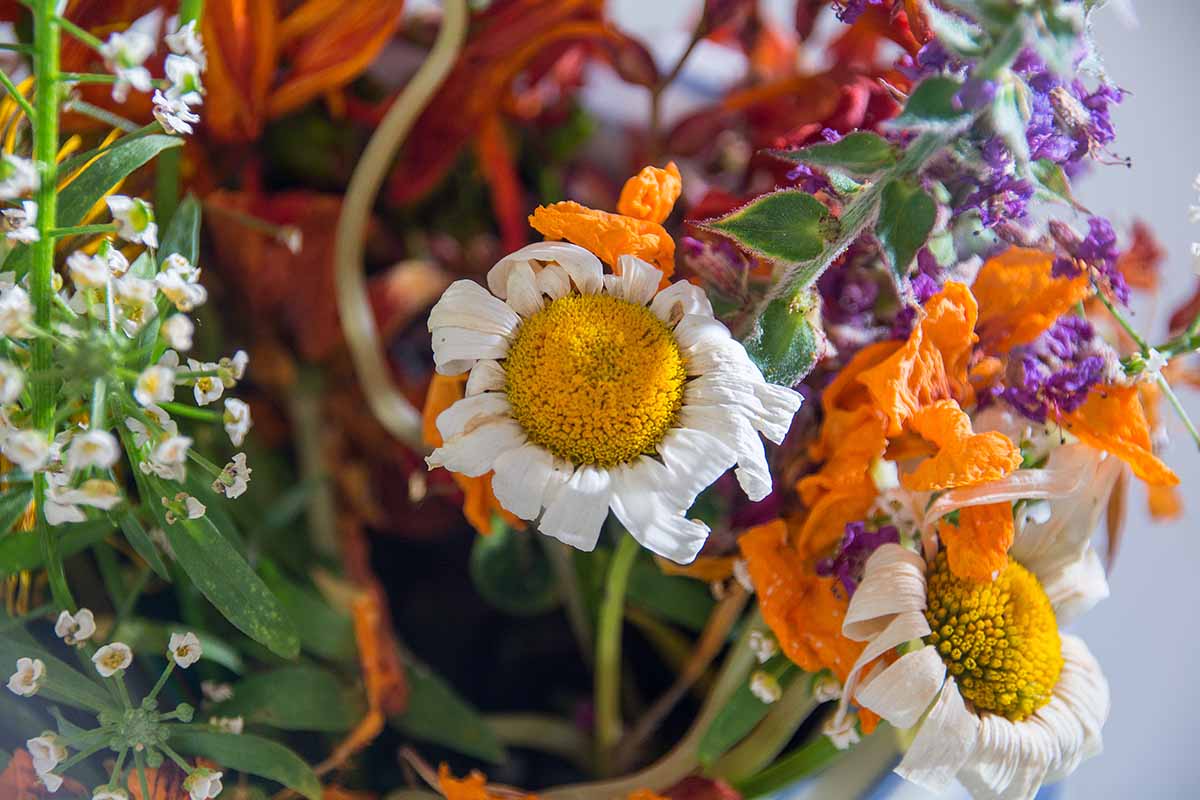
If the majority of a bouquet is ready to be tossed, entire stems may be removed from a vase arrangement, and the healthy remainder transferred to a smaller vessel.
For containers with florist’s foam, the removal of entire stems may leave large gaps.
Replace these with new material, like the oh-so-versatile evergreens we often take for granted in our yards.
Give their stems a 45-degree angle cut under running tap water before insertion.
7. Spritz Foliage
Cumbersome floral and foliage pieces that are not in vases or containers also need some moisture to remain attractive.
I often use a water-filled spritz bottle to moisten holiday evergreen swags, wreaths, garlands, and orchid garnishes.

There’s a commercial product you may find useful called Crowning Glory, and it’s available on Amazon.
It not only hydrates, but retards decay. However, it is not to be used on floral material that will be placed on or near food.
Fabulous Flowers for Every Day
Try these seven tips the next time you bring a gorgeous bunch of blossoms into your home, and you can feel good about making them last.
I love when the doorbell rings, two hands hold out a stunning arrangement, and I ask, “For me?” I know you do, too.
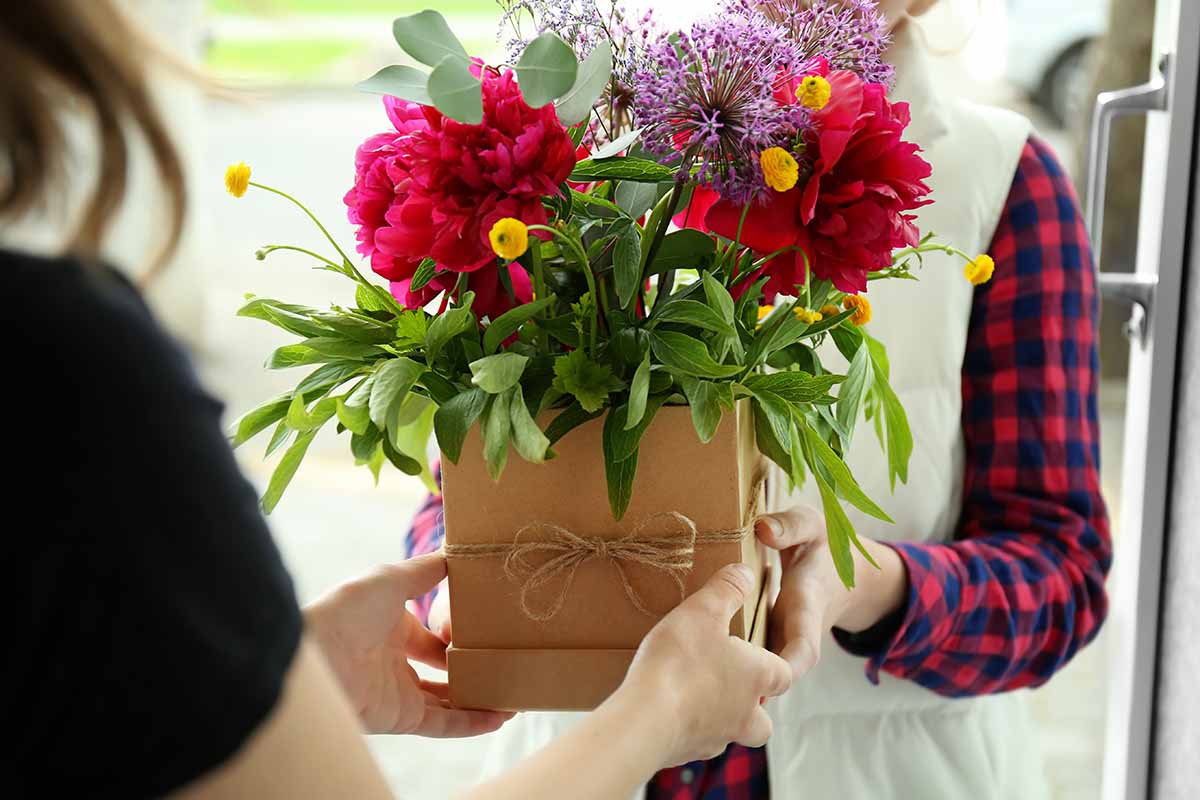
Why not make fresh flowers a regular part of your indoor decor?
It’s a gorgeous option that’s fun to explore whether you’re decorating for a holiday, or looking to add a touch of color to the dinner table.
An inexpensive way to do this is by growing them yourself. If you’re interested, check out our article, “Grow Your Own Cut Flower Garden,” for tips on getting started.
Do you have any additional tips to share? Tell us in the comments section below.
And for more information about caring for flowers, add these guides to your reading list next:

