


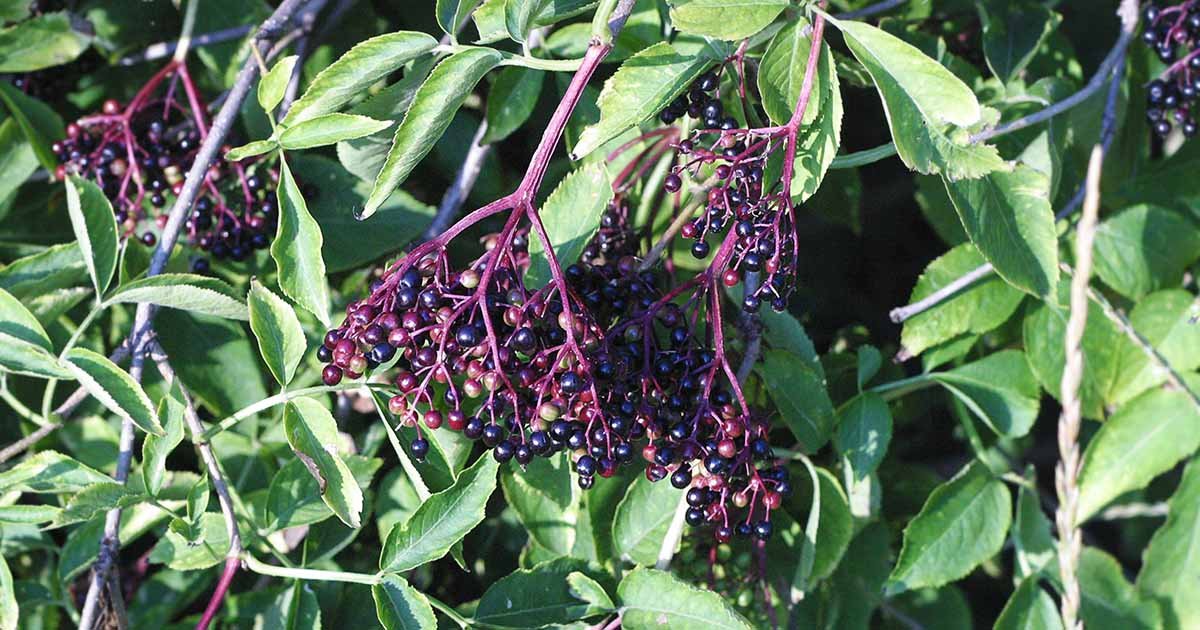
From the second year onward, fertilize in early spring with a balanced 10-10-10 (NPK) fertilizer according to packet instructions.
Regular fertilization is especially important for plants grown in containers, as the roots are unable to spread in search of nutrients, and regular watering will flush them from the soil.
Learn more about how to fertilize your elderberry here.
In the winter, protect the roots from freezing temperatures by adding a two-inch layer of mulch to the top of the soil, and wrap the container in blankets or burlap.
Many types of elderberries grow best in Zones 3 to 8, all of which experience winter freezing.
Since container-grown plant roots are more exposed to the elements, they can use a little extra protection.
Cultivars to Select
There are four species of elderberry that you’ll commonly find in container gardens:
- S.nigra (Black)
- S. racemosa (Red)
- S. mexicana or S. nigra var. caerulea (Mexican or blue)
- S. canadensis (North American native)
For more choices, check out our favorite elderberry varieties. Here are a few cultivars suitable for growing in containers:
Black Beauty®
First introduced to the US from Europe in 2004 by Proven Winners, Black Beauty® is a cultivar of S. nigra.
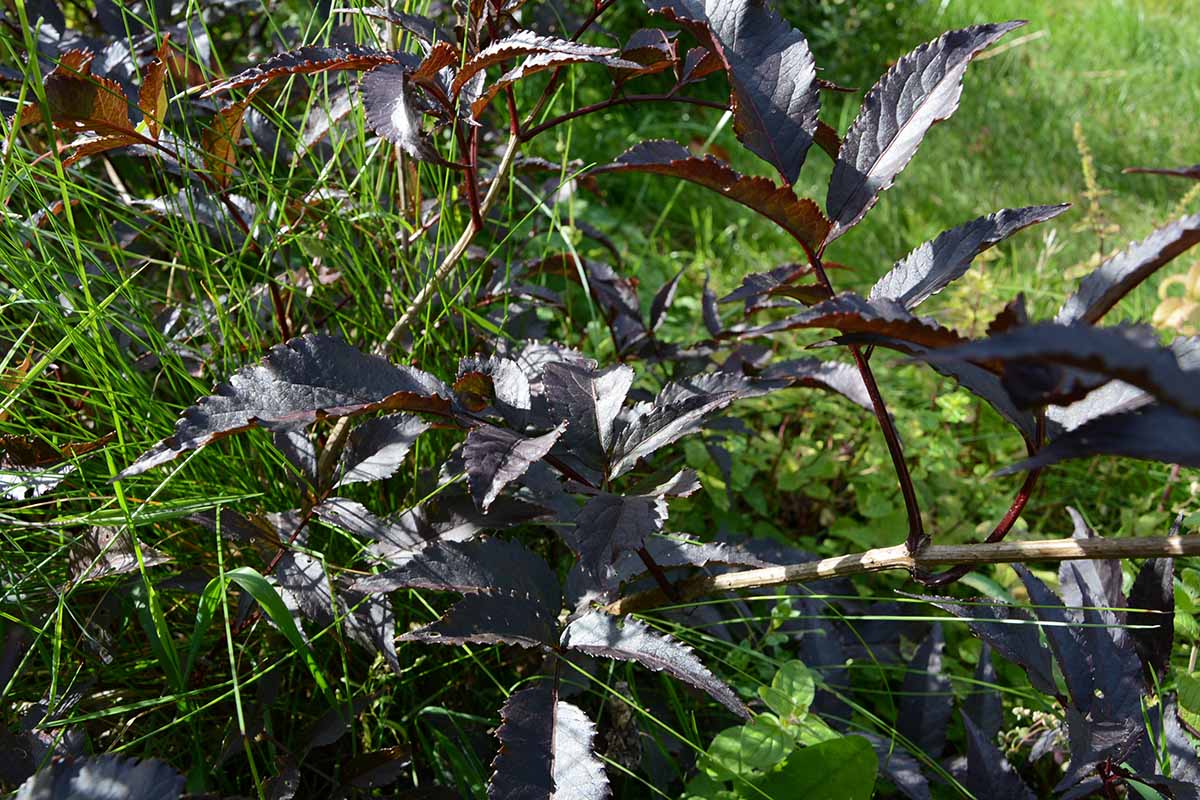
It has lance-shaped, dark purple leaves and delicate pink blossoms with a sweet, floral-lemony fragrance.
Suitable for Zones 4 to 7, it grows in a compact form, with a mature height of six feet. Prune regularly after the third year to maintain a short, bushy shrub.
In the fall, dark berries appear – provided you’ve got another variety, such as Black Lace® (described below) nearby.
Black Lace®
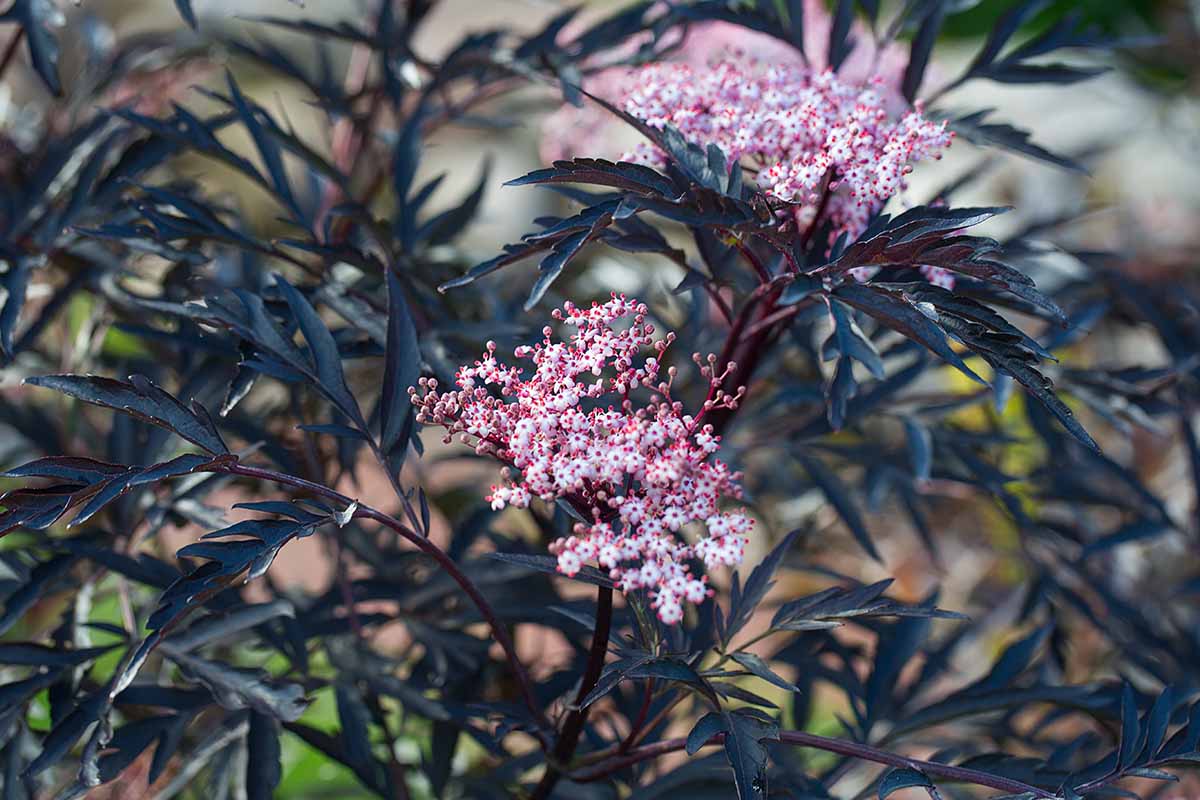
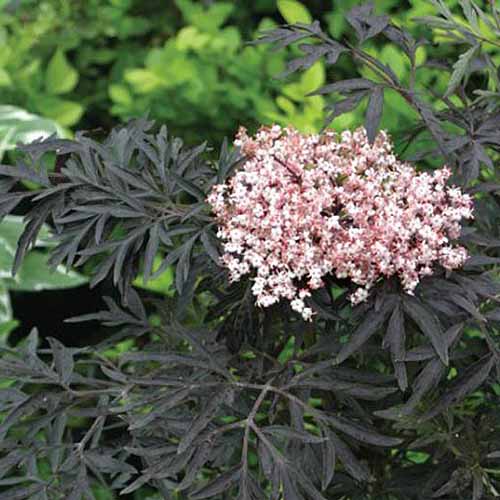
S. nigra Black Lace® is a real beauty, with delicate, dark reddish-purple lacy leaves and light pink blooms.
This cultivar is suited to gardens in Zones 4 to 7, and makes a perfect cross-pollinating companion for Black Beauty®.
S. nigra is often called the European elderberry. This particular cultivar was developed in England in the 1980s, and was introduced to the US market by Proven Winners.
If allowed to, it’ll top out at eight feet tall, but it responds well to pruning if you want to maintain a compact, bushy form.
The dark foliage, especially when contrasted with the delicate pink flowers in springtime, makes a bold statement on your patio or as a feature planting.
Glossy black berries will ripen in the fall, provided there is another variety with a similar bloom time and of the same species located close by for cross-pollination.
You can find 18- to 24-month-old plants in quart-sized or #3 containers at Nature Hills Nursery.
Lemony Lace®
S. racemosa Lemony Lace® is a compact, dwarf cultivar that has bright yellow-green lacy foliage, and produces delicate white blooms in springtime.
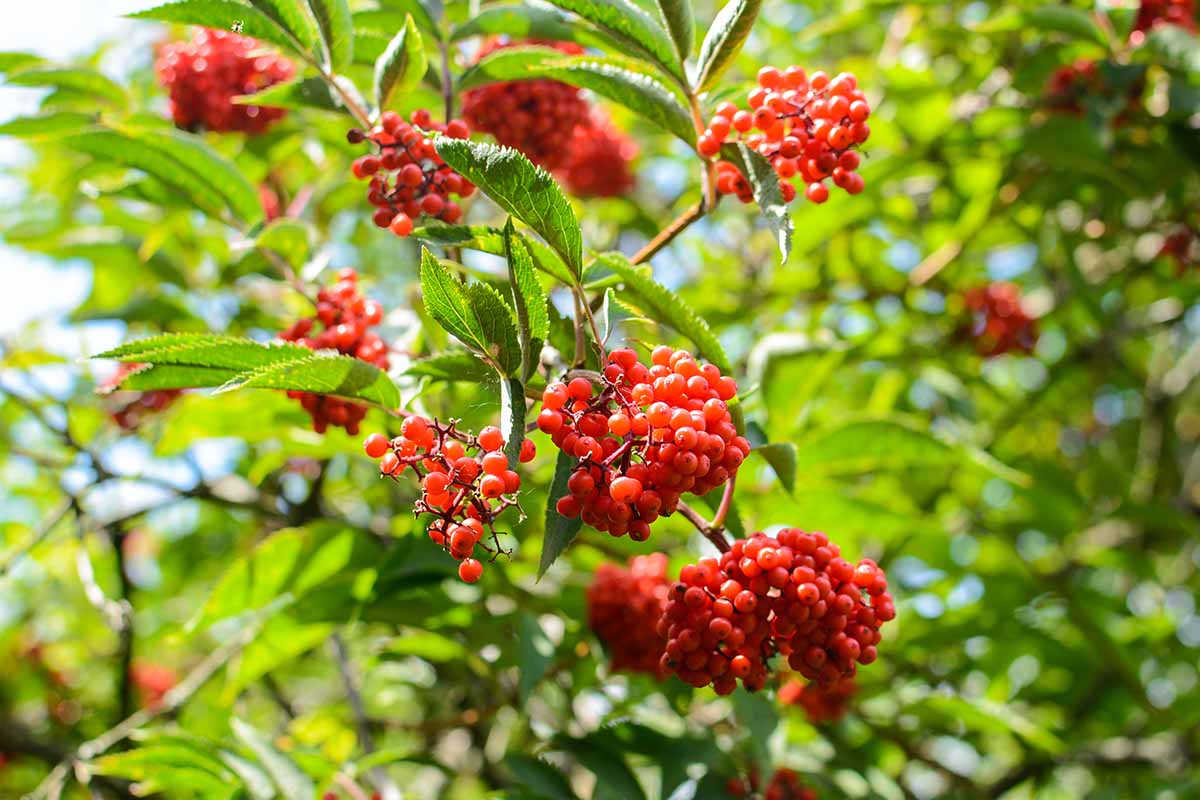
With its more upright growth habit, Lemony Lace® is perfect for smaller spaces, with a mature height of just three to four feet tall.
The ornamental red berries are not edible, but will provide a source of autumn sustenance for local songbirds.
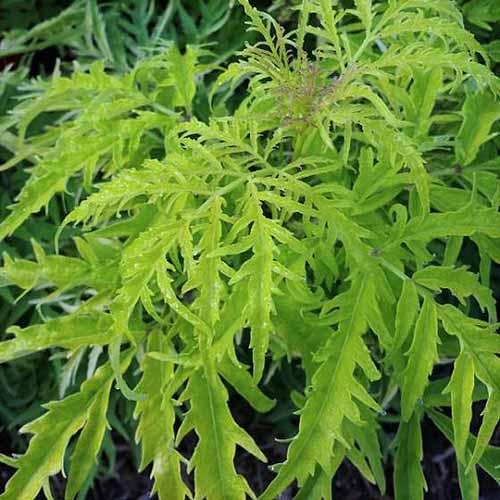
Suitable for growers in Zones 3 to 7, you can find plants available in #2 or #3 containers at Nature Hills Nursery.
Tapiro
Tapiro is the common name of the Mexican species, S. mexicana. It is native to western North America, from Oregon through Mexico.
It has green foliage, and delicate yellow or cream-colored flowers give way to clusters of light purple or blue berries in the fall.

