Hi GPODers!
I don’t think you could find more than a few Garden Photo of the Day posts in recent years that don’t have a comment from Sue Hughes (@simplesue). She always has some kind words and/or a bit of encouragement to offer every gardener that contributes. In a world where negativity usually gets the most attention, she often inspires me to spread a little more joy and light. Back in 2019 we had the pleasure of featuring the first garden Sue and her partner Marshall Goodwin designed in Pittsburgh, Pennsylvania (Zone 6b) (Check that submission out here: You Never Forget Your First Garden), but that was already after they had moved and started a new garden in the same city. Today, after 14 years of work, we finally get to see the new garden that Sue and Marshall created. I hope you can feel inspired by this gorgeous space and Sue’s kindhearted spirit, and decide to leave some positive comments for Sue and Marshall.
We are Sue Hughes & Marshall Goodwin, and we moved 14 years ago and were desperate for a garden at the new house. So we packed up what we could salvage of the little garden we created in our youth, which was on GPOD, and we started over. We moved to a small historic neighborhood called Schenley Farms, in Oakland, which is a very busy section of Pittsburgh, Pennsylvania in growing zone 6b.
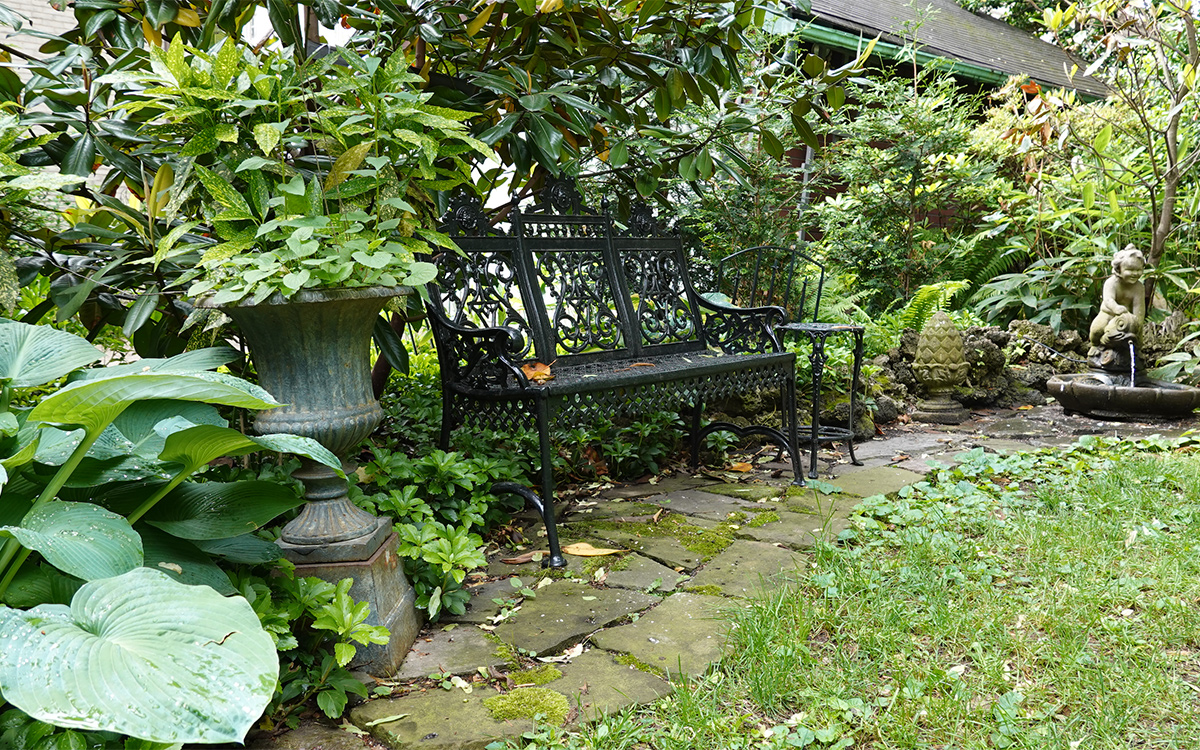
This iron garden bench, (attributed to John McLean, New York, c1880), sat in an old garden across the street since at least the early 1960s, and was given to us by the new neighbors who preferred contemporary garden design. It took a lot of work to restore it, and it inspired us to expand the stone border into a fuller and more graceful shape.
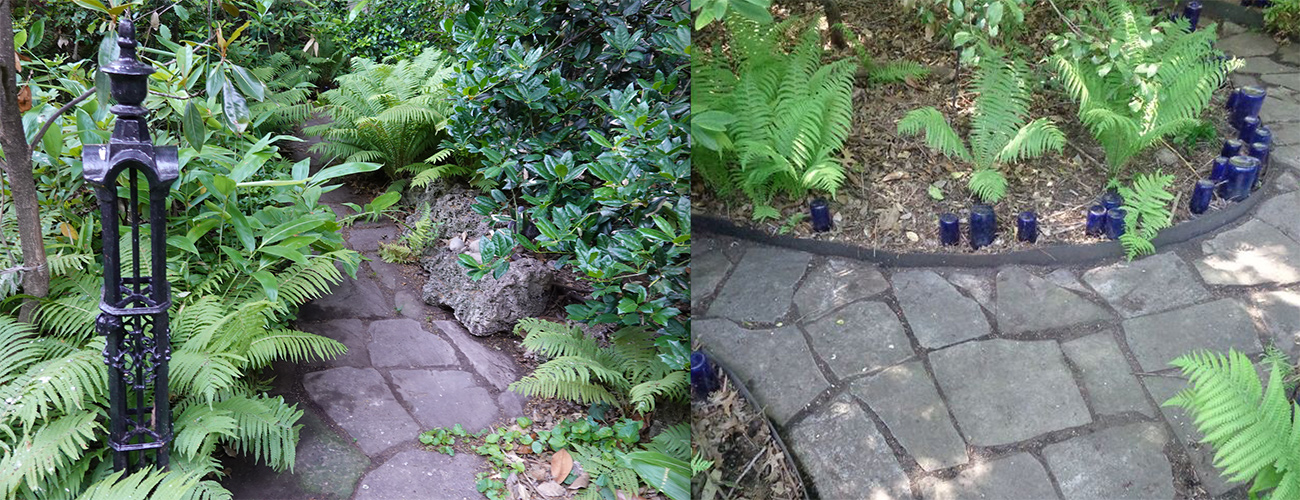 The garden path leads to the back of the garden and to the bird feeders. It’s lined with the same light catching cobalt blue bottles from our last garden. The plants in this area that survive the deer and deep shade: Ostrich ferns (Matteuccia struthiopteris, Zones 3–7), mayapples (Podophyllum peltatum, Zones 3–8), spotted laurels (Aucuba japonica, Zones 6–9), American holly (Ilex opaca, Zones 5–9), a very shade tolerant low growing bamboo (Sasa palmata, Zones 6–10), and rhododendrons.
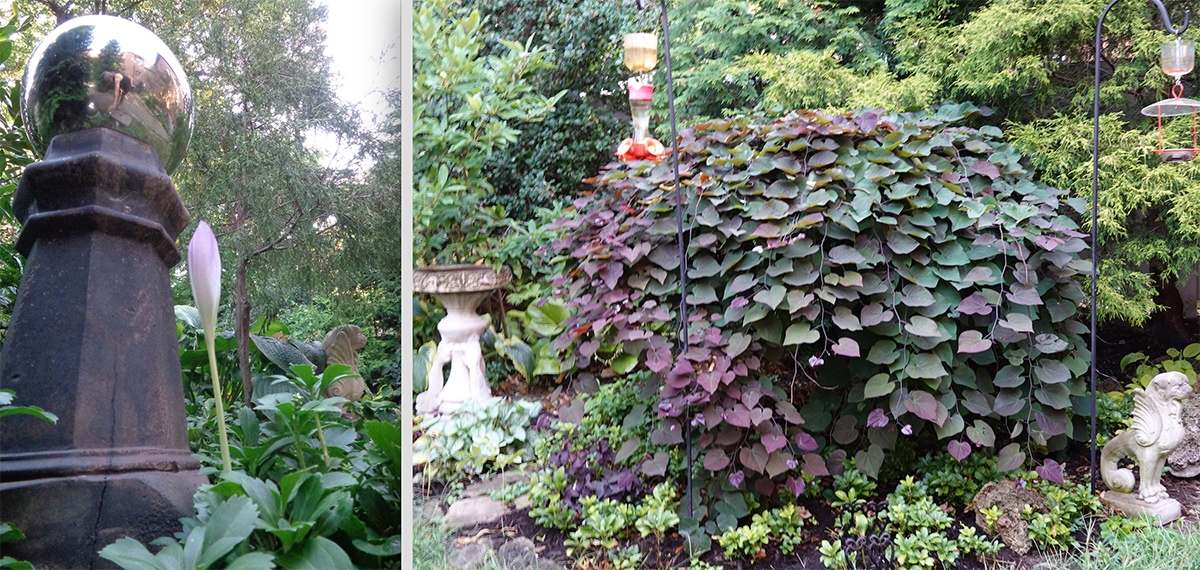 A giant autumn crocus (Colchicum giganteum, Zones 4–8) and a stainless steel gazing ball on an old chimney pot. Due to wildlife we can’t use glass gazing balls, they get knocked off and broken. We even rigged the stainless steel balls so they’re weighted and can’t be knocked off. ‘Ruby Falls’ weeping redbud (Cercis canadensis ‘Ruby Falls’, Zones 5–9) had a good year in 2025, but this year the winter was harsh, and in the spring the deer ate some of it, but it’s making a come back.
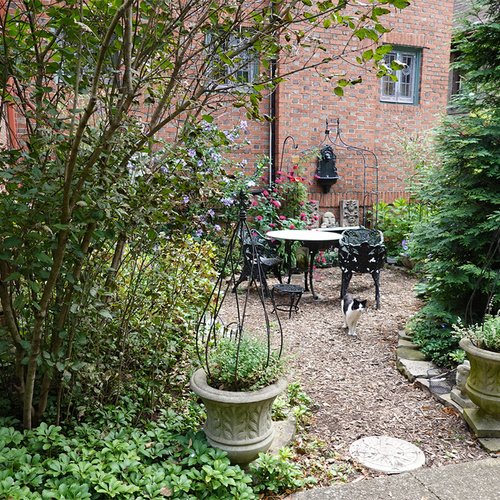
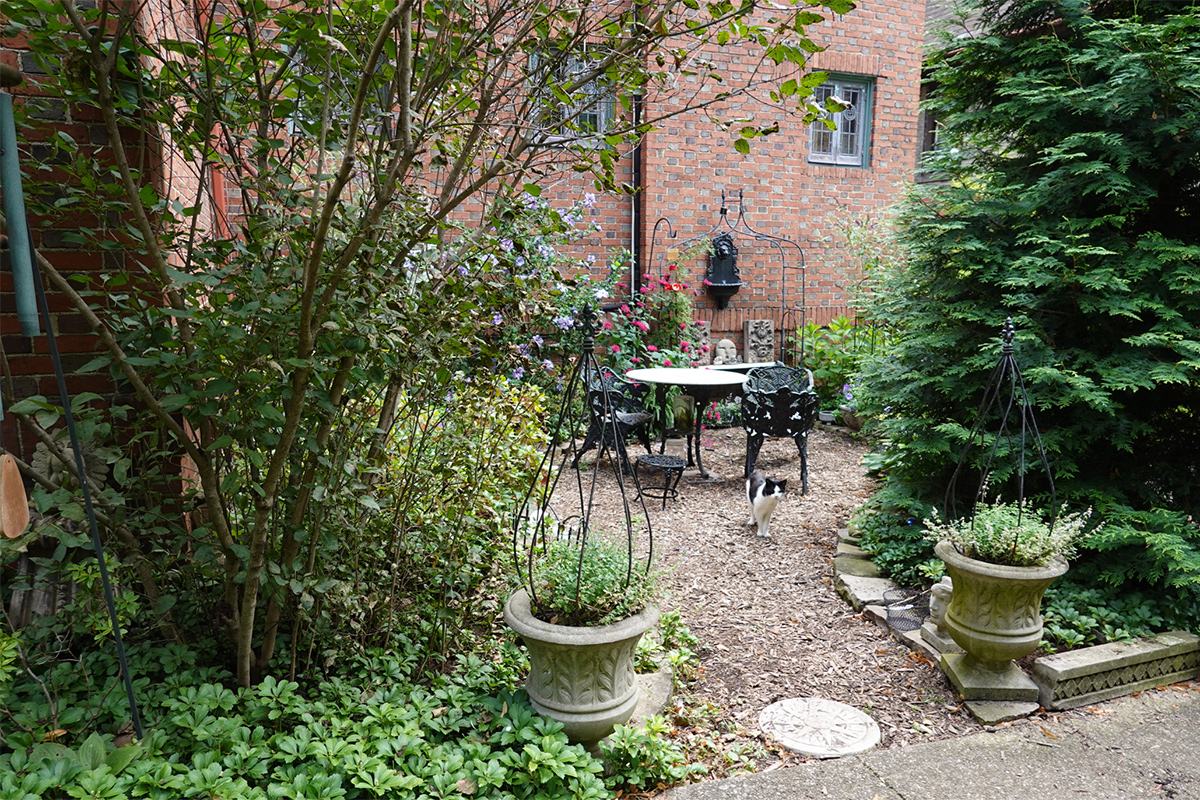 The sitting area is across from the wild woodsy side of the garden. The lilac on the left was started from a small sucker from my next-door neighbor’s beautiful old lilac. ‘Cat’s Pajamas’ catmint (Nepeta ‘Cat’s Pajamas’, Zones 3–8) in entrance pots. Pots can become too cold, to wet or too dry in winter and the nepeta survives just fine when other perennials didn’t.
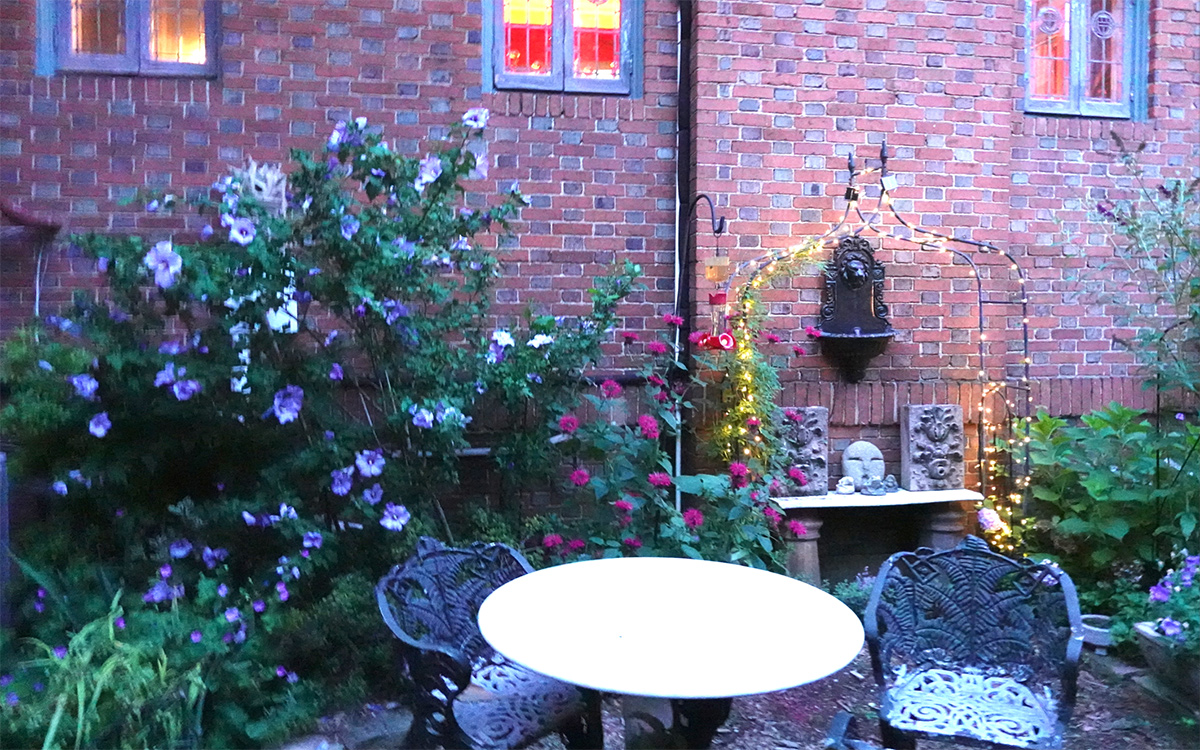 Twilight in the sitting area is a magical time of day, the heat of the day cools down, the hummingbirds come for their last sips of nectar before night fall, cardinals come for a few last seeds as the falcons that nest at the end of our street have so far never shown up that late in the day. (Check out this short video that talks about the falcons that visit Sue’s garden from their nest at the University of Pittsburgh: Our Cathedral residents got some new jewelry!)
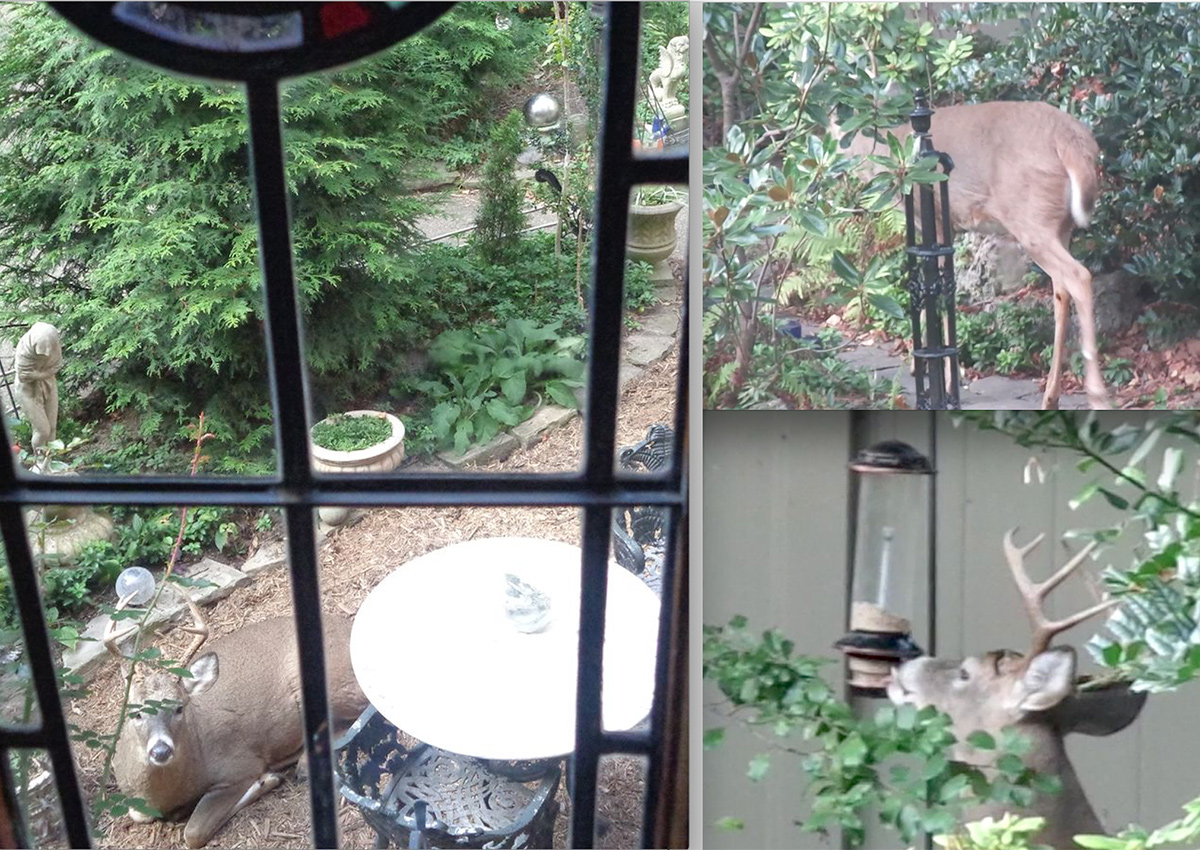 It seems the deer didn’t appear in our neighborhood until a couple of years ago when the city unfortunately began to allow deer hunting in Schenley Park, as if they sensed danger in the park and left in search of safety and plants to eat. Also as the University of Pittsburgh continues to grow and build on a once wooded hillside, more deer were displaced.
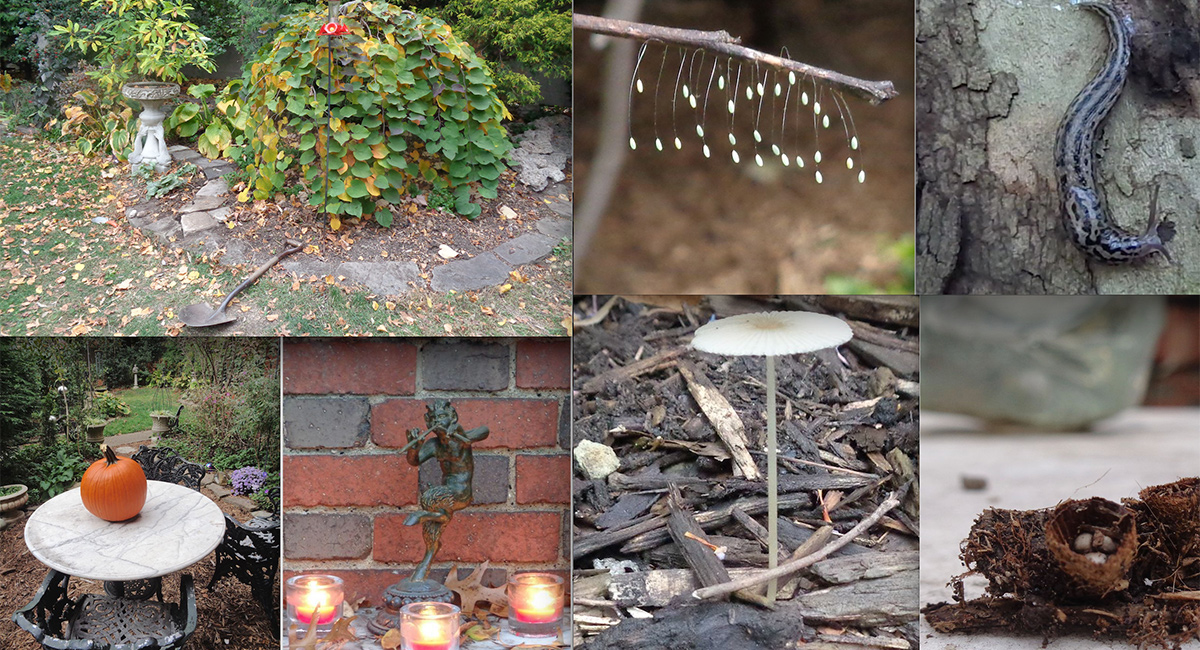 A photo collage of the garden in autumn, and tiny woodland details: The delicate eggs of the green lacewing a beneficial insect. A leopard slug (Limax maximus) that are beneficial, not destructive to the garden, they don’t eat plants and are considered detritivores and carnivores and cleanup debris and are said to actually eat the grey slug that eat garden plants. A delicate little fungus called pleated inkcap (Parasola plicatilis) and a tiny little bird’s nest fungus (Nidulariaceae).
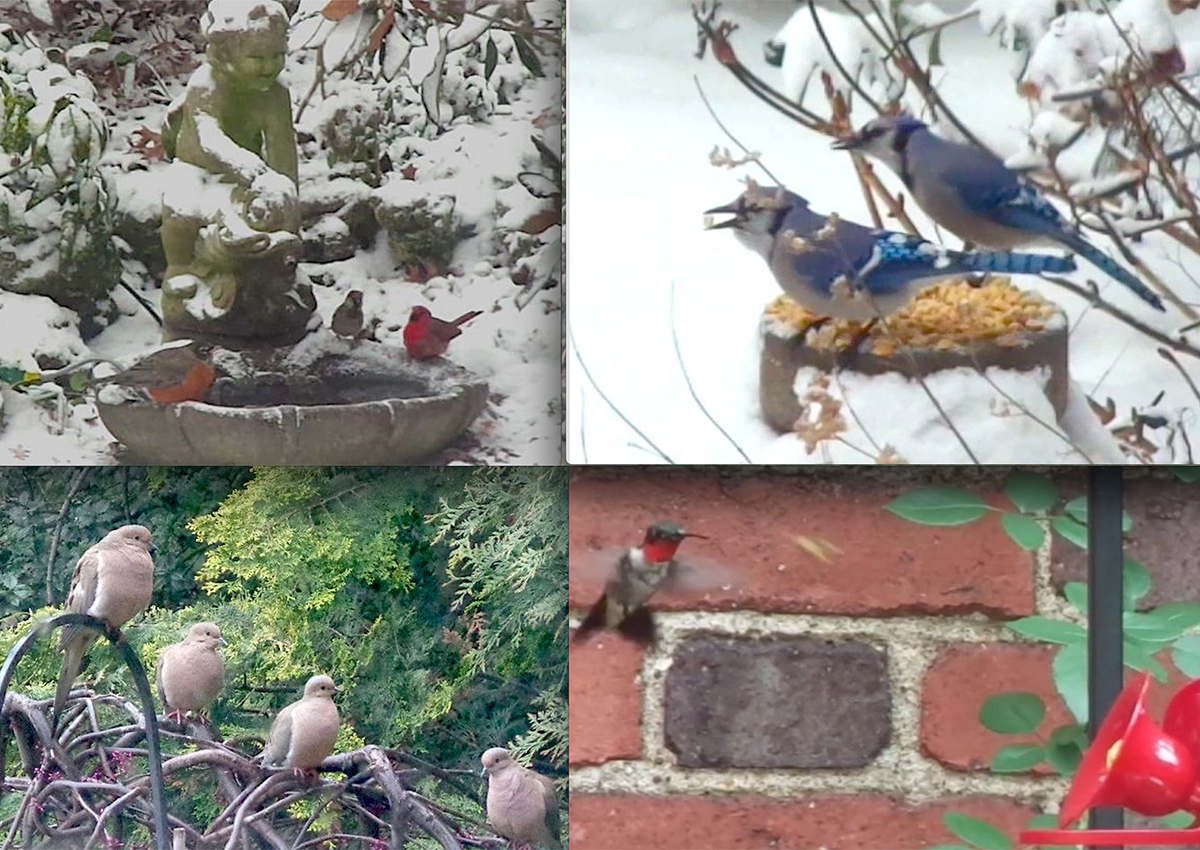 Our little woodland garden has birds all year round coming for food and water. A birdbath heater is especially important to wildlife when winters are dry or water has frozen, and having a source of water ground level allows all wildlife access to water.
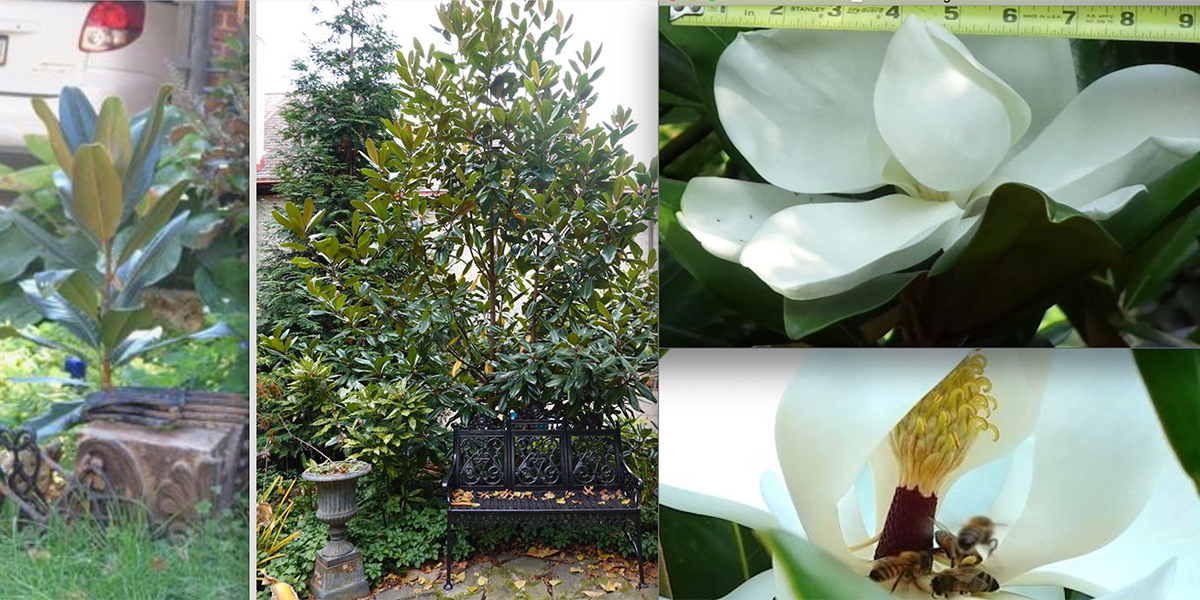 I love this tree, I rooted it from a small twig from an unknown type of Southern magnolia (Magnolia grandiflora, Zones 7–9). It grew super fast. It doesn’t lose leaves in winter and is much hardier than the two other ‘Bracken’s Brown Beauty’ magnolia (Magnolia grandiflora ‘Bracken’s Brown Beauty’, Zones 5–9) that I bought, which drop some of their leaves if it’s a harsh winter.. The bees alway seem drunk on the nectar of the huge fragrant flowers, sometimes they just roll around inside the flowers.
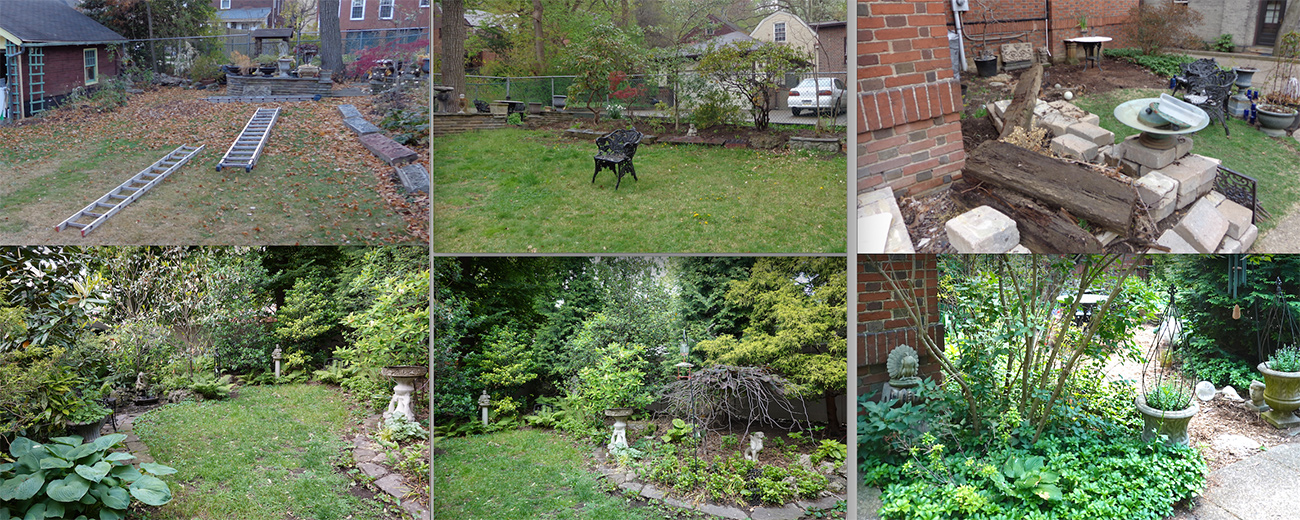 Last but not least—the before & after photos. Who would have thought there were old railroad ties buried under the ground when we began to level the hump in the sitting area, or that the boring cement block planter was almost impossible to take apart due to cement glue and filled with more gravel than soil.
Thank you so much for sharing this exciting garden update with us, Sue and Marshall! I’m happy to hear you have a glorious garden oasis again and I’m impressed with the lively landscape you have cultivated in 14 years.
What garden changes have you made in recent years? Did you move to a brand new space, like Sue and Marshall, or did you make some additions and upgrades this spring? Let us know in the comments, or consider sharing photos of your garden’s evolution with the blog. Follow the directions below to submit your photos to Garden Photo of the Day!
We want to see YOUR garden!
Have photos to share? We’d love to see your garden, a particular collection of plants you love, or a wonderful garden you had the chance to visit!
To submit, fill out the Garden Photo of the Day Submission Form.
You can also send 5–10 photos to [email protected] along with some information about the plants in the pictures and where you took the photos. We’d love to hear where you are located, how long you’ve been gardening, successes you are proud of, failures you learned from, hopes for the future, favorite plants, or funny stories from your garden.
Do you receive the GPOD by email yet? Sign up here
Fine Gardening Recommended Products
ARS Telescoping Long Reach Pruner
Fine Gardening receives a commission for items purchased through links on this site, including Amazon Associates and other affiliate advertising programs.
Telescopes from 4 to 7′. Cut and Hold (160) Blades. Drop forged blades for unsurpassed long lasting sharpness. Lightweight, 2.3 lbs., for continued use. Perfectly balanced for easy pruning.
Alpine Corporation 28″ Tall Outdoor Birdbath with Scrollwork Decoration Yard Statue
Fine Gardening receives a commission for items purchased through links on this site, including Amazon Associates and other affiliate advertising programs.
STUNNING BIRDBATH: Quality birdbath is sure to attract feathered friends and create a charismatic ambiance for your garden, patio, deck, yard, or other outdoor space. SHALLOW SHAPE: Shallow and wide bowl assures that multiple small birds can drink and bathe safely at the same time
BEAUTIFUL DESIGN: Luxurious and antique styling adds a touch of elegance to your garden or yard. DURABLE CONSTRUCTION: Polypropylene material resists rust and damage from the elements while the sturdy base prevents the birdbath from tipping over. IDEAL SIZE: Birdbath measures 20″ L x 20″W x 28″H, the perfect size for your yard, and includes a one-year manufacturer’s warranty from date of purchase.
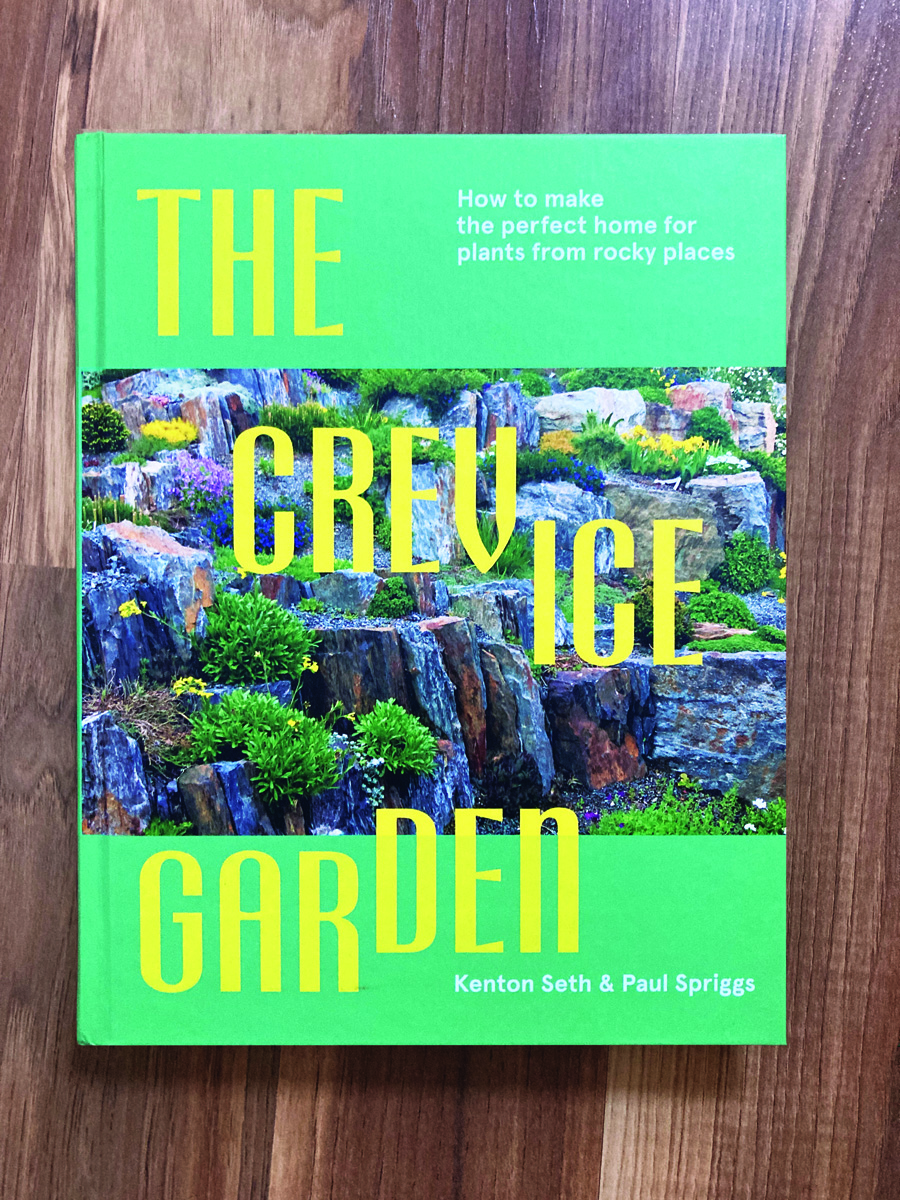
The Crevice Garden: How to make the perfect home for plants from rocky places
Fine Gardening receives a commission for items purchased through links on this site, including Amazon Associates and other affiliate advertising programs.
A crevice garden replicates the environmental conditions of mountain tops, deserts, coastlines, and other exposed or rocky places on earth. These striking garden features provide perfect conditions for the plants native to these far-off places, bringing the cultivation of these precious gems within everybody’s reach.