


I’m not exaggerating when I say that light changed my life. This often overlooked wellness tool seems so simple, but it can have really impressive benefits. I’ve talked a lot about sunlight, blue light, red light therapy, and more over the years. Today, I’m putting everything into one easy place for you to learn all about the benefits of light and how it can positively impact your life too.
There’s some overlap in the following sections, but I’ve tried to separate the info into a few different categories. Many of these articles and podcast episodes are purely about light for health, but some of them include other strategies alongside light exposure.
Healthy lighting is just one tool in the toolbox. And while it can have some pretty drastic effects, other healthy habits like stress reduction, sleep, hydration, etc. are still important. Though I would argue that healthy light exposure boosts the effects of all of these.
The Benefits of Sunlight
Overall sunlight is a powerful healing tool. When it hits our skin (and our eyes!) it triggers our body to produce the hormone vitamin D. It helps strengthen the immune system, bone health, boost mood, balance hormones, and so much more.
Yet many of us are cooped up indoors the majority of the time, under flickering artificial lighting. Experts estimate children spend an average of 4-7 minutes outside. A recent poll showed preschoolers only go out to play once a week, or less on average.
Adults aren’t faring much better. Most adults report they spend less than an hour outside per day. And for over 18% of us it’s less than 15 minutes a day! Prioritizing getting outside into the light at various times of the day can make a huge difference in health. Here are some more compelling reasons to step outside and into the light!
Morning Light Benefits
Morning light has its own health benefits and deserves its own section in this article. When I was recovering from Hashimoto’s I’d set my alarm, head outside at sunrise, and fall back asleep in the natural light. Hopefully you have more energy than I did back then, but even if you don’t, morning sunlight can help! Morning light is unique because it’s a great source of red light and naturally helps balance circadian rhythms, cortisol levels, and more. It’s become a non-negotiable part of my morning routine!
Cortisol and Circadian Alignment
Sunlight exposure, especially watching the sunrise and sunset, is key for circadian alignment. According to the Cleveland Clinic, the circadian rhythm is our body’s natural 24-hour clock. It’s a system that regulates our sleep-wake cycle, hormones, digestion, stress levels, and more.
Light also plays a role in cortisol levels, aka our stress hormone. We actually want cortisol, we just want the right amounts at the right time. When we’re exposed to blue light at the wrong time of day and other stressors though, it can throw off our cortisol rhythms. Here’s how to use light to improve both cortisol and circadian rhythms.
Sunscreen and Sunlight’s Role
I’m not the biggest fan of sunscreen most of the time. Contrary to most conventional dermatologists and doctors, I think we need more sun, not less! That said, burning and skin damage is never a good thing.
Here’s a balanced approach that covers when sunscreen can be helpful and healthy kinds to use. Plus other ways to protect skin when outside and benefits of sunbathing.
Red Light Therapy
Morning and evening sunlight (at sunrise and sunset) offer free red light. Then there are red light therapy devices for a more targeted approach. You’ll find red light face masks, red light blankets and panels, and even red light toothbrushes for gum health!
Here are my thoughts on red light therapy, its benefits, and how to get it from the best sources.
Healthy Home Lighting
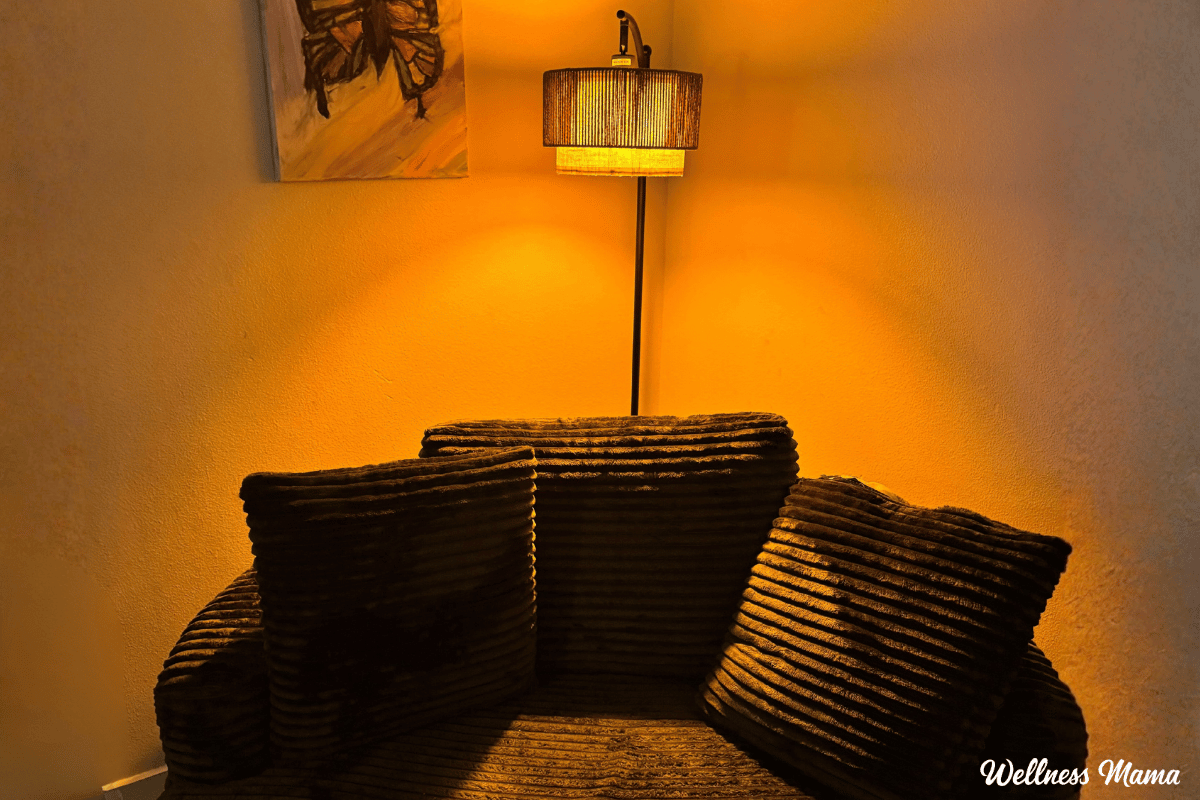
Many of us don’t think about indoor lighting when it comes to light’s benefits. However, the wrong indoor lighting at the wrong time of day can really sabotage our health efforts. LED lights flicker and cause stress to our nervous system, often too fast for our eyes to notice, yet our brain does.
Blue light at night from screens and overhead lighting tells our brain that it’s daytime and inhibits us from winding down for sleep. Here are some healthier swaps and solutions and what I do when it comes to indoor lighting.
More Podcast Episodes On Light’s Benefits
I’ve had the opportunity to chat with some amazing experts over the years on the Wellness Mama podcast. Some of my favorite episodes have been on the benefits of sunlight and how to use different kinds of light for health. I love talking about it so much that I’ve also done several solo podcast episodes on the topic.
You’ll find episodes on how to optimize sunlight exposure, its impact on mitochondria and energy, balancing hormones, and more.
- 429: Andy Mant on How Light Can Heal (or Damage) Your Health & Hormones
- 609: Dr. Jack Kruse on Junk Light, 5G, Optimizing Sunlight and Longevity
- 949: Light Masterclass: How to Transform Light From Health Sabotaging to Your Greatest Superpower With Roudy Nassif
- 822: Light, Mitochondria, DNA: Sunshine Is the Only Way With Dr. Courtney Hunt
- Episode 1000: What I’ve Learned, Changed, and Still Believe
- 627: Jim Stephenson on Vitamin D Deficiency: Deconstructing the Deception & Stop Fearing the Sun
- 1009: Masterclass: Mitochondria, Light, Phospholipids and Cellular Health With Justine Stenger
- 999: Light and Leptin: Understanding These For Hormones, Fertility, and Health With Sarah Kleiner
- 691: The 80/20 of Health: Light, Protein, Nutrition and Hormones With Dr. Leland Stillman
- 301: How to Use Light to Drastically Improve Health With Matt Maruca
- 245: Ari Whitten on Fighting Fatigue with Sauna, Sun, & Sweating
Do you prioritize getting sunlight or avoiding certain kinds of light? Have you noticed any positive difference? Leave a comment and share below!

