


Aerated
As mentioned, just as the quality of the compost you use is important, so is the quality of your water.
Chlorine, heavy metals, or contaminants will ruin your tea. If you’re not using rainwater, make sure you filter or aerate your water to remove chemicals before use.
To make a basic tea in a bucket, fill your bucket halfway with water. A five-gallon bucket works well, but feel free to use whatever you have on hand.
Add compost until there is just an inch or two of space left at the top. Stir everything together until well combined.
You can also use a giant tea bag to hold the compost. This makes the process easier since you won’t have to filter out the solids when it’s ready to use.
TeaLAB makes a nine-by-14-inch reusable bag, which is the right size for a five-gallon bucket. Grab one at Amazon.
Stir the mixture two or three times a day. This incorporates oxygen and prevents the compost from compacting in the water.
Optionally, you can place aquarium air stones attached to a pump at the bottom of the bucket to aerate the mix so you don’t need to stir it.
You don’t need anything fancy. A basic air pump and bubbler like this one from AquaMiracle on Amazon will do.
If you are using a bubbler, it’s a good idea to add molasses to feed the growing organisms.
The bubbling generates lots of microbial growth, and the organisms in the tea might run out of food. Use one tablespoon of molasses in a five-gallon bucket.
Tea made using a bubbler should be ready to use in about three or four days. The stirring method takes longer, up to two weeks.
If, at any point, the tea starts to smell foul, the oxygen has likely been depleted and the materials are rotting.
Check your mixture daily for rotten egg, vinegary, sour, or otherwise “off” odors. If this occurs, toss it and start over.
Foam, on the other hand, is a good thing. It means proteins, amino acids, and carbohydrates are being produced.
Tea made from vermicompost tends to be particularly foamy thanks to the leftover worms in the mix.
If you want to be a bit more dedicated to the whole process, it’s worth investing in a kit.
TeaLAB has a five-gallon kit that includes the bucket, aerator, pump, hoses, fittings, a bag to hold the solids, chlorine test strips to check your water before using, and several recipe ingredients like humic acid, insect frass, and kelp extract.
Pick up the TeaLAB kit via Amazon.
If you’re using a machine, follow the manufacturer’s directions in terms of mixing and timeline. Most machines take between 24 hours and three days to create a usable product.
Once the tea is done brewing, you need to filter out the solids, as discussed below.
Non-Aerated
Non-aerated tea doesn’t have the same variety of living microorganisms as aerated, but it can still provide a lot of nutrients and some degree of disease control.
Why would you want to use NCT if ACT is better? Good question!
The answer is that NCT is much easier to make. You simply fill a bucket halfway with clean water and then add compost within an inch or two of the top.
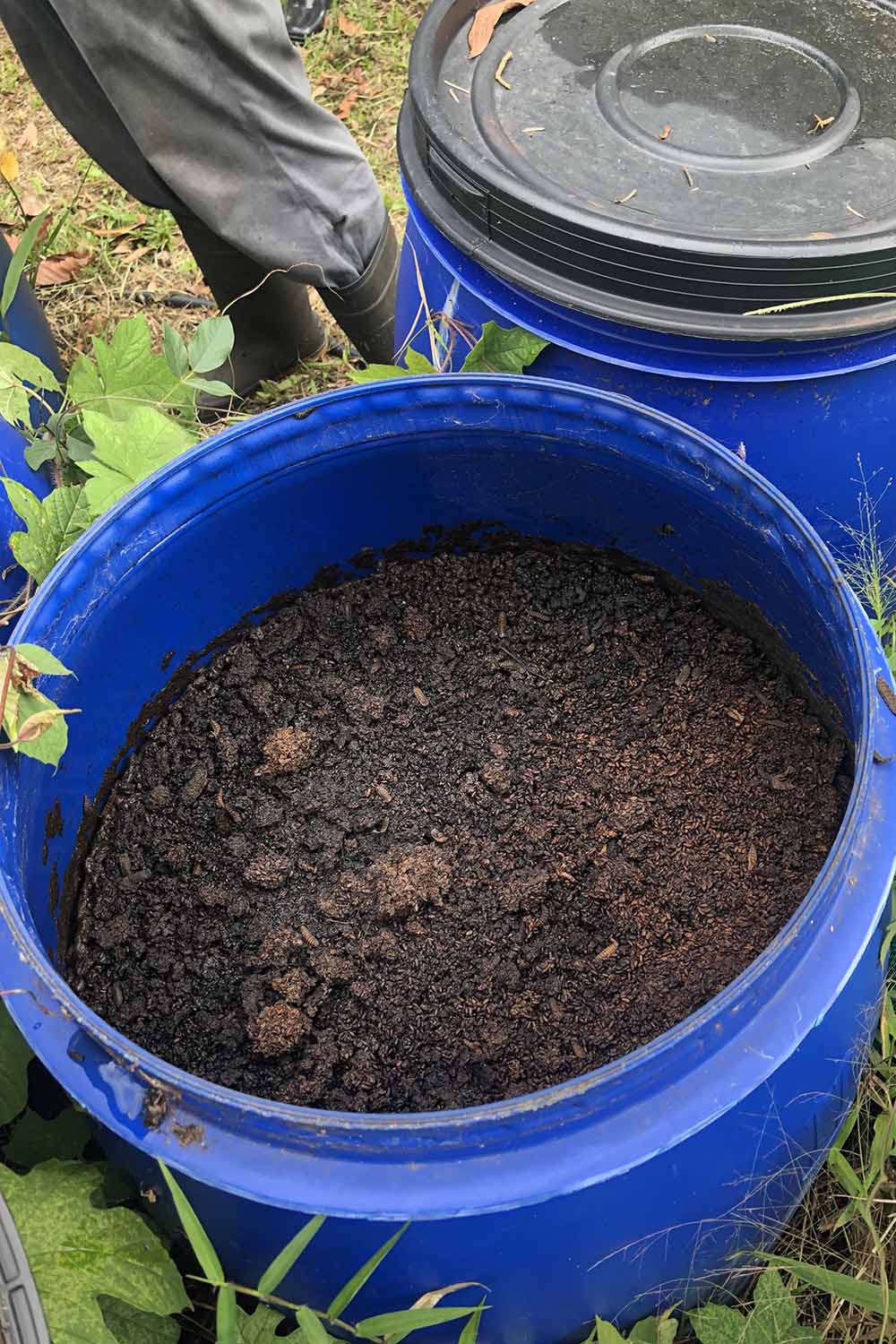
Skip the stirring or bubbler and just let it sit. It will take longer to steep and won’t be ready for about two weeks, but you can literally set it and forget it, just checking on it periodically.
Just keep it in a cool area out of direct sunlight until you’re ready to filter all the solids out.
You do need to be extra diligent about sniffing the mixture and watching for the development of molds on the top with non-aerated mixtures.
Don’t wait much longer than two weeks because, at that point, bad pathogens might start to outcompete the good ones.
Filtering
Once you’ve brewed your tea you’ll need to filter out any solids before applying the liquid to your garden.
The trick is to find some mesh that isn’t so large so that everything passes through but isn’t too small so that beneficial components can’t get through.
Something with a 400 mesh is about right. You can find strainers, filter cloth, or food-grade mesh that will do the job.
I personally find a filter with a handle to be the most useful. You can have a friend hold the sieve while you pour the mix.
Amazon carries a 400 mesh sieve filter with a handle if that sounds right for your needs.
If you use a cloth to filter, attach the cloth to the bucket containing the tea using rubber bands or bungee cords.
It’s much less messy to attach the cloth to the pouring bucket than to the top of the bucket you’re pouring into. Or, you can do the work in a spot where a little spillage will benefit the garden.
Be sure that the container you’re filtering the compost tea into is clean. You don’t want to contaminate your pristine liquid after all that hard work.
Let the mixture settle for an hour or so after stirring or turning off the bubbler.

