


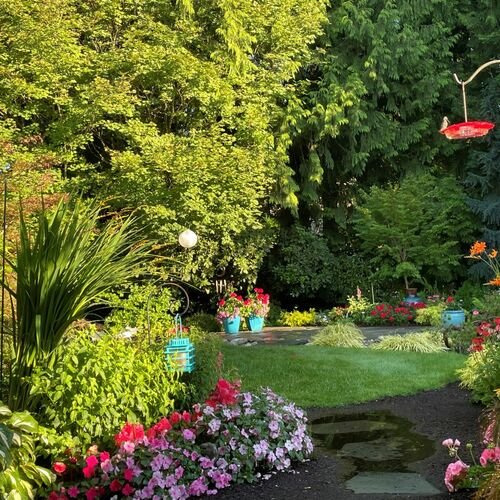
Today we’re visiting Lila Johnson in Mill Creek, Washington, where her garden was recently featured on a community garden tour benefiting her local garden club’s grants program. Visitors explored the landscape through interactive displays that shared the story behind the garden’s evolution. Here’s what Lila has to say:
We survived—and thrived—through our community garden tour, which raises funds for our garden club’s grants program, Giving Through Gardening.
We were one of six gardens open to visitors on July 25. It was a long day on our feet, but the wonderful compliments, thoughtful questions, and rave reviews made it all worthwhile.
As an experiment, we placed interactive storyboards with QR codes throughout the garden. They were a big hit, especially since I enjoy writing and have photos documenting the garden’s evolution dating back to 2011. Visitors especially enjoyed seeing the before-and-after transformations.
It was a wonderful day, and I encourage everyone to share their own gardens. This year’s tour theme, “Where Every Garden Tells a Story,” truly says it all. Enjoy the photos!
My attempt at a mini Japanese garden: I made a primitive wood bridge crossing the dry streambed, surrounded by deer fern (Struthiopteris spicant, Zones 5–8), baby’s tears (Soleirolia soleirolii, Zones 9–11), Himalayan maidenhair fern (Adiantum venustum, Zones 5–8), Fertil-Mulch bark, and the miniature ‘Piccolo’ balsam fir (Abies balsamea ‘Piccolo’, Zones 3–7).
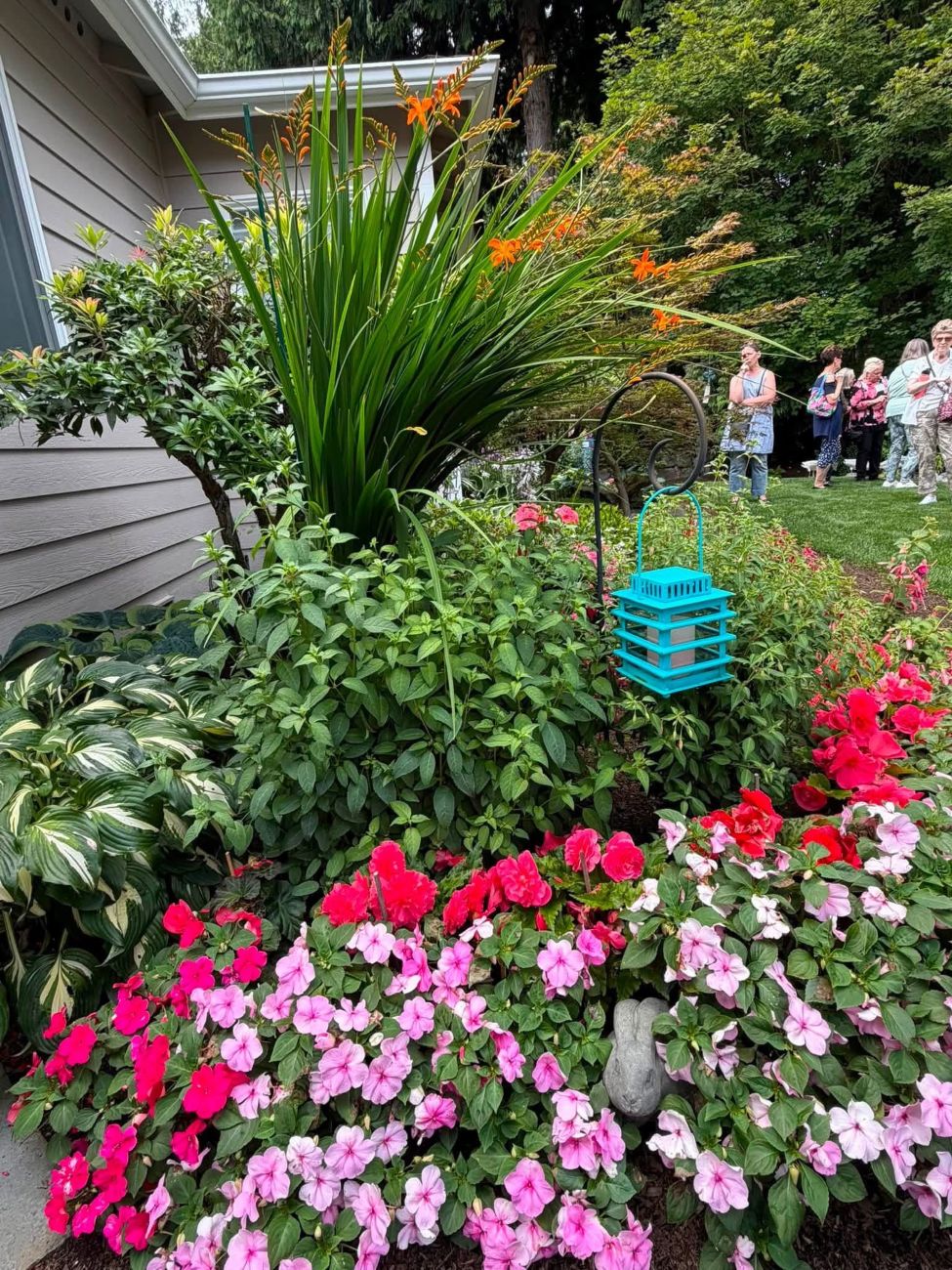
Front to back: pink impatiens (Impatiens walleriana, annual), rosy pink tuberous begonias (Begonia × tuberhybrida, annual), hosta (Hosta cvs., Zones 3–9), hardy fuchsias (Fuchsia magellanica, Zones 6–9), crocosmia (Crocosmia cvs., Zones 5–9), and Japanese andromeda (Pieris japonica, Zones 5–8) in the background.
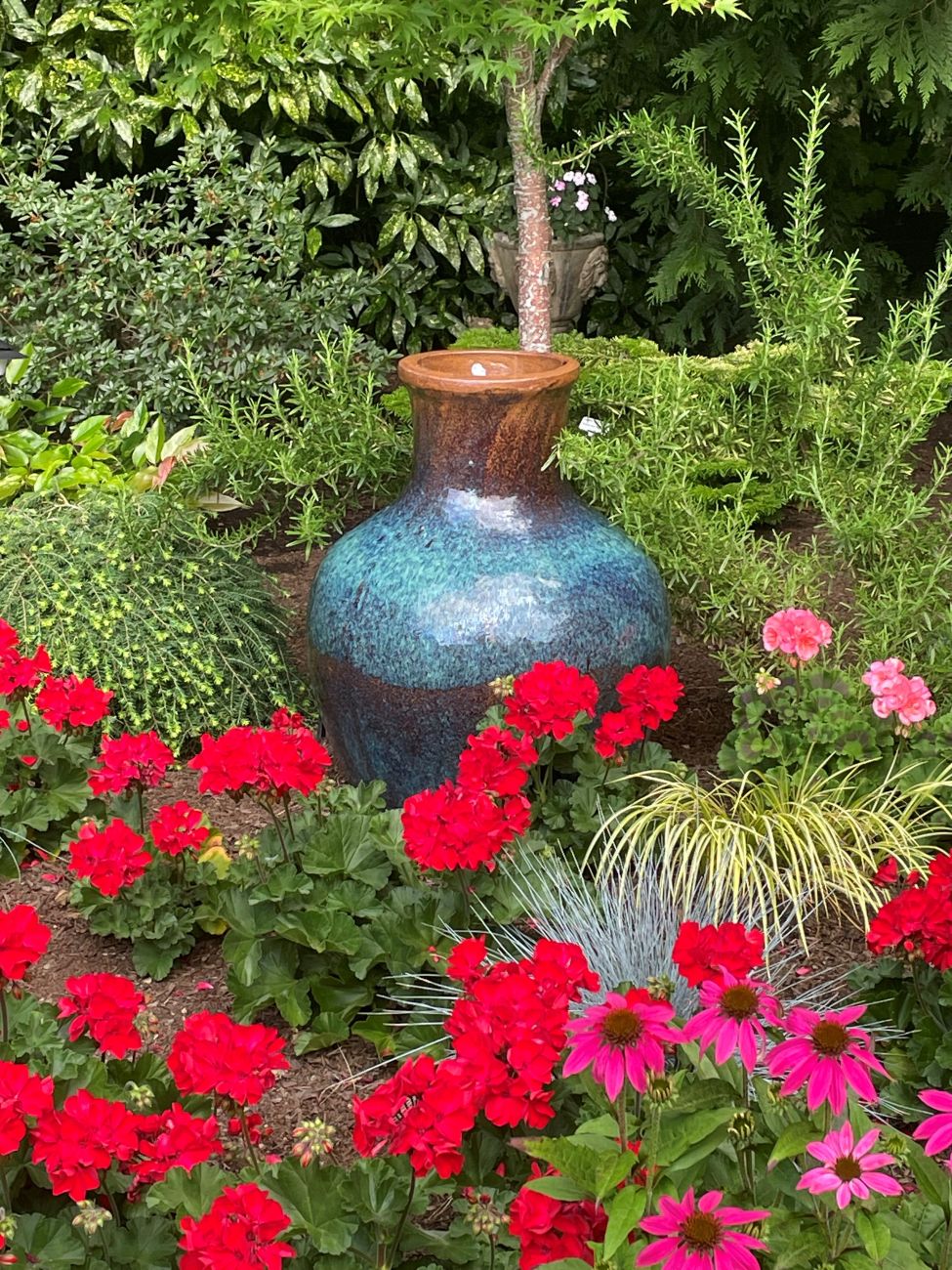
Blue pot surrounded by red and pink zonal geraniums (Pelargonium × hortorum, annual), ‘PowWow Wild Berry’ coneflower (Echinacea purpurea ‘PowWow Wild Berry’, Zones 3–8), blue fescue (Festuca glauca, Zones 4–8), a Carex sedge, rosemary (Salvia rosmarinus, Zones 8–10), gold dust aucuba (Aucuba japonica ‘Variegata’, Zones 6–10), and azalea in the background, along with the trunk of a coral bark Japanese maple (Acer palmatum ‘Sango-kaku’, Zones 5–8).
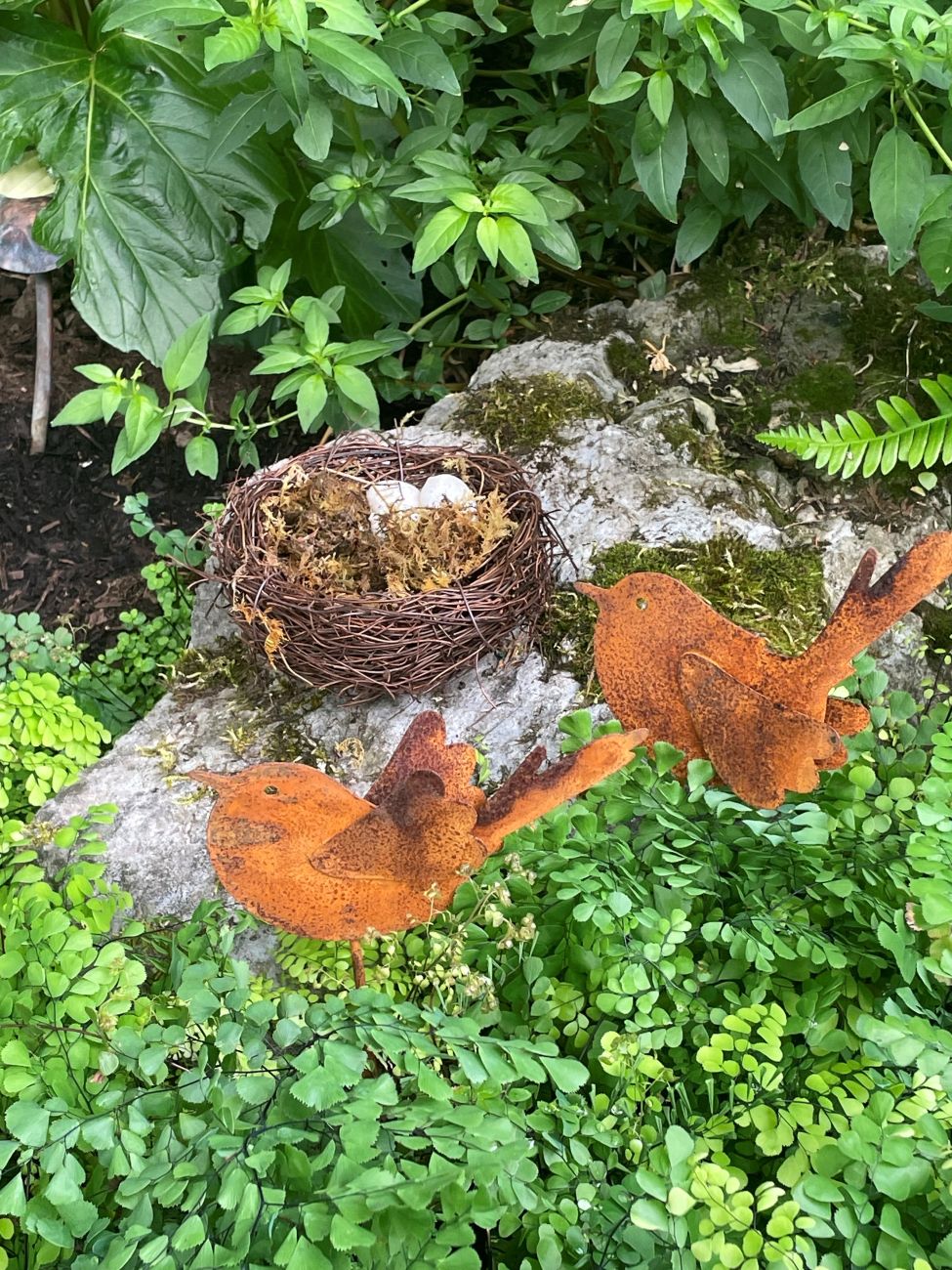
A bit of whimsy in the shady woodland garden area—rusty metal birds with a fake nest and eggs, hardy fuchsia, Himalayan maidenhair fern, a deer fern frond, and a mossy rock.
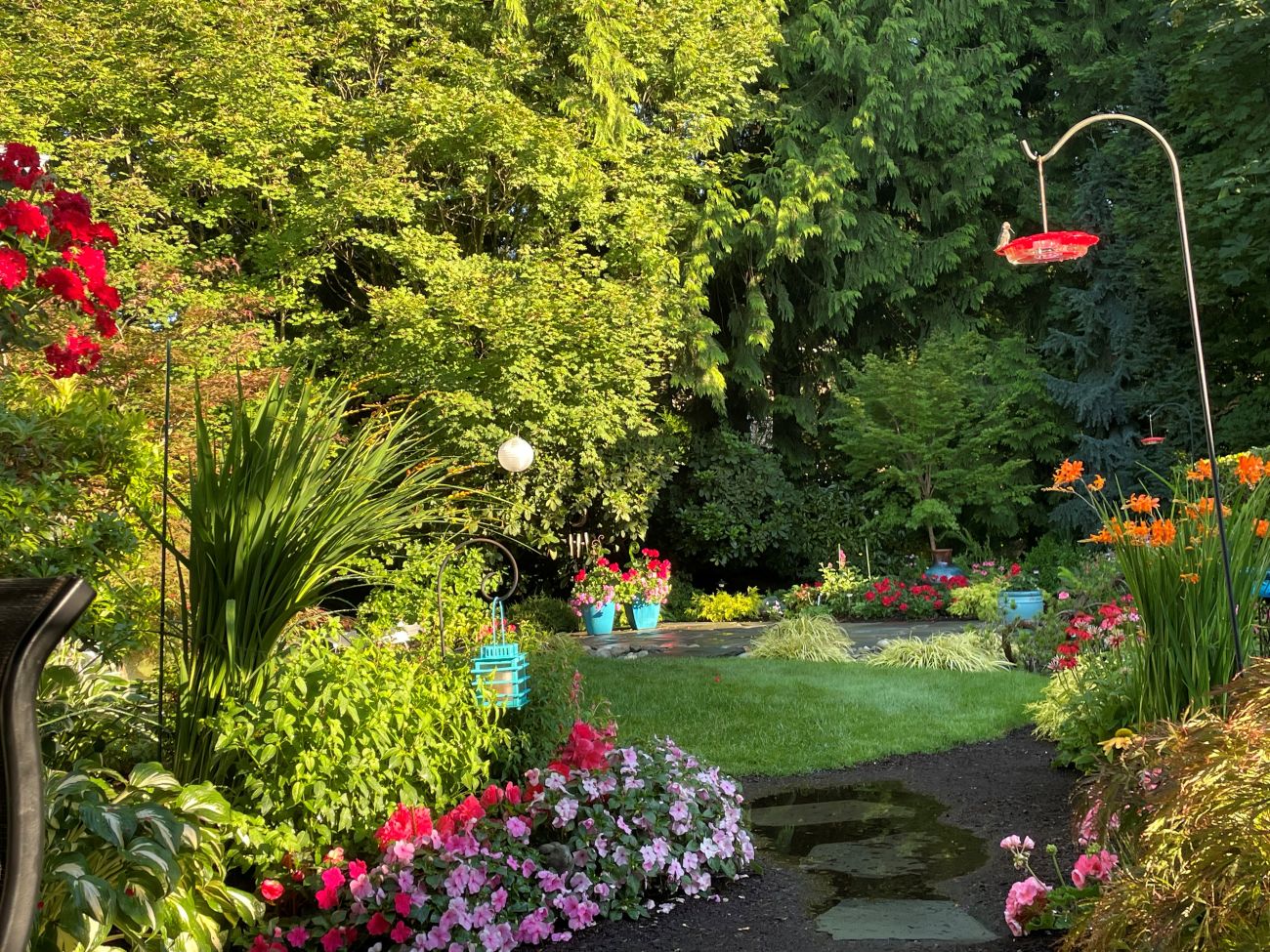
Pennsylvania bluestone patio in the background. Note the hummingbird at the feeder!
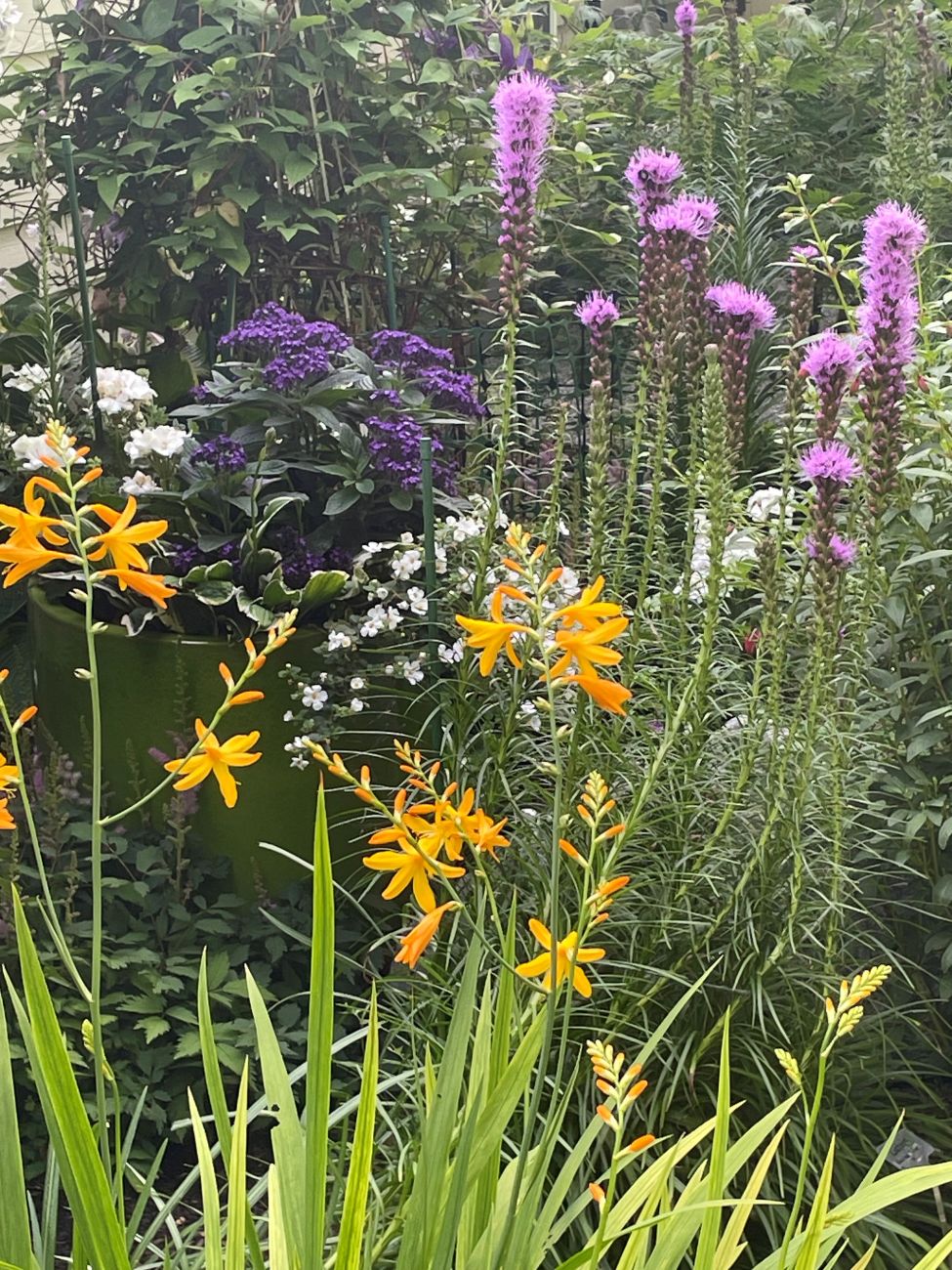
Along our gravel path: crocosmia (Crocosmia cvs., Zones 5–9), blazing star (Liatris spicata, Zones 3–8), a bit of astilbe (Astilbe cvs., Zones 4–9) on the lower left (and a planter with more blazing star), heliotrope (Heliotropium arborescens, annual), hosta (Hosta cvs., generally Zones 3–9), white zonal geranium (Pelargonium × hortorum, annual), and white trailing bacopa (Sutera cordata, annual).
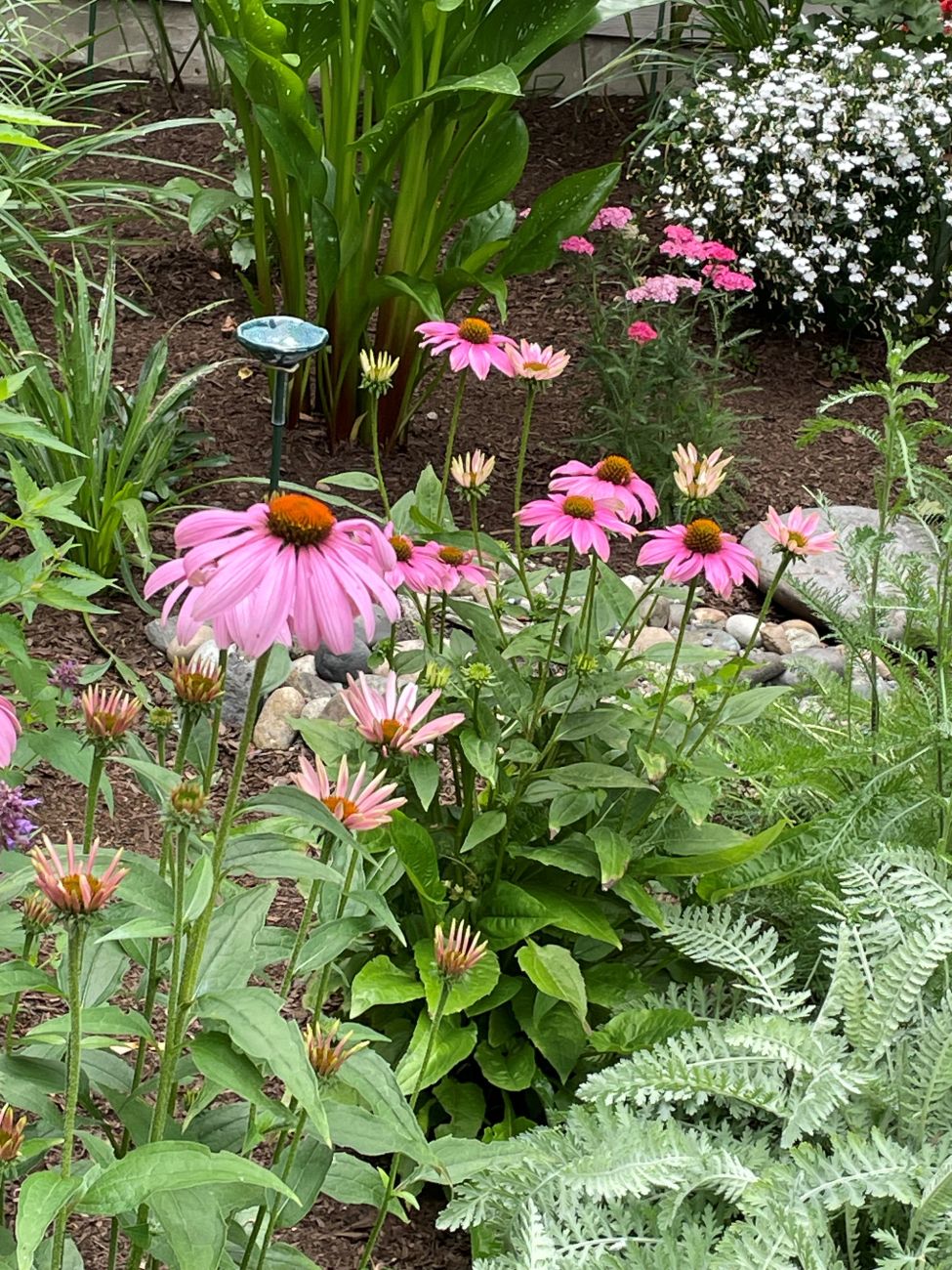
Butterfly garden featuring purple coneflowers (Echinacea purpurea, Zones 3–8), yarrow (Achillea millefolium, Zones 3–9), calla lilies (Zantedeschia cvs., Zones 8–10), dusty miller (Jacobaea maritima, Zones 8–10), and white euphorbia.
Thank you for sharing your beautiful garden with us, Lila! Your thoughtful plant combinations, creative garden features, and willingness to open your landscape to the community are a wonderful reminder that gardens are meant to inspire, educate, and bring people together.
We want to see YOUR garden!
Have photos to share? We’d love to see your garden, a particular collection of plants you love, or a wonderful garden you had the chance to visit!
To submit, fill out the Garden Photo of the Day Submission Form.
You can also send 5–10 photos to [email protected] along with some information about the plants in the pictures and where you took the photos. We’d love to hear where you are located, how long you’ve been gardening, successes you are proud of, failures you learned from, hopes for the future, favorite plants, or funny stories from your garden.
Do you receive the GPOD by email yet? Sign up here
Fine Gardening Recommended Products
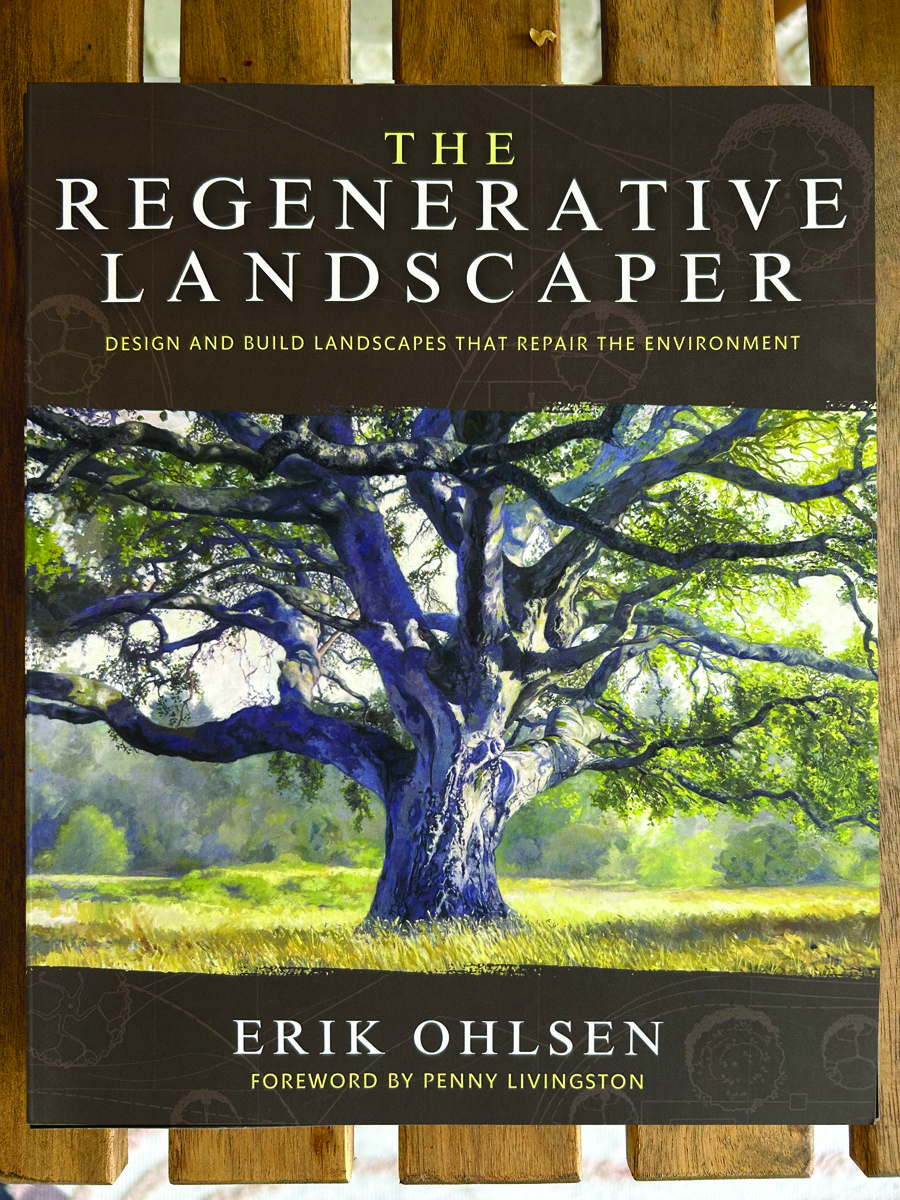
The Regenerative Landscaper: Design and Build Landscapes That Repair the Environment
Fine Gardening receives a commission for items purchased through links on this site, including Amazon Associates and other affiliate advertising programs.
2024 Nautilus Award Gold Medal Winner! This awe-inspiring guide weaves together permaculture design, food resiliency, climate adaptation, community organizing, and indigenous wisdom that you can implement in your own backyard.
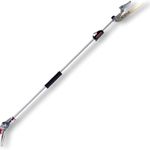
ARS Telescoping Long Reach Pruner
Fine Gardening receives a commission for items purchased through links on this site, including Amazon Associates and other affiliate advertising programs.
Telescopes from 4 to 7′. Cut and Hold (160) Blades. Drop forged blades for unsurpassed long lasting sharpness. Lightweight, 2.3 lbs., for continued use. Perfectly balanced for easy pruning.
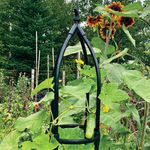
Lee Valley Garden Obelisks
Fine Gardening receives a commission for items purchased through links on this site, including Amazon Associates and other affiliate advertising programs.
Sturdy yet lightweight, these obelisks provide ample support for climbing plants while being easy to install and move. The medium obelisk stands 68 1/2″ high overall with a diameter of about 9 1/2″, compact enough for smaller containers indoors or out. The large size stands 86 1/2″ high with a diameter of 15 3/4″, ideal for larger outdoor spaces and containers.

