


Transforming a front entry
So, you’ve found your dream home. It has everything on your checklist, but the entrance is a bit underwhelming. Unfortunately, sometimes you’re stuck with certain structural problems that come with your space, and overhauling the entire layout or starting from scratch isn’t a viable or cost-effective option.
This suburban home in Pennsylvania came with an awkward layout and some uninspiring plantings. Working with the existing format, designer Heather Tuckman developed a carefully curated plant palette and installed better-functioning hardscape elements to create a dramatic yet inviting entryway that beckons you to come inside. Watch the video tour with Heather above or on our YouTube Channel to get even more insight into this front entry makeover.
Learn More: Find Plant IDs from This Entry Garden Makeover
|
| KEY GARDEN ELEMENTS | Garden Designer: Heather Tuckman
|
A Front Entry Makeover That Announces Itself with Added Curb Appeal
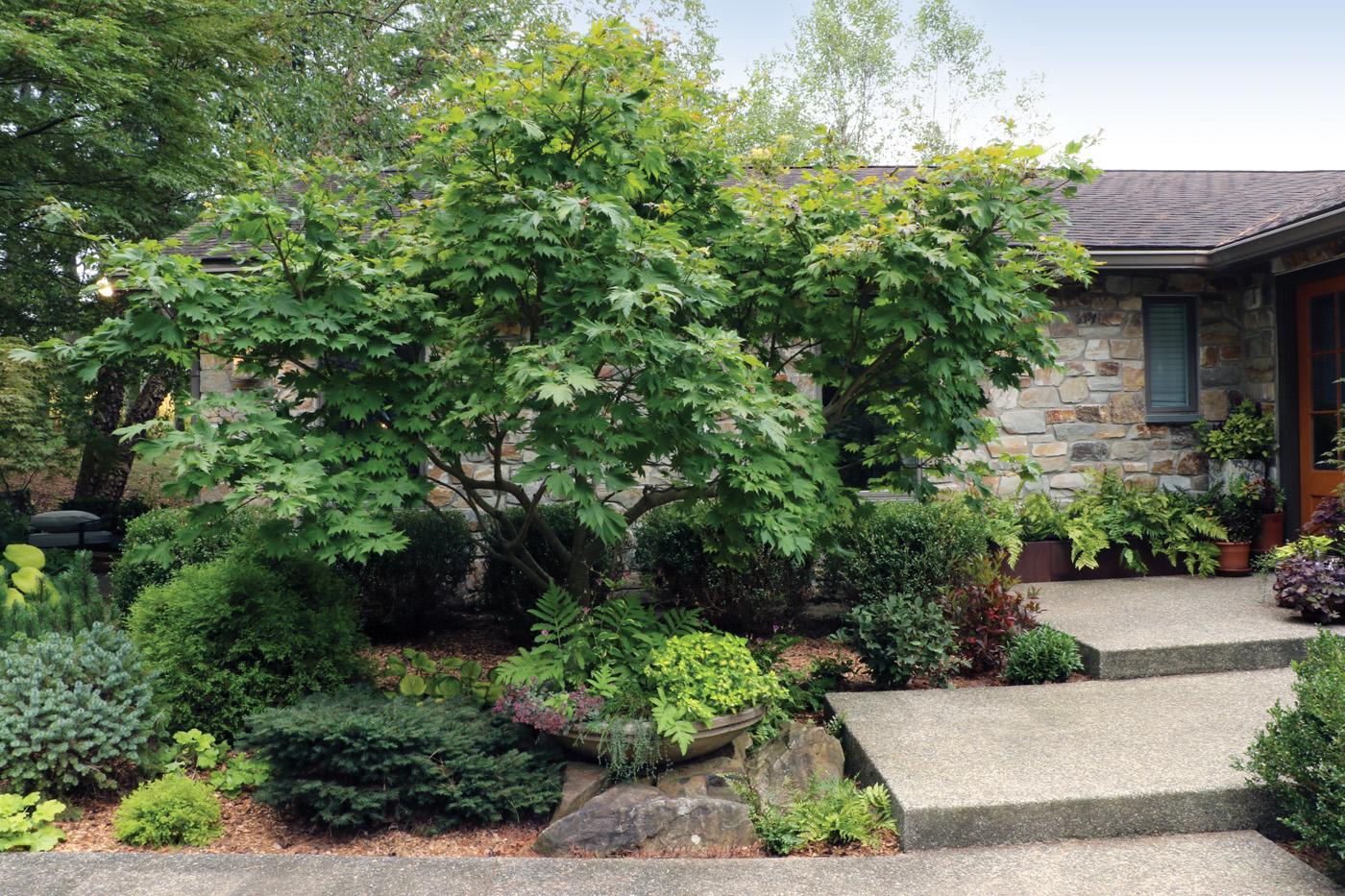
Ten years ago, Heather Tuckman purchased her home in eastern Pennsylvania because of a beautiful Japanese maple (Acer palmatum cv., Zones 5–9) overhanging a seating area to the side of the house. While this section of the property was charming and full of promise, the rest needed a bit of work. The front entryway was not just underwhelming, but it also had some major structural problems, from its bewildering layout to its poor drainage issues.
In order to make it more welcoming and functional, the hardscape needed to be overhauled to better define the entrance to the house. Plants that provided privacy and intrigue also aided this endeavor, and together these elements created an inviting and usable space that seems so intuitively designed that you never would have guessed what was there before.
Learn More: Beyond the Green Wall | Green Hedge Ideas for Privacy
Define the front entry to guide visitors and frame the space
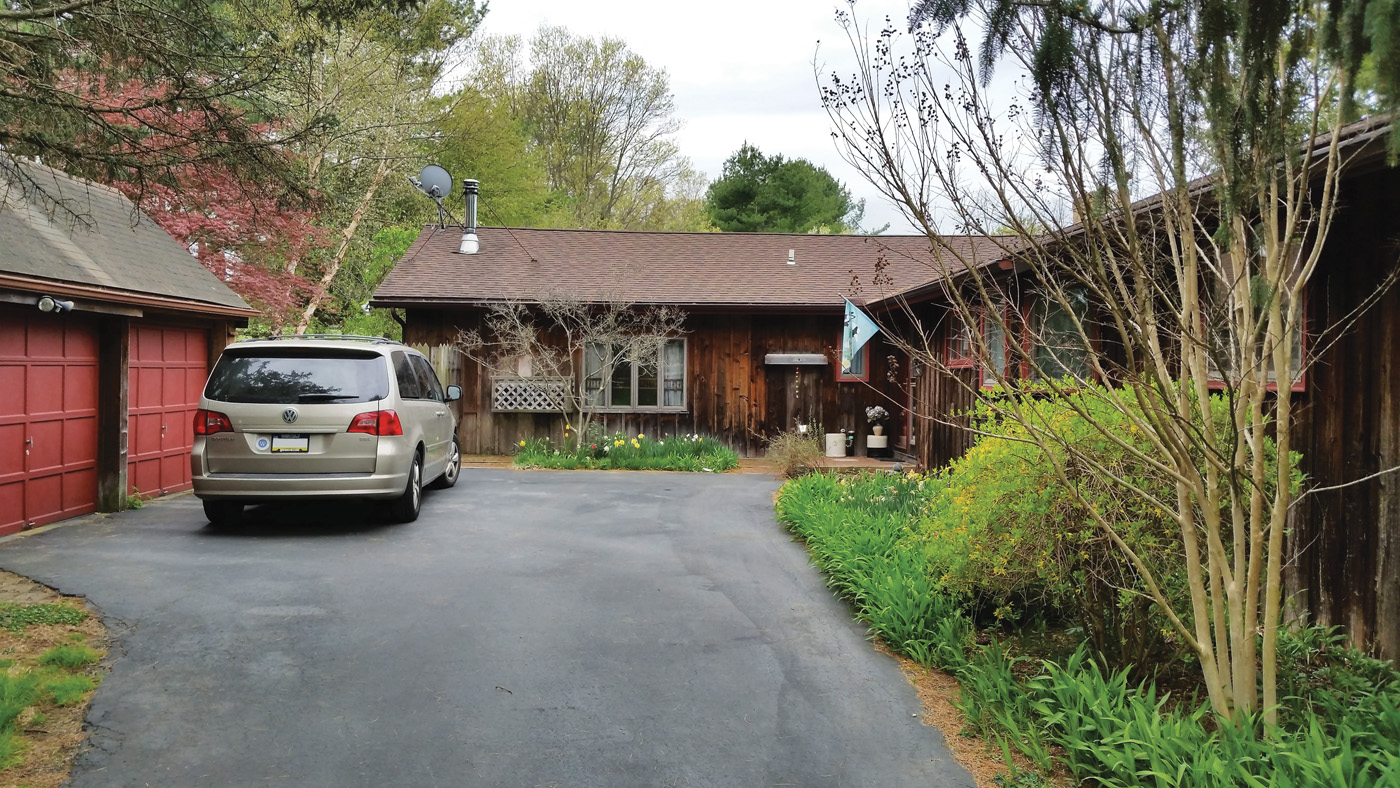
When Heather bought the property, it seemed unclear at first glance where the entrance was. The previous owner had made additions to the house and in the process relocated the entrance from the front of the residence toward the back. A long driveway led to a garage with an inconspicuous front stoop facing it on the other side (see “before” photo above). Heather remembers that “it was not uncommon to find a delivery person wandering around the other side of our house trying to identify something that resembled a front door.” Meanwhile, the garage itself was too small to accommodate most cars.
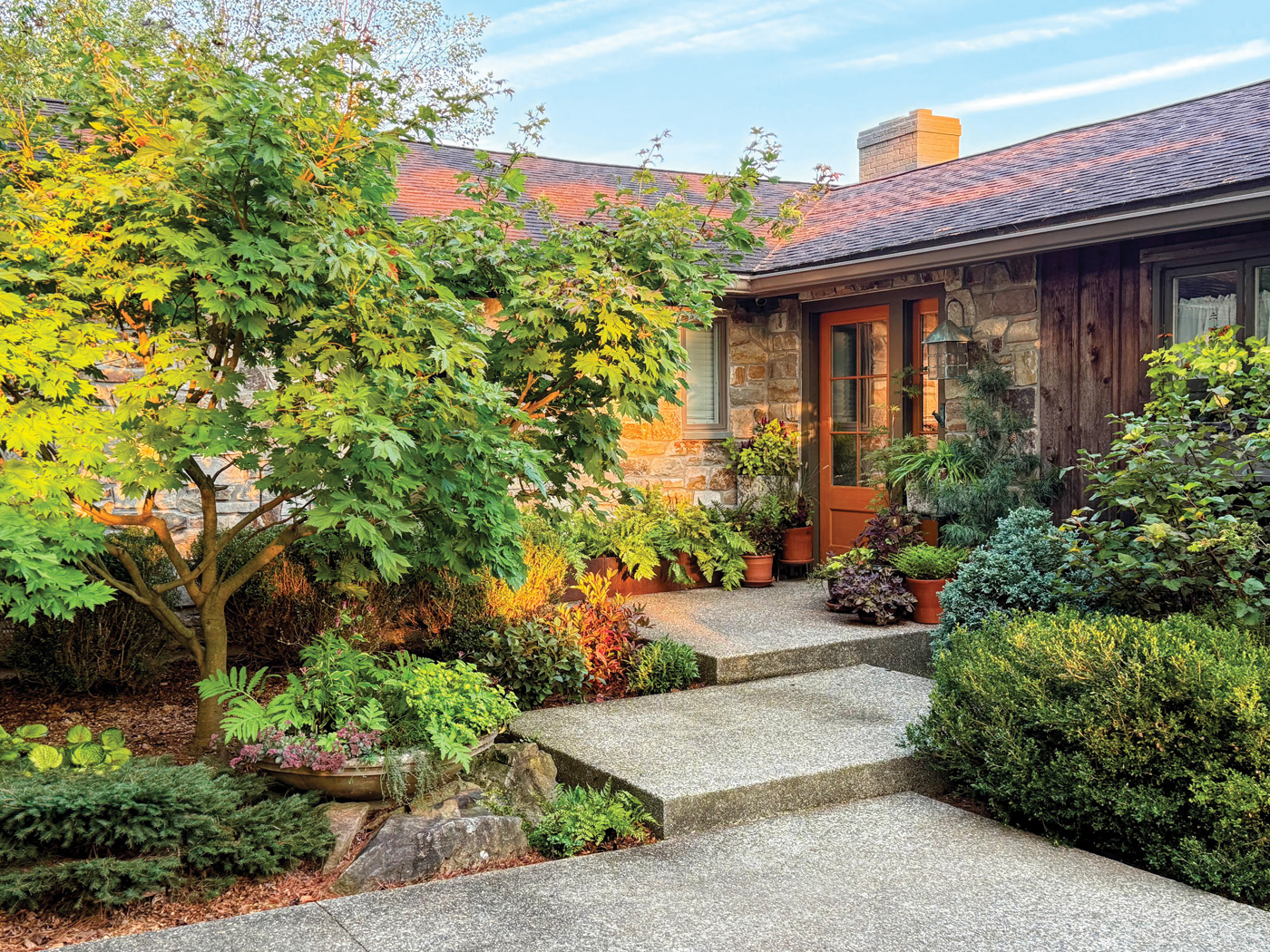
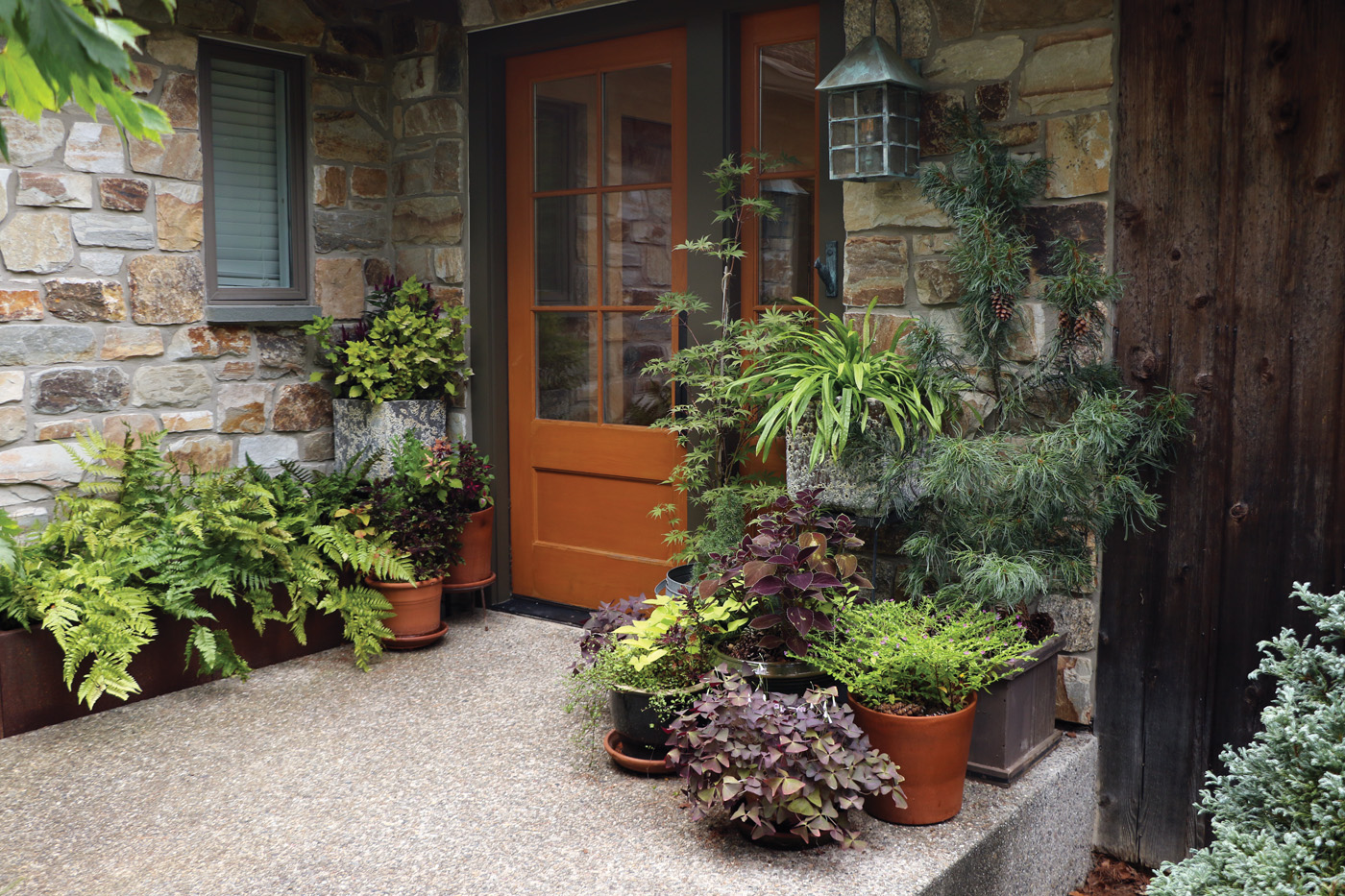
Heather removed the driveway and relocated the parking area to the front of the property. She added a walkway framed with plantings that now points like an arrowhead to the entrance. This path opens up to a small courtyard where raised steps lead diagonally toward the front door. An assortment of staggered containers is staged on either side of the steps, helping to designate the otherwise hidden entrance and announce it in style (see “before” photo at top). This new structure guides visitors directly to the door.
Pick plants that provide curb appeal for your entry garden
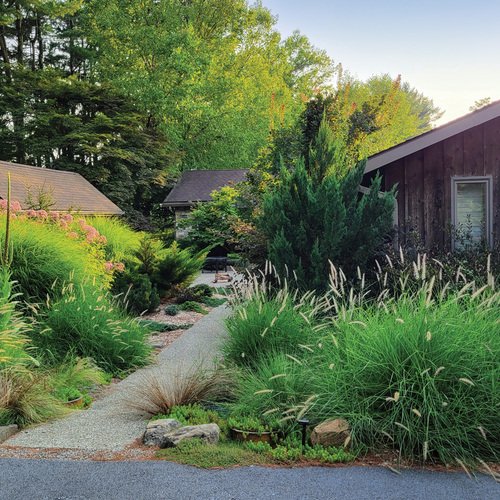
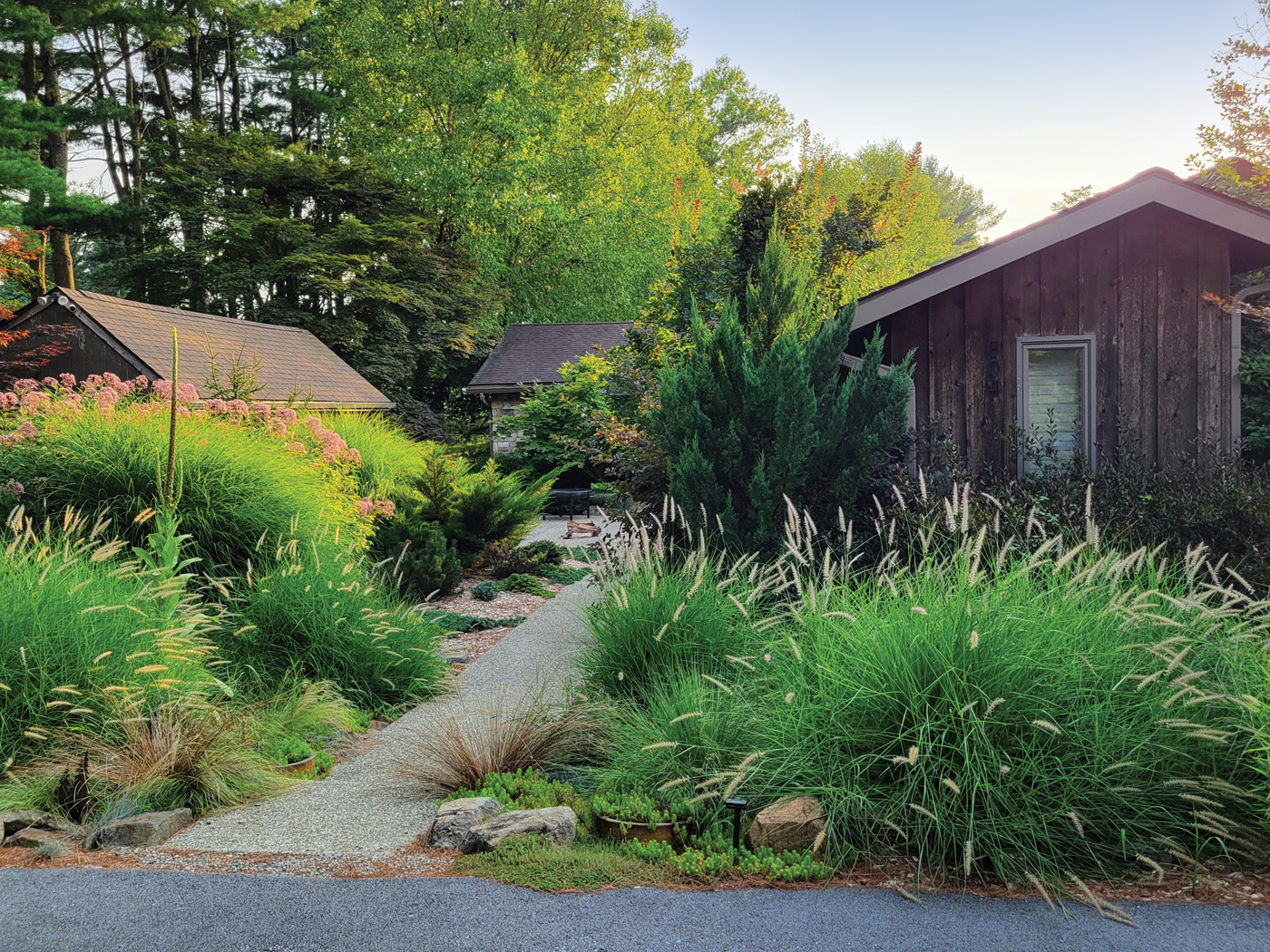
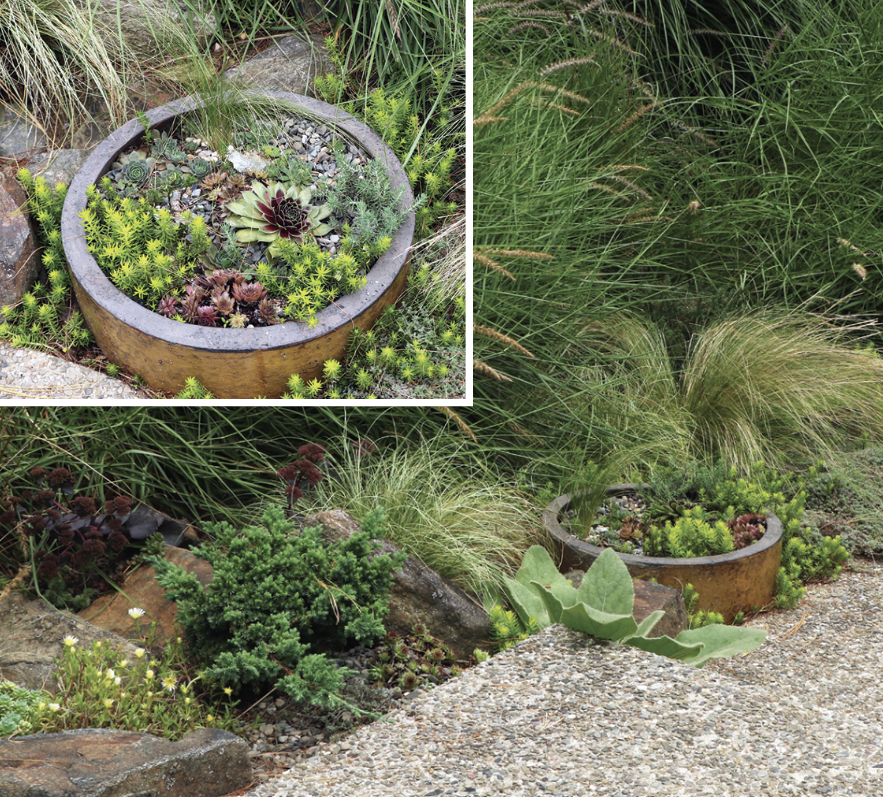
The first thing you’ll see when pulling up to the property is several mixed grasses, such as pink muhly grass (Muhlenbergia capillaris, Zones 5–9) and ‘Shenandoah’ switchgrass (Panicum virgatum ‘Shenandoah’, Zones 5–9), jumping out of the landscape like exclamation points with their airy foliage and prominent flowers and seed heads (above).
Heather says, “I chose grasses that are able to survive in conditions where they have full sun during part of the day and full shade during the other part of the day, and can do all of this in heavy clay.” Just beyond their swaying foliage, taller trees and shrubs form a charming backdrop while adding privacy.
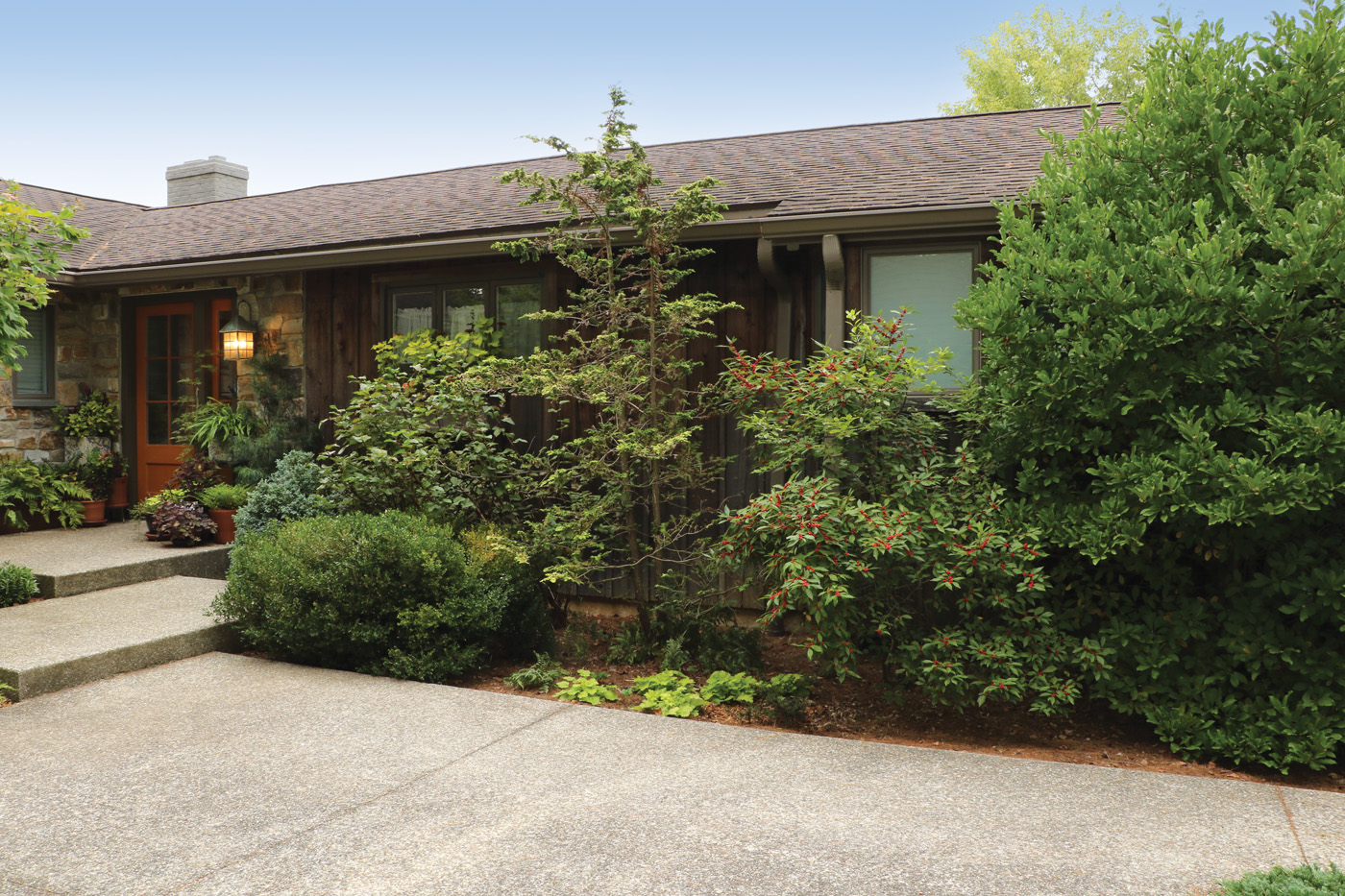
As visitors make their way down the path to the front door, smaller succulents and dwarf conifers draw the eye with bright colors and spiky forms that contrast with the fine-textured grasses. These plants add a touch of western whimsy, which Heather brings from her childhood spent in Nevada. A series of woodies like winterberry, ‘Curly Tops’ Japanese false cypress (Chamaecyparis pisifera ‘Curly Tops’, Zones 4–8), and Rocky Mountain juniper (Juniperus scopulorum, Zones 3–7) line the side of the house, providing four-season interest and structure.
Read More: A Pollinator Garden Design Offers Curb Appeal
A courtyard garden full of interest
Entering the courtyard brings you face to face with an eye-catching full moon maple (Acer shirasawanum cv., Zones 5–9). This tree serves as a focal point and visual anchor, with potted plants underneath it and on the porch beside it, balancing its size and presence. The bright green leaves echo chartreuse highlights from nearby plants like ‘Ball Gown’ heuchera that brighten the otherwise understated color palette. Nearby containers that surround the front door like sentinels provide more pops of color, holding woodies that live there year-round, with some annuals and herbaceous perennials swapped out here and there as the seasons change.
Read More: Small Trees That Like Shade
Alter Hardscaping to Be Functional While Solving Problems
When Heather began to tackle this project, one of the first things she had to fix was not the garden outside but her flooding basement. The driveway’s asphalt went right up to the house, leaving nowhere for stormwater runoff. Regrading the entrance and leaving ample space between the concrete courtyard and house left room for garden beds, where excess water could be sucked up by thirsty plants instead of leaking inside.
Heather also salvaged some of the damaged cedar siding on the house, cleaned and repaired it, and put it back up. Some added stone veneer near the doorway provides contrast, preserving and elevating the home’s bucolic character. The too-small garage was converted into a workshop for Heather’s husband, while the central area that was once a driveway has turned into a courtyard, which is shielded from the road (below). Heather’s husband will bring his woodworking materials outside on a nice day, and they occasionally set up a fire pit to enjoy warm summer nights, surrounded by lush plantings that provide privacy and ambiance on all sides.
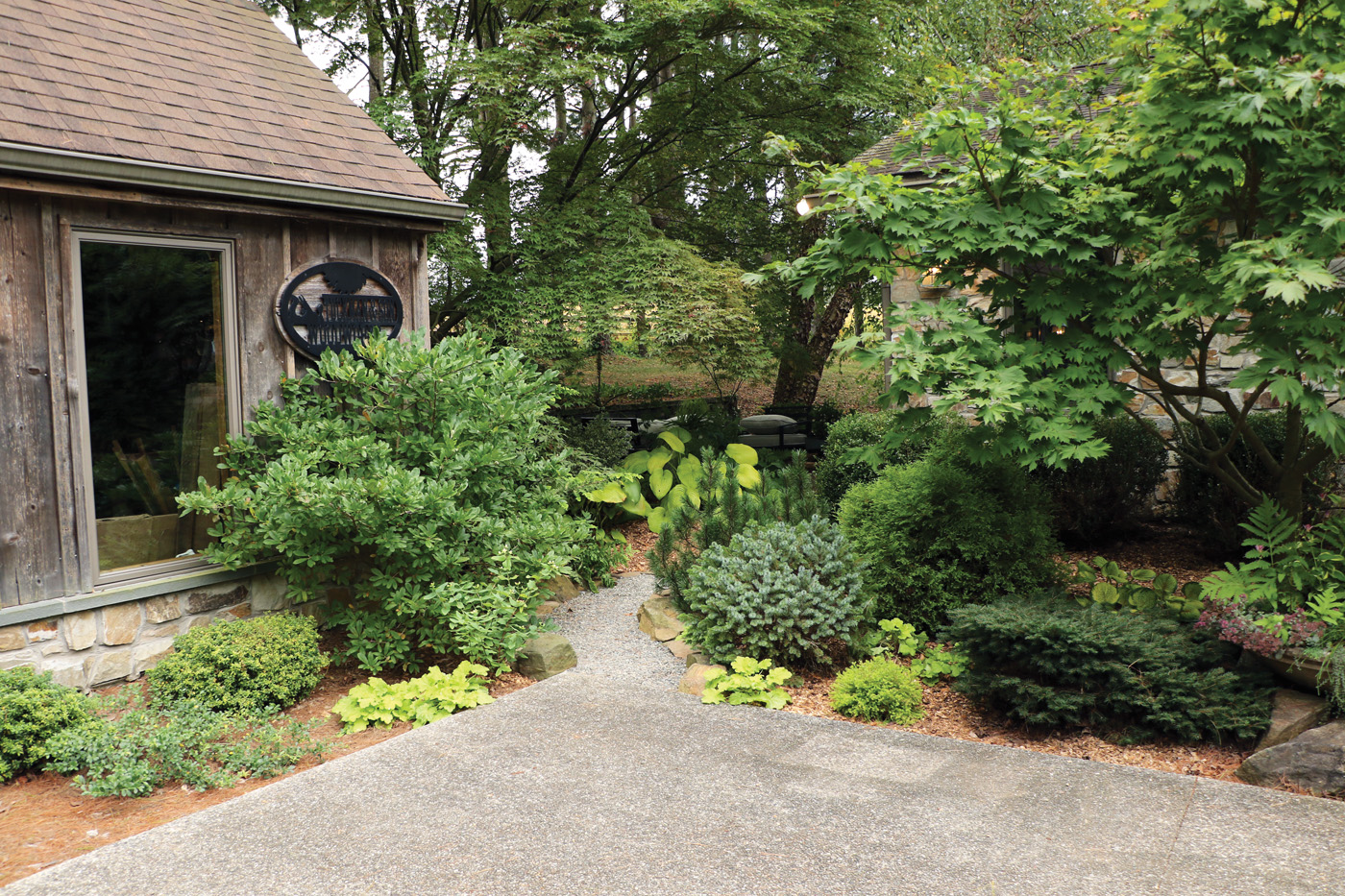
A place that was once confusing, unattractive, and structurally problematic is now a lovely area for visitors and a functional garden room for those who live there. Regardless of the size or location of your space, this transformation shows how a little creativity and the right plant choices can turn an awkward entryway into one you’ll be happy to come home to.
|
| DESIGNER PLANT PICKS | |
|
Plants with Big Impact for Small Spaces |
|
| While providing curb appeal and privacy, the plants selected for this garden also need to match its smaller scale. Here are a few standouts that draw the eye, making a sizable impact regardless of the space they take up. | |
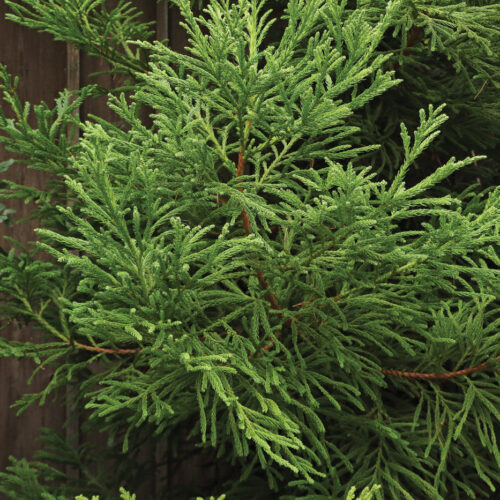 |
‘Black Dragon’ Japanese cedarCryptomeria japonica ‘Black Dragon’
|
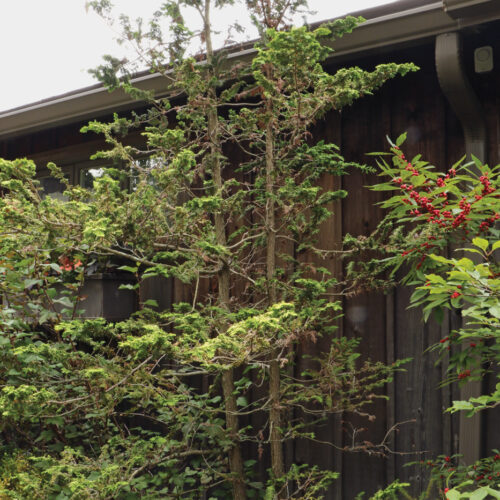 |
‘Fernspray Gold’ Hinoki cypressChamaecyparis obtusa ‘Fernspray Gold’
|
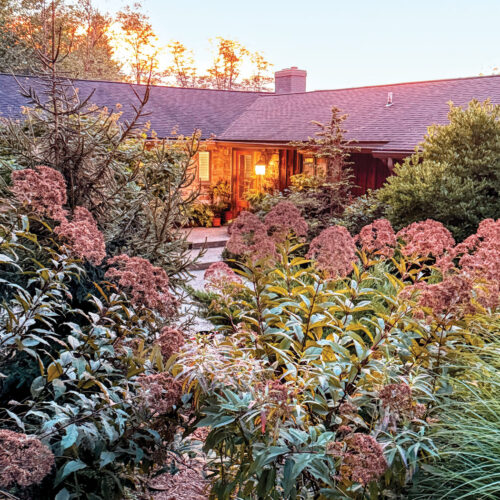 |
Sweet Joe Pye weed
|
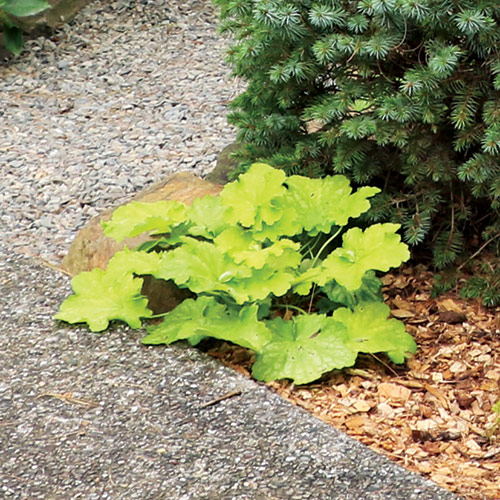 |
‘Ball Gown’ heucheraHeuchera ‘Ball Gown’
|
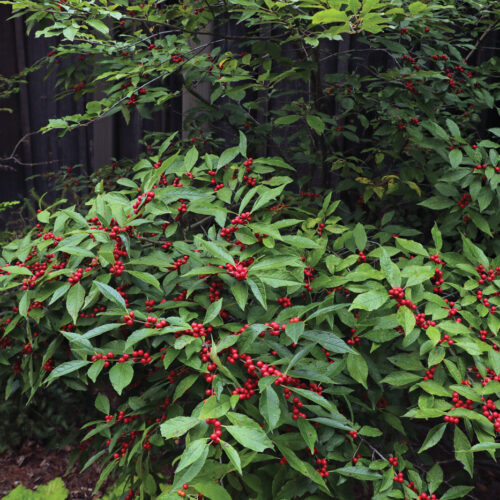 |
WinterberryIlex verticillata
|
Heather Tuckman is the owner of Resilient Ground Design. She is a graduate of the London College of Garden Design with an RHS horticultural qualification.
Diana Koehm is Fine Gardening’s content editor.
Learn More:
Subscribe to Fine Gardening Magazine
Watch More Garden Tours on YouTube
See More from the Fall Issue of Fine Gardening

