


Cylindropuntia spp.
My first encounter with cholla cactus is probably a familiar one.
I was out hiking and I swear that a piece of a cactus I walked near, but didn’t touch, leapt out at me and firmly attached itself to my clothing.
I grumbled and swore as I carefully detached the spines, all while insisting that I hadn’t actually touched the thing. It had jumped out at me!
Thankfully, subsequent encounters have been far more pleasant.
Chollas can be an eye-catching addition to a water-wise garden and I’ve seen them serve as a stately focal point in many.
We link to vendors to help you find relevant products. If you buy from one of our links, we may earn a commission.
Most Cylindropuntia species have a sort of shrubby shape, though there are tree-like options and creeping ground cover growth habits as well.
Plus, they all flower and some even have gorgeously bold blossoms that rival roses. Some have colorful papery-sheaths over the spines, which adds another layer of texture and color.
They are adaptable enough to grow in USDA Hardiness Zones 5 to 11 and are, unsurprisingly, extremely drought- and heat-tolerant.
If you are looking for a natural fence that will keep deer, coyotes, and unwelcome humans out, you can’t do better than this tough defender.
If you’re ready to learn about how to grow cholla cactus, keep reading. Here’s what we will go over:
Before we talk specifics, let’s get on the same page with our terms.
Cacti don’t have true stems, instead they have modified branches known as cladodes. These cladodes are made of cylindrical sections held together by segmented joints.
The spines are technically called glochids and they’re actually modified leaves.
The glochids emerge from wart-like bumps called tubercles. In the cactus world, cholla are special because they’re the only ones that have papery sheathes covering the spines.
The cool thing about these sheaths is they are brightly colored on many species, adding another layer of visual interest.
Quick Look
Common name(s): Choa, cholla, ciolim, jumping cactus, teddy bear cactus, walking stick cactus
Plant type: Cactus
Hardiness (USDA Zone): 5-11 (outdoors)
Native to: Mexico, Southern North America
Bloom time / season: Late spring, early summer
Exposure: Full sun
Soil type: Loose, coarse, sandy, rocky, depleted, well-draining
Soil pH: 6.0-7.0, neutral
Mature size: 1-15 ft tall by 2-7 ft wide (depending on species)
Best uses: Desert, succulent, rock, Mediterranean garden, container specimen, houseplant
Taxonomy
Order: Caryophyllales
Family: Cactacae
Genus: Cylindroptunia
Species: Arbunscula, bigelovii, californica, cholla, echinocarpa, imbricata, versicolor
Plants in the Cylindropuntia genus are closely related to prickly pears, cacti in the Opuntia genus. Both were once in the same genus, but were reclassified.
Chollas can vary wildly in their form and shape, from creeping, low-growing ground covers to tall, tree-like species that can be up to 15 feet high.
Most have a shrub-like shape with greenish stems, though stress will cause many species to turn orange or red, and light exposure can also impact color.
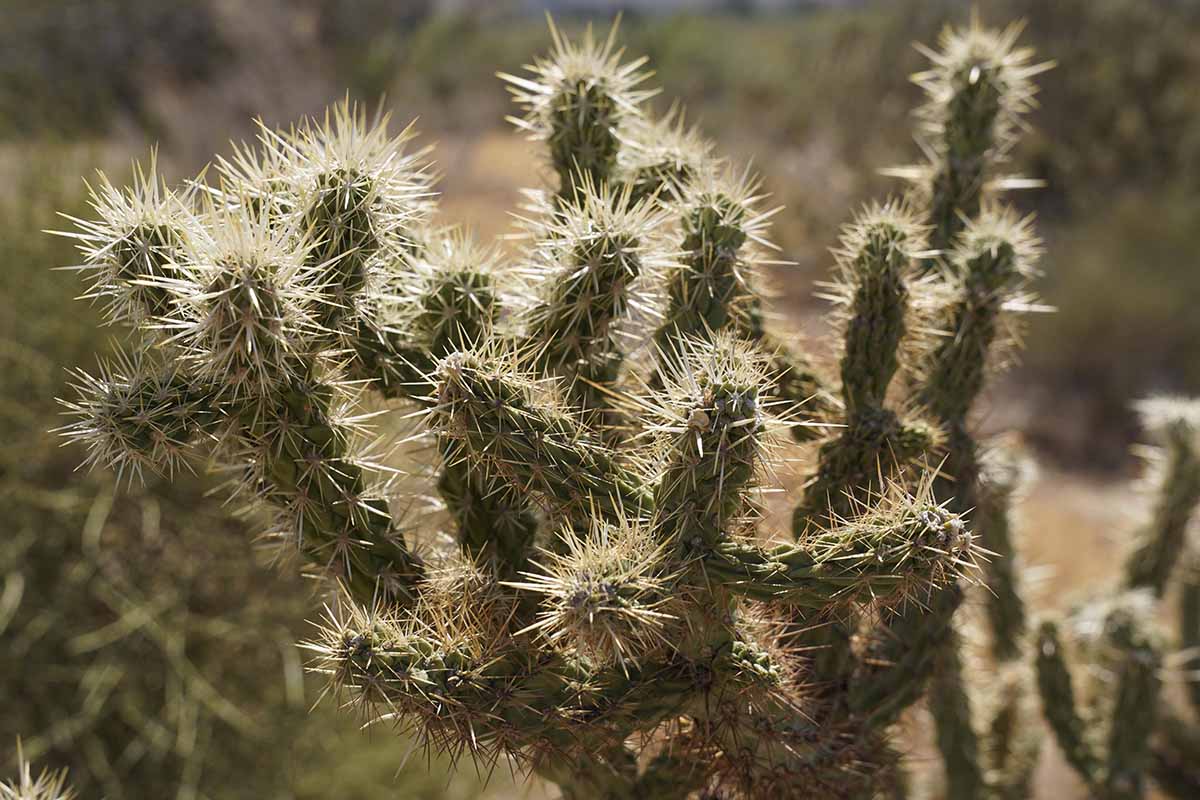
In the wild, they often appear in groups called “cholla gardens,” where fallen tubercles have taken root to form clusters.
If you’re like me and you prefer plants that can do double-duty as an ornamental and edible, you’re in luck. Chollas have edible flowers and fruit.
And they aren’t just beneficial to humans. All kinds of wildlife including bees, birds, and deer love them as food and shelter.
If you have neighborhood cats that like to hunt birds, a cactus is a great way to help protect the birds. Cats won’t climb a cholla, so the birds can perch safely.
If you or perhaps your child has had a terrarium or aquarium, you might have purchased cylindrical “wood,” sometimes called cholla wood, to put in the enclosure.
If so, that is actually a dried cholla section and not wood at all.
There are about 35 species within the genus, though this may change as the taxonomy is further studied, and only a handful are commonly cultivated in gardens.
How to Grow
Cholla cacti aren’t for everyone. If you live in a cool, rainy climate, you may need to nudge and cajole yours to survive.
I live in the Pacific Northwest, and I have a neighbor who is obsessed with cacti.
He is growing cholla in a container, but he has to bring it inside during the winter and situate it in a very sunny window with additional grow lights.
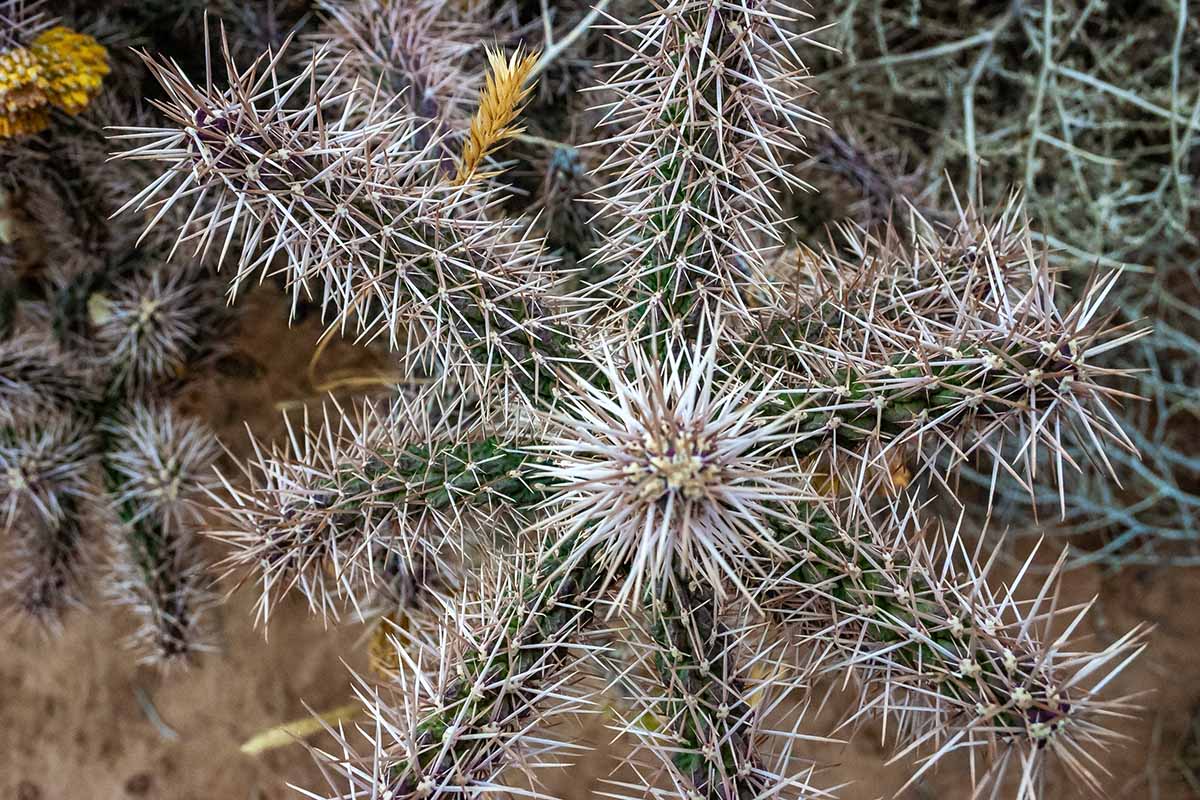
Chollas are desert cacti, needing sunny, hot climates. They are also a terrible choice for growing in spots where people may walk by and brush up against the spiky stems.
Even if you think you’re a safe distance, there’s a reason some species are called “jumping” cactus.
They seem to leap out onto your clothing and skin and while they don’t actually jump, it only takes the slightest brush and suddenly you’re being stabbed.
So be sure to situate this plant somewhere safe and away from passersby, both human and animal.
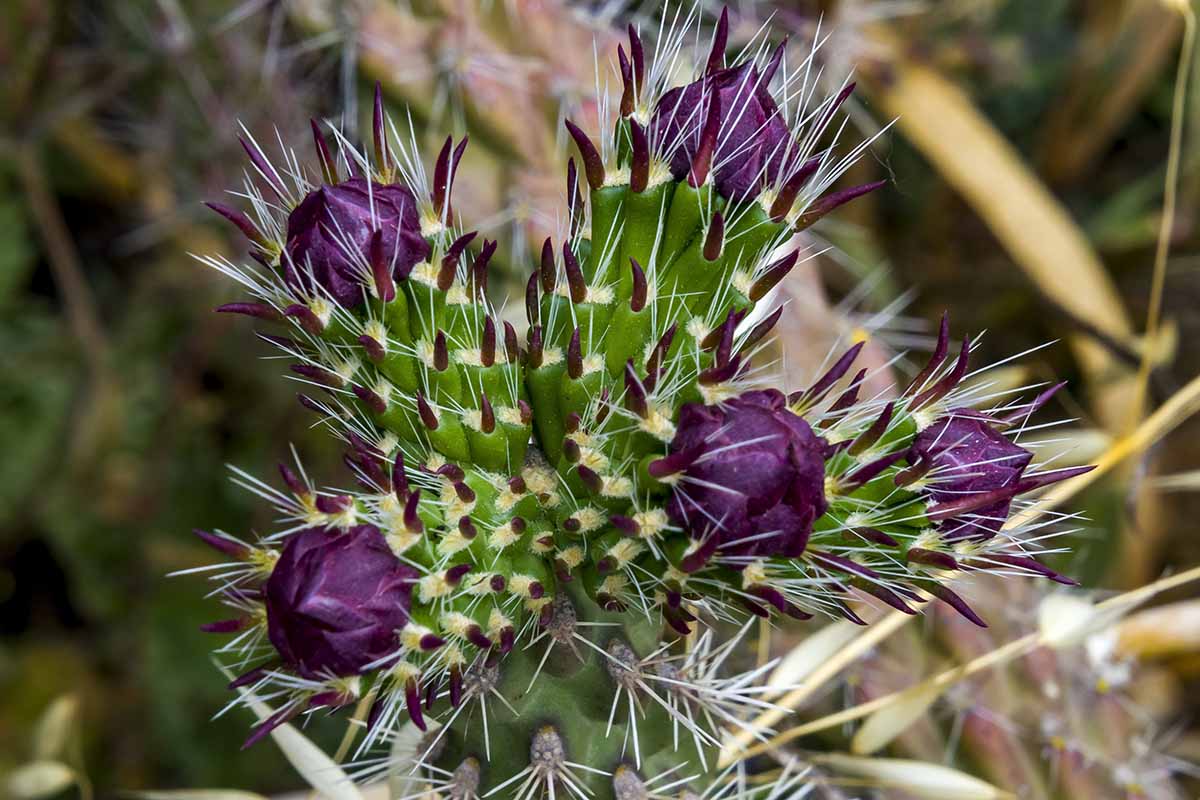
You can absolutely grow this plant in a container, but you will need to choose a container that is large enough to support the mature size of the cactus.
They don’t have particularly large roots, but the concern is that they can be quite large aboveground and they can topple over if they don’t have a good support base.
So pick a container large enough to support your chosen species and make sure it has lots of drainage holes.
My general rule of thumb is to use one gallon of soil for every foot of growth.
So if you have a cholla that reaches 15 feet tall, you’ll need at least a 15-gallon container, preferably one that is short and squat, not tall, unless it’s made from really heavy material.
Soil
If you’ve ever grown cacti before, then you know that they like gritty, sandy, rocky, depleted, well-draining soil.
If you have humus-rich soil in your garden, lucky you, but you should definitely grow something else. You have lots of other options out there.
Assuming you do have gritty soil, you can make your plant even happier by growing it on a slope.
You’ll often find cholla growing on a sloping area in the wild, which translates to better drainage than a flat part of the landscape.
Or, plant your cholla in a container filled with a cactus-specific soil. Tank’s Pro is one of my favorites.
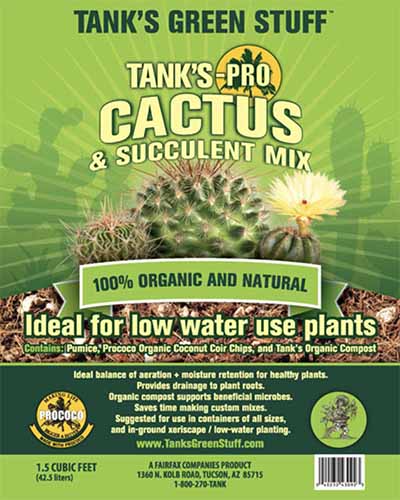
Tank’s Pro Cactus and Succulent Mix
It consists of pumice, coco coir, and compost to create a solid foundation that drains exceptionally well.
Pick up an eight-quart or one-and-a-half cubic foot bag at Arbico Organics.
Light
As with most cacti, your cholla wants lots and lots of sun. The more the better.
This isn’t a plant that should be parked in a shady spot.
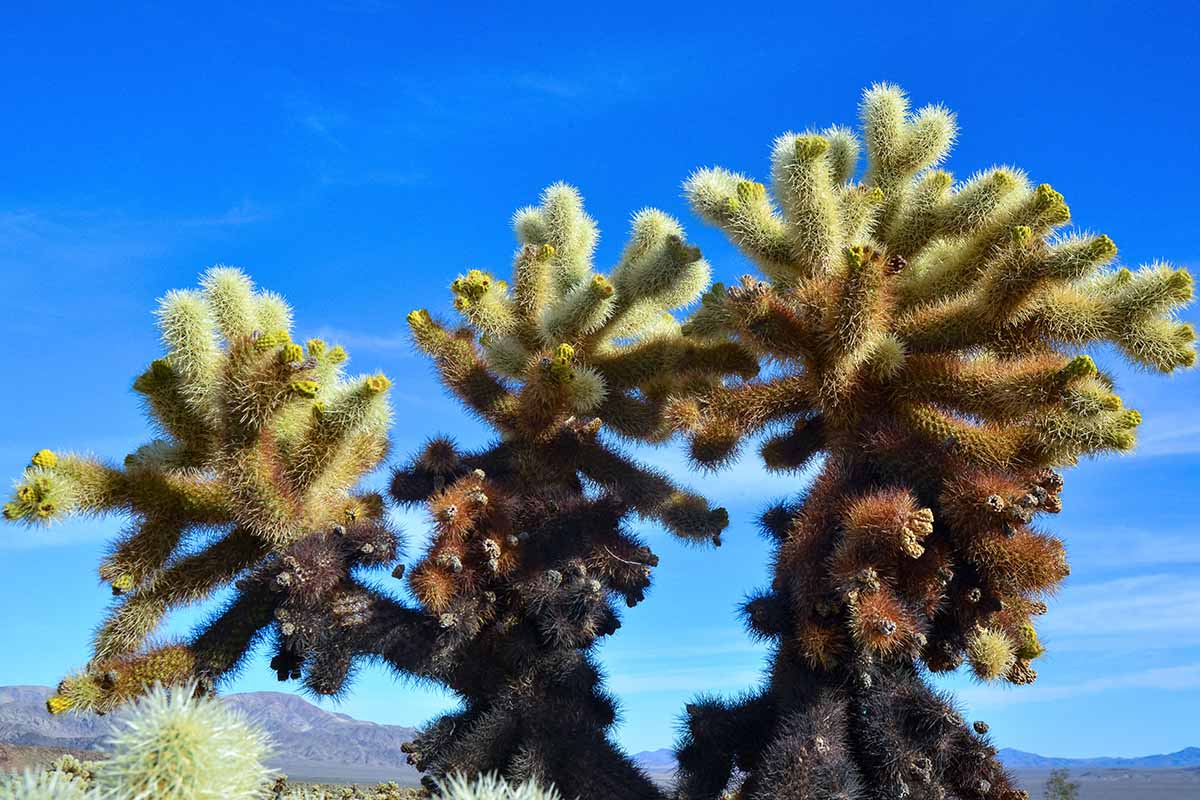
Ideally, it will be exposed to direct sun all day long, though a few hours of shade is fine. Some shade might reduce flowering, however.
Your cactus will likely develop a darker side and a lighter side based on which one faces the sun.
Water
Cacti are famously drought-tolerant, but it’s not just a tolerance, it’s a preference.
Too much water will absolutely, without question, kill your cholla. Their roots aren’t adapted to frequent moisture.
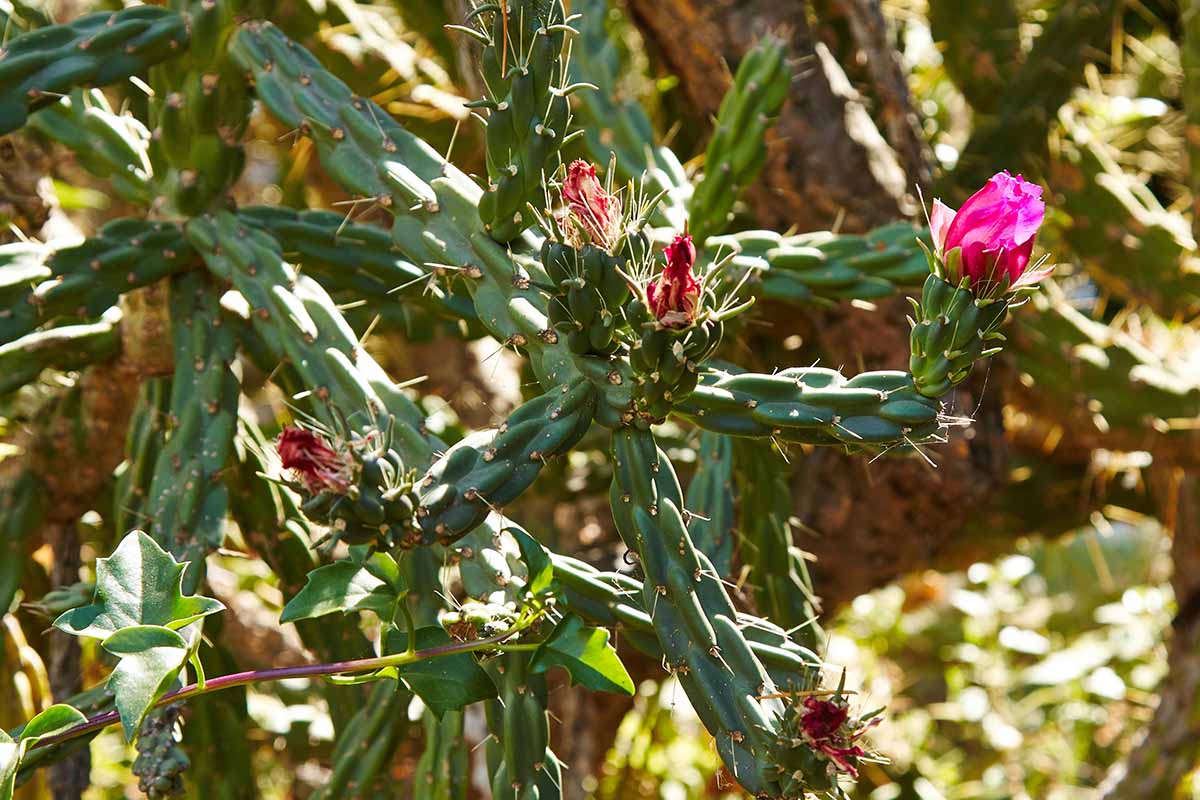
You honestly shouldn’t plan to water your cactus at all, just let nature handle the moisture. There almost isn’t a climate that is too dry for these plants.
Similarly, humidity is a no-go. They don’t like it and they won’t tolerate much of it.
Having said all that, the climate is changing and even cacti can suffer from too prolonged of a drought.
Remember, even though these plants come from arid climates, these regions typically experience a monsoon season.
This is a period where there are frequent rains and it typically coincides with the times when cholla cacti drop segments and fruits to reproduce.
If there hasn’t been any rain in your area for an unusually long time, a little bit of moisture will be appreciated.
Not a lot, just enough to keep it alive. Young plants, especially, need additional moisture.
Fertilizer
Plants in the ground might never need fertilizer, depending on your soil’s composition.
Those in a container or extremely depleted soil could probably use a little food every few years.
There are fertilizers formulated specifically for cacti, though I just generally use half strength all-purpose fertilizer.
My go-to is Down to Earth’s All-Purpose food, which is made from all-natural materials and comes in a compostable container.
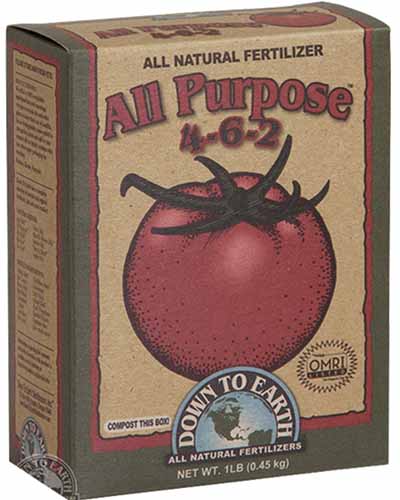
Down to Earth All-Purpose Fertilizer
You can find this product available at Arbico Organics in one-, five-, and 15-pound containers.
Apply in the spring at half or even a third strength.
Species to Select
You will often see chollas sold as “Cylindropuntia cholla,” but on closer examination, they aren’t truly the cholla species.
It seems to be a catch-all term. If you harvest plants for cultivation from the wild, keep in mind that they can hybridize with one another, so what you’ll have might not be a true species.
Also, remember that you should only harvest plants or plant parts where it’s legal and you have permission to do so.
Never overharvest, especially in areas where chollas are known to be struggling.
If you can determine the true species name, look for some of the following options. They’re all particularly nice in the garden.
Cane, Tree, or Walking Stick
C. imbricata is commonly called “cane,” “tree,” or “walking stick” cholla because it grows tall, with long “branches.”
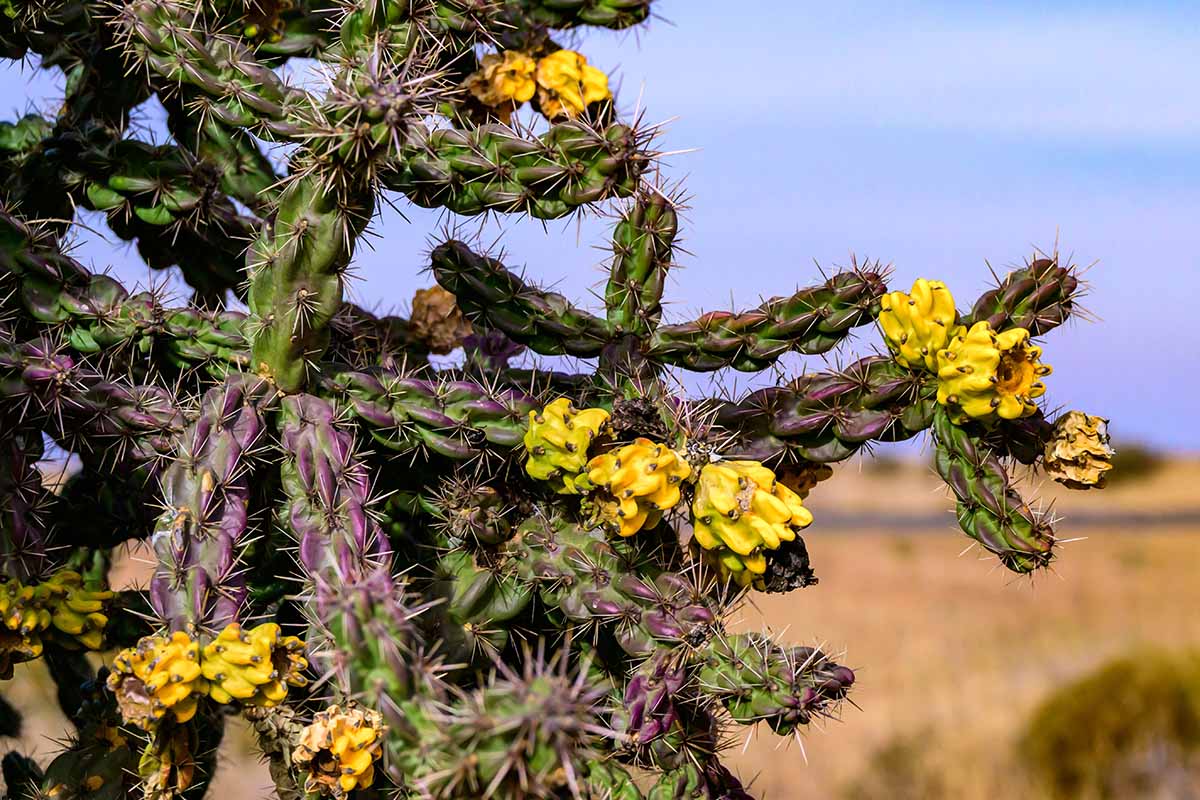
Its size is perfect if you want a larger specimen in your landscape. They can grow up to 15 feet tall, but usually stay much smaller.
Most chollas have yellow, green, or cream blossoms. But this beauty stands out.
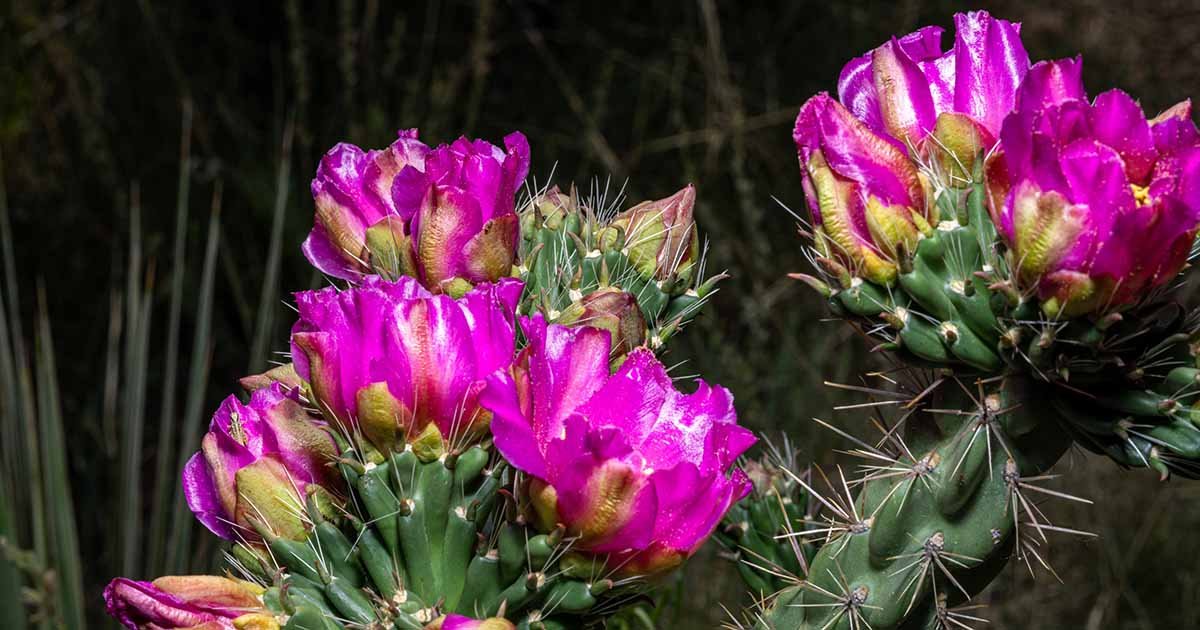
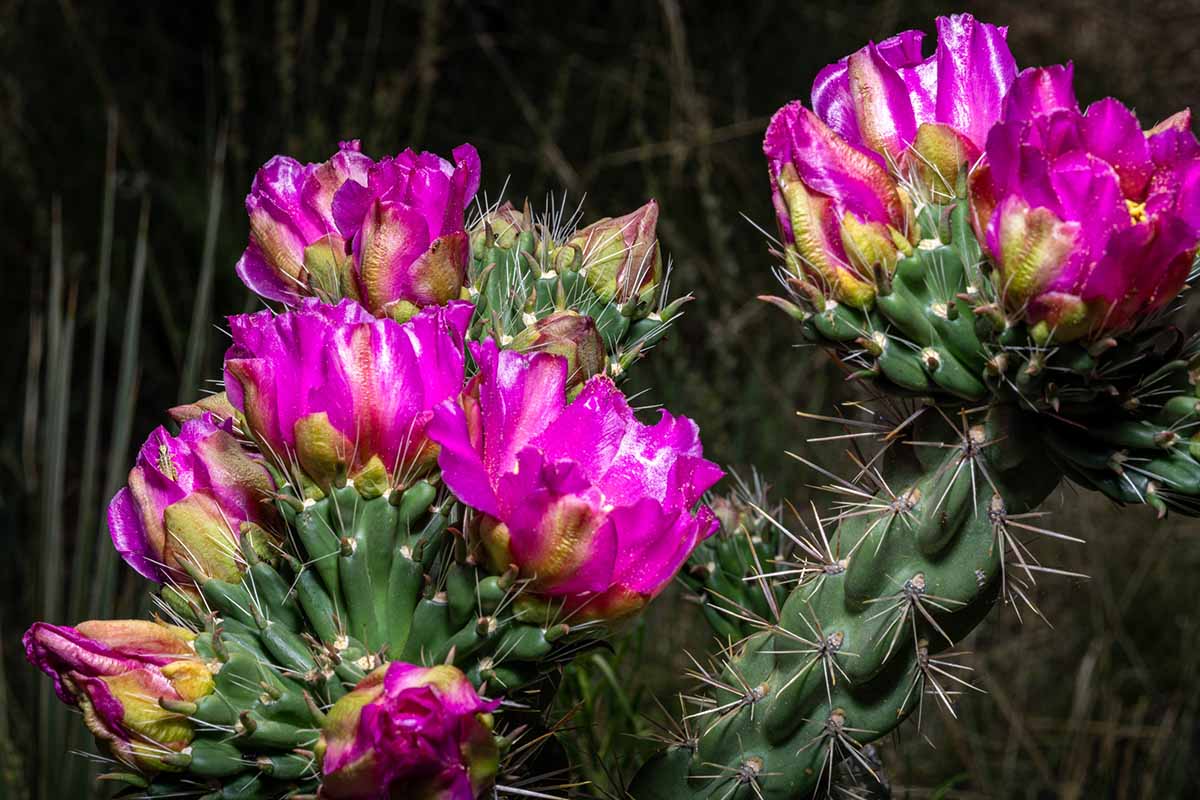
The late spring and early summer brings heaps of magenta, purple, or pinky blossoms on gray-green stems. The spines are reddish-pink, as well, with yellowy-tan sheaths.
It’s one of the more adaptable chollas, able to grow as far north as Zone 5 and can tolerate super hot, dry summers.
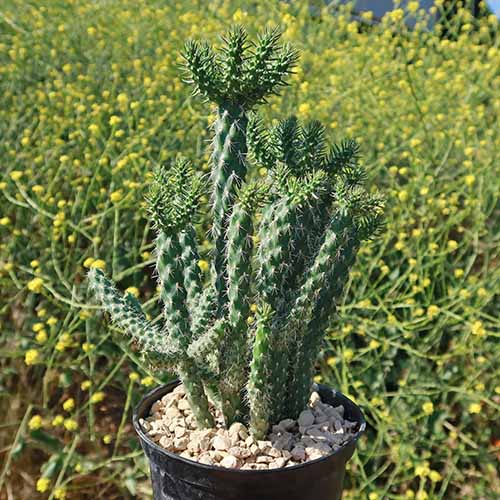
You can find this species in four- and six-inch pots available at Planet Desert.
Pencil
Pencil cholla (C. arbuscula) takes its name from its long, thin stems, most around the diameter of your pinky.
The flowers are yellow-orange to pale reddish-orange, and the spines are white, yellow, or tan, with white or yellow sheaths.
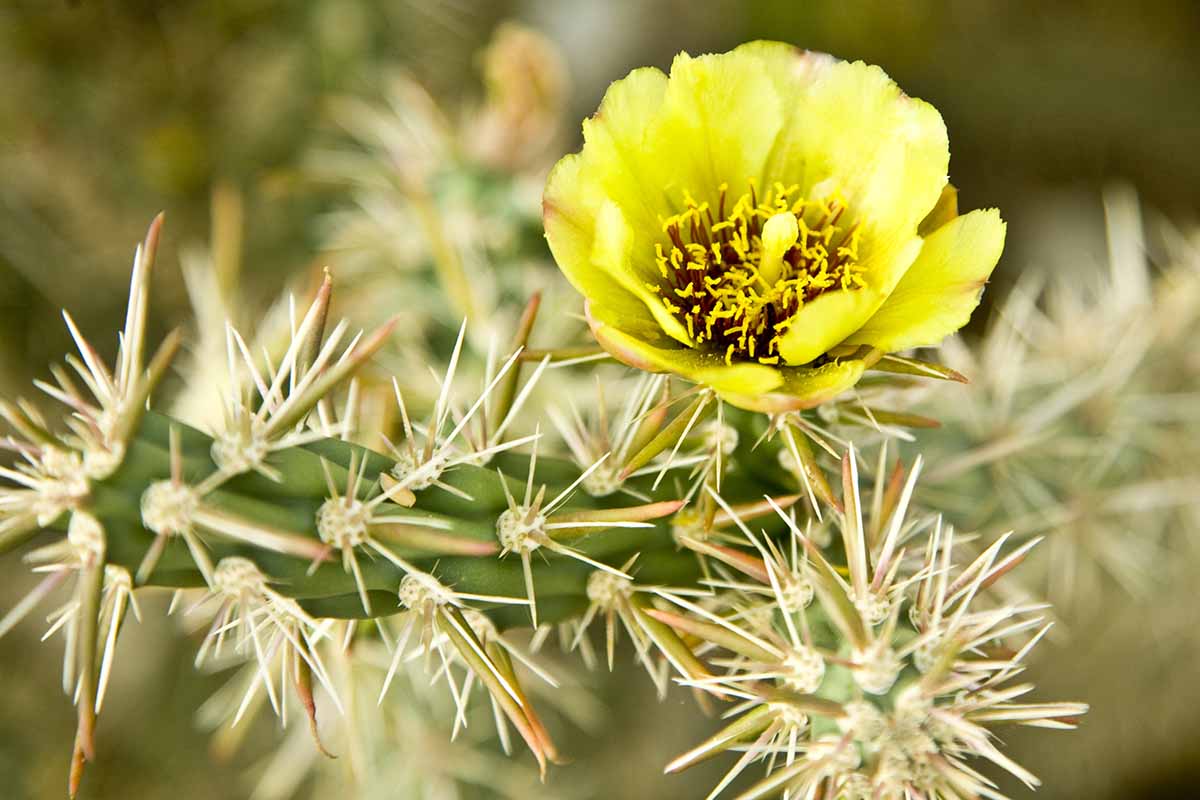
Although it’s capable of reaching up to nine feet in height, it typically stays much smaller than that, around four feet tall in the home garden and often wider than tall.
Having said that, it’s not common in cultivation, so you might have to propagate your own from a permitted source. This one is hardy in Zones 5 to 11.
Silver
C. echinocarpa can grow up to seven or so feet tall with gray-red-brown-tan spines and green segments. The sheaths are whitish yellow.
The flowers are a little less showy than those of some species, but still beautiful, with a green-yellow to pinkish-brown color.
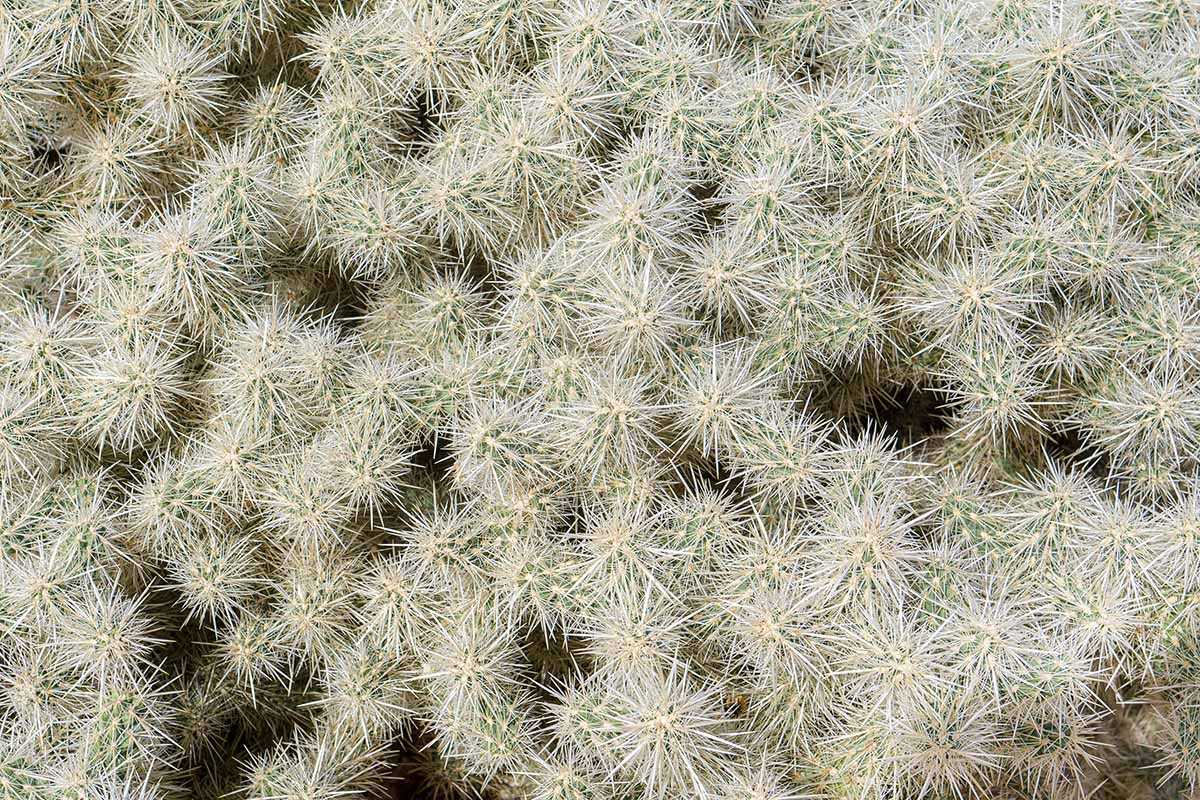
This plant likes a warmer climate than some others in the genus, needing Zone 6 and up to thrive.
It’s not an ideal choice if you are interested in harvesting the fruits, since they tend to have an unpleasant flavor and fragrance, and the majority will drop from the plant before they mature.
Staghorn
If it’s flowers that you want, C. versicolor delivers. Each individual plant can have varying blossom colors, or they will all be one color.
Within the species, the blossoms may be red, orange, purple, yellow or any variant of these.
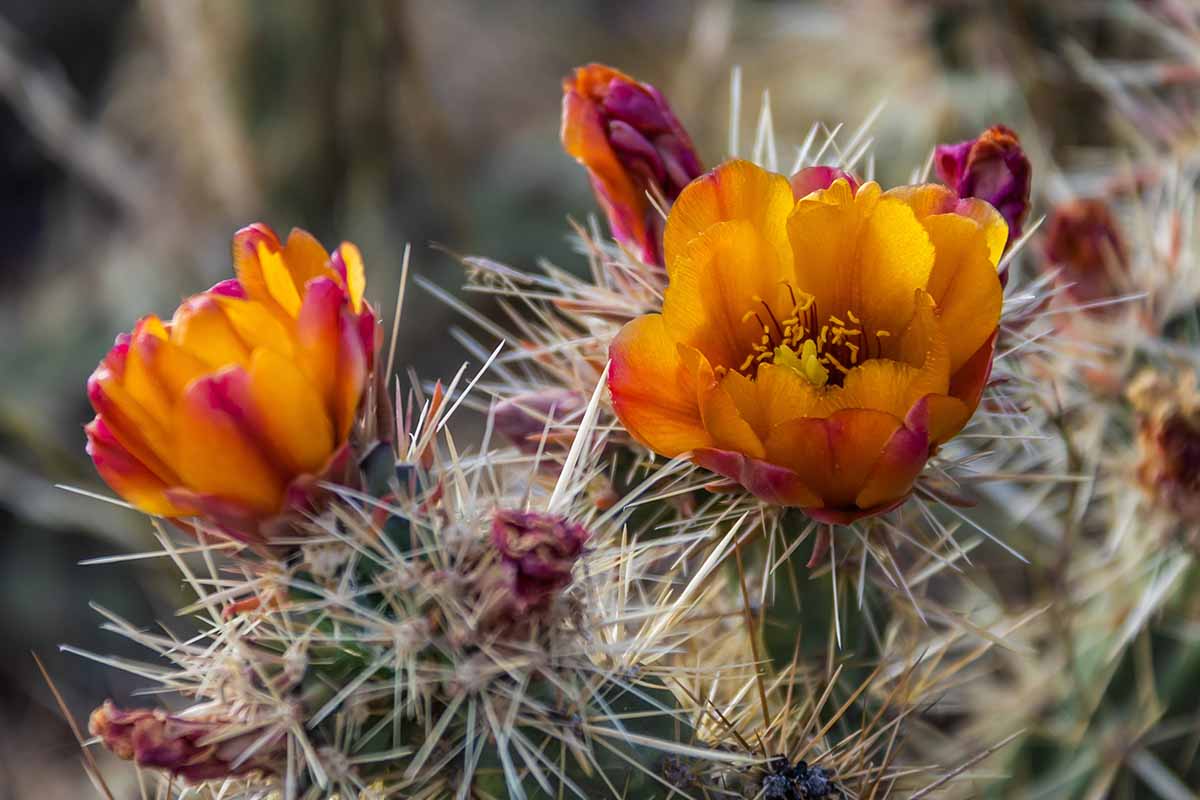
Growing anywhere from three to 15 feet tall, the plant has an openly branching habit that does indeed look like tangled horns.
The pink, white, or gray spines are shorter than many species and they don’t overlap, which gives staghorn a distinctive appearance. The sheaths are gray.
This is a popular species because the short spines make it less likely to stab you in the garden. It can grow in Zones 5 to 11.
Teddy Bear
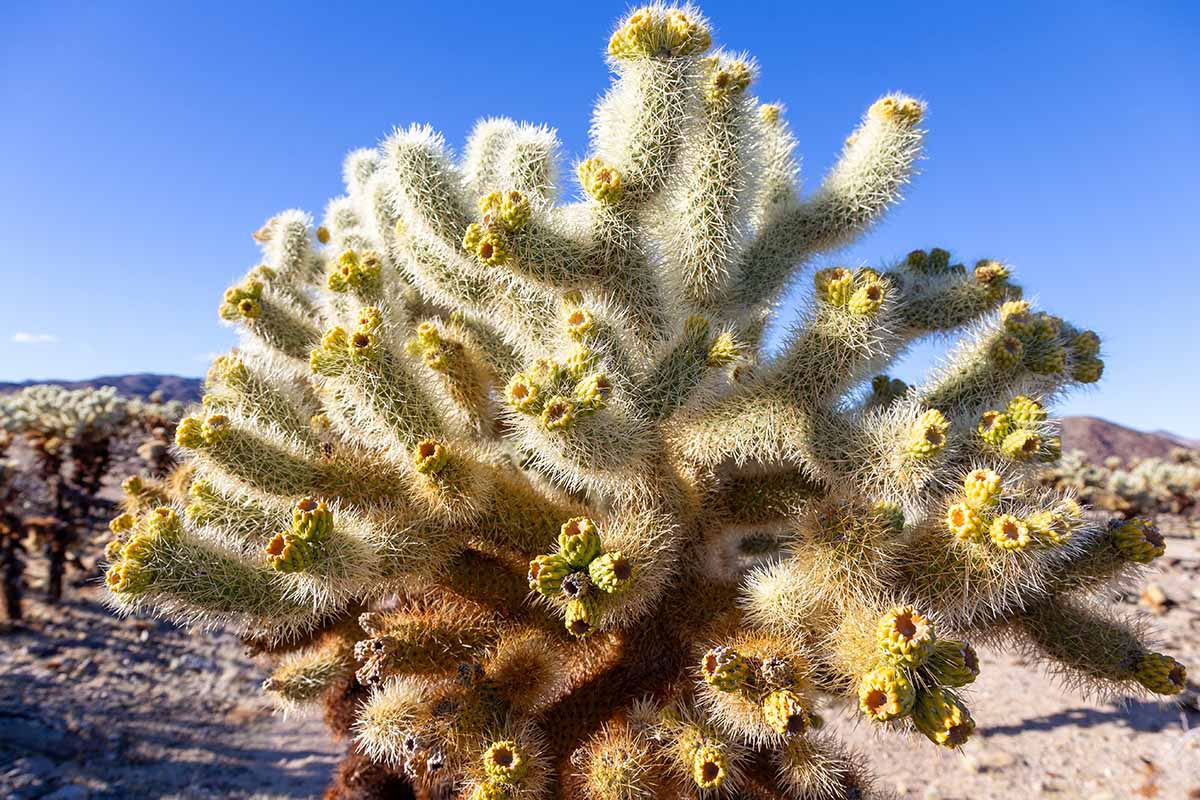
This adorable cactus is so packed with spines that it resembles a fluffy teddy bear. Just don’t try to snuggle with C. bigelovii.
It looks cute, but maintain a respectful distance unless you want an armful of spines.
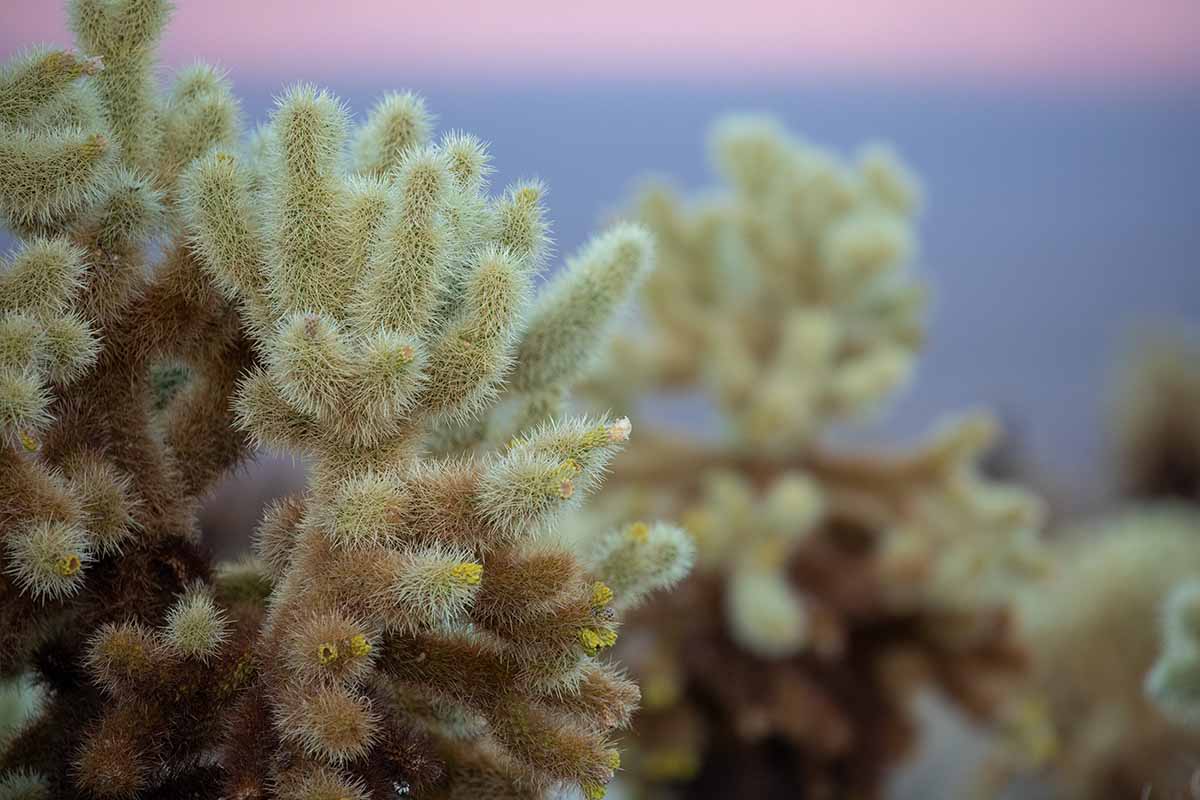
On top of the sheer number of the barbed hooks, the joints detach easily and will seemingly “leap” onto the nearest person or animal, so don’t plant it near a walkway or patio.
But observed from afar, it’s an interesting option. The younger growth is creamy yellow, while the trunk turns teddy brown as it ages.
In the late spring, yellow flowers speckle the plant, which can grow up to five feet tall in Zones 5 to 11.
The sheaths are silvery-white on spines that are whitish-tan, and they completely cover the cladodes so you can hardly even see what’s underneath.
It makes the cholla look fuzzy rather than spiky.
Maintenance
Be super careful when working around these plants. Even if you’re wearing leather gloves, the spines can penetrate and stab you. And they’re painful!
Many species drop their stem joints as a way of reproducing. These joints fall to the ground, take root, and a new plant starts. If you don’t want your cholla to spread, pick or rake these up.
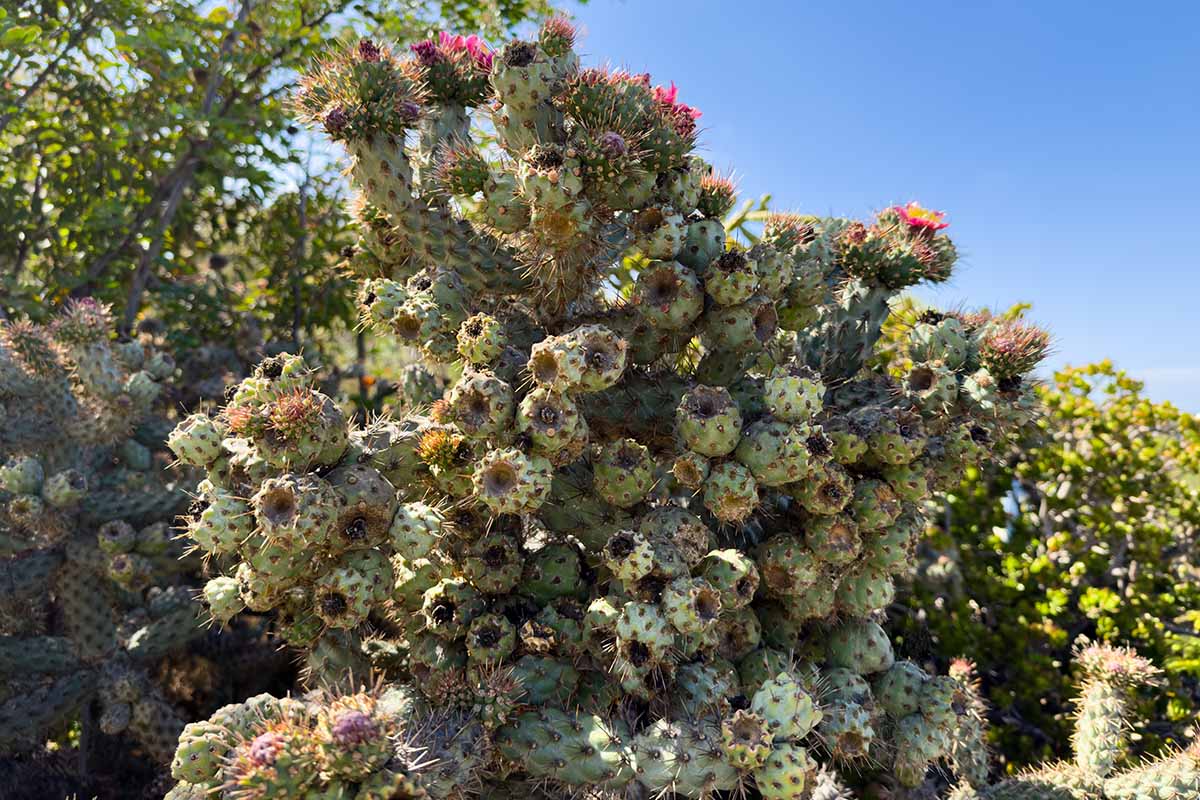
When the stems age, they die off and become hollow. You can remove these to improve the appearance. Cut them off at the base.
Some, like the walking stick cholla, are really cool looking and you can use them in decor or as walking sticks.
You don’t need to deadhead flowers, if you leave them in place, they will develop into fruits.
These fruits are technically edible, if not typically all that tasty. Animals will eat them, so they are a good source of food for wildlife.
If you have excessively cold weather, you might need to address cold damage. You can learn how to do that here.
Propagation
It’s possible to grow a cholla cactus from seed, but the process is slow and unreliable. It’s much faster and easier to use a vegetative reproduction method instead.
From Cuttings
Cuttings are fast and easy to propagate. The key is allowing the cutting to “cure” and form a callus before you set it into soil.
Start this process in the spring or early summer. Cuttings taken in fall and winter are prone to rot.
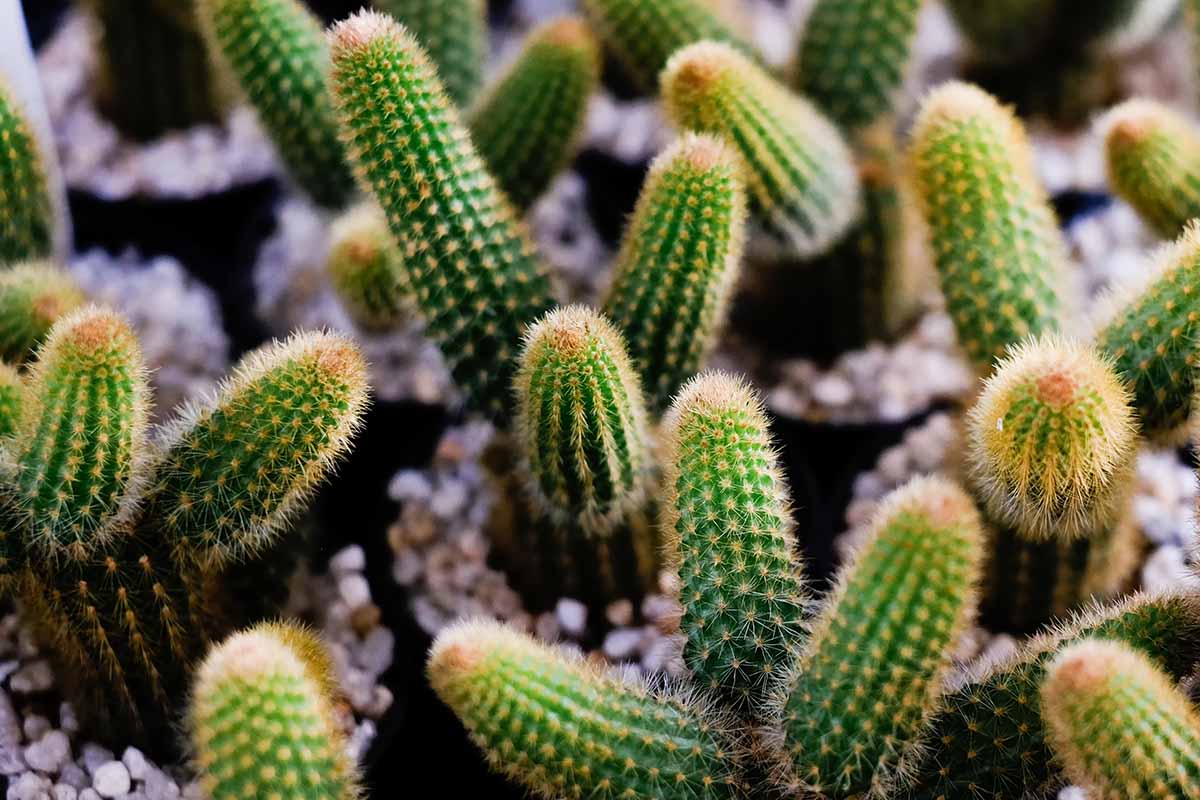
The hardest part of taking cuttings is avoiding injury, so put on gloves and wear a heavy leather or denim jacket while you work.
Carefully snip off a cladode by holding it with a pair of tongs and using pruners to make the cut.
If you examine a cholla cactus, it will be darker on the side facing the sun and paler on the other side. Note which direction the cutting was facing so you can reorient it that way once you plant.
Allow the cuttings to sit in a dry, bright, well-ventilated spot to form a callus. This is a necessary stop to ensure that the cutting doesn’t rot when you put it in the soil.
After the base feels dry and slightly firm, set the cutting in a container filled with cactus potting mix and gently firm the medium around the base slightly.
You don’t want to bury it, but ensure that all the base is in contact with the medium.
Water initially and allow the soil to dry out in between watering.
Once roots start to develop, you can transplant and reduce watering. You’ll know roots have developed when the cutting starts to grow or if you give it a gentle tug and it resists.
Transplanting
If you buy a potted cholla from a nursery, you’ve got a challenge ahead of you to avoid getting stabbed when transplanting.
Don some sturdy clothing and leather gloves and maybe even grab some tongs.
Dig a hole that is the same size as the growing container that the cactus is growing in.
Turn the container on its side and gently press and squeeze it to loosen the soil.
You can optionally cut away the container or gently grip the plant and pull it free from the container.
Set it in the hole and gently replace the soil. The cactus should be at the same depth or slightly less than it was in the container.
Add a bit of water.
Pests and Disease
There is really very little in terms of pests or disease that will bother chollas.
It’s not just herbivores that steer clear of feeding on these, but pests do, too.
Actually, I should note that goats will sometimes eat them, so they aren’t safe from those cute little sentient garbage disposals.
About the only problem you have to be aware of is root rot caused by overwatering. Like I’ve hammered home previously, you can’t overwater these plants.
If you do, it will essentially smother the roots and they will drown, killing the plant.
Water needs largely depend on the soil composition.
It’s much easier to overwater in water-retentive soil. Truly sandy, rocky, well-draining soil on a slope is going to be much more difficult to overwater.
Holla for Cholla Cacti
For a dry garden, whether you’re doing the Mediterranean thing or want to reduce your water usage, a cholla cactus will make a bold statement.
The colorful spines and sheaths, the brilliant flowers, and the unusual shape make it enchanting.
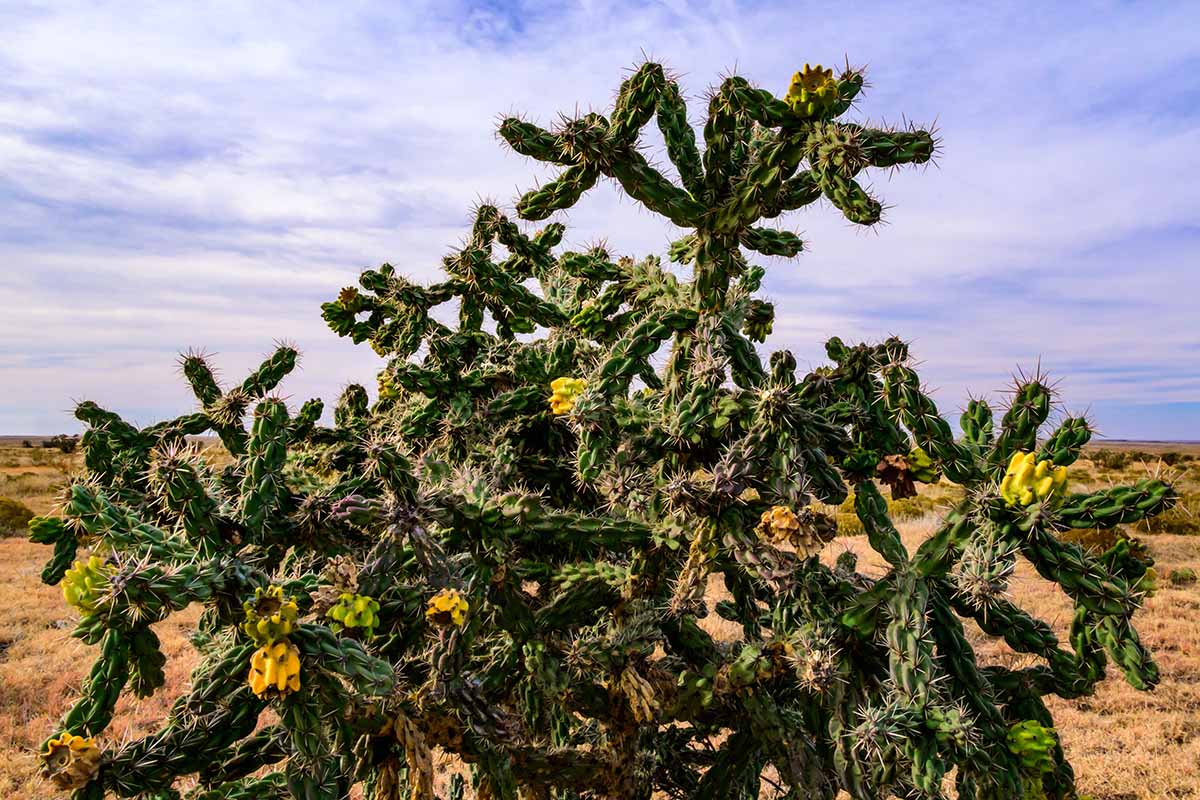
The low water needs and lack of problems from pests and disease just make it all the more appealing. Let us know in the comments how you intend to enjoy your new prickly friend.
And to learn more about other types of cacti to grow in your landscape, add these guides to your reading list next:

