A bandage is seen on a child’s arm after she received a COVID vaccine on November 3, 2021 in Shoreline, Washington.
David Ryder/Getty Images
hide caption
toggle caption
David Ryder/Getty Images
The federal government has drastically scaled back the number of recommended childhood immunizations, sidelining six routine vaccines that have safeguarded millions from serious diseases, long-term disability, and death.
Just three of the six immunizations the Centers for Disease Control and Prevention says it will no longer routinely recommend — against hepatitis A, hepatitis B, and rotavirus — have prevented nearly 2 million hospitalizations and more than 90,000 deaths in the past 30 years, according to the CDC’s own publications.
Vaccines against the three diseases, as well as those against respiratory syncytial virus, meningococcal disease, flu, and COVID, are now recommended only for children at high risk of serious illness or after “shared clinical decision-making,” or consultation between doctors and parents.
The CDC maintained its recommendations for 11 childhood vaccines: measles, mumps, and rubella; whooping cough, tetanus, and diphtheria; the bacterial disease known as Hib; pneumonia; polio; chickenpox; and human papillomavirus, or HPV.
Federal and private insurance will still cover vaccines for the diseases the CDC no longer recommends universally, according to a Department of Health and Human Services fact sheet; parents who want to vaccinate their children against those diseases will not have to pay out-of-pocket.
Experts on childhood disease were baffled by the change in guidance. HHS said the changes followed “a scientific review of the underlying science” and were in line with vaccination programs in other developed nations.
HHS Secretary Robert F. Kennedy Jr., an anti-vaccine activist, pointed to Denmark as a model. But the schedules of most European countries are closer to the U.S. standard upended by the new guidance.
For example, Denmark, which does not vaccinate against rotavirus, registers around 1,200 infant and toddler rotavirus hospitalizations a year. That rate, in a country of 6 million, is about the same as it was in the United States before vaccination.
“They’re OK with having 1,200 or 1,300 hospitalized kids, which is the tip of the iceberg in terms of childhood suffering,” said Paul Offit, the director of the Vaccine Education Center at the Children’s Hospital of Philadelphia and a co-inventor of a licensed rotavirus vaccine. “We weren’t. They should be trying to emulate us, not the other way around.”
Public health officials say the new guidance puts the onus on parents to research and understand each childhood vaccine and why it is important.
Here’s a rundown of the diseases the sidelined vaccines prevent:
RSV. Respiratory syncytial virus is the most common cause of hospitalization for infants in the U.S.
The respiratory virus usually spreads in fall and winter and produces cold-like symptoms, though it can be deadly for young children, causing tens of thousands of hospitalizations and hundreds of deaths a year. According to the National Foundation for Infectious Diseases, roughly 80% of children younger than 2 who are hospitalized with RSV have no identifiable risk factors. Long-awaited vaccines against the disease were introduced in 2023.
Hepatitis A. Hepatitis A vaccination, which was phased in beginning in the late 1990s and recommended for all toddlers starting in 2006, has led to a more than 90% drop in the disease since 1996. The foodborne virus, which causes a wretched illness, continues to plague adults, particularly people who are homeless or who abuse drugs or alcohol, with a total of 1,648 cases and 85 deaths reported in 2023.
Hepatitis B. The disease causes liver cancer, cirrhosis, and other serious illnesses and is particularly dangerous when contracted by babies and young children. The hepatitis B virus is transmitted through blood and other bodily fluids, even in microscopic amounts, and can survive on surfaces for a week. From 1990 to 2019, vaccination resulted in a 99% decline in reported cases of acute hepatitis B among children and teens. Liver cancer among American children has also plummeted as a result of universal childhood vaccination. But the hepatitis B virus is still around, with 2,000-3,000 acute cases reported annually among unvaccinated adults. More than 17,000 chronic hepatitis B diagnoses were reported in 2023. The CDC estimates about half of people infected don’t know they have it.
Rotavirus. Before routine administration of the current rotavirus vaccines began in 2006, about 70,000 young children were hospitalized and 50 died every year from the virus. It was known as “winter vomiting syndrome,” said Sean O’Leary, a pediatrician at the University of Colorado. “It was a miserable disease that we hardly see anymore.”
The virus is still common on surfaces that babies touch, however, and “if you lower immunization rates it will once again hospitalize children,” Offit said.
Meningococcal vaccines. These have been required mainly for teenagers and college students, who are notably vulnerable to critical illness caused by the bacteria. About 600 to 1,000 cases of meningococcal disease are reported in the U.S. each year, but it kills more than 10% of those it sickens, and 1 in 5 survivors have permanent disabilities.
Flu and covid. The two respiratory viruses have each killed hundreds of children in recent years — though both tend to be much more severe in older adults. Flu is currently on the upswing in the United States, and last flu season the virus killed 289 children.
What is shared clinical decision-making?
Under the changes, decisions about vaccinating children against influenza, covid, rotavirus, meningococcal disease, and hepatitis A and B will now rely on what officials call “shared clinical decision-making,” meaning families will have to consult with a health care provider to determine whether a vaccine is appropriate.
“It means a provider should have a conversation with the patient to lay out the risks and the benefits and make a decision for that individual person,” said Lori Handy, a pediatric infectious disease specialist at the Children’s Hospital of Philadelphia.
In the past, the CDC used that term only in reference to narrow circumstances, like whether a person in a monogamous relationship needed the HPV vaccine, which prevents a sexually transmitted infection and certain cancers.
The CDC’s new approach doesn’t line up with the science because of the proven protective benefit the vaccines have for the vast majority of the population, Handy said.
In their report justifying the changes, HHS officials Tracy Beth Høeg and Martin Kulldorff said the U.S. vaccination system requires more safety research and more parental choice. Eroding trust in public health caused in part by an overly large vaccine schedule had led more parents to shun vaccination against major threats like measles, they said.
The vaccines on the schedule that the CDC has altered were backed up by extensive safety research when they were evaluated and approved by the FDA.
“They’re held to a safety standard higher than any other medical intervention that we have,” Handy said. “The value of routine recommendations is that it really helps the public understand that this has been vetted upside down and backwards in every which way.”
Eric Ball, a pediatrician in Orange County, Calif., said the change in guidance will cause more confusion among parents who think it means a vaccine’s safety is in question.
“It is critical for public health that recommendations for vaccines are very clear and concise,” Ball said. “Anything to muddy the water is just going to lead to more children getting sick.”
Ball said that instead of focusing on a child’s individual health needs, he often has to spend limited clinic time reassuring parents that vaccines are safe. A “shared clinical decision-making” status for a vaccine has no relationship to safety concerns, but parents may think it does.
HHS’ changes do not affect state vaccination laws and therefore should allow prudent medical practitioners to carry on as before, said Richard Hughes IV, an attorney and a George Washington University lecturer who is leading litigation against Kennedy over vaccine changes.
“You could expect that any pediatrician is going to follow sound evidence and recommend that their patients be vaccinated,” he said. The law protects providers who follow professional care guidelines, he said, and “RSV, meningococcal, and hepatitis remain serious health threats for children in this country.”
This story comes from NPR’s health reporting partnership withKFF Health News, a national newsroom that produces in-depth journalism about health issues. KFF Health News is one of the core operating programs at KFF, the independent source for health policy research, polling, and journalism.
Unlike just growing flowering plants in your backyard, cut flower garden involves designing that escort beauty and fragance to your gardening space.
You must be creative to arrange seasonal blooms to experiment with different colors, shapes and texture.
Whether you’re an experienced gardener or a complete beginner, growing flowers specifically for cutting lets you enjoy fresh arrangements indoors all season long.
From cottage-style plantings to structured raised beds, there are endless ways to design a space that keeps your vases full and your garden buzzing with life.
Before starting it is important that you plant your cut flower garden. Requiremens like soil, sunlight and watering needs are to be considered in planning phase.
60 Popular Cut Flower Garden Ideas
Start your cut flower garden with long lasting flowering plants like roses, lilies and zinnias. Combining a mix of perennials and annuals guarantee year long floral display.
Create pathways between the garden layout for easy walkthrough.
1. Classic Cottage-Style Cut Flower Garden
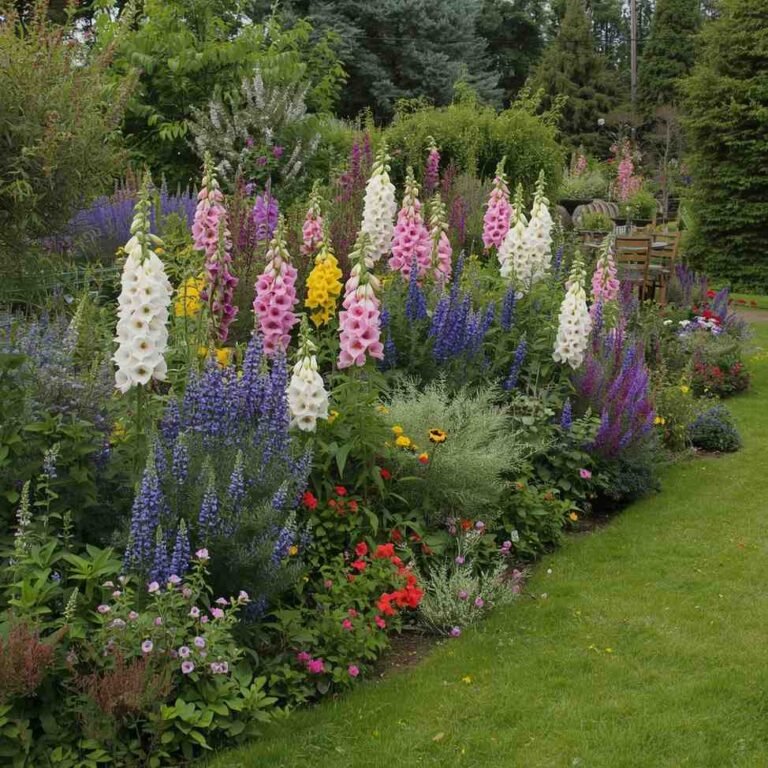
A cottage-style garden is perfect for anyone who loves an overflowing, storybook-like look. Packed with nostalgic blooms like foxgloves, hollyhocks, delphiniums, and old roses, it creates a soft, enchanting feel in your backyard.
The mix of heights and textures adds depth, while the natural, slightly messy layout ensures something is always blooming. You’ll enjoy constant color and plenty of stems snipped straight from that romantic, old-world charm.
2. Raised Bed Cut Flower Garden
Raised beds give your cut flower garden a neat, structured appearance while improving soil drainage and warmth. They are especially helpful if you’re working with rocky, clay-heavy, or poor soil.
You can assign each raised bed to specific flower families—filler flowers in one, focal blooms in another—making planting and harvesting incredibly easy. Plus, the elevated height keeps maintenance comfortable.
3. All-Annual Cutting Garden
Annuals like zinnias, cosmos, marigolds, and sunflowers provide nonstop blooms from early summer to frost. They grow fast, produce abundantly, and are perfect for gardeners who want weekly bouquets.
Since annuals bloom their hearts out in a single season, you’ll enjoy vibrant, vase-ready stems with minimal waiting time. Succession planting every few weeks keeps the display fresh and continuously productive.
4. Drought-Tolerant Cut Flower Garden
If you live in a hot or dry region, consider drought-tolerant favorites like lavender, yarrow, strawflower, and rudbeckia. These flowers stay healthy even through long dry spells, requiring far less watering.
They also offer excellent vase life, with many varieties retaining their shape and color even when dried. This makes them perfect for both fresh and everlasting bouquets.
5. Wildflower-Themed Cutting Patch
A wildflower garden brings natural beauty with little effort, using varieties like gaillardia, bachelor’s buttons, coreopsis, and poppies. The mix creates a breezy, meadow-like feel filled with butterflies and bees.
Their more relaxed and whimsical look gives bouquets an airy, natural vibe. It’s the perfect choice for gardeners who love a free-flowing, low-maintenance cutting space.
6. Rose-Dominant Cutting Garden
Roses bring unbeatable fragrance and elegance to any bouquet, making them a must-have for passionate cut-flower gardeners. Hybrid teas, David Austin varieties, and long-stemmed floribundas all work beautifully.
Planting roses in rows improves airflow, which keeps them healthier and produces stronger stems. Pair them with filler plants and greenery for fuller, richer flower arrangements.
7. Fragrance-Focused Cut Flower Garden
If scent is your priority, mix fragrant beauties like sweet peas, stock, lilacs, lilies, and gardenias. These flowers bring a delightful aroma indoors, filling rooms with natural perfume.
Combining early-, mid-, and late-season scented flowers ensures your bouquets always smell lovely. It’s an excellent way to make your floral arrangements feel luxurious and memorable.
8. Vertical Trellis Cutting Garden
Adding trellises helps climbing flowers like sweet peas, clematis, morning glories, and climbing roses grow upward. This maximizes your space while adding height and structure to your garden.
Vertical gardening also improves airflow, producing longer, straighter stems perfect for cutting. It’s ideal for small backyards or gardeners wanting dramatic, towering blooms.
9. Perennial-Only Cutting Garden
Perennials offer dependable blooms year after year, making them a long-term investment. Flowers like peonies, phlox, daisies, and echinacea provide strong stems and reliable blooming cycles.
Though perennials don’t bloom as continuously as annuals, they bring structure, longevity, and seasonal beauty. Over time, they fill out beautifully and require far less replanting.
10. Color-Themed Cutting Garden
A color-themed garden—like all whites, warm sunset tones, or cool pastel palettes—creates a visually stunning and intentional design. It helps your bouquets always feel cohesive and artistic.
Working within a color scheme simplifies plant selection and ensures your garden looks harmonious even from a distance. It’s a fun way to add personality while keeping things coordinated.
11. Butterfly-Friendly Cut Flower Garden
Butterflies flock to nectar-rich flowers like zinnias, lantana, verbena, and coneflowers. These blooms not only look gorgeous but also help support local pollinator populations.
A garden fluttering with butterflies feels lively and enchanting while giving you stems bursting with color. It’s a stunning combination of beauty and ecological benefit.
12. Bee-Friendly Cutting Patch
Bees love flowers like cosmos, lavender, borage, sunflowers, and oregano blooms. Planting these boosts pollination in your garden while supplying vibrant stems for your home.
This type of garden is especially helpful if you grow vegetables nearby, as bees improve yields. Plus, the flowers themselves offer wonderful movement and charm in bouquets.
13. Shade-Tolerant Cut Flower Garden
If your yard gets only partial sun, opt for shade-friendly florals like foxglove, hydrangea, astilbe, and columbine. These plants thrive in dappled or filtered light.
Their softer, woodland-style blooms create delicate, romantic arrangements. Shade gardens also tend to stay lush and cool throughout summer, making maintenance easier.
14. Farm-Style Row Garden
A traditional farm-style layout features long, straight rows packed with productive bloomers like snapdragons, lisianthus, celosia, and dahlias. This structure maximizes efficiency and yield.
Row planting makes watering, weeding, fertilizing, and harvesting a breeze. It’s especially helpful if you plan to grow cut flowers in larger quantities or sell bouquets.
15. Small Backyard Cutting Garden
Even a tiny space can become a productive cutting garden with clever planning. Narrow beds, vertical supports, tiered planters, and compact varieties make the most of limited room.
Choose smaller plants like dwarf zinnias, mini dahlias, and shorter sunflowers to avoid overcrowding. With the right layout, you can still enjoy a steady supply of homegrown bouquets.
16. Herb-and-Flower Mixed Cutting Garden
Mixing herbs like basil, rosemary, dill, and mint with blooms such as marigolds, cosmos, and calendula adds fragrance and texture to your garden and arrangements.
Herbal foliage makes bouquets smell amazing, and many herbs repel pests naturally. This creates a functional space that serves both your kitchen and your vase.
17. Container Cut Flower Garden
Growing cut flowers in containers is perfect for patios, terraces, and small gardens. You can experiment with dahlias, ranunculus, snapdragons, and cosmos in large pots or buckets.
Containers let you control soil quality, rearrange your garden easily, and grow flowers even if you’re renting. Just ensure they get enough sun and consistent watering.
18. Dahlia-Heavy Cutting Garden
Dahlias are beloved for their huge variety of colors, patterns, and styles—from dinnerplate blooms to pompons. They provide endless drama and beauty in bouquets.
Planting lots of dahlias ensures a summer-to-frost display that grows more impressive each week. Support their stems well, and you’ll harvest bucketloads of stunning blooms.
19. Foliage-Focused Cut Garden
A garden dedicated to foliage plants like eucalyptus, dusty miller, coleus, and ornamental grasses ensures your bouquets always look full and structured. Greens are the secret to professional-looking arrangements.
These plants grow vigorously and provide texture, contrast, and a cooling balance to bright blooms. Having dedicated foliage on hand elevates your floral designs effortlessly.
20. Succession-Planting Cut Flower Garden
Succession planting means sowing new seeds every two to three weeks, especially for fast growers like zinnias, cosmos, calendula, and sunflowers. This keeps the flower supply steady all season long.
By staggering your plantings, you prevent gaps in blooming cycles and always have fresh stems ready for cutting. It’s the perfect strategy for consistent bouquets from spring to fall.
21. Pollinator Pathway Cutting Garden
A pollinator pathway uses connected plantings of nectar-rich flowers to attract bees, butterflies, and hummingbirds. Blooms like salvia, echinacea, and cosmos keep the garden buzzing with life.
This type of garden not only helps local wildlife but also boosts flower production. More pollinators mean healthier plants and more stems for cutting throughout the season.
22. Sunflower-Focused Cutting Patch
Sunflowers are unbeatable for cheerful, bold arrangements, offering varieties from classic yellows to deep reds and bi-colors. They grow quickly and produce long, sturdy stems.
Mix branching sunflowers with single-stem varieties to get continuous blooms. Their vibrant appearance makes every bouquet instantly uplifting.
23. Peony Border Garden
Peonies are beloved for their lush, ruffled blooms and incredible fragrance. They bloom for a short but spectacular period in late spring to early summer.
Planting a peony border ensures big, luxurious stems for arrangements each year with minimal maintenance. Once established, they come back stronger and fuller.
24. Seasonal Color Block Cutting Garden
Instead of mixing everything together, plant your flowers in color blocks—one bed for reds, one for pinks, one for whites, and so on. This creates a striking visual impact.
Color blocking simplifies harvesting for themed bouquets while giving your garden a bold painterly look. It’s also great for photographers and content creators.
25. Aromatic Herb & Bloom Pairing Garden
Pair aromatic herbs like lemon balm, lavender, and sage with flowers such as zinnias and cosmos. These combinations create beautiful arrangements with soft scents.
Herbs also help repel pests and improve airflow around your blooms. The result is a healthier, more fragrant cutting garden that’s both useful and beautiful.
26. Edible-and-Flower Mixed Cutting Patch
Mix edible flowers like calendula, nasturtium, borage, and violas with traditional cutting blooms. You’ll have decorative edible garnishes and bouquet fillers in one space.
This garden is especially fun for food lovers who enjoy plating meals beautifully. It also brings double the color and function to your backyard.
27. Vintage-Style Cutting Garden
Use nostalgic flowers like sweet peas, old garden roses, carnations, and scabiosa for a vintage-style garden. These blooms bring soft, romantic charm with a timeless feel.
The delicate petals and pastel tones look perfect in dainty, old-fashioned arrangements. It’s ideal for anyone who loves retro aesthetics or Victorian garden vibes.
28. Modern Minimalist Flower Garden
A minimalist garden features clean lines, lots of negative space, and select plant varieties. Choose flowers like calla lilies, alliums, and white dahlias for a modern look.
The simplicity highlights each flower’s form and makes harvesting easy. It’s perfect for those who prefer streamlined design over big, busy borders.
29. Moon Garden for Night-Blooming Cuts
Moon gardens use white or pale flowers like moonflower, white cosmos, nicotiana, and evening primrose that glow under moonlight. These blooms look magical at dusk.
They provide unique, ethereal stems for evening arrangements or nighttime entertaining. Plus, their fragrance is often strongest after sunset.
30. Beginner-Friendly Cutting Garden
A beginner garden focuses on easy, forgiving varieties like zinnias, marigolds, sunflowers, and snapdragons. These plants thrive even with minimal care.
This type of garden helps new gardeners build confidence while still producing tons of flowers. It’s the simplest path to weekly fresh bouquets.
31. Children’s Cut Flower Garden
Create a fun, simple garden with fast-growing flowers like sunflowers, cosmos, strawflowers, and zinnias. Kids love watching these colorful blooms pop up quickly.
Add stepping stones and small labels for an interactive experience. This garden encourages creativity and makes harvesting flowers a shared family activity.
32. Mini Greenhouse Cut Flower Setup
Using a small greenhouse lets you start seeds early and extend your growing season. Flowers like ranunculus, anemones, and snapdragons thrive in cooler temps.
This setup gives you earlier blooms and longer-lasting stems. It’s perfect for gardeners who want spring bouquets before the outdoor beds wake up.
33. Long-Stem Specialty Garden
Focus on varieties known for extra-long stems such as delphinium, snapdragons, lisianthus, and tall cosmos. These are ideal for dramatic, tall arrangements.
Growing these specialty blooms gives your bouquets a professional look. Support and trellising keep the stems straight and cut-ready.
34. Rainbow-Themed Cutting Garden
Plant flowers in a rainbow order—red, orange, yellow, green, blue, purple, pink. This makes your garden look like a vibrant, living spectrum.
It creates visually stunning beds and helps you harvest matching colors for coordinated bouquets. It’s a playful and cheerful garden style.
35. Spring-Only Cutting Garden
A spring garden focuses on bulbs and early bloomers like tulips, daffodils, ranunculus, and anemones. These flowers bring soft, fresh colors after long winters.
Spring cutting gardens look spectacular with little effort and provide the season’s first harvests. They pair beautifully in gentle, pastel bouquets.
36. Summer Explosion Cutting Garden
This garden emphasizes peak-summer blooms like zinnias, sunflowers, dahlias, marigolds, and celosia—plants that love heat and produce continuously.
A summer-heavy cutting garden ensures you’ll have bright, bold bouquets every week. It’s the perfect choice for gardeners who enjoy vibrant, energetic color palettes.
37. Fall-Themed Cut Flower Garden
Grow late-season flowers like chrysanthemums, asters, rudbeckia, and ornamental grasses. These plants keep the garden alive when most others start fading.
The autumn color palette—rust, gold, burgundy, and deep orange—creates warm, cozy fall bouquets. It’s an excellent way to extend your cutting season.
38. Cut Flower Garden with Decorative Paths
Design paths using mulch, gravel, bricks, or stepping stones to create structure around your flower beds. It makes the garden feel more intentional and easier to access.
Pretty pathways elevate the overall look, making harvesting smoother and enjoyable. They also keep your shoes clean even after watering or rain.
39. Mixed Height Layered Cutting Garden
Use tall flowers like sunflowers and hollyhocks in the back, medium plants like cosmos in the middle, and low growers like alyssum or marigolds in the front.
This layered approach creates depth and keeps all plants visible. The structure also makes harvesting simple since everything has its own place.
40. Backyard Flower Farm Style Garden
Transform your backyard into a mini flower farm with rows of productive varieties like lisianthus, zinnias, dahlias, and snapdragons. It mimics professional grower layouts.
With efficient spacing, irrigation, and succession planting, you’ll have enough blooms to fill your home—and share with neighbors or sell at local markets.
41. Xeriscape Cut Flower Garden
A xeriscape flower garden focuses on water-wise plants like lavender, coneflowers, yarrow, and globe thistle. These blooms thrive even in hot, dry climates with minimal irrigation.
This garden style reduces maintenance while still delivering gorgeous, long-lasting stems for arrangements. It’s perfect for gardeners dealing with water restrictions or naturally dry soil conditions.
42. Rustic Farmhouse Cutting Garden
Rustic farmhouse gardens mix sunflowers, black-eyed Susans, asters, and wild grasses for a warm, country feel. The look is relaxed, abundant, and charming.
Paired with wooden raised beds, galvanized buckets, or old crates, the space becomes decorative as well as productive. The harvested bouquets reflect that homey, cozy farmhouse vibe.
43. Bohemian-Style Cut Flower Garden
A boho garden uses free-flowing, textural flowers like amaranthus, cosmos, celosia, and ornamental grasses. Nothing is overly structured—everything feels whimsical and natural.
Bouquets from this garden look airy and artistic, often featuring trailing blooms and unique shapes. It’s perfect for gardeners who love relaxed, creative designs.
44. Tropical Cut Flower Garden
Grow dramatic tropical blooms like cannas, ginger lilies, hibiscus, and bird of paradise for bold, exotic arrangements. These plants bring vibrant color and lush foliage.
Tropical flowers create eye-catching bouquets that feel like vacation vibes in a vase. They thrive in warm, humid climates or can be grown in containers in cooler regions.
45. Patio Cut Flower Garden
If you’re gardening on a patio, use large containers, tiered stands, and railing planters filled with dahlias, zinnias, cosmos, and mini sunflowers. This keeps everything close and accessible.
Patio cutting gardens look beautiful and allow you to harvest flowers right outside your seating area. They’re perfect for renters and small-space gardeners.
46. Front-Yard Cut Flower Border
Make your front yard work double duty by planting a long border of daisies, phlox, roses, asters, and lilies. It adds curb appeal while supplying endless stems.
Visitors enjoy the display, and you get a garden that’s both ornamental and useful. It’s a smart way to blend beauty with practicality.
47. Backyard Archway Flower Garden
Install a metal or wooden arch covered with climbing flowers like roses, clematis, or sweet peas. This creates a beautiful entry point to your cutting garden.
The arch adds height, romance, and structural interest while offering long stems for harvesting. It instantly elevates the garden’s overall aesthetic.
48. Shady Woodland-Inspired Cut Garden
For gardens with dappled light, grow shade-loving flowers like astilbe, Japanese anemones, columbine, and ferns. These plants thrive under tall trees or along fences.
Their soft colors and delicate textures create dreamy, natural-looking arrangements. This style makes the most of spaces many gardeners ignore.
49. Raised Border Cutting Garden
A raised border uses slightly elevated mounds or built-up edges filled with perennials and annuals. It provides excellent drainage and adds visual shape to your yard.
These borders make flowers easier to harvest and help define pathways or garden zones. They look especially beautiful with layered height plantings.
50. Mixed Bulb Cut Flower Garden
Plant a variety of bulbs—tulips, alliums, lilies, gladiolus, and dahlias—for blooms from early spring to fall. Bulbs offer strong stems and striking shapes.
This garden gives you waves of color throughout the year. With careful planning, something is always popping up for your vases.
51. Japanese-Inspired Flower Garden
Use simple, elegant flowers like irises, peonies, camellias, and flowering branches to create a peaceful, Zen-like atmosphere. Less is more here.
These flowers make arrangements that feel serene and artistic. Paired with stones and water features, the garden becomes a tranquil retreat.
52. Fairy Garden-Themed Cut Flower Bed
Soft, whimsical flowers like violas, alyssum, foxgloves, and baby’s breath make your garden feel magical. Add tiny decorative elements for charm.
The harvested blooms are delicate and sweet, perfect for small table arrangements. Kids especially love this enchanting garden theme.
53. Evergreen Foliage & Bloom Combo Garden
Mix evergreen shrubs like boxwood or rosemary with seasonal blooms. This ensures your cutting garden looks good even in winter.
The evergreens provide structure while the flowers add seasonal color. Together, they create balanced bouquets and year-round visual interest.
54. White Garden (All-White Blooms)
A white garden uses flowers like white roses, daisies, phlox, snapdragons, and hydrangeas. It creates a clean, elegant, moonlit effect.
These monochromatic bouquets feel fresh and timeless. White gardens also look stunning in the evening when the blooms reflect ambient light.
55. Colorful Cottage Strip Garden
If you have a narrow area, plant a strip of mixed cottage blooms like delphiniums, daisies, poppies, and scabiosa. It turns unused edges into mini flower farms.
Strip gardens produce surprising amounts of stems while requiring very little space. They’re perfect for walkways, fences, or property edges.
56. Salvaged & Recycled Container Garden
Use old buckets, wooden crates, tin cans, and unused pots to create a charming recycled cutting garden. Fill them with easy growers like marigolds, cosmos, and zinnias.
This eco-friendly approach saves money while adding personality to your space. It’s creative, sustainable, and perfect for rustic or farmhouse decor lovers.
57. Mediterranean Cut Flower Garden
Mediterranean flowers like lavender, rosemary blooms, sage flowers, snapdragons, and rock roses thrive in warm, dry climates. Their silvery foliage adds extra beauty.
This garden style looks timeless and sun-kissed, offering herbs and blooms with great vase life. It’s ideal for low-maintenance gardeners.
58. Cottage Meadow Mix Garden
Combine meadow-style blooms like asters, cosmos, rudbeckia, and Queen Anne’s lace for a loose, natural look. These plants blend beautifully and grow with little fuss.
You’ll get airy, textured bouquets that feel like they came straight from the countryside. It’s perfect for a relaxed, wandering garden style.
59. Circular Cut Flower Garden Layout
Arrange your flower beds in circular patterns with a center focal point like a birdbath or statue. It creates symmetry and visual flow.
A circular layout is easy to walk around and makes harvesting simple from all sides. It also adds elegance to the space without needing much room.
60. High-Volume Flower Production Garden
Designed for gardeners who want LOTS of blooms, this garden uses intensive planting, spacing, and succession techniques. Rows of zinnias, dahlias, snapdragons, and strawflowers keep production high.
With proper planning, you can harvest buckets of flowers every week. It’s perfect for gifting, events, or starting a small home flower business.
Conclusion
By mixing seasonal favorites, experimenting with textures, and growing varieties you truly love, you’ll always have fresh flowers ready for your home.
From spring bulbs to fall classics, your garden can keep your vases full nearly all year long.
No matter which ideas you choose, the joy of stepping outside and gathering a handful of fresh, homegrown flowers never gets old—and that’s the magic of a blooming backyard.
Khaja Moinuddin, a computer science graduate, finds joy in gardening and homesteading. Join him on this blog as he shares his experiences in homesteading, gardening, and composting
Price: $39.99 - $29.99 (as of Jan 10, 2026 17:43:44 UTC – Details)
From the brand
With children’s health as our top priority, Biggerfive is committed to creating the best wearable technology products for children.
Encouragement is at the core of our philosophy, and we believe in the fierce power of familial encouragement to shape our kids for a healthier and happier tomorrow.
Biggerfive,happy to thrive!
Kids Fitness Watch without APP
Kids Multi-functional Watch
Kids Fitness Tracker
Brave Kids Smartwatch
10+ Sports Mode
All-Day Activity Tracking: BIGGERFIVE BRAVE 2 Smart Watch for Kids Teens Automatically counts steps, distance, calories burned, and active minutes. Supports 80 sports modes like walking, running, cycling, basketball, and more. Without/With APP: BIGGERFIVE kids fitness tracker watch can be used seperately without APP and phone. But with APP, you could explore more functions. Compatible with Android 6.0+ and iOS 9.0+ smartphones. Comprehensive Health Monitoring: Monitors real-time heart rate and tracks sleep patterns to promote your child’s well-being. Customizable Watch Face &1.8″ HD Touch Screen:Our kids smartwatch boasts a 1.8″ HD touch screen and offers 100+ exquisite cloud dials in APP BIGGERFIVE. Elevate personal style with custom dials using your kids’ own photos and ignite their creativity! Puzzle Games under Parents’ Control: 5 built-in puzzle games can help train your child’s reaction ability and calculation ability. You could restrict your child from playing games at school in the BIGGERFIVE APP (supports also lock game all the time). Encourages Healthy Habits & Perfect Gift Idea: BIGGERFIVE kids smart watch motivates children to develop good exercise habits and stay healthier. Ideal gift for birthdays, Christmas, and other special occasions.
Price: $27.99 (as of Jan 10, 2026 05:41:58 UTC – Details)
To calculate the overall star rating and percentage breakdown by star, we don’t use a simple average. Instead, our system considers things like how recent a review is and if the reviewer bought the item on Amazon. It also analyzed reviews to verify trustworthiness.Learn more how customers reviews work on Amazon
Customers say
Customers find the resistance band to be of above-average quality and excellent for home workouts, with one customer noting it works muscles better than dumbbells. However, the ease of use receives mixed feedback, with some finding it easy to put together while others say it's not the easiest to use.
AI Generated from the text of customer reviews Generated from the text of customer reviews
Customers find the resistance band effective for home workouts, with one customer noting it works muscles better than dumbbells, and another mentioning it helps with shoulder and biceps exercises.
"I love this pedal resistance band. It works my muscles better than dumbbells. It's easy to assemble and store away, and the quality is above average…."Read more
"…I just used these today. Feet in the holders, used for some shoulder and biceps. Need more weight add another band. Excellent"Read more
3 customers mention ease of use, 2 positive, 1 negative3 customers mention "Ease of use"2 positive1 negative
Customers have mixed opinions about the resistance band's ease of use, with some finding it easy to put together while others say it's not the easiest to use.
"…It works my muscles better than dumbbells. It's easy to assemble and store away, and the quality is above average…."Read more
"…It was easy to put together, but not the easiest to use. Standing on the foam ends weren’t easy to exercise with. I didn’t find it very effective."Read more
"…It was easy to put together, but not the easiest to use. Standing on the foam ends weren’t easy to exercise with. I didn’t find it very effective."Read more
I love this pedal resistance band. It works my muscles better than dumbbells. It's easy to assemble and store away, and the quality is above average. However, it doesn't stretch very far. I'm 5' 9" and have to sit down to get full extension for my upper body exercises. But besides that, I'm happy with my purchase overall. I recommend it.
Bought these for extra bands, for space saving and for quick workout pretty much anywhere. You could fit these in a purse. I just used these today. Feet in the holders, used for some shoulder and biceps. Need more weight add another band. Excellent
These r the real deal enough tension to give u results not enough to hurt u and u can adjust it from 25 to 100 pounds of resistance i do 100 a day already seeing results
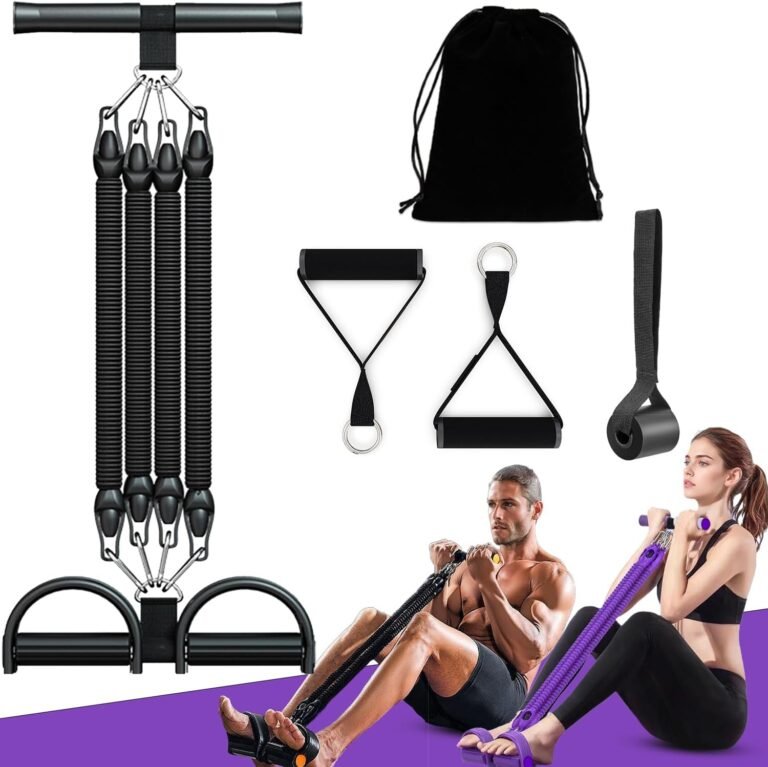
Product Summary: HELISAN 2026 Upgrade Foot Pedal Resistance Band, Adjustable 4-Tube Pedal Ankle Puller Resistance Band with Handle, Multifunction Home Gym Equipment, Stirrup Puller for Men Women for Full Body Exercise
From HELISAN 🏋️【Full Body Shaping&Fat Burning】HELISAN pedal resistance band can perform a full body workout, effectively stimulating multiple muscle groups, including the abdomen, chest, arms, shoulders, biceps, back and leg muscles, helping you to build a plump and curvy figure and create tighter muscle lines (Already Patented) 🏋️【Adjustable Pounds】4 Adjustable resistance tubes (25-100lb) suitable for users of different fitness levels. Whether you are a beginner or an experienced fitness enthusiast, you can easily adjust the resistance to suit your own situation, develop a personalized training plan, and progress step by step 🏋️【Safe & Durable Design】Pedal ankle puller resistance bands is made of high-quality natural latex. It is fully wrapped with gourd weaving to prevent breakage and bullet injuries. The foam-coated handle provides a firm grip, and the non-slip NBR pedal and thick buckle ensure a safe and comfortable exercise experience 🏋️【Multi-function & Convenient】Stirrup puller for exercise is easy to disassemble and assemble. Portable design, can be used at home, office, hotel or on the road anytime and anywhere, helping you maintain a regular exercise habit, is an excellent supplement to home fitness equipment 🏋️【Home Fitness Choice】Fitness resistance band set includes 4*25 lbs resistance tubes, 2*durable handles, 1*ankle pedal, 1*long handle, 1*door anchor, 1*storage bag and fitness action guide. It can be used for yoga, Pilates, stretching and strength training, 5 times a week, 30 minutes each time, to help you shape a perfect body
Some nights, the idea of cooking dinner feels heavier than the dinner itself.
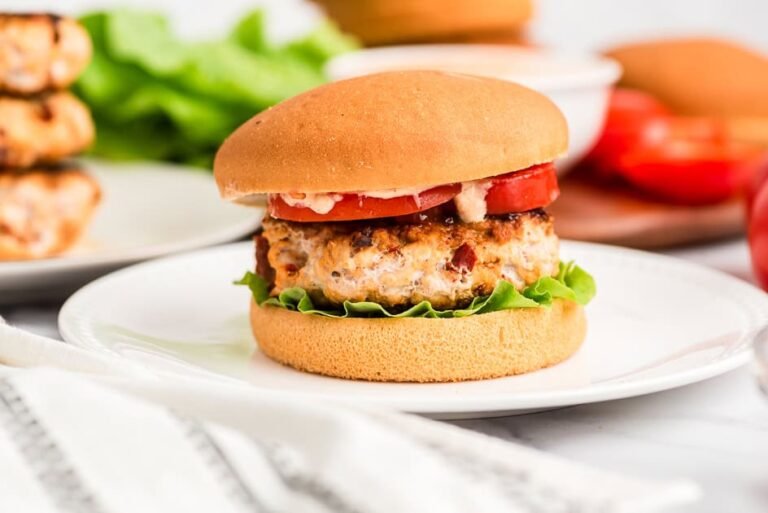
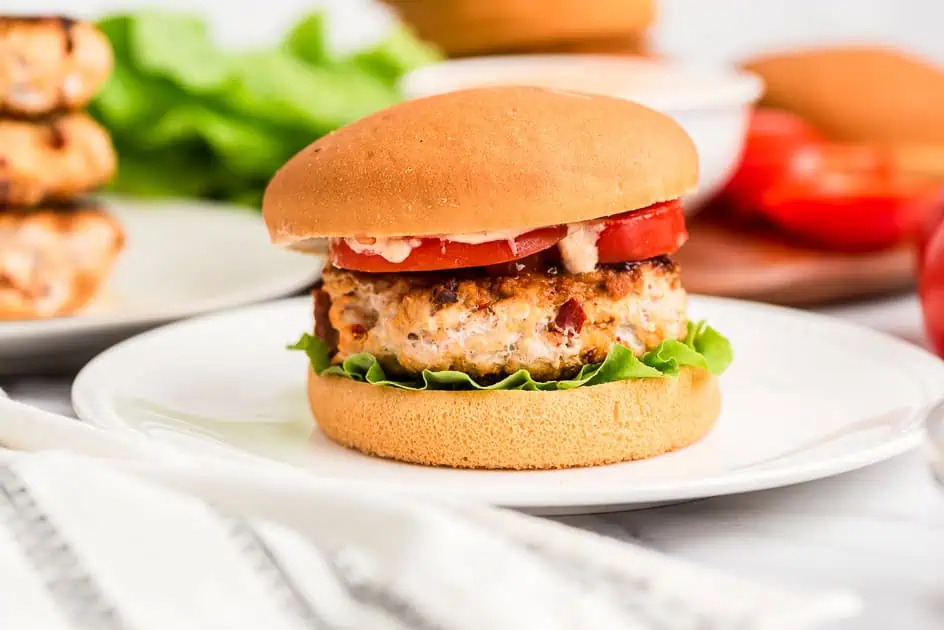
That’s exactly why I created these chipotle chicken burgers. When life feels full and energy is low, I still want something that tastes good, feels satisfying, and doesn’t require a cutting board parade or a sink full of dishes. These burgers are one of those meals that look impressive on the plate but are secretly very low effort.
Anytime I need dinner to hit without overthinking it, burgers are my go-to. They’re easy to make, fun to eat, and don’t ask much of me when I’m already running on fumes. After making my air fryer chicken burgers one too many times, I started playing around with different spice combinations just to keep things interesting without adding extra steps. This chipotle version was a quick win.
The ingredient list is short, the food processor does most of the work, and everything comes together quickly on the stovetop or in the air fryer. No sautéing, no separate sauce, no extra steps that sound reasonable on paper but feel impossible at 5:30 pm. You mix, shape, and cook. That’s it.
If you’re feeling brave, a little chipotle mayo on top takes these over the edge and makes dinner feel easy and fun again, even on nights when cooking is the last thing you want to deal with.
This post contains affiliate links. As an amazon associate I earn from qualifying purchases. Click here to read my policy and more about affiliate links.
Ingredient spotlight
A full list of the ingredients is below in the recipe card, this is just a highlight of a few key ingredients.
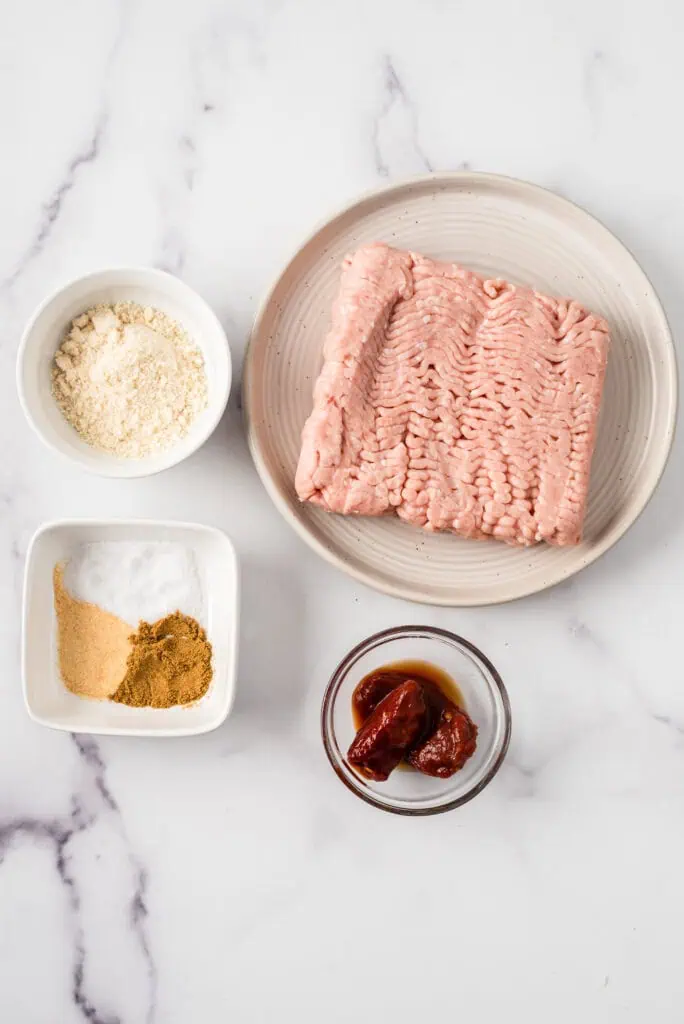
Ground chicken – I like using a 92/8 ground chicken for these burgers. Having a little fat in the mix helps keep them juicy and tender. You can go leaner, but you’ll want to keep a closer eye on them since ground chicken can dry out quickly.
Chipotle in adobo – These bring all the smoky, spicy flavor. Both the peppers and the sauce they’re packed in have heat, so if you’re not big on spice, start with just one pepper.
Almond flour – Instead of breadcrumbs, I use almond flour to help bind the burgers. It’s something I almost always have on hand and it works really well here. If you prefer, a gluten-free panko breadcrumb will also do the job.
Step by step instructions
Tips for Success
No food processor? No problem – If you don’t have a food processor, finely chop the chipotle in adobo and mix it with the almond flour and spices. The goal is just to distribute the chipotle evenly throughout the burgers.
Adjust the spice level to your comfort– Both the chipotle peppers and the sauce they’re packed in have heat. If you’re unsure, start with just one pepper. You can always add more spice later with a little chipotle mayo on top.
Use a lid when cooking on the stovetop – Covering the pan helps the burgers cook through evenly without needing to flip them multiple times.
Let carryover cooking do the work – If the burgers are just shy of 165°F, turn off the heat and leave them covered in the pan. The residual heat will finish cooking them without drying them out.
Let the burgers rest briefly before serving – Giving them a minute or two off the heat helps the juices redistribute and keeps them juicy.
Stovetop vs air fryer: – I tested these both ways and they’re delicious either way. The stovetop gives the best texture, but if you hate cleaning up after burgers, the air fryer is a great low-effort option.
Freeze leftover chipotle in adobo – If you don’t use the whole can, freeze the leftovers flat in a zip-top bag. You can break off a pepper or two whenever you want to add smoky heat to another meal.
★ Did you make this recipe? Please give it a star rating below!
In a small food processor combine the almond flour, chipotle in adobo, garlic powder, cumin and salt. Pulse until well combined.
¼ cup almond flour, 2 chipotle in adobo, ½ teaspoon garlic powder, ½ teaspoon ground cumin, ½ teaspoon sea salt
Move chipotle mixture to a bowl and add ground chicken. Stir well until the chipotle mixture is well combined.
1 pound ground chicken
Portion into 4 burgers. I roll them into balls then flatten with my hands. Be sure to press a small dimple on the top with your thumb to allow even cooking.
Preheat a large skillet over medium heat for 3-4 minutes. When preheated, spray with avocado oil and add the chipotle chicken burgers. Cook 4 minutes. After 4 minutes, flip the burgers with a spatula and cook an additional 6 minutes, covered.
Check internal temperature: Ground chicken should reach 165°F at the thickest part of the burger. Check from the side for the most accurate reading.
Keep burgers the same thickness: Form the burgers evenly so they cook at the same rate.
Add a dimple before cooking: Press a small dimple in the center of each burger to help them cook evenly and prevent puffing.
Air fryer option: These burgers can be cooked in the air fryer at 390°F for 15 minutes, no flipping required.
Storing leftovers: Store in the fridge for up to 3 days. Reheat in the air fryer or in the microwave until warmed through.
Nutrition Information
Nutrition Facts
Amount per Serving
Where does nutrition info come from? Nutrition facts are provided as a courtesy, sourced from the USDA Food Database.
SHARE THIS POST!
If you liked this post, share it with your friends and family!
Let others know by rating and leaving a comment below!
Ways to Serve Ground Chicken Chipotle Burgers
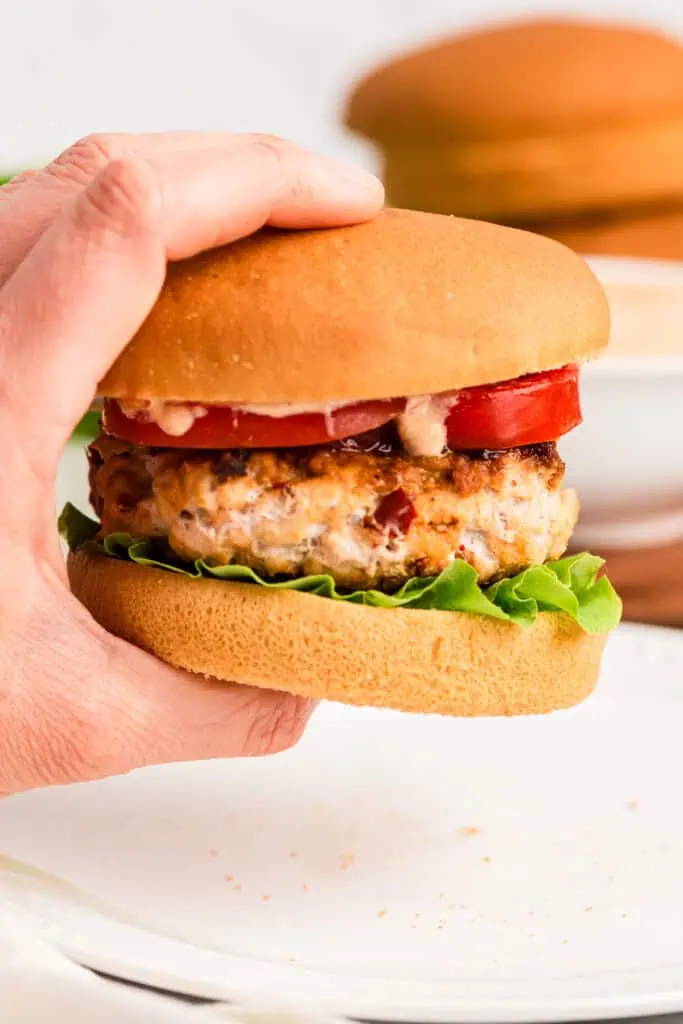
On a bun (my go-to): Serve these on a bun with lettuce, tomato, avocado slices, and a drizzle of bottled ranch dressing. Easy, familiar, and always a win.
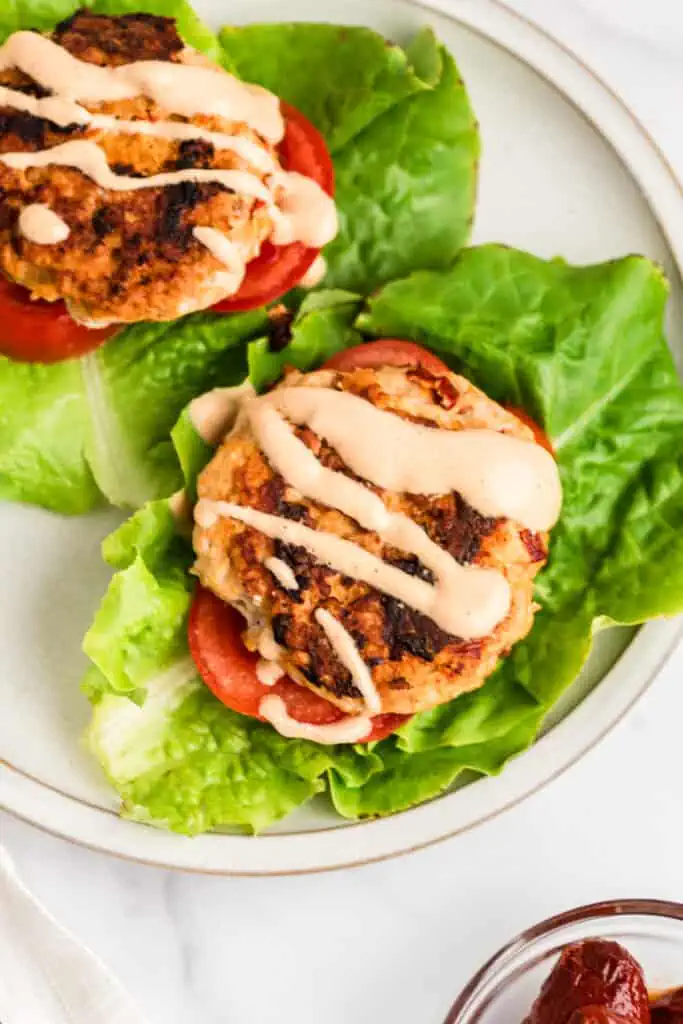
Lettuce wraps: Skip the bun and wrap the burgers in butter lettuce or romaine. Add chipotle mayo or a cilantro lime dressing for extra flavor without extra effort.
Burger bowl style: Serve the burgers over greens with avocado, tomatoes, and lime tahini sauce (or whatever sauce you love). This is a great option if you’re out of buns but still want dinner to feel complete.
Experts think this is partly thanks to cognitive reserve: Basically, the more brain power you’ve built up over the years, the more you can stand to lose before you experience impairment. Researchers still don’t agree on how to measure cognitive reserve, but one theory is that better connections between different brain regions corresponds with more cognitive reserve.
To build up these connections, you need to stimulate your brain, said Dr. Joel Salinas, a neurologist at NYU Langone Health and the founder and chief medical officer of the telehealth platform Isaac Health. To do that, try an activity that is “challenging enough that it requires some effort but not so challenging that you don’t want to do it anymore,” he said.
Speaking a second language has been shown to be good for cognition, as has playing a musical instrument, visiting a museum and doing handicrafts like knitting or quilting. Reading is considered a mentally stimulating hobby, and experts say you’ll get an even bigger benefit if you join a book club to make it social. Listen to a podcast to learn something new, or, better yet, attend a lecture in person at a local college or community center, said Dr. Zaldy Tan, the director of the Memory and Healthy Aging Program at Cedars-Sinai. That adds a social component, plus the extra challenge of having to navigate your way there, he said.
A fewstudies have found that playing board games like chess can be good for your brain; the same goes for doing crossword puzzles. It’s possible that other types of puzzles, like those you find in brain teaser books or from New York Times Games, can also offer a cognitive benefit.
But there’s a catch: To get the best brain workout, the activity should not only be challenging but also new. If you do “Wordle every day, it’s like well, then you’re very, very good at Wordle, and the Wordle part of your brain has grown to be fantastic,” said Dr. Linda Selwa, a clinical professor of neurology at the University of Michigan Medical School. “But the rest of your mind might still need work.”
So play a game you’re not used to playing, Dr. Selwa said. “The novelty seems to be what’s driving brain remodeling and growth.”
Today, we want you to push yourself out of your cognitive comfort zone. Check out an online lecture or visit a museum with your challenge partner. Or try your hand at a new game, below. Share what novel thing you did today in the comments, and I’ll see you tomorrow for Day 5.
When you’re planning your garden, you have to know how much space to give to each plant.
Sure, the seed packets usually recommend how far apart to grow, but how deep will the roots reach?
Is my raised bed deep enough? What about the leaves? Will they grow so tall that they shade the neighbors?
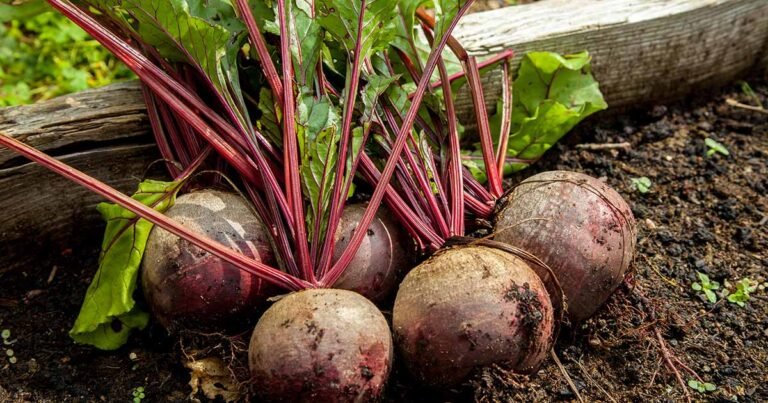
Beets (Beta vulgaris) are typically considered a fairly small crop, but as with many things in life, there are exceptions.
Big, giant, huge exceptions. They can actually grow quite large. Or super small. Totally confused?
We link to vendors to help you find relevant products. If you buy from one of our links, we may earn a commission.
Most table beets are similar in size, but sugar beets and mangelwurzel can be massive.
And there are some table beets that can be downright petite. And then there are the leaves aboveground.
So, if you’re interested in learning about beet sizes in all their varying glory, stick around. We’re going to cover the following:
Beet Root Sizes
So, how big can beets be? I know it’s the most frustrating answer, but “it depends.” Let’s look at the details:
For most home gardeners growing standard varieties, you can expect roots to reach one to three inches in diameter and two to three inches long for round varieties.
The leafy tops typically grow 12 to 18 inches tall with a spread of six to eight inches wide. But as you’ll see, there’s quite a range depending on variety and growing conditions.
Sugar beets and mangel are, by far, the largest of the beet family.
The Guinness Book of World Records states that the heaviest sugar beet weighed in at 52 pounds 14 ounces, though growers have reportedly grown larger ones without having been certified by Guinness.
Some accounts claim the largest ever at 156 pounds! That’s larger than many adult humans!
The longest variety, including the spindly taproot and not just the main part, was reportedly recorded at 322 inches. That’s longer than four mattresses laid end to end.
Mangelwurzel regularly grows up to 40 pounds and six feet long. I’ve had them grow nearly that large myself, so it’s not an unusual occurrence.
The bottom line is that beets are capable of growing exceptionally large.
But let’s talk about the average size in the garden, particularly for gardeners growing table beets. While these can grow pretty large as well, most of them are more of a medium size.
The long-time favorite ‘Detroit Dark Red’ grows to about three inches in diameter.
By the way, if you want to grow this particular cultivar, the roots are super dark red and deeply flavorful. I always end up coming back to it.
Okay, so that covers the root, but what about the leafy tops? How big these grow also depends on the cultivar.
Generally, you can assume the larger the root, the larger the leaves will be, but that’s not always the case.
Let’s go back to chunky ‘Bull’s Blood.’ The leaves on the mature plant can grow up to 18 inches tall. At the same time, petite ‘Early Wonder’ has greens about the same size.
With the exception of larger sugar and mangelwurzel greens, which can grow up to two feet tall, expect most greens to be about 16 to 18 inches tall at maturity.
You can influence this a bit by fostering green growth at the expense of root growth through careful fertilizer applications and pruning.
Now that you know how big beets can get, let’s talk about how much room they actually need to reach those sizes.
Most table beets need eight to 12 inches of loose, friable soil depth for proper development.
If you’re growing in raised beds, aim for at least 10 inches of depth to give them adequate room to expand underground.
Cylindrical varieties like ‘Cylindra’ appreciate the extra depth even more.
Your planting density is one of the easiest ways to control final size. If you want to harvest baby beets for pickling, plant them two inches apart.
For medium-sized roots perfect for roasting, stick with three to four inches. And if you’re going for those impressive, large roots, give them a full five to six inches of space in all directions.
The mature foliage spreads six to eight inches wide, so keep this canopy spread in mind when planning rows.
As a practical example, a standard four-by-four raised bed can comfortably hold 16 to 25 beet plants depending on whether you’re growing compact varieties or larger ones.
If you are growing beets in containers, choose pots at least 10 to 12 inches deep and eight to 10 inches in diameter for individual plants.
How to Influence Growth
To encourage root growth, give the plant what these vegetables need to be happy, like full sun, consistent water, and a bit of food. You can learn more about how to grow beets here.
As mentioned above, give them adequate spacing for the size you want.
Make sure the soil is super loose and rock-free. I grow my beets in raised beds to maximize the size, since I have heavy clay soil.
But if you haven’t been cursed by the soil fairies with heavy clay like I have, you can loosen up your soil adequately using lots of well-rotted compost.
Actually, even if you do have heavy clay, you can loosen it up with well-rotted compost, but plan to do so every year to maintain the looseness, since once the fairies curse you, the curse never lifts.
If you really want to encourage growth and go for super big ones, you’ve got to discourage the plant from focusing on the tops.
To do this, prune back the tops a bit to thin them out. You want to remove about a third to a half of the tops by cutting them down at the base.
Then, feed with bone meal. This encourages root growth rather than leaf growth.
Arbico Organics carries Down to Earth bat guano in four ounce, two pound or 10 pound compostable containers.
Either way, feed right around the time you first plant and then again a month later.
Grow Big, Beefy Beets and Greens
Whether you’re after heaps of greens or piles of roots, or maybe you’re just curious about what to expect when growing these plants, I hope we were able to shed some light on the subject.
Let me know how big your beets are in the comments section below!
Price: $49.00 (as of Jan 09, 2026 17:40:34 UTC – Details)
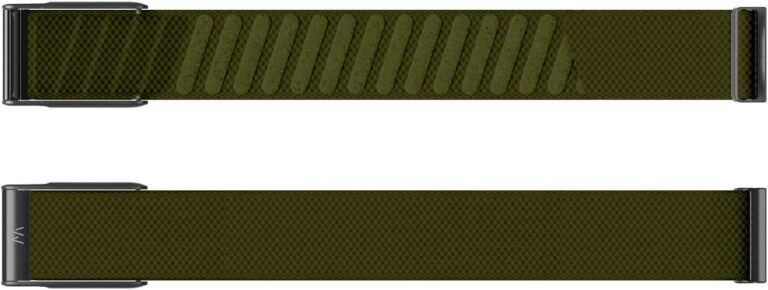
SuperKnit is our signature knit band, engineered for versatile comfort and style. From the gym, to work, to your evening plans, this band is fit for any moment. Includes a Band, Hook, Clasp, and Fast Link slider that makes swapping bands easier than ever. Compatible with WHOOP One, WHOOP Peak, and WHOOP Life— membership not included. This is not compatible with WHOOP 4.0 OUR SIGNATURE KNIT BAND – SuperKnit is designed to keep up with your busy schedule—from your high-intensity workouts to your evening plans. DESIGNED FOR ULTIMATE COMFORT – SuperKnit is made with an ultra-soft backing and microfilament yarn that moves with you. With a completely adjustable band, you can easily tighten or loosen SuperKnit to find your perfect fit. SWITCH UP YOUR STYLE – With our widest color selection and premium stainless steel components, match your SuperKnit to your personal style—made easy with Fast Link technology. BUILT TO LAST – SuperKnit is engineered with premium materials, so that you can stay secure, comfortable, and stylish for years to come. OPTION FOR ECG COMPATIBILITY – With a WHOOP Life membership, choose a SuperKnit band to take on-demand ECG readings.* This band is not compatible with the WHOOP 4.0
I’ve been known for my unconventional skincare methods. They often involve herbs or essential oils and sometimes rubbing ice or even mud on my face. There are so many plants in nature that provide a wide variety of skin benefits. This herbal face steam is a great way to get some of those benefits!
I’ve done steams before, mainly for congestion or upper respiratory support. An herbal face steam makes for a wonderful all natural facial. It’s really simple to do and doesn’t require any fancy equipment.
You can even pick and choose which herbs you want to use. Just use one, or use a combination of whatever you have on hand that will work.
The Best Herbs For a Face Steam
There are lots of different plants that work well in a face steam and you probably already have some in your pantry. Feel free to mix and match from this list or use something completely different. Just be sure it’s not something that will irritate your skin.
Here are some of my favorite herbs to use in herbal face steams.
Rose petals – Rose has long been used for glowing, more youthful skin. The fragrant petals also have potent aromatherapy benefits that soothe heartache. A 2015 study noted rose helped improve skin elasticity, moisture, and reduced wrinkles.
Lavender flowers – Soothing and calming to skin, lavender is a skincare favorite. It’s naturally anti-inflammatory and helps repair damaged skin.
Mint leaves – Refreshing and invigorating, hot mint relaxes arteries and stimulates circulation for faster healing. It’s also a rich source of vitamins and minerals that thirsty skin craves!
Calendula flowers – Anti-inflammatory, anti-microbial, calendula has a wide and long history of use for healing wounds and damaged skin.
Chamomile – The flowers and leaves have a floral, apple-like scent that’s calming and relaxing. It has the same effect on skin and is great for soothing irritation and damaged skin.
Comfrey – This plant is another favorite of mine for skincare. Both the flowers and leaves are very efficient at healing damaged skin and even bone. It stimulates tissue repair and cell proliferation.
Echinacea – People use the flowers or leaves topically for a variety of skin complaints, including damaged skin, eczema, varicose veins. Echinacea is anti-inflammatory, antibacterial, and anti-viral so it’s also helpful for acne.
Helichrysum – This herb has cheery yellow flowers with potent skin benefits. It’s drying, warm, and astringent, so pair it with a demulcent herb like violet or marshmallow if you have really dry skin. A 2020 study looked at a nightcream that contained helichrysum and found it significantly improved wrinkles, hyperpigmentation, and UV spots
Horsetail – A wonder herb that is full of micronutrients, including silica for more resilient skin. It’s also anti-inflammatory and anti-microbial and is traditionally used for improving wrinkles, acne, and moisturizing the skin.
Lemon – Not just for lemonade, lemon has so many uses for skin too. The juice is high in vitamin C and acids, while the peel has volatile essential oils that uplift the mood and brightens dull and damaged skin. A 2013 study found lemon juice was even more effective for acne than the conventional option tested.
How to Do an Herbal Face Steam
I prefer to use herbs that are more gentle on the skin and don’t have strong volatile oils that can irritate my skin or eyes. Cinnamon and oregano come to mind!
You might have seen some of the face steamer machines in stores or online. Companies usually use plastic to make facial steamers, so you’re getting steam heated in plastic directly on your pores. A pot on the stove isn’t as fancy, but sometimes simpler is better (and cheaper!).
You also can’t add herbs into the face steamer tank or it can cause damage. Again, another win for doing it the old fashioned way.
Step by Step Face Steam Directions
Simply place the herbs you’re using in a pot of very hot, filtered or distilled water. Be sure it’s not boiling hard or you could burn yourself.
Turn the stove off and/or move the pot to a countertop. Drape a towel over your head and lean over the steam.
You want to be close enough for the steam to wash over your face, but not so close you get a steam burn.
If you’re looking for a more specific recipe, here’s one to start with.
Rejuvenating Herbal Face Steam
A relaxing way to open pores, moisturize skin, and improve blemishes and signs of aging.
Prep Time3 minutesmins
Steam Time10 minutesmins
Total Time13 minutesmins
Yield: 1face steam
Author: Katie Wells
Place the water, lemon, and herbs in a clean pot and gently bring it to a boil with the lid on. This helps preserve more of the volatile oils.
Turn the heat off and lean over the pot with your eyes closed. Be sure not to get too close or you’ll get a steam burn! I’ve found that as the water cools I’ll edge closer. You can also drape a towel over your head to trap more of the steam in.
Once the pot is done steaming, compost your herbal face steam.
The herbs I used here can be mixed and matched with any skincare friendly herbs. Just aim for about 1/3 cup of herbs total.
You can save some time and mix the herbs up in bulk for later. Just add 1/4 cup of each (or however much you want) and store in a large glass jar. Scoop out 1/3 cup when you’re ready to use. Then you’ll just need to add the freshly sliced lemon and water to make your face steam!
What are some of your favorite herbs to use for skincare? Have you done a steam before? Leave a comment and let us know!