


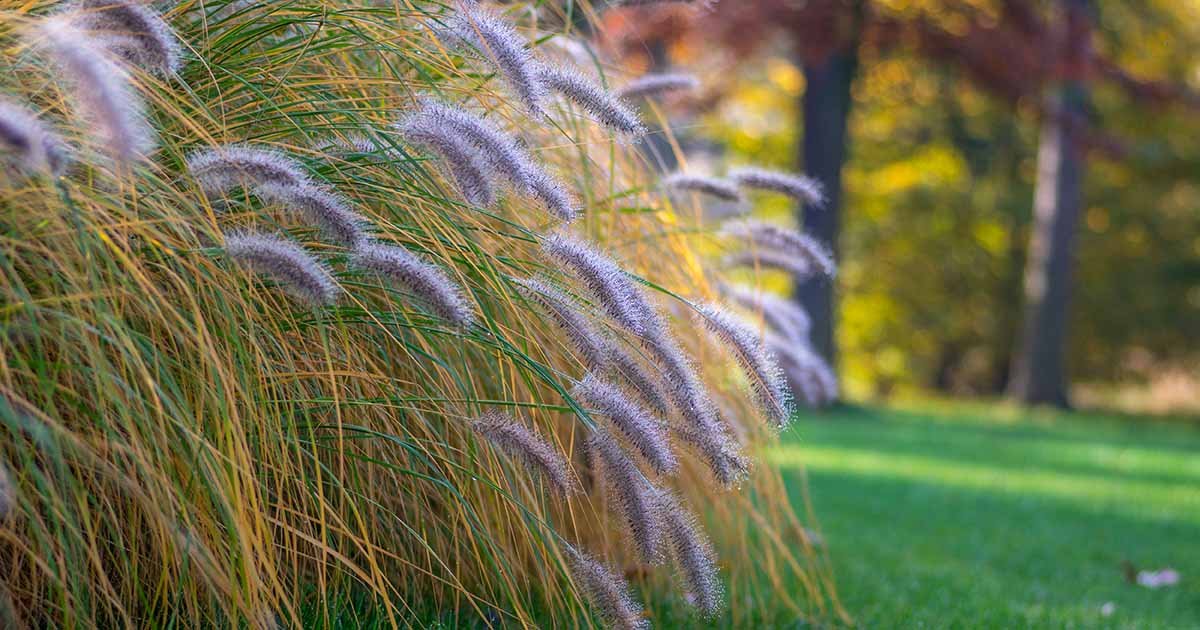
Cultivars to Select
The following are some of the most popular cultivars of fountain grass to consider, and all of the options that I’ve included in this list are perennial varieties of P. alopecuroides.
There are also annual plants in the Pennisetum genus that you can grow, including P. setaceum ‘Rubrum,’ and other species as well.
Hameln
This cultivar is short and compact, growing to just one to three feet tall and wide. It grows best in Zones 4 to 11.
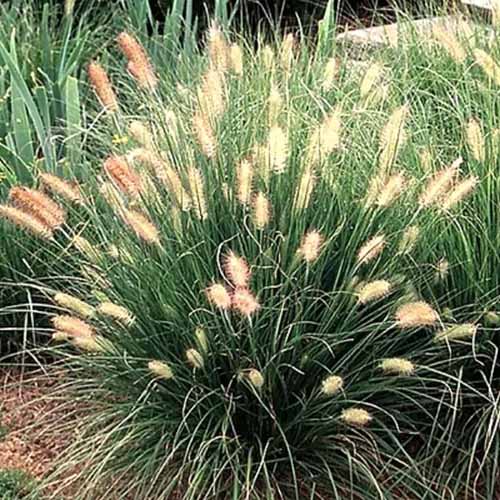
With its lovely soft, fluffy plumes and purple flowers, it makes a striking border. It has been awarded the Royal Horticultural Society’s Award of Garden Merit.
You can find ‘Hameln’ plants available from Nature Hills Nursery.
Jambalaya
A sterile cultivar from the University of Georgia’s breeding program, Jambalaya™ (P. alopecuroides ‘Tift PA19’) forms a tidy, upright mound of slender, arching green blades that turn golden-bronze in fall.
Hardy in Zones 5 to 9, it produces large, smoky, silvery pink plumes flushed with purple, aging to silver and fading to tan as they hold into winter.
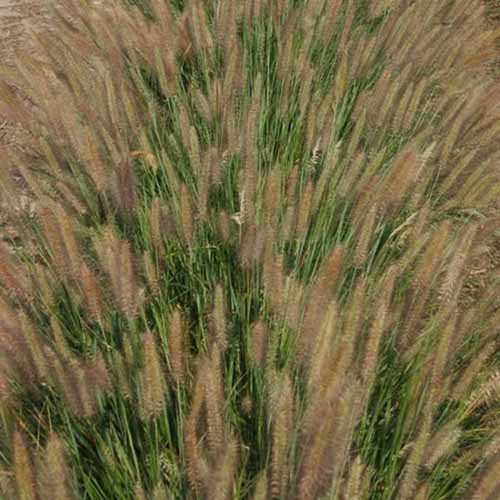
It reaches about three feet tall with a spread of three to four feet. Being sterile, it sets no viable seed and will not self-sow the way the straight species does.
Find plants in #2 containers available at Nature Hills.
Moudry
One of the most popular and striking cultivars to consider, ‘Moudry’ is often referred to as black fountain grass.
It produces gorgeous dark purple or black flower spikes that appear in late summer to early fall, about three to five weeks later in the season than those of other options.
It grows to about two to three feet tall and reseeds with ease. However, it does not usually grow true to seed. Plants are hardy in Zones 5 to 9.
Praline
A compact, sterile cultivar from the University of Georgia’s ornamental grass breeding program, Praline™ (P. alopecuroides ‘Tift H18’) forms a tidy mound of narrow, arching green blades that turn amber and copper in fall.
From midsummer into fall it sends up soft, fuzzy bottlebrush plumes in tan flushed with pink, fading to a wheat color that holds into winter.
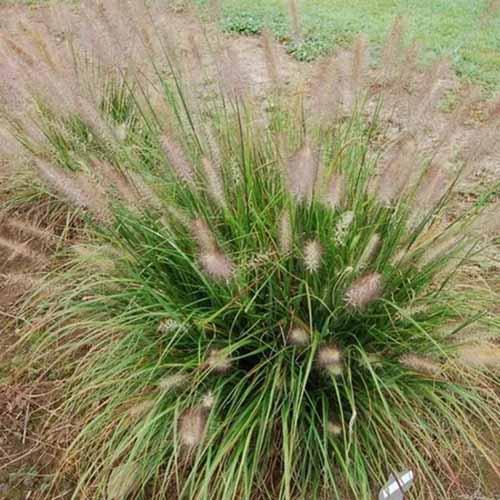
Among the smallest of the sterile fountain grasses, it reaches roughly two to three feet tall in bloom with a spread of just over three feet.
Because it sets no viable seed, it stays put and will not self-sow the way the straight species does. Hardy in Zones 5 to 9.
You can find Praline™ available in #2 containers at Nature Hills Nursery.
Purple Fountain Grass
Purple fountain grass (P. × advena ‘Rubrum,’ often sold as P. setaceum ‘Rubrum’) forms an upright, fountain-shaped clump of narrow, deep burgundy-red blades.
In summer it sends up arching, foxtail-like plumes in burgundy-purple to rose-red that nod above the foliage and fade to tan as they age.
It reaches roughly three to five feet tall with a spread of two to four feet. Unlike the invasive species, this cultivar is sterile and rarely sets seed.
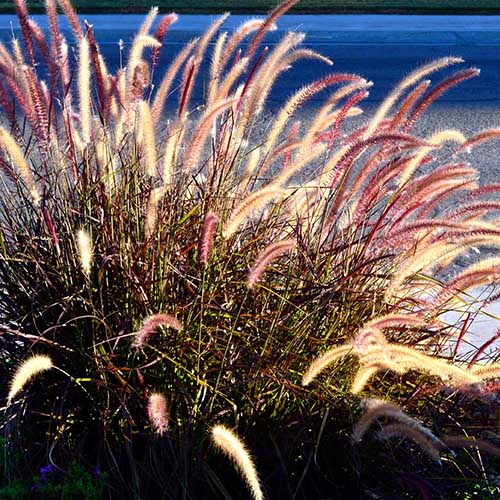
Hardy in Zones 9 to 11, it’s grown as an annual in most of the country, where it puts on a full season of color before dying back with the first frost.
You can find this cultivar in one- and three-gallon containers at Fast Growing Trees.
Check out our guide to growing purple fountain grass here.
Maintenance
You can divide your plants every three or so years if the clump is getting a bit too big. We discuss this in more detail in the Propagation section below.
Prune or cut back in late winter or early spring to remove any old, dead plant material and control the height of the specimen.
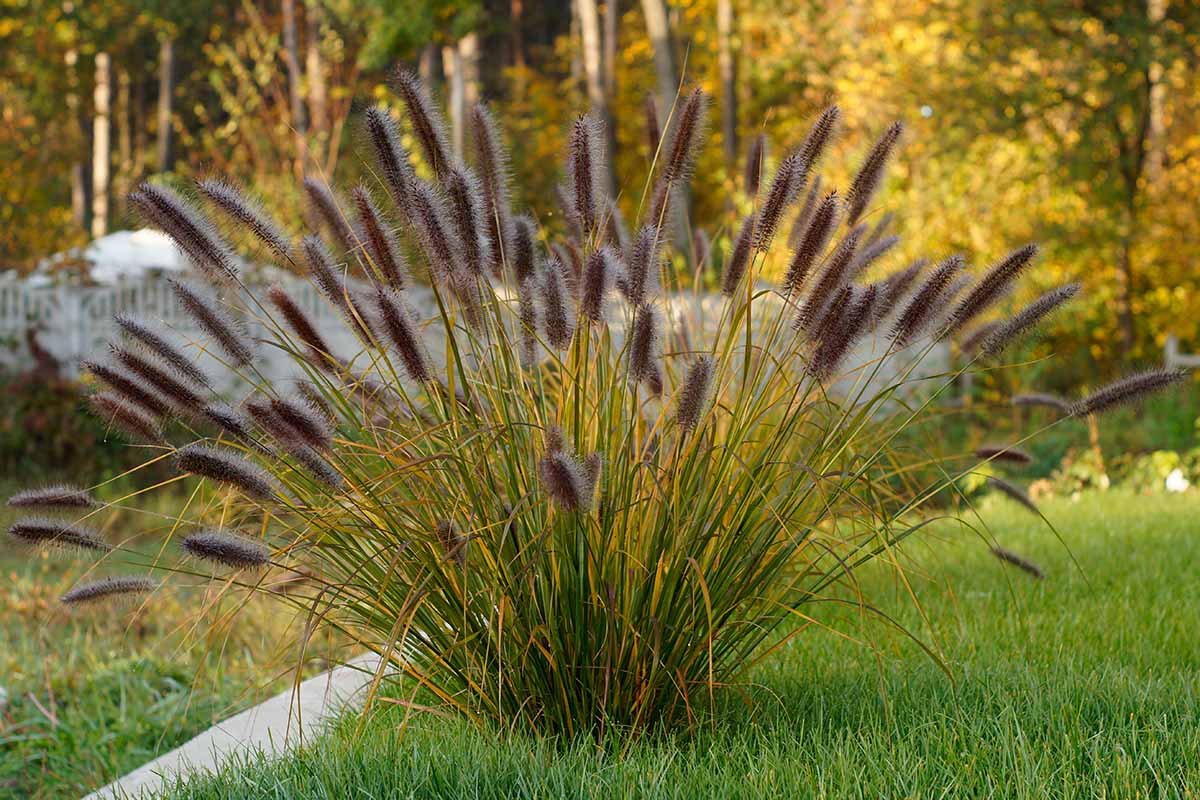
Wear gloves when you do this, as the blades of these plants can be sharp!
Fountain grass should die back naturally as part of the growing cycle, even in warmer climates where they are grown year-round.
The plants won’t start growing each year until the soil has warmed up, so you should have time at the end of winter to cut last year’s growth back before new shoots appear.
Trim the foliage back to about three to six inches above the ground with a pair of hedge trimmers.
Learn more about pruning ornamental grasses here.
To prevent self-seeding, purchase infertile cultivars, or remove seed heads before they open and spread their seed around the garden.
If you aren’t able to catch them all before they pop, plan to do a little weeding around the garden the following season to pull up unwanted volunteers.

