Hi GPODers!
Last week I shared photos from a trip I made to Denver Botanic Garden this spring (Denver Botanic Garden in Spring). But as I was going through the pictures, I noticed the majority of what I captured was not spring plants but rather some special specimens that are on display year-round. As I scrolled through, I saw an endless stream of photos from the Boettcher Memorial Tropical Conservatory. While most botanical gardens of a certain size have a conservatory, the design of this one had me spending far more time there than I normally would. A maze of paths often encouraged circling back and getting drawn into something you missed the first time around. In addition, a large central structure (constructed to look like a tree with a wraparound tree house) allows you to climb up and onto platforms where even more tropical beauties can be found and other plants can be enjoyed from new angles. Needless to say, I spent hours exploring this wonderland of tropical plants, and these are just a handful of its highlights.
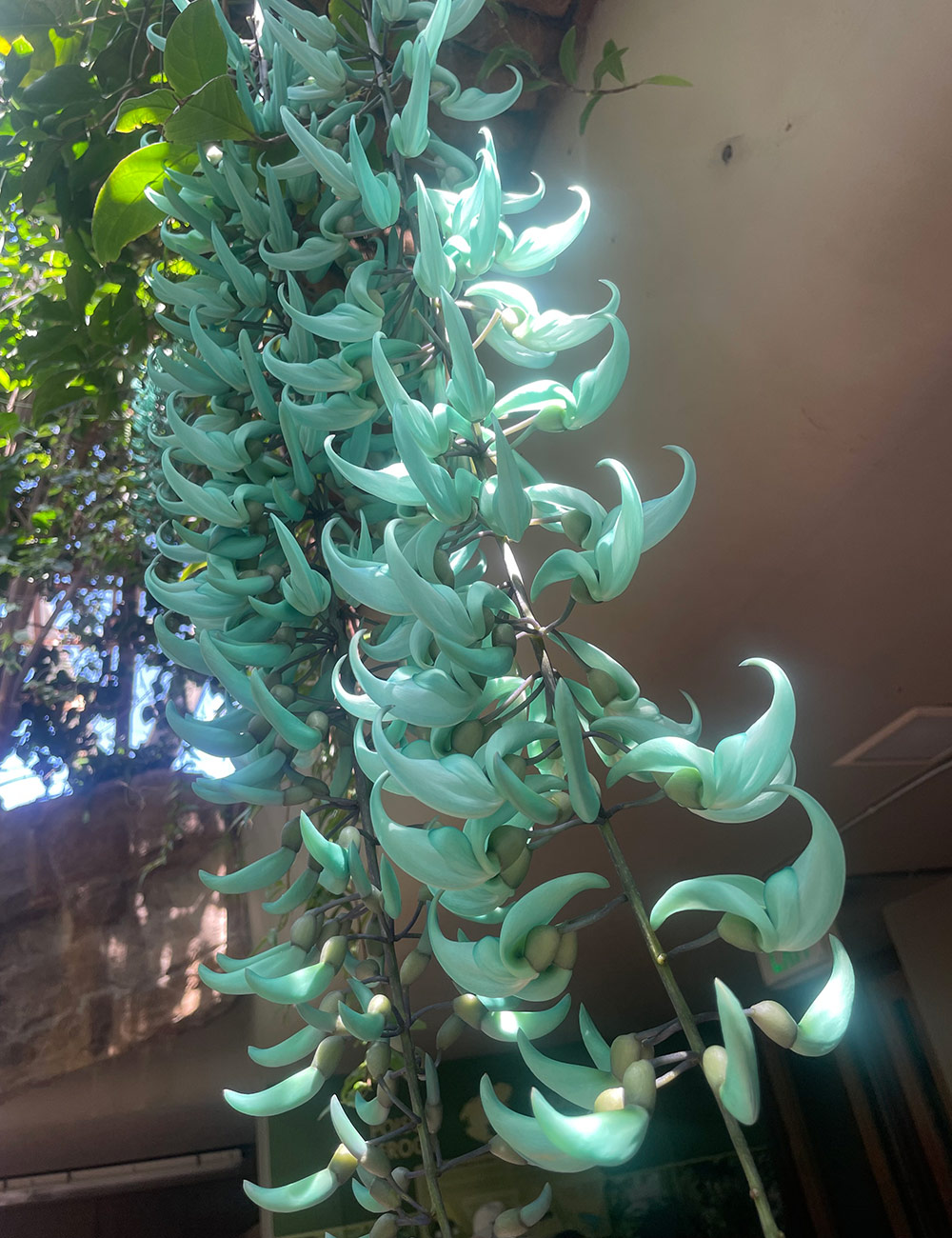
There are countless plants to take in upon entry into the conservatory, but this jade vine (Strongylodon macrobotrys, Zones 10–12) instantly caught my eye. Light was pouring into the space on the very sunny day I visited, and it made these stunning turquoise blooms look like they were glowing.
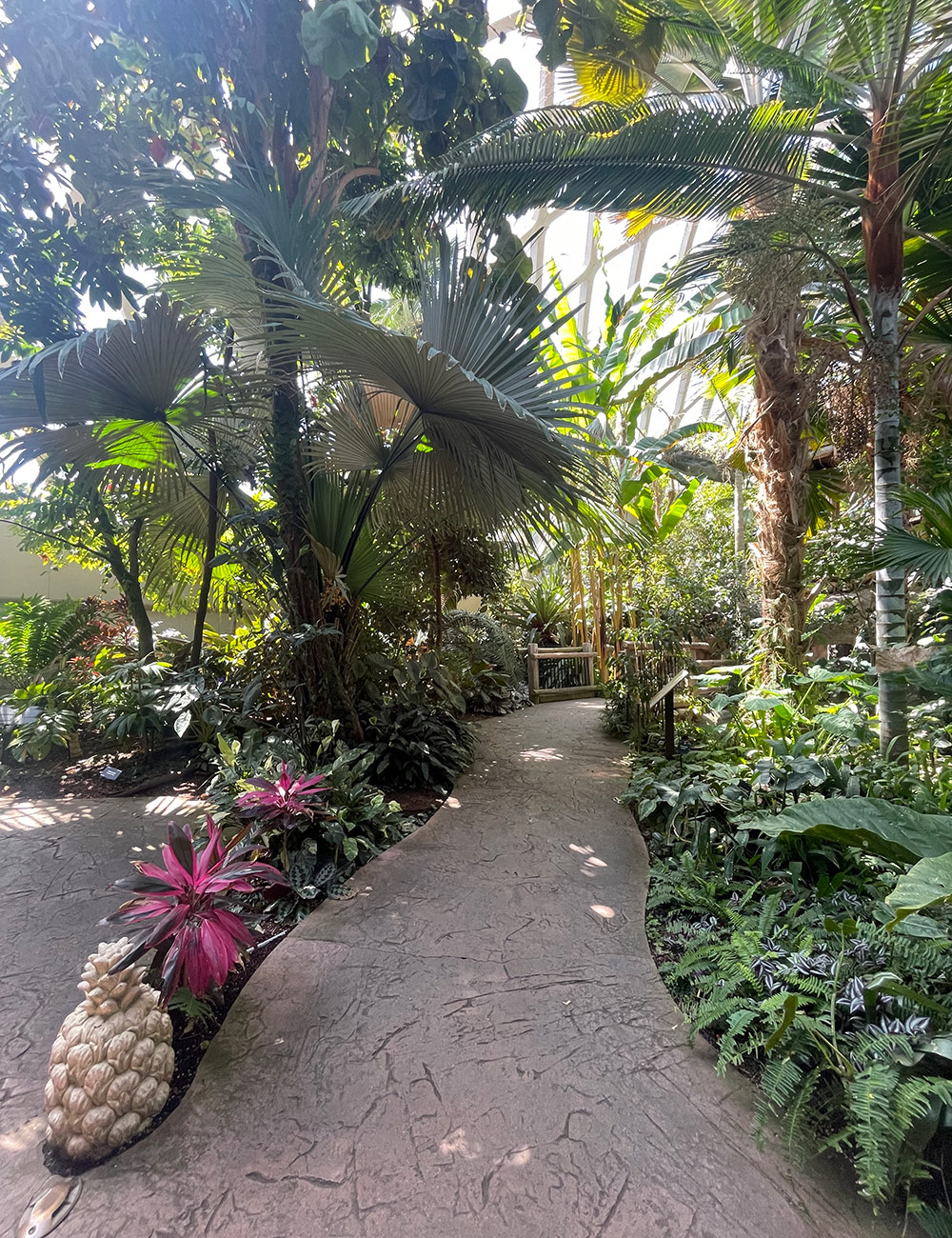 Walking into this conservatory feels like stepping into a tropical rainforest. Other than the paths that lead you through the space, every crevice is filled with lush greenery and layers of plants that mimic a real tropical canopy.
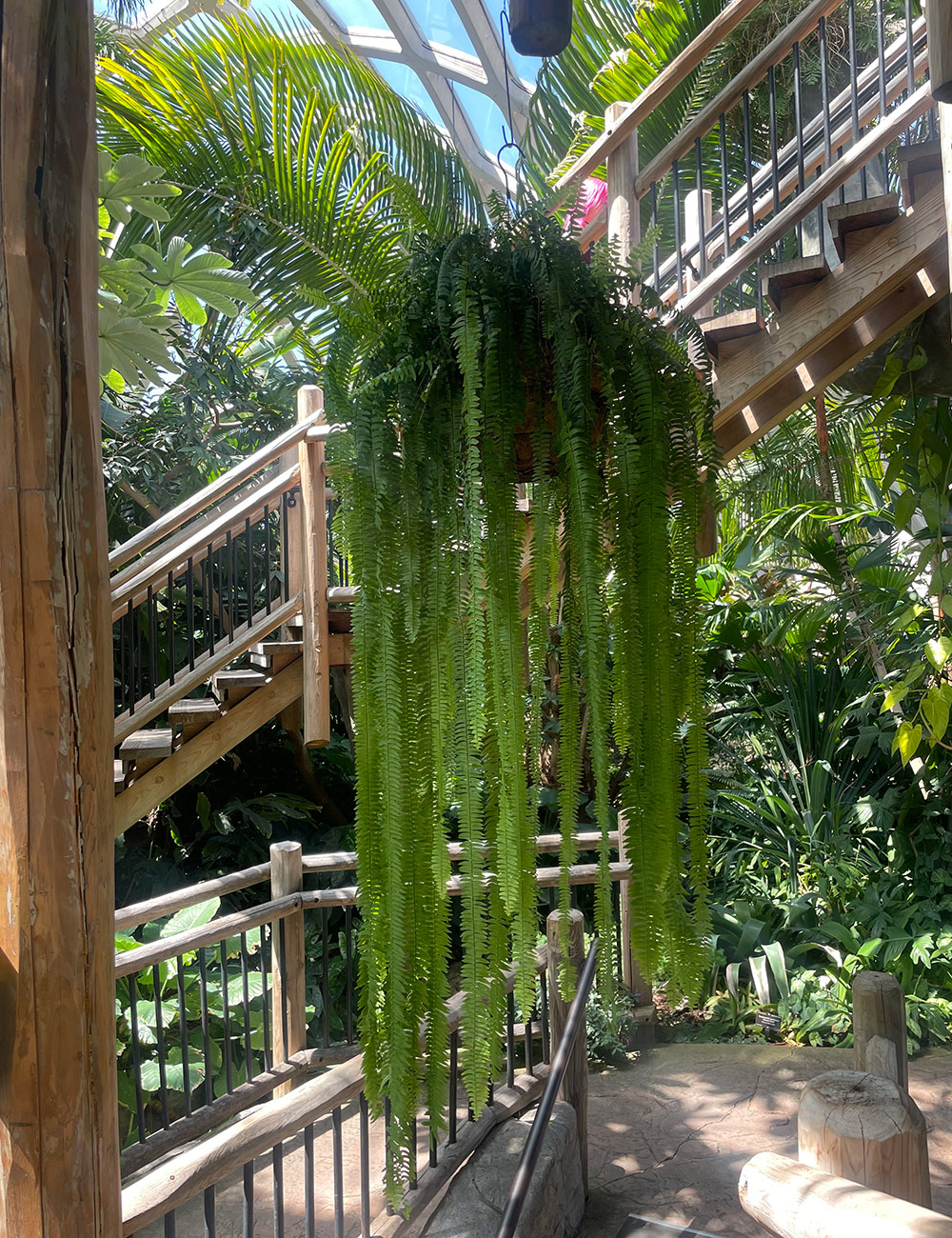 Along with towering palms, several climbing and trailing plants contributed to the feeling that greenery was enveloping the sunny conservatory. In this shady corner a gorgeous fern—potentially a Long John pendulant fern (Nephrolepis pendula, Zones 9–11)—looks like it is dripping from its hanging basket. This photo also gives a glimpse of the stairs that wind around a central “tree” structure and take you up above the vibrant canopy.
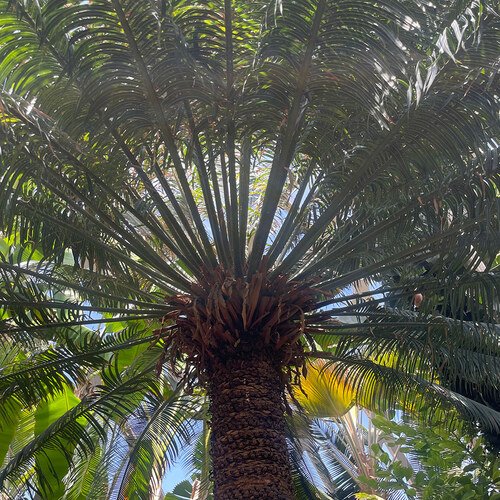
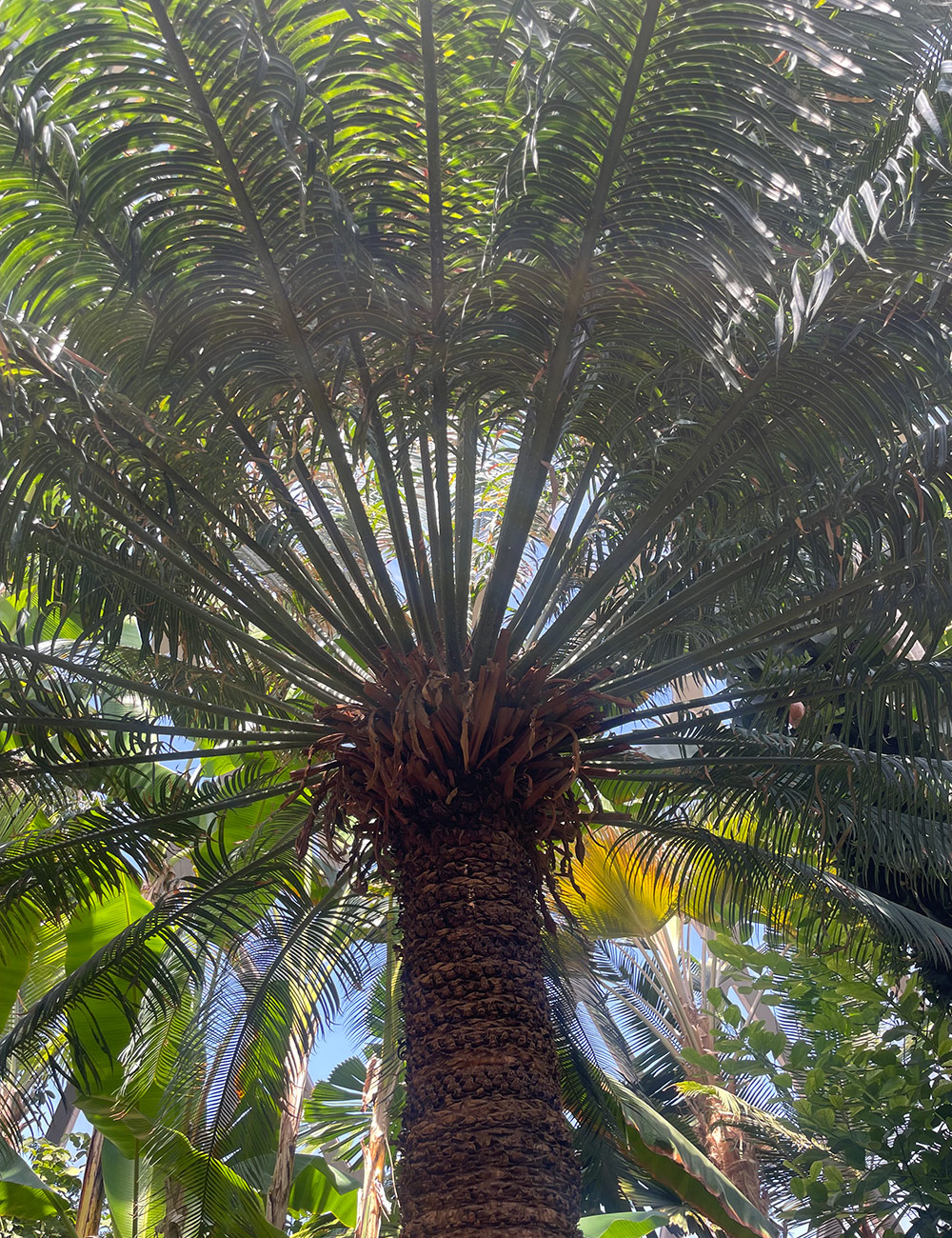 Cycads are always a favorite to spot in conservatories. Their gorgeous crowns of leaves and outstanding textural trunks are beautiful, but just being in the presence of these ancient plants makes me feel like I’m standing in front of a piece of history or walking back in time.
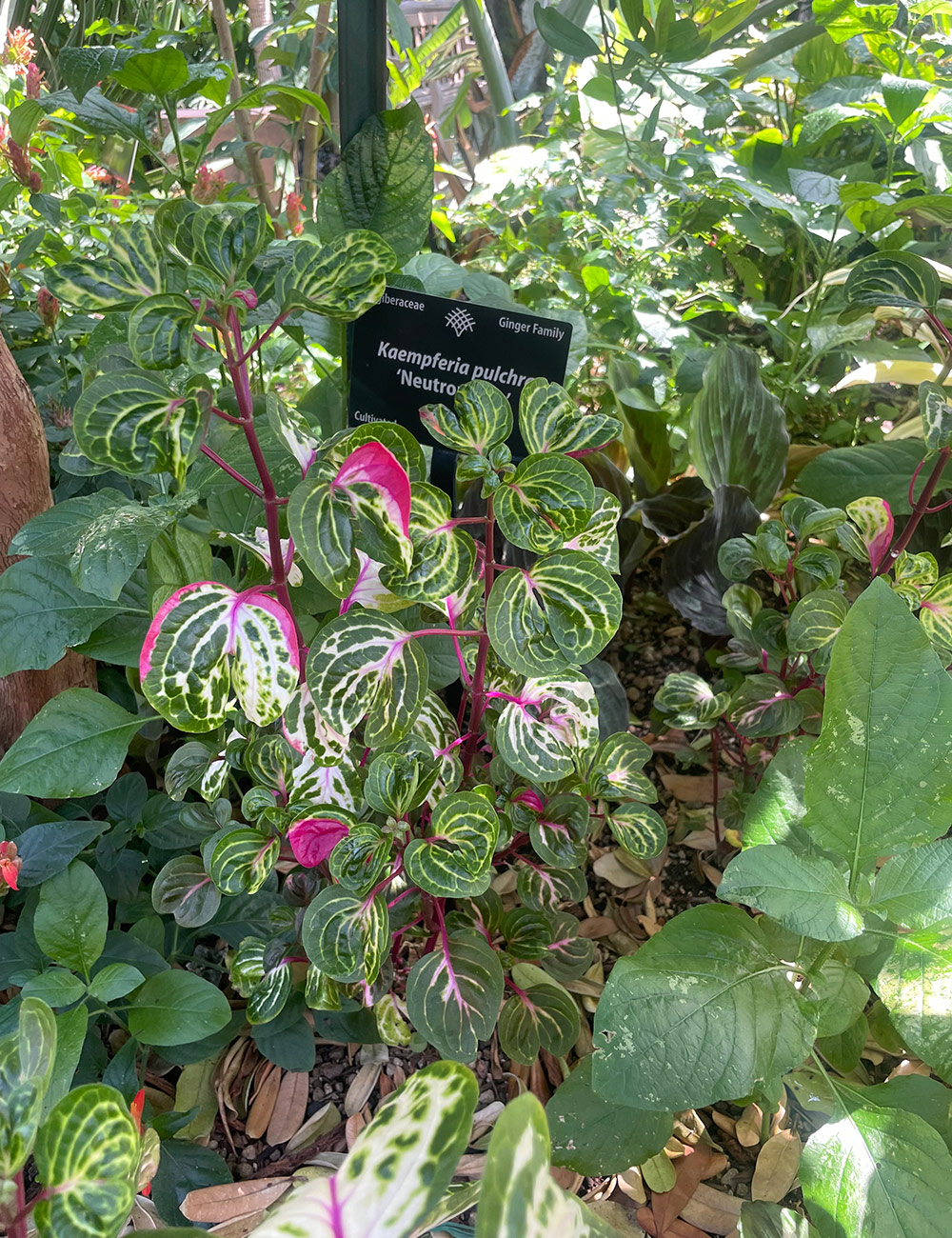 Bloodleaf is a wonderfully colorful foliage plant that is stellar as a container annual or indoor plant in colder climates, and not particularly uncommon. However, this Golden Vein variety (Iresine herbstii ‘Aureoreticulata’, Zones 10–12) with striking variegation and deep pink stems still stopped me in my tracks.
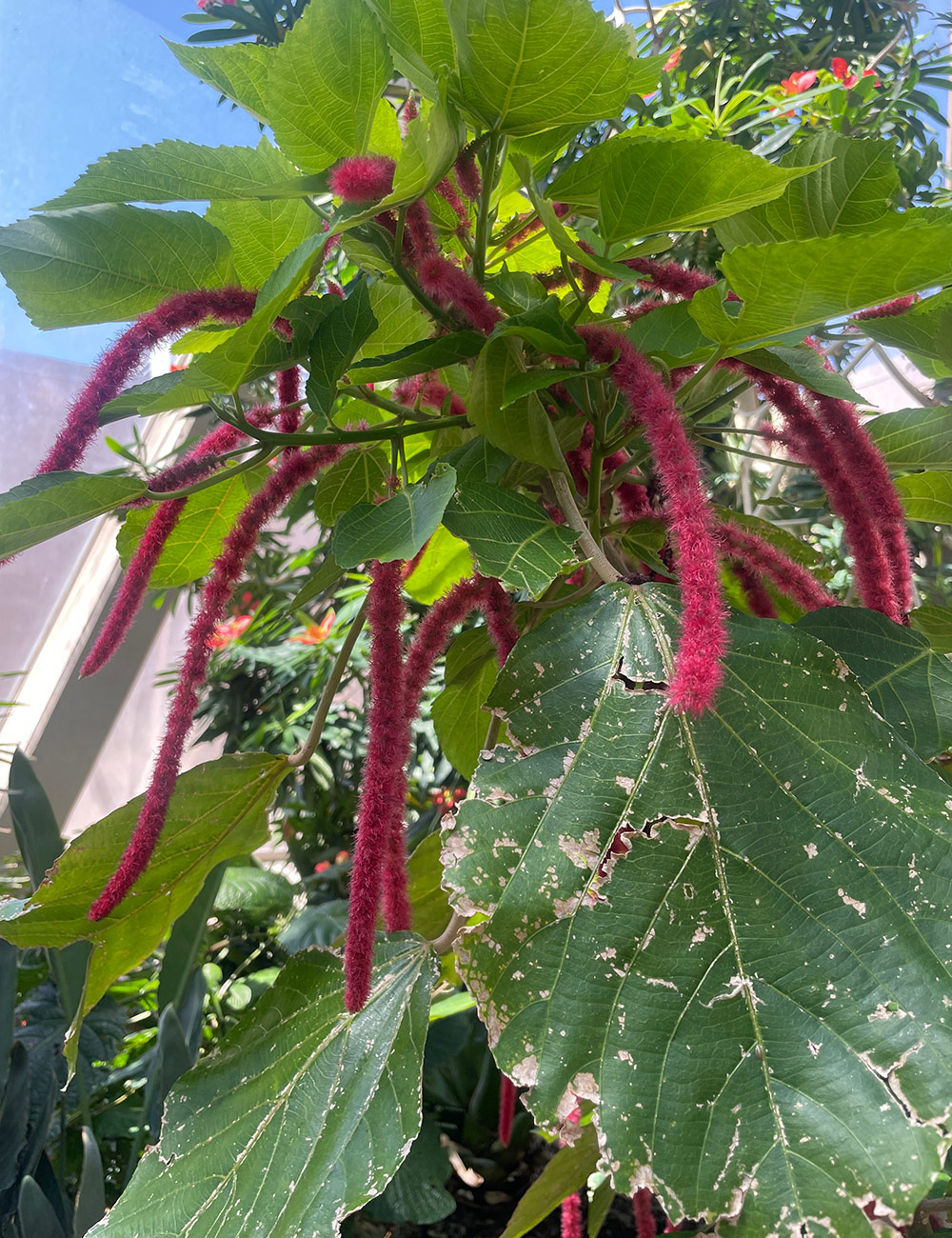 Another pop of pink in the conservatory came from a large chenille plant (Acalypha hispida, Zones 10–11). Aptly named after the French word for caterpillar, the fuzzy flowers feel as good as they look.
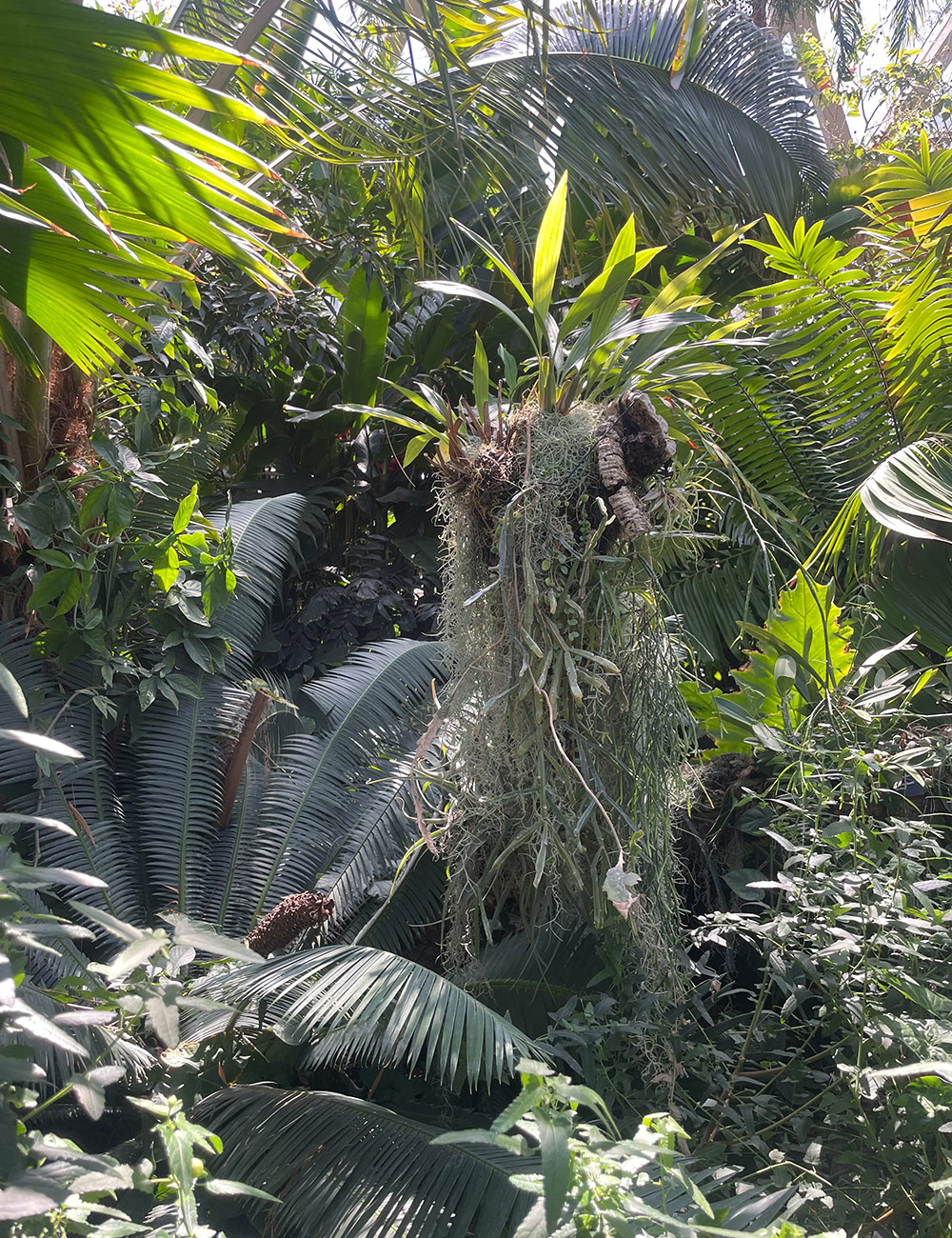 In these settings I often zoom in to capture a close look at the plants and flowers that I find the most eye-catching, but I did snap a few photos that show the denseness and variety of these plantings.
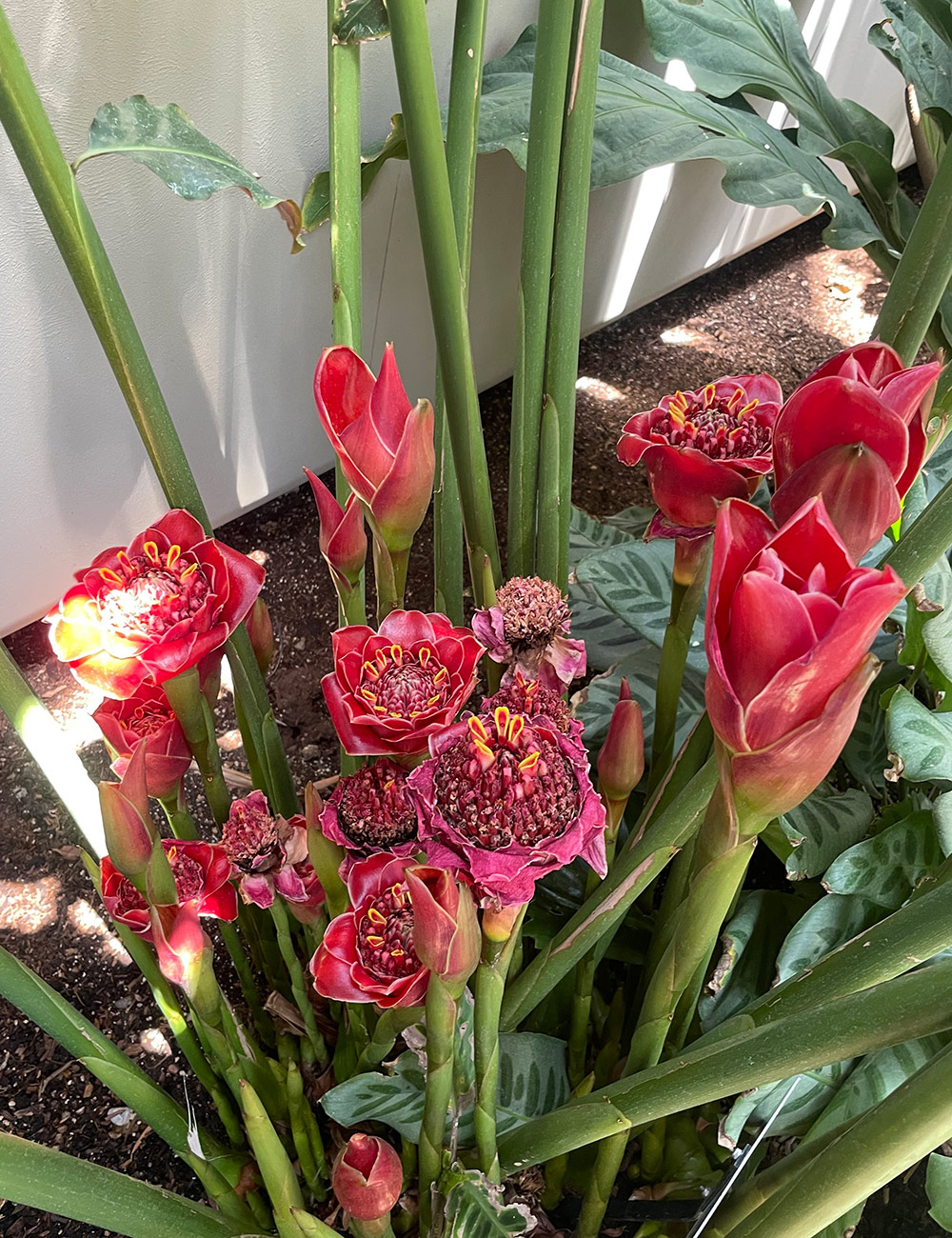 Another plant with some gorgeous flowers when I visited was the ‘Black Diamond’ torch ginger (Etlingera elatior ‘Black Diamond’, Zones 10–12). I’m always enamored by the unique flower shapes you see on tropical plants, so these unusual blooms were a definite highlight.
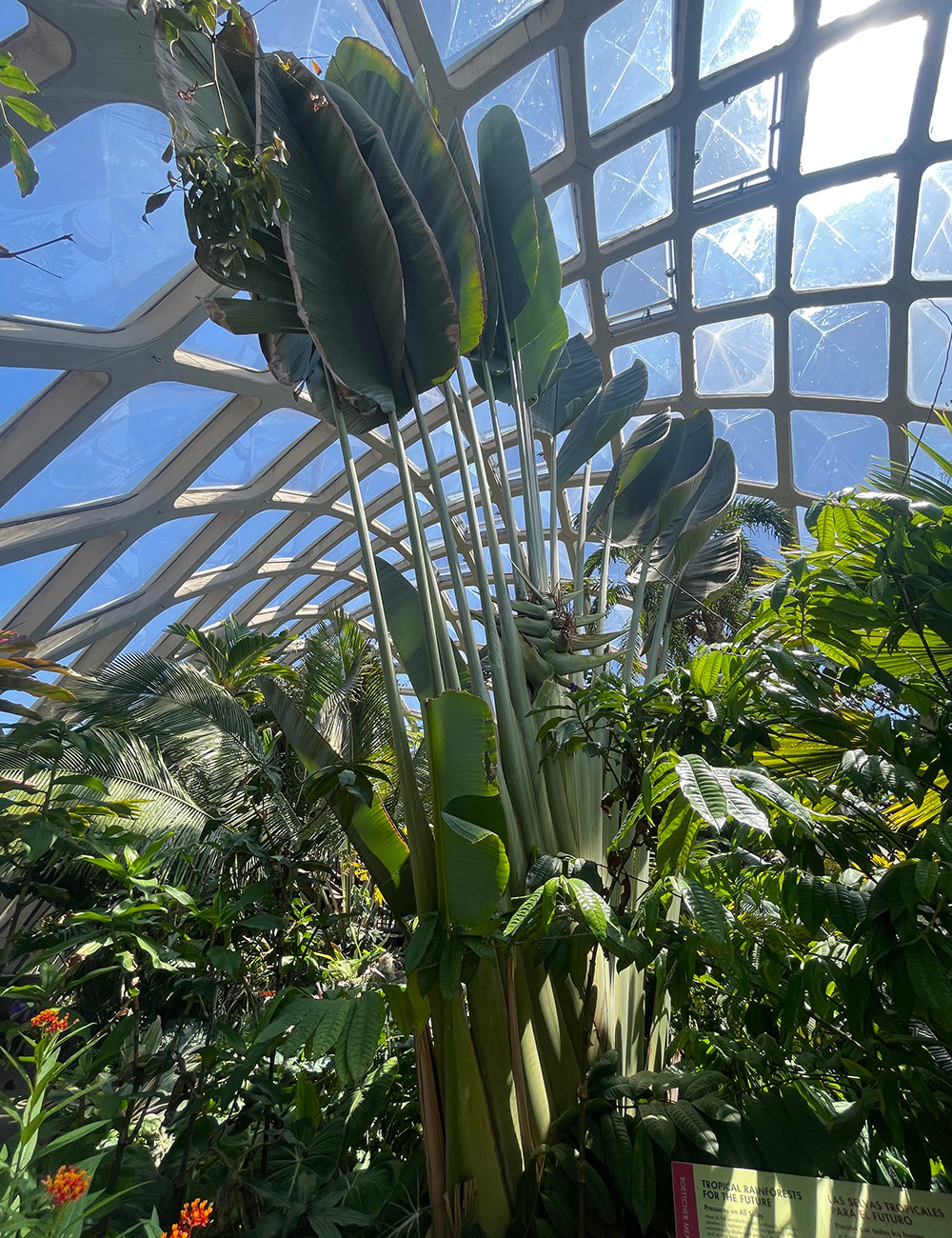 Lastly, the magnificent traveler’s palm (Ravenala madagascariensis, Zones 10–11) that towers above them all: You catch glimpses of this plant at different points in the conservatory, but you don’t get a true sense of its size until you reach the top platform. Native to Madagascar, these trees reach up to 50 feet tall in the wild, and this specimen might be nearing those heights as it maxes out the space in the Boettcher Memorial Tropical Conservatory.
I hope you all enjoyed this tour of a tropical oasis in Denver! There are so many gorgeous parts of Denver Botanic Garden to share, so let me know in the comments if there are any particular sections you would like to see more of.
And if you made a visit to a botanical garden recently, we would love to see highlights from your trip. Whether you traveled far to see a bucket-list garden, or popped in to a local garden you make a trip to every year, please consider sharing your photos. Follow the directions below to submit your photos to Garden Photo of the Day!
We want to see YOUR garden!
Have photos to share? We’d love to see your garden, a particular collection of plants you love, or a wonderful garden you had the chance to visit!
To submit, fill out the Garden Photo of the Day Submission Form.
You can also send 5–10 photos to [email protected] along with some information about the plants in the pictures and where you took the photos. We’d love to hear where you are located, how long you’ve been gardening, successes you are proud of, failures you learned from, hopes for the future, favorite plants, or funny stories from your garden.
Do you receive the GPOD by email yet? Sign up here
Fine Gardening Recommended Products
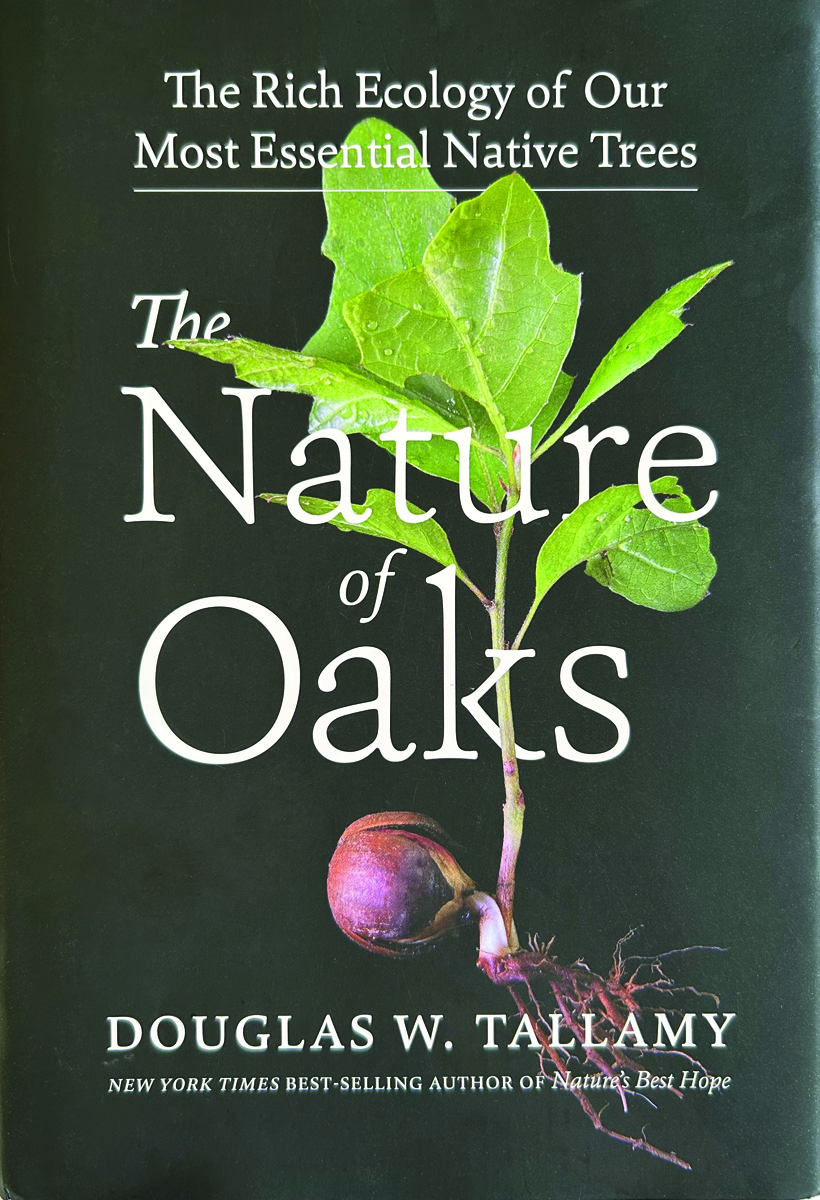
The Nature of Oaks: The Rich Ecology of Our Most Essential Native Trees
Fine Gardening receives a commission for items purchased through links on this site, including Amazon Associates and other affiliate advertising programs.
The Nature of Oaks reveals what is going on in oak trees month by month, highlighting the seasonal cycles of life, death, and renewal. From woodpeckers who collect and store hundreds of acorns for sustenance to the beauty of jewel caterpillars, Doug Tallamy illuminates and celebrates the wonders that occur right in our own backyards. He also shares practical advice about how to plant and care for an oak, along with information about the best oak species for your area.

The Regenerative Landscaper: Design and Build Landscapes That Repair the Environment
Fine Gardening receives a commission for items purchased through links on this site, including Amazon Associates and other affiliate advertising programs.
2024 Nautilus Award Gold Medal Winner! This awe-inspiring guide weaves together permaculture design, food resiliency, climate adaptation, community organizing, and indigenous wisdom that you can implement in your own backyard.
Gardener’s Supply Company Summerweight Fabric Plant Cover
Fine Gardening receives a commission for items purchased through links on this site, including Amazon Associates and other affiliate advertising programs.
Ideal for summertime pest control, this garden cover effectively screens out Japanese beetles, potato beetles, cabbage worms, leaf miners, carrot flies and most vine borers. It transmits 97.6% of the light to your plants without allowing heat build-up, and it provides cold protection down to 41° F, to extend your growing season.