


Vines are plants with long stems that cascade, climb, or creep.
Some grow so big and old that they earn world record status, like the 240-year-old grapevine that fills a conservatory in Hampton Court Palace, London, England, and the 127-year-old Sierra Madre, California Chinese wisteria that spans an acre.
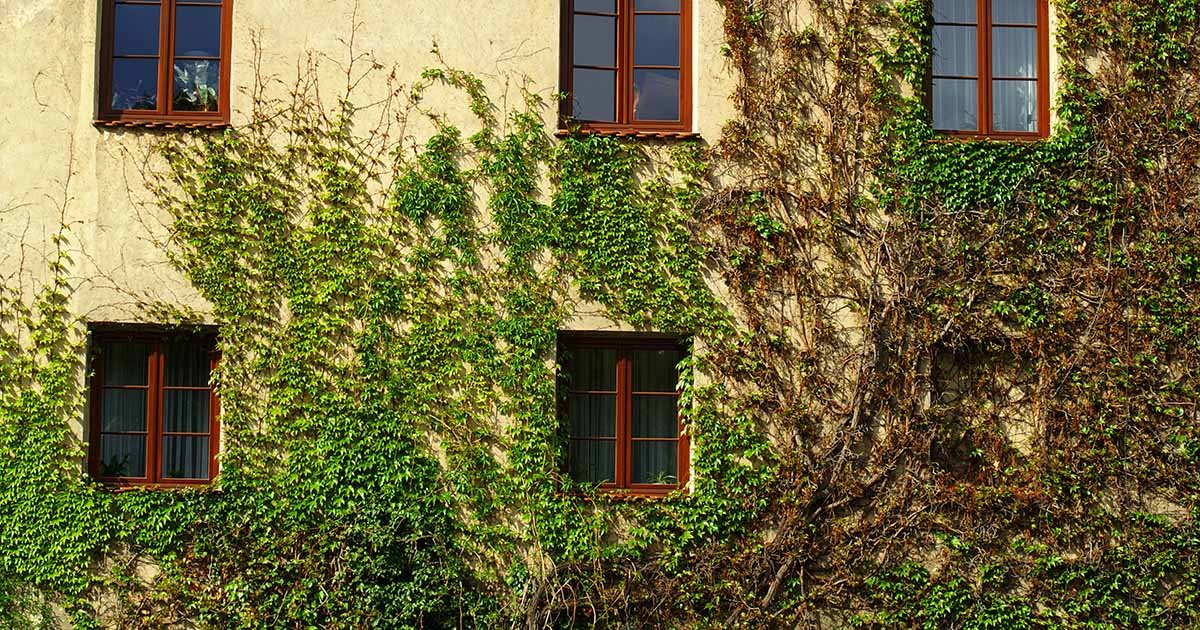
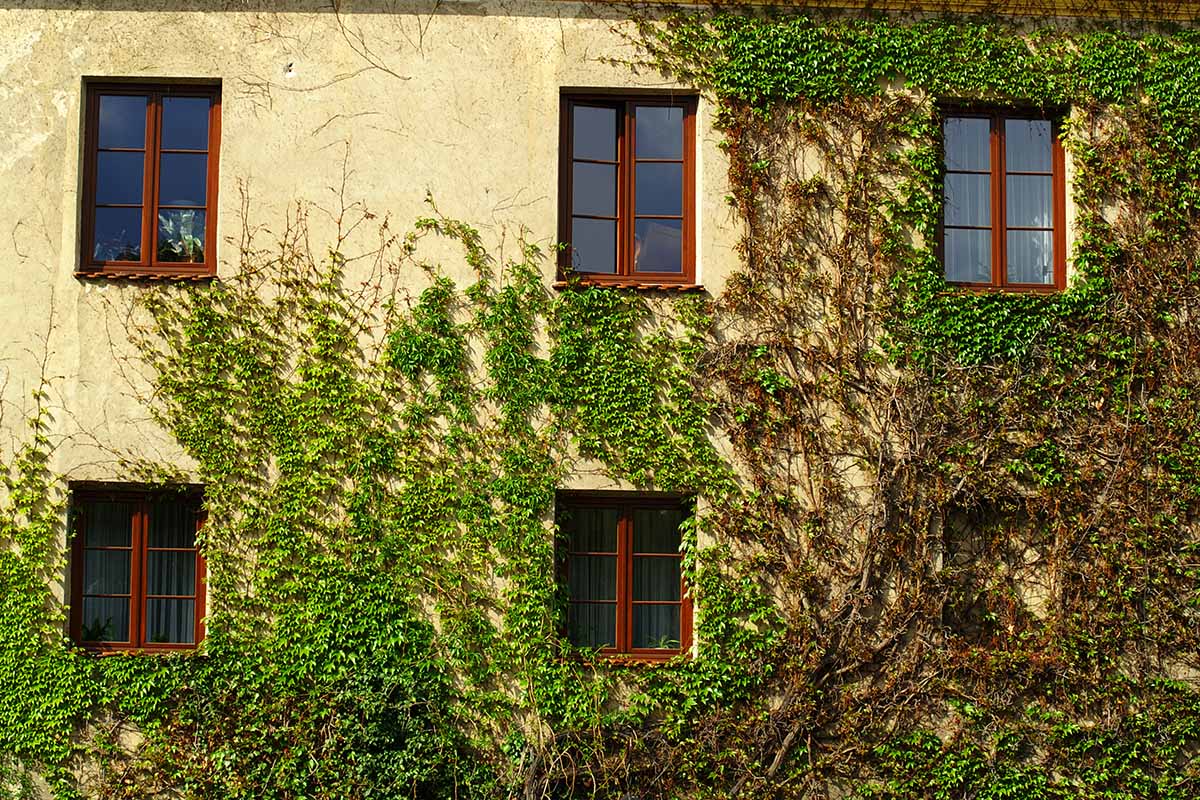
When they cover the facade of a home, climbing plants enrich its character, contribute to its identity, and create a sense of permanence.
We link to vendors to help you find relevant products. If you buy from one of our links, we may earn a commission.
Who hasn’t admired a stately mansion ensconced in Boston ivy, Parthenocissus tricuspidata, or a country cottage nestled in Virginia creeper, P. quinquefolia?
But while they may be pretty to look at, one can’t help but ask, “Are those vines doing damage?”
In this article, we explore climbing vines and their effect on home exteriors.
Let’s begin!
Types of Vines
There are many types of vines, including annuals and perennials, soft stemmed and woody, deciduous and evergreen, flowering and fruiting, non-clinging and clinging.
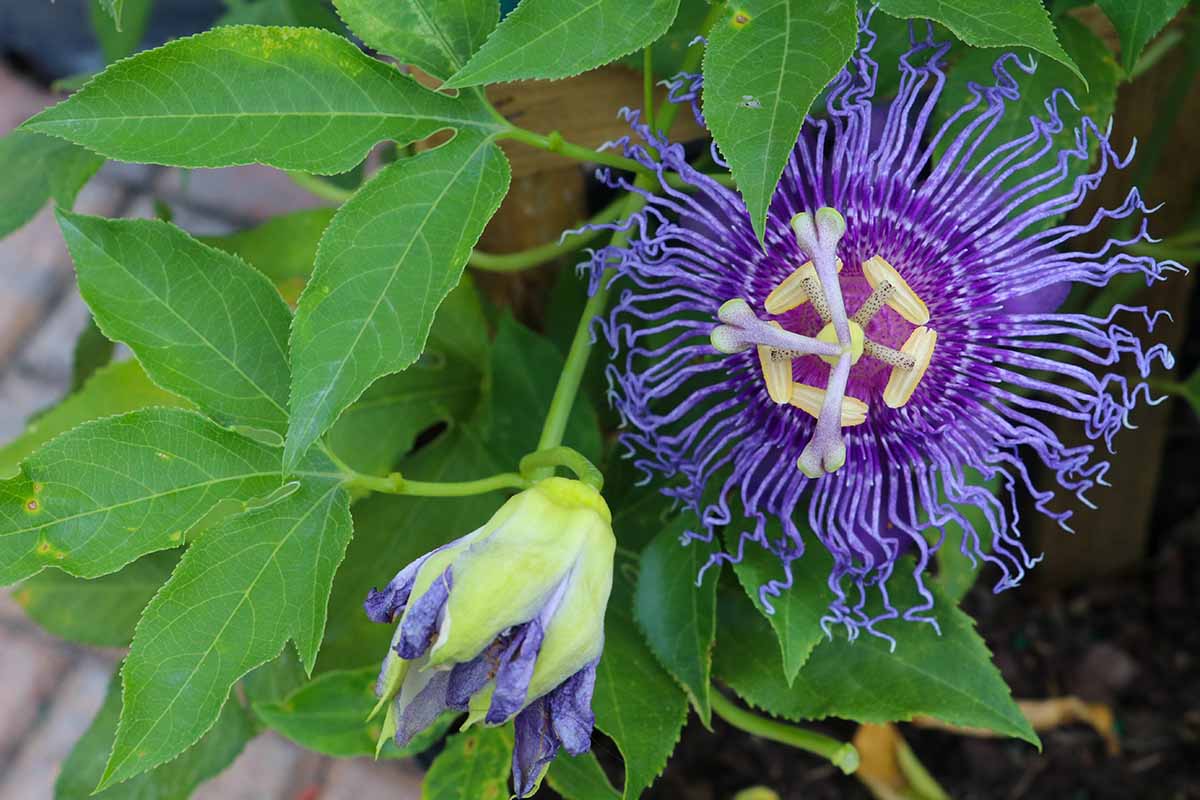
Non-clinging types, like purple passionflower, Passiflora incarnata, must be “trained” to climb, using supports such as twine and trellises.
Clinging varieties are able to climb of their own accord, seeking out surfaces to attach to for support.
They are able to accomplish this remarkable task because they have one or more of the following:
- Sticky disks
- Twining growth habit
Let’s define each and consider some examples.
Aerial Rootlets
Aerial rootlets look like small fibers on a plant’s stems.
They are referred to as adventitious, because they grow in response to a need, or in this case, support for the plant while it fulfills its innate desire to climb.

Examples are Boston ivy, Parthenocissus tricuspidate, and Japanese climbing hydrangea Hydrangea anomala.
In addition, most plants crave light. Some even physically turn toward it, a phenomenon called positive phototropism.
However, there are others that turn away from light. This is called skototropism, or negative phototropism.
An example of a negatively phototropic species is tropical monsterra, or the Swiss cheese plant, Monstera deliciosa.
It has clinging aerial roots and grows toward dark crevices in tree bark, where it can burrow and strengthen, before proceeding upward in search of sunlight.
Tendrils
Tendrils are narrow stems that act as sensors for a plant, reaching out for something to grasp.
There are two kinds:
- Stem tendrils
- Leaf tendrils
Stem tendrils shoot off a main stem anywhere along it. They look like especially narrow, leafless stems that end in a spring-like coil.
Leaf tendrils are little coiled stems that emerge from a leaf node, and these lack the long feeler stem.
A tendril’s inclination to try to wrap around something it touches is called positive thigmotropism.
Stem tendril plants include squash, Cucurbita species, and grapes, Vitis vinifera.
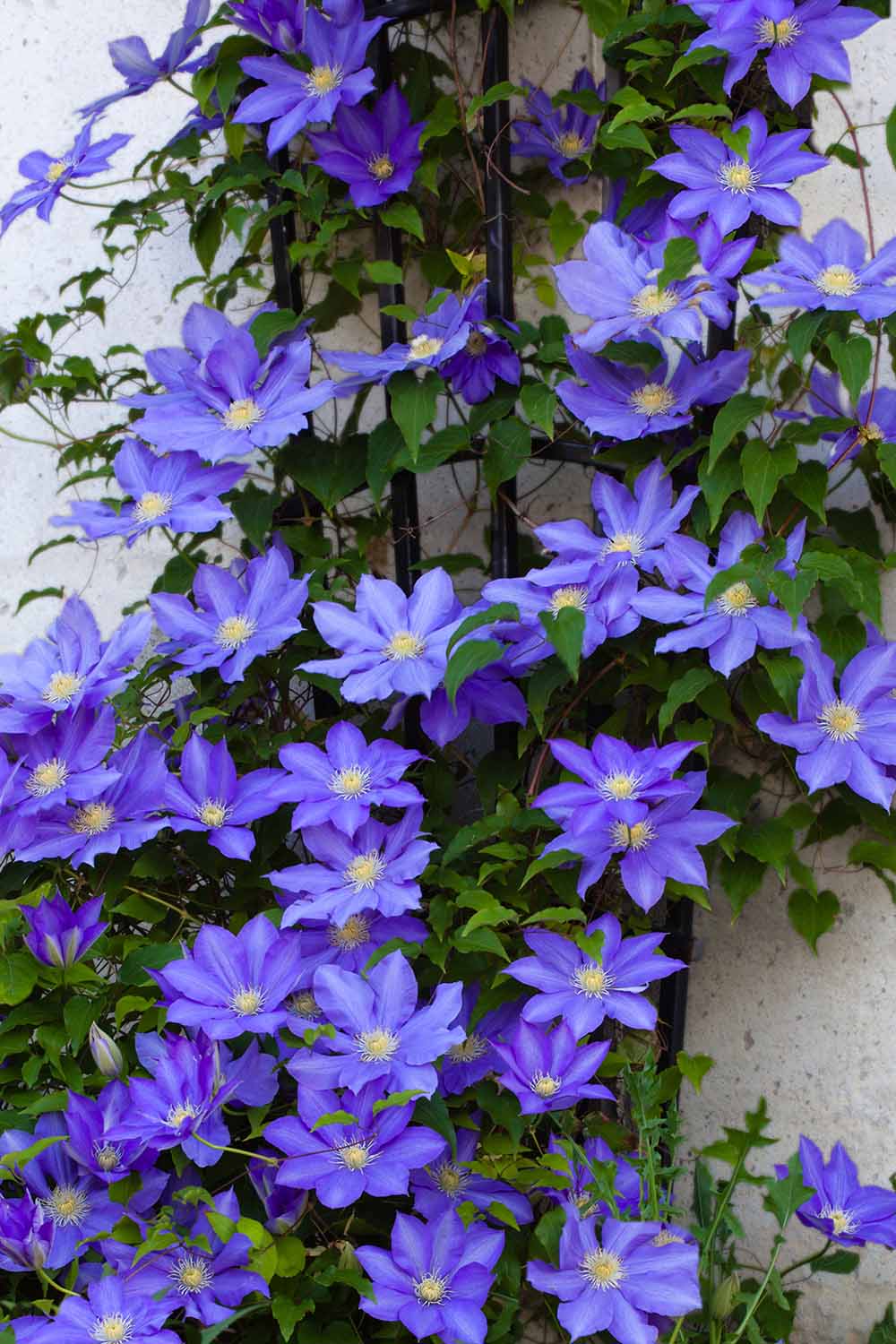
Clematis is a flowering climber that clings by wrapping its leaf stems around a support.
Sticky Disks
At the ends of aerial roots and tendrils, there may be a sticky substance that further facilitates clinging to surfaces.
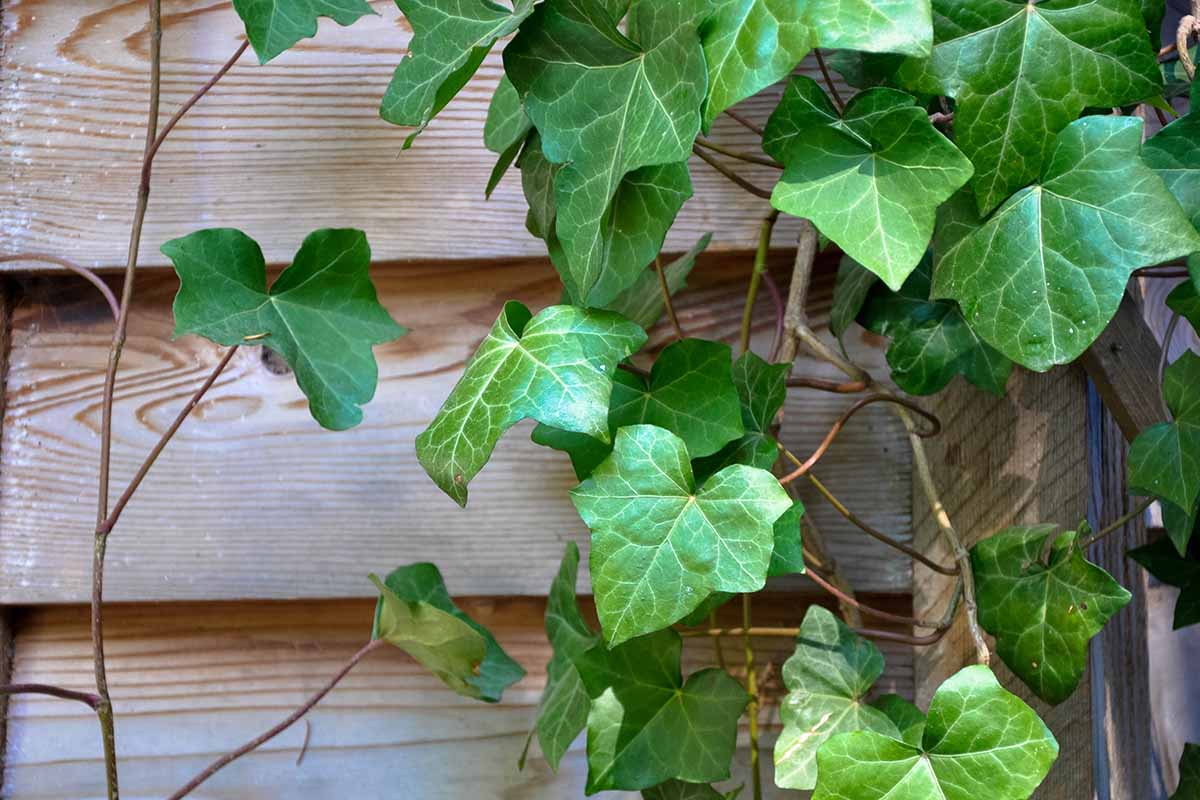
These gluey dabs are called sticky disks or holdfasts. They act like little suction cups.
An example of a vine with aerial roots and sticky disks is English ivy, Hedera helix.
Virginia creeper, Parthenocissus quinquefolia, has tendrils with sticky ends.
Twining Growth Habit
Twining is a plant behavior that causes stems to spiral in either a clockwise or counter-clockwise direction. This is called circumnutation.
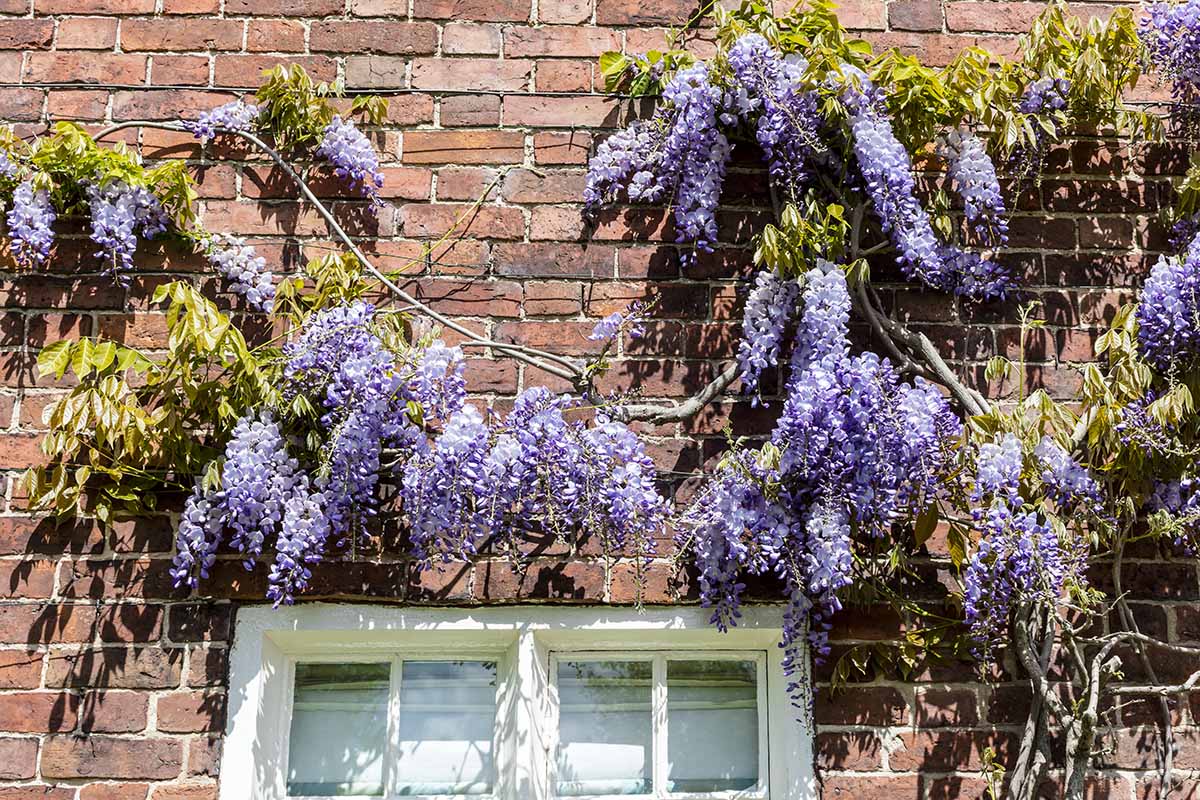
Regardless of whether or not there is something available to wind around, twining stems reach, twisting around other plants, poles, or even themselves as they grow.
Examples of species with this habit include morning glory, Ipomoea spp., hyacinth bean, Lablab purpureus, trumpet honeysuckle Lonicera sempervirens, and wisteria, Wisteria spp.
In addition to vines, there are also plants that exhibit vine-like behavior, like ground-covering periwinkle, Vinca minor, and climbing and rambling roses, Rosa spp.

