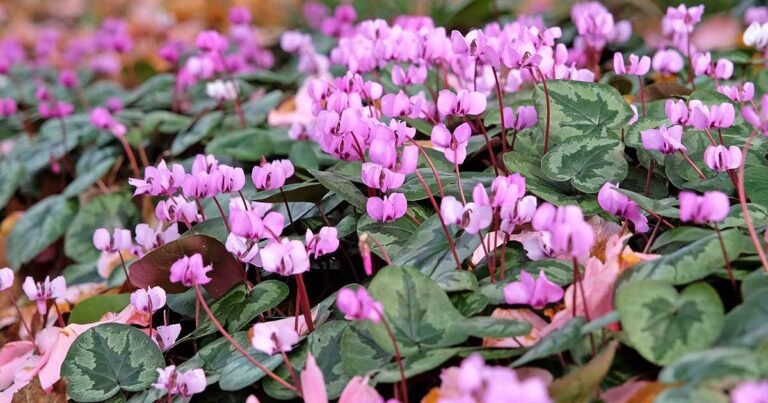
C. balearicumis a Mediterranean variety that flowers from mid-winter through spring and has a strong, sweet perfume.
The flowers are mostly white, some featuring a little pink, and the heart-shaped leaves are dark to light green with blue-green to gray patterning.
Native to the south of France and the Balearic islands, this species is semi-hardy and suitable for Zones 6 to 9.
4. Cilicium
C. cilicium is renowned for its sweet, honey-scented flowers that bloom in autumn.
The oval to heart-shaped leaves have dark green, patterned centers that look like a Christmas tree coupled with grayish-green margins. Flowers are deep pink to white.
Native to southern Turkey through the Tarsus Mountains, plants are hardy in Zones 5 to 7.
5. Coum
C. coum is one of the most popular late-flowering species, and commonly known as hardy or winter cyclamen, and eastern sowbread.
It has a primary habitat from Bulgaria, northern Turkey, and Crimea and a secondary range nearer the Mediterranean, from southern Turkey through Lebanon and into northern Israel.
Plants have pretty, heart-shaped leaves of mid to dark green speckled with silver, and dainty blooms in shades of rosy pink, purple, or white. This species is hardy in Zones 4 to 9.
C. creticumis a native to the island of Crete and features sweetly perfumed white to pink flowers that bloom in spring.
Hardy in Zones 9 to 10, this species thrives in Mediterranean climates with mild, wet winters and hot, dry summers.
Its heart-shaped leaves, which emerge in autumn, are dark green with silver marbling on the upper surface and often display a reddish hue underneath.
7. Cyprium
C. cyprium is localized to Cyprus, and the pale pink, highly fragrant flowers bloom from fall to mid-winter.
The heart-shaped green leaves have striking silver or pale green mottling and emerge in fall. It’s hardy in Zones 9 to 10 and goes dormant in spring.
8. Graecum
C. graecum is Greek cyclamen and native to southern Greece and the Cyclades islands of the eastern Aegean Sea.
The broad oval leaves are variegated in icy green, forest green, and silver with a satiny shine and purple underside.
The pink, purple, or white flowers bloom in fall and plants are semi-hardy in Zones 7 to 9.
9. Hederifolium
C. hederifoliumis known as ivy-leaf cyclamen and is among the most robust for growing in coastal climates.
The pale pink to magenta or purple flowers bloom in late summer through fall and the attractive leaves are heart- or spade-shaped in various shades of green with creamy white to silver patterning.
Walking is one of those things that most of us do every single day, but don’t think much about. It’s not just a way to get us from point A to point B, but it can also be a powerful health tool. More recently, I’ve been intentionally incorporating more walks into my day, and here’s why.
The (Many) Benefits of Walking
Walking isn’t just a casual form of movement, but a research-backed, restorative practice that can have a profound impact on nearly every area of our health. That is, if we choose to make it a daily habit.
And I say “choose” because walking is one of those things that’s so simple, we often dismiss its potential benefits. It doesn’t come with fancy gear, flashy gym memberships, or complex routines. Yet it’s often the simple things that can be the most impactful.
I recently shared a post about wearing a weighted vest while walking, a habit I’ve adopted more recently. It got a lot of questions and responses, which made me realize this topic deserves a deeper dive. In this article, we’ll cover what the science has to say about walking benefits and how to practically make it a regular part of your routine.
We’re Meant to Move
As humans, we’re biologically wired to walk. For most of our history, walking wasn’t an exercise, but how we survived. From foraging to hunting to living our daily lives, it’s estimated that our ancestors walked anywhere from five to ten miles each day.
Today? Most of us are lucky if we get a mile in between our cars, screens, and schedules.
This disconnect between where we came from and how we live now contributes to what some researchers call “Nature Deficit Disorder.” And while we can’t all go live barefoot in a forest, we can bring elements of natural movement back into our lives. A simple daily walk is a great way to start doing that.
The Science Backed Benefits of Walking
There are so many areas of our health that are positively impacted by walking. Here are some of the most compelling reasons to lace up your shoes. Better yet, go for a walk barefoot on the grass!
Boost Mental Health
Research shows walking helps reduce anxiety and depression symptoms. That might not be surprising if you’ve ever taken a walk to clear your head or felt better after a stressful day just by getting outside.
But it’s not just anecdotal. Studies show walking can increase levels of serotonin and dopamine, the “feel good” neurotransmitters we’re often told we need more of. One study even showed that 30 minutes of walking led to significant changes in brain activity associated with relaxation and positive mood. And when over 15% of women in the US take a prescription antidepressant (twice as many as men), that’s a big deal!
Support Metabolic Health
Less than 10% of Americans are considered metabolically healthy. That means over 90% of us could benefit from blood sugar support. And here’s the great news: walking is one of the most accessible tools we have.
A study in Diabetes Care found that just a 10-minute walk after meals can reduce blood sugar spikes by up to 12%. I often take short post-meal walks to help my body process food more efficiently. If I’m not in a place where I can really do that, then even a few dozen air squats will do the trick. I’ve seen the difference firsthand in my blood sugar readings while wearing a continuous glucose monitor.
It’s Great for Your Heart
Want a healthier heart? Get walking! A meta-analysis found that walking for just 30 minutes a day can reduce the risk of heart disease by 19%.
Unlike high-intensity workouts, walking is gentle on the body. That means you can do it daily without spiking cortisol or overly stressing your system. When I was healing from Hashimoto’s and intense nervous system dysregulation, walking (not running or weightlifting) was my movement of choice. It was restorative instead of depleting.
Regulate the Nervous System
One of my favorite benefits of walking is how it supports nervous system health. Especially when done in nature, walking stimulates the vagus nerve and helps shift the body into a parasympathetic (rest-and-digest) state.
You may have seen those powerful before-and-after brain scans showing how even 30 minutes of walking can reduce stress activity in the brain. Nature walks and forest bathing can also reduce cortisol levels and promote feelings of calm.
Enhance Lymphatic Flow and Joint Health
Walking is a full-body activity that helps boost our lymphatic movement and circulation. Since the lymphatic system doesn’t have a pump like the heart, it relies on muscle movement. Walking is a perfect way to keep things flowing. This can support immune function, detoxification, and even reduce puffiness and inflammation.
Walking also supports joint health through regular, low-impact movement. Unlike more intense workouts, walking can actually lubricate and hydrate joints. As my friend Hunter Cook teaches with CARs (controlled articular rotations), consistent joint movement is key to long-term mobility.
Do You Really Need 10,000 Steps?
You’ve probably heard the “10,000 steps a day” mantra. But did you know that number actually came from a Japanese marketing campaign in the 1960s, not from science?
The truth is, studies show that benefits really start around 7,000 to 8,000 steps per day. Even that might sound like a lot, but it breaks down to about 30 to 60 minutes of walking, spread throughout the day. And every step counts.
The goal isn’t perfection, but consistency. Whether you take one long morning walk or three short ones after meals, the benefits add up.
How to Upgrade Your Walks
Once walking becomes a regular habit, you can layer in some optional (and fun) upgrades to boost the benefits.
1. Add a Weighted Vest
Wearing a weighted vest can increase calorie burn, core engagement, and bone density. It’s important to start light, 5% of your body weight or less, and build up slowly if desired. I’ve worn vests from 30 to 60 pounds, depending on the terrain. On soft ground like sand, I stick to lighter weights or skip it altogether.
A quick note here: Someone once asked if wearing a weighted vest is like being overweight. The answer is… kind of, but with important differences. Carrying extra weight does stress the bones (which can strengthen them), but chronic inflammation or poor metabolic health can negate some of those benefits. With a vest, you get the bone benefit without the systemic stress.
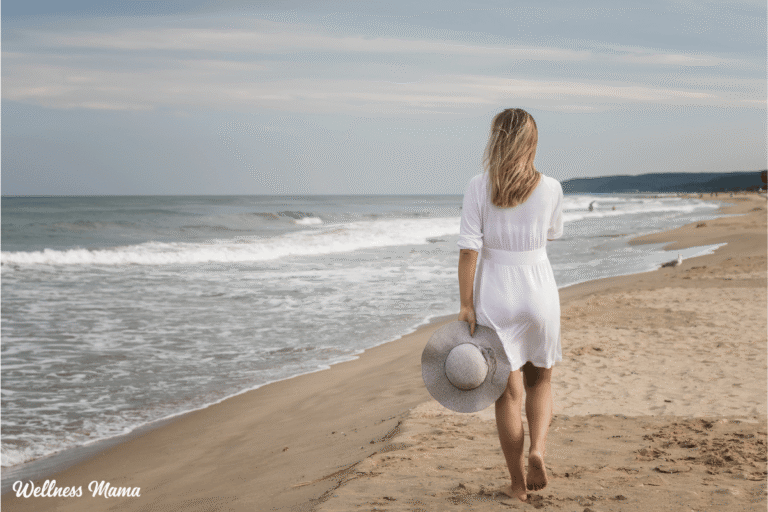
I love barefoot walking when possible, on sand, dirt trails, or grass. It strengthens the feet, improves balance, and may help reduce inflammation through grounding or earthing (contact with the Earth’s natural electric charge). My oldest son regularly takes barefoot runs on concrete and has slowly worked his way up to having the proper form to do that safely. Myself? I’m not a fan of how the concrete feels barefoot, and I definitely wouldn’t recommend starting there!
Not ready for full barefoot walks? There are great minimalist shoe options like Earth Runners and Groundies that offer flexibility and grounding without sacrificing protection.
3. Try Incline or Hill Walks
Want to increase the intensity without adding weight? Find a hill or set your treadmill to an incline. This targets the glutes and hamstrings more, elevates heart rate, and boosts the metabolic impact. Overall, it’s still low impact.
The Best Times to Walk (And Why)
If you’re wondering when to walk, here are a few times that offer extra benefits:
Morning: Walking in early daylight helps regulate your circadian rhythm, supports hormone balance, and boosts mood. Try combining it with a morning gratitude or meditation practice to habit stack even more benefits.
After Meals: A short walk after eating (even just 10 minutes) supports digestion and stabilizes blood sugar. This is one of my favorite health habits.
Evening: Gentle movement in the evening helps wind down the nervous system and supports better sleep. Bonus if you walk at sunset and get some free red light!
Make Walking a Daily Habit
The biggest takeaway here isn’t about how long or intense our walks are. It’s all about getting started and being consistent. Here are a few ways to make walking an easy, enjoyable habit:
Track It: I use an Oura ring, but you don’t need anything fancy. A simple step counter or app can help you stay mindful.
Make It Enjoyable: Listen to audiobooks or podcasts, or just enjoy the quiet. Whatever helps you look forward to it. Sometimes I’ll reserve a favorite audiobook to listen to only while I’m on a walk.
Walk with Others: Social walks are one of my favorite ways to connect. Meet up with a friend and walk instead of sitting at a coffee shop.
Habit Stack: Pair it with an existing habit, like your morning tea, your lunch break, or your evening wind-down.
Start Small: Even five to ten minutes a day is enough to get started. It’s about building the habit, not winning a marathon.
Final Thoughts on the Benefits of Walking
Walking might be one of the most common human activities, but that doesn’t mean it’s ordinary. In my humble opinion, walking is one of the most overlooked tools we have for healing, regulating, and thriving. It supports everything from our mental health and metabolism to our bone strength, brain health, and longevity.
If you’re simply looking to start getting healthier or you’ve been on this path for a while, I’d encourage you to try adding walking to your routine. See how it affects your energy, your mood, and your stress levels. Over time, you may just notice that you crave walking more, especially when it’s out in nature!
Do you make walking a habit? Have you ever tried upgrading your walk? Leave a comment and let us know!
It has been a fabulous week of old friends and new here at Garden Photo of the Day. We started on Monday with an incredible introduction to Ann Gilmour’s garden in New Jersey (check out Part 1 and Part 2, if you missed them), and we’re the ending the week with an update from Bonnie Plikaytis in North Georgia. Bonnie has shared many spectacular scenes from her woodland garden in the past (check out some previous submissions: A Photo Journey Through the Seasons of 2022, Garden Stumperies, Autumn Colors in North Georgia, and Winter Beauty in Bonnie’s Garden), which we admired so much that we featured it in the print magazine (A Woodland Garden That Takes Inspiration from Nature)! Today she’s back to share some highlights from this spring.
Spring is officially over, and it was a beauty. Rain was plentiful, and the plants emerged from winter ready to burst forth with foliage and flowers. This year there were challenges from the deer and voles. Living in a woodland setting, one must remember we share the forest with all that live here and that this was their home first.
Spring invites a bit of whimsy as seen in this photo of a snail sculpture, made from discarded metal items, smiling with glee among the native columbine(Aquilegia canadensis, Zones 3–8).
These red trilliums(Trillium erectum, Zones 4–9)were a transplant from a friend’s garden several years ago, so I do not know the species or variety. Trilliums are always a lovely announcement of spring.
When ‘Percy Wiseman’ rhododendron(Rhododendron yakushimanum ‘Percy Wiseman’, Zones 6–9)blooms, it puts on a kaleidoscope of color from red to pink, ending in creamy peach. Needless to say, it is a real show-stopper!
This spring we added ‘Purple Ghost’ Japanese maple (Acer palmatum ‘Purple Ghost’, Zones 5–9)to the front garden near several Damozel rhododendrons(Rhododendron ‘Damozel’, Zones 4–8). The red blooms of the Damozel create a nice color echo with the bright red leaves of the Purple Ghost.
This ‘Spotty Dotty’ mayapple (Podophyllum ‘Spotty Dotty’, Zones 6–9)was given to me by a gardening friend several years ago. This is the first spring it developed the unusual shaggy red blooms under the leaves. The large spotted leaves always attract the attention of garden visitors.
Royal fern(Osmunda regalis, Zones 3–10)is often not recognized as a fern by some visitors. Its unusual-shaped fronds with the bronze-colored fertile fronds give it the common name flowering fern, though it does not produce actual flowers.
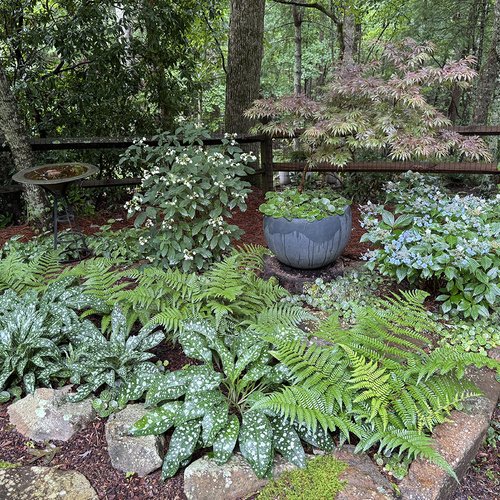
This is a view within Cody’s Garden, which is protected from the deer by a fence. Looking from bottom to top, there are ‘Trevi Fountain’ lungwort(Pulmonaria ‘Trevi Fountain’, Zones 4–8); Champion’s wood fern(Dryopteris championii, Zones 5–8); left side in the back is ‘Hayes Starburst’ smooth hydrangea (Hydrangea arborescens ‘Hayes Starburst’, Zones 4–8), with its delicate white double blooms; center, ‘Oregon Sunset’ Japanese maple (Acer palmatum ‘Oregon Sunset’, Zones 5–9); right, Tiny Tuff Stuff™ mountain hydrangea (Hydrangea serrata ‘MAKD’, Zones 4–9).
This spring, the butterfly weed (Asclepias tuberosa, Zones 3–9)started blooming early and continues to bloom. I certainly am no butterfly expert, but Siri says this is a great spangled fritillary (Speyeria cybele).
Another Japanese maple added to the garden this year is ‘Summer Gold’(Acer palmatum ‘Summer Gold’, Zones 5–9), which gives a lovely pop of color to even shady areas of the garden. Planted in front is beautiful wood fern(Dryopteris pulcherrima, Zones 6–9),an outstanding evergreen fern. Also seen is leopard plant(Farfugium japonicum, Zones 7–9),which has yellow flowers in early fall.
Cody is the Guardian of the Garden. When he spots a deer, you know immediately from his verbal response that he has beagle and coon hound in his heritage! He is a good boy and my gardening companion.
Thank you so much for this selection of stunning photos from your spring garden, Bonnie! It never disappoints, and every year there is something new to marvel at in your woodland wonderland.
What were your spring highlights? Was there a plant that put on a particularly powerful performance, or a corner of the garden that wowed in every way possible? It’s not too late to look back on the previous season and share some highlights with Garden Photo of the Day! Follow the directions below to submit photos via email, or send me a DM on Instagram: @agirlherdogandtheroad.
We want to see YOUR garden!
Have photos to share? We’d love to see your garden, a particular collection of plants you love, or a wonderful garden you had the chance to visit!
To submit, send 5–10 photos to [email protected] along with some information about the plants in the pictures and where you took the photos. We’d love to hear where you are located, how long you’ve been gardening, successes you are proud of, failures you learned from, hopes for the future, favorite plants, or funny stories from your garden.
Fine Gardening receives a commission for items purchased through links on this site, including Amazon Associates and other affiliate advertising programs.
STUNNING BIRDBATH: Quality birdbath is sure to attract feathered friends and create a charismatic ambiance for your garden, patio, deck, yard, or other outdoor space. SHALLOW SHAPE: Shallow and wide bowl assures that multiple small birds can drink and bathe safely at the same time
BEAUTIFUL DESIGN: Luxurious and antique styling adds a touch of elegance to your garden or yard. DURABLE CONSTRUCTION: Polypropylene material resists rust and damage from the elements while the sturdy base prevents the birdbath from tipping over. IDEAL SIZE: Birdbath measures 20″ L x 20″W x 28″H, the perfect size for your yard, and includes a one-year manufacturer’s warranty from date of purchase.
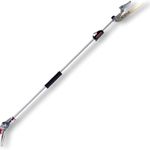
ARS Telescoping Long Reach Pruner
Fine Gardening receives a commission for items purchased through links on this site, including Amazon Associates and other affiliate advertising programs.
Telescopes from 4 to 7′. Cut and Hold (160) Blades. Drop forged blades for unsurpassed long lasting sharpness. Lightweight, 2.3 lbs., for continued use. Perfectly balanced for easy pruning.
Wagner’s 52003 Classic Blend Wild Bird Food, 6-Pound Bag
Fine Gardening receives a commission for items purchased through links on this site, including Amazon Associates and other affiliate advertising programs.
Classic wild bird food uses the highest quality grains to attract backyard wild Birds. A high-quality mix containing Millet, milo, cracked corn and Sunflower for a wide range of wild birds to enjoy. Perfect for tube, hopper, or platform feeders. Great to feed in all seasons! Perfect for the winter, when seeds are scarce; spring and summer for hatchlings; and autumn to give energy to migrating birds. This seed will help you fill your yard with birds such as Jays, cardinals, doves, Juncos, finches, goosebeaks, any many more.
Earlier this year, the Food and Drug Administration approved the first new kind of painkiller in 20 years. It’s considered an alternative to opioids. But it’s expensive, and not everyone has access to it yet.
Vertex Pharmaceuticals
hide caption
toggle caption
Vertex Pharmaceuticals
Jerry Abrams, a 64-year-old marketing strategist in Minneapolis, used to run marathons.
But two decades of degenerative spine disease have left him unable to run — and he’s grieving.
For Abrams, losing running felt like “the loss of a loved one – that friend who’s been with you every day you needed him.
“You know, having that taken away from you because of pain is the hardest thing of all,” he says.
The constant pain in his lower back makes running impossible. Sometimes, when the pain isn’t under control, he can’t get out of bed.
Abrams has tried taking opioids. They help, but he feels he has to be careful because they’re potentially addictive. He’s also worried about building up a tolerance to them.
“I don’t ever want to be in a situation where I need surgery and need to recover and opioid medication no longer does what it needs to do,” he explains.
It’s offered hope for the 1 in 5 Americans who suffer from chronic pain, but it’s also just out of reach. Journavx is the first new kind of painkiller in more than 20 years, and the medical community is cautiously optimistic that Journavx doesn’t have the same addictive potential as opioids do.
But the new pills are expensive, and not everyone has been able to access them, thanks to a narrowly-focused FDA approval and limited insurance coverage
Abrams’ doctor wanted him to be able to try Journavx. But the FDA only approved the medication for short-term use for acute pain, which is usually defined as lasting less than three months, such as right after surgery.
Because Abrahm’s pain is chronic, his insurance wouldn’t cover it.
A single Journavx pill costs around $15 without insurance, according to Vertex Pharmaceuticals, the drug’s manufacturer.
Vertex Pharmaceuticals
hide caption
toggle caption
Vertex Pharmaceuticals
Journavx’s FDA approval was based on studies of patients right after surgery. But even in those cases, insurance coverage has been slow.
“I think overall surgeons were very excited about the option to have a non-opioid pain medicine for our patients,” says Dr. Jessica Burgess, a surgeon at Eastern Virginia Medical School at Old Dominion University in Norfolk, Virginia. “Unfortunately, I have yet to meet a surgeon that’s been able to prescribe it.”
Opioids, which are off-patent and generic, cost just a few cents per pill. Journavx costs around 15 dollars per pill, she says.
Even with insurance, that can mean a significant difference at the pharmacy counter, as Barreveld learned when a family member was prescribed both medications after a recent surgery.
“The oxycodone cost about, I think, $0.50 and the Journavx was a $30 co-pay. So the differences are definitely stark,” she says.
Some patients who got insurance approval for a first round of Journavx are then denied when trying to get a refill after two weeks.
About 38% of people have insurance coverage for Journavx, according to Jayne Hornung, Chief Clinical Officer at MMIT, a data company focused on the pharmaceutical market. That’s a pretty typical level of coverage for the first few months following a new drug’s launch.
The reason why most insurers are only covering it for 14 days is because that’s how long the drug was studied during clinical trials, Hornung says.
“We know it’s not addictive within 14 days. But what about after 14 days?” she says.
“Also, what are the long-term side effects?” she says.”We know it’s okay at 14 days, but do we know at 30 days if you’re going to have some long-term side effects from the drug? What about a year?”
The limited use has been frustrating for some chronic pain patients, who told NPR they tried but failed to get a prescription for Journavx.
As for Jerry Abrams, the ex-marathoner, he and his doctor were eventually able to get a coupon from Vertex Pharmaceuticals, the drug’s maker, to help pay for a few months of Journavx.
Instead of paying for it himself, which would have cost more than $500 every two weeks, with the coupon Abrams would only have to pay $30. But the coupon was only good for four prescription fills.
Abrams tried it for about two months.
The drug didn’t relieve the main source of pain in his spine, he says, but did help ease pain in his shoulder and mid-back.
“I find it really interesting that it has had positive effects on the secondary pain from my back issues.”
His doctor is trying to find a way for him to stay on the drug after his coupon runs out.
Studies are now underway that could help Journavx win additional FDA approvals for some kinds of chronic pain. Vertex says it is specifically studying Journavx in patients with diabetic peripheral neuropathy, painful nerve damage in the limbs, and lumbosacral radiculopathy, a type of low-back pain caused by a pinched nerve.
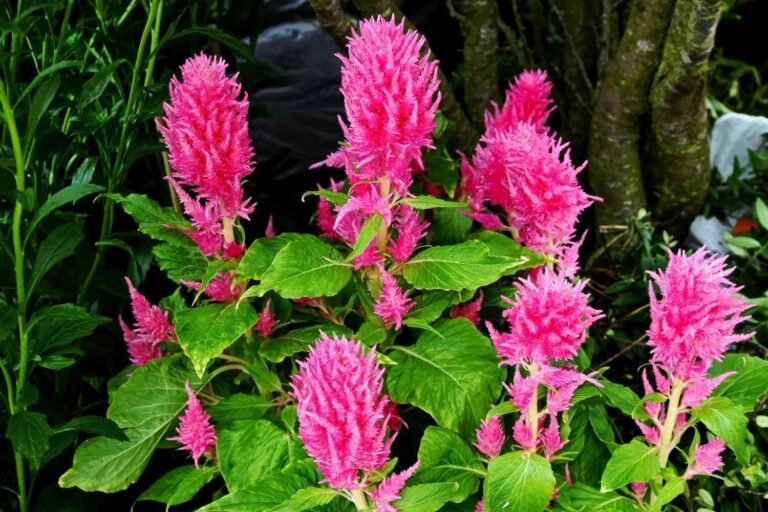
Celosia got its name from a Greek word for “burning” due to its flame-like flower heads.
Native to tropical regions, Celosia is an annual flower plant renowned for its wide array of floral colours.
You can grow celosia from seeds or through cuttings. Gardening experts recommend to plant this annual flowering plant in garden beds, instead of containers.
Celosia prefers full sun, well-drained soil, sufficient water and soil temperature above 55F to thrive.
Celosia Plumosa, Celosia Cristata, Celosia Spicata are three prominent varieties that you can consider to grow in your backyard.
Before you decide to germinate seeds or propagate celosia plant through cuttings, lets first know about the plant.
Celosia thrives in warm, sunny spots with well-drained soil. Start from seeds indoors or use cuttings, then transplant outdoors after frost, spacing them 8–12 inches apart.
Keep soil slightly moist and fertilize every few weeks. Pinch young plants for bushy growth and deadhead often. Celosia rewards with bright, long-lasting blooms all season.
Growing Requirements of Celosia Plant
Celosia is an ornamental flowering plant that belongs to the amaranth family, Amaranthaceae.
It includes various species such as Celosia argentea, Celosia cristata (cockscomb), and Celosia plumosa (plumed celosia) and Celosia Plumosa.
Native to tropical regions of Africa and Asia, celosia is known for its flame-like blooms in shades of red, yellow, orange, and pink, making it a favorite in gardens and floral arrangements.
Sunlight: Celosia thrives in full sun. Ensure it receives at least 6 to 8 hours of direct sunlight daily for vigorous growth and vibrant blooms.
Soil: Well-drained, moderately fertile soil with a slightly acidic to neutral pH (6.0–7.0) is ideal. Avoid heavy clay soils that retain too much moisture.
Watering: Water regularly to keep the soil evenly moist, especially during dry spells. However, avoid overwatering as it can lead to root rot.
Temperature: Celosia prefers warm conditions. Optimal temperatures range from 20°C to 30°C; protect it from cold drafts or temperatures below 15°C.
Fertilization: Apply a balanced, water-soluble fertilizer every 3–4 weeks during the growing season to encourage lush growth and blooming.
Spacing: Space plants about 8–12 inches apart to ensure good air circulation and prevent fungal diseases.
Pruning and Maintenance: Remove faded flowers to promote continuous blooming. Minimal pruning is needed, but pinching young plants helps them grow bushier.
Celosia’s low-maintenance nature and striking colors make it an excellent choice for borders, containers, and cutting gardens.
Best Celosia Flower Varieties to Grow
Celosia comes in several eye-catching forms, each adding a unique texture and burst of color to gardens and floral displays. Among the most popular types are Plumosa, Cristata, and Spicata—each known for its distinct bloom style and vivid hues.
Celosia Plumosa
Also known as Feather Celosia, this variety features upright, feathery plumes that resemble flames. It blooms in fiery shades of red, orange, yellow, and pink.
Plumosa is perfect for garden borders and thrives well in containers. Its tall, airy flowers also make excellent cut or dried arrangements.
Celosia Cristata
Cristata, or Cockscomb Celosia, has crested, brain-like flower heads that are bold and dramatic. The blooms come in deep crimson, golden yellow, and rich magenta.
This variety is a striking center-piece in beds and bouquets. It’s long-lasting and draws attention with its unusual, velvety texture.
Celosia Spicata
Known as Wheat Celosia, Spicata features slender, spike-like blooms that resemble wheat heads. The flowers appear in soft shades of pink, lavender, and silver.
Spicata adds height and contrast to mixed borders. It’s drought-tolerant and ideal for both fresh and dried floral arrangements.
How to Grow Celosia?
Celosia is most commonly grown from seeds, which is the easiest and most effective method for home gardeners. However, it can also be propagated from stem cuttings, especially if you want to replicate a specific variety. Both methods are simple and rewarding when done correctly.
How to Grow Celosia from Seeds?
Starting celosia from seeds is an excellent way to grow a variety of colors and forms, especially for gardeners who enjoy planning ahead for a colorful summer display.
1. Choose the Right Time to Start Seeds
Celosia is very sensitive to cold, so it’s important to start seeds indoors 6 to 8 weeks before the last expected frost date in your area. This allows the plants enough time to grow strong and healthy before being transplanted outdoors when the weather warms up.
2. Select Quality Seeds
Choose seeds from a reliable source. There are different types of celosia—like Plumosa (feathered), Cristata (cockscomb), andSpicata (wheat-type). Decide which one fits your garden design, or try a mix for variety.
3. Prepare the Seed Tray or Containers
Use a seed-starting tray or small containers with good drainage. Fill them with a lightweight seed-starting mix, which holds moisture without becoming soggy. Avoid regular garden soil, which can be too dense and compact for delicate seedlings.
4. Sow the Seeds Properly
Sprinkle the tiny celosia seeds evenly across the surface of the moist soil. Gently press them down with your fingers or a flat tool, but do not cover them with soil—celosia seeds need light to germinate. Mist the surface lightly with water to help the seeds settle.
5. Create a Warm, Humid Environment
Cover the tray with a clear plastic dome or plastic wrap to retain moisture and warmth. Place the tray in a warm location where the temperature stays between 68F to 72F.
You can also place the tray on a seedling heat mat to maintain consistent bottom warmth, which speeds up germination.
6. Water Carefully and Consistently
Keep the soil moist but not wet. Water gently using a spray bottle or from the bottom by placing the tray in a shallow container of water. This helps avoid displacing the seeds and prevents damping-off disease, a common seedling issue caused by overwatering.
7. Germination Time
Under ideal conditions, celosia seeds will sprout in 10 to 15 days. Once you see green sprouts, remove the plastic cover and place the tray under grow lights or near a bright window with indirect sunlight to prevent seedlings from becoming leggy.
8. Provide Enough Light
Celosia seedlings need 12 to 14 hours of light daily. If natural light isn’t sufficient, use fluorescent grow lights placed about 2 inches above the seedlings. Raise the lights as the plants grow taller.
9. Thin and Transplant into Larger Pots
When the seedlings develop two or more sets of true leaves, thin them out by cutting the weaker ones at the base. You can also transplant the strongest ones into individual small pots to give them more space to grow.
10. Harden Off Before Planting Outdoors
About a week before transplanting, start the hardening off process. Gradually introduce the seedlings to outdoor conditions—start with 2–3 hours a day in a shaded, sheltered spot, then increase exposure to full sun and wind over the course of 7–10 days.
11. Transplanting to the Garden
Once all risk of frost has passed and night temperatures stay above 59F, transplant your celosia seedlings into the garden or containers. Choose a spot that receives full sunlight for at least 6–8 hours a day.
Space the plants 8 to 12 inches apart to allow for airflow and prevent fungal problems. Use well-drained soil enriched with compost or organic matter for best growth.
While most gardeners grow celosia from seeds, propagation from stem cuttings is an excellent method for quickly multiplying your favorite varieties.
This technique ensures the new plant is genetically identical to the parent, preserving unique colors, flower forms, and other desirable traits. It’s especially helpful for hybrid varieties or rare cultivars that may not come true from seed.
Why Choose Cuttings Over Seeds?
Ensures identical blooms as the parent plant
Faster results compared to seed germination
Useful for saving a mature plant before winter
Avoids the variability of seed-grown plants
Step-by-Step Guide to Celosia Propagation from Cuttings
1. Select a Healthy Mother Plant
Start with a strong, pest-free celosia plant. The best time to take cuttings is during the plant’s active growing phase, usually in late spring or early summer. Avoid flowering stems, as they are more focused on blooming than rooting.
Tip: Choose a stem with vibrant green growth, no buds or blooms, and no signs of disease or insect damage.
2. Take the Cuttings
Using sterilized scissors or pruning shears, cut a 4 to 6 inch long stemjustbelow a leaf node—this is where new roots will most likely form.
Strip off the lower leaves on the bottom half of the stem, leaving only 2–3 leaves at the top. This helps reduce moisture loss and stress.
If the leaves are large, trim them in half to reduce transpiration and support faster rooting.
3. (Optional) Dip in Rooting Hormone
While celosia can root without hormone, applying rooting hormone powder or gel gives your cutting an advantage, especially in less-than-ideal conditions.
Dip the cut end into the hormone
Tap gently to remove excess
Rooting hormone helps stimulate root growth and reduces the chance of fungal infection at the wound site.
Use a small pot or seed tray filled with a sterile, well-draining rooting mix. Recommended media include:
Peat + perlite
Cocopeat + vermiculite
Perlite + sand
Moisten the mix lightly before planting—damp but not soggy.
Make a small hole using a pencil or stick, insert the cutting carefully, and firm the soil gently around it.
5. Create a Humid Environment
High humidity is crucial for preventing moisture loss and encouraging root growth. Cover the pot or tray with:
A clear plastic bag supported by sticks
A humidity dome
A mini greenhouse
Keep the setup in a bright, warm spot(not in direct sun), with temperatures between 68F to 77F.
6. Water and Monitor
Mist the cutting lightly once or twice daily
Keep the rooting medium moist but never waterlogged
Ensure good air circulation to prevent fungal issues
Too much water can cause stem rot, while too little can dry the cutting before roots form.
7. Watch for Root Development
Celosia cuttings typically begin to root within 2 to 3 weeks. Gently tug the stem after this period—if you feel resistance, roots have formed.
If you’re rooting in water, place the cutting in a clear glass with 1–2 inches of water, changing it every 3–4 days. You’ll see tiny white roots begin to emerge along the stem.
8. Pot Up the Rooted Cutting
Once a strong root system (1–2 inches long) has formed:
Transplant the cutting into a pot filled with regular potting mix
Water thoroughly after transplanting
Place in indirect sunlight for a few days before introducing it to full sun
This helps the new plant acclimate to its environment without stress.
9. Harden Off and Move Outdoors
If you plan to plant your celosia outdoors, harden it off by gradually exposing it to outdoor conditions over 7–10 days. Start with 2–3 hours of morning sun and slowly increase time and exposure.
Once hardened off, plant in:
Full sunlight (6–8 hours daily)
Well-draining soil enriched with compost
Spacing of 8–12 inches apart to ensure airflow and healthy growth
After transplanting celosia, water the plants thoroughly to help settle the soil around the roots. For the first week, keep the soil consistently moist to support root establishment, but avoid waterlogging.
Place the plants in a spot with full sunlight—at least 6 to 8 hours daily. Celosia loves heat and light, so sunny beds or balconies are ideal. Shade or low light can result in weak, leggy growth and fewer flowers.
Ensure the soil is well-drained to prevent root rot. You can improve drainage by adding compost or sand to heavy soils. Mulching around the base helps retain moisture and keeps weeds in check.
Apply a balanced, water-soluble fertilizer every 3–4 weeks to promote healthy foliage and vibrant blooms. Avoid over-fertilizing, which can lead to lush leaves but fewer flowers.
Pinch off the tips of young plants to encourage bushier growth. Regularly deadhead faded flowers to prolong blooming and keep the plant looking tidy. Celosia requires minimal care once established and will reward you with bold color all season.
Growing celosia is a rewarding experience for gardeners of all levels, thanks to its bold colors, unique flower shapes, and easy-growing nature.
Whether you start from seeds or cuttings, providing the right conditions—sunlight, well-drained soil, and consistent care—ensures healthy, vibrant plants.
With a little attention, celosia will thrive in your garden, containers, or borders, adding a stunning splash of color that lasts all season long.
Khaja Moinuddin, a computer science graduate, finds joy in gardening and homesteading. Join him on this blog as he shares his experiences in homesteading, gardening, and composting
Self care doesn’t have to be expensive, inaccessible, or Instagram-worthy. Let’s redefine self care in these three ways to make it work for us and not for the algorithms.
Okay. Don’t get me wrong. I love a massage. I love a mani pedi. I love a retreat. Bubble bath? Yes, please!
I’m not immune to the indulgences that you typically think of when you hear the word self care. In fact, I really enjoy them.
And there is a reality and a privilege wrapped up in these types of self care. They tend to be expensive and inaccessible for many.
And unfortunately, they are the types of self care we see over and over again in our social media feeds. Because they are Insta-worthy. I mean, the algorithm loves a bougie retreat in the woods, right?!
And yet how many of us can realistically jet off to some expensive airbnb that’s booked up a year in advance?
If you ever feel like you’re failing at self care, you’re not alone. Comparison is so easy when you’re scrolling social on the daily.
But I’m here to tellyou that you are not failing self care. You simply need to redefine what self care is to you.
How do we redefine self care? Here are three suggestions to start with:
1. Think of self care as a form of adulting.
Let’s rethink self care as taking care of yourself in the simplest of ways. Often times, this looks like adulting.
Doing the things that maybe you don’t really feel like doing or tend to put off but know are important for your wellbeing.
This could look like:
paying your bills
doing laundry
loading the dishwasher
keeping your space clean and somewhat tidy
taking medications or vitamins
going to therapy
grocery shopping
cooking
If you let these things slip or get behind on them, it will impact your mental state and wellbeing. Maybe you can begin to think of these things not as chores but as self care. Notice if that shifts anything within you when you go to start these tasks.
2. Accept that self care can be boring.
If you only view self care as the things you’d feel super cool posting about on Insta, then you’ll be coming up short.
Self care doesn’t have to be sexy or trendy or Insta-worthy. Self care can be mundane or boring too.
Sometimes these “boring” types of self care can arguably be the most important.
Think:
taking a shower
eating regularly throughout the day
moving your body
staying hydrated
getting enough sleep
brushing your teeth
meditating
resting
Sure, posting a Reel of you resting isn’t super sexy but IMHO it is kind of a radical act in our hustle-and-grind culture and something we need to see more normalized.
We all could probably benefit from seeing more real, mundane lives depicted on social. It would probably help us feel more seen, normalized, and validated, and there might be less comparison, anxiety, and depression.
3. Remember that self care can be ever evolving.
Self care is not static and it’s definitely not a one-size-fits-all approach. Self care is dynamic, fluid, and individual.
What might feel like self care in one season of life might not feel like self care in another. For example, you might have seasons when even boring, adulting self-care feels inaccessible (i.e. resting or getting enough sleep when you’re postpartum).
Or maybe cooking before you had kids felt like self care but now that no one eats what you make (and maybe there’s some complaining involved too), cooking stirs up feelings of anxiety or frustration.
Know that it’s okay if the actions that once felt like care no longer feel that way. You are allowed to evolve and so is your self care.
Also, remember that self-care is individualized in nature. Meaning that what feels like self care to me may feel like the furthest thing from care to you.
For example, taking the time to sit and meditate feels like self care to me and I know others for whom meditation doesn’t feel safe because being in their body doesn’t feel safe.
There are no black-and-white definitions of what constitutes self care. You get to decide for yourself what self care is to you.
Perhaps you start making a list of all the actions or activities that feel like self care. Once you allow yourself to think outside of the box, you might be surprised at all the tools you have in your self care tool belt.
What would go on your self care list? Tell me a few things in the comments below!
For more self care inspiration, check out my blog posts below:
Susan Burton, reporter and host of the podcast “The Retrievals,” talks about the alarming number of patients who report feeling significant pain during their C-sections.
If you’ve visited the supplement aisle of a health food store, you’ve definitely come across bacopa.
It’s the main ingredient in all kinds of pills, powders, and extracts that claim to boost brainpower and sharpen memory.
While these supplements are not going to turn you into Einstein, the plant that they’re made from, sometimes called water hyssop, is a worthy addition to your garden, terrarium, or aquarium.
We link to vendors to help you find relevant products. If you buy from one of our links, we may earn a commission.
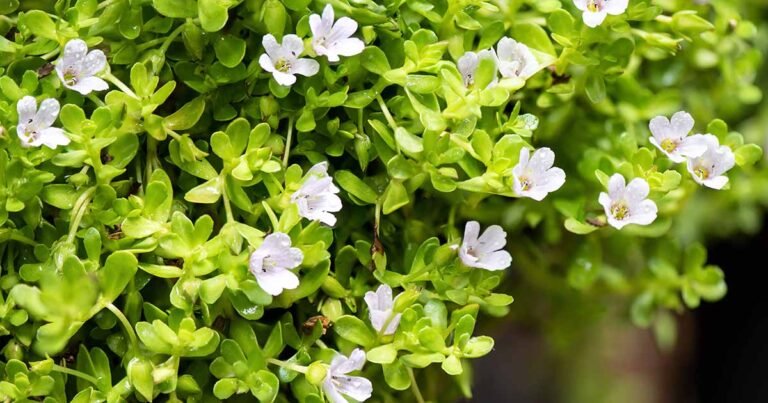
It’s perfect for soggy areas, creating a carpet of gorgeous greens and pale blossoms.
Hardy in Zones 8 to 11, bacopa is ideal for those with a heavy watering hand or wet feet in the landscape. Let it creep along pond margins, tuck it into a hanging basket, or trail it from a high shelf indoors.
Can’t wait to learn more? Here’s what we’re about to discuss about this beloved herb:
Bacopa is an evergreen perennial with glossy, elliptical, fleshy green leaves that grow opposite from one another on fleshy stems.
The plant typically stays under a foot tall and grows about three feet wide, but it can grow up to three feet tall in an aquatic environment.
Quick Look
Common name(s): Water hyssop, brahmi, herb of grace, Indian pennywort
Plant type: Herbaceous evergreen perennial
Hardiness (USDA Zone): 8-11
Native to: Africa, the Americas, Asia, Australia, Middle East
Bloom time / season: Year round, spring, summer, fall blossoms
Exposure: Full sun to partial sun
Soil type: Moist, rich, well-draining or aquatic substrate
Soil pH: 6.0-7.5, slightly acidic to neutral
Time to maturity: 1 year
Mature size: Up to 4 feet wide by 6-12 inches tall (taller when grown in water)
Best uses:Ground cover in wet areas, aquariums, terrariums, herbal medicine
Taxonomy
Order: Lamiales
Family: Plantaginaceae
Genus:Bacopa
Species:Monnieri
Native to warm, wet, tropical or subtropical regions across the globe, from the southern US and Hawaii to India, Southeast Asia, Australia, and parts of Africa. B. monnieri has naturalized in California and is considered invasive in regions such as Spain and Japan.
It’s also known as brahmi, baby tears, coastal waterhyssop, Indian pennywort, water purslane, smooth or Monnier’s water hyssop, thyme-leaved gratiola, herb of grace, and ʻaeʻae in Hawaiian.
This semi-aquatic plant thrives in waterlogged or poorly drained soil, tolerates brackish water, and is often found in coastal areas.
Its tolerance for standing water makes it popular in aquariums, bogs, and ponds. It’s also fantastic ground cover that can handle foot traffic and produces impressive blooms.
From spring through first frost, bacopa displays faintly pink, blue, or white bell-shaped flowers with five petals. In mild climates, it can bloom year-round.
Bacopa is an important larval host of the white peacock butterfly (Anartia jatrophae) in the southern US.
Traditionally, it’s used to support memory, relieve insomnia, and help manage epilepsy.
In the US, the plant is often dismissed as a weed, but the supplements made from it have gained widespread popularity.
The leaves contain many compounds including triterpenoid saponins, alkaloids, and phytochemicals, that show potential pharmacological benefits.
With that in mind, let’s talk about what water hyssop can really do as a supplement.
While it’s often hyped as a miracle herb that can cure Alzheimer’s disease, this claim is unproven.
In fact, the FDA has issued warnings to manufacturers against promoting it as a treatment for Alzheimer’s, anxiety, hypoglycemia, hypertension, or digestive disorders.
That’s not to say that it’s useless. Several clinical trials suggest that it can improve memory, but only after weeks of use and only to a limited degree.
How to Grow
This moisture-loving tropical herb thrives in a variety of settings, from garden beds and containers to aquariums and ponds.
Whether you’re growing it submerged or on land, the key to success is constant moisture and plenty of sun.
Water
Bacopa can literally grow in water, so don’t ever let it dry out. Even a single day of dry soil can kill the plant.
You should aim for the soil to feel like a well-wrung-out sponge at all times.
In some areas during dry times of year or indoors in the winter when the heat is on, you might need to water every day.
If you are worried the soil is too dry, add water. It’s better to err on the side of too much than too little water.
Do you know how gardeners always tell you to empty the dish or tray that catches the water that drains out of the container? Don’t empty it.
In fact, you should fill it up. The moisture will absorb into the soil from the tray or dish as needed.
Light
Provided that you can keep up with the water needs, bacopa prefers full or partial sun, with six or more hours of sunlight per day. Indoors, you might need to provide supplemental lighting.
Heat isn’t a problem, as this plant is from tropical regions, but it can’t handle even a moment of drought.
That means if you live in a warm area, you’ll either need to water very frequently or grow it in a pond, stream, or other moist area.
Soil
In garden beds, B. monnieri prefers moist, nutrient-rich, and well-draining soil.
It can adapt to various soil types, including clay, loam, or sand, provided they retain moisture without becoming waterlogged.
To enhance moisture retention and fertility, amend your garden soil with organic matter such as compost or peat moss. Aim for a soil pH between 6.0 and 7.5.
If you decide to grow the plant in a container, choose a water retentive potting medium.
I use Tank’s Pro Potting Mix. It’s available in one and a half cubic foot bags at Arbico Organics.
Fertilizing
If you are growing bacopa in an aquarium or pond, there’s no need to fertilize. In the ground, fertilize with a mild, balanced food once every three months.
I’m a fan of Dr. Earth’s Pump & Grow because it comes in a convenient pump container and is made using food scraps that would go to waste from grocery stores.
For example, you can pick up a live plant in a small aquarium basket at Amazon.
Maintenance
Prune away any dead or damaged growth as you see it.
Dry soil, temperature extremes, or even high heat can cause dieback, and those patches won’t regenerate so go ahead and snip them off to keep things tidy.
You can also give your bacopa a bit of a haircut in the late winter if you want to encourage bushier growth.
Just use a clean pair of shears and lightly cut it back. The plant responds well to pruning and will come back even fuller.
The white and pink flowers appear in the spring and can persist through fall. A little deadheading can encourage more flowering if they start to fade early.
In ideal conditions, this plant can spread aggressively. Keep an eye out for runners popping up in places you didn’t intend.
If it starts growing out of bounds, dig up unwanted stems and roots to keep it in check.
Propagation
Bacopa is easy to propagate from seeds, stem cuttings, or division.
From Seed
Growing from seed takes time, warmth, and lots of moisture. Start seeds about four months before temperatures reach 70°F outdoors.
If you intend to grow your plants indoors year-round, you can start any time, ideally in spring or summer.
Sow seeds on the surface of a moist seed-starting mix and press them in gently, don’t cover.
They need light to germinate, so place the tray in a bright window or under grow lights for at least four hours a day.
Use a heat mat set to 75°F and cover with plastic or glass to retain humidity.
Keep the soil moist and check for mildew daily. If you see any forming, spritz the medium with a five percent water and bleach solution. Germination takes 10 to 20 days.
After the seedlings sprout and develop true leaves, thin to one every three inches or transplant extras into small pots.
Move them to their final location when they are well established in their pots and temperatures are above 70°F.
From Cuttings
Bacopa propagates quickly from stem cuttings. While you can root them in water, I prefer using a water-retentive potting mix for stronger transplants.
Fill small containers with drainage holes with a suitable potting medium. Set the containers in a tray filled with water to keep the medium evenly moist.
Find a long stem and make a cut just underneath a leaf or leaf node, which is the spot where leaves emerge from. If the stem is particularly long, you can cut it into sections.
Each section should be at least two inches long and should have a leaf node at the base. Remove all but the top two leaves.
Dip in rooting hormone if desired, then insert about an inch deep into the medium and firm up the soil around it. Keep the medium consistently moist, don’t allow it to dry out at all.
Cuttings typically root and begin to grow within a few weeks, though timing varies with season and temperature.
By Division
If your bacopa is thriving, it’s likely to spread. Take advantage by dividing it to create more plants.
Lift the plant from the container or gently dig up a clump. Separate out a few stems, making sure each has roots attached.
Replant these divisions just as you would a transplant and keep the soil consistently moist while they establish.
Transplanting
Bacopa is often sold at aquarium and terrarium supply stores. It’s a popular choice for aquatic setups and frequently comes in small mesh baskets.
If you’re growing in an aquarium or pond, you can simply submerge the basket into the substrate.
For container planting, remove the plant from the basket and repot it in a moisture-retentive potting mix. It looks especially nice in a hanging basket.
Outdoors, bacopa works well as a spreading ground cover in consistently moist areas.
To transplant, dig a hole slightly wider than the rootball and plant at the same depth. Loosen the roots, place in the hole, firm the soil, and water thoroughly.
Space plants about eight inches apart to allow room for spreading.
Pests and Disease
Bacopa is relatively problem-free, but there are a few issues that can cause problems.
Pests
Aphids are small, sap-sucking insects that feed on leaves and stems, causing yellowing foliage, stunted growth, and potentially spreading disease. If you spot curled or discolored foliage, check for clusters of tiny, soft-bodied insects.
Whiteflies are tiny flying insects that also use their sucking mouthparts to draw out the sap from host plants, causing stunting and leaf yellowing.
If you notice little clouds of flies popping up when you walk near your plants, you’re likely looking at whiteflies.
Disease
Because bacopa thrives in high humidity and wet soil, the plants can attract fungal pathogens like those that cause powdery mildew.
This disease causes a powdery, flour-like dusting on the leaves and sometimes stems, which can slow growth. It rarely kills the host plant.
Harvesting
To harvest, use clean scissors to snip off stems and leaves as needed. Just be sure not to remove more than half the plant at once to allow for healthy regrowth.
Drying is the best way to preserve bacopa. The dried leaves can last up to six months when stored properly.
After harvesting, rinse the stems and leaves, then let them dry on a towel. Spread them in a single layer on a dehydrator tray or baking sheet.
Dehydrate at 95°F until crisp. If you don’t have a dehydrator, place the sheets in a well-ventilated, shaded area and turn the leaves every few days until they’re dry and crunchy.
Store the dried leaves in an airtight glass jar, zip-top bag, or vacuum-sealed pouch. For short-term storage, you can keep fresh leaves in a bag in the crisper drawer for up to a week.
Uses
The supplement industry in the United States is largely unregulated, which means that a manufacturer doesn’t have to prove that their supplement contains what they say it does.
So that bacopa “memory enhancing” supplement you see on the shelf? It could contain mostly dried lawn clippings instead of the active compounds that make bacopa so wonderful.
When you grow your own, you know you’re getting the real deal. Plus you have the pleasure of enjoying the plant as it matures.
Bacopa is relaxing but you stay sharp, or even sharper than you were before with regular use, according to numerous small studies.
To take advantage of the triterpenoid saponins this plant contains, you can consume up to 10 grams of fresh leaves per day, divided into smaller doses. Toss a few into a salad, brew them into tea, or simply chew them raw.
Note that if you consume large quantities of the leaves, you might experience some digestive upset.
And always remember to consult your healthcare professional before taking any kind of supplement.
A Brilliant Addition to the Home or Garden
Whether you grow bacopa to harvest the leaves and stems as a supplement or you just want something to fill in a swampy spot in your garden, this plant is an excellent addition.
What are your goals for growing bacopa? Are you interested in adding color to an aquarium? Or hoping to give your memory a boost? Let us know in the comments section below!
Tired of eggs for breakfast? You don’t have to resort to highly processed baked goods to have a yummy treat in the morning. These almond flour muffins are a delicious option for breakfast, snacks, or dessert. Plus, you can add your favorite mix-ins for a customizable muffin.
Most of the time I have eggs, fermented veggies, and even fish for breakfast. While my breakfast choices are a little unconventional at times, I stick with high protein options. Healthy fats for blood sugar regulation are a must too.
Almond Flour Muffins
Not all of my kids are on board with sardines for breakfast, so they prefer to throw in some gluten-free muffins too. We’ve made plenty of coconut flour muffins over the years. These almond flour muffins are also grain-free, paleo, refined sugar-free, and dairy-free.
You can make them low-carb and keto-friendly if you omit the arrowroot powder and coconut sugar. Swap out the bananas for yogurt if you’re looking for keto muffins.
Use either blanched almond flour or almond meal, depending on what you have. I really like adding the arrowroot powder to give these a texture similar to regular wheat flour muffins. Even better, they can be customized to create all sorts of flavors. Check out the list of optional flavors below the recipe for some ideas! Our favorite so far are the carrot cake almond flour muffins.
I don’t like my baked goods really sweet, so this recipe is mildly sweet. If you prefer your muffins sweeter, then taste and adjust the sweetener in the batter as necessary.
Fluffy Almond Flour Muffin Recipe
These delicious muffins can be customized with your favorite ingredients. Great as a snack, dessert, or even a quick breakfast!
Preheat oven to 350°F. Line a 12-count muffin pan with silicone muffin liners, parchment paper liners, or grease lightly with coconut oil.
In a large bowl, whisk together the almond flour, arrowroot, baking soda, baking powder, salt, and cinnamon.
In a separate mixing bowl, whisk the eggs, mashed banana, coconut sugar, melted butter or oil, milk, and vanilla. Add lemon juice or ACV here if using.
Pour the wet ingredients into the dry ingredients and stir gently until just combined. Fold in any add-ins (berries, chocolate, nuts, etc.).
Divide batter evenly among muffin cups. Bake for 20–22 minutes, or until a toothpick inserted into the center comes out clean. They should be lightly golden brown.
Let cool in the pan for 5–10 minutes, then transfer to a wire rack. They’re extra good warm with a smear of grass-fed butter
Nutrition Facts
Fluffy Almond Flour Muffin Recipe
Amount Per Serving (1 muffin)
Calories 229 Calories from Fat 153
% Daily Value*
Fat 17g26%
Saturated Fat 5g31%
Trans Fat 0.004g
Polyunsaturated Fat 0.3g
Monounsaturated Fat 1g
Cholesterol 42mg14%
Sodium 168mg7%
Potassium 115mg3%
Carbohydrates 15g5%
Fiber 3g13%
Sugar 6g7%
Protein 7g14%
Vitamin A 83IU2%
Vitamin C 2mg2%
Calcium 75mg8%
Iron 1mg6%
* Percent Daily Values are based on a 2000 calorie diet.
Freezer Tip: Let muffins cool completely, then store in an airtight container or reusable bag in the freezer for up to 3 months. Reheat in the toaster oven or oven for a quick snack.
You can also use lemon juice instead of ACV if desired.
Almond Flour Muffin Variations
You can add whatever mix-ins you like to the base muffin recipe above. Try dried or fresh fruit, nuts, chocolate chips, or shredded coconut. Here are some more ideas for different flavors:
1. Chocolate Almond Flour Muffins
Add to the base recipe:
Replace cinnamon with 2–3 tbsp unsweetened cocoa powder
Use ½ cup dark chocolate chips or chunks
Add 1–2 TBSP maple syrup if you like them sweeter
Tip: Sprinkle a few chocolate chips on top before baking for that bakery-style look.
2. Carrot Cake Muffins
Add to the base recipe:
Add ¾ cup finely grated carrots
Add ¼ cup raisins (optional)
Add ½ tsp nutmeg + ½ tsp ginger
Swap bananas for 1/3 cup applesauce for a smoother texture
Stir in ¼ cup chopped walnuts or pecans (optional)
3. Savory Cheddar & Herb Muffins
Remove: coconut sugar, cinnamon, vanilla, and banana Add:
¾ cup shredded sharp cheddar cheese
2 TBSP chopped fresh chives or green onions
½ tsp garlic powder
Optional: pinch of red pepper flakes or cooked, crumbled bacon
Tip: Great served warm with soups, or as a breakfast sandwich base!
4. Almond Flour Blueberry Muffins
Add:
Lemon zest from 1 lemon + 1 TBSP lemon juice
½ cup fresh or frozen blueberries (toss in almond flour before adding to batter)
Optional: drizzle a simple lemon glaze after baking with lemon juice + powdered coconut sugar
5. Zucchini Almond Flour Banana Muffins
Add:
½ cup grated zucchini (squeeze out moisture first)
Stick to bananas as your sweetener
Add a dash of cinnamon + nutmeg
Optional: ¼ cup chopped walnuts or mini chocolate chips
Healthy Muffin Recipes
Want some more healthy muffin ideas? These healthy recipes are a hit in our house! Most of them are made with coconut flour, and they’re all refined sugar free.
What are your favorite muffin flavors? Leave a comment and let us know
If you’ve been a part of the Garden Photo of the Day community for a while, the name Howard Nemeroff might ring a bell. Howard is the owner of Plant Parenting, Inc., an interior landscaping and container gardening company based in Chicago. He has shared his sensational designs several times over the years (One Window Box, Four Seasons; Howard’s Spring Container Displays; and Celebrating Summer and Welcoming Fall with Howard’s Containers, to name a few), and has been featured in Fine Gardening‘s print magazine (Accessorizing the Landscape with Seasonal Containers). Howard’s creations are anything but ordinary, and even after years of building containers for his clients, he is still managing to come up with completely new and unique designs. Here are some of his latest masterpieces.
Hi Fine Gardening! I wanted to share this new design. Fifteen tulips and three grape ranunculus in the center, purple pansy, and green vinca vine (Vinca major cv., Zones 7–9) outside. Hoping to achieve a hand-tied-bouquet effect.
This steel basket once used on a factory floor is repurposed by planting Ocean Mix pansies (Viola wittrockiana ‘Ocean Breeze Mix’, annual) on the outside and then weaving pussy willow collar around the rim. Sweet alyssum (Lobularia maritima, annual) completes the look (or could be wheat grass) to make ready for holiday eggs.
Lucky and goth: Combination of Iron Cross oxalis (Oxalis tetraphylla ‘Iron Cross’, Zones 8–11 or as an annual), ‘Black Mamba’ begonia (Begonia sp. ‘Black Mamba’, Zones 10–12 or as an annual), and ‘Club Moss’ selaginella (Selaginella kraussiana ‘Club Moss’, Zones 11–12 or as an annual). I actually added a couple of oyster mushroom plugs in here too, to attempt a woodsier look.
When I say alyssum at nose level, this delivers! What was done here: reused the alyssum and heuchera from spring, removed the hydrangeas and replaced with white caladium and begonias. Also, moved a couple of the alyssum from the right planter to the left as the shaded left side needed a little more balance, and replaced the gaps with Spotlight Lime ipomoea (Ipomoea batatas ‘Balspotime’, annual).
And a closer look at those entryway pots . . .
This planter is on a 46th-floor balcony! Low-maintenance cacti and succulents allow for some fabulous forms and color without endless trips to the faucet every day for watering. Be sure to check out the Plant Parenting Instagram to see the other container creations Howard made for this client: @plant_parenting.
Thank you so much for sharing your incredible container designs with us again, Howard! Your combinations are always a welcome reminder to think outside the box and try something new.
How are your container creations looking so far this year? Were your spring pots spectacular? Are your summer plantings starting to fill out? Consider sharing your container designs with Garden Photo of the Day! Follow the directions below to submit photos via email, or send me a DM on Instagram: @agirlherdogandtheroad.
We want to see YOUR garden!
Have photos to share? We’d love to see your garden, a particular collection of plants you love, or a wonderful garden you had the chance to visit!
To submit, send 5–10 photos to [email protected] along with some information about the plants in the pictures and where you took the photos. We’d love to hear where you are located, how long you’ve been gardening, successes you are proud of, failures you learned from, hopes for the future, favorite plants, or funny stories from your garden.
Do you receive the GPOD by email yet? Sign up here
Fine Gardening Recommended Products
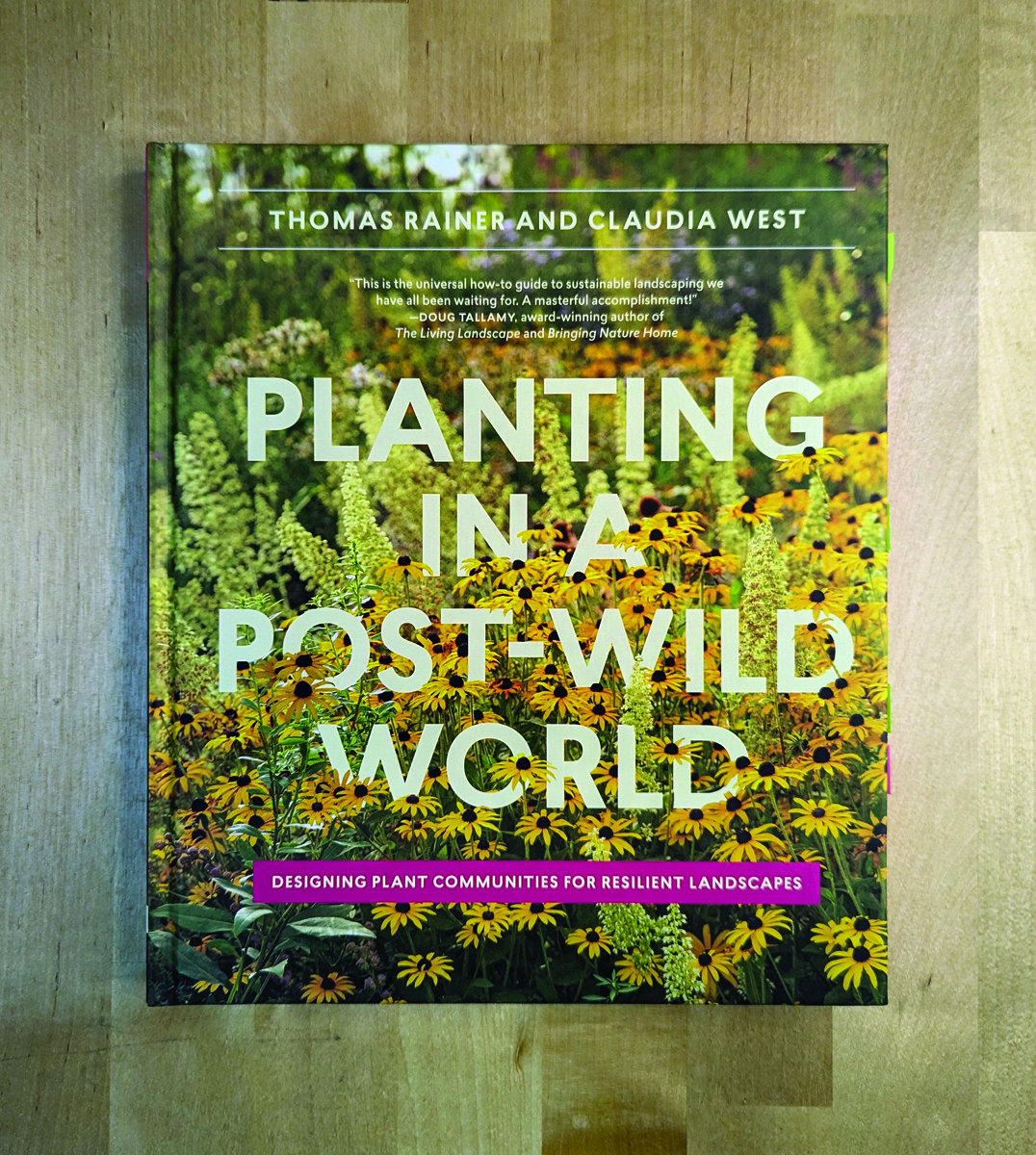
Planting in a Post-Wild World: Designing Plant Communities for Resilient Landscapes
Fine Gardening receives a commission for items purchased through links on this site, including Amazon Associates and other affiliate advertising programs.
Featuring gorgeous photography and advice for landscapers, Planting in a Post-Wild World by Thomas Rainer and Claudia West is dedicated to the idea of a new nature—a hybrid of both the wild and the cultivated—that can nourish in our cities and suburbs.
Lee Valley Mini Garden Shear Set
Fine Gardening receives a commission for items purchased through links on this site, including Amazon Associates and other affiliate advertising programs.
These shears have a distinctive finger rest that not only aids grip but allows greater freedom of movement than a conventional handle design. They have a durable powder-coat finish to resist rust and wear, and a simple clasp that locks the spring-action stainless-steel blades closed. The set includes one pair of round-nose shears measuring 5 1/2″ overall with 1″ blades for cutting stems up to 3/8″ in diameter, and one pair of 6 1/2″ needle-nose shears with 2″ fine-tip blades for precise work.