49.9 F
Klamath Falls
Saturday, March 14, 2026
Home Blog Page 126

Planting Plan: Use Containers to Create a Lush Garden Oasis in a Small Space

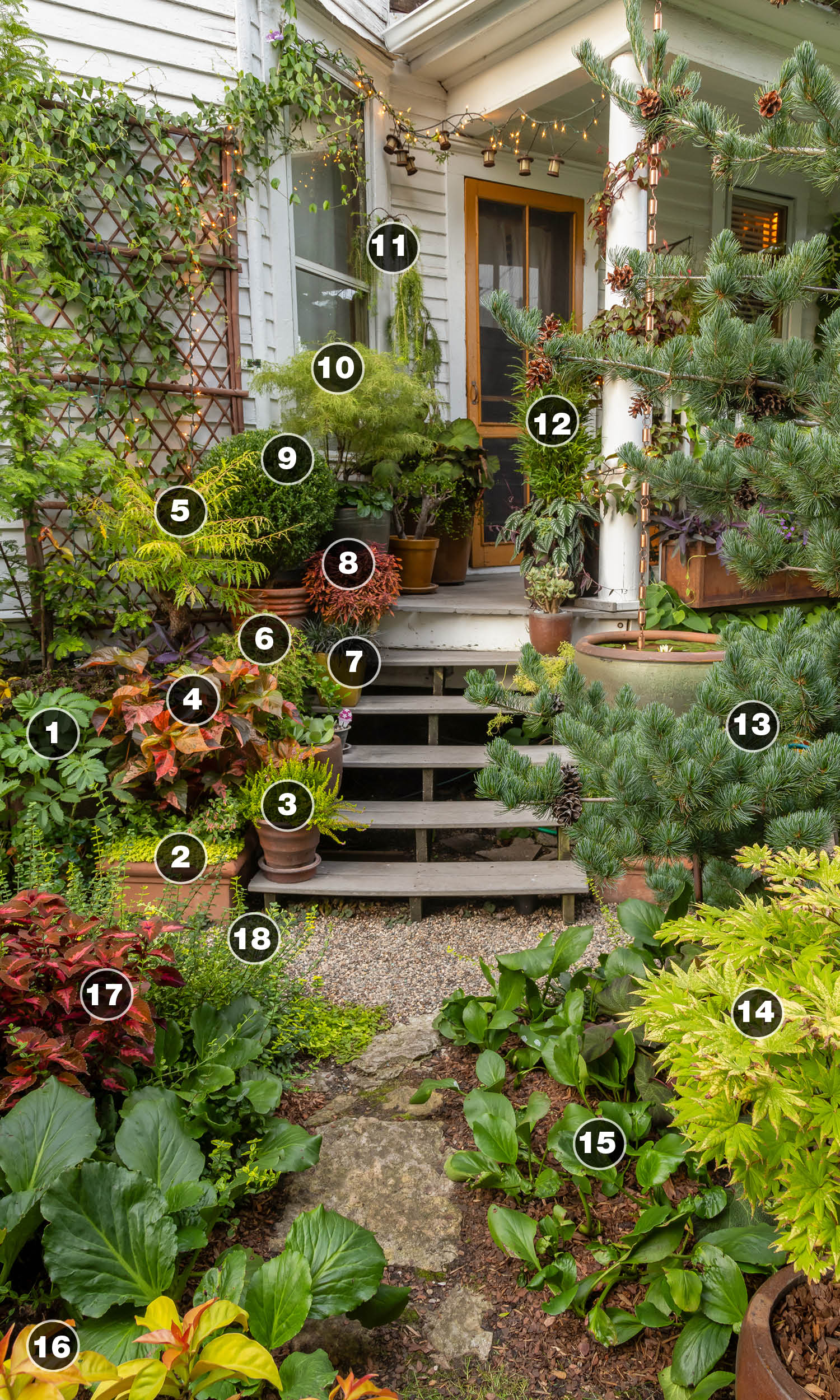
Container garden designer Derrik Gagliardi’s garden in Minneapolis, Minnesota is a bit of a hidden gem. Walking past the property, you wouldn’t even notice the secluded side yard shielded from busy traffic by thick vines. But once you enter, you are spirited away into a semi-tropical paradise packed to the brim with vivid, contrasting flora. From a rare cactus with leaves instead of spines (‘Godseffiana’ Barbados gooseberry) to old garden stalwarts (‘Aureola’ Japanese forest grass) to native plants from across the country (American agave), this garden has it all and makes a memorable impression despite its small footprint. Here are just some of the many plants growing in Derrik’s garden.

Learn more:

Make a Big Impact in a Small Garden Space with Tropical Plants

How to Effectively Use Tropical Plants in Cool Climates

How to Maintain Privacy Without a Fence


  1. Honey bush (Melianthus major, Zones 8–10)
  2. Golden Japanese stonecrop (Sedum makinoi ‘Ogon’, Zones 6–9)
  3. ‘Fraser’s Gold’ heather (Calluna vulgaris* ‘Fraser’s Gold’, Zones 4–6)
  4. ‘Showtime’ Copperleaf (Acalypha wilkesiana ‘Showtime’, Zones 10b–11)
  5. Tiger Eyes® Sumac (Rhus typhina ‘Bailtiger’, Zones 4–8)
  6. ‘Crispa’ cutleaf stephanandra (Stephanandra incisa ‘Crispa’, Zones 4–7)
  7. Black mondo grass (Ophiopogon planiscapus ‘Nigrescens’, Zones 5–10)
  8. ‘Monkey Puzzle’ coleus (Plectranthus scutellarioides ‘Monkey Puzzle’, Zones 10–11)
  9. ‘Green Mountain’ boxwood (Buxus ‘Green Mountain’, Zones 4–9)
  10. ‘Filigree Lace’ European white birch (Betula pendula ‘Filigree Lace’, Zones 2–7)
  11. Weeping European larch (Larix decidua ‘Pendula’, Zones 3–6)
  12. Fine Line® buckthorn (Rhamnus frangula ‘Ron Williams’, Zones 2–7)
  13. ‘Brevifolia’ Japanese white pine (Pinus parviflora ‘Brevifolia’, Zones 5–9)
  14. ‘Autumn Moon’ full moon maple (Acer shirasawanum ‘Autumn Moon’, Zones 5–7)
  15. Heartleaf bergenia (Bergenia cordifolia, Zones 3–8)
  16. ‘Godseffiana’ Barbados gooseberry (Pereskia aculeata ‘Godseffiana’, Zones 10–11)
  17. ‘Sunset Boulevard’ coleus (ectranthus scutellarioides ‘Sunset Boulevard’, Zones 10–11)
  18. ‘Acutus’ wintercreeper (Euonymus fortunei* ‘Acutus’, Zones 5–9)



container display planting plan with tropical plants

  1. ‘Monkey Puzzle’ coleus
  2. ‘Peve Maribo’ variegated ginkgo tree (Ginkgo biloba ‘Peve Maribo’, Zones 3–9)
  3. Variegated lilyturf (Liriope muscari ‘Variegata’, Zones 5–10)
  4. ‘Godseffiana’ Barbados gooseberry
  5. ‘Tiny Dancer’ elephant’s ear (Alocasia ‘Tiny Dancer’, Zones 9–11)
  6. ‘Caramel’ heuchera (Heuchera ‘Caramel’, Zones 4–9)
  7. ‘Black Scallop’ ajuga* (Ajuga reptans ‘Black Scallop’, Zones 3–10)
  8. Heartleaf bergenia
  9. American agave (Agave americana, Zones 8–11)
  10. ‘Sunset Boulevard’ coleus
  11. ‘Aureola’ Japanese forest grass (Hakonechloa macra ‘Aureola’, Zones 5–9)
  12. Grisebach’s sedum (Sedum grisebachii, Zones 5–9)
  13. Dutchman’s pipe (Aristolochia macrophylla, Zones 4–8)
  14. ‘Main Street Beale Street’ coleus (Plectranthus scutellarioides ‘Main Street Beale Street’, Zones 10–11)
  15. ‘Strawberry Firetails’ chenille (Acalypha pendula ‘Strawberry Firetails’, Zones 9–11)
  16. Helena’s Blush™ euphorbia (Euphorbia x martini ‘Inneuphhel’, Zones 5-7)
  17. Chocolate vine (Akebia quinata, Zones 4–9)
  18. ‘Calidora’ elephant’s ear (Alocasia ‘Calidora’, Zones 9–11)
  19. ‘Godseffiana’ Barbados gooseberry
  20. Honey bush

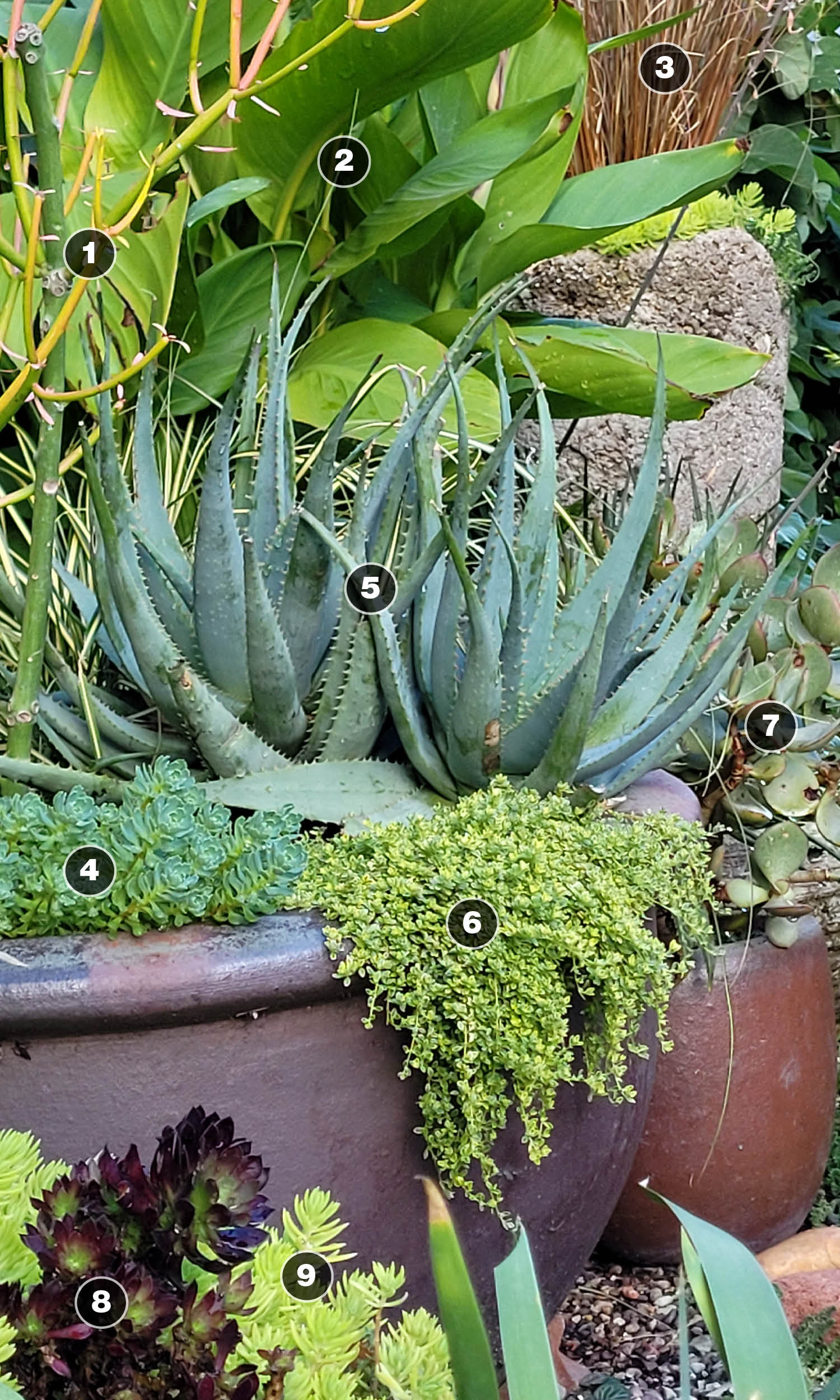
tropical plants and succulent container plantings planting plan for big impact

  1. ‘Firesticks’ pencil cactus (Euphorbia tirucalli ‘Firesticks’, Zones 10–11)
  2. Canna cv. (Canna, Zones 7–11)
  3. ‘Red Rooster’ leatherleaf sedge (Carex buchananii ‘Red Rooster’, Zones 6–9)
  4. Gray stonecrop (Rhodiola pachyclados, Zones 5–9)
  5. ‘Blue Elf’ aloe (Aloe ‘Blue Elf’, Zones 9–11)
  6. ‘Golden Transparent’ creeping thyme (Thymus ‘Golden Transparent’, Zones 5–9)
  7. Pig’s ear (Cotyledon orbiculata dinteri, Zones 9–11)
  8. Black rose aeonium (Aeonium arboreum ‘Zwartkop’, Zones 9–11)
  9. ‘Lemon Ball’ sedum (Sedum mexicanum ‘Lemon Ball’, Zones 7–11)


*Please note: These plants are considered invasive in certain areas. Please reference your state or province invasive plant list for more information.


See More Planting Plans:

Planting Plan for Mixed Sun and Shade Garden Beds

Planting Plan for a a Dog-Friendly Garden that is Full and Lush

Planting Plan to Optimize a Small Garden Space


Diana Koehm is the content editor.


A Look at the Most Popular Prescription Weight Loss Drugs

by Caitlin H,

May 20, 2024

Exploring Ozempic, Wegovy, Zepbound, and Mounjaro and their effectiveness.


Weight Loss Drugs

GLP-1 agonist weight loss drugs (think Ozempic and Wegovy) are all the rage right now, available at clinics and spas nationwide. They promise users a quick way to shed pounds, and many studies show they are quite effective in doing just that.

But do they work long-term? What are the downsides? And are they right for you? Here’s a deeper look at these weight loss drugs, including pros and cons and how to use them most effectively paired with your Diet-to-Go meals.


How Do GLP-1 Agonist Weight Loss Drugs Work?


GLP-1 agonist drugs like semaglutide (Ozempic and Wegovy) and tirzepatid (Mounjaro and Zepbound) work by imitating a hormone that releases insulin. That, in turn, brings down blood sugar levels, telling the brain you’re full and lowering appetite.

Doctors prescribe Ozempic and Mounjaro to people with type 2 diabetes, while the FDA specifically approved Wegovy and Zepbound for weight loss.


How Effective Are These Drugs?


Studies show that these weight loss drugs are extremely effective. For example, Wegovy helped 1,961 adults with BMIs of 30 or more lose an average of 15% of their body weight compared to a placebo group — as outlined in the results of a 2021 clinical trial. Another study of Ozempic users found statistically significant weight loss in users compared to the placebo group, as did studies of Mounjaro and Zepbound.

However, while users of these drugs are likely to see results, Radio Host and Sports Medicine Physician, Dr. Gabe Mirkin cautions that the studies fail to outline the full picture.

“Most people have regained two-thirds of their lost weight within one year after they stop taking these drugs,” Mirkin wrote in a recent article.

That means most users would have to continue taking the drug to keep the weight off, a fact which itself comes with challenges surrounding cost, supply shortages, and unpleasant side effects.


High Costs, Low Supply, and Adverse Reactions


The most difficult hurdle for most people to overcome when it comes to long-term usage of weight loss drugs is cost, with insurers less likely to approve them and out-of-pocket costs topping well over $1,000 a month.

“In 2022, about 60% of the new weight-loss drugs were approved by insurers, but today fewer than 25% are covered by insurance,” Mirkin said.

Supply shortages are another problem, particularly with specific weight loss drugs like Wegovy, as demand surges.

Providers at clinics, spas, and telehealth services also tend to prescribe them improperly, even referring customers to pharmacies that offer unapproved knockoffs.

Side effects have the potential to be extremely unpleasant and can include:


  • Nausea and vomiting
  • Stomach pain
  • Diarrhea
  • Pancreatitis and kidney issues (in rare cases)


Despite the challenges, many people have found them worthwhile, including celebrities like Oprah, who publicly announced her own usage of them and how she found success via a holistic approach.


How to Use Them Most Effectively


In late 2023, Oprah joined a growing list of celebrities who announced they used weight loss drugs like Ozempic to maintain their weight. She explored the latest trend in her special, “Shame, Blame, and the Weight Loss Revolution,” where she echoed what many experts say.

Weight loss drugs are most effective if users combine them with other healthy lifestyle changes that involve incorporating fitness and, most importantly, healthy eating.
Diet-to-Go’s meal plans are specifically made for a wide variety of people who want to eat delicious, nutritionally balanced meals without much thinking. Our meal plans include:



“Recent studies show that GLP-1 agonists and bariatric surgery may help with weight loss, but the excess weight usually returns soon after you stop taking the drugs or have the surgery,” Mirkin wrote. “Before you take GLP-1 agonist weight-loss drugs or have bariatric surgery, be ready to follow the lifestyle changes necessary for long-term weight loss.”


How Can I Get the Weight Loss Drugs?


Prescriptions for weight loss drugs depend on your medical situation and history. However, many providers and insurers base it on your body mass index (BMI).

Patients must have a BMI of 30 or more, or 27-29 combined with another condition, such as high cholesterol or blood pressure.

The best way to determine if you’re a candidate is to discuss your options with your doctor.


The Bottom Line


Ultimately, weight loss drugs like Wegovy, Ozempic, Zepbound, and Mounjaro may be highly effective while using them. However, ensuring results last a lifetime entails a multi-pronged approach that includes fitness and healthy eating, too.


————————————————————————————


Author: Caitlin H

Diet-to-Go Community Manager

Caitlin is the Diet-to-Go community manager and an avid runner. She is passionate about engaging with others online and maintaining a healthy, active lifestyle. She believes moderation is key, and people will have the most weight loss success if they engage in common-sense healthy eating and fitness.


Building a Referral Network: 6 Mistakes to Avoid

0

Everyone needs a team.

As a health coach, you can become an expert in multiple areas: nutrition, behavior change psychology, fitness and athletic performance, stress management and recovery, and more.

However, no matter how many certifications you earn, you’ll invariably encounter clients with progress-blocking problems you don’t have the skills, training, expertise, or legal right to solve.

Here’s the thing…

You may not be an expert at fixing marriages, treating GERD, or counseling someone with an eating disorder, but someone else is.

Here’s where a healthy referral network comes in.

By connecting your client with such a person, you get to stay within your scope of practice, give welcome business to respected colleagues, and help your client solve their problem.

(Total. Supercoach. Move.)

All of our certification programs include sections devoted to teaching coaches how to build robust referral networks of professionals skilled at solving common client problems.

In this article, we’ll discuss how to do that—by exploring the top mistakes we see coaches make. Avoid them, and you’ll be able to refer out with confidence.

First, what’s a referral network?

A referral network is a list of supplementary professionals, businesses, and resources that benefit clients.

Your network might include local or virtual:

  • Medical doctors, psychologists, registered dietitians, and other professionals with the training and credentials to help clients with problems outside of your scope of practice. (For an in-depth refresher, see our Scope of Practice worksheet.)
  • Fellow health coaches and personal trainers with deep knowledge in an area outside your experience. (For example, maybe a client is interested in learning yoga, but you haven’t the faintest idea of how to salute the sun.)
  • Workshops, fitness groups, webinars, food services, and other resources that support clients during their behavior change journey.

To confidently refer clients to skilled practitioners with excellent reputations, you’ll want to do some legwork. That brings us to the top mistakes to avoid.

Mistake #1: You build your network before launching your business.

For recently certified health coaches, the task “create a referral network” can double as a procrastination tool, says PN’s Director of Community Engagement Kate Solovieva.

Rather than take on clients, these coaches search for an increasing number of professionals, valiantly trying to be prepared for every potential referral situation. Yet, as much as they continue to work on it, their list is never “complete.”

That’s because…

“We can’t be prepared for everything,” says Solovieva.

The solution

Take on clients as soon as you’re certified.

Yes! That might sound scary, but the best way to figure out your “gaps” is to begin your practice, and see where your clients actually need help beyond what you can offer.

Add folks to your referral network over time as you:

  • Connect with professionals on LinkedIn and other virtual networking sites
  • Lean into peer networks (such as the Precision Nutrition Facebook communities)
  • Mingle with members of your local Chamber of Commerce
  • Chat with family, friends, and clients about professionals and resources they love
  • Attend health conventions and other local events where a variety of health professionals tend to congregate
  • Search for (and try out!) providers based on your own health needs

Who belongs in your referral network?

Use the following resource list as inspiration.

Resource Name Website Contact information
Acupuncturist
Chiropractor
Cooking class
Cycling, hiking, walking, or running club
Exercise physiologist
Coach who specializes in plant-based diets / pre- or post-natal fitness / other coaching niche you don’t cater to
Marriage / family counselor
Massage therapist
Meal delivery service
Mental health professional
Orthopedist
Pelvic floor therapist
Primary care physician
Physiotherapist
Registered dietitian
Stress management class
Other

Mistake #2: You assume your referral list will cover all client needs.

As we mentioned above, you’ll never be able to anticipate every referral or client question ahead of time—and that’s okay.

This is especially true if you coach virtually with clients worldwide.

(You might know three fantastic massage therapists where you live in Toronto, Canada, but that knowledge won’t help if your client is based in Wellington, New Zealand.)

Similarly, some professionals or resources might work for some clients, but not others.

(You might, for example, know of several meal delivery options, yet none are suitable for that plant-based client who’s on a strict gluten-free diet.)

The solution

Learn how to help clients find the professionals and resources they need.

You might:

  • Ask clients to describe their preferences. (Do they prefer working with a specific gender? Do they want to meet in person or online? Do they like the eagerness and creativity of a newer professional, or the “I’ve seen it all” sageness of a more seasoned pro?)
  • Devote a coaching session to searching online for potential professionals and services together.
  • Encourage clients to contact three practitioners, ask questions, and use what they learn to pick a winner.

Mistake #3: You let social awkwardness derail networking opportunities.

Reaching out to a stranger requires some bravery. You have to put yourself out there, explain who you are and what your motives are, and risk being ignored or turned down.

This is where many coaches get stuck, says Toni Bauer, PN’s Director of Coaching and Education Operations.

As a result, many coaches may put off the conversation.

The solution

Turn networking into a challenge. Coach Solovieva calls it “Operation 100.”

  • Set a goal to contact 100 professionals over 12 months.
  • Work toward your goal every week for about 20 minutes.
  • Follow up with each non-responder once or twice.
  • Instead of expecting a “yes” from every person you approach, understand that only about 10 percent of people will get back to you.

To ease yourself into the challenge, draft your elevator pitch, suggests Bauer.

Don’t overthink this. Your pitch doesn’t have to be a multi-page persuasive essay. Nor does it have to contain magical talking points. Just be yourself.

The elevator pitch: How to introduce yourself to a potential referral

As you work on your elevator pitch, use the examples below for inspiration.

“I’m a health coach who works with corporate executives. However, some of my clients would benefit from someone with your expertise. I would like to recommend you to my clients as those needs arise. Are you open to that?”

Or:

“I’m a health coach who works with athletes. Occasionally, my clients need guidance that I can’t always provide. I admire the work you’re doing, and I’d love to be able to refer people to you. If you’re open to that, could we have a quick 15- or 20-minute meeting to discuss what that arrangement would look like?”

Or simply:

“I’m a health coach and I’m building a referral list of practitioners. I would love to refer clients to you. Are you taking new patients right now?”

Mistake #4: You use dated persuasion tactics.

If you use LinkedIn, then you’ve likely been on the receiving end of old-school cold sales tactics. We’re talking direct messages from strangers who clearly haven’t read anything on your profile and know nothing about you.

These spammy messages are as welcome as a stranger who sidles up to you at a bar and says, “So, wanna come back to my place?”

We’re not here to discourage you from using cold outreach. It has a place. However, to increase your response rate, we’d like to introduce you to a rarely used technique.

The solution

Get to know people before making an online ask, suggests Coach Solovieva.

Follow them, read their content, download and consume their free resources, comment on their posts, congratulate them on career wins, and become a part of their online life.

Do that, and people will remember you. More of them will respond to your messages, too. Plus, the intel you gather by forming a relationship will help you avoid…

Mistake #5: You don’t personally vet referrals.

How do you ensure you refer clients to compassionate professionals who truly know what they’re doing?

It involves more than checking someone’s website or social media profile.

If you only look at someone’s website or social media posts, “You’re just vetting their confidence and copywriting skills,” says Solovieva. “If we’re fortunate, confidence and copywriting go hand in hand with ability, but not always.”

The solution

Try out their services. Take someone’s yoga or Zumba class. Book a massage. Ask a medical professional to look at your creaky knee.

That way, you can see the professional in action.

If you’re thinking, ‘I don’t need some of the services my clients need!’ you’ve got a couple of options:

  • Offer to pay a professional to meet with you for 30 to 60 minutes so you can ask some questions, get a sense of their treatment philosophy, and chat about referring clients to them.
  • Interact with people in local social networking communities like NextDoor.com. Ask group members if they’ve seen a practitioner and, if so, whether they’d recommend the person.

Mistake #6: You sell clients too hard on your referrals.

When you recommend a professional you’ve personally vetted, it’s natural to want your client to take action.

However, despite your hard work, some clients just won’t make an appointment with the professional in question—and that’s okay.

“Let your clients be adults,” says Coach Bauer.

Clients have their reasons. Maybe their insurance won’t cover the service in question. Or, maybe they decided to see someone else.

“It’s not your responsibility for the relationships to be perfect or to flourish,“ says Bauer.

A cycle of support

Some coaches fear referrals because they see them as “giving business away.”

In reality, however, when you refer clients to solid pros, your clients simply feel like you have their back. (Which means they’ll be more likely to refer friends and family to you.)

Plus, when you send business towards another respected colleague, it also puts you on their radar for a cross-referral.

It’s good for your clients, good for business, and good for your community of health pros at large.

If you’re a coach, or you want to be…


You can help people build sustainable nutrition and lifestyle habits that will significantly improve their physical and mental health—while you make a great living doing what you love. We’ll show you how.


If you’d like to learn more, consider the PN Level 1 Nutrition Coaching Certification. (You can enroll now at a big discount.)

13 Easy Vegetables to Grow in Summer

Summer isn’t just about scorching heat and longer days for gardeners. While most people are sweating out under the blazing sun, gardeners can enjoy the lemonade under the shade of a large tree.

While the intense heat of the sun can stress out many vegetable plants, there are a few standout varieties that actually thrive in warmer climates. These heat-loving veggies can handle the summer sizzle and keep producing with just a bit of care.

Most vegetable plants need 6 hours of direct sunlight to thrive. But, these plants can’t tolerate harsh afternoon sunlight on hot days. It is essential that you use a shade cloth or grow these veggies at a spot where it get saved from scorching sunlight.

Okra, tomatoes, cucumber, sweet potatoes, spinach and swiss chard care among best summer vegetables to grow in your backyard.

Whether you’re working with raised beds, containers, or a small backyard plot, there are plenty of low-maintenance veggies that don’t mind a little heat—as long as you’re smart about where you plant them.

In this write-up, I’ll walk through some of the easiest vegetables to grow in summer and share tips to help them thrive, even when the temperatures start to soar.

13 Easy Vegetables to Grow In Summer

1. Okra

Okra is a heat-loving plant that thrives in full sun and well-drained soil. It prefers slightly acidic to neutral pH (around 6.5–7.0) and benefits from rich, organic matter in the soil.

Once established, okra is drought-tolerant and doesn’t require much fuss, though consistent watering during dry spells will boost pod production. Space the plants about 12–18 inches apart to give them room to grow tall and bushy.

You’ll want to plant okra after the last frost when the soil temperature has warmed to at least 65F. In most regions, that means sowing seeds in late spring to early summer.

Pods typically begin to appear within 50 to 60 days, which means a steady summer harvest if you keep picking them regularly. Frequent harvesting encourages the plant to produce more pods throughout the season.

2. Bush Beans

Bush beans are one of the easiest vegetables to grow in warm weather, especially for beginners. They prefer full sun (6–8 hours daily) and well-draining soil enriched with compost.

Avoid over-fertilizing with nitrogen-heavy products, as that will encourage leafy growth at the expense of beans. Unlike pole varieties, bush beans don’t need support and grow in a compact, self-supporting shape.

Plant bush beans directly in the ground or containers once the soil temperature reaches at least 60F, typically late spring. They grow fast—most varieties mature in just 50–60 days—making them perfect for a summer harvest.


You can even do succession planting every couple of weeks for a continuous bean supply throughout the season. Just keep the soil moist and pick the pods while they’re still young and tender.

3. Zucchini

Zucchini is one of the most rewarding summer vegetables to grow—it practically thrives on neglect. It loves full sun and loose, well-draining soil enriched with compost or aged manure.

Zucchini plants are heavy feeders and drinkers, so consistent moisture and occasional feeding with a balanced fertilizer can keep them producing all summer long. Give them plenty of space, as they tend to sprawl out wide.

Sow seeds directly into the garden once temperatures consistently stay above 70F. With quick germination and a fast growth cycle, you can start harvesting zucchinis in as little as 40–50 days.

Pick them small and often—this keeps the plant producing and the fruits tender. A single plant can produce a surprising number of zucchinis over the season.

Also Read: 19 Vegetables for Your Winter Garden

4. Malabar Spinach

Malabar spinach isn’t a true spinach, but it’s a fantastic summer substitute that loves hot, humid weather. This climbing vine grows well in partial shade to full sun and needs moist, rich soil with good drainage. Provide a trellis or some kind of vertical support, as it can grow rapidly once established.

Start seeds or seedlings after the danger of frost has passed. Malabar spinach takes about 55–70 days to mature, and you can begin harvesting young leaves once the vine starts vining aggressively. It’s a cut-and-come-again type crop, so regular harvesting will encourage new growth throughout the summer.

5. Eggplant

Eggplants enjoy the heat and need full sun, warm soil, and plenty of room to breathe. They grow best in rich, well-drained soil with a pH of around 6.0–6.8.

Eggplants also appreciate consistent watering and a layer of mulch to keep their roots cool and moist. In windy areas, staking the plants may be helpful since the fruits can get heavy.

Transplant seedlings outdoors when nighttime temperatures are reliably above 60°F (16°C). They typically need 70–85 days to produce fruit, so an early start helps ensure a long harvest window. Harvest eggplants when they’re glossy and firm—not too hard, not too soft—for the best flavor and texture.

6. Sweet Potatoes

Sweet potatoes thrive in hot weather and sandy, well-drained soil with lots of organic matter. They don’t need much fertilizer and can even tolerate poor soils.

These sprawling vines prefer full sun and will stretch out over garden beds or large containers, so be sure to give them room to spread.

Start with slips (young shoots) once the soil warms to at least 65°F (18°C). Sweet potatoes take around 90–120 days to mature, so planting in late spring allows you to harvest by late summer or early fall. In the meantime, you can snip a few young leaves to add to stir-fries and soups.

7. Cucumbers

Cucumbers are fast-growing vines that need full sun, rich soil, and consistent watering—especially during fruit production. They can be grown on the ground or trained up a trellis to save space and keep fruits clean. Mulching helps retain soil moisture and reduces the risk of powdery mildew.

Sow cucumber seeds directly into warm soil or transplant starts after the last frost date. Most varieties mature within 50–70 days, so you’ll be harvesting fresh cucumbers in midsummer. Keep picking regularly to encourage continuous fruiting.

Also Read: 30 Best Vegetables to Grow in Buckets, Bags or Containers

8. New Zealand Spinach

This heat-tolerant leafy green is ideal for those craving fresh greens in the middle of summer. Unlike traditional spinach, New Zealand spinach doesn’t bolt in high temperatures. It prefers full sun but will tolerate some shade and grows best in sandy, well-drained soil with moderate watering.

Direct sow seeds once soil temperatures are consistently above 70°F (21°C). The plants are slow to start but take off once the heat arrives. Begin harvesting young leaves around 50–60 days in, and keep pinching back the stems to promote bushier growth and ongoing production.

9. Peppers (Bell & Hot)

Peppers love the heat and need full sun and well-draining soil with a slightly acidic to neutral pH. They benefit from regular watering and mulching to retain moisture and suppress weeds. Avoid over-fertilizing with nitrogen-heavy fertilizers, which can delay fruiting.

Start peppers indoors or purchase transplants to get a jump on the season. Move them outdoors when nights stay above 55–60F. Most varieties take 60–90 days to mature, depending on the type. For a steady summer harvest, pick peppers as soon as they reach full size—even if they’re still green.

10. Yardlong Beans (Asparagus Beans)

Yardlong beans are made for summer—they love heat, humidity, and poor soils that might stress other plants. These vigorous climbers grow best in full sun and require a sturdy trellis or support system. They’re surprisingly pest-resistant and quite low-maintenance.

Sow seeds directly into the garden once temperatures are consistently above 70F. Yardlong beans grow quickly, and you can begin harvesting in about 60–75 days. Pick the pods while they’re long and slender for the best texture and flavor.

11. Swiss Chard

Swiss chard is more heat-tolerant than many leafy greens, making it a great option for summer gardens. It thrives in full sun to partial shade and grows well in rich, well-draining soil. Keep it well-watered, especially during hot, dry spells, and mulch to keep the soil cool.

Sow seeds directly in the garden after the last frost, or transplant starts for a quicker harvest. Chard matures in about 50–60 days, but you can begin harvesting outer leaves much sooner. The plant will keep producing all summer long if you don’t harvest too aggressively at once.

12. Armenian Cucumbers

Armenian cucumbers aren’t true cucumbers, but they grow like them and love the heat. They’re best grown on a trellis to promote air circulation and produce long, straight fruits. These plants do best in full sun and fertile, well-drained soil with regular watering.

Sow seeds directly in late spring once the soil is warm. They typically mature in 60–70 days and are best picked when about 12–18 inches long and still tender. Armenian cucumbers are especially great for slicing raw, and they stay crisp even in hot weather.

13. Roselle (Hibiscus sabdariffa)

Roselle is a tropical plant with edible leaves and vibrant red calyces used in teas and jams. It prefers full sun, well-draining soil, and regular moisture, though it can handle short dry spells. The plant grows into a small shrub and adds ornamental value as well.

Start seeds indoors or sow directly after all danger of frost has passed and soil is warm. Roselle takes 90–100 days to reach maturity, but you can begin harvesting the young leaves earlier for salads or cooking. The calyces, used for hibiscus tea, are ready in late summer.

Conclusion

Summer doesn’t have to be a challenging season for gardening—in fact, it’s the perfect time to grow a wide range of easy, heat-tolerant vegetables. From sun-loving staples like zucchini, okra, and peppers to leafy greens like Malabar spinach and New Zealand spinach that won’t bolt in the heat, there’s something for every kind of summer garden.

Many of these vegetables thrive in full sun and actually prefer warm soil and consistent heat. Others, like Swiss chard and bush beans, grow well with a bit of afternoon shade, especially in hotter climates. Whether you’re working with raised beds, containers, or a small patch of yard, these resilient plants are built to handle the summer sizzle with minimal fuss.

By choosing the right varieties and planting them at the right time—typically after the last frost when the soil has warmed up—you can enjoy a productive and rewarding harvest all summer long. With a little care, some smart watering, and attention to soil quality, your garden can thrive even when the temperatures climb.

Arugula Salad With Lemon Dressing And Basil


Arugula Salad With Lemon Dressing And Basil


Privacy & Cookies Policy

DIY Bug Repellent Lotion Bars

0

Ever since I discovered how to make lotion bars, I’ve experimented with different variations including sunscreen bars, Vapo-Rub bars, and others. Today’s favorite: bug repellent lotion bars!

They’re as easy to make as the original bars, and they seem even more effective at keeping bugs away than regular homemade bug spray. Probably because they actually coat the skin with a protective layer. They’re easy to take along and the kids can apply it themselves.

What’s the Problem With Bug Spray?

While I’m certainly not a fan of mosquitos or tick bites, I’m not a big fan of conventional bug spray either. These usually contain DEET, a chemical that studies have linked to a whole host of potential health issues. 

Some of the reported side effects include wheezing, muscle cramping, skin rashes and blisters, dizziness, disorientation, and difficulty concentrating. There are also reports of increased cancer risk, aggressive behaviors, and uncontrollable body movements. Experts assure us the risk appears to be low though…

Bug Repellent Lotion Bar Ingredients

Instead of being filled with toxins like conventional bug sprays, this recipe nourishes and moisturizes the skin while protecting it. It uses a base of coconut oil, shea butter, and beeswax. You can also use cocoa butter or mango butter if preferred for a slightly harder bar. 

I’ve also included a variety of herbs that are great at repelling unwanted insects. You don’t have to use all of them if you don’t have them on hand, but I do think it works better. If you need to substitute an herb, just add some more of the others instead. 

Dried herbs work best in this recipe since fresh herbs can cause the infused oil to mold. If you have fresh herbs from your garden you’d like to use, simply dehydrate them some first. Here’s a guide on drying herbs.

The vitamin E is optional but it helps extend the shelf life and prevent the oils from oxidizing as quickly. I also add some extra protection with essential oils. These are more concentrated than the herbs and help boost the bar’s efficiency. I like this kidsafe blend from Plant Therapy. 

Lotion Bar Molds

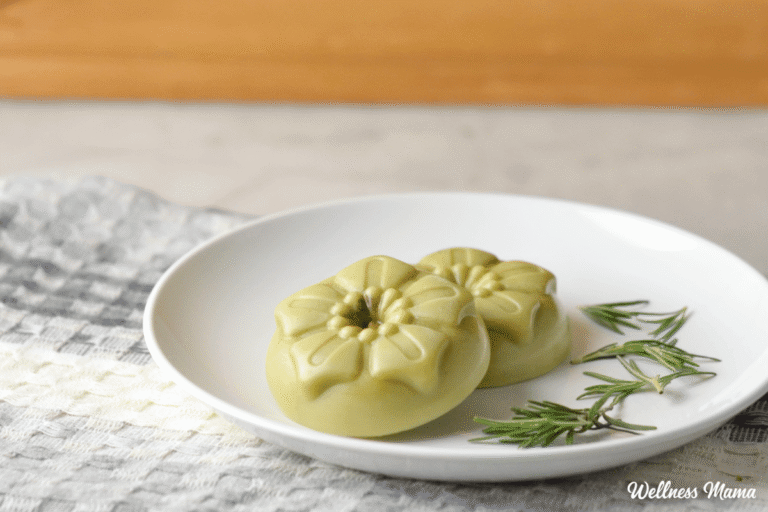
I use silicone molds to set the bars. These are the cupcake molds I used but I also love these heart ones or simple flower molds which would both be great for gifts. There are also actual bar shaped ones. If you don’t have a silicone mold, then a lined cupcake pan can also work.

On to the recipe!

Bug Repellant Lotion Bar Recipe

Keep away bugs without chemicals using herbs and essential oils in a nourishing lotion bar.

Prep Time15 minutes

Active Time30 minutes

Cool Time4 hours

Total Time4 hours 45 minutes

Yield: 5 bars

Author: Katie Wells

Infuse the Oil

  • Using a double boiler or glass bowl on top of a small saucepan, heat some water in the bottom of the pan to boiling.

  • Place the coconut oil in the top part of the double boiler and add the dried rosemary, cloves, thyme, cinnamon, catnip, and mint.

  • Cover the bowl or top part of the double boiler and keep the water at a medium temperature for at least 30 minutes or until the oil has adopted a darker color and smells strongly of rosemary. You can also fill a slow cooker about half full with water, put the coconut oil and herbs in a glass mason jar with a tight lid, cover and keep on the lowest setting for several days to make an even stronger infused oil.

  • Strain the herbs out of the oil using a small mesh strainer or cheesecloth and pour the oil back into the double boiler. The oil will have reduced by almost half and you should have about ½ cup of the infused oil. If you have more, save it for next time!

Make the Lotion Bars

  • Add the butter(s) and beeswax to the double boiler with the infused coconut oil and stir until all have melted.

  • Remove from the heat and add the vitamin E oil and essential oils (if using).

  • Pour the liquid into the molds.

  • Leave in the molds until completely set (overnight is best). Or you can speed up the process by placing them in the fridge.

  • To use, rub the bars on exposed areas of DRY skin to protect against mosquitoes.
  • I use cupcake-size molds for my lotion bars. If you use a different size, your yield will be different.

Don’t Want to Make Them?

If you want to use lotion bars but don’t have the time or ingredients to make them yourself, I found a great alternative. Made On is a small business that makes all kinds of lotion bars, soaps, natural baby products and hair products that are up to my standards. You can browse all of their non-toxic products here and use the code wellnessmama for a discount!

How do you keep the bugs away? Share below!

When and How to Deadhead Coneflowers (Echinacea)

North American native coneflowers, Echinacea spp., are hardy daisy-like perennials for USDA Hardiness Zones 3 to 9.

There are nine species and numerous cultivars for an array of color, height, and style options. Perhaps best known is the purple coneflower, Echinacea purpurea.

The blossoms have protruding center disks that attract beneficial pollinators galore throughout the growing season, and foraging songbirds like goldfinches feast on the seeds at season’s end.

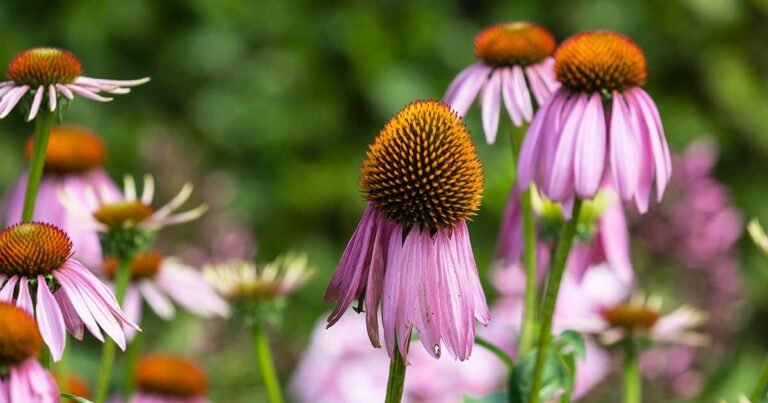
A close up horizontal image of spent purple coneflowers growing in the garden pictured on a soft focus background.A close up horizontal image of spent purple coneflowers growing in the garden pictured on a soft focus background.

We link to vendors to help you find relevant products. If you buy from one of our links, we may earn a commission.

In our coneflower growing guide, we discuss all you need to know to cultivate echinacea in your outdoor living space.

Our roundup of 17 fabulous coneflower varieties provides a list of exceptional options from which to choose.

In this article, we focus on deadheading. First, we’ll define the practice, and then weigh the pros and cons, so you can make an informed decision when caring for your coneflowers.

Here’s the lineup:

Let’s get started.

What Is Deadheading?

A flower sets seed after blooming, unless it is severed from the plant before it gets the chance.

A close up horizontal image of two hands from the left of the frame holding a pair of pruners and deadheading a coneflower.A close up horizontal image of two hands from the left of the frame holding a pair of pruners and deadheading a coneflower.

The process of cutting off individual spent blossoms, as well as stems containing multiple blossoms that have finished blooming, is called deadheading.

Stems are cut just above a leaf node, or at the base where they originate. Energy is redirected from reproductive to vegetative growth, resulting in lateral growth, and ultimately more buds and blossoms.

In addition, some folks snip off the growing tips of stems earlier in the growing season, sacrificing a potentially large bloom, to promote lateral growth for a bushier plant with more flowers.

And in the warmest zones, plants in a summer lull are often not just deadheaded, but cut back by up to one-half of their height, for a late season flush of growth.

This is not advised in cooler regions, as there may not be time for reblooming before the first frost.

The Nature of Coneflowers

Coneflowers have a basal mound of foliage from which upright stems sprout. Each stem has a terminal bud that blooms for a few weeks. After blooming, lateral growth may produce more buds.

A close up horizontal image of yellow Echinacea paradoxa growing in the garden with pink coneflowers in soft focus in the background.A close up horizontal image of yellow Echinacea paradoxa growing in the garden with pink coneflowers in soft focus in the background.

Here in Southeastern Pennsylvania, the first flush of echinacea arrives in late spring to early summer.

And while species like the purple, E. purpurea, and yellow, E. paradoxa, are called continuous bloomers, they tend to be the most vigorous early in the season, before summer heats up.

This year, we’ve had a cool, wet spring interspersed with some hot, dry days.

My neighbor’s tall purple echinacea are out in full and glorious splendor in partial shade, while my more compact red ones are basking in the sun, still in the bud stage.

I tell you this to illustrate that plant performance varies widely and is affected not only by type, but also by conditions like exposure, moisture, nutrients, and soil quality.

On the Pro Side

Even a supposedly continuous bloomer may benefit from deadheading.

The cutting of spent stems and redirection of energy into more blossom production can help to bridge the natural gaps created by lulls in blooming that occur naturally throughout the growing season.

It also helps to keep plants neat, contributing positively to a garden scheme, not only because you are removing debris, but because you are inhibiting the random self-sowing of seeds.

In addition, the removal of decaying foliage reduces vulnerability to pests and pathogens, and supports overall health and longevity.

And finally, in the warmest regions, you have the option of the mid-season cutback for a vibrant late season show.

And the Cons

From a bird lover’s standpoint, a drawback of removing flowers instead of letting them set seed is that forging avian species will be deprived of a late season food source.

Also, buds that form on the lateral stems generated by deadheading may open into blossoms that are less showy than those of the upright main stems.

And if you’re a seed saver, deadheading will deprive you of the ability to save and share seeds from your favorite varieties.

It’s Up to You

Deadheading is a matter of choice. Let’s recap our discussion.

A close up horizontal image of multiple purple coneflowers growing in the garden.A close up horizontal image of multiple purple coneflowers growing in the garden.

On the pro side, we have:

  • Promoting more blooming to offset lulls during the growing season.
  • Keeping plants neat.
  • Minimizing self-sowing.
  • Reducing vulnerability to pests and disease for overall good health.
  • And, in the warmest zones, the option to dodge midsummer heat altogether with a cutback for a last hurrah.

And on the con side:

  • Supplying few to no seeds for foraging birds.
  • Stimulating the growth of more, but potentially smaller blossoms.
  • Enabling the collection of seeds to save and share.

And while some types have a natural tendency to rebloom, like the purple, E. purpurea and yellow E. paradoxa, deadheading can only serve to support this behavior, especially as summer heats up and plant growth slows down.

What clinches the decision for me is this:

The longer I can keep a plant from running to seed, the longer it will bloom and add color to my landscape.

I like to deadhead the echinacea in the front of my house, and leave the ones in the back to set seed.

That’s where I let things get a little wild and wooly with native plants, a birdfeeder, and a birdbath. I also have outdoor seating so the family can enjoy nature’s show.

The red variety that I mentioned is in the front garden, where things are more manicured. That’s the one I deadhead regularly. I like the neatness, and the idea of squeezing out as many blooms as I can, regardless of size, for showy curb appeal.

It’s your turn. Will you deadhead some, all, or none of your coneflowers this year? Please tell us your thoughts in the comments section below.

If you enjoyed reading about the pros and cons of deadheading garden flowers, you may like to read these articles next:

Spinach and Strawberry Salad with Poppyseed Dressing


Spinach and Strawberry Salad with Poppyseed Dressing | Dietitian Debbie Dishes


Trump’s FDA wants natural food dyes to replace synthetic ones. Is it that easy? : Shots

0

Even foods you may not guess would have food coloring added often do, like pickled banana peppers.

BWFolsom/iStockphoto/Getty Images


hide caption

toggle caption

BWFolsom/iStockphoto/Getty Images

The Trump administration’s Make America Healthy Again effort hopes to eliminate potentially harmful synthetic dyes from the food supply.

Manufacturers use those dyes to make foods, drinks and medicines in vivid colors, but the government argues that those cosmetic additives are both harmful and easy to substitute.

Dr. Marty Makary, the new commissioner of the Food and Drug Administration, addressed the issue at a recent event attended by a contingent of “MAHA moms” in addition to media outlets. Makary told food and beverage companies that switching to all-natural food dyes should be easy.

“Try watermelon juice,” Makary suggested, holding up a sequence of small jars of liquid as the audience laughed, “or beet juice.”

Experiments and expense

But how simple is it to switch to all-natural dyes?

Mark Oliveria, owner of Oliveria Peppers based in Clarksburg, W. Va., found out for himself about five years ago, when his grocery-chain buyers pointed to greater consumer demand for more all-natural products. They asked Oliveria if he could remove the Yellow Dye No. 5 he’d used in his bright yellow banana pepper recipe.

So Oliveria ran kitchen experiments, initially using ground turmeric root, the powdered spice that makes curry so easily stain clothes.

“It took me a little while to get the color exact, because within six to eight weeks in the jar, it would start lightening up,” he says. “So the first year, we had a little bit of a tough time, and it was mainly because we were using the powdered form, which didn’t hold its color as long.”

Oliveria then found a liquid version of the turmeric dye that was pricier and required more quantity but worked perfectly and did not fade. And although he says Yellow Dye No. 5 still remains approved to use in food, he’s now happy he’s able to remove it from his ingredients.

That move five years ago put Oliveria ahead of the curve.

Europe has since banned more synthetic dyes, and required manufacturers to include warning labels about the dyes in their food products. Canada imposed limits on the amount of dye that can be used in food, and requires dyes to be listed on labels.

Government actions

In the U.S., the Biden administration banned Red Dye No. 3 in January just before leaving office. Last month, the Trump administration said it wants to go further, getting food, beverage and pharmaceutical industries to voluntarily eliminate all petroleum-based dyes by the end of next year. The FDA also recently approved three new all-natural dyes for manufacturers to use.

For Oliveria, who relied on only a single dye, finding an alternative was relatively easy, but he says that likely won’t be the case for other companies more reliant on petroleum-based dyes like Red No. 40, or Blue No. 1 or Blue No. 5 across more of their products.

“I think in the snack industry, in the drink industry, they’re going to have a tougher time,” he says.

Indeed, Rep. Chuck Fleischmann, R-Tenn., raised the snack industry’s concerns last week during a House Appropriations Committee hearing where Health Secretary Robert F. Kennedy Jr. testified. Fleischmann said he represents many snack companies that have factories in his district in eastern Tennessee.

“Candidly, I think these dyes are safe,” Fleischmann said, referring to synthetic dyes. He also noted that the current dyes have been used for many years, and manufacturers are seeing costs five to 10 times higher for the natural substitutes.

It takes a lot of red cabbage

One cost driver is that extracting large volumes of color from natural sources is far more complex than mixing chemical dyes, says Melissa Wright, a food-safety expert at Virginia Tech University.

“If you’re using red cabbage extract in place of Red 40, you’re going to have to plant and harvest and extract raw material to be able to derive that natural color material,” says Wright. And finding enough quantity is a problem.

She says some colors are harder than others to reproduce, because some, such as yellow, have lots of common natural alternatives – including turmeric, paprika and annatto. Not so with blue.

“Blues are going to be a really hard one,” Wright says. “Blue, there’s not a lot of natural sources. Supply is going to be limited and that’s going to make a difference as to what the cost is, as to reformulation.”

And, because green is a mix of both blue and yellow, it, too, can be costly and difficult to source.

Two of the recently approved natural dyes produce blue. One comes from Galdieria sulphuraria, an algae, and the other is a butterfly pea flower extract that can make purples and greens, in addition to blue, according to a press release from the Department of Health and Human Services.

Heat, acid, and the way people ‘eat with their eyes’

Wright says the cooking process can add to the complexity.

“These naturally derived colors tend to not be as stable, especially with heat or acid,” which means they can degrade or change color when added to an acidic soda or if they are baked like a cookie.

“Products that you have to heat, it’s going to become a problem because they’re just not going to be as vivid as the customer’s used to seeing,” Wright says.

Loyal consumers can vocally revolt when cherry flavors suddenly turn dull purple – as they did when General Mills briefly switched its Trix cereal to all-natural dyes nine years ago – or when cheese snacks appear more rust-colored than safety-tape yellow.

Those consumer habits and preferences can be hard to break, says Wright. Consumers might think the new product is defective, bad, or simply less pleasurable: “When I eat Doritos and Cheetos, I have that orange dust on my fingers, right? And if I don’t have that, is that really a Doritos-eating experience?”

Mark Oliveria, the pickled pepper maker, sees that preference in his product line, too. The cauliflower he dyes bright yellow with turmeric sells far better than his giardiniera vegetable mix, in which he includes no dye at all.

“So people like that color,” Oliveria concludes. “Ninety percent of the people eat with their eyes. And I think ninety percent of the people don’t read and don’t care what’s in that jar.”

Spring Blooms in Rhonda’s Pennsylvania Garden

Happy Monday GPODers!

We’re starting the week off in in West Grove, Pennsylvania with Rhonda Molin. Rhonda has shared her gorgeous garden in almost every season (Check out previous submissions here: Rhonda’s Pennsylvania Garden, Fall in Rhonda’s Garden, A Safe Garden Wedding, Rhonda’s Hellebore Roundup, and A Guest in Rhonda’s Garden), and there is always a bounty of blooms and a flush of colorful foliage to enjoy. However, I think her palette of cool toned flowers and bright green foliage in spring is a particular highlight. The following photos showcase some of her recent blooms.

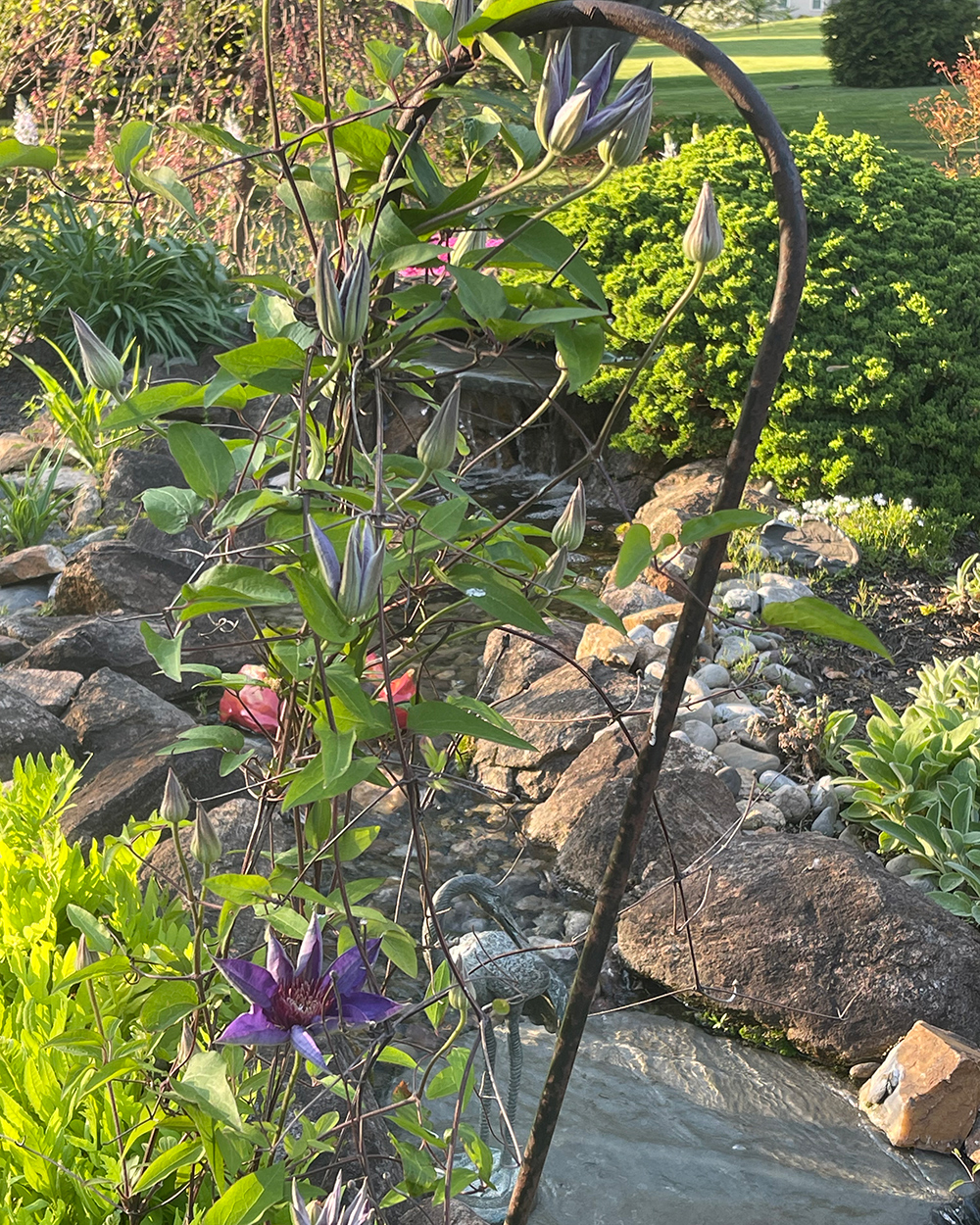
Rhonda’s clematis is just starting to bloom, but it is already covered in big buds. The focal point in Rhonda’s garden, a gorgeous creek with waterfalls, creates a relaxing backdrop.

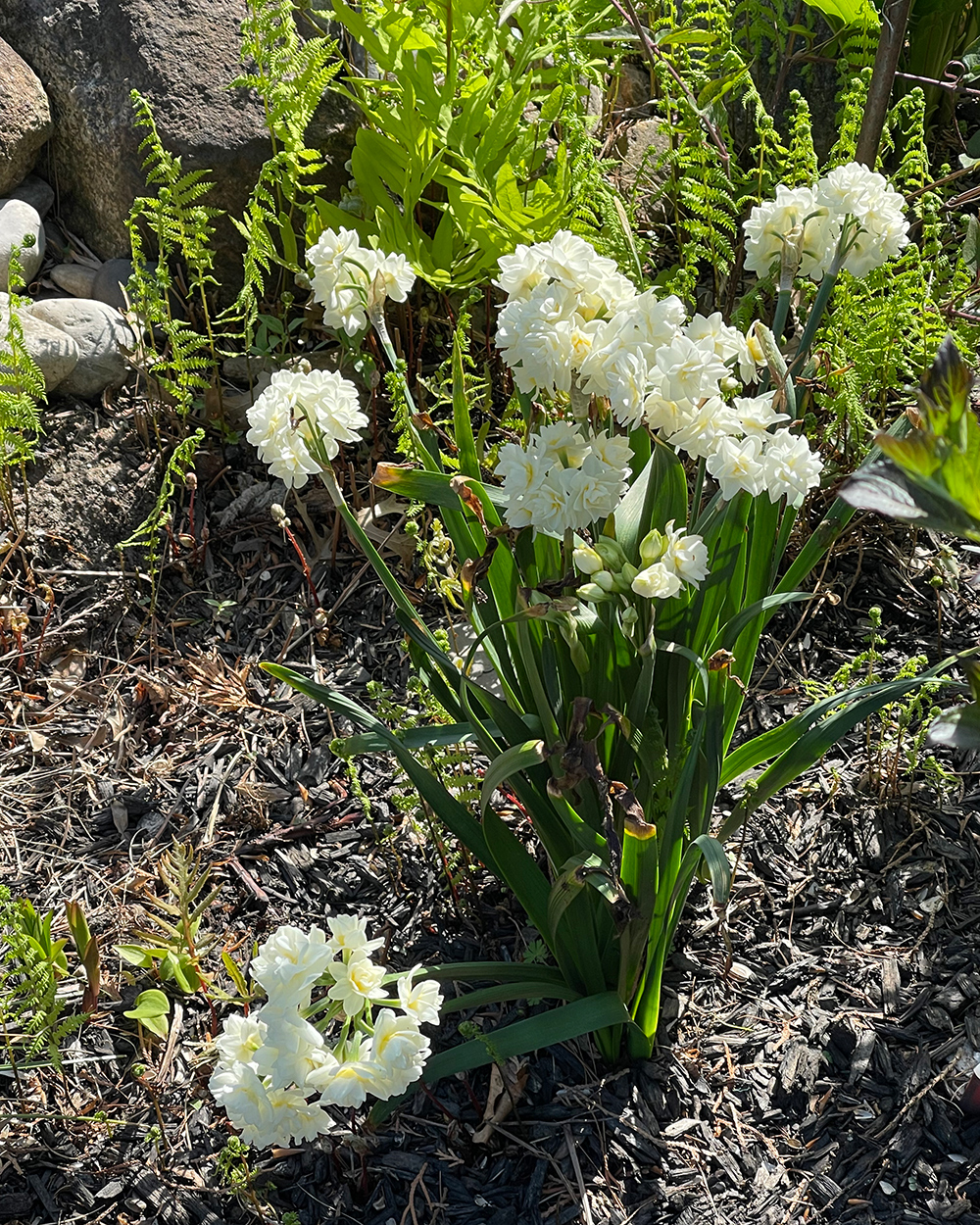
white daffofilsRhonda has several beautiful bulbs in her garden, but these ‘Erlicheer’ daffodils (Narcissus ‘Erlicheer’, Zones 5–9) are some of the best. Clusters of creamy white, double flowers on each stem create a texture distinctively different than most daffodils.

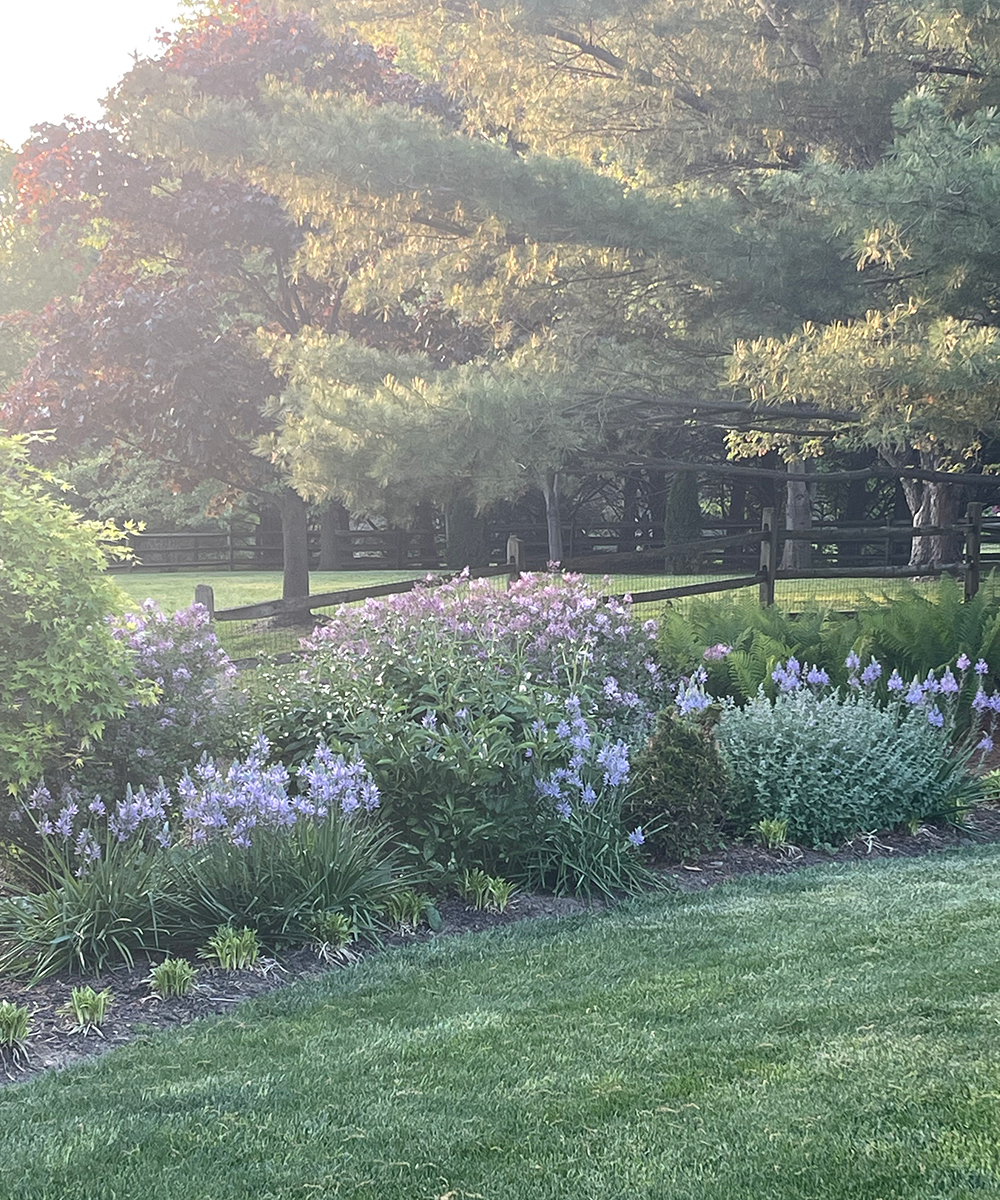
sunny spring border with blue flowersWith the sun low in the sky, this border garden glows. Large clumps of blue camassia pair perfectly with the shrubs covered in pink flowers behind (possibly lilacs?).

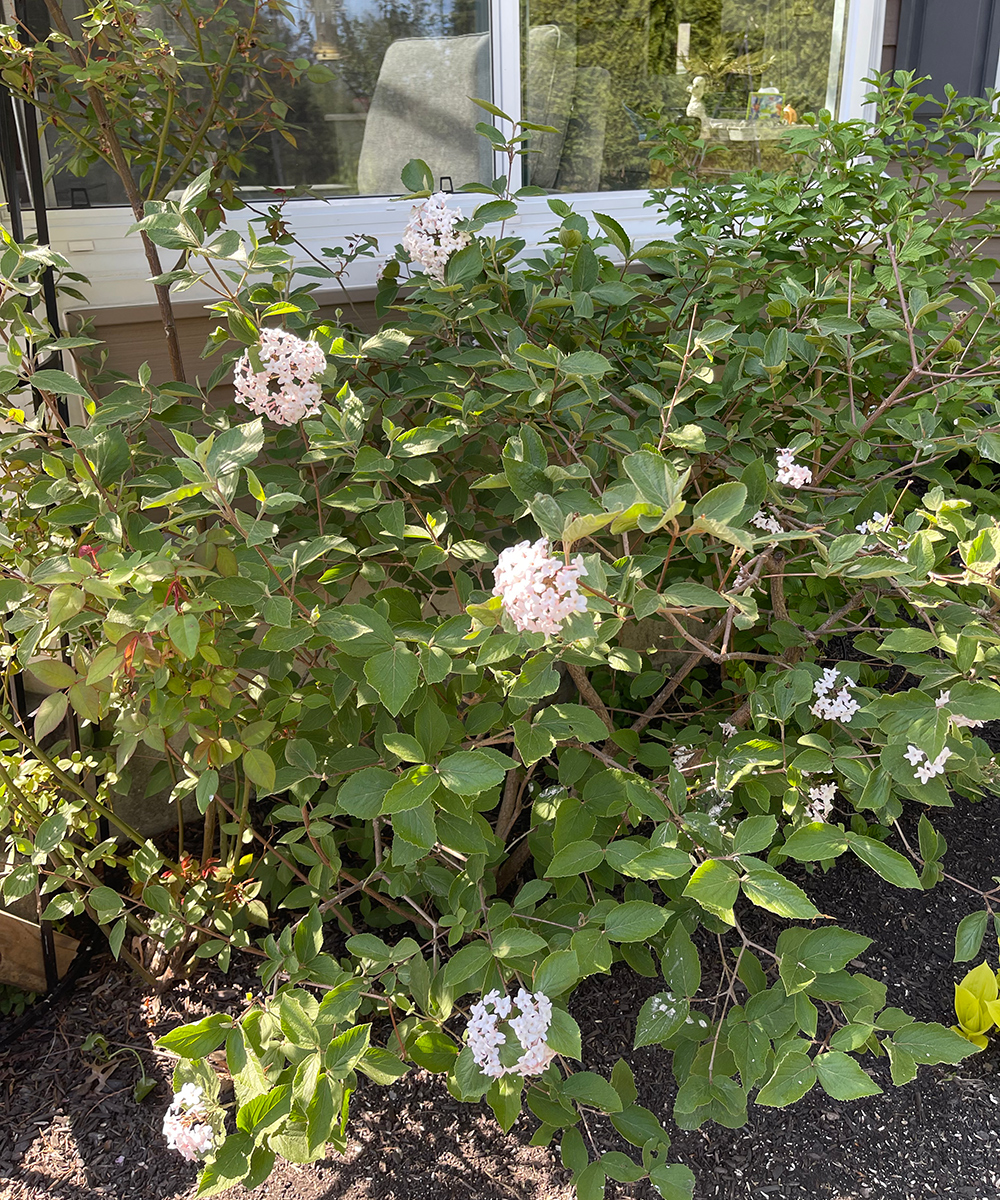
small viburnum shrub in bloomRhonda expertly sited this Koreanspice viburnum (Viburnum carlesii, Zones 5–9) underneath a window, so it’s spicy-sweet fragrance can be enjoyed indoors.

small pond in spring garden with weeping tree with pink bloomsFinally, a better view of Rhonda’s fantastic water feature. A weeping redbud underplanted with some bright pink creeping phlox (Phlox subulata, Zones 3–9) sets off this display with a pop of color. An elegant crane statue at the bottom right corner is the perfect art accent.

Thank you so much for sharing this sensational sampling of spring blooms, Rhonda! As usual, your garden is shining this season.

This season always seems to slip by in a flash, so don’t miss your opportunity to showcase your spring garden with the blog. Follow the directions below to submit photos via email, or send me a DM on Instagram: @agirlherdogandtheroad.


We want to see YOUR garden!

Have photos to share? We’d love to see your garden, a particular collection of plants you love, or a wonderful garden you had the chance to visit!

To submit, send 5–10 photos to [email protected] along with some information about the plants in the pictures and where you took the photos. We’d love to hear where you are located, how long you’ve been gardening, successes you are proud of, failures you learned from, hopes for the future, favorite plants, or funny stories from your garden.

Have a mobile phone? Tag your photos on Facebook, Instagram or Twitter with #FineGardening!

Do you receive the GPOD by email yet? Sign up here