79.1 F
Klamath Falls
Tuesday, July 28, 2026
Home Blog Page 23

Kevin’s Colorful Spring Garden in Pennsylvania

Hi GPODers!

Yesterday we enjoyed some lovely early spring flowers from the garden of Nancy Mellen in Hingham, Massachusetts (Early Spring Blooms in Nancy’s Massachusetts Garden), and today we have another frequent contributor showing off sensational spring photos. Kevin Kelly in Harrisburg, Pennsylvania has shared his gorgeous garden’s evolution and four-season interest for several years now (Check out some of his past submissions: Kevin’s Pennsylvania Garden in November, Kevin’s Winter Garden That Supports Wildlife, Kevin’s Pennsylvania Garden in 2025, Containers in the Landscape, Transition to Summer, and many more), and yet there is always something new to admire in his photos. From the feast of bare forms and enchanting evergreens in his winter garden to the lively color of his peak summer blooms, there is always inspiration to gleaned from his naturalistic landscape and these spring scenes are no exception.

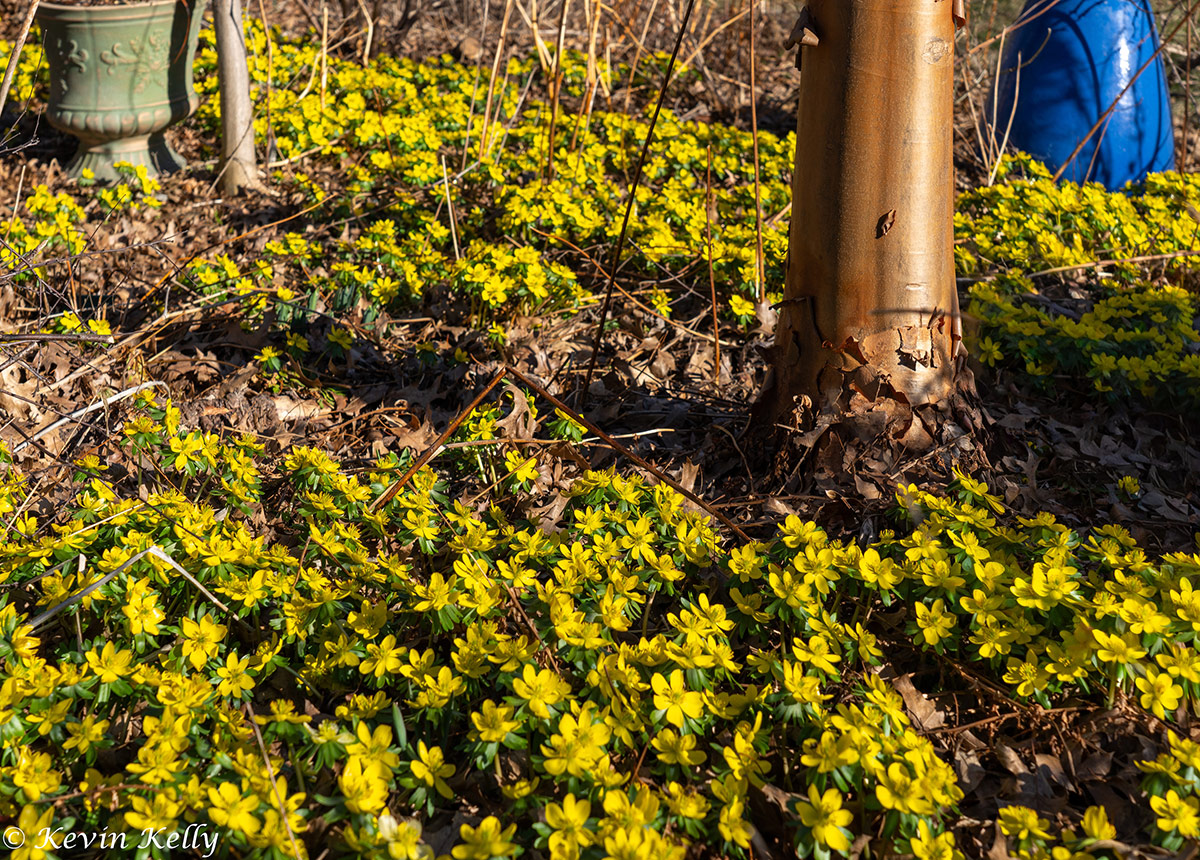
One of the earliest bulbs to bloom, winter aconite (Eranthis hyemalis, Zones 3–7). This will naturalize the space. The foliage will be gone by late May. This area will fill in with ferns, thalictrum, anemone, and hardy begonia.
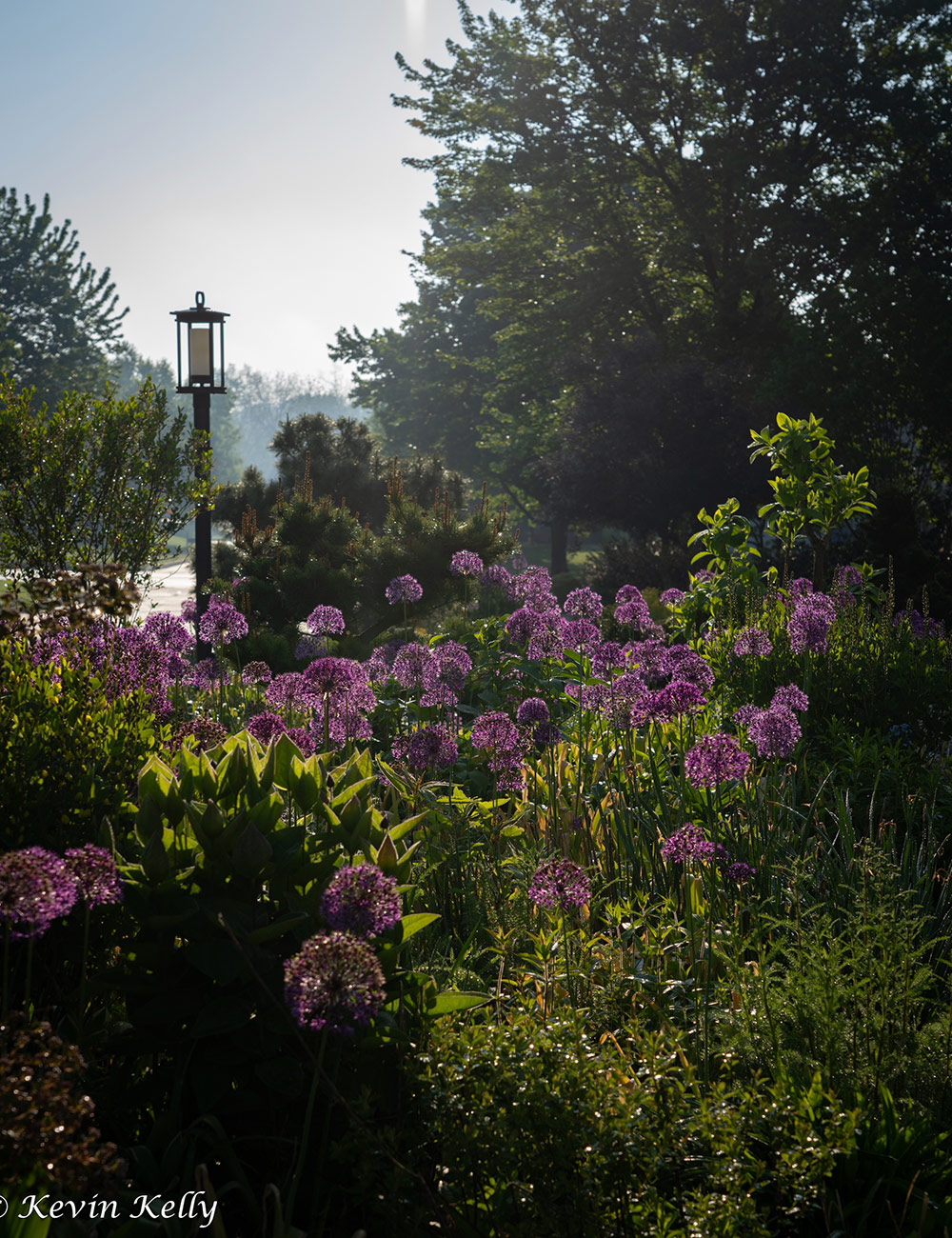
Purple Sensation allium mass plantingA large drift of ‘Purple Sensation’ allium (Allium aflatunense ‘Purple Sensation’, Zones 4–9) in the front yard. This is one of the earliest alliums to bloom. I love how it stands about the emerging herbaceous perennials. Attracts many generalist pollinators.
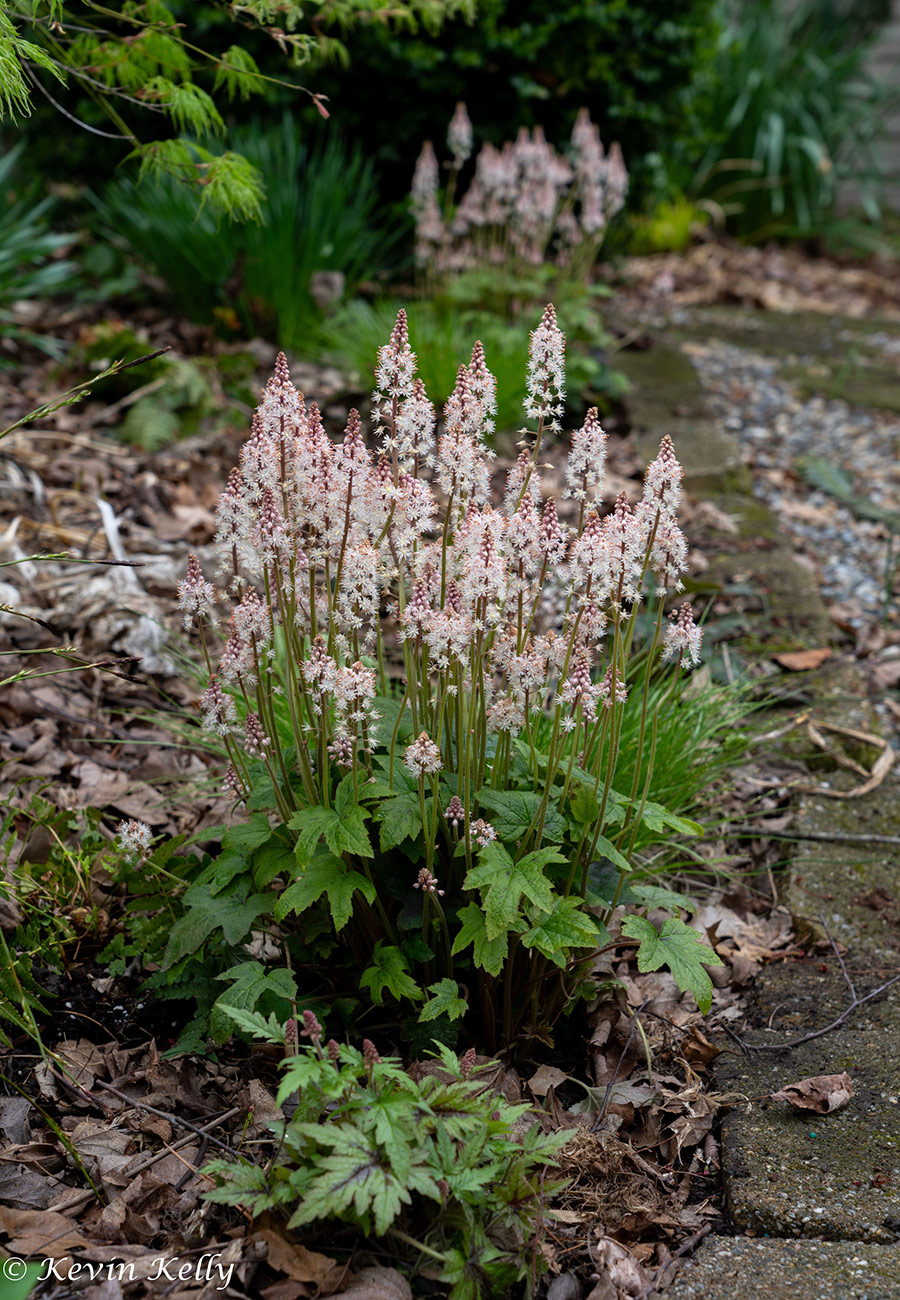
close up of Oakleaf Tiarella‘Oakleaf’ foamflower (Tiarella cordifolia ‘Oakleaf’, Zones 4–9) is a lovely native for average to moist soils. Grows best in part shade. Blooms in May.
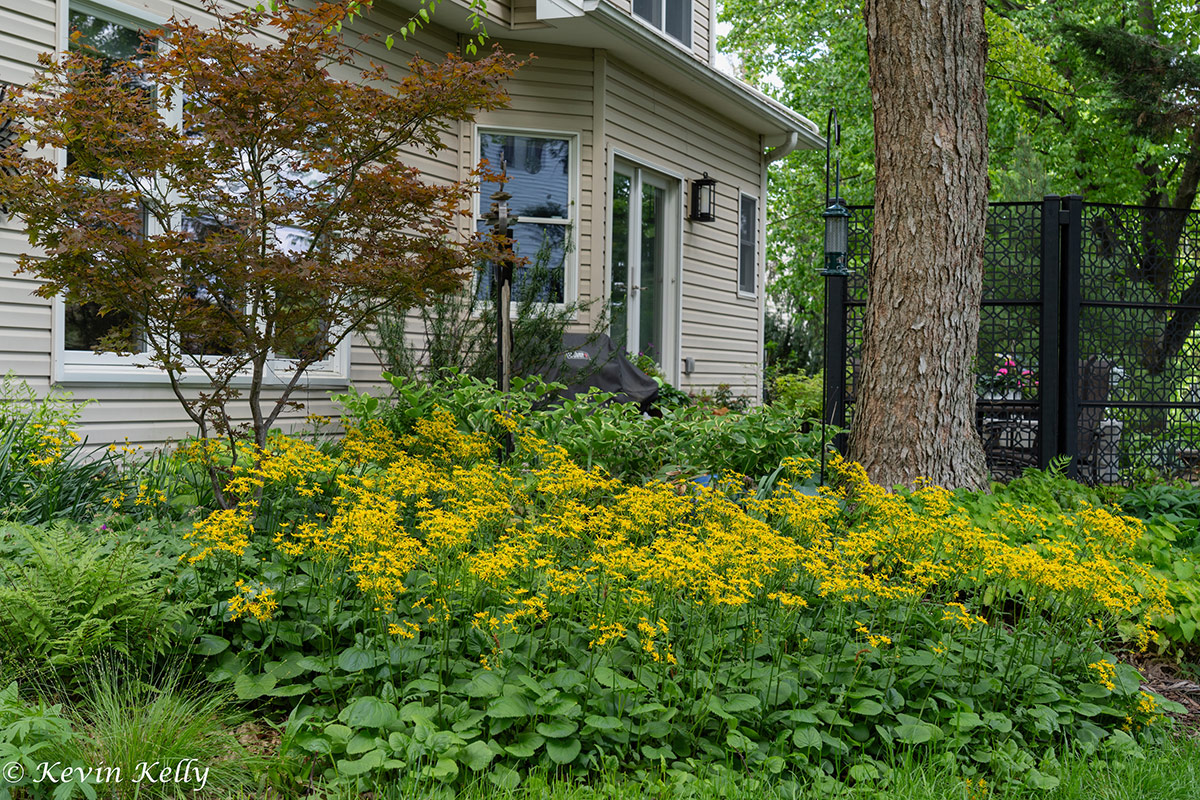
golden ragwort under a treeGolden ragwort (Packera aurea, Zones 3–7) blooming in part shade beneath a mature Heritage® river birch (Betula nigra ‘Cully’, Zones 3–7). While it prefers moist soils, this plant thrives in this area despite the intense root competition.
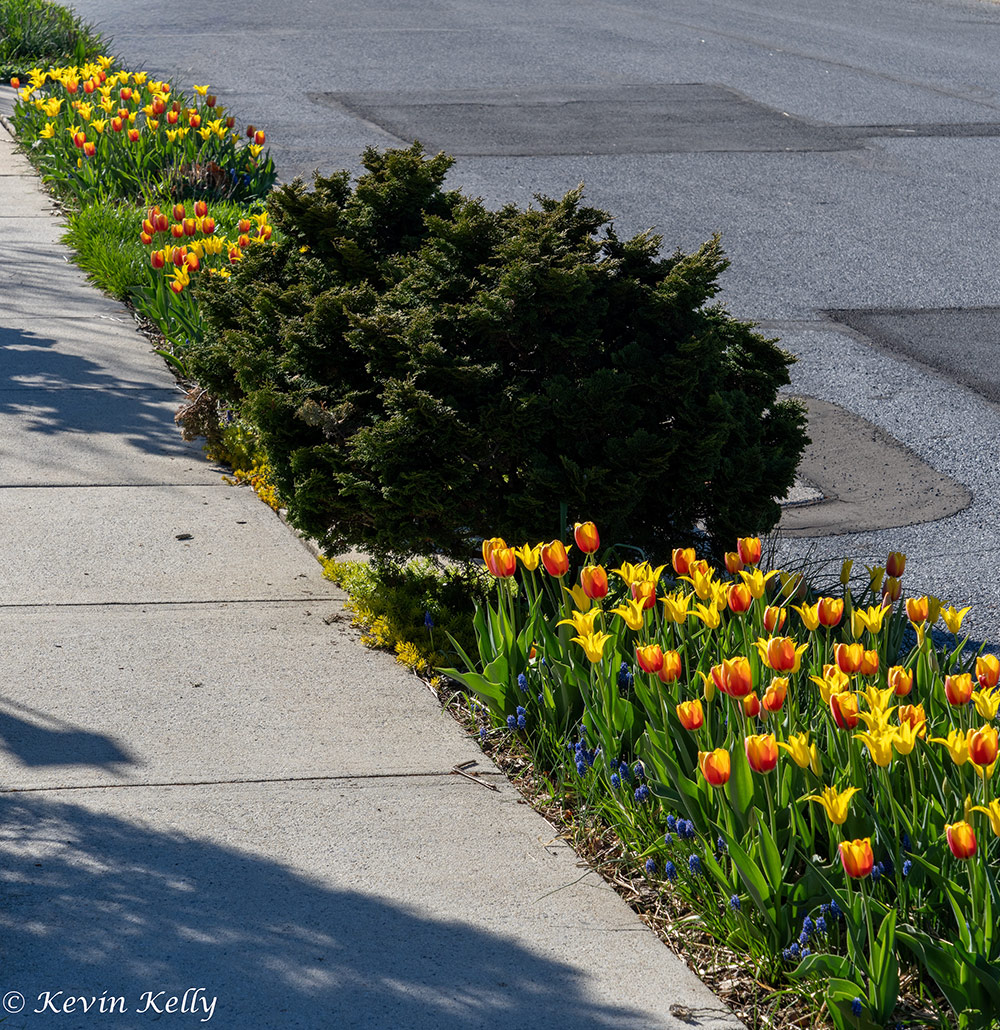
Hellstrip full of multi-colored tulipsTulips in the hellstrip. I have planted most of the hellstrip, the area between the curb and the sidewalk. In these 3 sections, I plant about 600 bulbs, usually 2 types, that will bloom together. It makes an awesome spring display. Once finished, I compost them, and fill the area with summer annuals. Each year has a different color display.
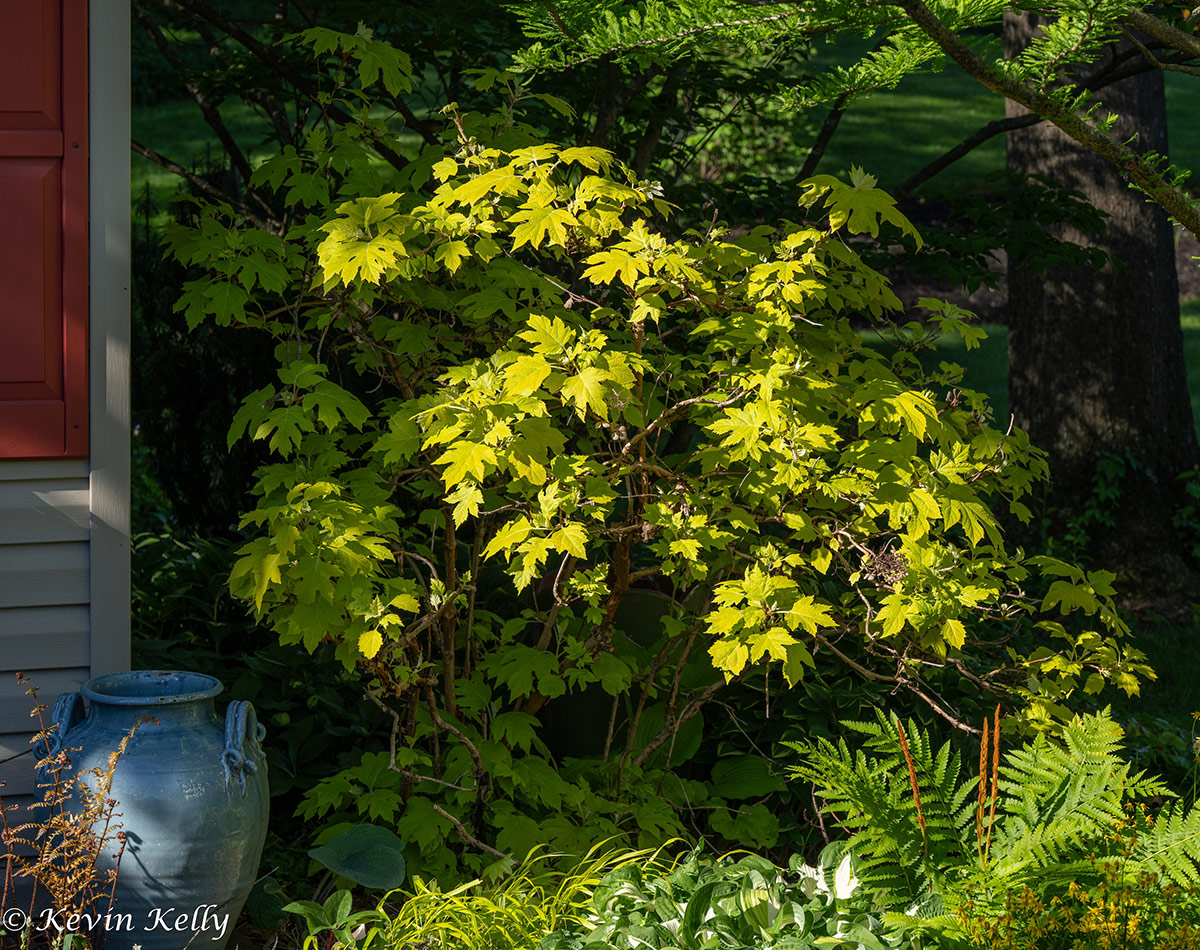
Little Honey oakleaf hydrangeaI love this ‘Little Honey’ oakleaf hydrangea (Hydrangea quercifolia ‘Little Honey’, Zones 5–9). The native oakleaf hydrangea is a multi-season shrub. It has attractive foliage, beautiful white panicles of flowers in June, amazing fall color, and twisted stems with exfoliating bark for winter interest. ‘Little Honey’ has golden leaves and grows to 4 feet tall. The color looks great with the blue container.
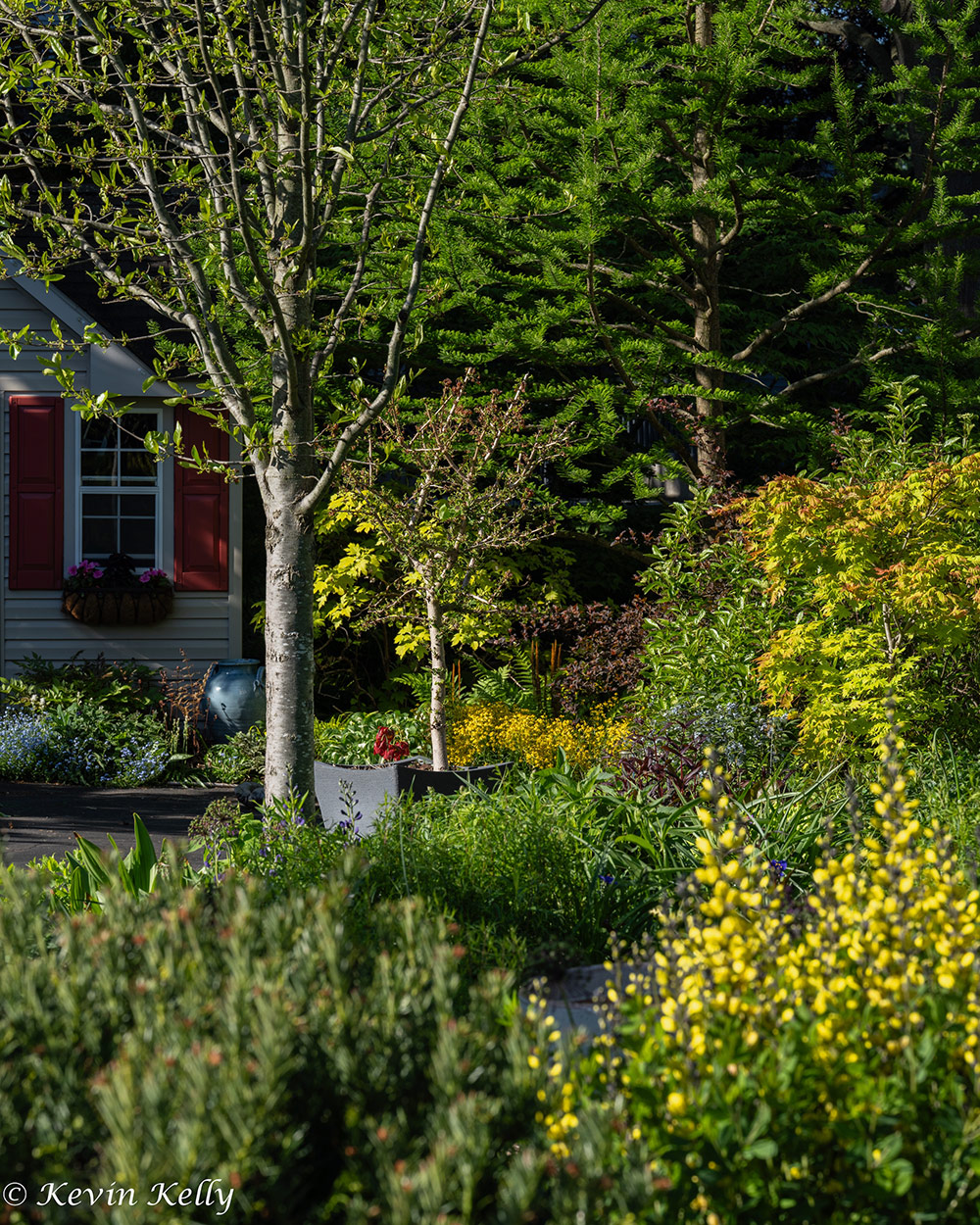
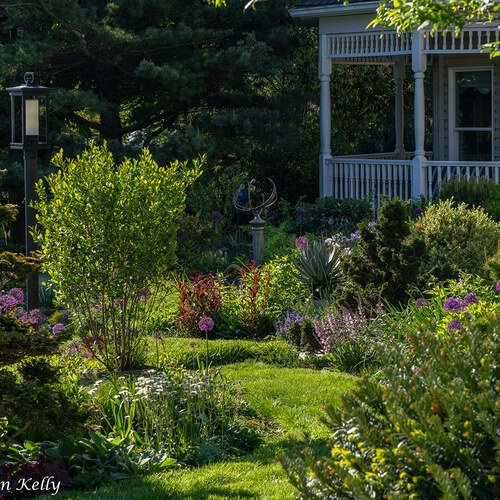
front yard garden borderThis is the west border as viewed from the sidewalk. The driveway is to the left, and part of the shed is visible. I use the repetition of yellow to pull your eye along the border.
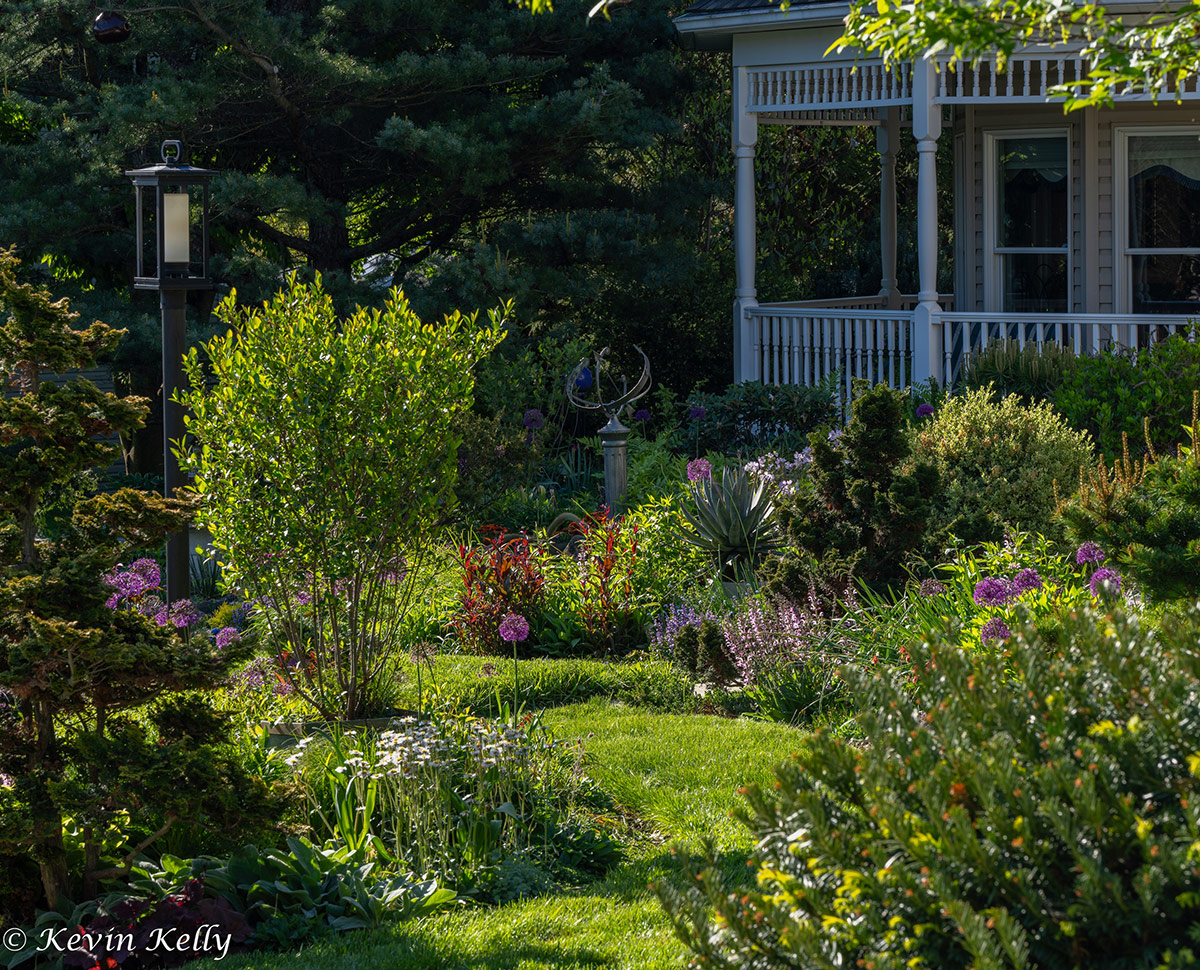
front yard garden in springA view of the front yard in early May. You can see the only grass in the front yard. The lawn serves as a path as well as a low green space to rest the eye and separate the beds.
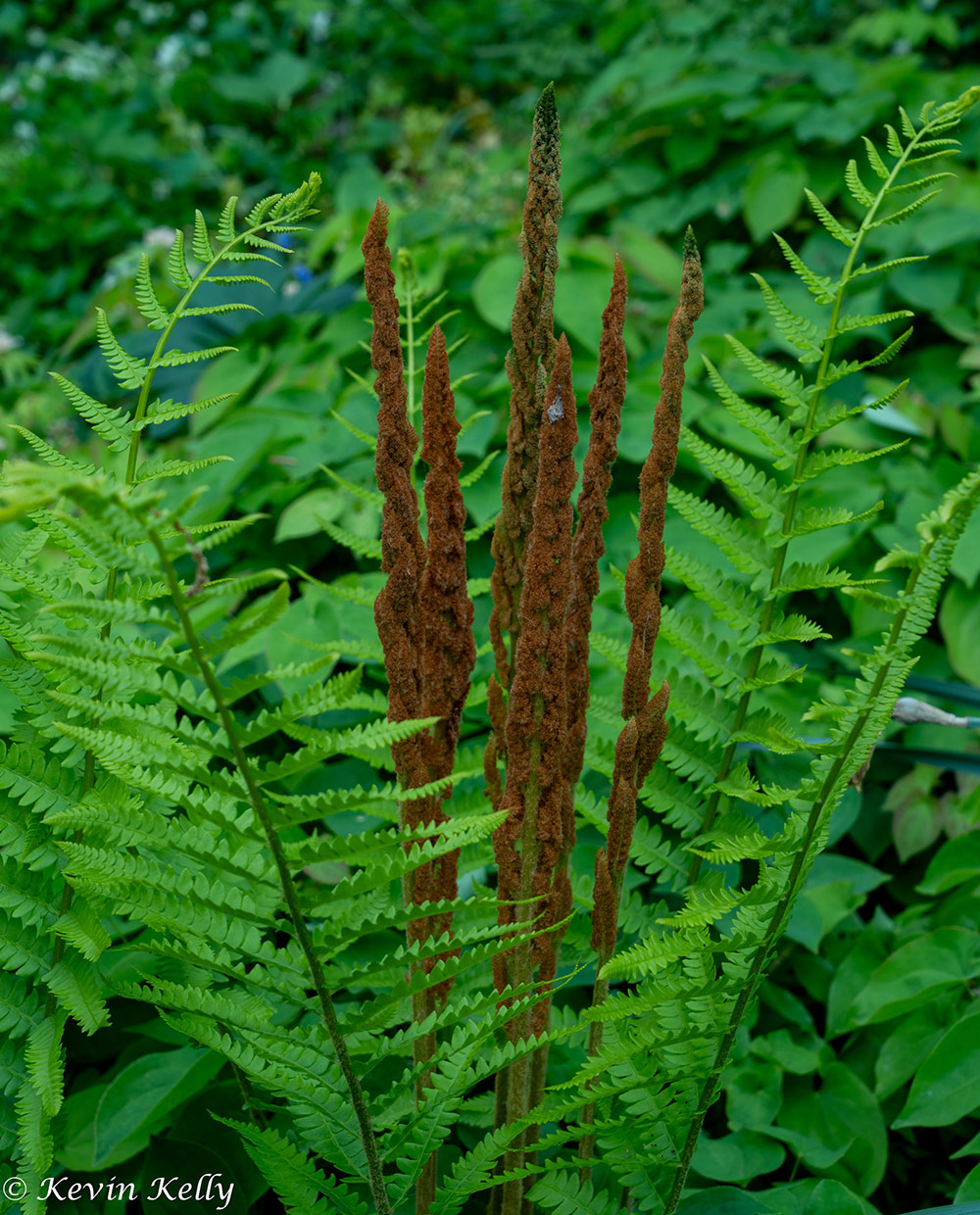
close up of cinnamon fernThe cinnamon fern (Osmundastrum cinnamomeum, Zones 3–9) thrives in part shade and moist soils. It has dimorphic fronds (separate fertile and sterile fronds). The fertile fronds look like cinnamon sticks, but sadly has no scent.
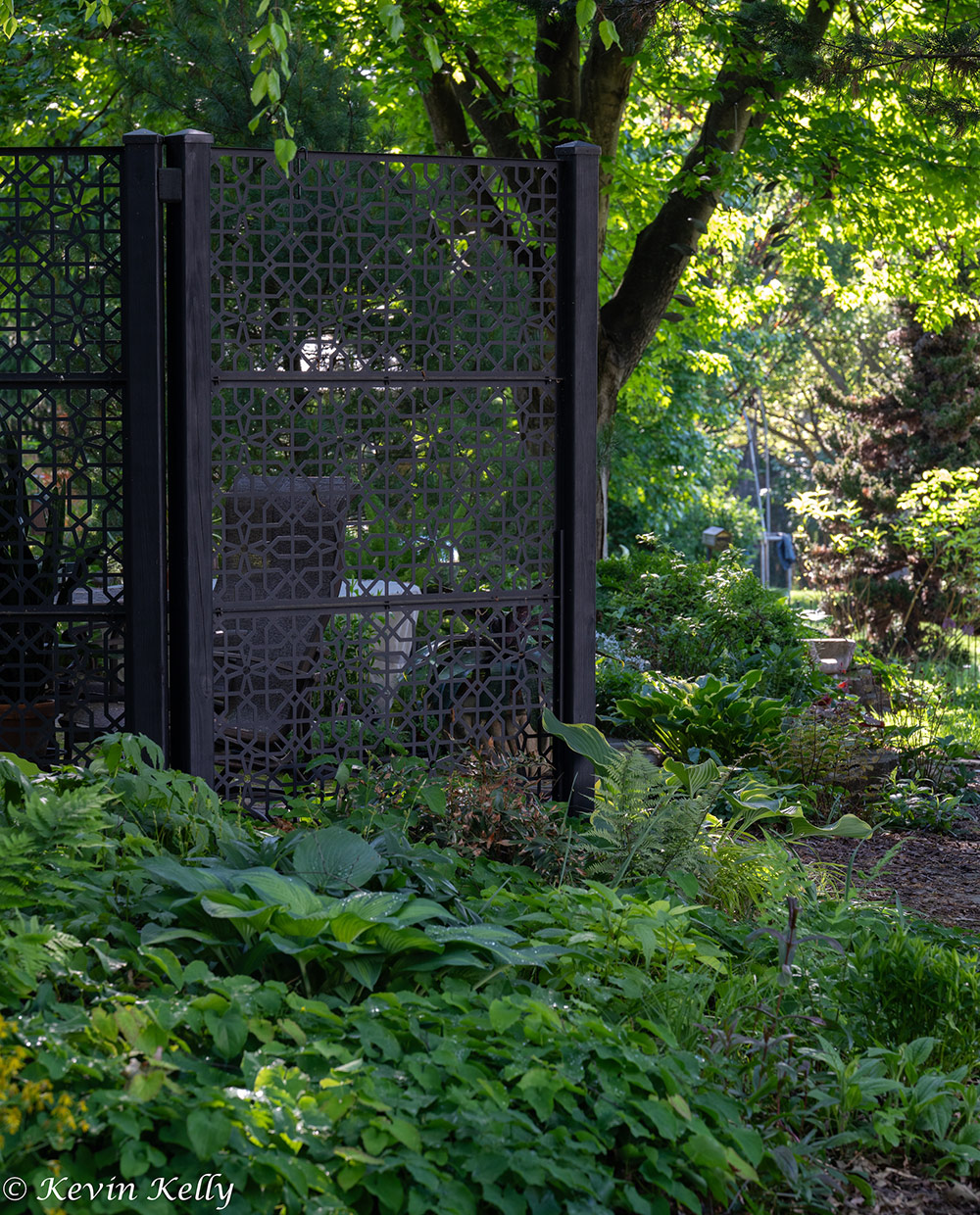
patio gardenA different view of the patio garden. This is the south side of the property. The house is on the left. I planted multiple trees to keep this area in shade. It is a wonderful place to sit in the heat of summer.

Thank you so much for another incredible update from your garden, Kevin! I’m endlessly impressed by your stunning palette of plants and the interest you maintain in every season.

Before the sweet days of spring are replaced by the heat and frenzy of summer, I would love to feature more early season gardens on the blog. Please consider sharing photos of your spring garden highlights and letting us know how the growing season is going for you for far. Follow the directions below to submit your photos to Garden Photo of the Day!


We want to see YOUR garden!

Have photos to share? We’d love to see your garden, a particular collection of plants you love, or a wonderful garden you had the chance to visit!

To submit, fill out the Garden Photo of the Day Submission Form.

You can also send 5–10 photos to [email protected] along with some information about the plants in the pictures and where you took the photos. We’d love to hear where you are located, how long you’ve been gardening, successes you are proud of, failures you learned from, hopes for the future, favorite plants, or funny stories from your garden.
Do you receive the GPOD by email yet? Sign up here

Medicine Reminder Sticker Pack, Funny Pharmacy Take Your Meds Sticker, Healthcare Medical Nurse Pharmacist Gift, Decoration for Laptop Tablet Office Water Bottle Helmet Vehicles


Price: $8.99
(as of Jun 09, 2026 02:14:50 UTC – Details)


Waterproof: Our sticker is ideal for use in damp or muggy conditions because it is made to be totally waterproof. Applying it to surfaces like water bottles, car windows, and even boats can be done with confidence.
UV Protection: Our outdoor stickers offer protection against UV rays from exposure to sunlight, rain, and wind, among other factors that qualify them for outdoor use.
Durable: The premium vinyl used to make the stickers is intended to be weather- and scratch-resistant. It is designed to endure years in the weather.
Precision die-cutting: With the use of cutting-edge die-cutting technology, your design is accurately, crisply, and cleanly cut out of our sticker. Additionally, this technology makes it simple to modify the sticker to meet your unique design requirements.
Versatile: You can use our sticker on a lot of different things, such as water bottles, laptops, cars, and more. Furthermore, it is appropriate for both indoor and outdoor use due to its waterproof qualities.
Easy to apply: No special tools or techniques are required to apply our sticker; it is designed to be that simple. Simply peel off the backing and apply it to any smooth surface. Furthermore, it is simple to remove the sticker without leaving any trace.

PERFECT FOR PERSONALIZING: Stay on top of your health and add some humor to your daily routine with these medication-themed stickers! Perfect for decorating your water bottle, laptop, medication box, or any smooth surface. Featuring funny medication quotes, reminder designs, and humorous messages, these stickers are ideal for anyone who takes medication regularly or wants to remind themselves or others to take their meds. Easy to apply and remove without leaving any residue—perfect for adding a lighthearted touch to your wellness routine.
PERFECT GIFT IDEA: These “Take Your Meds” stickers make a fun and thoughtful gift for anyone who takes medication regularly or appreciates medication humor. Great for birthdays, holidays, or as a playful surprise for a friend, family member, or loved one who needs a reminder. Perfect for men, women, teens, and anyone who wants to stay on track with their health while having a little fun.
SEARCH US: take your meds sticker; funny medication quotes sticker; don’t forget to take your meds sticker; caffeinated and medicated sticker; hot girls take their meds sticker; medication reminder sticker; medication quotes decal; I took my medication sticker; daily meds sticker; coffee and meds sticker; medication reminder decal; medication humor sticker; why I’m on so many medications sticker; meds quotes sticker; take your meds reminder sticker; medication appreciation sticker.
HIGH QUALITY, WATERPROOF & UV RESISTANT: Made from high-quality vinyl, these “Take Your Meds” stickers are durable, waterproof, and UV-resistant. Designed for both indoor and outdoor use, they won’t fade, peel, or fall off easily. The strong adhesive ensures they stay in place even on curved or uneven surfaces, and they are easy to apply and remove without leaving any sticky residue behind.
FIT ALL OCCASIONS: Perfect for decorating your medication box, water bottle, laptop, or giving as a fun and thoughtful gift to anyone who takes medication or wants a daily reminder. These stickers are great for adding a little humor to your health routine, encouraging others to stay on track, or as a lighthearted gift for anyone who takes daily medication.


How to Grow and Care For Lewisia Bitterroot (Cliff Maids)

Species to Select

Chances are, you’ll only find cliff maids for sale, which makes choosing which species to plant pretty easy.

But some specialty nurseries will carry other species.

You might also be able to grab some offsets from wild plants, but be sure that you are harvesting in an area where it’s allowed, and be cautious only to take a few at a time.

Also, keep in mind that wild plants rarely survive well in cultivation.

Cliff Maids

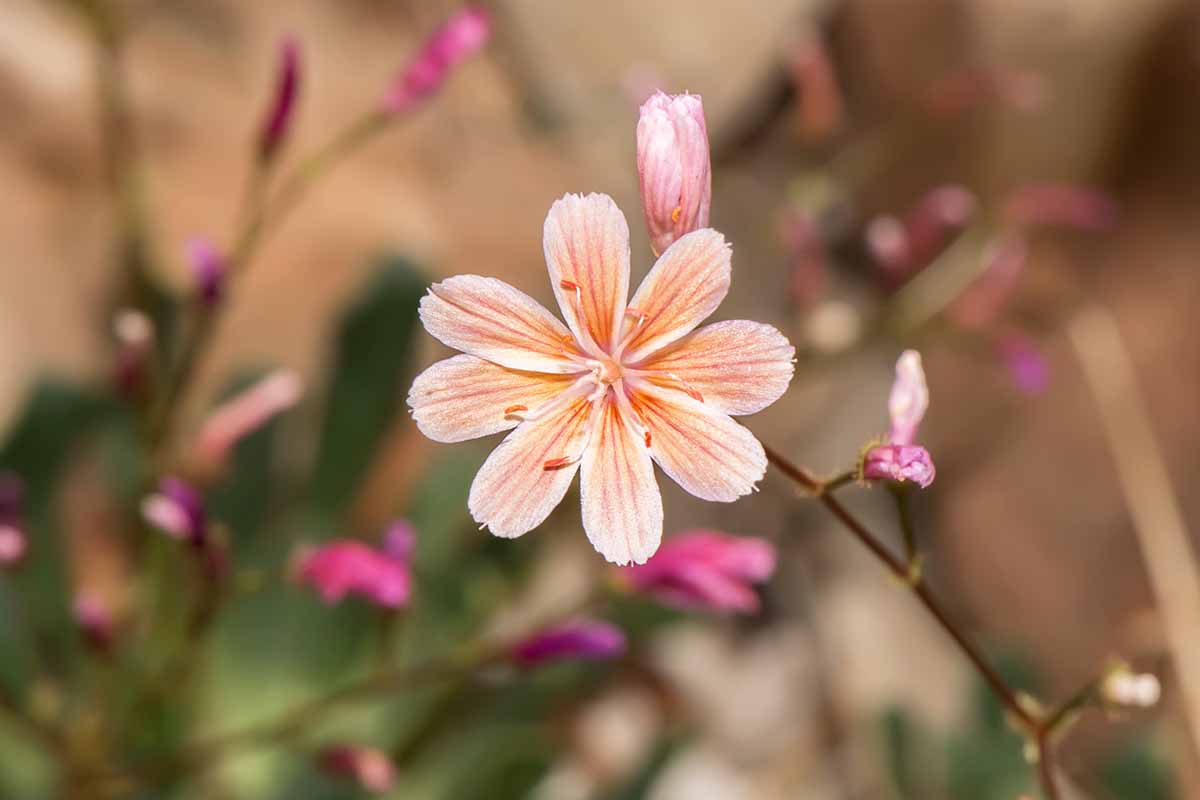
Cliff maids (L. cotyledon) are evergreen, which means you can have a year-round display in Zones 3 to 9.

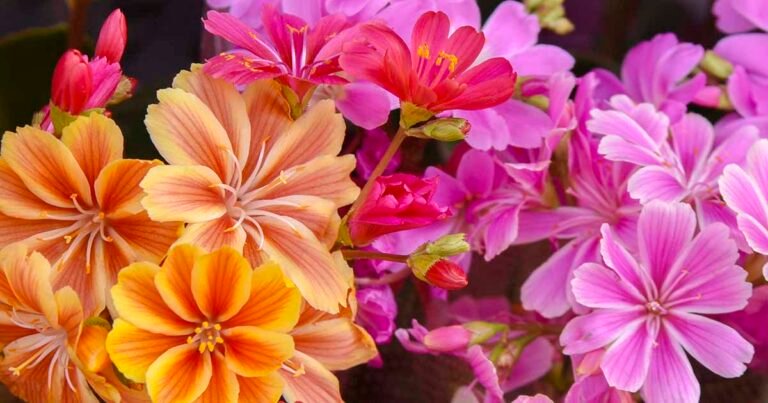
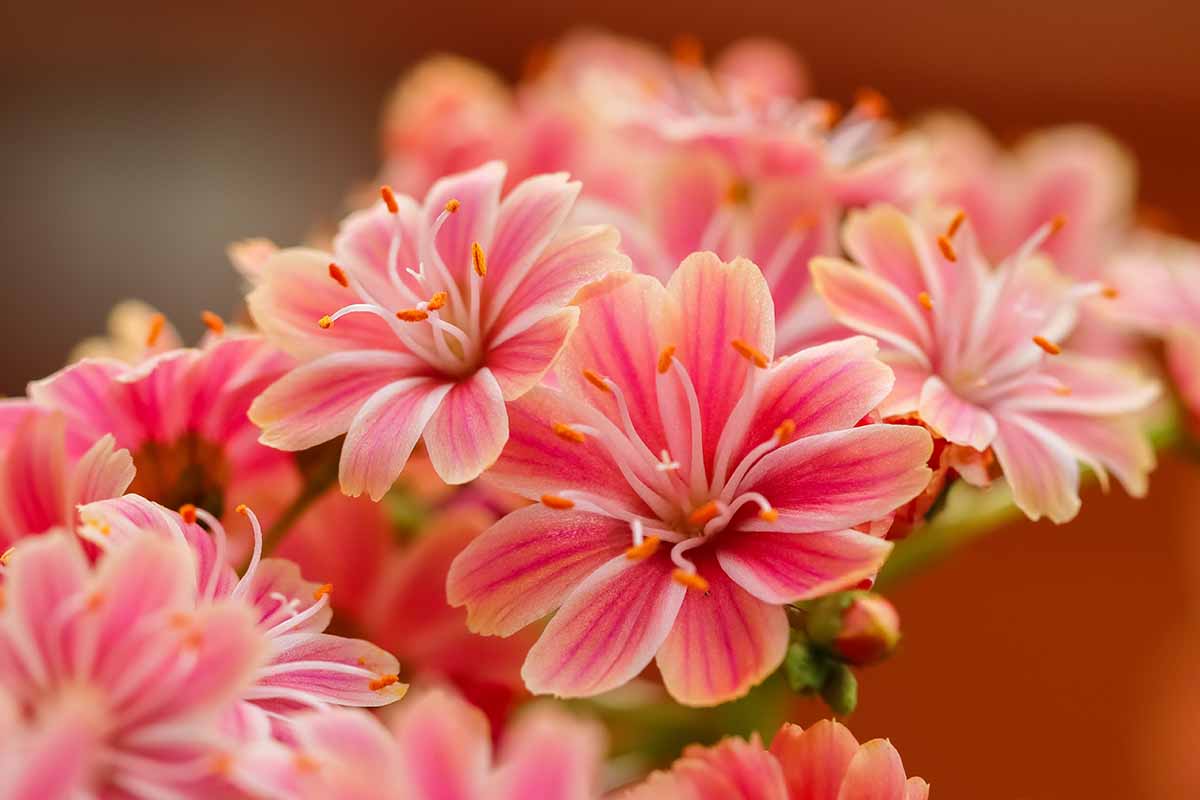
In the spring and early summer, the plants are smothered in heaps of colorful blossoms. This species produces pink, white, or orange flowers.

A close up horizontal image of cliff maids flowers pictured on a soft focus background.

There is also a popular group of cultivated varieties known as the Sunset Group.

Plants from the Sunset Group flower for even longer and the blossoms are more vibrantly colored in hues like white, yellow, apricot, tangerine, pink, fuchsia, violet, and purple.

Both the species and the Sunset Group were awarded the Royal Horticultural Society’s Award of Garden Merit in 1993.

If you’re new to lewisia and you want something easy to grow, this is definitely the species to start with.

Bitterroot

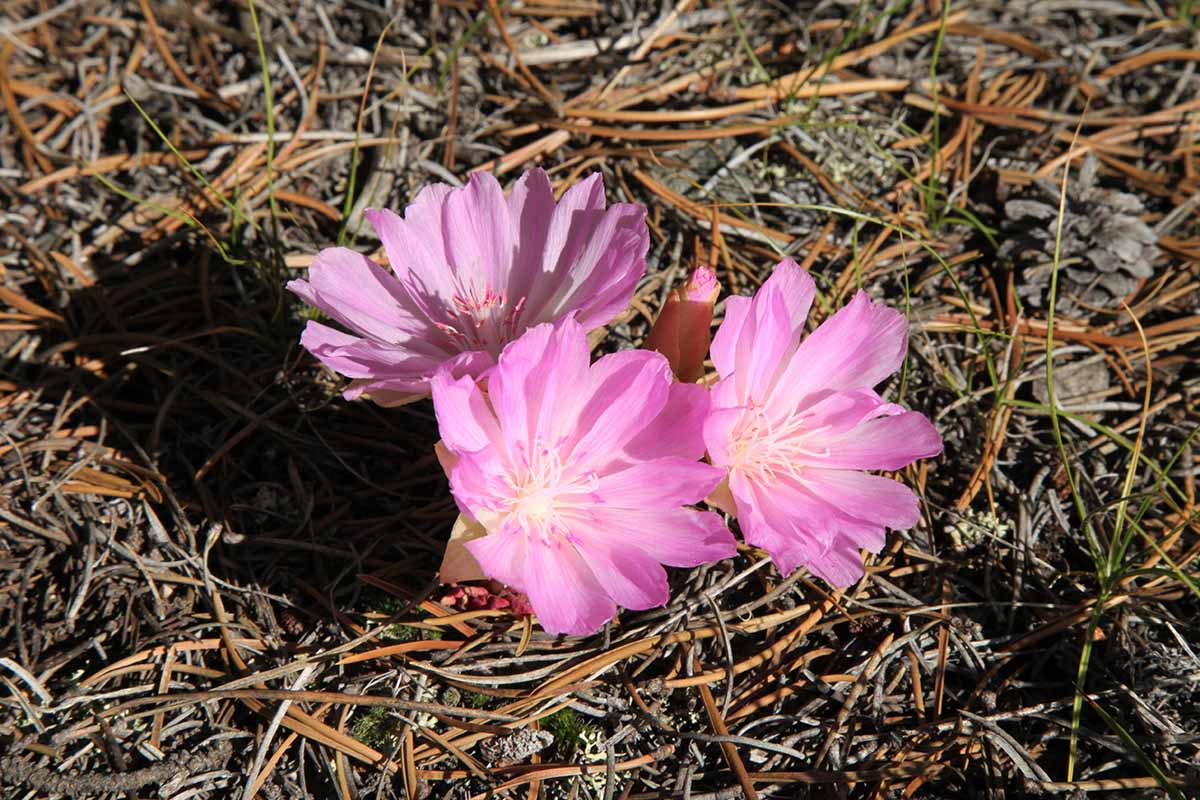
L. rediviva is the state flower of Montana and while it’s rarely seen in cultivation, these days it’s gaining in popularity.

A close up horizontal image of pink bitterroot flowers growing in bright sunshine.A close up horizontal image of pink bitterroot flowers growing in bright sunshine.

While this species isn’t quite as showy or adaptable as cliff maids, it’s a beautiful plant in its own right. In spring it produces pink or white flowers before going dormant in the summer months.

If you live in its indigenous range, consider growing this one since wild plants are disappearing, causing stress for the animals that rely on it.

It’s suitable for cultivation in Zones 3 to 9.

Columbian

I was hiking in Oregon when I first spotted this sweet little plant, known to botanists as L. columbiana.

A close up horizontal image of a single Lewisia columbiana flower pictured on a soft focus background.A close up horizontal image of a single Lewisia columbiana flower pictured on a soft focus background.

It’s not as bold and bright as cliff maids, with its narrow leaves and pink and white flowers held on long pink stems.

If you look closely, you will notice that the flowers are white with distinct pink lines running down the petals. This is an evergreen species, so it won’t go dormant in the summer.

There’s a natural variety (L. columbiana var. rupicola) that I long to get my hands on. It has lavender blossoms and bright magenta stripes.

Kellogg’s

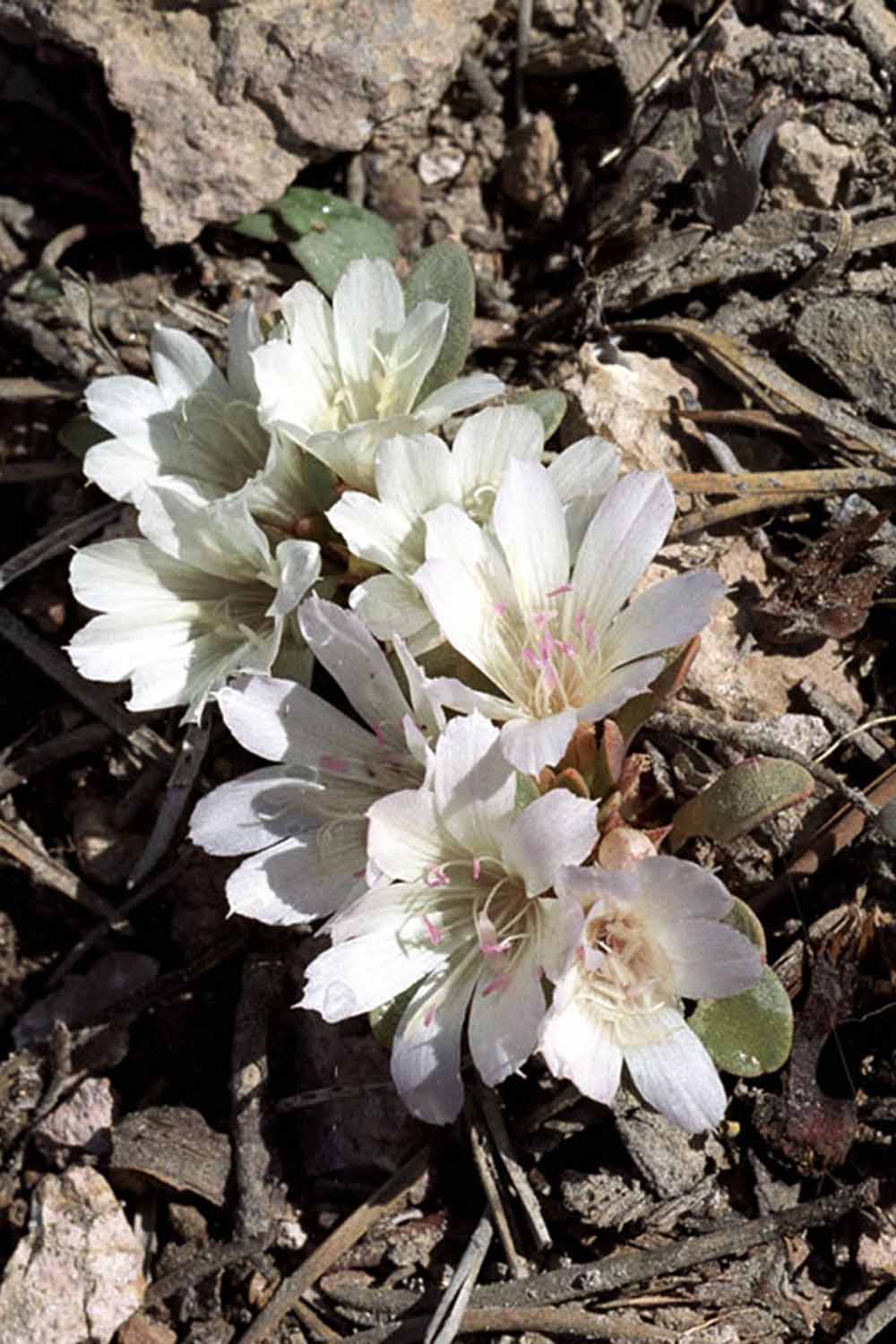
When Kellogg’s lewisia (L. kelloggii) is in bloom, it can be hard to tell if the plant even has leaves.

A close up vertical image of Kellogg's lewisia growing wild pictured in bright sunshine.A close up vertical image of Kellogg's lewisia growing wild pictured in bright sunshine.
Photo by Karen Callahan, Wikimedia Commons, USDA Forest Service.

The clusters of white or pale pink blossoms appear on short stems that smother the rosette of spoon-shaped leaves underneath.

The leaves die back for the summer after the blossoms fade, but they’ll return in the fall for another round of growth.

Short-Sepal Bitterroot

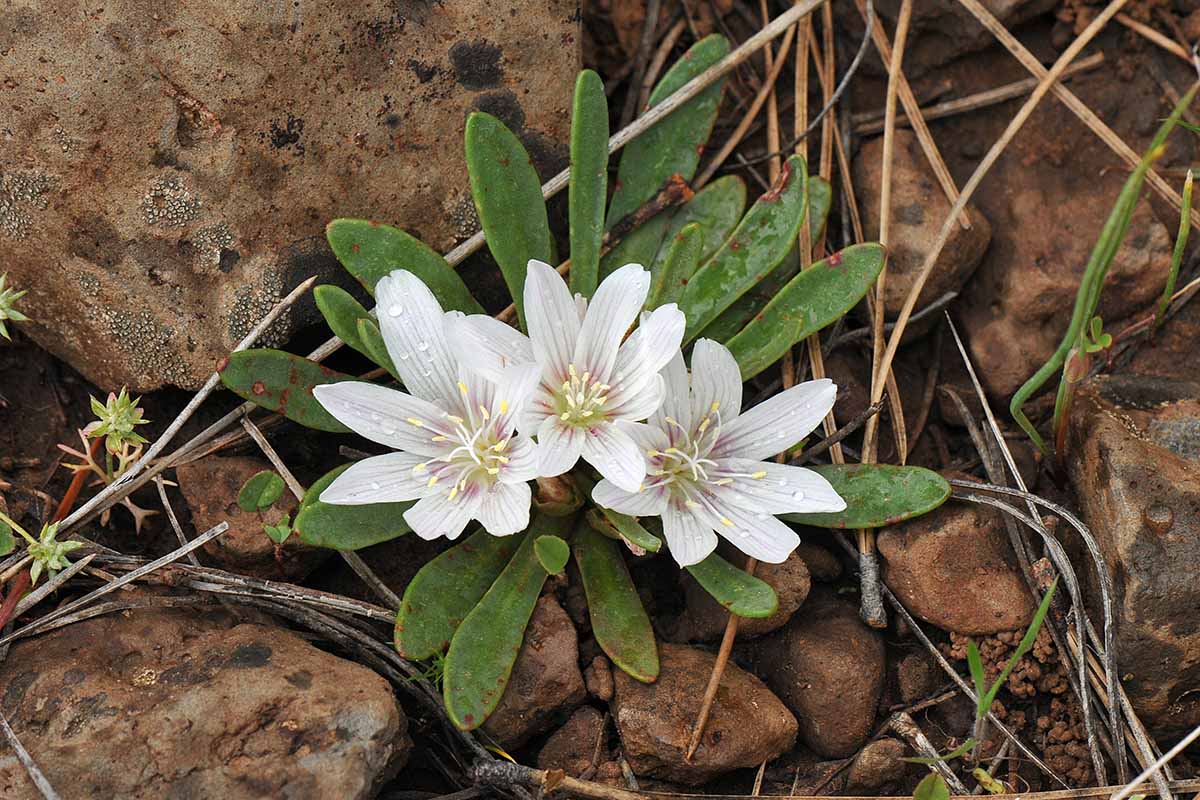
Short-sepal bitterroot (L. brachycalyx) is a deciduous type that goes dormant in the summer.

A close up horizontal image of the white flowers of Lewisia brachycalyx growing in a rocky outcrop.A close up horizontal image of the white flowers of Lewisia brachycalyx growing in a rocky outcrop.

It has pink or white flowers with narrow succulent leaves. It’s resilient and reliable, which is part of the reason that this plant was awarded the Royal Horticultural Society’s Award of Garden Merit in 1993.

 It grows indigenously throughout southwestern North America.

Propagation

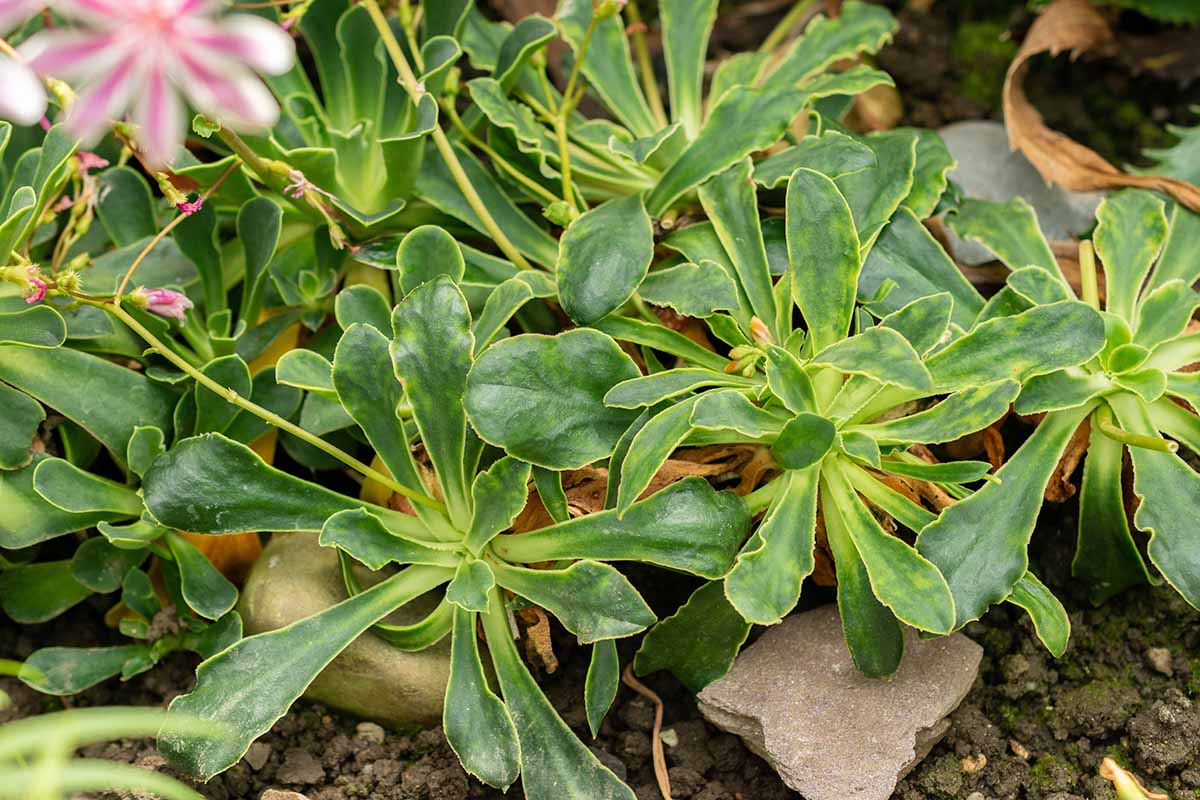
There are two main methods for propagating lewisia, from seed and by dividing offsets.

A close up horizontal image of the succulent rosettes of cliff maids foliage.A close up horizontal image of the succulent rosettes of cliff maids foliage.

Seeds can be hard to come by, but some specialty nurseries may carry them. You’ll normally find potted starts rather than seeds.

From Seed

Since lewisia grows natively in sub-alpine regions, they typically experience cold winters. The seed needs a period of cold stratification for them to break dormancy and germinate.

When you have your seeds, you’ll need to recreate this.

Fill a bag or sealable container with moist sand and add the seeds.

Place the container and seeds into the refrigerator. They need to stay just above freezing and below 40°F for about six weeks.

Cute Pharmacy Technician Healthcare Rainbow Stainless Steel Insulated Tumbler


Price: $26.99
(as of Jun 08, 2026 14:13:41 UTC – Details)


Celebrate the essential work of pharmacy technicians with this vibrant and detailed graphic. The design showcases a charming rainbow arc, adorned with various medical and pharmacy-related elements. You’ll find meticulously drawn pills, capsules, a syringe, a band-aid, the caduceus symbol, a stethoscope, a mortar and pestle, a medicine bottle, a nurse cap, a first aid kit, and a heartbeat line. This artwork is for anyone in the medical profession, especially pharmacy assistants, pharmacy students, and healthcare workers who play a crucial role in patient care. It’s a thoughtful way to express appreciation for the dedication and hard work involved in dispensing medications and supporting health. Show your pride in the healthcare community with this unique and colorful illustration, highlighting the vital contributions of medical professionals.
Charming pharmacy technician graphic featuring a colorful rainbow arc. Includes detailed illustrations of medical supplies: pills, syringe, stethoscope, caduceus, mortar and pestle.
Designed for dedicated pharmacy technicians, pharmacy students, and all healthcare workers. Celebrate your vital role in the medical field and passion for patient care.
Dual wall insulated: keeps beverages hot or cold
Stainless Steel, BPA Free
Leak proof lid with clear slider


Glenmal 3 Roll Syringe Line Stickers 1.5″ x 0.5″ Dosage Marking Clear Label Bright Red Dose Level Pharmacy Labels for Veterinary Medical Pharmacy Medication Healthcare Medicine, 500 Pcs Per Roll


Price: $9.99
(as of Jun 08, 2026 02:12:55 UTC – Details)


Features:
These medicine labels stickers measure about 1.5 x 0.5 inches in size, making them just the right size for your syringes.
Our medication stickers offer clear visibility and are quite easy to use, saving you precious time.
Specifications:
Material: transparent polypropylene material
Color: as pictures
Single size: about 1.5 x 0.5 inches
Quantity: 1500 pieces/ 3 rolls
Package includes:
1500 x Syringe labels with dose level
Notes:
Manual measurement, please allow slight errors on size.
The color may exist a slight difference due to different screen displays.
Our products have strong adhesive, please do not stick them on the paper cabinet, paint cabinet, in case of damage to the furniture

Abundant Quantity: this package contains a generous count of 1500 pieces of syringe line stickers spread across 3 rolls; This significant quantity provides an ample supply, meeting the demands of medical facilities; The labels are supplied in rolls, ensuring they’re easy to distribute and manage
Quality Material: our dosage marking clear label is crafted with transparent polypropylene material ensuring their long lasting durability and reliable use; Offering clarity, these labels prioritize safety, allowing to identify and administer the correct injection or dosage
Easy to Use: these pharmacy labels’ adhesive is strong enough that you don’t have to worry about falling off; The label can be easily wrapped around the barrel of the syringe to indicate the correct dosage; When you don’t need them, you can easily remove them
Easy to visually recognize: These medical labels are designed with clear colors and red dose lines, and labeled with dose level, allowing you to directly fill in the required dose data; This color feature helps with easy recognition and reduces the possibility of errors; It also enhances the aesthetic appeal of syringe labels, making them more attractive to use
Multipurpose Utility: these prescription labels measure about 1.5 x 0.5 inches, boast wide application, ideal for use in hospitals, clinics, or even for personal use at home; They feature a clear and reliable red dose line which helps prevent accidental mix ups or errors during dosages; Promoting safety in medication administration


GPOD on the Road: Denver Botanic Garden in Spring

Happy Friday, GPODers!

Today’s photos are another installment from my spring road trip through the Mountain West and Southwest, and show another highlight from my time spent in Denver, Colorado (check out my post on spring flowers I spotted in the city, if you missed it last week). After a couple of days regrouping from the long drive and exploring downtown, I made a beeline for Denver Botanic Garden—a botanical garden that has long been on my bucket list. I was most excited to see their small but very mighty Cactus and Succulent House (which will likely get its own installment in this series) and to see what other cold-hardy cacti I could spot around the gardens. Of course, as soon as I stepped foot onto the 24 acres of plant magic that make up Denver Botanic Garden, I found myself dazzled by far more than the cacti and succulents I adore collecting as houseplants. After exploring every nook and cranny possible in the roughly four hours I spent there, I walked away with tons of inspiration and many photos to share.

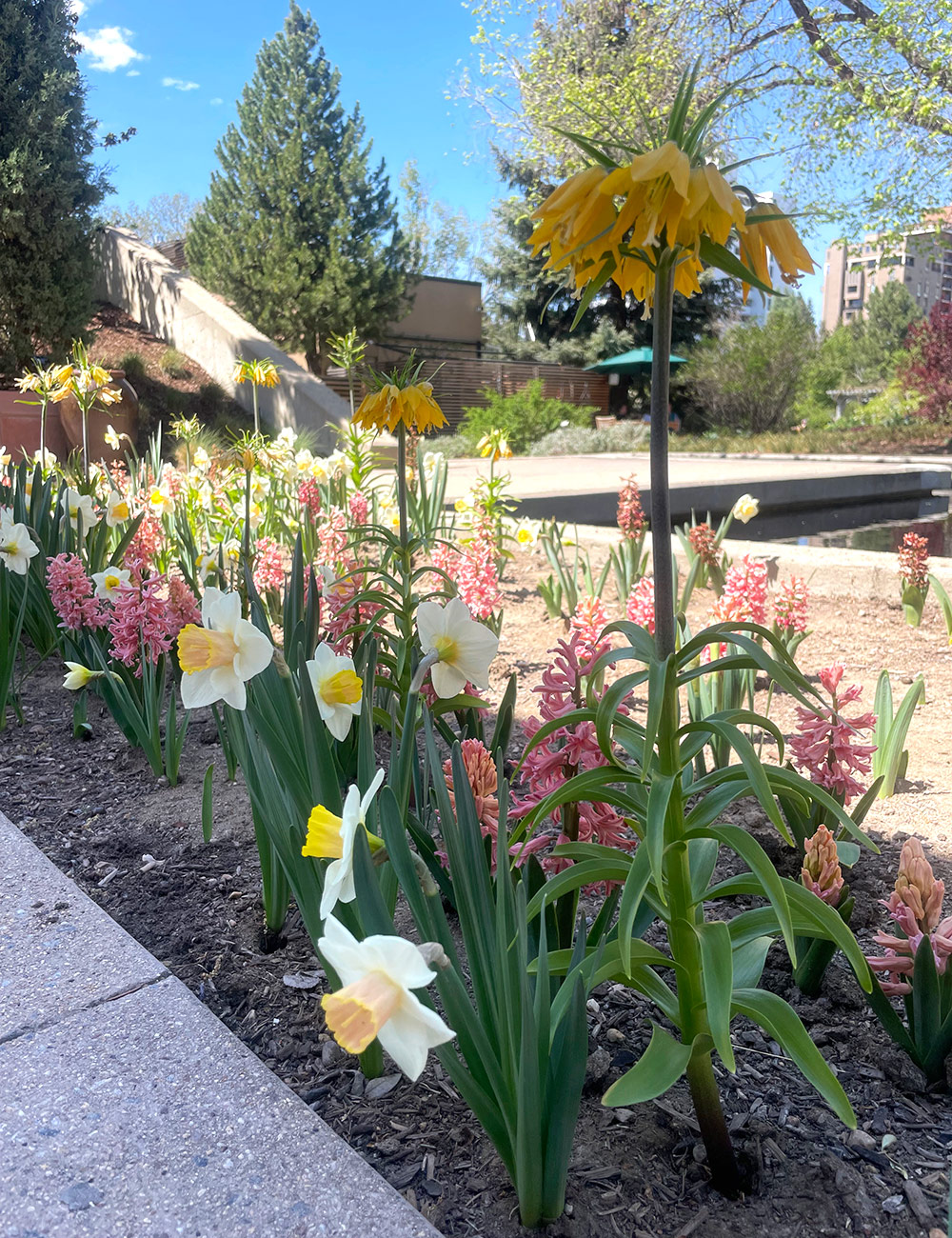
As was the case in downtown Denver, most of the spring bulbs on display were already spent and crispy. However, there were a few spots in the shade where blooms were still looking bright and fresh. I was particularly enamored by this combination of daffodils, hyacinths, and fritillaria.

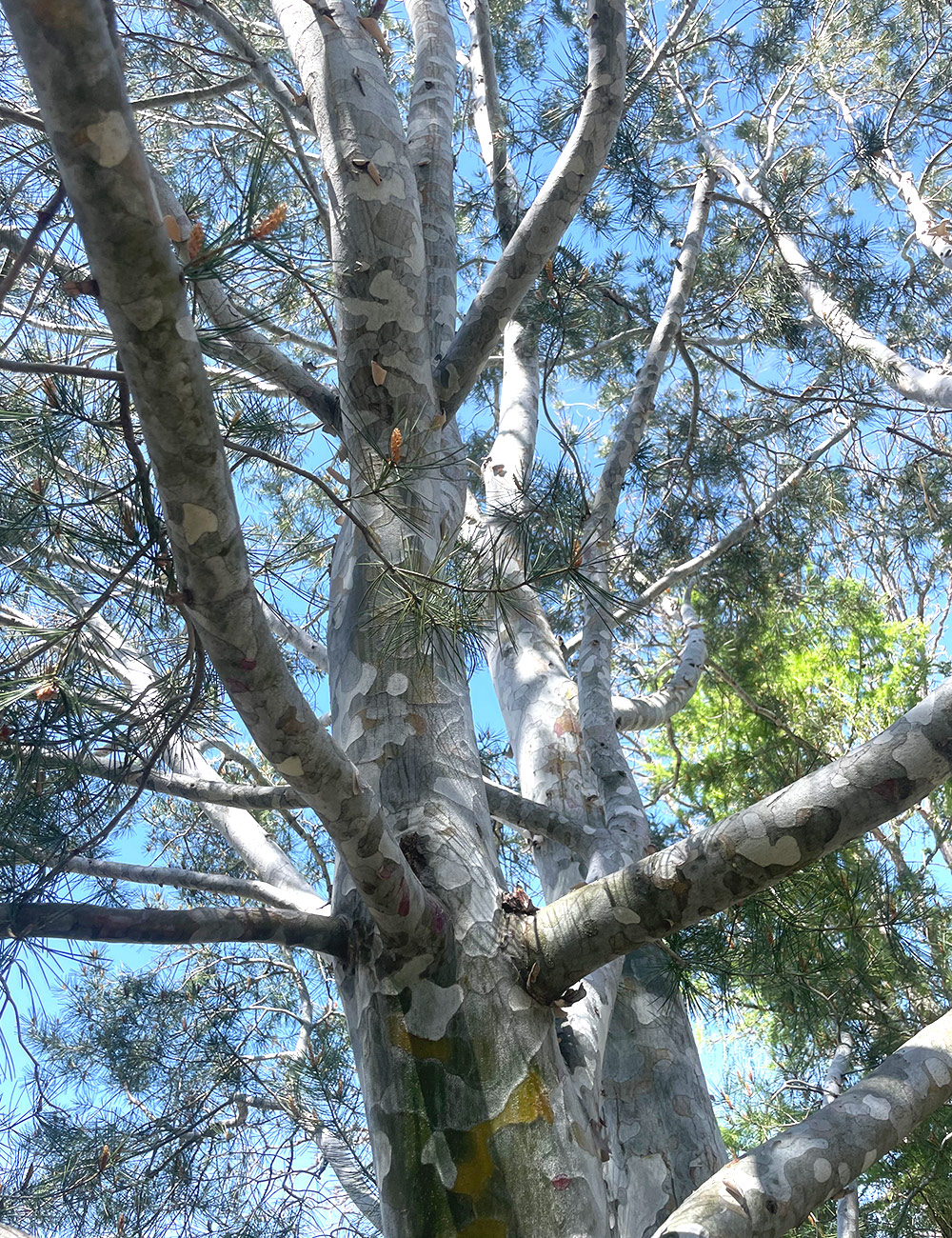
lacebark pine barkWhere blooms were on short supply, woodies were putting on a fantastic display and captured my attention. As is appropriate for a botanical garden located just a stone’s throw from the foothills of the Rocky Mountains, there is an unbelievable collection of conifers. This lacebark pine (Pinus bungeana, Zones 4–8) in the Lilac Garden was an easy standout.

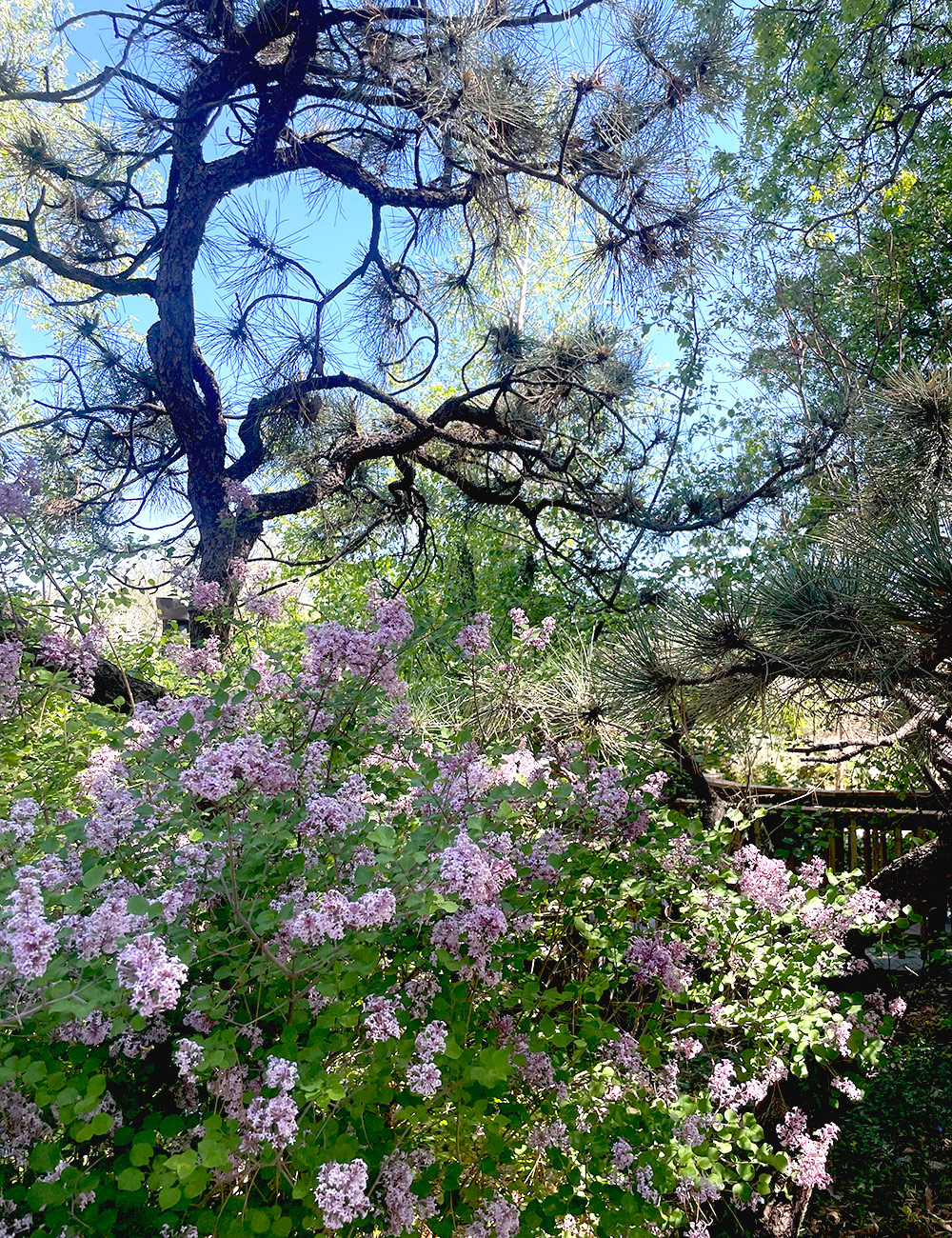
lilac under twisted pine treeTrees in the Lilac Garden were eye-catching (check out the twisted pine in the background of this photo), but the color and fragrance stars were the lilacs in full bloom, like this dwarf Korean lilac (Syringa meyeri ‘Palibin’, Zones 3–7) putting on a marvelous display.

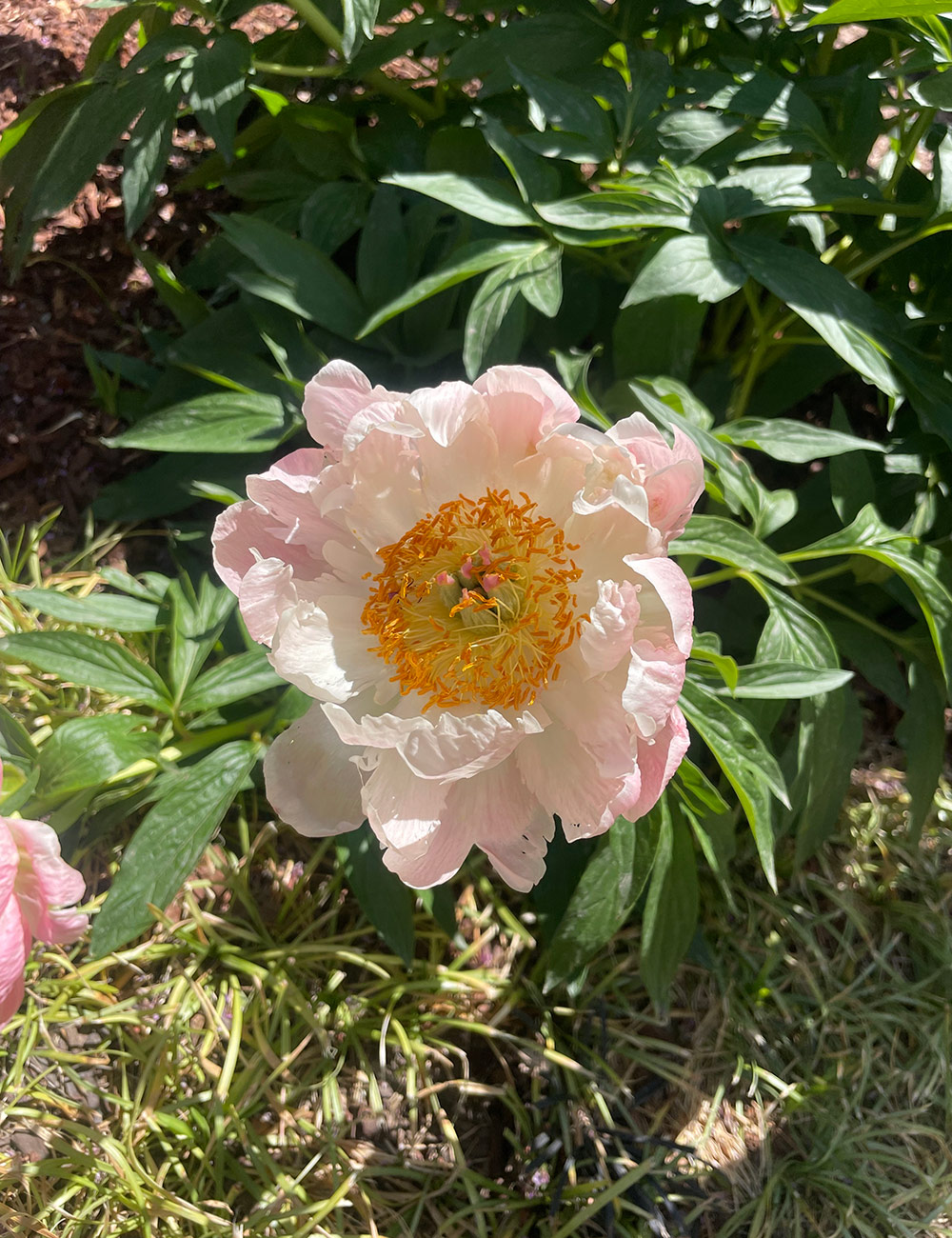
light pink peony flowerPeonies were also beginning to burst with blooms when I made my visit in mid-April. While not yet at their peak, there were several lovely specimens to enjoy.

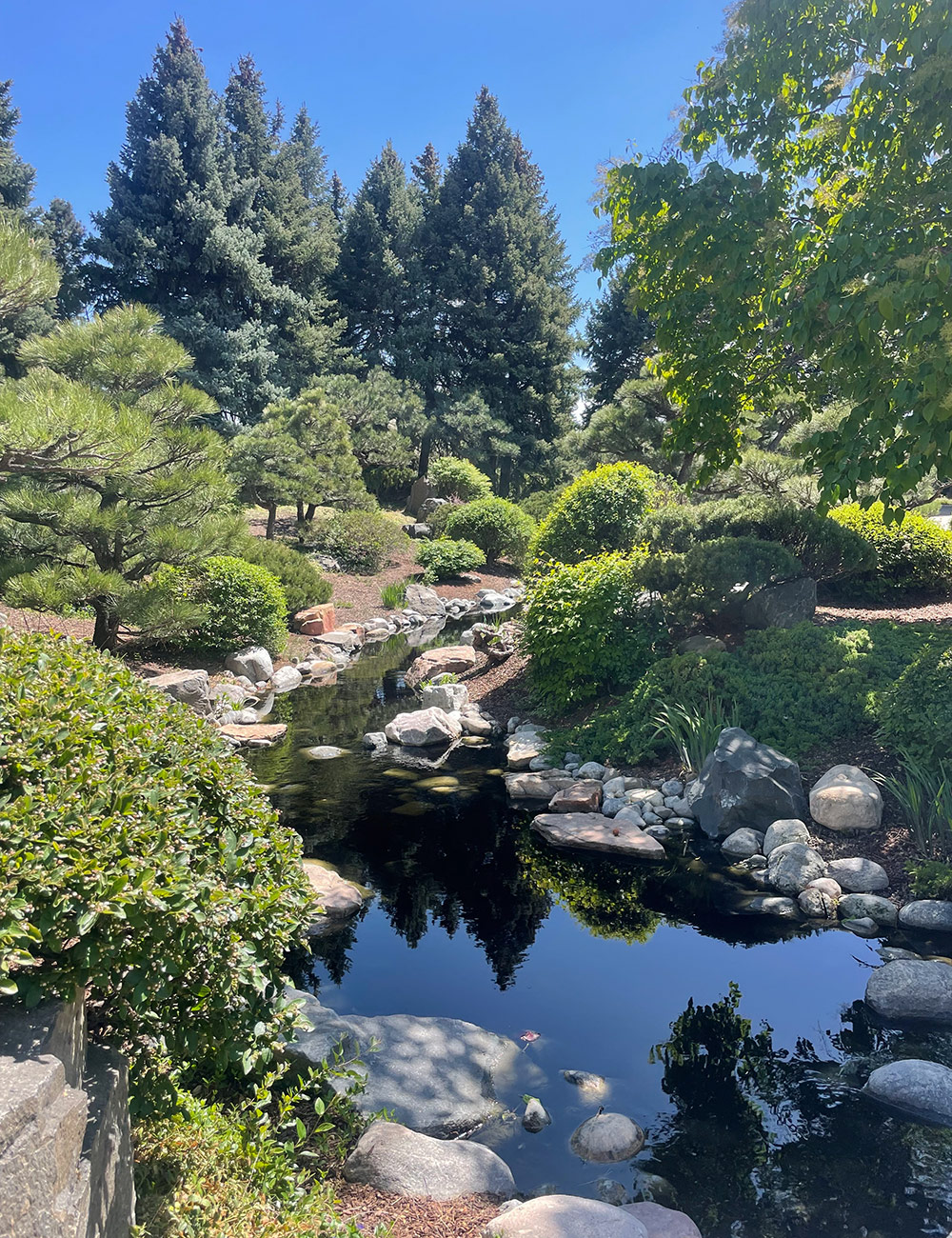
pond in Japanese gardenMany of the peonies were located in and around the Shofu-en Japanese Garden, which also featured some sensational water features. Shofu-en translates to “Garden of Pine and Wind,” so the conifer displays did not stop. I’m always amazed by the way garden designs from other climates and cultures can translate in different landscapes.

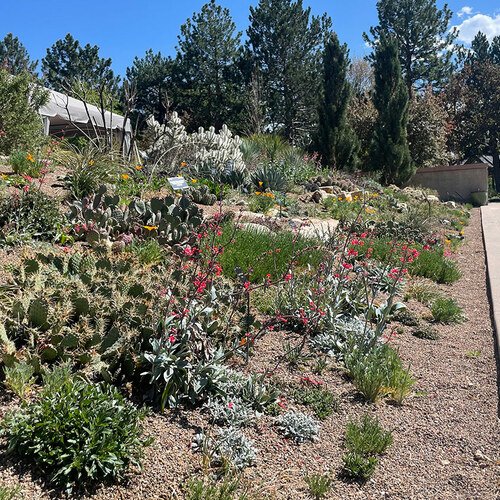
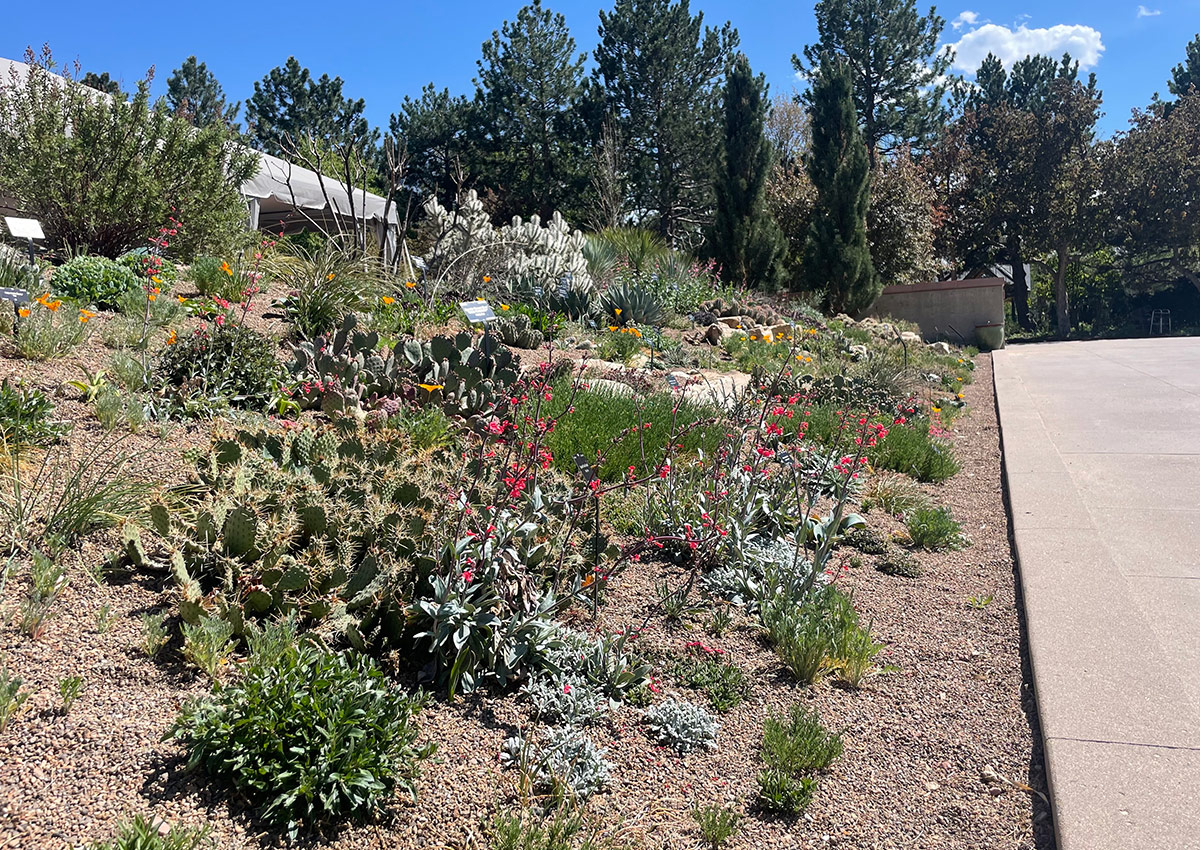
full sun border with cactiMoving on to one of their Gardens of the West, the Nexus Garden is on the smaller side but is full of attention-grabbing plants—especially if you’re a cacti and succulent lover. This sloped bed is full of cold-hardy, high-desert dwellers, including many Walk in Beauty™ prickly pears, which were bred by esteemed local grower and hybridizer Kelly Grummons.

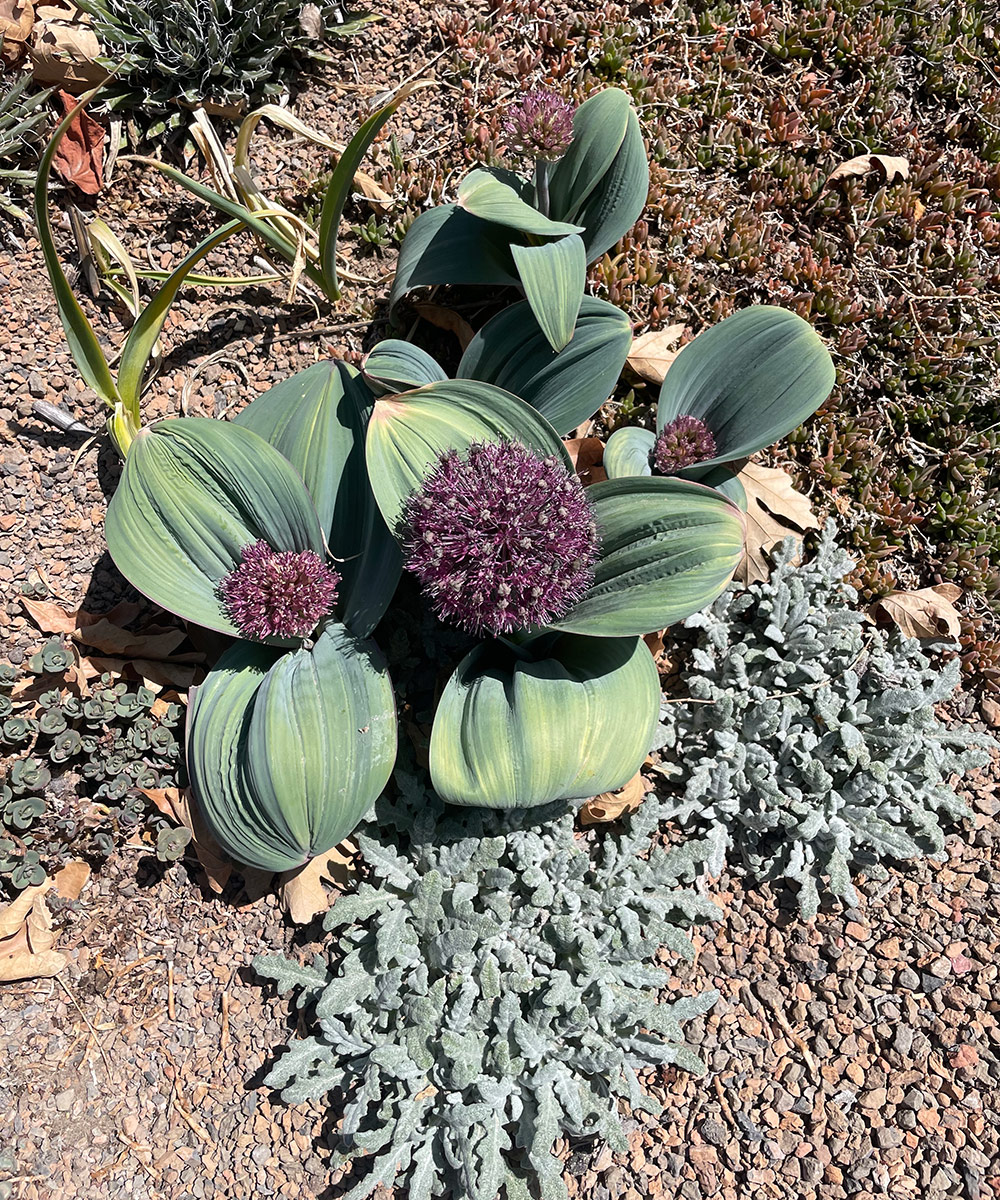
close up of Red Giant alliumA diverse cast of drought-tolerant beauties were on display, including the bushy blooms of ‘Red Giant’ allium (Allium karataviense ‘Red Giant’, Zones 3–8) with some kind of spreading dusty miller that I can’t manage to identify.

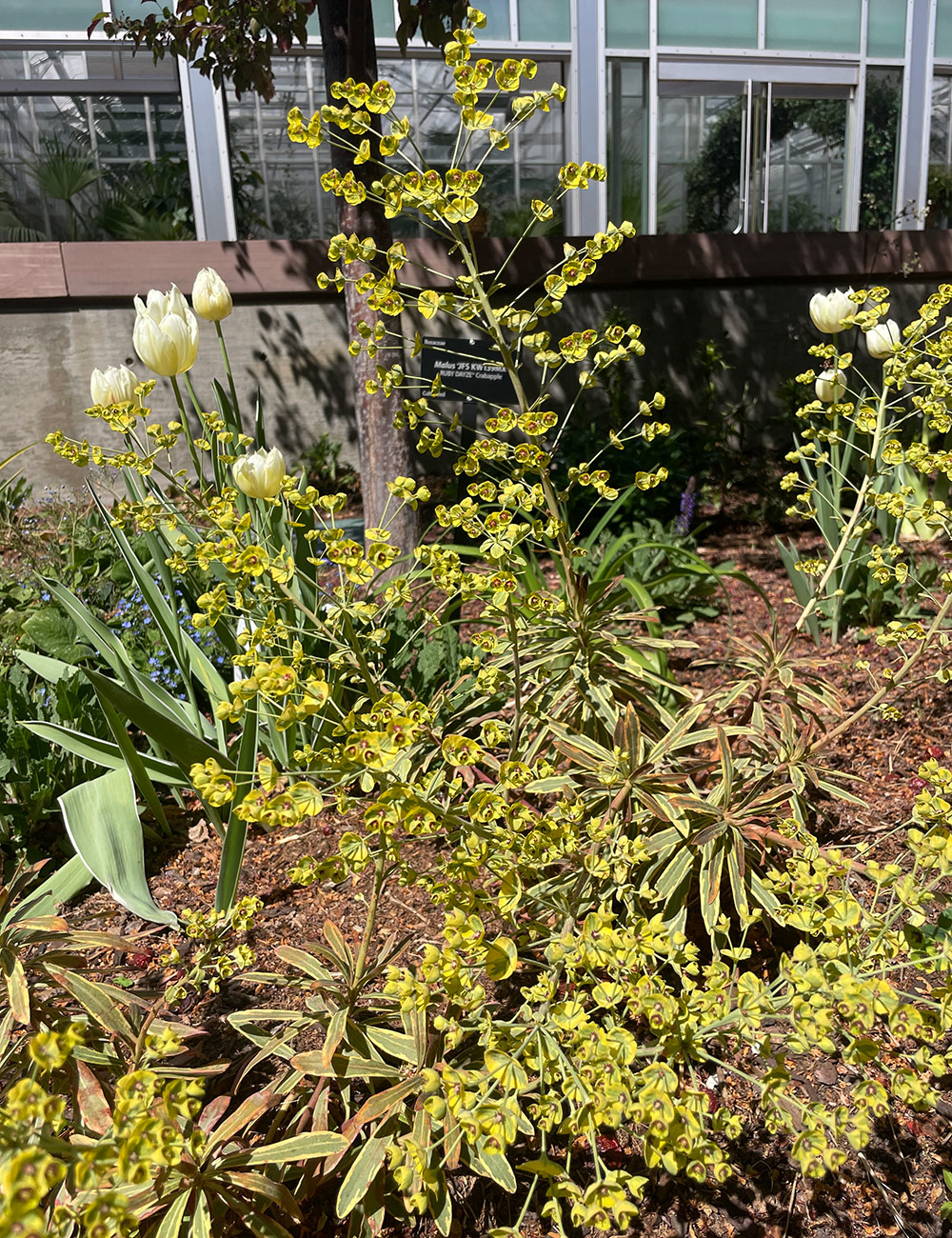
Euphorbia Ascot Rainbow in bloomOne genus of plants that I truly covet is Euphorbia. While I have a couple of euphorbia cacti in my houseplant collection, there are some species that exist just outside (or just within) my growing zone that taunt me with their inability to come back every year. ‘Ascot Rainbow’ spurge (Euphorbia × martinii ‘Ascot Rainbow’, Zones 6–9) is one of those varieties, with radiant foliage and charming little flowers. While it is technically hardy to my zone (6b), there is nowhere in my yard that is protected enough to get it to survive harsh winters and I never got such a spectacular display of blooms.

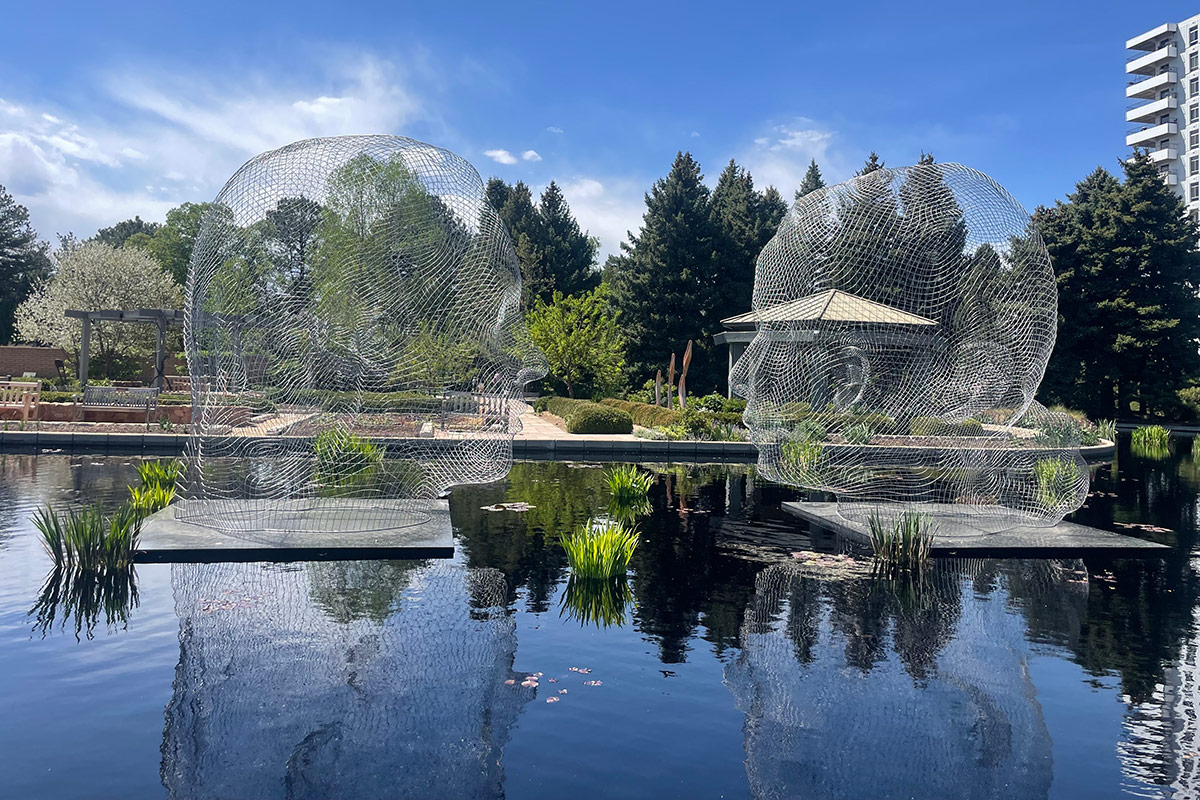
metal sculpture above pond at Denver Botanic GardenThere was some incredible art on display, as is the case in most botanical gardens. The new 2026 sculpture collection was from the Spanish visual artist and sculptor, Jaume Plensa, and it is the first retrospective of the acclaimed artist’s work in the United States. Several of his sculptures can be seen throughout the gardens and within the Freyer – Newman Center galleries. The stars of the collection, undoubtedly, are “Julia” and “Lou,” massive steel wire busts that can be found in the Monet Pool.

I hope you enjoyed this mid-spring tour of Denver Botanic Garden! I took countless photos at this garden haven, so more pictures from this visit are bound to make their way onto the blog in the future.

Have you explored any public gardens this spring? From beautiful bulb displays to fabulous flowering trees and shrubs, we would love to see some of your favorite scenes from your visit. Follow the directions below to submit your photos to Garden Photo of the Day!


We want to see YOUR garden!

Have photos to share? We’d love to see your garden, a particular collection of plants you love, or a wonderful garden you had the chance to visit!

To submit, fill out the Garden Photo of the Day Submission Form.

You can also send 5–10 photos to [email protected] along with some information about the plants in the pictures and where you took the photos. We’d love to hear where you are located, how long you’ve been gardening, successes you are proud of, failures you learned from, hopes for the future, favorite plants, or funny stories from your garden.

Do you receive the GPOD by email yet? Sign up here

Lovely POD Personalized Embroidered Quarter Zip Sweatshirt, Gift for Nurses, Doctors, Healthy Care, Medical Gifts


Price: $19.95
(as of Jun 07, 2026 14:09:13 UTC – Details)


To calculate the overall star rating and percentage breakdown by star, we don’t use a simple average. Instead, our system considers things like how recent a review is and if the reviewer bought the item on Amazon. It also analyzed reviews to verify trustworthiness.Learn more how customers reviews work on Amazon


Top reviews from the United States

  • 3 out of 5 stars

    College on item isn’t example

    Reviewed in the United States on March 9, 2026
    Brief content visible, double tap to read full content.
    Full content visible, double tap to read brief content.
    I didn’t know it was specifically for this college and no way to change it. It was absolutely gorgeous but wrong college for me, I thought picture was example.

    Sending feedback…

    Thank you for your feedback.

    Sending feedback…

    Thanks, we'll investigate in the next few days.


Product Summary: Lovely POD Personalized Embroidered Quarter Zip Sweatshirt, Gift for Nurses, Doctors, Healthy Care, Medical Gifts

From LOVELYPOD
Department ‏ : ‎ womens
Date First Available ‏ : ‎ January 6, 2026
ASIN ‏ : ‎ B0GF6L1JYF
Product Warranty: For warranty information about this product, please click here
Best Sellers Rank: #864,428 in Clothing, Shoes & Jewelry (See Top 100 in Clothing, Shoes & Jewelry) #587 in Women’s Sweatshirts
Customer Reviews: 4.3 4.3 out of 5 stars (3) var dpAcrHasRegisteredArcLinkClickAction; P.when(‘A’, ‘ready’).execute(function(A) { if (dpAcrHasRegisteredArcLinkClickAction !== true) { dpAcrHasRegisteredArcLinkClickAction = true; A.declarative( ‘acrLink-click-metrics’, ‘click’, { “allowLinkDefault”: true }, function (event) { if (window.ue) { ue.count(“acrLinkClickCount”, (ue.count(“acrLinkClickCount”) || 0) + 1); } } ); } }); P.when(‘A’, ‘cf’).execute(function(A) { A.declarative(‘acrStarsLink-click-metrics’, ‘click’, { “allowLinkDefault” : true }, function(event){ if(window.ue) { ue.count(“acrStarsLinkWithPopoverClickCount”, (ue.count(“acrStarsLinkWithPopoverClickCount”) || 0) + 1); } }); });


15 Tropical Herbs and Spices to Grow at Home

This tropical tree can be cultivated outdoors year round in USDA Hardiness Zones 9 to 12.

Curry leaves are used as a seasoning in the cuisines of South and Southeast Asia.

Read our guide for more tips and guidance on growing curry leaf trees!

5. Galangal

Galangal (Alpinia galanga) is a tropical spice that’s frequently used in Thai and Vietnamese food. You might not recognize it on your plate, but it imparts a unique citrusy flavor.

A horizontal image of galangal growing in the garden.
Galangal (Alpinia galanga).

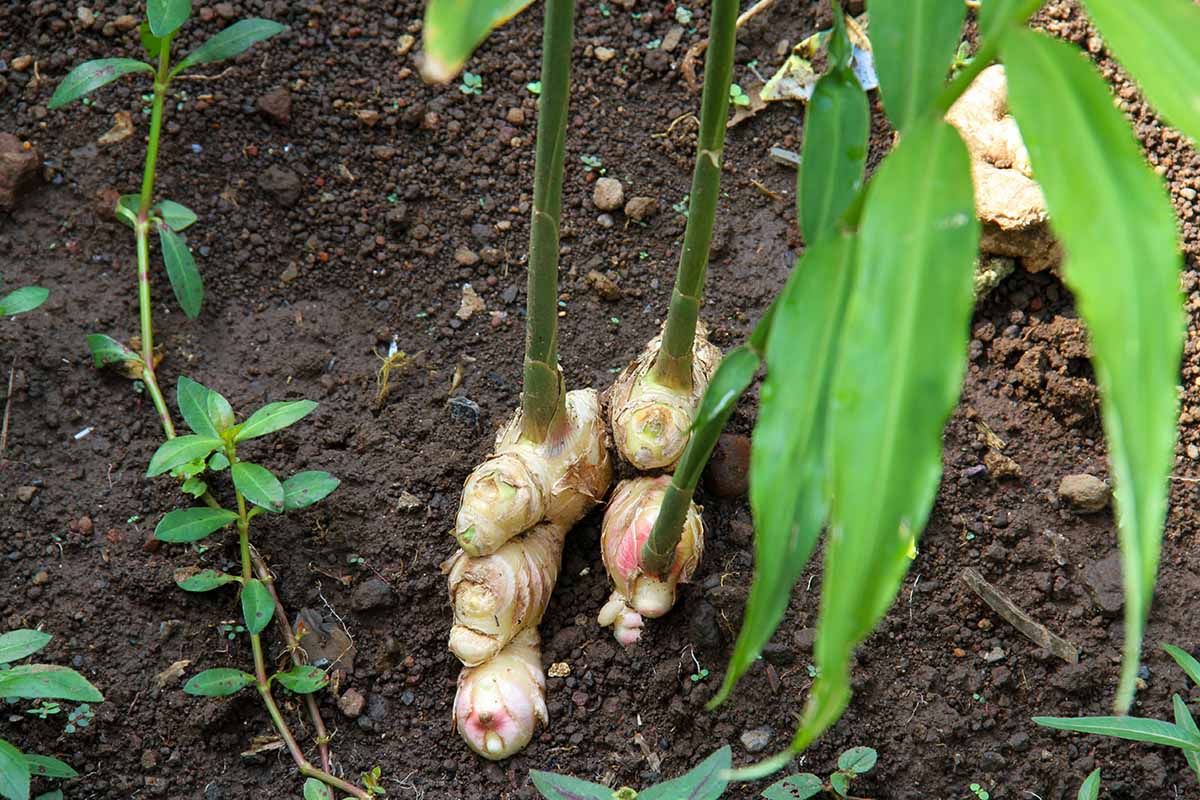
Also known as “Thai ginger,” galangal is one of the fabulous, spice-producing members of the ginger family I mentioned earlier in this article. Galangal is cultivated for its flavorful rhizomes.

Galangal plants bear long leaves that are widely spaced on upright stalks, and can reach over six feet tall.

Hardy in USDA Zones 9 to 12, galangal requires moist soil and thrives in part shade.

When cultivated from rhizomes, count on waiting about three months until harvest for this spice.

This tropical spice is a staple in Cambodian, Malaysian, Thai, and Vietnamese cuisine. Spice your next coconut soup with a slice or two of the rhizome and savor the flavor!

Galangal Rhizomes

Want to be able to harvest your own galangal from your garden to use as a spice?

You’ll find fresh galangal rhizomes from Kejora via Amazon.

You can learn to propagate and grow galangal here.

6. Ghost Pepper

Ready to shift to another meaning of the word “spice” and turn up the heat in your garden?

For some of us, a meal isn’t really satisfying without the inclusion of some capsaicin, and the ghost pepper (Capsicum assamicum) certainly packs it, coming in at over one million Scoville heat units.

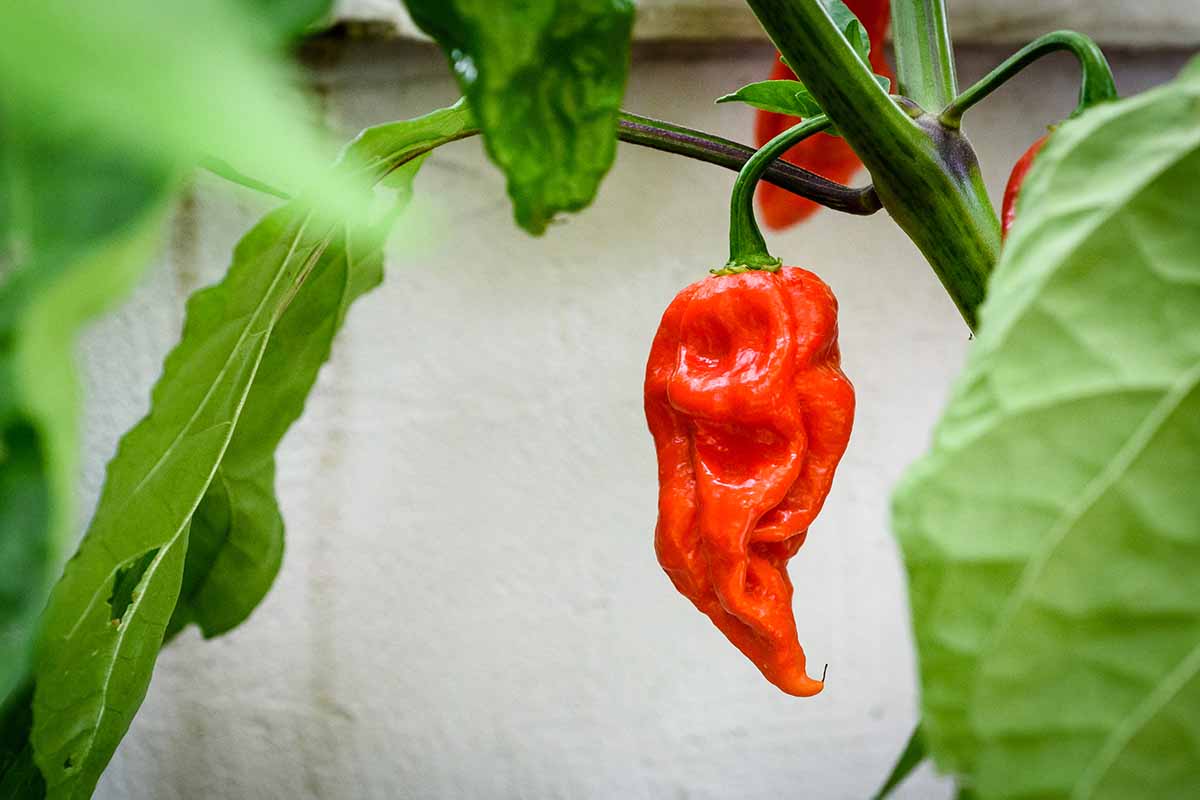
A horizontal image of ghost peppers growing in the garden with a white fence in the background.A horizontal image of ghost peppers growing in the garden with a white fence in the background.
Ghost pepper (Capsicum assamicum).

Also known as “bhut jolokia” or “naga jolokia,” the ghost pepper is a member of the nightshade family, which includes tomatoes, eggplants, and potatoes as well as bell peppers and other hot peppers.

Ghost pepper plants reach up to four feet tall and have lance-shaped leaves, bearing peppers that are tapered and wrinkly, maturing from green to orange to red.

These tropical peppers thrive in hot, humid conditions, require a long growing season, and are considered tender perennials in USDA Hardiness Zones 8 to 11.

In the garden, locate ghost peppers in full sun, plant in well-drained soil, and water when soil is dry one inch deep.

Expect a harvest of this tropical spice 120 to 150 days from transplanting.

If you are a chili head like me, I doubt you’ll need suggestions on how to use this hot pepper. It’s the perfect option to elevate a bowl of beans and rice or spice up some scrambled eggs.

What better way to start the day than with a kick of intense heat?

Whatever your intended use for this hot pepper, be sure to start off with small amounts – it’s a blazing forest fire in a tiny package.

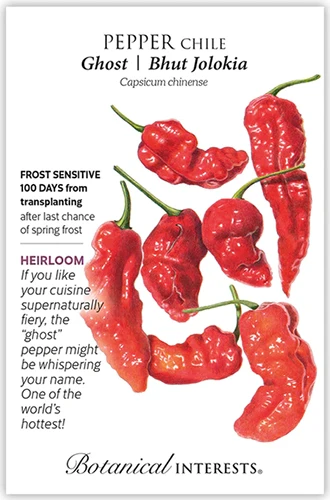
A close up of a packet of ghost pepper seeds with text to the left of the frame and a hand-drawn illustration to the right.A close up of a packet of ghost pepper seeds with text to the left of the frame and a hand-drawn illustration to the right.

Ghost Pepper Bhut Jolokia Seeds

You can purchase packs of 15 ghost pepper seeds from Botanical Interests.

Learn more about growing and harvesting ghost peppers here.

7. Ginger

This next spice option is a great companion plant for galangal and cardamom in the garden.

Zingiber officinale is the tropical plant that lends its name to the delectable and delightful Zingiberaceae, also known as the ginger family.

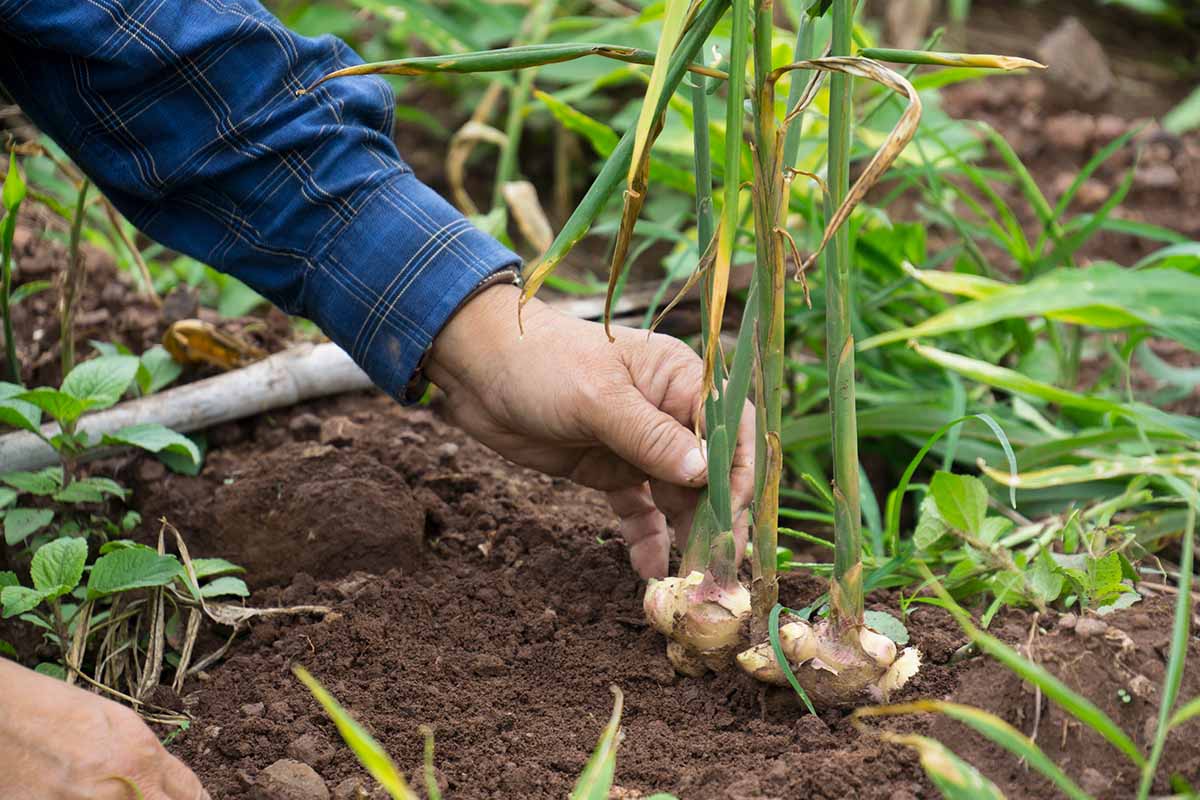
A horizontal image of a gardener harvesting ginger roots in the garden.A horizontal image of a gardener harvesting ginger roots in the garden.
Ginger (Zingiber officinale).

Ginger plants produce a rhizome used to flavor many a stir fry, but also culinary delights as diverse as gingerbread and ginger beer.

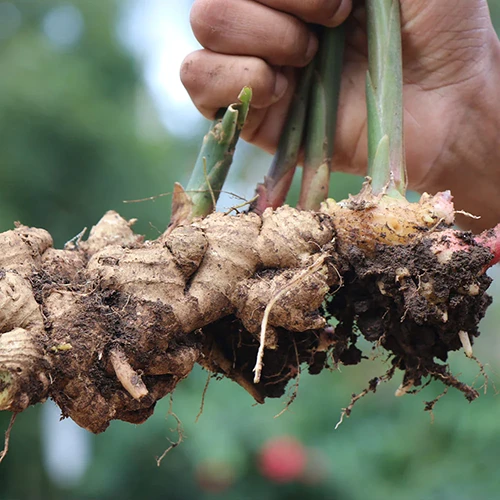
Reaching a little over three feet tall with narrow leaves, the edible rhizome, the source of the ubiquitous ginger spice, is also known commonly as “ginger root.”

This tropical spice can be cultivated in the garden year round in USDA Hardiness Zones 9 to 12, but ginger can also be grown indoors.

To care for ginger, plant in part shade and keep the soil moist. Plan to wait about eight to 10 months from planting rhizomes until your crop is ready to harvest.

Ginger has so many culinary uses that you might not realize just how pervasive this spice is in various cuisines across the world.

Whether it’s picked and used as a garnish for Japanese sushi, a seasoning in Indian dal, or as a spice in Dutch speculaas cookies, this rhizome crop has a widespread and established presence in the culinary world.

Speaking of cookies, if you suddenly have a hankering, check out this recipe for big and soft ginger cookies from our sister site, Foodal.

Use the store bought spice for this batch of cookies if you must, but start cultivating your own homegrown ginger root in the garden to flavor cookies truly made from scratch.

A close up square image of a hand from the top of the frame holding up a freshly harvested ginger root.A close up square image of a hand from the top of the frame holding up a freshly harvested ginger root.

Ginger Plants

You can purchase organically-grown ginger plants in one-quart pots from Fast Growing Trees.

Check out our guide to growing and harvesting ginger in the home garden.

8. Green Peppercorn

Our next tropical herb for the garden offers a new look at a familiar spice.

While once considered a luxury item, black peppercorns are so commonplace these days that we expect to have a grinder sitting on every restaurant table to use free of charge.

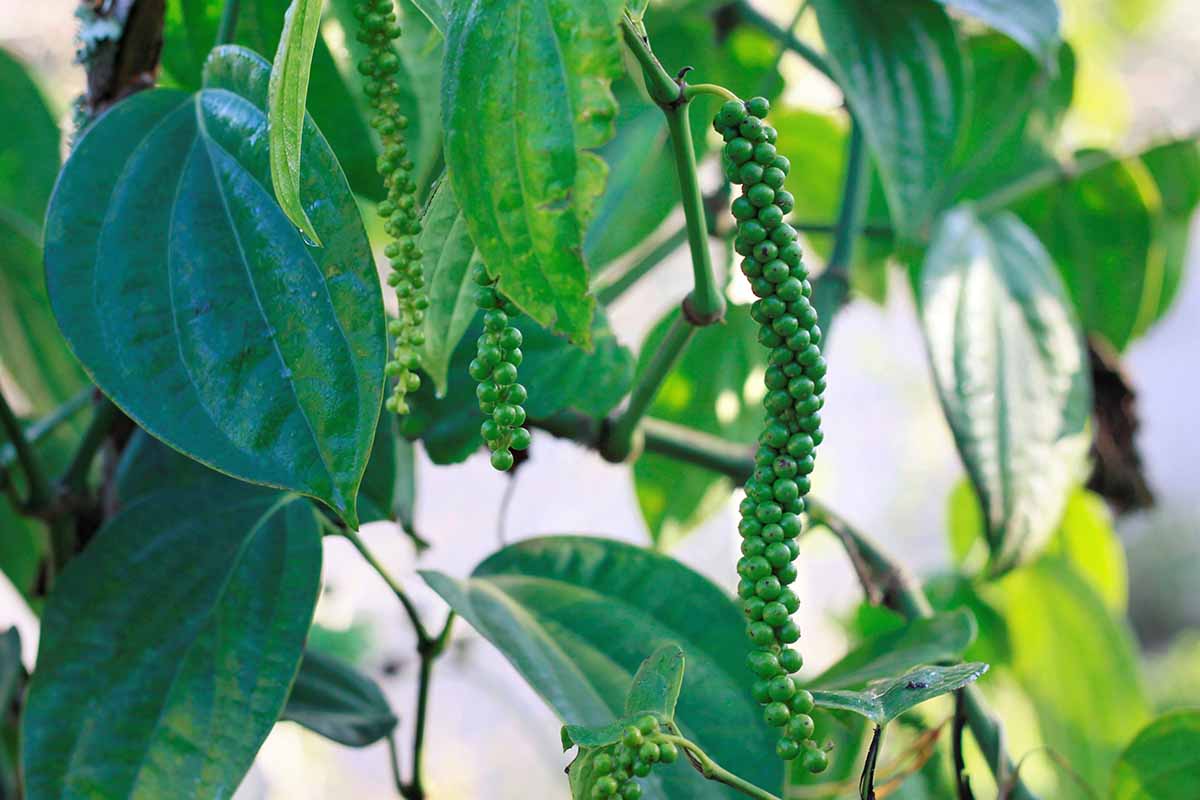
A horizontal image of peppercorns growing in the garden.A horizontal image of peppercorns growing in the garden.
Fresh green peppercorns on P. nigrum plant.

Though the dried peppercorns of Piper nigrum would hardly be considered a luxury ingredient anymore, fresh green peppercorns, on the other hand, offer a mind-blowing taste sensation that’s hard to come by.

Yes, these are the same peppercorns, only fresh rather than dried.

Peppercorns are grown commercially in tropical locales and don’t hold up long in their fresh form, so you won’t be likely to see it in the average North American grocery store.

Grow your own crop of this tropical spice, however, and the problem is solved!

A member of the Piperaceae family related to peperomias, P. nigrum is a vining tropical plant that produces long clusters of drupes – we know these as peppercorns.

Its leaves are heart shaped, the vines can reach 30 feet long, and can be grown outdoors year-round in USDA Hardiness Zones 10 to 11.

Peppercorn plants should be placed in part sun (or full sun in milder climates), in soil that is moist and well-draining.

Be patient – the vines only start bearing fruit after four to five years.

Personally, I lean towards a plant-based diet these days, fresh green peppercorns are scrumptious when included in a creamy pan sauce and poured over chicken or steak.

As an alternative to animal protein, mushrooms also provide a harmonious flavor combination with this spice.

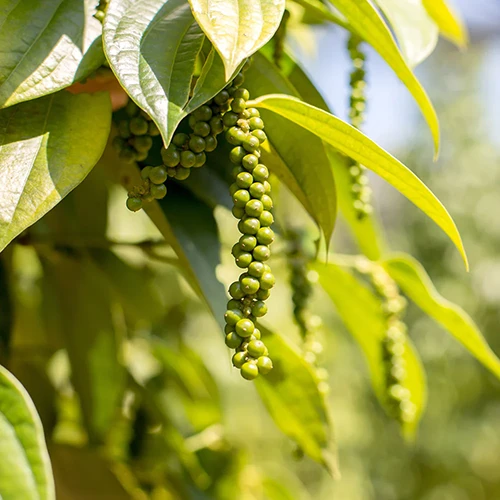
A square image of a peppercorn plant growing in the garden pictured in light sunshine on a soft focus background.A square image of a peppercorn plant growing in the garden pictured in light sunshine on a soft focus background.

Black Peppercorn Plant

To start growing your own supply of green (or black!) peppercorns, you’ll find P. nigrum plants in three-gallon pots from Fast Growing Trees.

9. Lemongrass

For those who love citrus flavors that are gardening in small spaces and need the option of compact plants, this next tropical herb will be of interest.

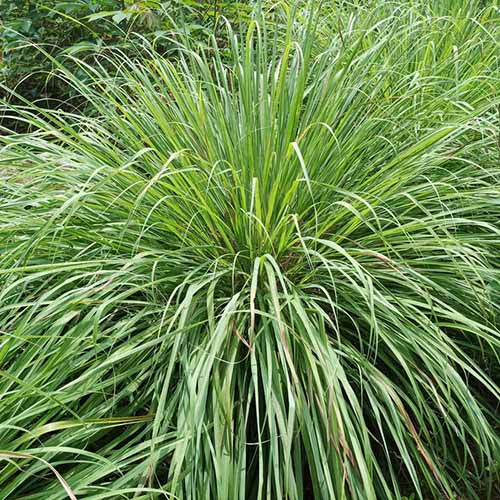
Lemongrass (Cymbopogon citrates) is – as you would expect – a grass, but one that is extremely flavorful.

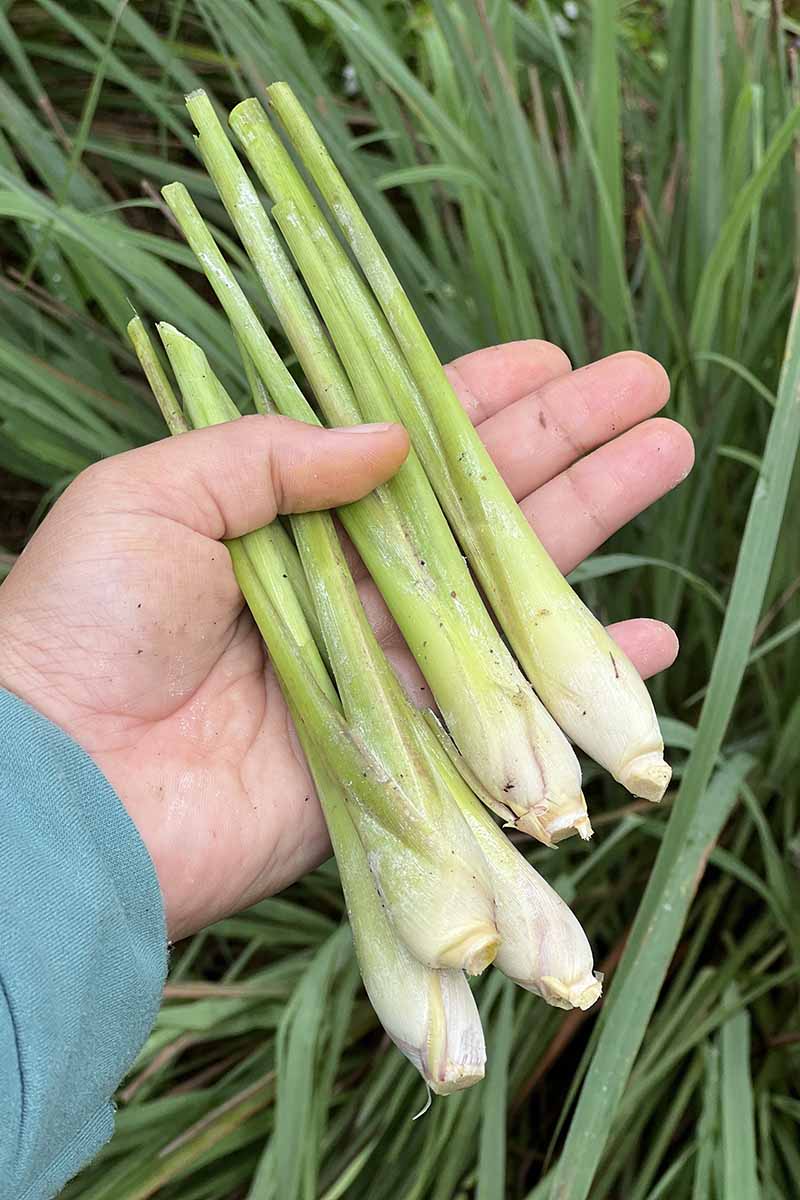
A close up vertical image of an open hand holding up lemongrass stems.A close up vertical image of an open hand holding up lemongrass stems.
Lemongrass (C. citrates).

This member of the grass family or Poaceae is also known as “oil grass” in reference to its aromatic essential oils, the compounds responsible for making this tropical herb so flavorful.

The long, thin blades of lemongrass can reach up to four feet long at full size.

Lemongrass is cultivated in full sun in moist, well-draining soil, and needs water when the top inch of the soil is dry.

This tropical herb can be grown in the garden year round in USDA Hardiness Zones 8b to 11b. Seed-grown specimens will reach maturity in 75 to 100 days.

Lemongrass is used in many cuisines of Southeast Asia. It pairs beautifully with coconuts and peanuts in soups, noodle dishes, and curries.

A close up square image of a lemongrass plant growing in a garden border.A close up square image of a lemongrass plant growing in a garden border.

Lemongrass Seeds

Ready to grow your own? You can find packets of seeds available at Eden Brothers.

Need more tips on growing and harvesting this flavorful tropical grass? Read our complete guide to growing lemongrass.

10. Shiso

Our next selection is a tropical herb with an incomparable flavor.

Shiso (Perilla frutescens) is a subtropical to tropical herb that is easy to grow all year in Zones 10 to 11, or as a summer annual in cooler locations.

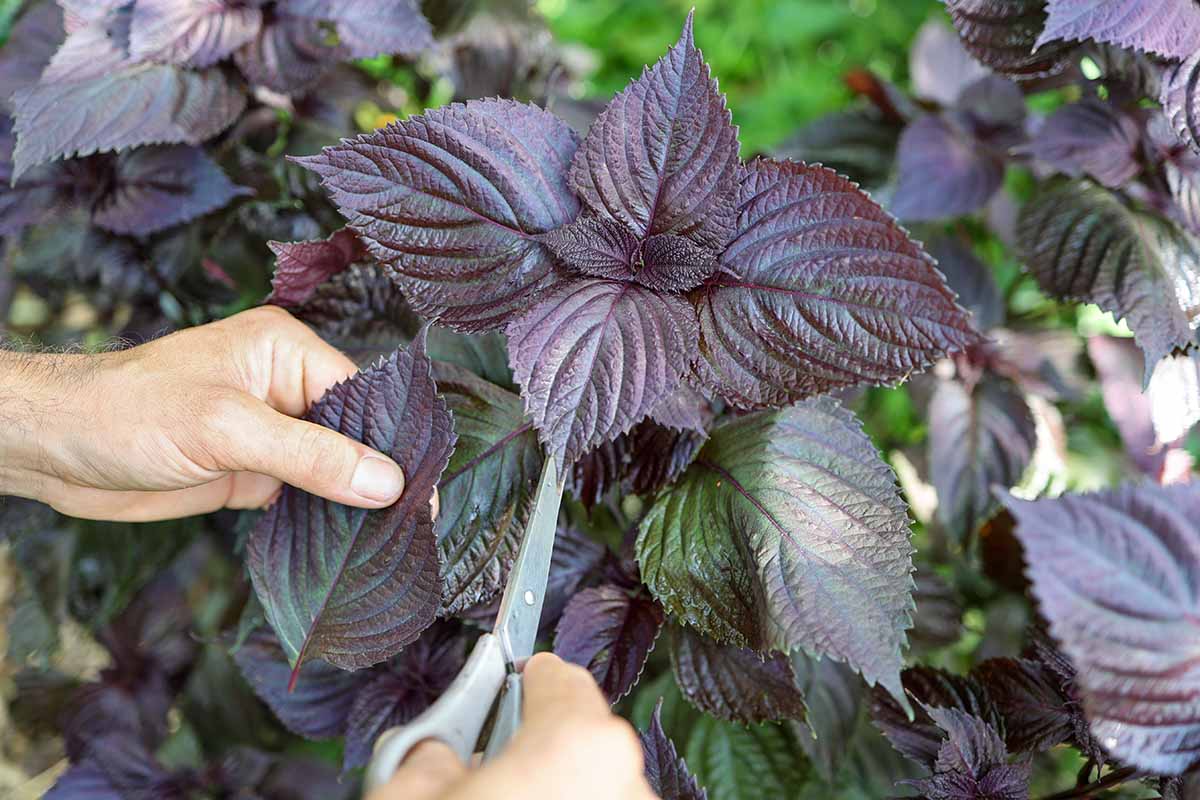
A close up horizontal image of two hands from the bottom of the frame harvesting shisho leaves.A close up horizontal image of two hands from the bottom of the frame harvesting shisho leaves.
Shiso (P. frutescens).

Also known as “perilla,” “beefsteak plant,” or “perilla mint,” shiso is a member of the mint family related to herbal staples such as basil, peppermint, and rosemary.

Shiso reaches up to three feet tall with a one-and-a-half-foot spread. The green or purple leaves of this herb are oval shaped, wrinkled, and have serrated edges.

In the garden, shiso thrives in full sun or part shade and prefers well-drained soil.

The leaves can be picked sparingly as soon as young plants are a few inches tall, and more established plants can be harvested at will.

Shiso is listed as an invasive species in some locations, so be sure to check with your local extension office before growing it.

When it comes to flavor, perilla seems to be the inkblot test of herbs – ask 10 people what it tastes like, and you might get 10 different answers!

Some folks notice citrus or mint flavors, others may detect cinnamon and celery. The flavor I notice the most when partaking in shiso is similar to that of cumin.

While the leaves are fun to use as mini wraps, they can also be mixed into noodle dishes or used in pickle preparations.

In one of my most memorable encounters with this herb I was served a single, delicate fried shiso leaf on top of a sushi roll.

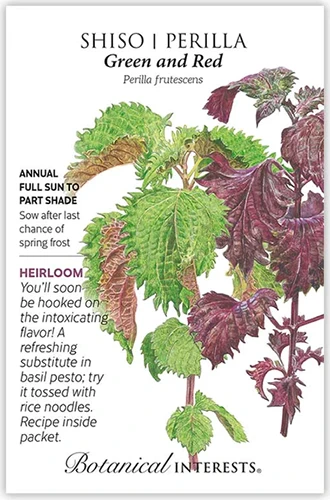
A close up of a packet of shisho seeds with text to the left of the frame and a hand-drawn illustration to the right.A close up of a packet of shisho seeds with text to the left of the frame and a hand-drawn illustration to the right.

Red and Green Shiso Packs of 280 Seeds

Decide for yourself about the flavor of this tasty tropical herb! You’ll find shiso for purchase in packs of 280 seeds at Botanical Interests.

Learn more about growing shiso here.

11. Star Anise

If you are a fan of all things licorice or anise flavored, you may want to consider growing star anise (Illicium verum) in your tropical spice and herb garden.

Also known as “badian,” and not to be confused with aniseed (Pimpinella anisum), star anise is a small evergreen tree with oval, elliptical, or lance-shaped green leaves and striking pink or red flowers.

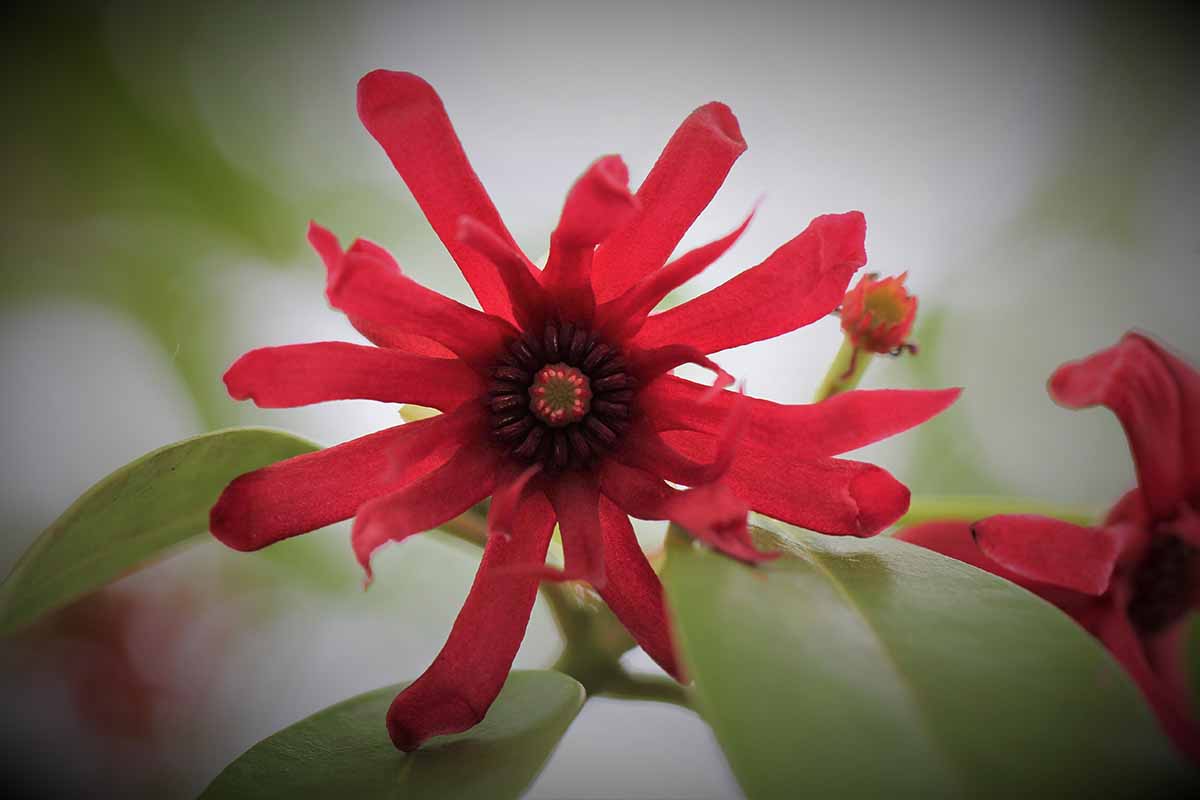
A close up horizontal image of a red star anise flower pictured on a soft focus background.A close up horizontal image of a red star anise flower pictured on a soft focus background.
Star anise (l. verum).

This tropical tree produces star-shaped, seed-filled fruits that are dried and used as spice.

Star anise trees grow to be 10 to 20 feet tall and five to 10 feet wide.

Appreciation Gifts for Dietitian, With Colorful Wellness Decor, ealth Coach Wellness Counselor Nutrition Specialist, Healthcare Professionals Nutrition Experts, Funny Icon Decor Sign VA77


Price: $9.99
(as of Jun 07, 2026 02:05:57 UTC – Details)

Product description

Dietitian Appreciation GiftsDietitian Appreciation Gifts

Gifts with Colorful Wellness DesignGifts with Colorful Wellness Design

Balanced Eating and Gut Health Message SignBalanced Eating and Gut Health Message Sign

for Healthcare Professionals Nutrition Experts Office Decor Sign Plaquefor Healthcare Professionals Nutrition Experts Office Decor Sign Plaque

Spotlights meaningful dietetic topics: mindful eating, nutrient balance, food science education, and body image positivity.
Recognizes the dedication of dietitians in schools, hospitals, clinics, and corporate wellness teams.
Great for National Nutrition Month, Dietitian Appreciation Day, or patient care team recognition.
Features a professional acrylic panel and wood base combo, compactly designed at 4.9 x 4.2 x 0.4 inches.
Boosts motivation and wellness in office settings while celebrating those who support healthy lifestyles.


24 Recipes With Blueberries


24 Recipes With Blueberries


Privacy & Cookies Policy