72.5 F
Klamath Falls
Wednesday, July 29, 2026
Home Blog Page 51

The Best New Plants for 2026

0

Best New Plants to Look for in 2026!

We all love the thrill of discovery when we find a new plant that improves upon a favorite one. This year, many of our featured introductions take the best qualities of much-loved classics and upgrade them with new colors, improved disease resistance, and plenty of other fun and functional features.

Here you’ll find the best new plants for 2026 including problem-solving perennials, shrubs that endure tough growing conditions with style, and some tender plants and veggies that will truly earn their keep. For us, the only difficult part is figuring out what plant we’d like to try first. Which ones will stand out for you?


Best New Plants for 2026: Perennials


Editor’s Top Pick: Count on this statuesque beauty for spring pollinator appeal

Photo courtesy of Plant Delights Nursery

‘Lavender Towers’ baptisia

(Baptisia ‘Lavender Towers’)

‘Lavender Towers’ is the result of a 2010 hybridization project by Plant Delights Nursery and Juniper Level Botanic Garden involving Baptisia alba, B. australis, B. albescens, and B. tinctoria. Very cold hardy and drought tolerant once established, it is quick to emerge early in the season, sending up enormous spires of glowing pastel blooms that open in mid-spring (around April 15 at JLBG). For the rest of the season, the attractive, shrub-like greenery will hold its own as a supporting actor on the summer and fall stage. Tony Avent gives this exceptional nativar two thumbs up.

A petite and pretty shrub that can handle both heat and cold
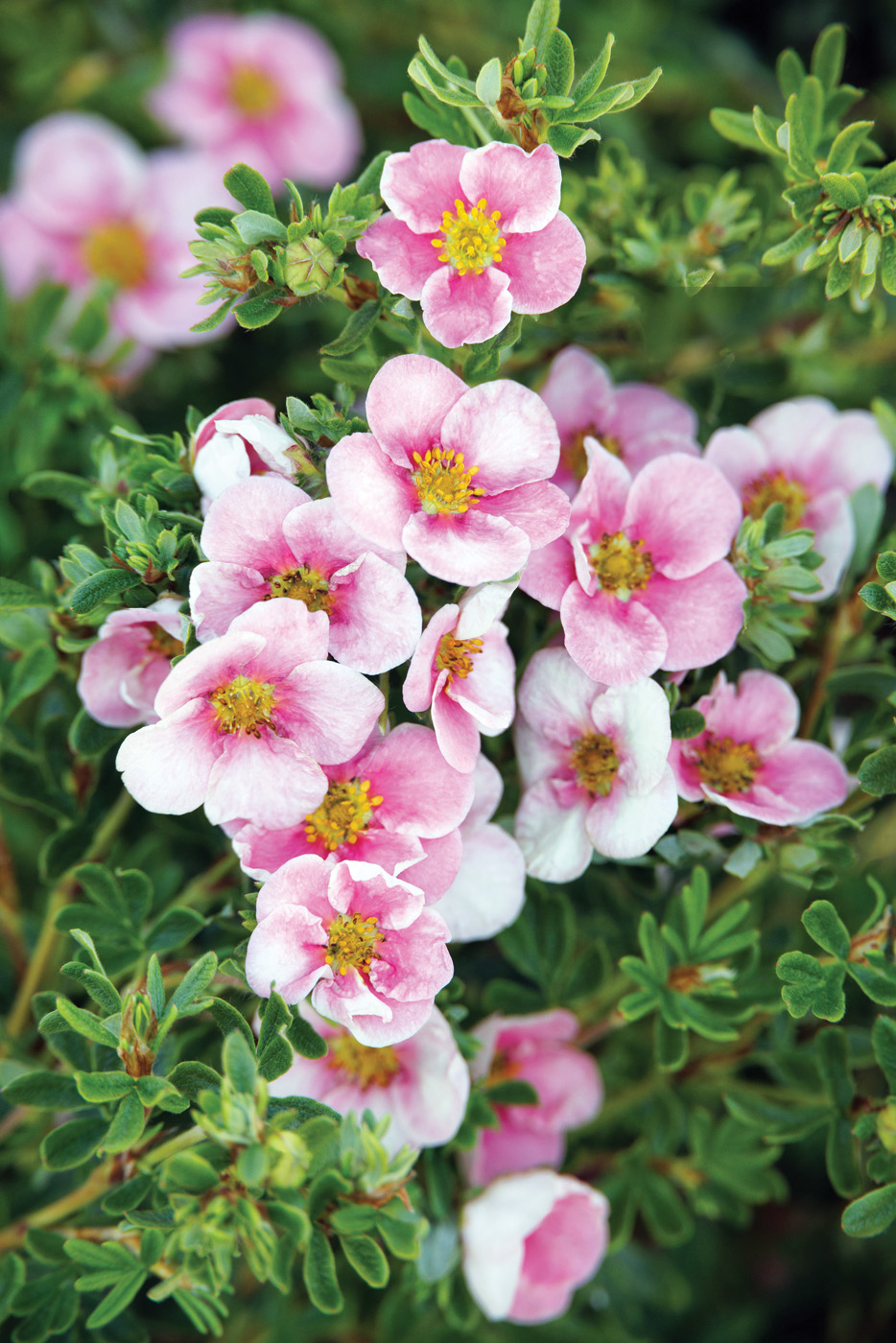
Monrovia Pink N' Pretty Potentilla photo by Monrovia.com by Doreen Wynja
Photo: Doreen Wynja/courtesy of Monrovia.com

Pink N’ Pretty® shrubby potentilla

(Potentilla fruticosa ‘Pink with White’)

  • Zones: 3–8
  • Size: 2 feet tall and wide
  • Conditions: Full sun; average to dry, well-drained soil
  • Native range: Canada, northern Asia, northern Europe, and northern United States
  • Introduced by: Monrovia®

This potentilla selection is all about the flowers, which open over a long period from spring through summer. Bright pink blooms develop white edges as they age, giving them a two-toned ombré effect. Cold hardy and heat loving, Pink N’ Pretty® is adaptable to a variety of soil types. With attractive compound foliage and a compact habit, it makes an easy-care addition suitable for nearly any garden space.

Give this cutie shade and moisture and it will happily join the jamboree
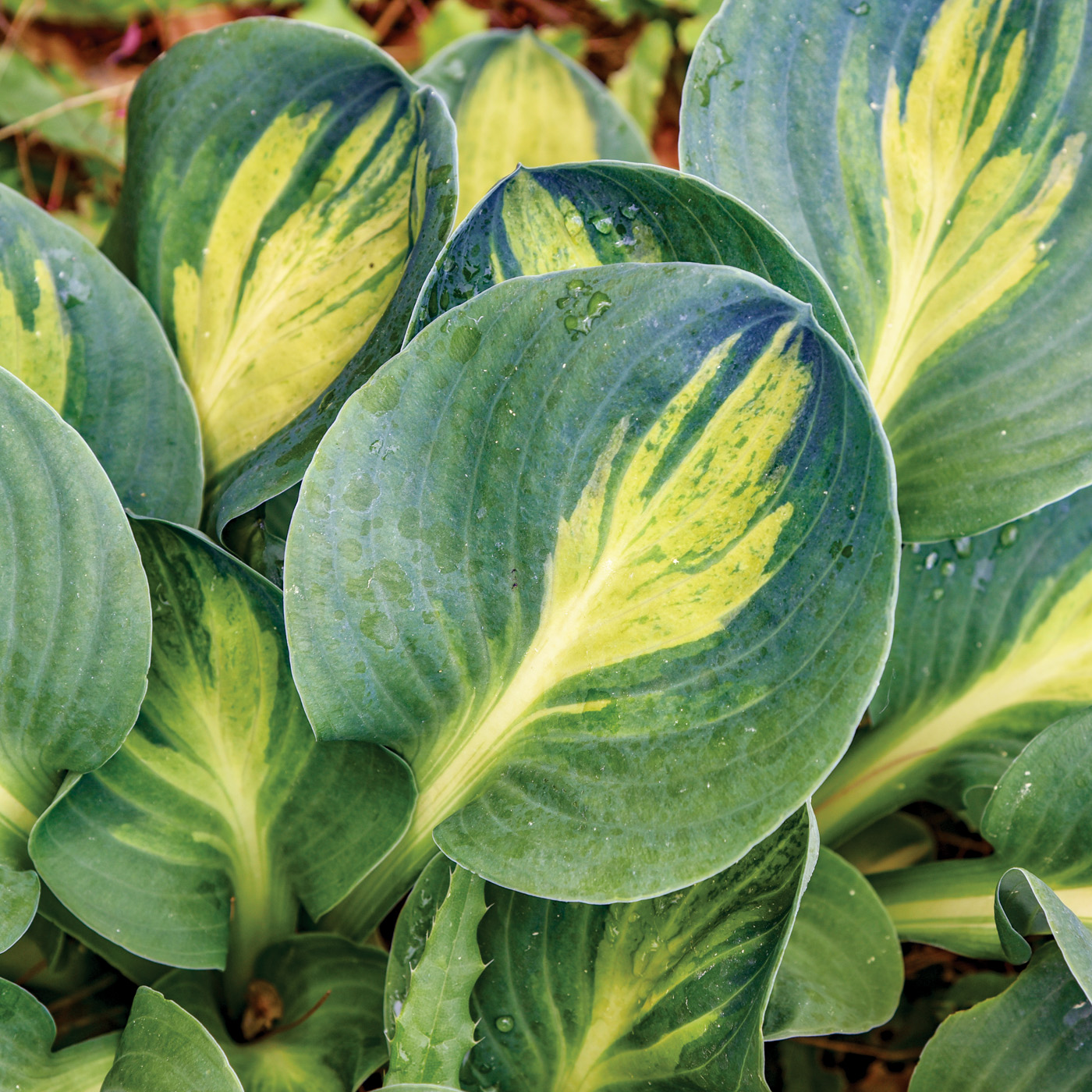
Hosta 'Mouseketeer' photo courtesy of Walters Gardens Inc
Photo courtesy of Walters Gardens, Inc. and Proven Winners

‘Mouseketeer’ hosta

(Hosta ‘Mouseketeer’)

  • Zones: 3–9
  • Size: 8 to 10 inches tall and 16 to 18 inches wide
  • Conditions: Partial to full shade; average to consistently moist soil
  • Native range: Hybrid of Asian species
  • Introduced by: Walters Gardens

‘Blue Mouse Ears’ hosta became an instant classic when it was introduced in the early 2000s, beloved for its miniature size, cool blue color, and sturdy, slug-resistant foliage. ‘Mouseketeer’ shares many of these winning attributes, adding a splash of painterly variegation and a slightly chunkier habit to the mix. Be sure to site this little gem in a spot where you won’t miss the beautiful spectacle of its fresh foliage unfurling in spring. Purple flowers on 8- to 10-inch scapes arrive in early summer, a thrill for hummingbirds fortunate enough to find them.

Read More: Top 10 Tiny Hostas

A late-summer icon has added disease resistance to its resume
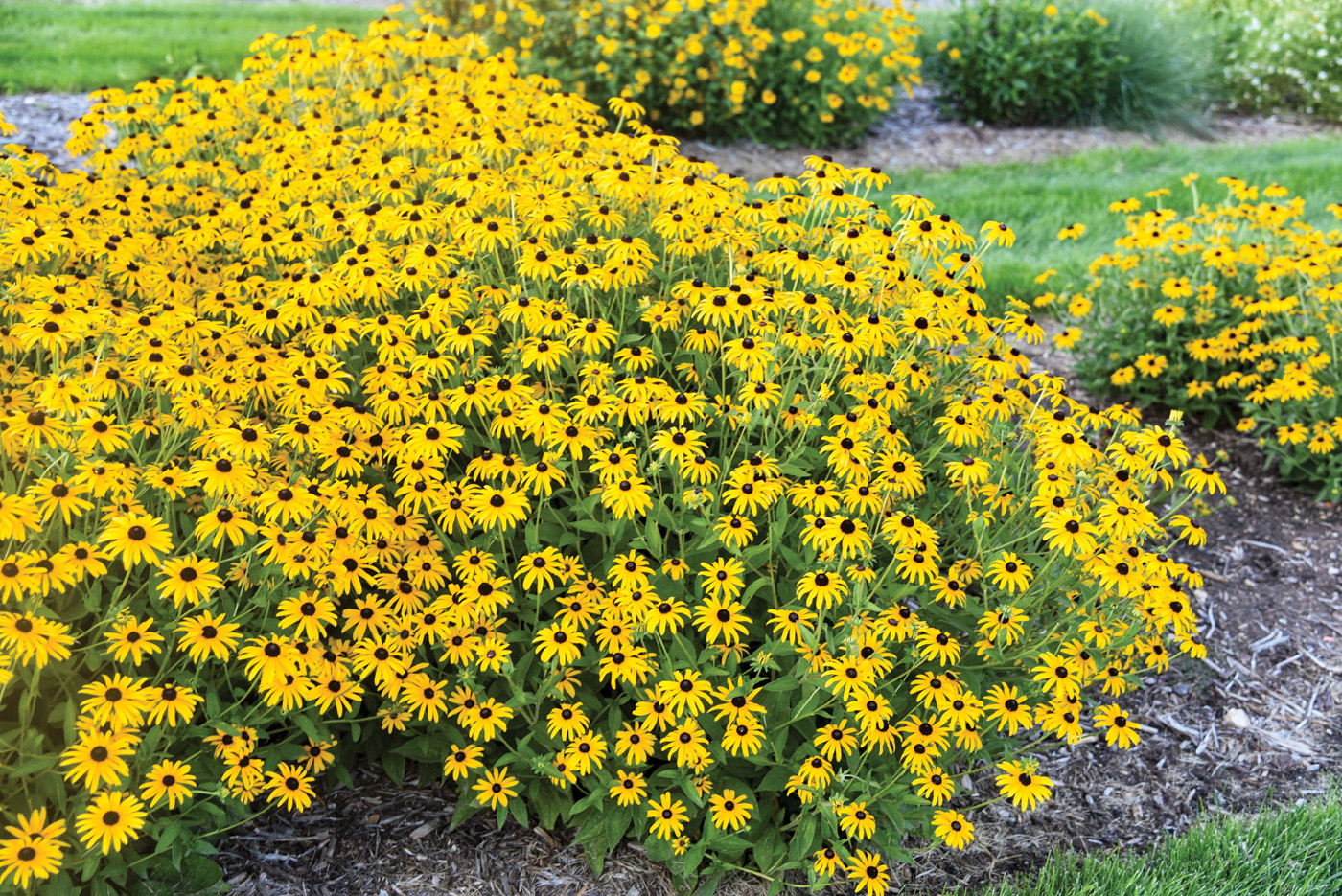
Rudbeckia Treasure Trove Courtesy Proven Winners Perennials
Photo courtesy of Walters Gardens, Inc. and Proven Winners

‘Treasure Trove’ black-eyed Susan

(Rudbeckia ‘Treasure Trove’)

  • Zones: 4–9
  • Size: 32 to 38 inches tall and 36 to 42 inches wide
  • Conditions: Full sun to partial shade; average to dry, well-drained soil
  • Native range: Hybrid of North American species
  • Introduced by: Walters Gardens and Proven Winners®

‘Treasure Trove’ starts the season by developing a robust, well-branched mound of healthy foliage that will then be completely covered with golden, star-shaped blooms from late summer through autumn. The plants are deer and rabbit resistant, and highly invulnerable to Septoria leaf spot, making them reliable standouts late into fall. Bees, butterflies, and hummingbirds will be attracted to an over-the-top pollinator buffet that lasts for several weeks. For the best floral performance, site it in full sun with loose, fertile soil that is on the dry side.

Choose a sun-loving Southwest native to add sizzle in containers and hot, dry spots
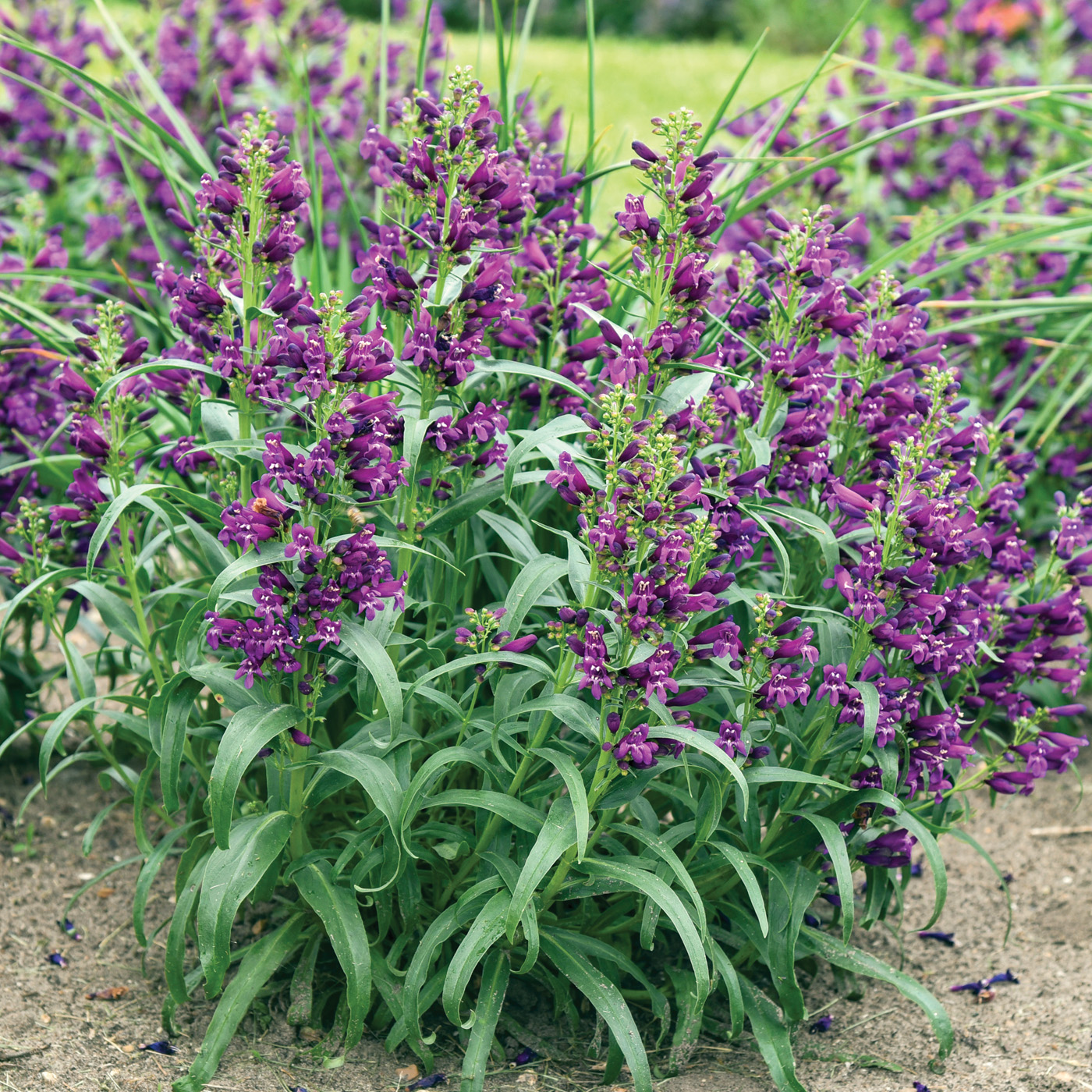
Penstemon barbatus Dark Amethyst courtesy of Walters Gardens
Photo courtesy of Walters Gardens, Inc. and Proven Winners

‘Dark Amethyst’ beardlip penstemon

(Penstemon barbatus ‘Dark Amethyst’)

  • Zones: 4–8
  • Size: 18 to 22 inches tall and 20 to 26 inches wide
  • Conditions: Full sun; average to dry, well-drained soil
  • Native range: Northern Mexico and southwestern United States
  • Introduced by: Walters Gardens and Proven Winners®

‘Dark Amethyst’ beardlip penstemon is a colorful new selection from a native species known for stellar performance through summer’s most searing weather. It will withstand the heat and arid conditions of the desert Southwest and the intense humidity of the Southeast, and it is also quite cold hardy. Try it in containers, where it will require much less water than your typical annuals, or in a parking strip where it will bask in the reflected heat from the pavement.

Try this snazzy nativar for elegant texture in shade
carex shade fanfare
Photo courtesy of Walters Gardens, Inc. and Proven Winners

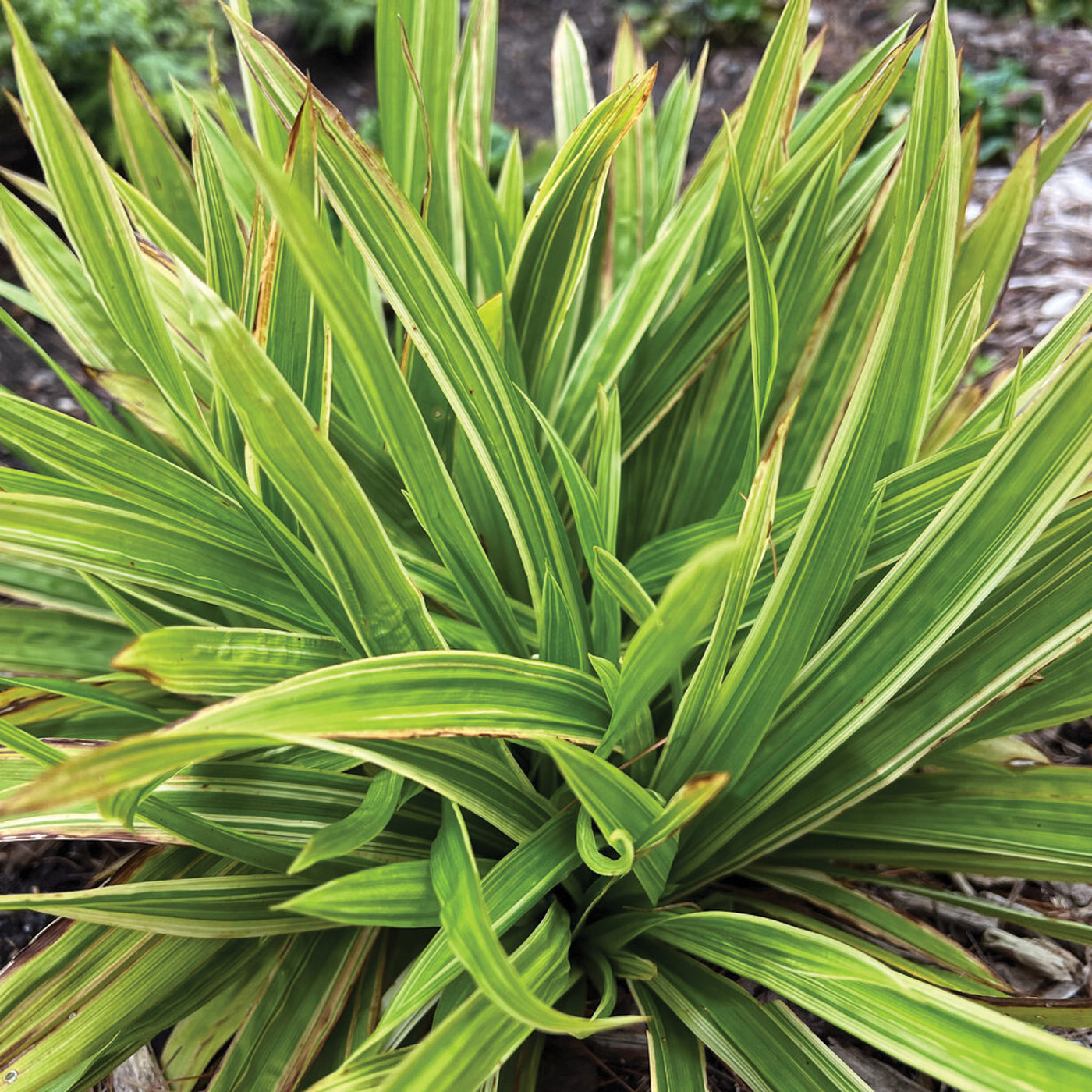
‘Shade Fanfare’ seersucker sedge

(Carex plantaginea ‘Shade Fanfare’)

  • Zones: 3–8
  • Size: 8 to 12 inches tall and 12 to 24 inches wide
  • Conditions: Full to partial shade; moist, humus-rich soil
  • Native range: Eastern North America
  • Introduced by: Walters Gardens and Proven Winners®

Broad, puckered green leaves edged in creamy white deliver crisp texture and semi-evergreen interest all season long. Consider the possibilities of using this sedge as a deer-resistant hosta substitute, or as a stylish ground cover in that dark spot between the house and garage where nothing else will grow. It is also perfect for edging pathways in woodland settings or as a low-maintenance filler in partially shaded borders and rock gardens. Unlike some other native sedge species, it will not tolerate foot traffic, and it can’t take full sun, even with plenty of soil moisture. But with no serious insect, disease, or pest problems, it is otherwise a practically carefree choice for shady situations.

Chocolate-red foliage makes an adaptable North American native selection even more appealing
Geranium Huggy Bear photo courtesy of Intrinsic Perennials
Photo courtesy of Intrinsic Perennials

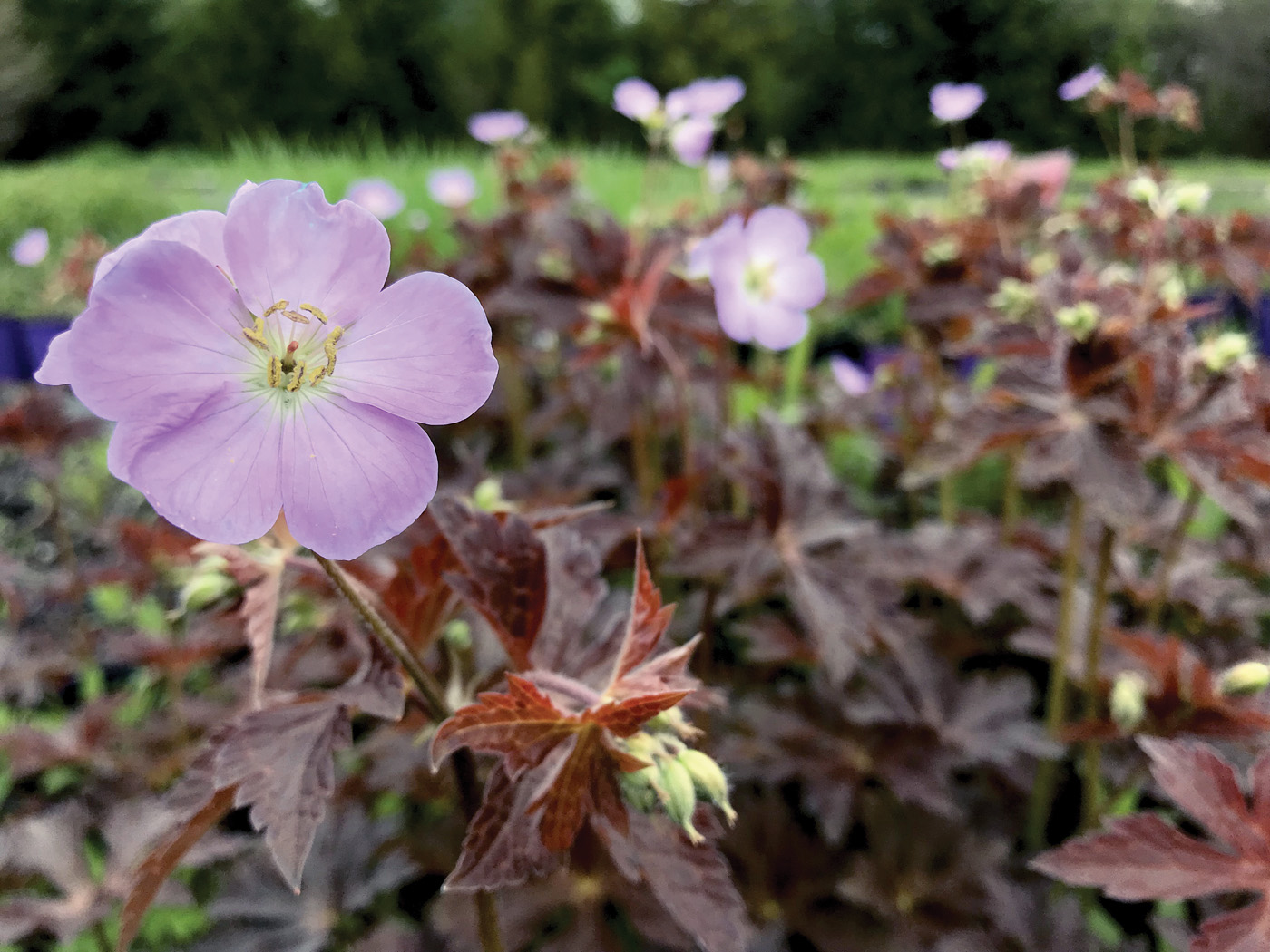
‘Huggy Bear’ spotted geranium

(Geranium maculatum ‘Huggy Bear’)

  • Zones: 5–8
  • Size: 18 to 24 inches tall and 6 to 12 inches wide
  • Conditions: Full sun to partial shade; moist, well-drained soil
  • Native range: Eastern North America
  • Introduced by: Intrinsic Perennial Gardens

When this charmer blooms from late spring to early summer, the soft pink petals of its dainty flowers stand out strikingly against the warm reddish leaves. The rest of the season, plants provide a pop of consistent foliage color that can stand up to full sun, as long as there is sufficient moisture. Ensuring that it has rich, fertile soil will enhance its performance, and it may need some afternoon shade in hotter summer climates. ‘Huggy Bear’ is an earlier introduction that has just recently built up a good supply, so it will be more widely available this season.

Cool blue color and treelike architecture set this perennial apart
Yucca rostrata 'Blue-haired Lady' photo courtesy Plant Delights
Photo courtesy of Plant Delights Nursery

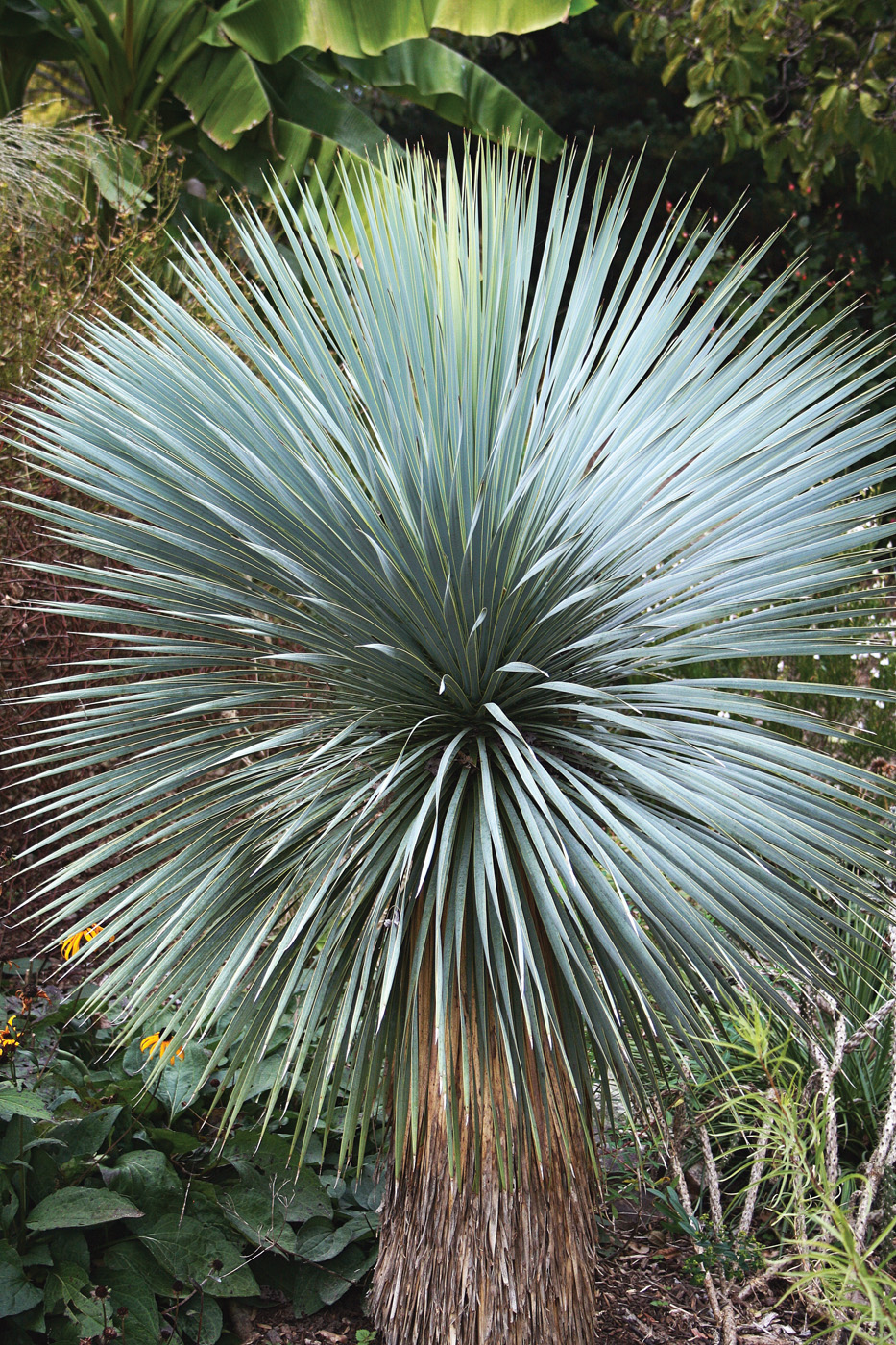
‘Blue-haired Lady’ beaked yucca

(Yucca rostrata ‘Blue-haired Lady’)

  • Zones: 3–8
  • Size: 4 to 11 feet tall and 4 to 8 feet wide
  • Conditions: Full sun; average to dry, rocky, well-drained soil
  • Native range: Northern Mexico and Texas
  • Introduced by: Plant Delights Nursery

‘Blue-haired Lady’ is a clonal selection with genetics from the beaked yuccas that grow near Mamulique Pass in Nuevo Leon, Mexico. This long-lived, slow-growing plant will start to produce spires of creamy, bell-shaped flowers in spring to early summer after it matures to a height of about 4 feet tall. As the trunk-like main stem continues to grow, it will become clad in layers of dried foliage that can be retained for its interesting texture or removed without affecting hardiness.

Ember-colored blooms glow against deep purple leaves
Dark Fire Montbretia photo Monrovia.com by Doreen Wynja
Photo: Doreen Wynja/courtesy of Monrovia.com

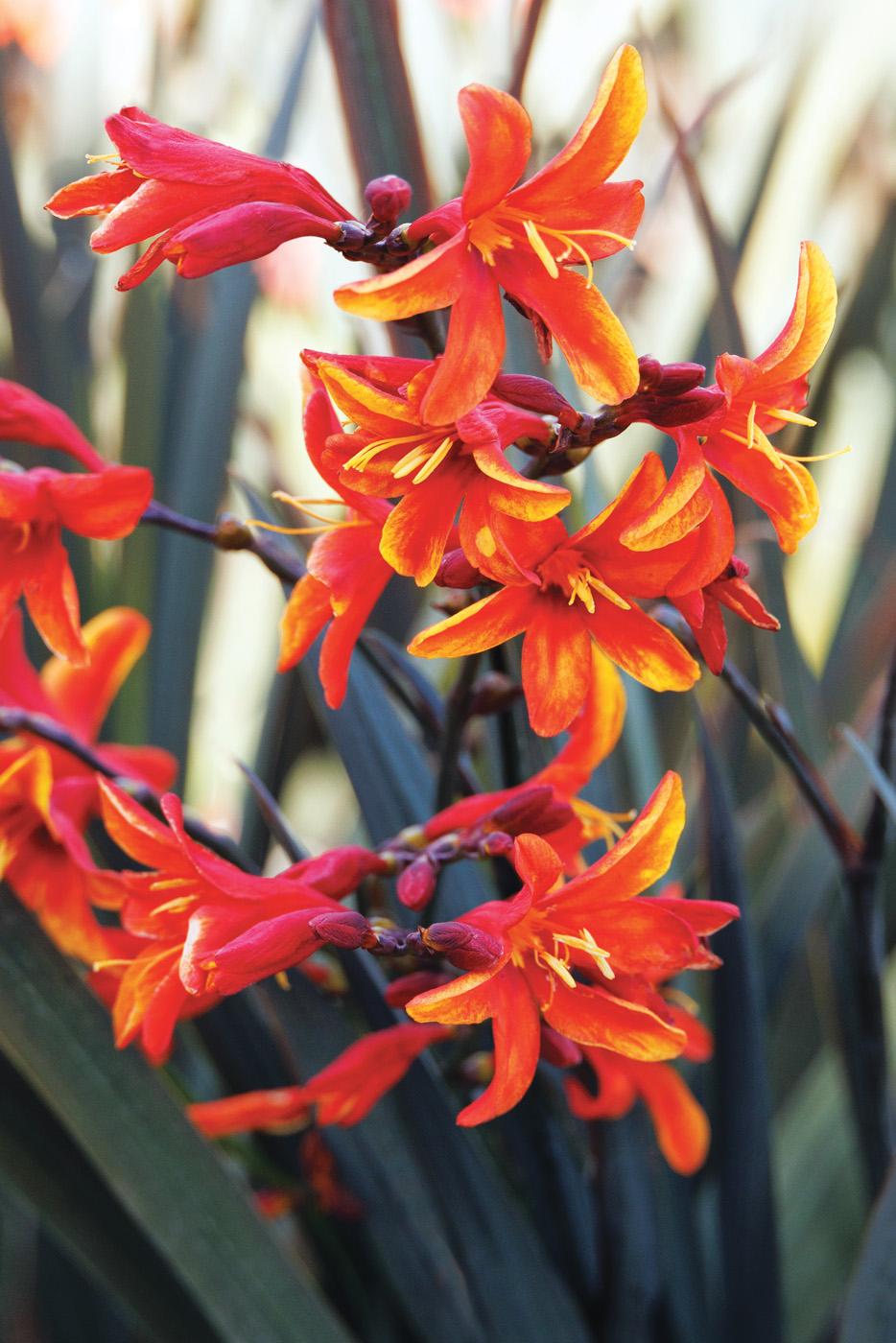
‘Dark Fire’ crocosmia

(Crocosmia ‘Dark Fire’)

  • Zones: 6–9
  • Size: 20 inches tall and 12 inches wide
  • Conditions: Full sun to partial shade; rich, moist, well-drained soil
  • Native range: South Africa
  • Introduced by: Monrovia®

Flame red flowers accented with streaks of warm yellow become even more eye-catching with a built-in backdrop of moody purple foliage. Of course, the hummingbirds will adore this plant as much as the gardeners do, as will the bees and butterflies. A good layer of organic mulch and even watering in the first year will help it to become well established and relatively drought tolerant.

Back to Top ↑


Best New Plants for 2026: Shrubs & Trees


Editor’s Top Pick: An effortless, classic form that doesn’t require much pruning puts this holly over the top
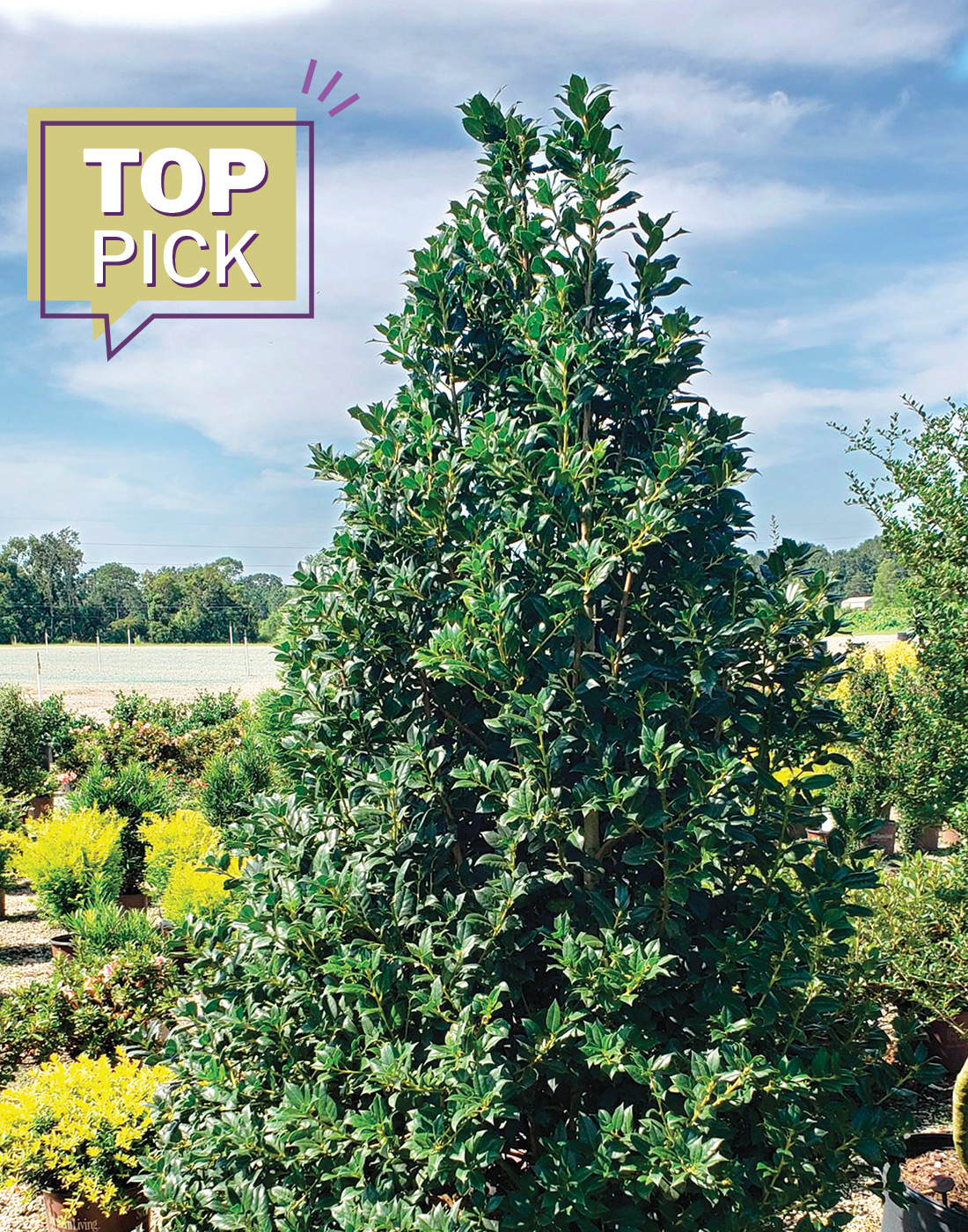
Holly Nelliet Photo courtesy of Southern living and Sunset Plant Collections
Photo courtesy of Southern Living Plant Collection

Nelliet holly

(Ilex ‘ROX’)

This hybrid holly was selected as one of the best new plants for 2026 for superior branching and denser foliage, which means it should look good with less maintenance than classic holly cultivars. It develops a loosely symmetrical pyramid form draped in shiny, dark evergreen foliage that’s perfect for complementing brightly colored garden companions. It flowers in winter and looks especially stunning when studded with the shiny, ripe red berries that follow. With its compact, upright habit, Nelliet is a great choice for entryway screening or for privacy hedging along property lines.

This reblooming hydrangea keeps the show going all summer long
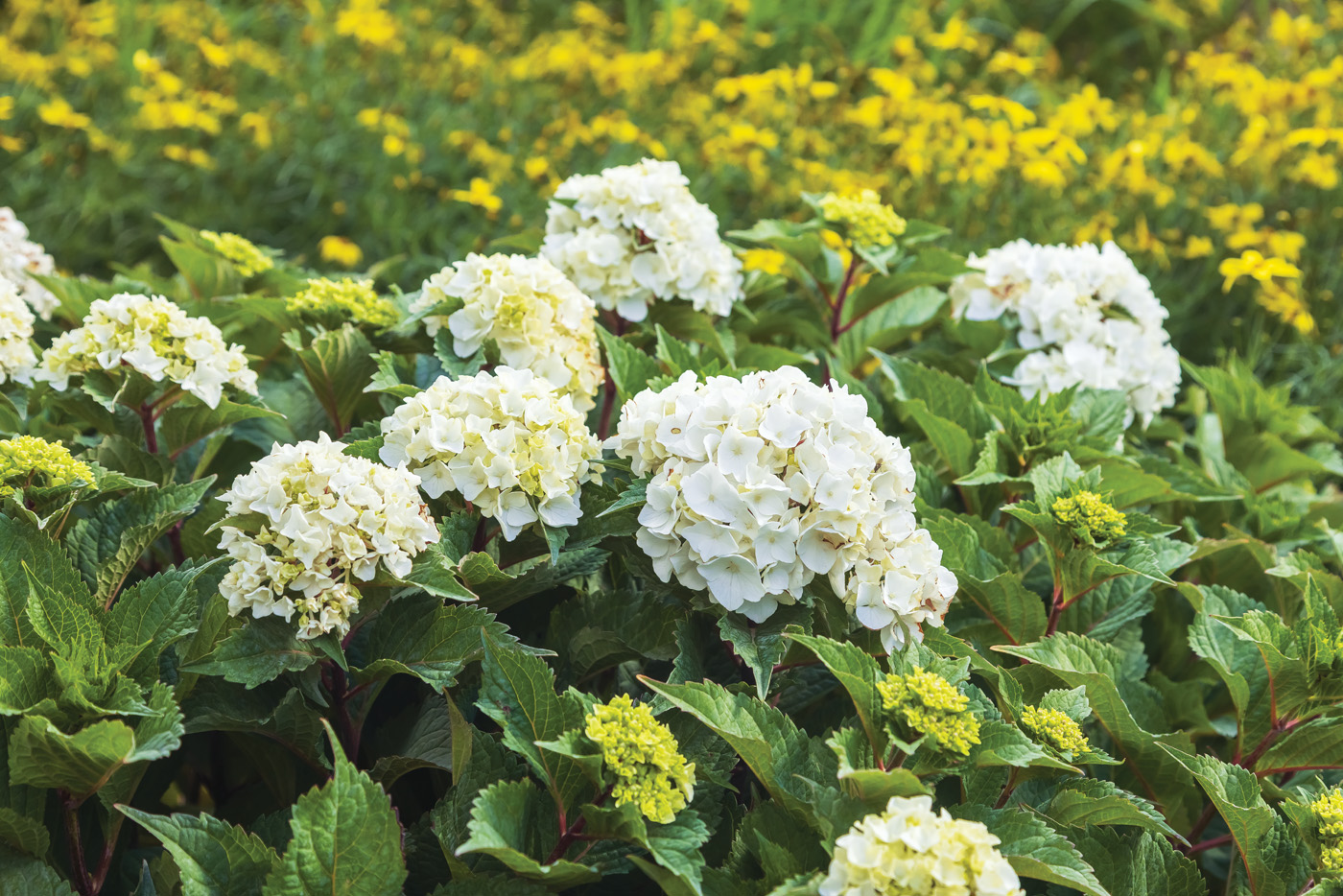
DreamCloud Endless Summer Hydrangeas
Photo courtesy of Endless Summer Hydrangeas

DreamCloud® bigleaf hydrangea

(Hydrangea macrophylla ‘Bailmaceight’)

  • Zones: 6–9
  • Size: 3 to 4 feet tall and wide
  • Conditions: Partial shade; moist, fertile, well-drained soil
  • Native range: China, Japan, Korea, and southeast Asia
  • Introduced by: Endless Summer® Hydrangeas

The bright white blooms of DreamCloud® cover the plant all season long; they are slower to fade than those of other varieties and will age to deep pink in certain climates. Because it blooms on both old and new wood, you can count on this cheerful little workhorse to put on a good summer show regardless of any iffy weather events it may have experienced the previous winter. The compact size makes it a great fit for a container, too.

Read More: The Best New Hydrangeas to Grow

Wake up your senses with a big dose of spring color
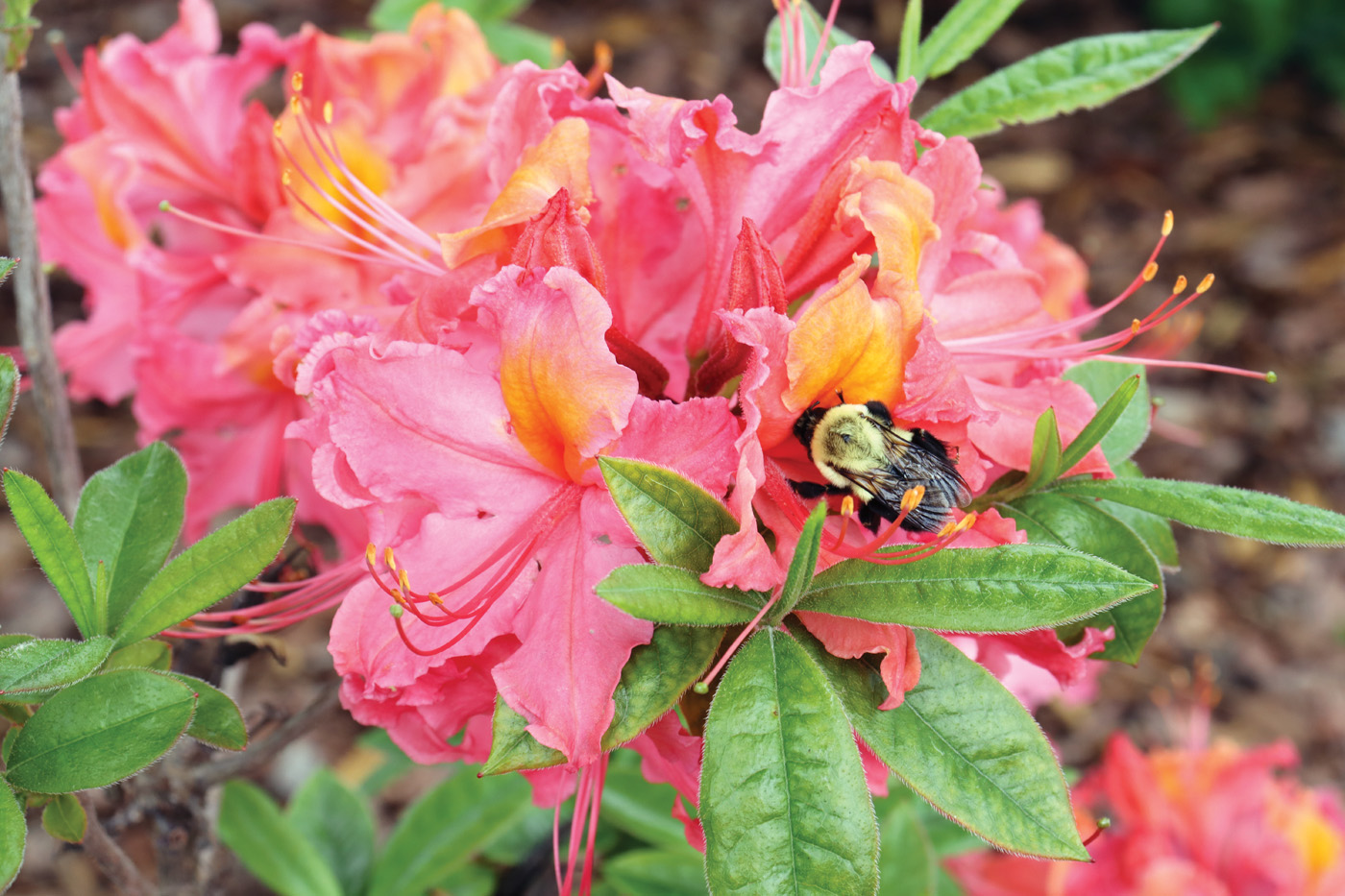
Azalea Sweet Reward Coral courtesy of Proven Winners ColorChoice Flowering Shrubs
Photo courtesy of Proven Winners ColorChoice Flowering Shrubs

Sweet Reward® Coral Azalea

(Rhododendron × ‘NCB195’)

  • Zones: 5–8
  • Size: 3 to 6 feet tall and wide
  • Conditions: Partial shade; average to moist, acidic soil
  • Native range: Hybrid of North American native species
  • Introduced by: Proven Winners® ColorChoice®

The intense mix of coral-pink and bright clementine orange hues of this azalea is accompanied by an equally enticing scent. Bloom time will be an event that draws you outdoors to experience the show up close. Because it flowers on old wood, limit your cuts to a light pruning after it finishes blooming. To help fuel the floral fury, give it a dose of rose fertilizer in early spring, as new growth starts to emerge, and again after flowering finishes.

Citrusy, spicy fragrance adds to its charm
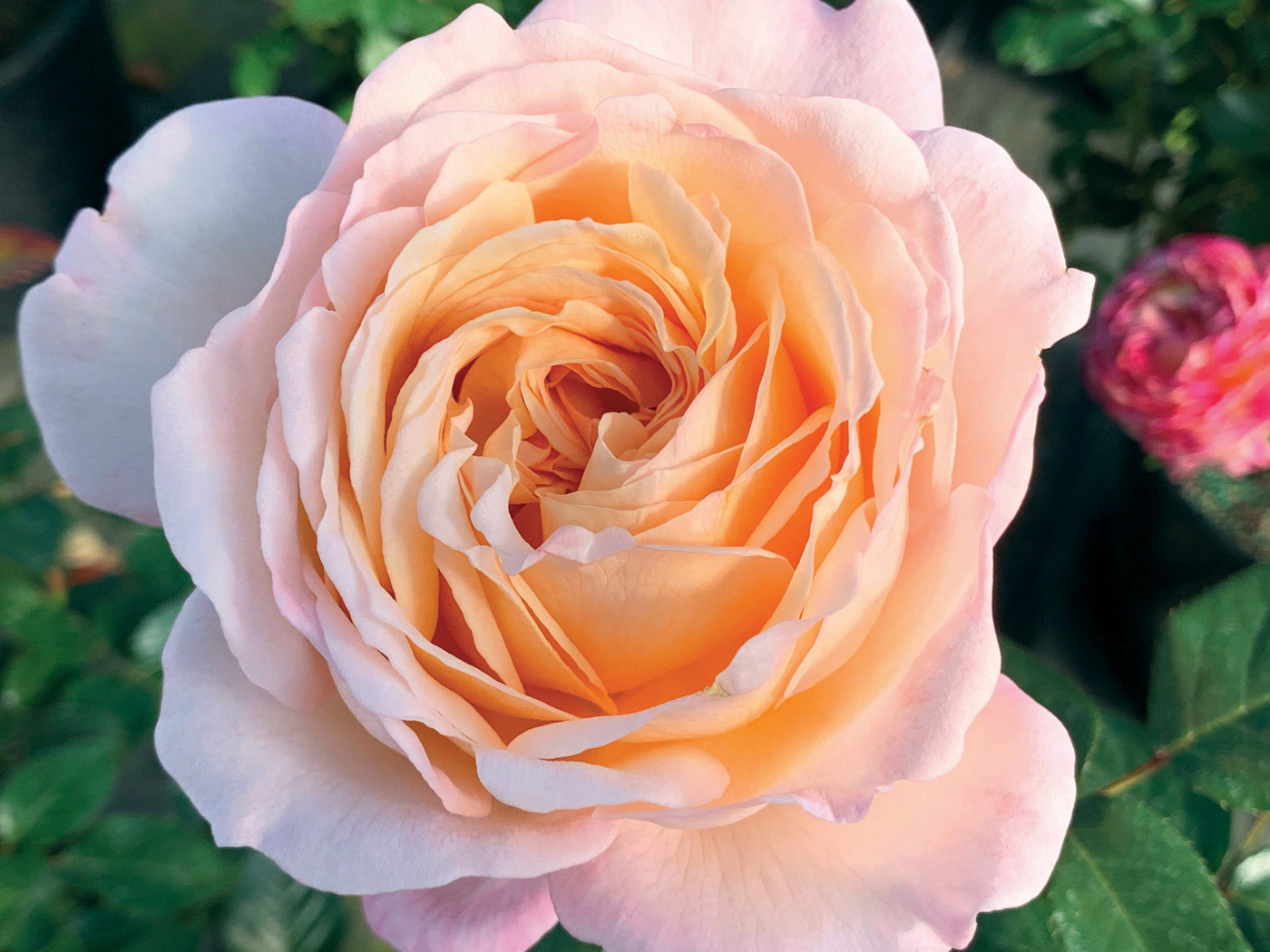
ParfumaSunrise Bloom photo courtesy of Star Roses and Plants
Photo courtesy of Star Roses and Plants

Parfuma® Sunrise hybrid tea rose

(Rosa ‘KORbrocaze’)

  • Zones: 4–9
  • Size: 4 feet tall and 2 to 3 feet wide
  • Conditions: Full sun; average to moist, fertile, well-drained soil
  • Native range: Hybrid
  • Introduced by: Star® Roses and Plants

The new leaves of this sweetly scented hybrid tea rose emerge with a dark burgundy tint, the chef’s kiss accompaniment for its dreamy apricot-blush blooms. Selected for strong resistance to rusts and mildews, Parfuma® Sunrise will develop a bushy, upright framework of slender branches enveloped in dark green, glossy foliage. It is grown on its own rootstock and performs well over a large zonal range.

A semi-evergreen spring bloomer with multiple seasons of interest
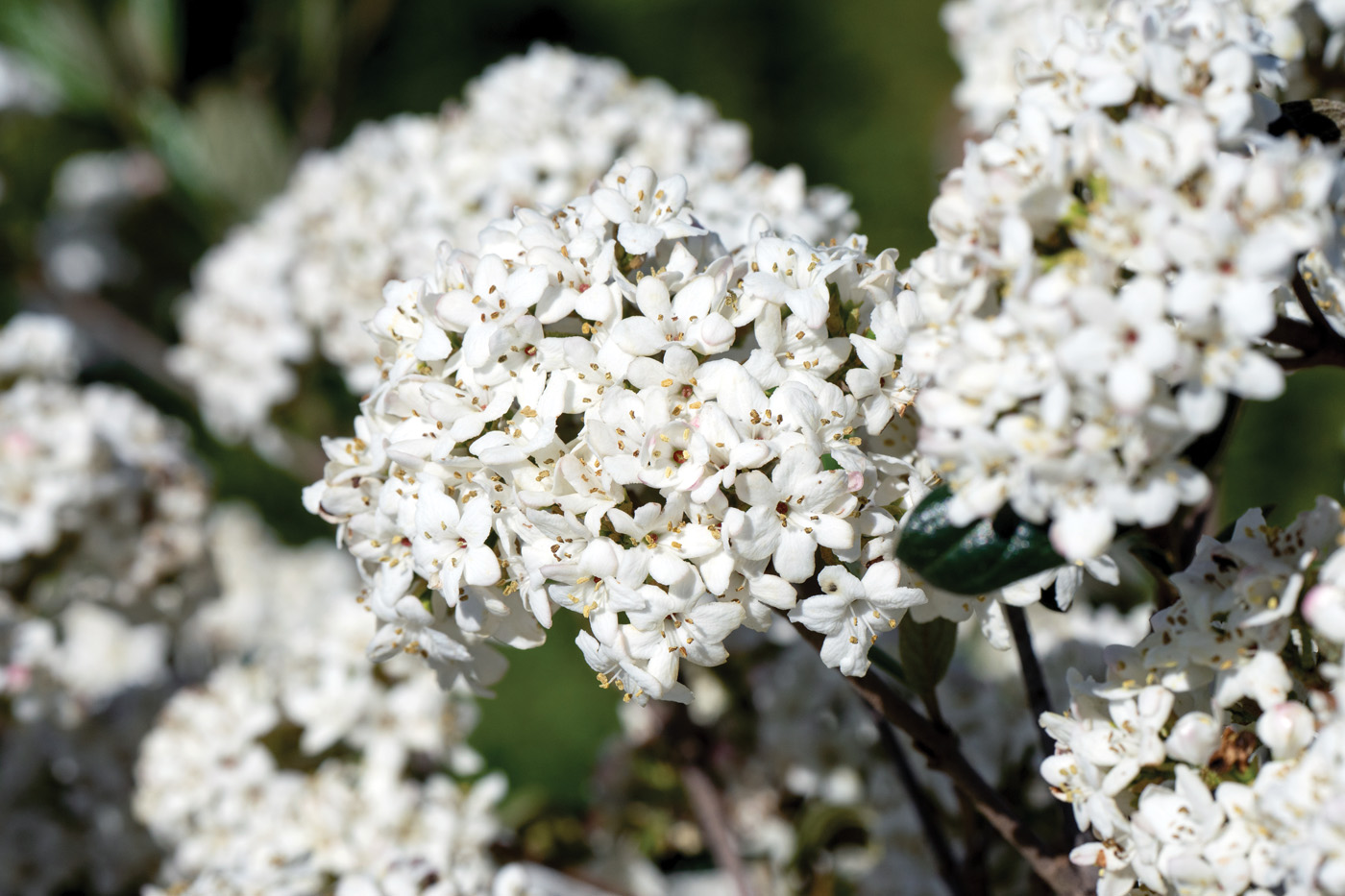
VibPOWfume courtesy of First Editions Shrubs & Trees
Photo courtesy of First Editions® Shrubs & Trees

POWFume viburnum

(Viburnum ‘Bailvibone’)

  • Zones: 6–9
  • Size: 6 to 8 feet tall and 5 to 7 feet wide
  • Conditions: Full sun; average to moist, well-drained soil
  • Native range: Hybrid
  • Introduced by: First Editions® Shrubs & Trees

Glossy new leaves combined with large clusters of snowy white flowers make POWFume viburnum a centerpiece of the early spring garden. Its dense, upright form and dark semi-evergreen foliage give it staying power in summer, fall, and winter. Early-emerging pollinators are grateful for the bounty of blooms this shrub provides when little else is available, but deer are not particularly interested in it.

Easy-care summer drama in a compact, water-wise package
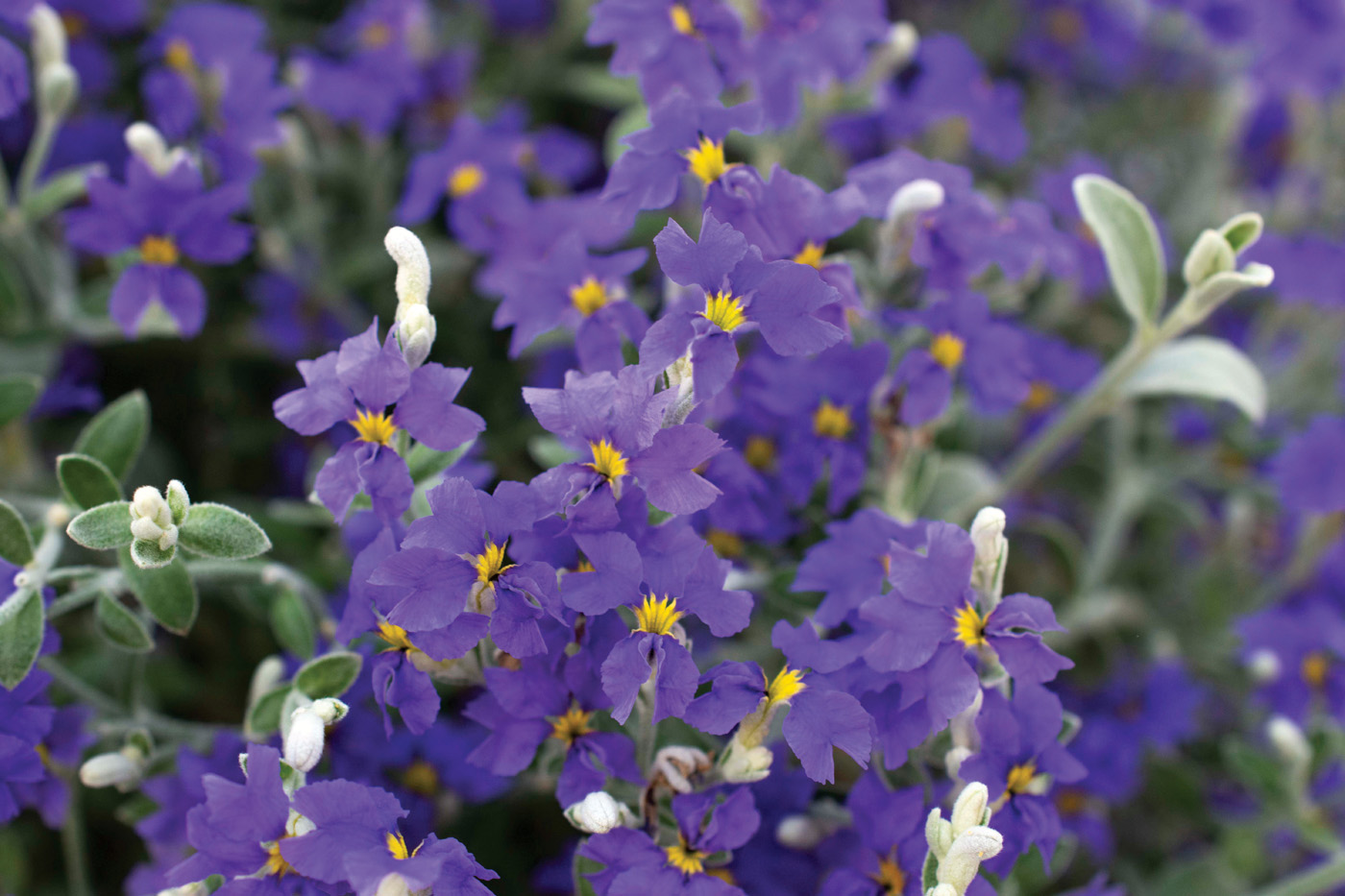
Dampiera photo courtesy of Star Roses and Plants
Photo courtesy of Star Roses and Plants

Purple Oz dampiera

(Dampiera altissima ‘Altmp2336’)

  • Zones: 8–11
  • Size: 2 to 3 feet tall and 3 to 4 feet wide
  • Conditions: Full sun; average to dry soil
  • Native range: Western Australia
  • Introduced by: Star® Roses and Plants

Silvery foliage sets off the rich purple flower color of this showy small shrub from the land down under. Selected for its tidy, compact habit, Purple Oz is equally at home in a xeric container planting or as a colorful bedding plant in a hot, dry border. Golden throats set off the bluish violet blooms, which open in abundance from June to October. Treat yourself to a hot-weather performer that will look great with very little input from you during the dog days and right up until frost and cold set in at season’s end.

Enjoy these magenta-pink umbels from July to September
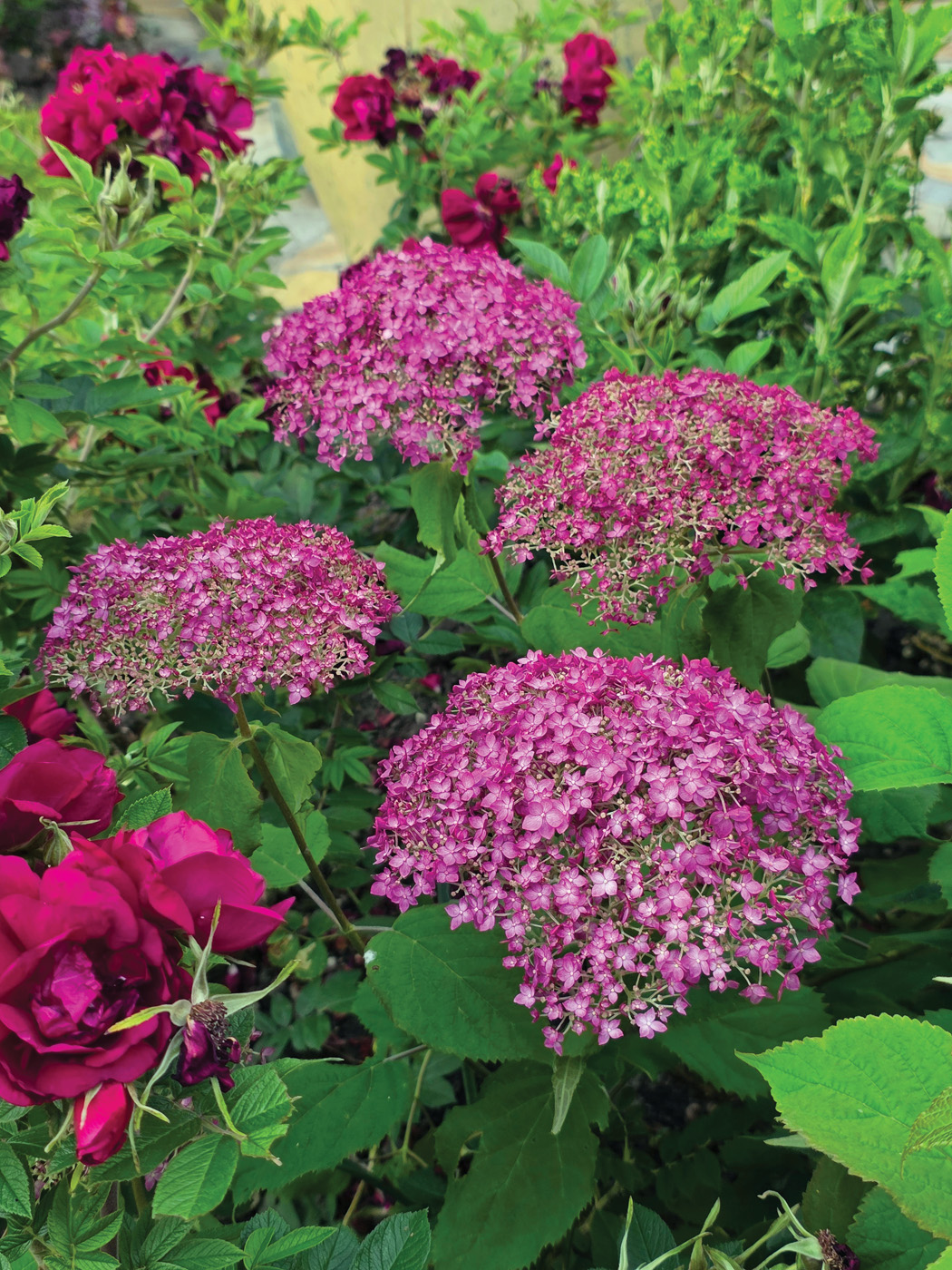
Hydrangea Candybelle Winegum photo courtesy of Concept Plants
Photo courtesy of Concept Plants

Candybelle® Winegum smooth hydrangea

(Hydrangea arborescens ‘GRHYAR2008’)

  • Zones: 5b–8
  • Size: 40 inches tall and 36 inches wide
  • Conditions: Full sun to partial shade; average to moist, well-drained soil
  • Native range: Eastern United States
  • Introduced by: Concept Plants

For a colorful new take on our native smooth hydrangea, look no further than Candybelle® Winegum. Healthy foliage and strong burgundy-tinted stems provide a compact framework for showing off its lacy-looking mophead blooms brushed with saturated wine-tinted hues. These make great cut flowers that can also be dried for fall and winter wreaths and bouquets. A little light pruning after bloom time finishes is all you need to keep this carefree shrub looking its best.

Pollinators will love the bounty of fertile florets, and you’ll love the sturdy, upright habit
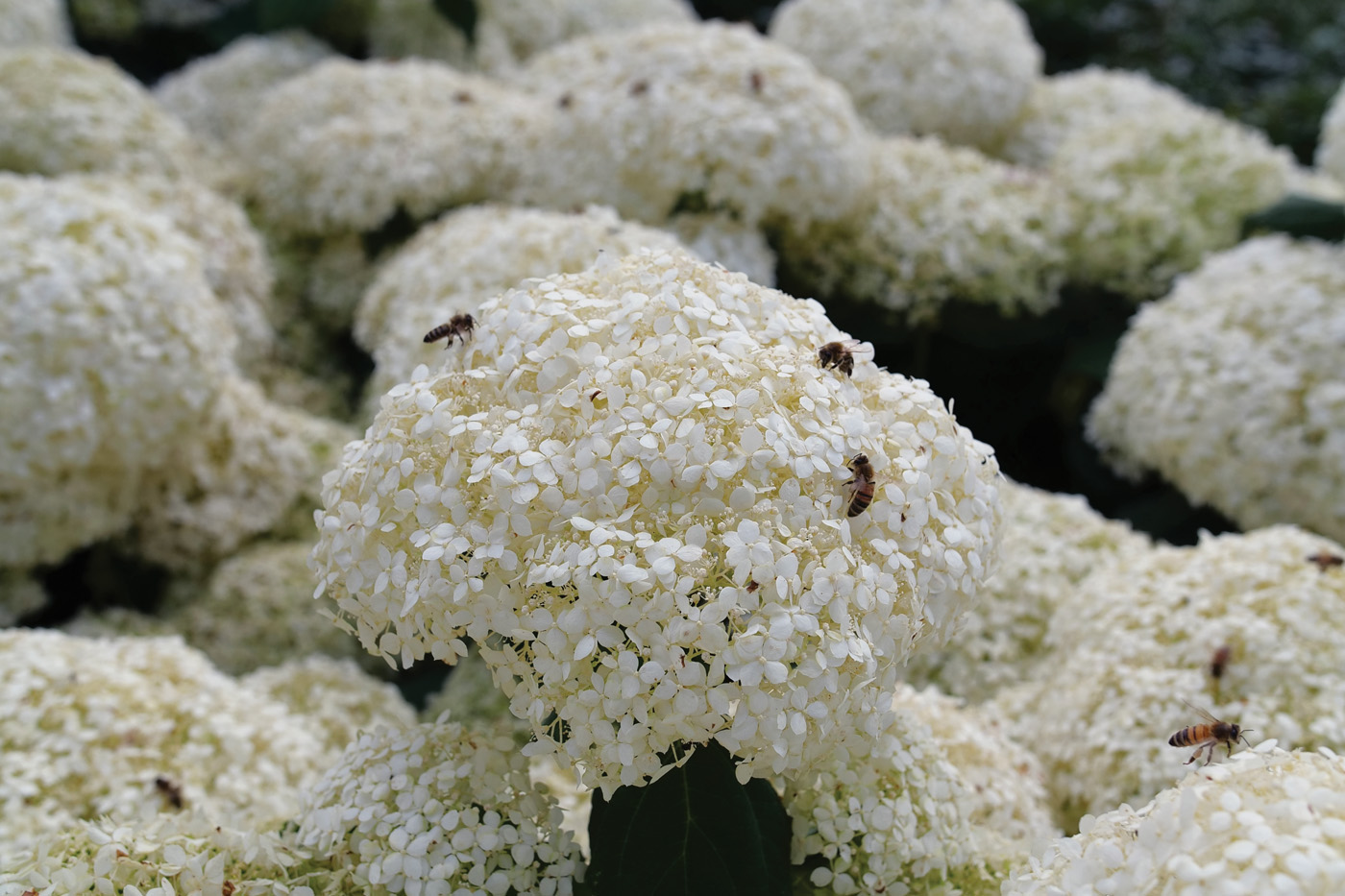
Incrediball Storm Proof courtesy of Proven Winners ColorChoice Flowering Shrubs
Courtesy of Proven Winners ColorChoice Flowering Shrubs

Incrediball Storm Proof smooth hydrangea

(Hydrangea arborescens ‘SMNHAGOV’)

  • Zones: 3–8
  • Size: 42 to 48 inches tall and 36 to 48 inches wide
  • Conditions: Full sun to partial shade; average to moist, well-drained soil
  • Native range: Eastern United States
  • Introduced by: Proven Winners® ColorChoice®

Dense growth, strong stems, and reliable blooms may make this show-stopping new nativar a design staple, but its wildlife value elevates it to something truly special. Frothy inflorescences are packed with fertile florets, drawing in bees, butterflies, and other hungry pollinators. For the best flowering performance, site it in a spot that receives at least six hours of good sun, or a bit less in hotter climates.

Back to Top ↑


Best New Plants for 2026: Annuals


Editor’s Top Pick: A favorite coleus color that can take some sun
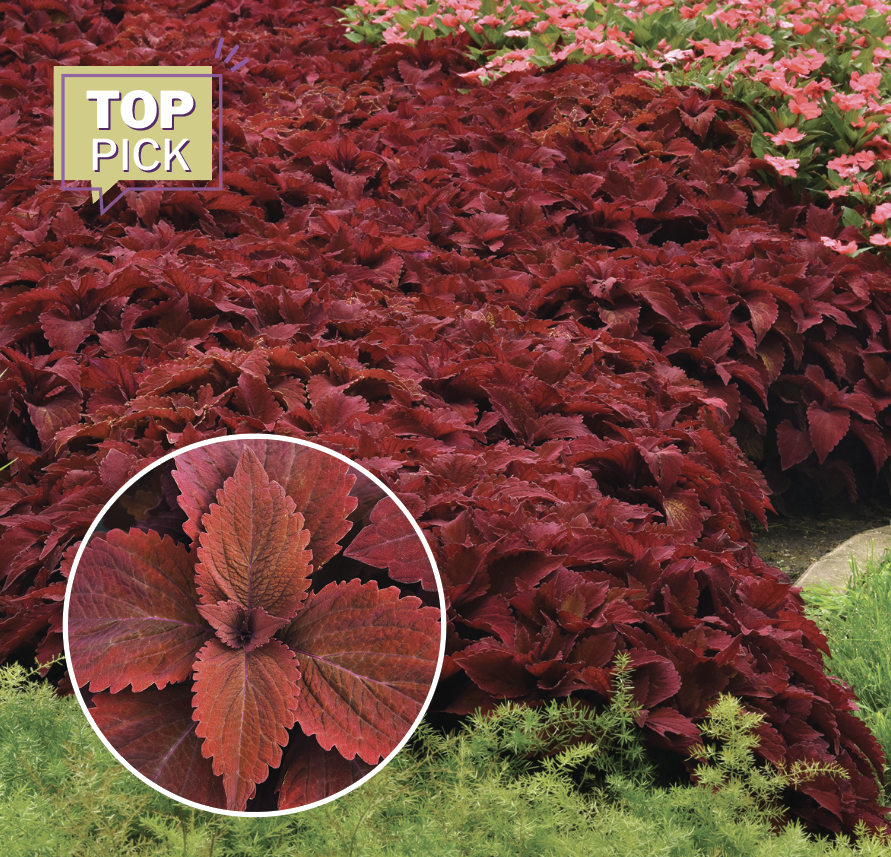
Premium Sun Sweet Paprika coleus
Photos courtesy of PanAmerican Seed

Premium Sun Sweet Paprika coleus

(Solenostemon scutellarioides ‘PAS1231185’)

The well-branched plants of this coleus series, which includes Premium Sun Sweet Paprika, can grow successfully in full sun in areas with high relative humidity in summer. The one caveat is that full sun may still scorch the leaves if it is more arid in your region. Regardless of meteorological conditions, this is a great solution for adding an annual flush of deep, spicy summer color in partly to fully shaded beds and containers.

These shimmering hues enhance garden beds, fresh bouquets, and dried arrangements
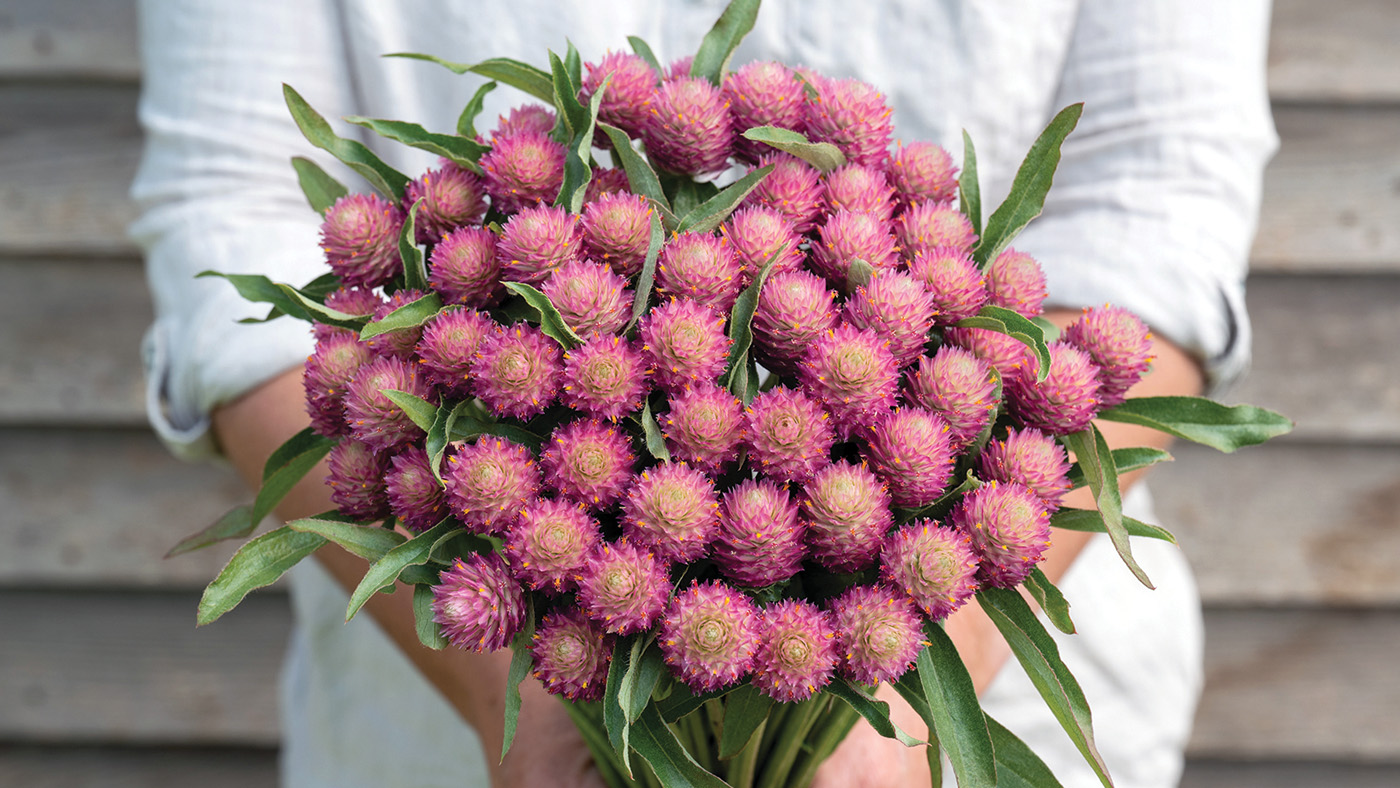
Sequin gomphrena Courtesy Johnny’s Selected Seeds
Photo courtesy of Johnny’s Selected Seeds

‘Sequin’ globe amaranth

(Gomphrena haageana ‘Sequin’)

  • Zones: 9–11
  • Size: 18 to 28 inches tall and wide
  • Conditions: Full sun; moist, well-drained soil
  • Native range: Northern Mexico and southwestern United States
  • Introduced by: Johnny’s Selected Seeds

Fresh, long-lasting color is the hallmark of this showy relative of ‘Strawberry Fields’. Start seeds indoors six to eight weeks before planting outside, after all danger of frost has passed. Seedlings will mature and begin flowering on long, well-branched stems 85 to 100 days from the time of transplant. Because it branches at the base and its stems tend to have only a few sparse leaves, this beauty makes an excellent cut flower, and its soft color fits in well with both cool and warm palettes. The papery, opalescent bracts hold their rosy hues beautifully if the flowering stems are cut and hung upside down to dry as soon as the blooms are fully open.

Read More: Pollinator Container Gardening Ideas

Vibrant double flowers and impressive disease resistance are a winning combination for shade
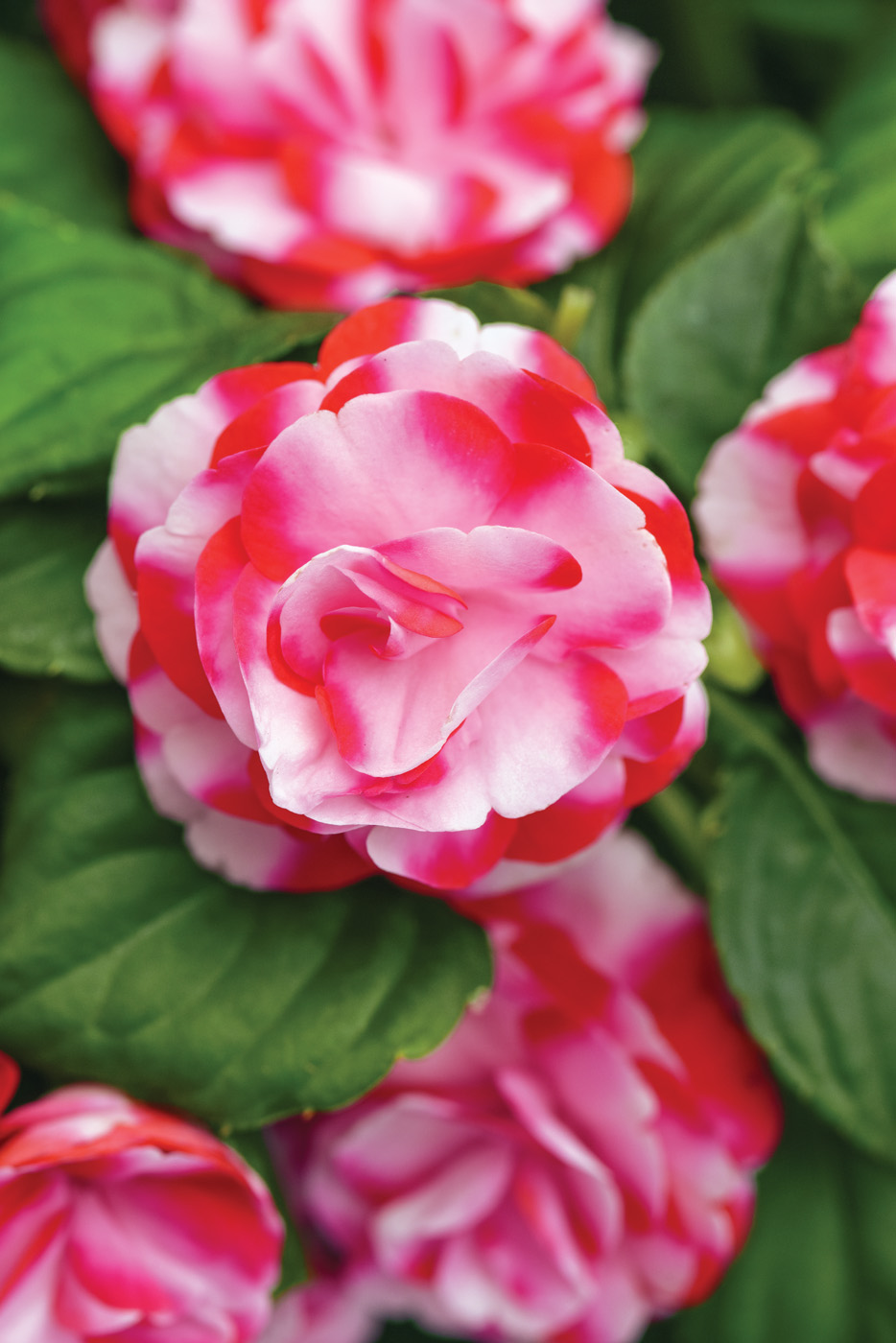
Impatiens Glimmer Strawberry Sparkler_IMP24-32079_CC2_Glimmer Strawberry Sparkler Double Impatiens

Glimmer® Strawberry Sparkler impatiens

(Impatiens walleriana ‘Balglimstark’)

  • Zones: Annual
  • Size: 10 to 16 inches tall and 10 to 12 inches wide
  • Conditions: Full to partial shade; consistently moist, fertile, well-drained soil
  • Native range: Eastern Africa
  • Introduced by: Ball FloraPlant®

Romantic, roselike double blooms are the icing on the cake for this impatiens introduction. Strawberry Sparkler is the latest addition to the Glimmer® series, bred for high resistance to impatiens’ downy mildew. The beautiful bicolor blooms look perfectly at home cascading out of hanging baskets or patio pots and serve as sparkling fillers in beds that receive less sunlight.

Tuck tiny galaxies into containers, or brighten the edges of a border
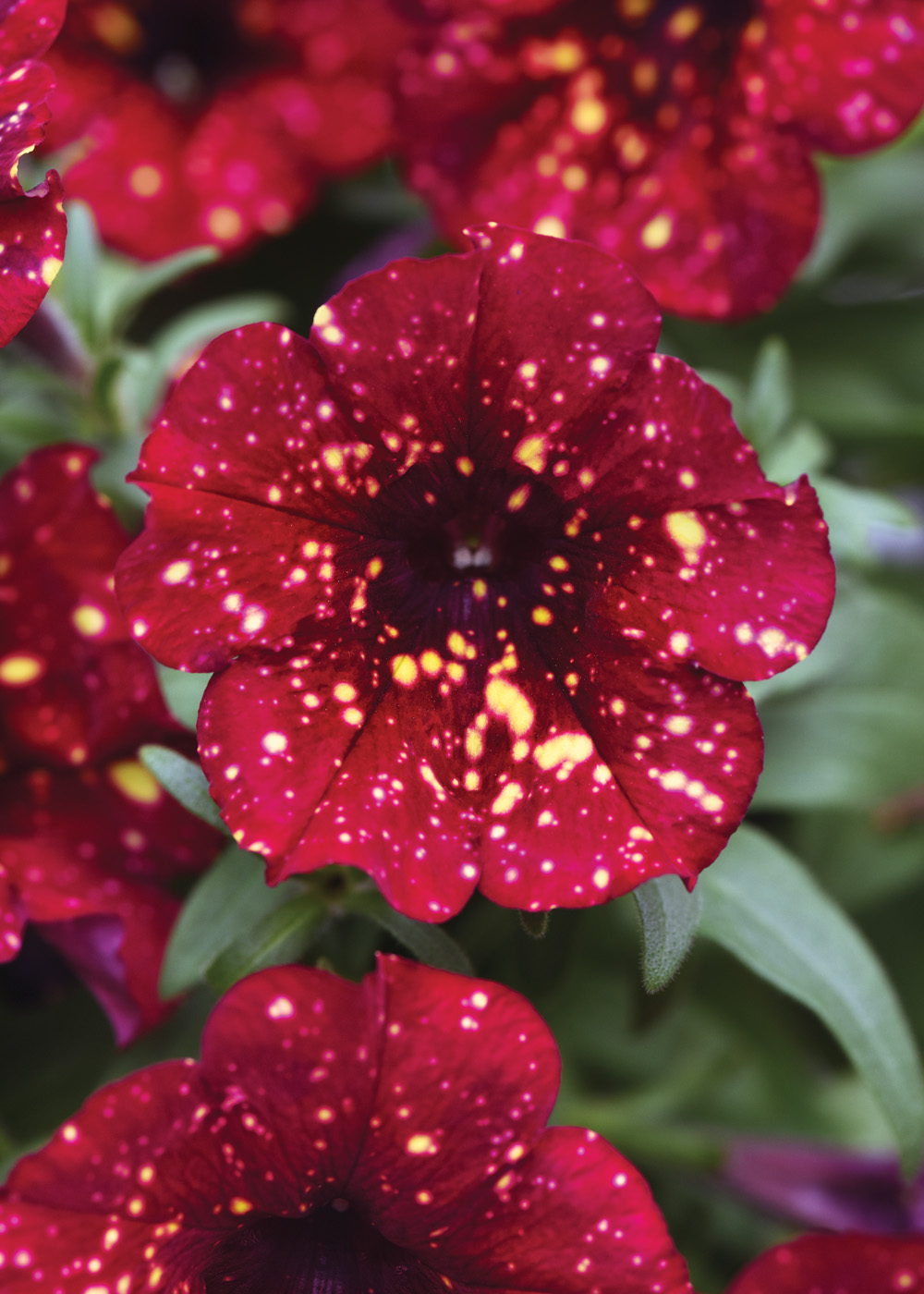
Petunia Main Stage Burgundy Star
Photo courtesy of Selecta One

Main Stage Burgundy Sky petunia

(Petunia ‘KLEPH24909’)

  • Zones: Annual
  • Size: 12 to 16 inches tall and 24 to 30 inches wide
  • Conditions: Full sun; consistently moist, fertile, well-drained soil
  • Native range: Hybrid
  • Introduced by: Selecta One®

From a new line of vigorous, trailing petunias, Main Stage Burgundy Sky evokes the afterglow of a summer sunset with bright stars just beginning to emerge. Give it a spot in a window box or tall container where it can do what it does best, cascading and putting out continuous blooms throughout the course of summer. Regular doses of fertilizer (weekly or biweekly) will enhance its performance.

Zero deadheading is required to keep the colorful double blooms coming
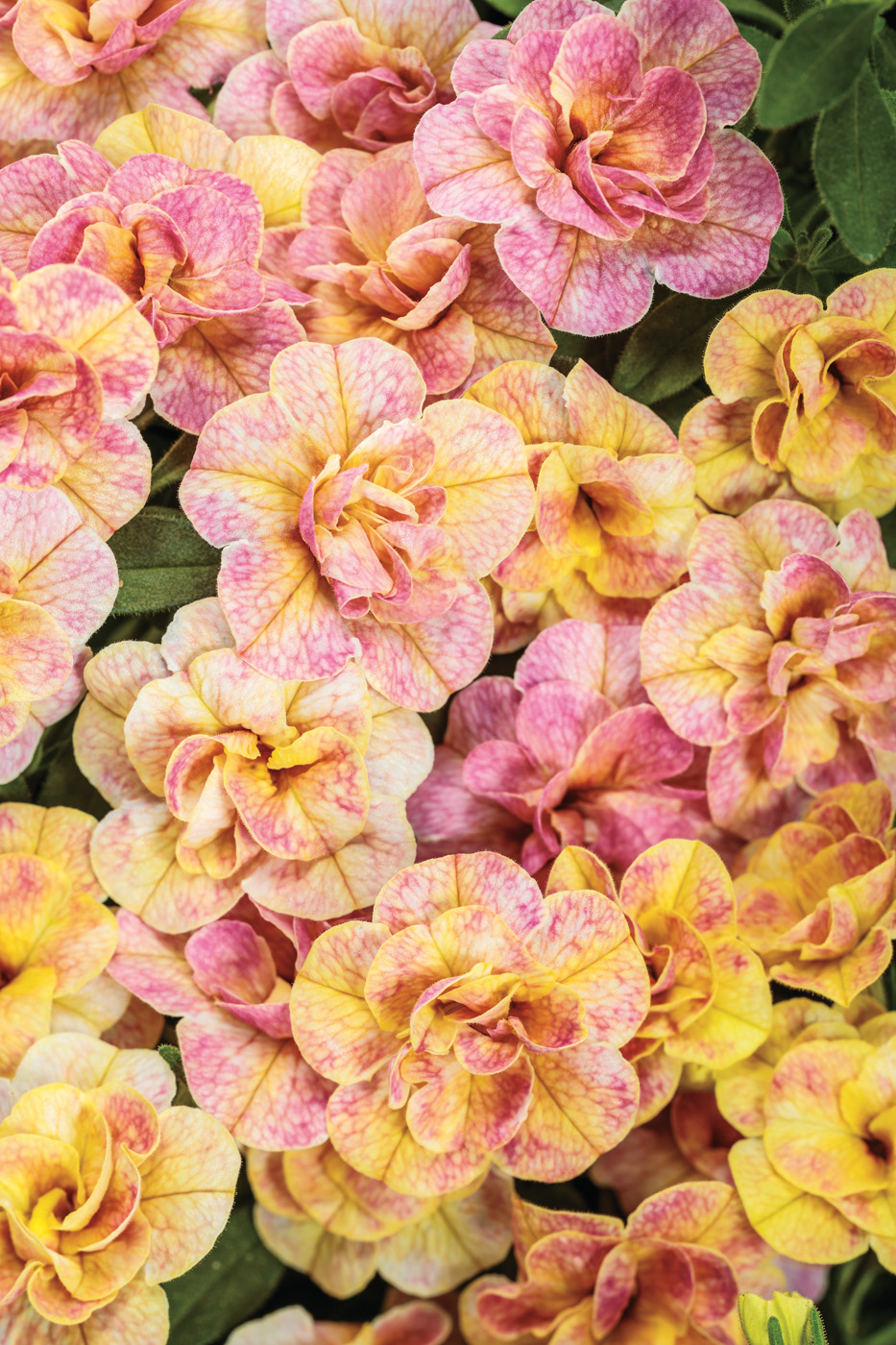
Superbells Magic Double Grapefruit Calibrachoa photo courtesy Proven Winners
Photo courtesy of Proven Winners

Magic® Double Grapefruit calibrachoa

(Calibrachoa ‘WNCALSBDBLGF26’)

  • Zones: 9–11
  • Size: 6 to 12 inches tall and 12 to 24 inches wide
  • Conditions: Full sun; average to dry, well-drained soil
  • Native range: Central and South America
  • Introduced by: Proven Winners

The double, color-shifting blooms of this cute trailer start off primrose yellow and take on pink tones as they soak up the summer sun. It will bloom from the time it is set out in spring until frost takes it down in fall. An occasional trim with clean, sharp shears will help keep the plant looking tidy. Although plants are very heat tolerant, they do not appreciate constantly wet soil and can do better in containers than they do in the ground.

Back to Top ↑


Best New Plants for 2026: Vegetable Introductions


Editor’s Top Pick: Expect early yields of blocky, bright red peppers
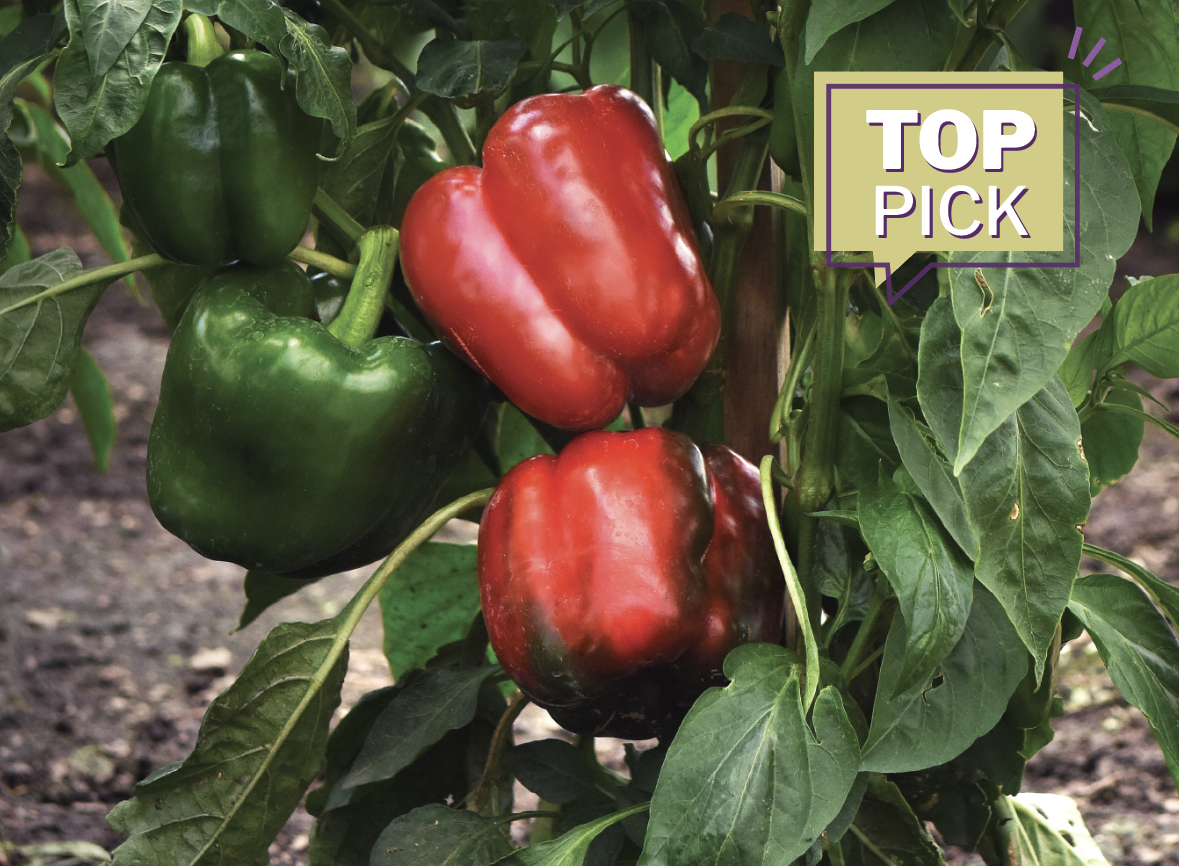
KickStart sweet bell peppers
Photo courtesy of PanAmerican Seed

KickStart sweet bell pepper

(Capsicum annuum ‘PAS1443591’)

  • Days to maturity: 70 to 75
  • Introduced by: PanAmerican Seed®

Upright, disease-resistant plants produce peppers that ripen to red about two and a half months after being transplanted. The thick-walled fruit can also be eaten green if they are harvested starting around 50 to 55 days from transplant time. Grow it in a large container, or in the ground spaced 12 to 18 inches apart. Staking the plants will help to prevent lodging and protect fruit from coming into contact with the ground.

This grape tomato is sweet, disease resistant, and not prone to splitting
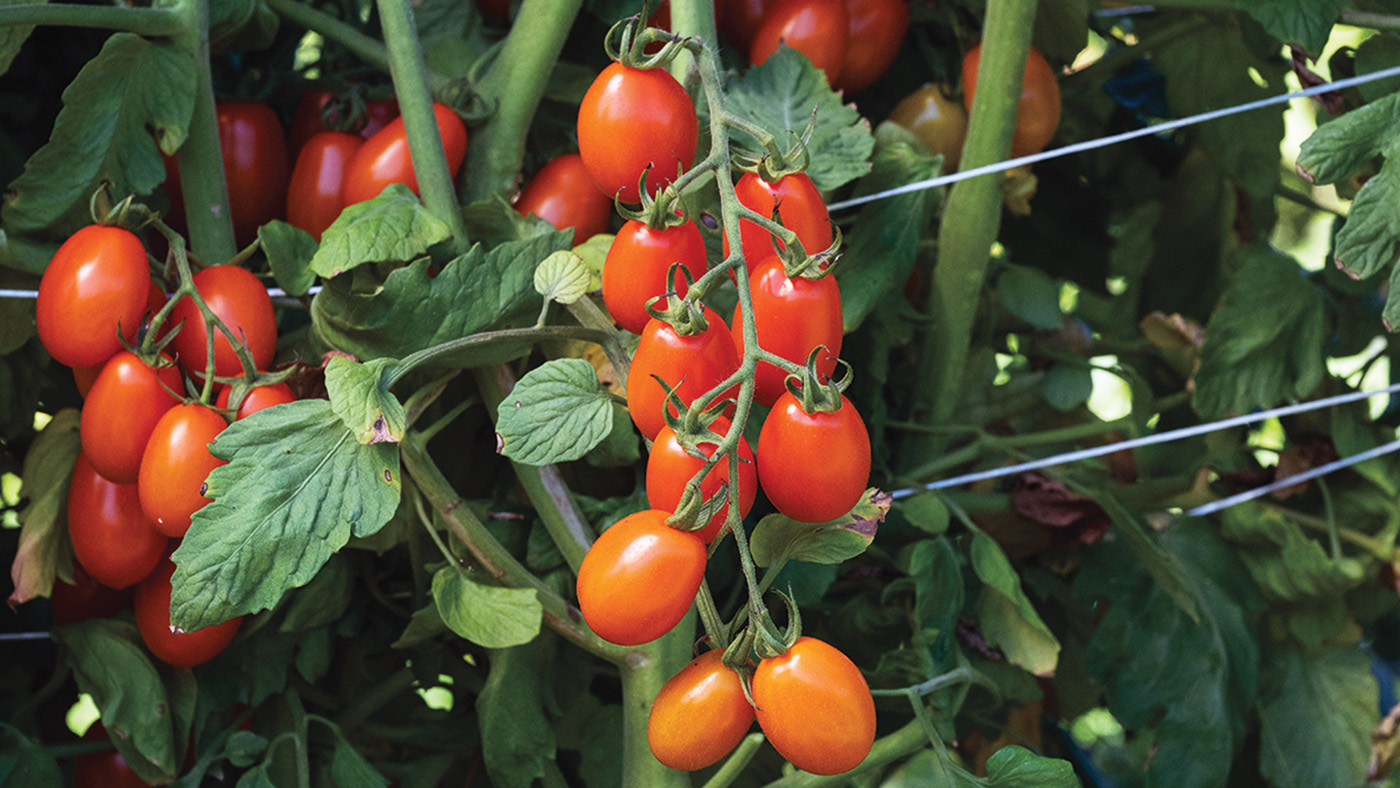
Mimosa tomto courtesy of Johnny’s Selected Seeds
Photo courtesy of Johnny’s Selected Seeds

‘Mimosa’ organic tomato

The tangerine-orange fruit of this new tomato variety are tasty and an ideal size for snacking and topping summer salads. Plants were developed to have high resistance to a number of fungal diseases, including late blight. The first fruit should begin to ripen about two months after transplants are set out in the garden, which is nice and early compared to varieties with larger fruit. You can expect the indeterminate vines to reach about 5 to 6 feet tall and 3 to 4 feet wide in a season.

Enjoy gourmet flavor with a shorter wait time
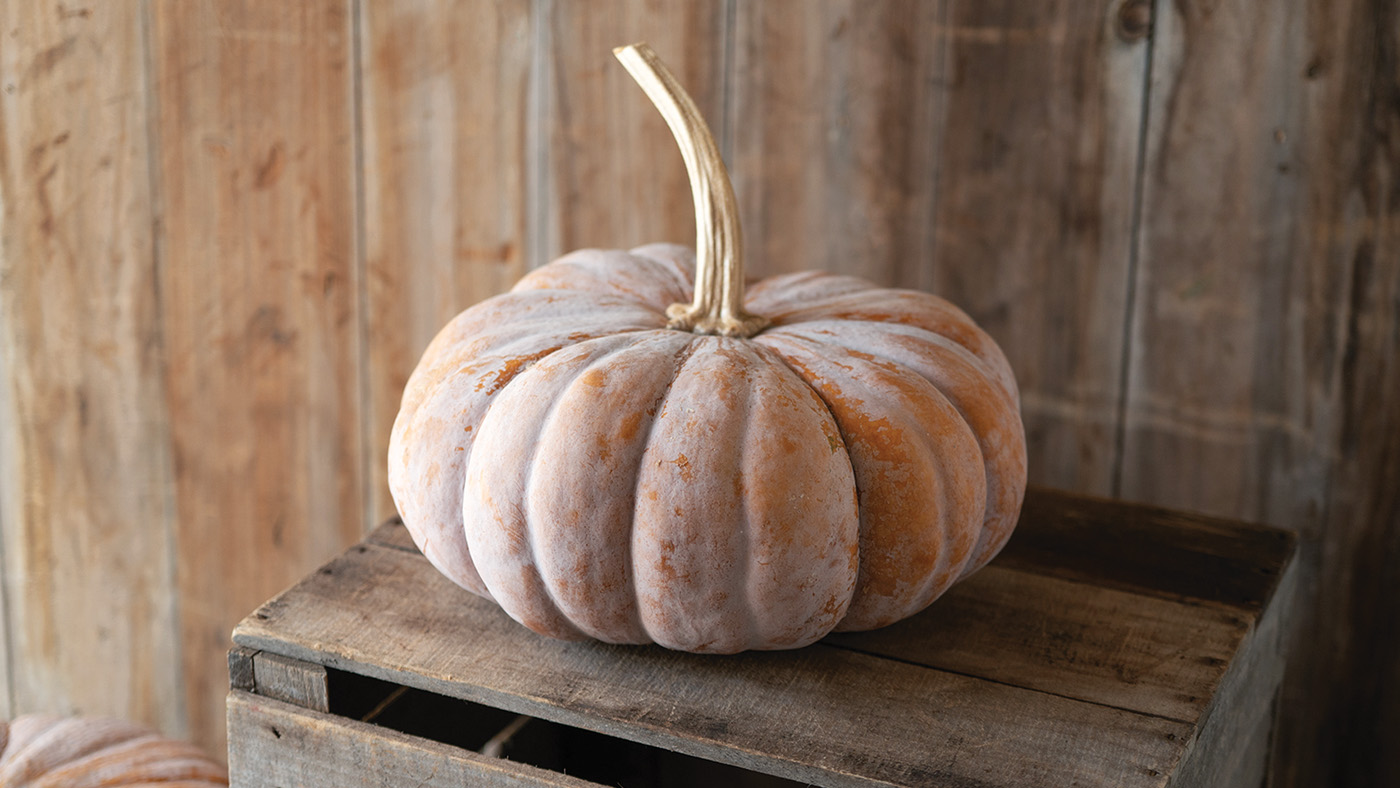
Wan Fu pumpkin photo courtesy Johnny’s Selected Seeds
Photo courtesy of Johnny’s Selected Seeds

‘Wan Fu’ pumpkin

(Cucurbita moschata ‘Wan Fu’)

  • Days to maturity: 110
  • Introduced by: Johnny’s Selected Seeds

This beautiful winter squash has similar flavor to ‘Musquee de Provence’ but ripens much earlier than that venerable heirloom. You can expect to begin harvesting fully ripe pumpkins about 110 days after seeds are direct-sown, and a couple of weeks earlier if you start transplants indoors ahead of time. The fruit can also be harvested earlier and used like summer squash. Be sure to leave room for its extra-long vines to spread.

Back to Top ↑


The editors of Fine Gardening have several decades of combined experience trialing new plants.

See More: Best New Plants for 2025

Resistance Bands,Exercise Bands,Resistance Bands for Working Out with Handles for Men and Women,Workout Bands with Door Anchor and Ankle,Strength Training Home Gym Equipment

0


Price: $16.99 - $16.14
(as of Apr 07, 2026 23:06:01 UTC – Details)


1
100% Natural Latex
✅ DIFFERENT COLOR ADJUSTABLE RESISTANCE BANDS: The exercise bands come with 5 different resistance level 10lbs, 20lbs, 30lbs, 40lbs and 50lbs in 5 different colors, and and can be used alone stacked in any combination to a maximum equivalent of 150 lbs
✅ MULTIFUNCTIONAL FOR WORKOUT: resistance band set is great with any workout like Yoga.Also comes with convenient travel pouch,You can take them outside, to the gym, wherever you want to work out
✅ HIGH QUALITY MATERIALS: Bands for working out is made of natural latex . Strong wear resistance and perfect elasticity, steel metal buckle for stronger strength, non-slip handle, comfortable and absorbent
✅ WHAT YOU GET: The resistance band set includes 5 sports bands with different resistances, 1 door anchor, 2 non-slip handles, 2 ankle straps,and 1 waterproof carrying bag.
✅ SUITABLE FOR DAILY USE: Each exercise bands set is carefully constructed to resist snapping and breaking, which are able to withstand intense daily exercise sessions.Now enjoy the exercise with BSJ BESTGYM resistance bands set

Exercise Resistance Bands with Handles for Working Out Workout Bands Set with Door Anchor for Physical Therapy, Yoga, Pilates

0


Price: $17.89 - $14.99
(as of Apr 07, 2026 11:04:54 UTC – Details)


WIKDAY Exercise Resistance Bands with Handles for Working Out Workout Bands Set with Door Anchor for Physical Therapy, Yoga, Pilates
Adjustable Resistance Bands:WIKDAY professional resistance bands set with handles includes 5pcs resistance bands: Yellow (10 lbs), Red (20 lbs), Blue (30 lbs), Green (40 lbs), Black(50 lbs), all 47 inches long. They can be used individually or stacked for a total resistance range from 10 lbs to 150 lbs, making them versatile strength training equipment suitable for beginners, fitness enthusiasts, athletes, and others seeking effective exercise gear
Premium Package: WIKDAY resistance band set for exercise includes all essential accessories: 1 door anchor, 2 anti-slip foam handles, 2 foam ankle straps, 1 user poster, and a carry bag. The user poster, sized 22.7*15.2 inches, can be easily affixed to a wall or door, providing exercise guidance even for beginners. Enjoy convenient workouts at home with this comprehensive set of resistance bands, ankle weights, and ankle straps from WIKDAY
Solid and Hard-wearing: Crafted from high-quality natural rubber, the WIKDAY resistance bands set ensures durability and longevity. Ideal for both men and women, these resistance bands with handles maintain their resistance over time, perfect for exercise routines. Featuring double-layered tube bands for maximum resistance and robust metal buckles for superior strength, these fitness bands provide reliable support for effective workouts
Multifunctional Workout Bands: These resistance bands are perfect for enhancing muscle strength, mobility, and motor function. They serve as ideal tools for body resistance training and physical therapy, aiding in strengthening ligaments and muscles, making them suitable for exercising arms, back, legs, and booty. Additionally, they are suitable for use by seniors and can be utilized for rehabilitation exercises
Anywhere to Use: With WIKDAY’s carry bags, our resistance bands with handles are lightweight and compact, making them perfect for at-home workouts, home gyms, and on-the-go exercise. Whether you’re at home, at the gym, in the office, or traveling, you can conveniently exercise anytime, anywhere

17 Best Vegetables that Grow on Trellis

0

Growing veggies vertically is one of the best options to double the harvest within specified space.

You aren’t limited to a few climbing vines for your vertical veggie garden.

Along with popular choices like cucumber, pumpkin and squash, you can grow bitter gourd, malabar spinach and a bunch of fruits that you can trellis.

Growing plants on trellis improves air circulation, avoids pests and aesthetic addition to your garden.

I already discussed how you can make your own trellis using bamboo here. Or you can get one from a local store.

Now, before jumping to the list of veggies and fruits that you can grow on trellis, let me point out why you should prefer growing edibles vertically.

3 Reasons Why to Grow Veggies on Trellis

Growing vegetables on a trellis isn’t just about saving space—it actually makes your garden healthier and easier to manage. Here are three solid reasons to try it:

Better Use of Space: Training plants vertically lets you grow more in a smaller area. Instead of sprawling across the ground, crops like beans, cucumbers, and tomatoes climb upward, freeing up valuable garden space for other plants.

Healthier Plants: Keeping vines off the soil improves air circulation and reduces the risk of diseases, rot, and pest damage. Leaves dry faster after watering or rain, which helps prevent fungal issues.

Easier Harvesting & Maintenance: With fruits hanging at eye level, harvesting becomes quicker and less messy. You’ll also find it easier to prune, water, and spot problems early without bending or digging through dense foliage.

17 Vegetables and Fruits that You Can Grow on Trellis

If you’re setting up a vertical garden, you don’t want to grow just one type of plant. You need to grow a mix of veggies, flowers, and fruits together.

Why?

Because diversity helps your garden stay productive, balanced, and visually appealing.

Vegetables give you food, flowers attract pollinators and beneficial insects, and fruits add variety while making the most of vertical space.

1. Pole Beans

Pole beans are one of the easiest and most rewarding crops to grow on a trellis.

They naturally climb using twisting vines, quickly covering vertical structures with lush green growth.

Because they grow upward instead of spreading out, you can fit more plants into a small space—perfect for compact gardens.

Another big advantage is their productivity. Pole beans keep producing over a longer period compared to bush varieties, giving you a steady harvest.

Plus, the hanging beans are easier to spot and pick, making harvesting quicker and more enjoyable.

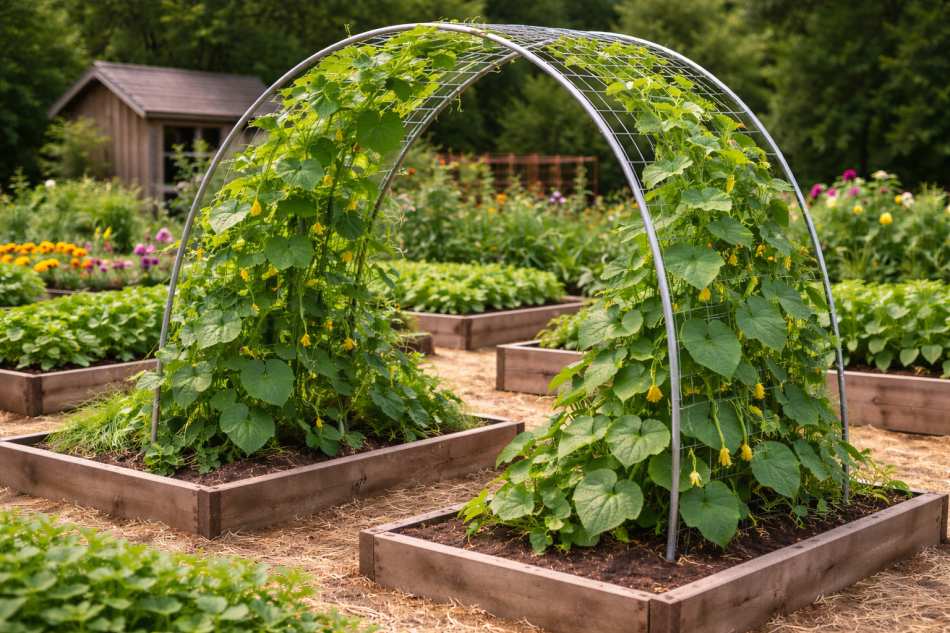
2. Cucumbers

If there’s one plant that truly benefits from growing upward, it’s cucumbers. When left on the ground, fruits can become misshapen and more prone to pests—but on a trellis, they grow straighter, cleaner, and healthier. The vines naturally latch onto supports with their tendrils, making training them super easy.

Growing cucumbers vertically also improves airflow around the leaves, which helps prevent common issues like powdery mildew.

On top of that, harvesting becomes much simpler since the fruits hang visibly, saving you from digging through dense foliage.

Must Read: 9 Tips for Growing Vegetables in a Greenhouse

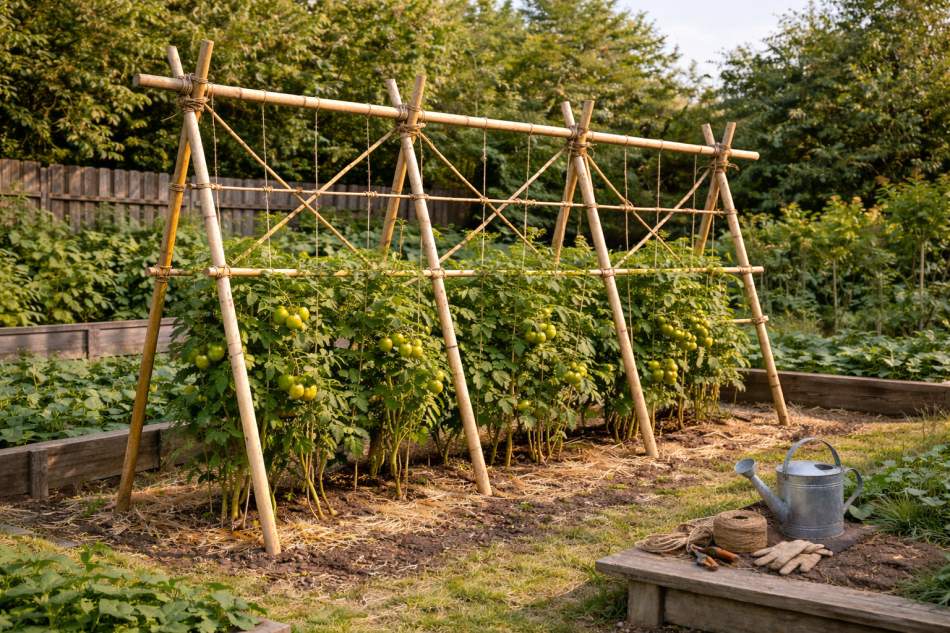
3. Tomatoes (Indeterminate varieties)

Unlike bush types, indeterminate tomatoes are natural climbers that just keep growing taller throughout the season.

With a trellis or support system, you can guide their vines upward, keeping the plant organized and preventing it from sprawling all over the ground. This not only saves space but also keeps your garden looking neat.

Another advantage is better fruit quality and plant health. Elevating the vines improves sunlight exposure and airflow, which helps reduce disease and encourages even ripening.

Plus, harvesting becomes far less of a hassle when your tomatoes are right in front of you instead of hidden under tangled growth.

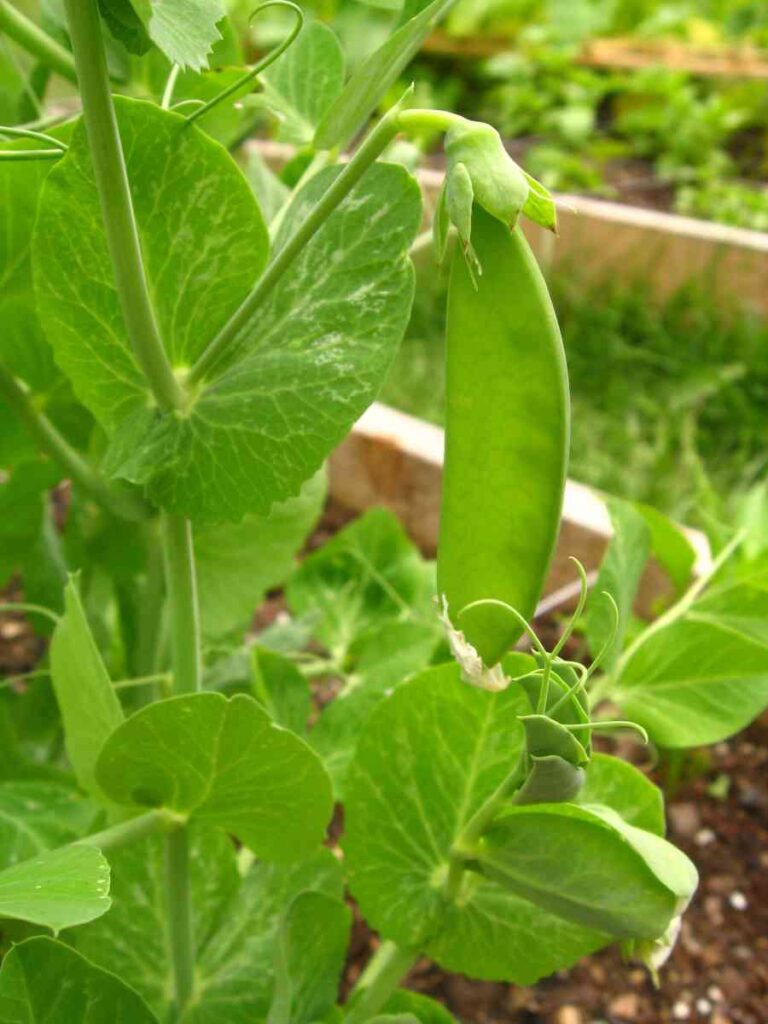
4. Peas

Early in the season, peas are some of the first climbers to get going—and they absolutely love a trellis.

Their delicate tendrils quickly grab onto any support, guiding the plant upward with very little effort from you. This vertical growth keeps the vines tidy and prevents them from flopping over.

Because the pods hang freely, they’re easier to spot and pick at the right time.

Trellising also keeps the foliage off the soil, which helps reduce rot and keeps the plants healthier, especially in cool, damp conditions where peas usually thrive.

Also Read: 19 Best Vegetables to Plant in Spring

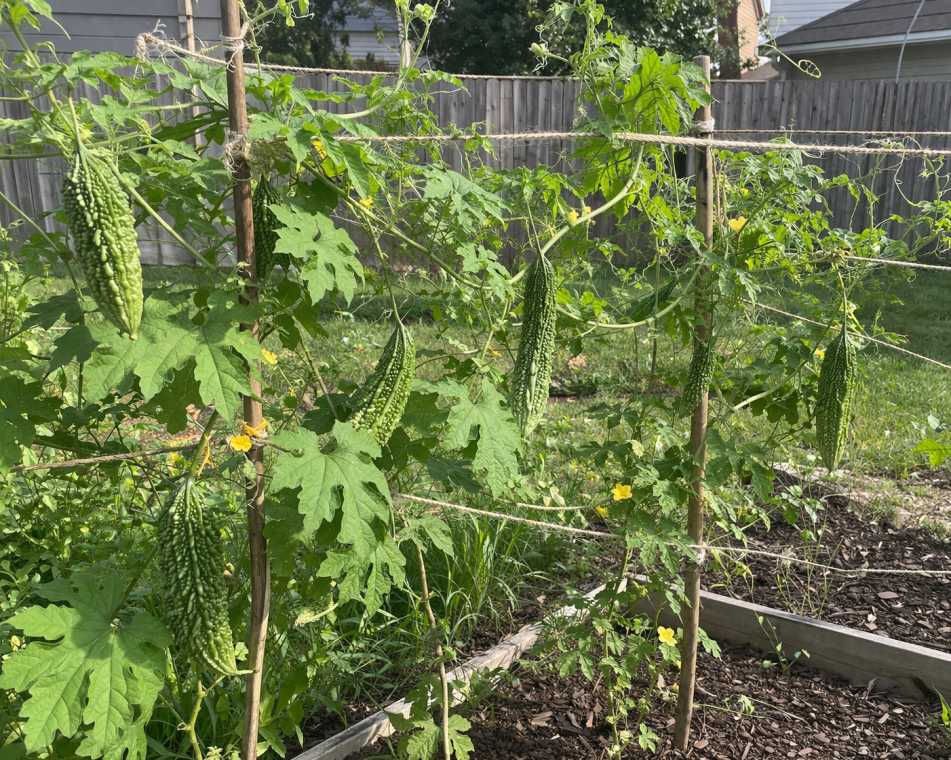
5. Bitter Gourd (Bitter Melon)

Give the bitter gourd some height, and it will take off. This fast-growing vine spreads quickly, and a trellis helps keep its growth under control while allowing the fruits to hang freely. That space makes a big difference in both plant health and fruit shape.

When grown vertically, the fruits develop straighter and cleaner, without touching the soil.

It also becomes much easier to monitor for pests and harvest at the right stage, especially since bitter gourds can mature quickly.

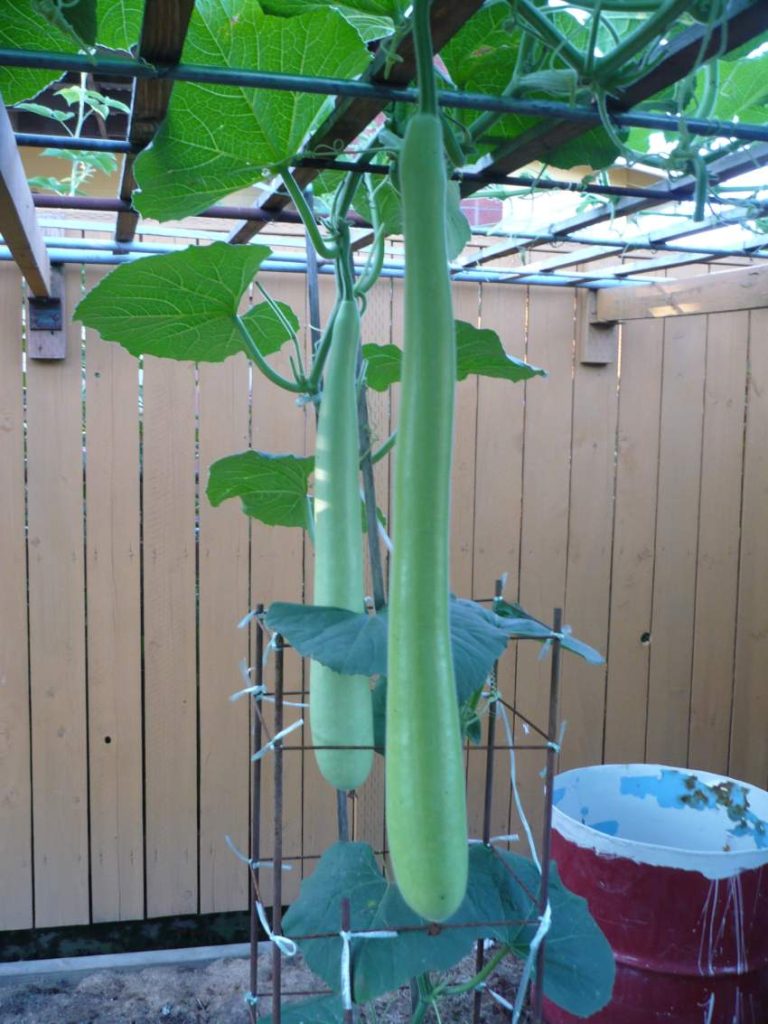
6. Bottle Gourd

Bottle gourd is a vigorous climber that really needs strong support to perform well.

When trained onto a sturdy trellis, the plant directs its energy upward, producing large hanging fruits instead of sprawling across the ground.

The vertical setup also helps the fruits grow evenly and reduces the chances of rotting. Since bottle gourds can get quite heavy, having them suspended makes harvesting safer and prevents damage to both the fruit and the plant.

7. Ridge Gourd

Ridge gourd grows rapidly and responds extremely well to vertical training. Once it starts climbing, the vine spreads across the trellis, creating a green canopy while producing long, tender fruits that hang down neatly.

Growing it this way keeps the fruits straight and easier to harvest.

It also improves airflow around the plant, which helps reduce fungal issues and keeps the leaves healthy throughout the growing season.

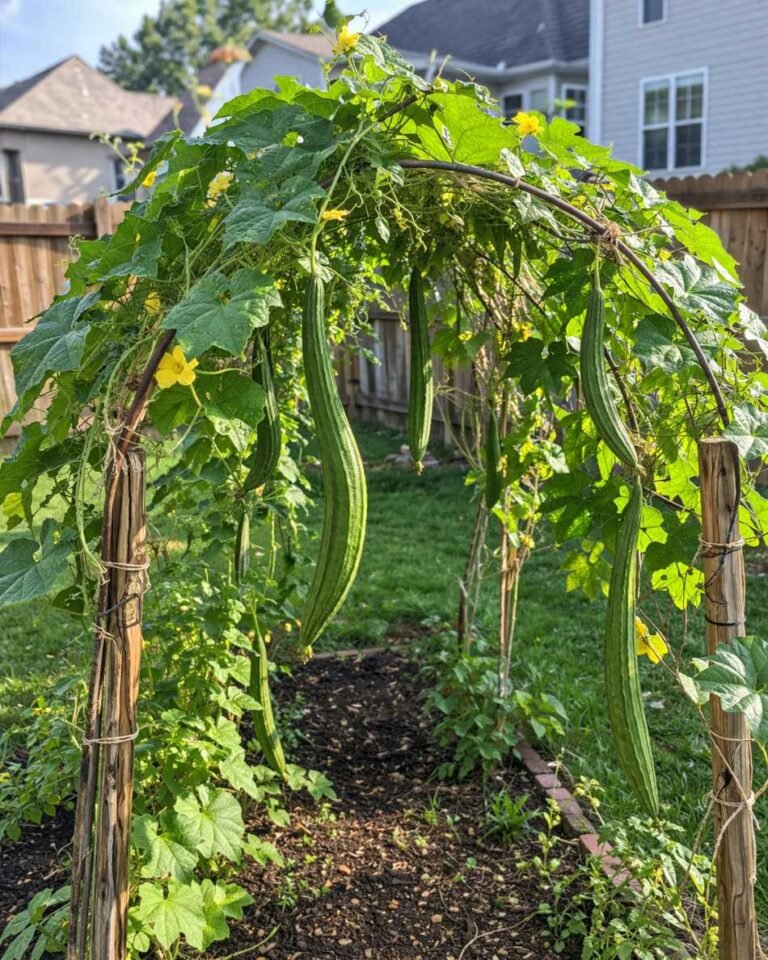
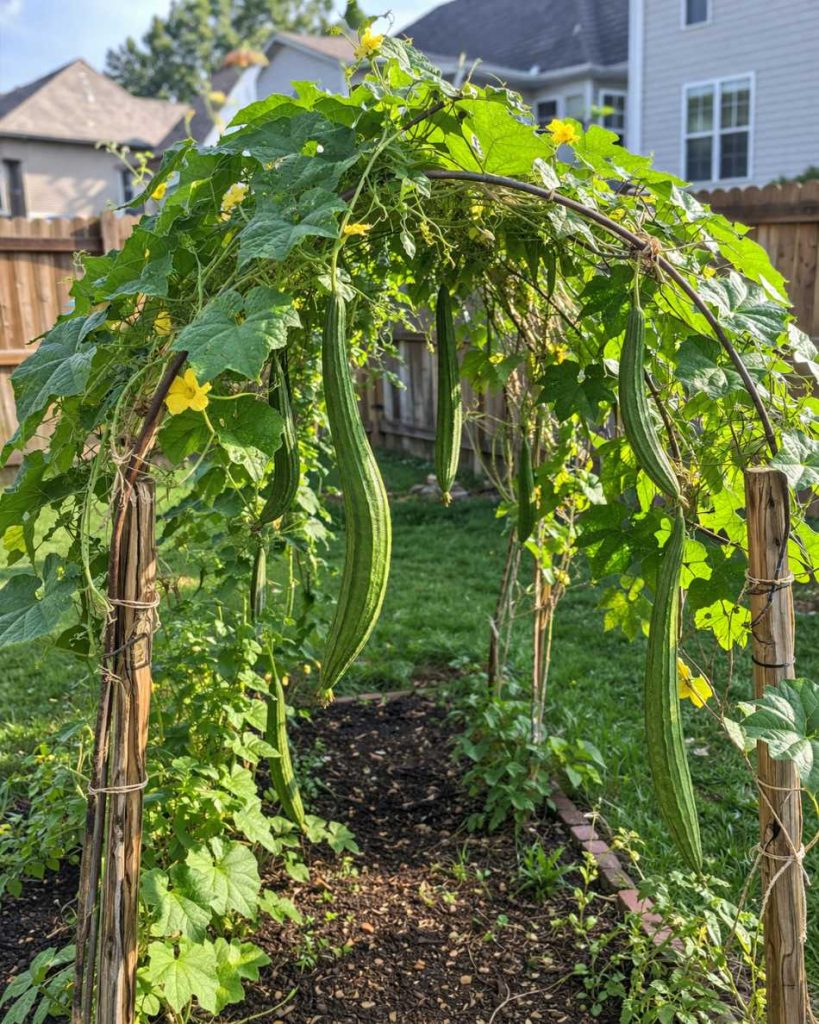
8. Sponge Gourd (Luffa)

Ever seen those natural bath sponges? That’s luffa—and it grows on a vigorous climbing vine.

On a trellis, the plant has room to stretch out, producing long, smooth fruits that hang down evenly instead of curling on the ground.

Vertical growth also keeps the fruits cleaner and reduces pest issues. Plus, better airflow around the vines helps maintain healthy foliage, which is key if you want a good harvest—whether for eating young or drying into sponges.

9. Snake Gourd

growing snake gourd

Long, slender, and slightly twisted—snake gourd truly lives up to its name. But to get those impressively straight fruits, a trellis is almost essential.

When the fruits hang freely, they grow longer and more uniform.

Letting it climb also prevents the vines from taking over your garden space. With better light exposure and airflow, the plant stays healthier, and harvesting becomes much easier since the fruits are clearly visible.

10. Malabar Spinach

Not your typical spinach, Malabar spinach is actually a climbing vine that thrives in warm weather.

Instead of spreading along the ground, it grows upward beautifully when given a trellis or support.

This vertical habit keeps the leaves clean and makes regular harvesting simple. It’s also a great way to add lush greenery to your garden, as the thick vines quickly cover structures while providing a steady supply of edible leaves.

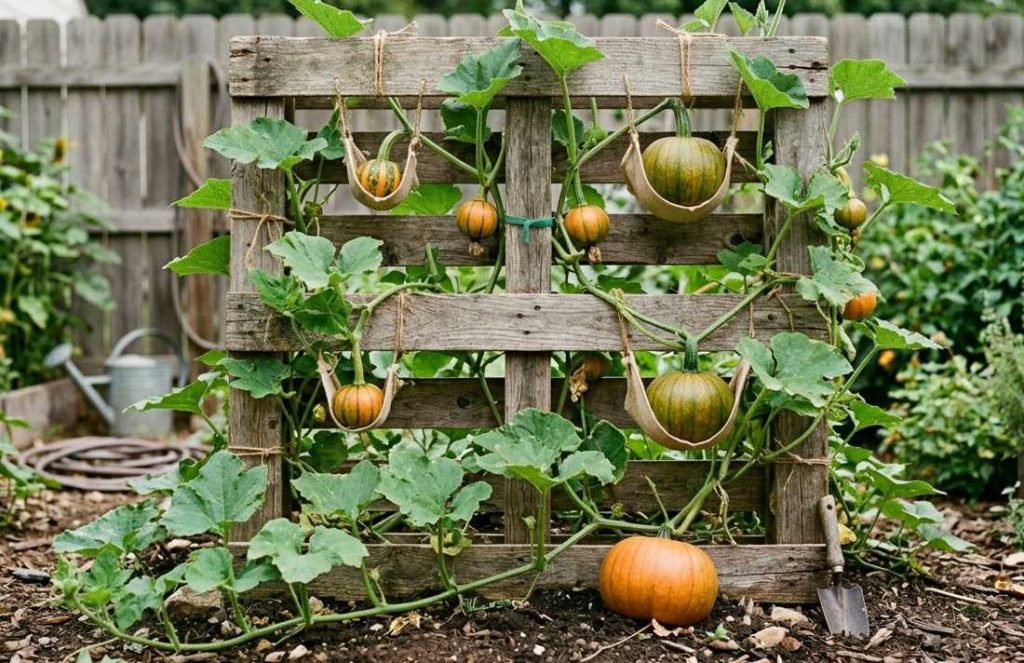
11. Pumpkins (small varieties)

It might sound surprising, but smaller pumpkin varieties can be trained to grow on a sturdy trellis. Instead of sprawling across the ground, the vines climb upward, saving a huge amount of space in your garden.

The key benefit is cleaner, healthier fruits that don’t sit on damp soil.

With proper support (like slings), pumpkins develop nicely while staying off the ground, reducing rot and making them easier to monitor as they grow.

Also Read: 8 Vegetables to Plant in November

12. Yardlong Beans

Long, slender, and incredibly productive, yardlong beans are made for trellises.

These vigorous climbers quickly wrap around supports and start producing beans that can grow impressively long.

Growing them vertically keeps the pods straight and clean while making harvesting much more convenient. Plus, regular picking encourages even more production, giving you a steady supply throughout the season.

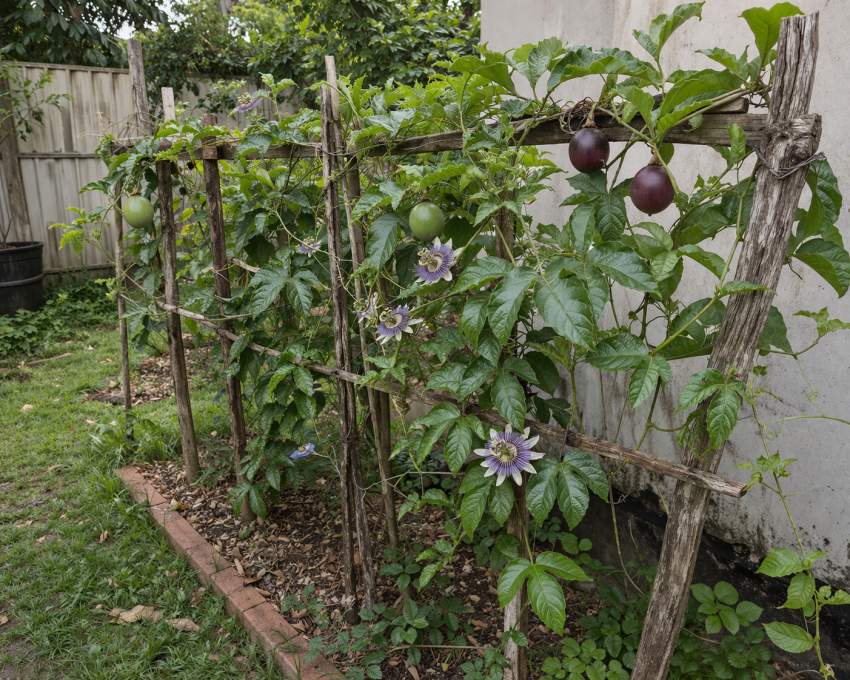
13. Passion Fruit

Looking to cover a trellis quickly? Passion fruit vines are incredibly vigorous and can turn a simple structure into a lush green wall in no time. Their climbing habit makes them perfect for vertical gardens where you want both beauty and productivity.

Beyond the dense foliage, the plant produces unique, aromatic fruits that hang attractively from the vine.

Growing it on a trellis keeps the growth manageable, improves sunlight exposure, and makes harvesting much easier compared to letting it sprawl.

14. Grapes

Few plants suit a trellis as naturally as grapes. Their woody vines are designed to climb, spreading beautifully across supports and creating a structured, elegant look in your garden. Over time, they can even provide partial shade.

Training grapes vertically keeps the fruit clusters well-spaced and exposed to sunlight, which helps them ripen evenly.

It also improves airflow, reducing disease problems and making pruning and harvesting much more manageable.

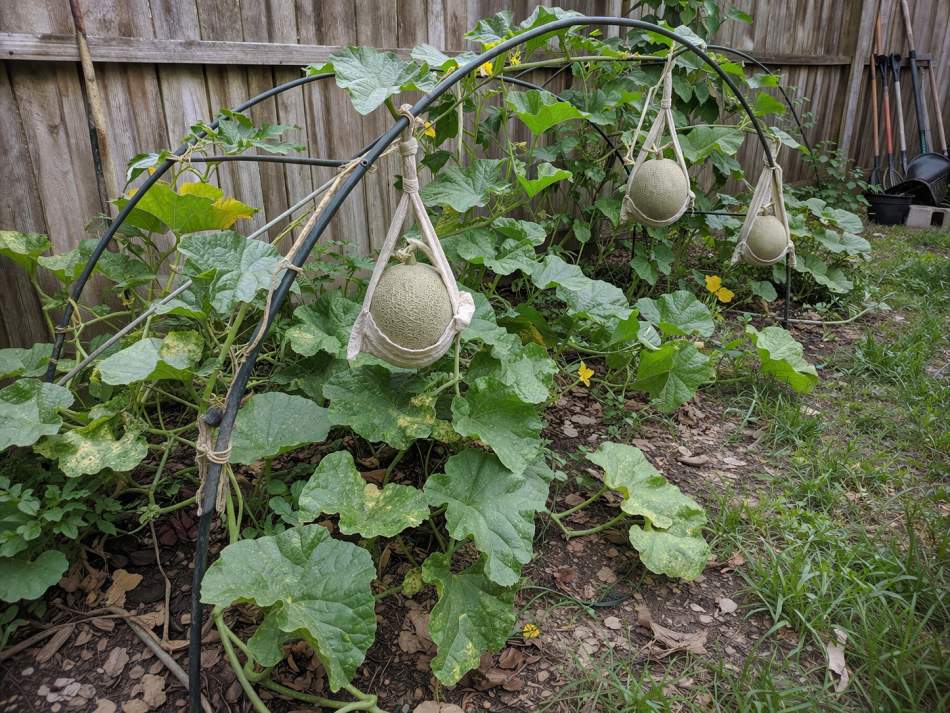
15. Melons (small varieties like cantaloupe)

Yes, even melons can go vertical—if you choose smaller varieties. With a trellis and a bit of support (like slings), the vines can climb while the fruits hang securely without breaking the stems.

Growing melons this way saves a lot of ground space and keeps the fruits off damp soil, reducing rot.

Plus, better air circulation around the plant helps maintain overall health and fruit quality.

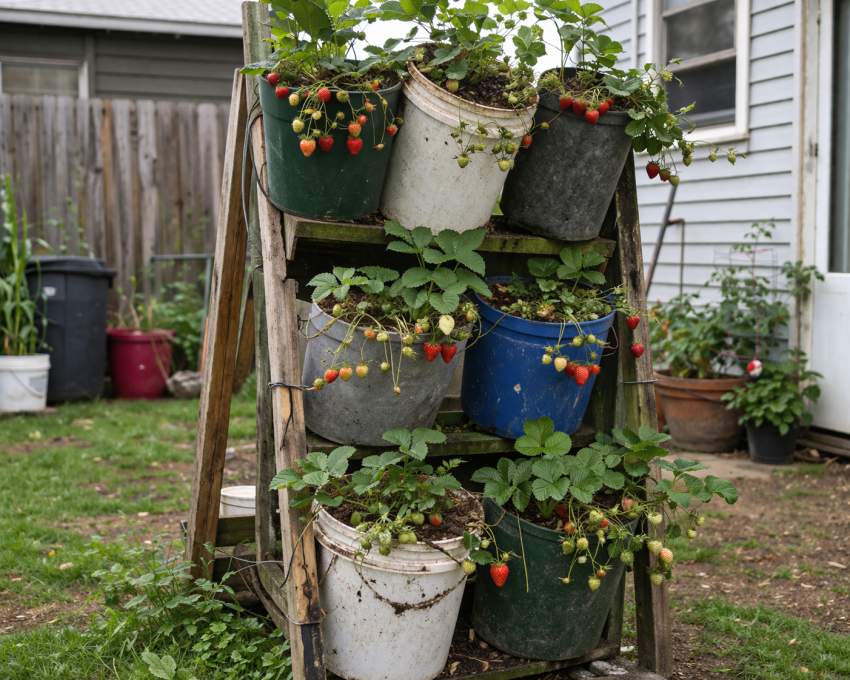
16. Strawberries (vertical systems)

Strawberries don’t climb, but they fit perfectly into vertical gardening using pocket planters or tiered trellis setups. This method lifts the fruits off the ground, keeping them cleaner and less prone to pests.

It also makes harvesting much easier—no more bending down to search under leaves.

As a bonus, vertical strawberries add a decorative touch, turning your trellis into both a productive and visually appealing feature.

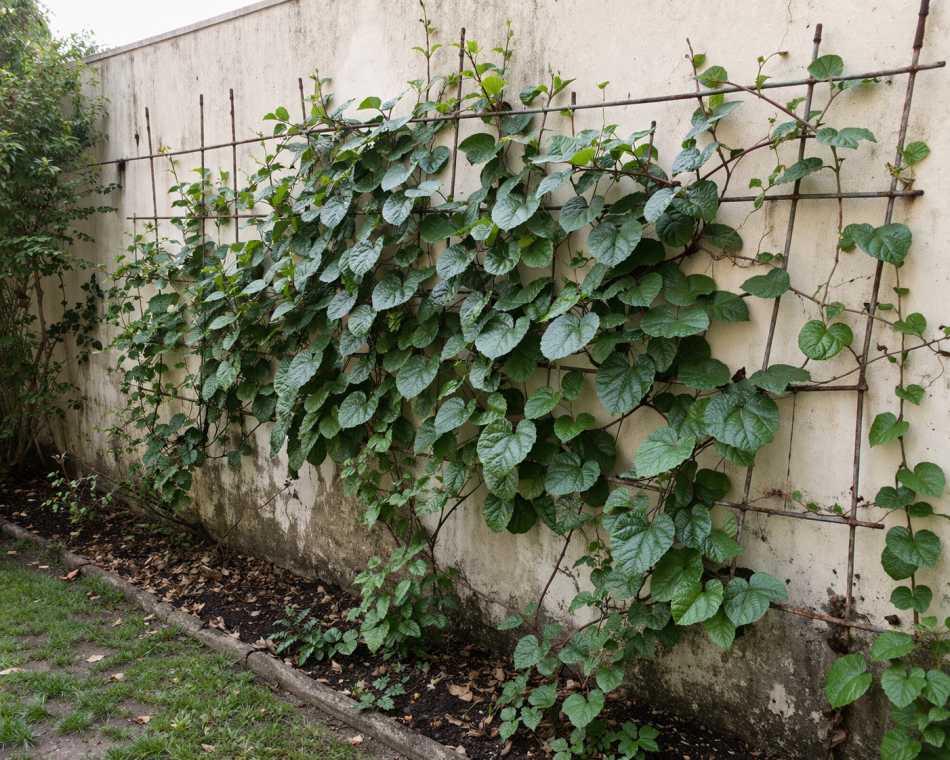
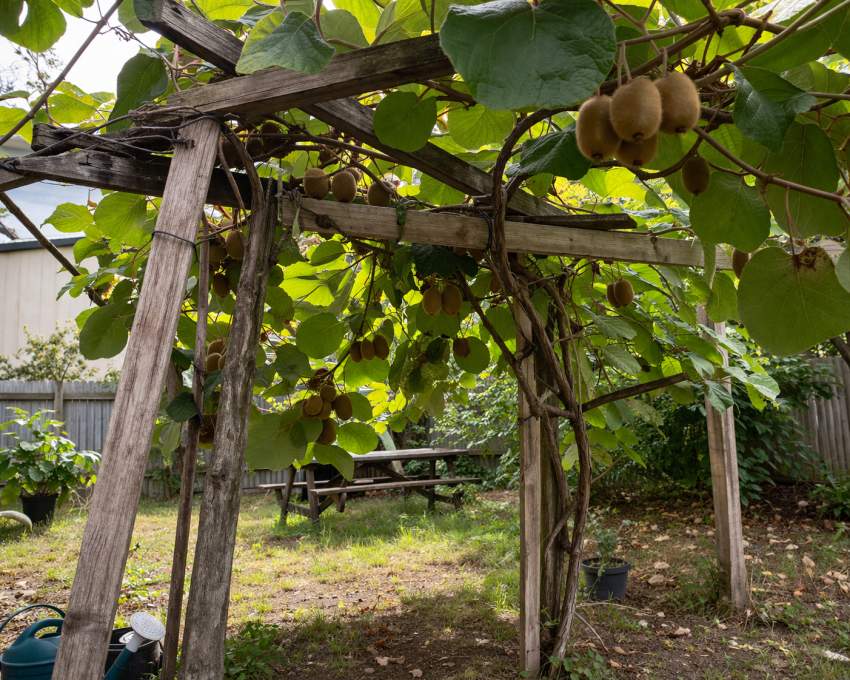
17. Kiwi (Hardy or Dwarf varieties)

For something a little different, kiwi vines are excellent climbers that thrive on strong trellises. They grow vigorously and can quickly cover vertical structures, making them ideal if you want both shade and fruit in your garden.

When trained properly, the vines stay organized and productive, allowing better sunlight exposure and airflow. This leads to healthier growth and easier harvesting, as the fruits hang down within reach instead of getting lost in dense, tangled vines.

Choose the Right Trellis Type

Choosing the right trellis isn’t just about looks—it directly affects how well your plants grow, how easy they are to manage, and how long your setup lasts.

Match Trellis Strength to Plant Weight: Light climbers like peas and pole beans are happy with simple supports like bamboo stakes, string lines, or mesh netting.

But heavier plants—like gourds, melons, grapes, or kiwi—need strong wooden, metal, or welded wire trellises that won’t bend under weight.

Pick the Right Structure Style: Flat trellises (against a wall or fence) are great for saving space. A-frame or arch trellises give plants more room to spread and are perfect for walkways. Vertical strings or netting work best for fast-growing, lightweight vines.

Consider Durability: If you’re growing seasonal veggies, temporary setups like bamboo or jute rope work fine. But for long-term plants like grapes or passion fruit, invest in sturdy materials like treated wood or metal that can last for years.

Think About Accessibility: Make sure you can easily reach both sides of the trellis for pruning and harvesting. Overcrowded or hard-to-reach setups can quickly become messy and difficult to maintain.

Allow Proper Spacing: Don’t cram plants too close together. Good spacing improves airflow, reduces disease, and gives each plant enough room to climb without competing.

Conclusion

Growing vegetables on a trellis is one of the simplest ways to get more out of your garden without needing more space.

By taking plants upward instead of outward, you create a cleaner, more organized setup that’s easier to manage and far more productive.

From fast-growing climbers like beans and cucumbers to heavier vines like gourds and melons, trellising helps improve airflow, reduce pests and diseases, and make harvesting effortless.

In the end, it’s a smart, space-saving approach that gives you healthier plants, better yields, and a garden that looks just as good as it performs.

Sheet Pan Chicken Fajitas

0


Sheet Pan Chicken Fajitas


Privacy & Cookies Policy


THERABAND Resistance Band, Special Heavy, 50-Yard Roll, Elastic Band for Exercise

0


Price: $80.31 - $72.18
(as of Apr 06, 2026 23:03:46 UTC – Details)


HEAVY RESISTANCE FOR ADVANCED TRAINING: Designed for serious workouts and rehabilitation, offering high-level resistance ideal for building strength and flexibility; trusted by pros and clinics
50-YARD ROLL FOR CUSTOM LENGTHS: Long continuous latex roll lets you cut exactly what you need for every exercise or client; great for home, gym, or professional use and measures 4 inches wide for easy grip and wrapping
PORTABLE & MULTIPURPOSE FITNESS TOOL: Compact, lightweight, and tangle-resistant; perfect for yoga, Pilates, stretching, home workouts, and physical therapy sessions on the go
PROGRESSIVE RESISTANCE MADE SIMPLE: The THERABAND color-coded system makes it easy to track your progress and adjust challenge levels; helps support fitness goals and rehab stages at any pace
USED BY ALL AGES & FITNESS LEVELS: Great for beginners to pros, including seniors in recovery and athletes in training; latex band stores easily, wipes clean, and holds its elasticity workout after workout

How to Grow and Care for Crinum Lilies

0

Crinum spp.

With large, showy flowers and a sweetly spicy scent, crinum lilies (Crinum spp.) are sensational for adding dramatic flair to many garden settings!

Each bulb offers two or three successive flower scapes, and each scape is topped in generous umbels that develop handsome trumpet-shaped blooms.

Colors are mostly in reddish tones such as apricot, burgundy, mauve, pink, scarlet, and white.

While each flower has a short life of only a couple of days, mature bulbs produce heavily laden umbels that bloom for weeks!

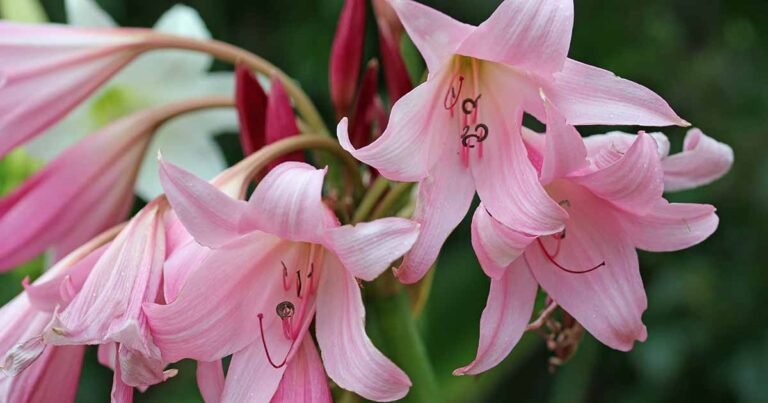
A close up horizontal image of light pink crinum lilies growing in the garden pictured on a soft focus background.

We link to vendors to help you find relevant products. If you buy from one of our links, we may earn a commission.

Tough and low-maintenance, the robust bulbs develop large roots that regularly produce offsets, creating impressive stands of glossy green strappy foliage with multiple flower scapes.

Plants are long-lived perennials in mild climates, and when grown undisturbed, can last for generations. Some develop jumbo-sized bulbs that weigh as much as 20 pounds!

Outside of their hardiness range, crinum lilies can be enjoyed in large containers and moved into a sheltered spot protected from winter cold.

Does your garden need a splash of these striking, perfumed blooms? Then let’s uncover how to grow and care for crinum lilies!

Here’s what’s up ahead:

Members of the Amaryllis family with over 100 species, crinum lilies are long-lived perennial bulbs, but they are not true lilies.

They are known by several other common names including cemetery plant and cape, spider, or swamp lily.

A close up horizontal image of a light pink crinum lily growing in the garden pictured on a soft focus background.A close up horizontal image of a light pink crinum lily growing in the garden pictured on a soft focus background.

Native to Africa, the Americas, Asia, and Australia, Crinum species are prized for the large and perfumed blooms that flower mostly in summer and into fall, although some open in mid or late spring.

Quick Look

Common name(s): Crinum lily, cemetery plant, cape, spider, or swamp lily.

Plant type: Perennial flowering bulb

Hardiness (USDA Zone): 7-11

Native to: Africa, Asia, Australia, and the Americas

Bloom time / season: Summer

Exposure: Full sun

Soil type: Organically-rich, well draining

Soil pH: 6.0-7.0, slightly acidic to neutral

Time to maturity: 2-3 years for flowers

Mature size: 3-4 feet tall by 2-7 feet wide (depending on species)

Best uses: Containers, foundations, mass plantings, erosion control, and coastal or water gardens

Taxonomy

Order: Asparagales

Family: Amaryllidaceae

Genus: Crinum

Species: Americanum, x amibile, asiaticum, bulbispermum, x powellii, mooreii

The spreading clumps of long, lush foliage spread two to seven feet and scapes reach three to four feet tall, depending on the variety.

Many species and cultivars sport large, funnel-like blooms. However, some varieties like the spider lily (C. asiaticum) feature distinctively thin, wispy petals.

A close up horizontal image of the flowers of a crinum lily pictured on a soft focus background.A close up horizontal image of the flowers of a crinum lily pictured on a soft focus background.
Spider lily (C. asiaticum). Editorial credit: 2ShotsDown / Shutterstock.com

Hardy in Zones 7 to 11, all varieties thrive in full sun to partial shade and are highly adaptable to a range of soil conditions.

As the bulbs grow they also spread via offsets or “pups,” reliably developing into robust clumps with decent drought tolerance.

Exuding laid back elegance, crinum lilies are dependable garden performers that add eye-catching appeal to beds, borders, and containers or massed into drifts.

And they’re a stellar choice for erosion control on banks or hills with the boisterous bulbs and large roots perfect for soil stabilization.

A close up horizontal image of white swamp lily flowers growing wild.A close up horizontal image of white swamp lily flowers growing wild.
Swamp lily (C. americanum).

Some species, including varieties of the popular starry-flowered native swamp lily (C. americanum), are well-suited for growth in aquatic locations with still waters or wet soil conditions, such as bogs, creek banks, marshes, pond edges, and swamps.

DOCTORS’ PREFERRED High Potency Magnesium Glycinate Complex- Doctor-Developed Formula for Heart Health, Mood Support and More | 420 mg per Serving | 30-Day Supply

0


Price: $19.99
(as of Apr 06, 2026 11:02:59 UTC – Details)

Product description

Doctor photo lineupDoctor photo lineup

DOCTOR-FORMULATED FOR BETTER RESULTS

Clinically validated, triple-tested, and built on decades of real-world experience and science—not guesswork or trends.

The video showcases the product in use.The video guides you through product setup.The video compares multiple products.The video shows the product being unpacked. DOCTOR-FORMULATED FOR BETTER RESULTS Merchant Video

High Potency  Magnesium Glycinate Complex Fuel for your mind & bodyHigh Potency  Magnesium Glycinate Complex Fuel for your mind & body

Woman taking a pill with a glass of waterWoman taking a pill with a glass of water High potency, gentle formula

Powerful complex with 420 mg from magnesium glycinate and oxide. Just 2 capsules deliver 100% daily magnesium in a gentler formula.

Young woman and man taking a walk togetherYoung woman and man taking a walk together Supports smooth body function

Magnesium supports vital functions in every cell, helping regulate blood pressure, maintain healthy blood flow, and bolster metabolic function.

Older woman relaxing on a hammockOlder woman relaxing on a hammock The original “chill pill”

Used since ancient times, magnesium supports mood wellness and overall well-being. Paired with a healthy lifestyle, it promotes balance and vitality.

Doctor looking into a microscopeDoctor looking into a microscope Top quality. Optimal results

Backed by research, rigorous quality testing (including independent lab analysis), and doctor developed.

Dr Drew Sinatra in a doctor's office

Uncompromising safety and reliability

Delivering science- backed formulas & real results

Committed to helping people live better lives

Delivering excellence and results

Doctors’ Preferred Picks

Add to Cart

Add to Cart

Add to Cart

Add to Cart

Add to Cart

Add to Cart

Customer Reviews

4.7 out of 5 stars 142

4.4 out of 5 stars 1,202

4.3 out of 5 stars 256

4.1 out of 5 stars 369

4.4 out of 5 stars 545

4.5 out of 5 stars 231

Price

$19.99$19.99

$42.84$42.84

$69.99$69.99

$69.99$69.99

$69.99$69.99

$69.99$69.99

Number of Servings

30

30

30

30

30

30

Primary Ingredients

Magnesium Glycinate

Berberine, Chromium

Lutein, Zeaxanthin

CogniGrape, Sensoril

Magnesium, Chromium, Turmeric

Berberine, OEA, Mulberry

Gluten Free

Doctor-Developed

Triple-Tested

Package Dimensions ‏ : ‎ 3.7 x 1.89 x 1.85 inches; 2.4 ounces
Date First Available ‏ : ‎ January 18, 2024
Manufacturer ‏ : ‎ Healthy Directions
ASIN ‏ : ‎ B0CSQQ2PHC
Best Sellers Rank: #60,871 in Health & Household (See Top 100 in Health & Household) #1,021 in Magnesium Mineral Supplements
Customer Reviews: 4.7 4.7 out of 5 stars (142) var dpAcrHasRegisteredArcLinkClickAction; P.when(‘A’, ‘ready’).execute(function(A) { if (dpAcrHasRegisteredArcLinkClickAction !== true) { dpAcrHasRegisteredArcLinkClickAction = true; A.declarative( ‘acrLink-click-metrics’, ‘click’, { “allowLinkDefault”: true }, function (event) { if (window.ue) { ue.count(“acrLinkClickCount”, (ue.count(“acrLinkClickCount”) || 0) + 1); } } ); } }); P.when(‘A’, ‘cf’).execute(function(A) { A.declarative(‘acrStarsLink-click-metrics’, ‘click’, { “allowLinkDefault” : true }, function(event){ if(window.ue) { ue.count(“acrStarsLinkWithPopoverClickCount”, (ue.count(“acrStarsLinkWithPopoverClickCount”) || 0) + 1); } }); });
KEY TO OPTIMAL HEALTH and ESSENTIAL FOR MORE THAN 300 BIOLOGICAL PROCESSES IN THE BODY. This straightforward, yet high potency complex features two forms of magnesium in a hardy 420 mg daily dose. Magnesium glycinate and oxide combined provide a formula that’s gentler on your stomach than many other forms. It’s also highly potent which means it delivers more of this vital mineral throughout your body. 100% of your daily magnesium in just 2 capsules.
SUPPORTS YOUR HEART AND ENTIRE CARDIOVASCULAR SYSTEM, AND METABOLIC FUNCTION. Magnesium is a star player throughout your body especially when combined with healthy lifestyle habits. Along with a healthy diet and regular exercise, it helps support and maintain blood pressure levels already within the normal range, markers of blood flow and healthy lipid levels. Magnesium is also important for energy production as it supports healthy fasting and post-meal nutrient levels throughout the body.
PROPER MOOD HEALTH IS KEY FOR A VIBRANT, HEALTHY LIFE. Magnesium is well known for the role it plays in relieving the effects of occasional anxiousness. Plus, it goes a step further by promoting a positive mood. This benefit alone can have a profound effect on your overall physical health and enjoyment of daily living.
DEVELOPED AND RECOMMENDED BY BOARD-CERTIFIED NATUROPATHIC DOCTOR DREW SINATRA, graduate of Bastyr University (America’s top naturopathic and integrative medicine school) with a vibrant, multi-disciplinary practice in the Pacific Northwest. Widely regarded as a leader of the latest generation of integrative practitioners.
THE DOCTORS’ PREFERRED DIFFERENCE: Helping people live healthier, more active lives for over 30 years through innovative and exclusive doctor-developed formulas, superior quality standards, clinically validated key ingredients and results, and outstanding customer service.

DOCTORS’ PREFERRED GlucoGold with Berberine, Concentrated Cinnamon, Chromium, Banaba Leaf Extract (90 Tablets)

0


Price: $42.84
(as of Apr 05, 2026 22:58:42 UTC – Details)

Product description

Next-Generation Supplements for Outstanding ResultsNext-Generation Supplements for Outstanding Results

DOCTOR-FORMULATED FOR BETTER RESULTS

Clinically validated, triple-tested, and built on decades of real-world experience and science—not guesswork or trends.

The video showcases the product in use.The video guides you through product setup.The video compares multiple products.The video shows the product being unpacked. DOCTOR-FORMULATED FOR BETTER RESULTS Merchant Video

Powerful, all-in-one solution goes well beyond berberine for optimal wellnessPowerful, all-in-one solution goes well beyond berberine for optimal wellness

Middle aged man playing pickleballMiddle aged man playing pickleball Cellular Energy & Heart Health

GlucoGold with Berberine supports cellular energy and cardiovascular wellness by activating AMPK, helping move nutrients into cells after meals.

Banaba leaf blossomBanaba leaf blossom Botanical Boosts Energy

Research suggests banaba leaf extract helps regulate nutrients that support cellular energy, backed by a long history of traditional use.

Food sources that contain chromiumFood sources that contain chromium Targeted Lipid Support

Crominex 3+ is a well-researched, more advanced form of chromium shown in a 12-week study to help your body process nutrients and manage blood lipids.

Cinnamon sticksCinnamon sticks Concentrated Cinnamon Power

A highly concentrated 10:1 cinnamon extract supports cardiovascular wellness, delivering the benefits of higher doses with less needed.

Dr. Julian Whitaker of Whitaker Wellness Institute

Uncompromising safety and reliability

Delivering science- backed formulas & real results

Committed to helping people live better lives

Delivering excellence and results

Doctors’ Preferred Picks

Add to Cart

Add to Cart

Add to Cart

Add to Cart

Add to Cart

Add to Cart

Customer Reviews

4.4 out of 5 stars 1,202

4.4 out of 5 stars 545

4.3 out of 5 stars 255

4.1 out of 5 stars 369

4.7 out of 5 stars 142

4.5 out of 5 stars 231

Price

$42.84$42.84

$69.99$69.99

$69.99$69.99

$69.99$69.99

$19.99$19.99

$69.99$69.99

Number of Servings

30

30

30

30

30

30

Primary Ingredients

Berberine & Chromium

Magnesium, Chromium & Turmeric

Lutein & Zeaxanthin

CogniGrape & Sensoril

Magnesium Glycinate

Berberine, OEA & Mulberry

Gluten Free

Doctor-Developed

Triple-Tested

Package Dimensions ‏ : ‎ 4.29 x 2.4 x 2.28 inches; 4.16 ounces
Date First Available ‏ : ‎ July 7, 2023
Manufacturer ‏ : ‎ Healthy Directions
ASIN ‏ : ‎ B0CBBHM3RZ
Best Sellers Rank: #19,283 in Health & Household (See Top 100 in Health & Household) #36 in Cinnamon Herbal Supplement
Customer Reviews: 4.4 4.4 out of 5 stars (1,202) var dpAcrHasRegisteredArcLinkClickAction; P.when(‘A’, ‘ready’).execute(function(A) { if (dpAcrHasRegisteredArcLinkClickAction !== true) { dpAcrHasRegisteredArcLinkClickAction = true; A.declarative( ‘acrLink-click-metrics’, ‘click’, { “allowLinkDefault”: true }, function (event) { if (window.ue) { ue.count(“acrLinkClickCount”, (ue.count(“acrLinkClickCount”) || 0) + 1); } } ); } }); P.when(‘A’, ‘cf’).execute(function(A) { A.declarative(‘acrStarsLink-click-metrics’, ‘click’, { “allowLinkDefault” : true }, function(event){ if(window.ue) { ue.count(“acrStarsLinkWithPopoverClickCount”, (ue.count(“acrStarsLinkWithPopoverClickCount”) || 0) + 1); } }); });
THREE POWERHOUSE BOTANICALS: An advanced combination of nutrients in the dosages shown in clinical studies—1,500 mg daily dose of BerberPureR Berberine, 400 mcg Crominex 3+ Chromium, and 48 mg Banaba leaf extract. Also includes a 200 mg highly concentrated cinnamon extract shown to increase potency and absorption of berberine.
FULL 1,500 MG RESEARCH DAILY DOSE OF BERBERINE. With clinically validated BerberPure Berberine Hydrochloride used in clinical practice, which means you get the dosage and form backed by human clinical data.
PLUS 400 MCG OF CROMINEX 3+. This unique, clinically studied blend includes optimized chromium with the addition of Capros amla extract, and PrimaVie purified shilajit extract, for superior bioavailability.
FORMULATED BY JULIAN WHITAKER, MD Pioneer, and trusted authority on integrative medicine whose 40+ years treating patients and work with supplement leader Healthy Directions led to the development of GlucoGold with Berberine.
THE DOCTORS’ PREFERRED DIFFERENCE: Helping people live healthier, more active lives for over 30 years through innovative and exclusive doctor-developed formulas, superior quality standards, clinically validated key ingredients and results, and outstanding customer service.

Poppy Varieties for Every Garden: Annual and Perennial Favorites to Grow

0

Find the Right Poppy Varieties for Your Garden

Conjuring images of pastoral scenes and colorful cottage gardens, poppies are a charismatic addition to the landscape. There are over 60 species of true poppies (Papaver spp. and cvs., Zones 3–9), which have a native distribution throughout northern and southern Africa, western Asia, southern and central Europe, and western North America. Their family, Papaveraceae, contains 42 additional genera, including other common garden plants like bleeding heart (Lamprocapnos spectabilis and cvs., Zones 3–9).

Poppy varieties generally prefer average to poor soil and full sun, and are tolerant of dry conditions. Typically, the plants are hairy and exude sap that makes them resistant to browsing from deer and other herbivores. Many commonly grown poppies are annuals, completing their life cycle in a single season but persisting in the garden through reseeding. Others are short-lived perennials that are often grown functionally as annuals. Most selections are only available to purchase as seed. While they are easy to grow, knowledge and effort are required. With all the different species and selected varieties, poppies are a wonderful low-stakes way to experiment with color while adding ephemerality and serendipity to beds and borders.

Read More: Try These 4 Poppy-Like Plants


Perennial poppy varieties provide years of bold color and may self-sow


Oriental poppies are reliable perennials with a wide variety of cultivars to choose from

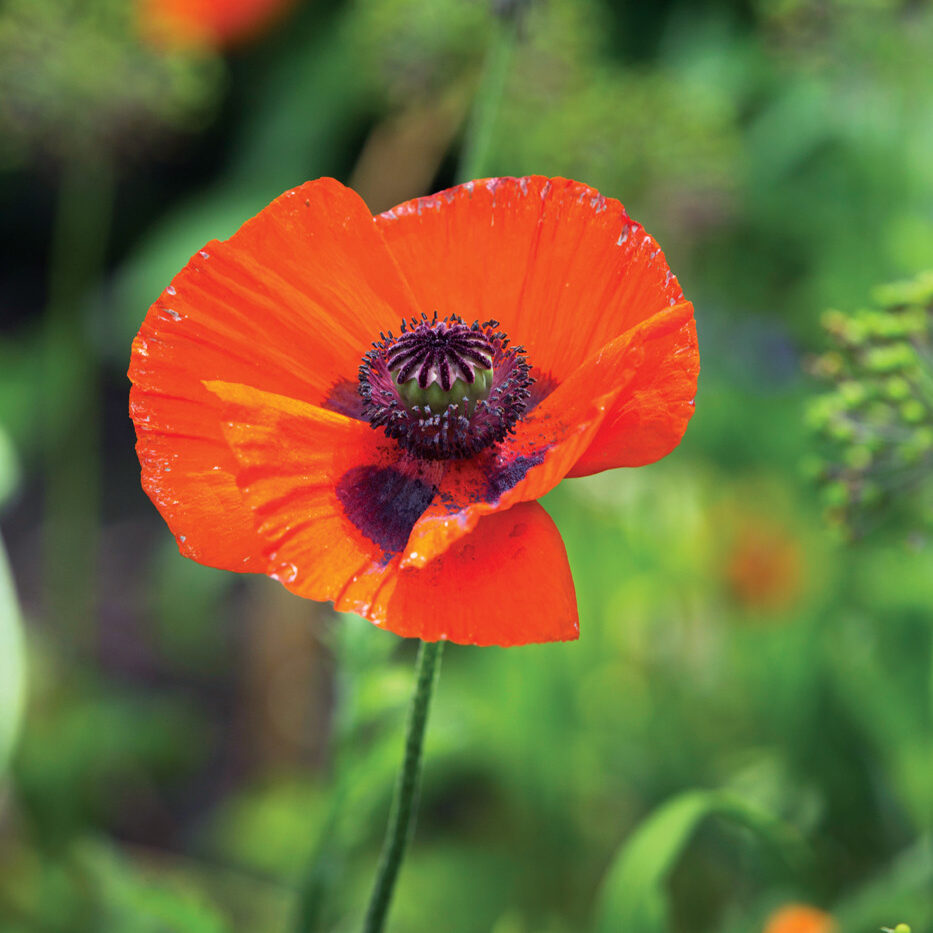
Oriental poppy  Photo by Adobe Stock

P. orientale and cvs.

  • Zones: 3–7
  • Size: Variable, typically up to 3 feet tall and 2 feet wide
  • Conditions: Full sun; medium, well-drained soil
  • Native range: Caucasus Mountains, Iran, and Turkey

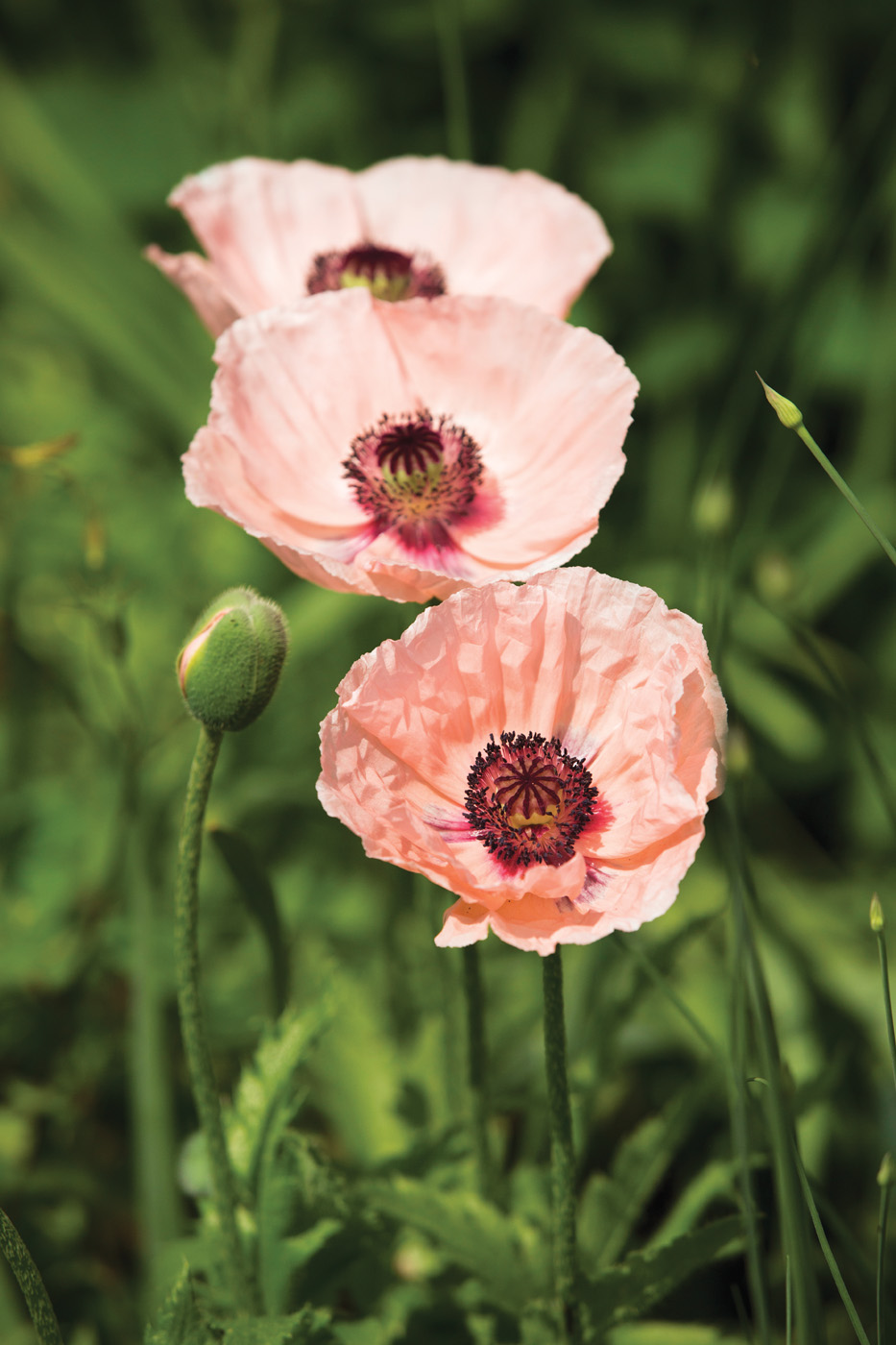
Oriental poppy is the most common true perennial poppy available to gardeners. Along with the straight species (photo above), a variety of cultivars are available that display large flowers in shades of red, orange, pink, mauve, and white. The plants have basal rosettes of bright green, toothed leaves. Blooms emerge in mid-spring, typically from mid-May through early June. These poppies will disappear in summer heat and humidity but begin growing again when the temperatures cool off, and will return for the upcoming year.

Add them alongside other perennials that will continue to grow as the season progresses to ensure that summer gaps are filled. Maintenance is simple—a cutback to the ground after they have faded for the summer is typically all that’s required.

Papaver oriental 'Royal Wedding'
Papaver orientale ‘Royal Wedding’  Photo by DoreenWynja.com

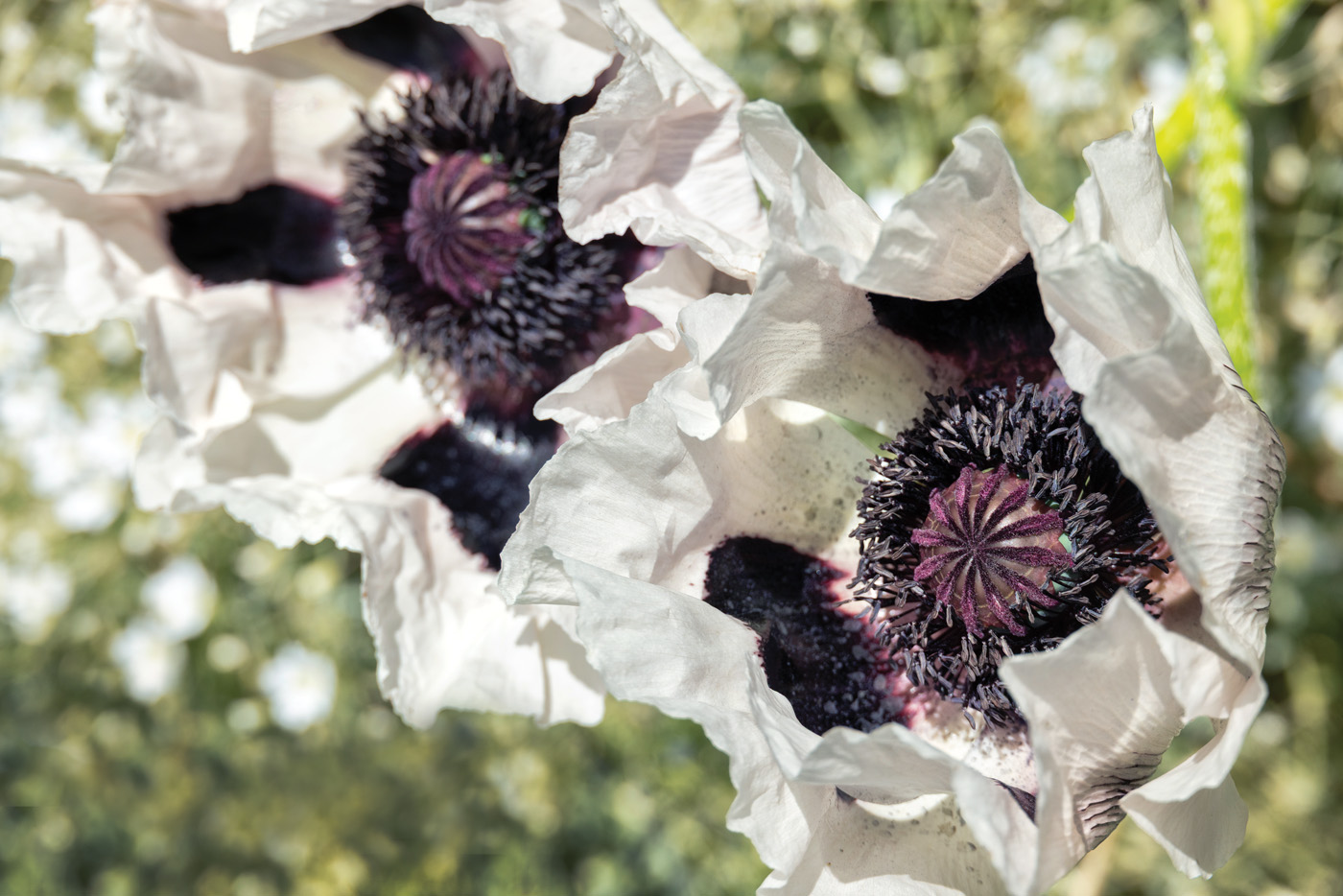
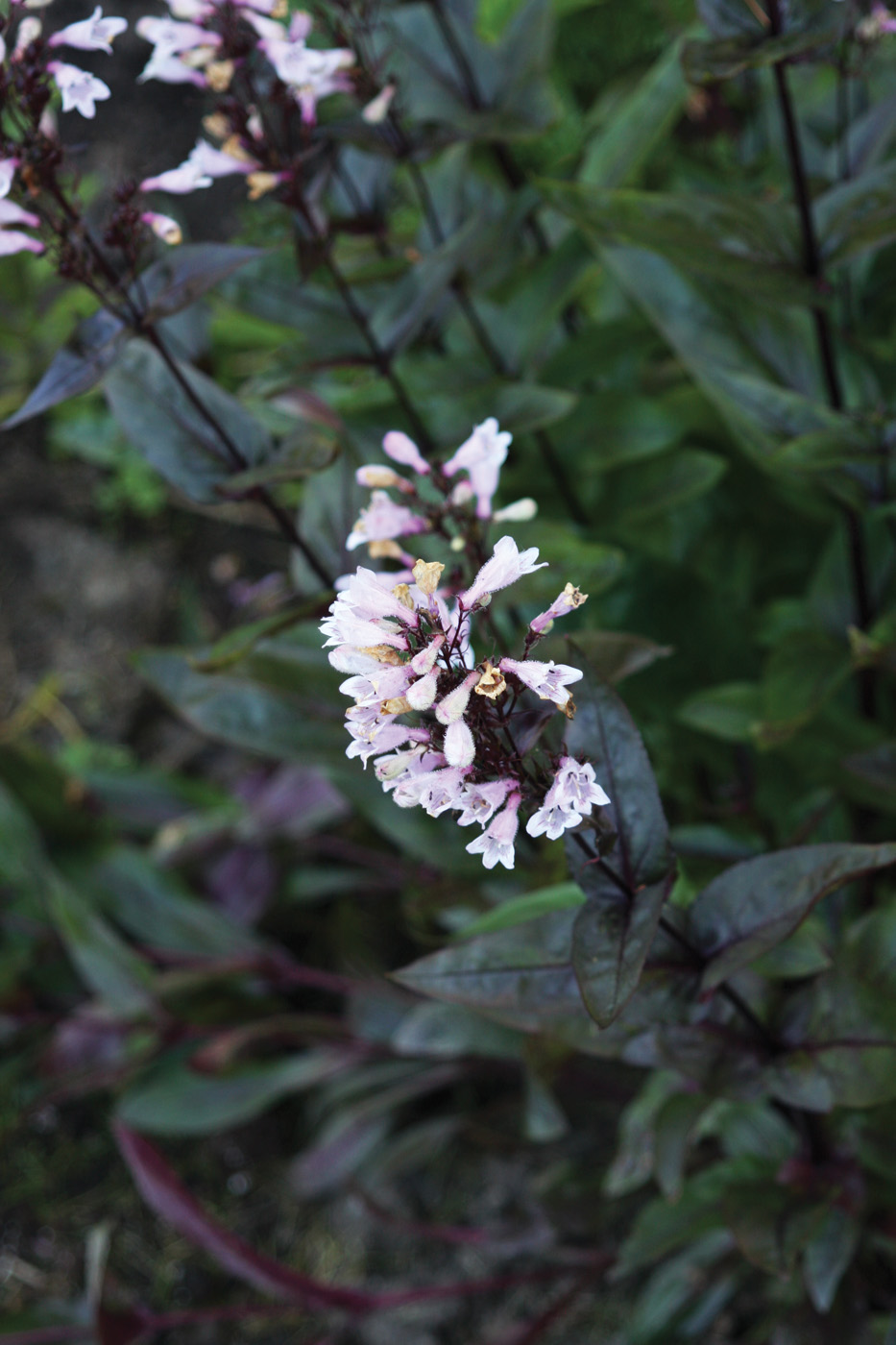
‘Royal Wedding’ is a selection that blooms with semidouble pure white petals that graphically contrast with the black patches at the base. Blooms are large, up to 6 inches wide, and when flowering, plants can grow to 34 inches tall. To enhance the contrast, grow ‘Royal Wedding’ alongside herbaceous perennials with dark foliage like ‘Husker Red’ penstemon (Penstemon digitalis ‘Husker Red’, Zones 3–8).

Papaver orientale Prince of Orange Courtesy New York Botanical Garden
Papaver orientale ‘Prince of Orange’  Photo courtesy of New York Botanical Garden

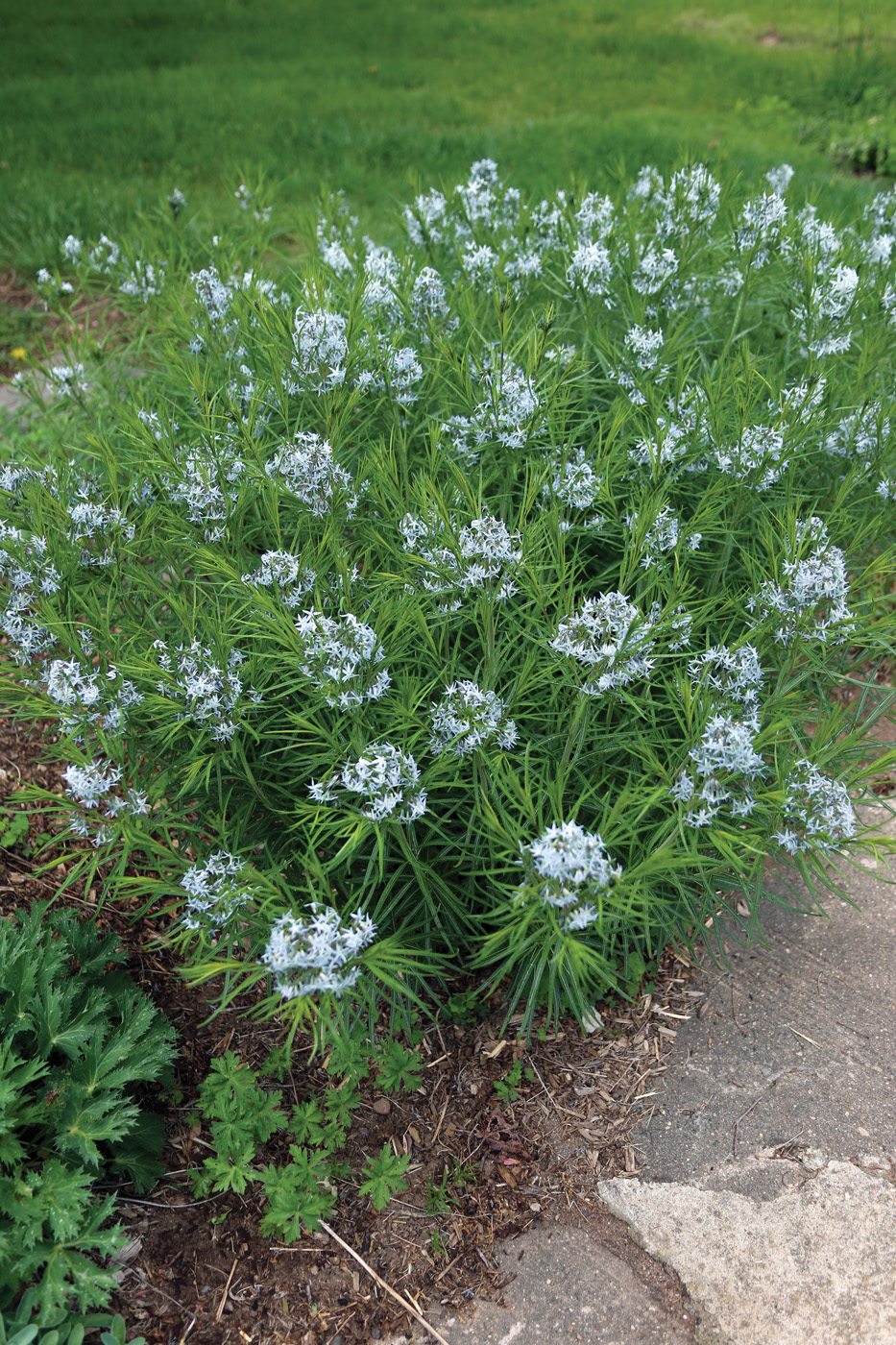
A robust cultivar, ‘Prince of Orange’ has semidouble brilliant vermillion petals that are slightly more orange than the species, and feature black spots at the center of the blossoms. This selection is especially eye-catching when its royal purple pollen sprinkles over the petals. Flowers are up to 5 inches across and stems grow to 3 feet tall when in bloom. These vibrant flowers are best complemented by soft blue ones like those of threadleaf bluestar (Amsonia hubrichtii, Zones 5–8).

Papaver orientale Karine Photo courtesy New York Botanical Garden
Papaver orientale Karine  Photo courtesy of New York Botanical Garden

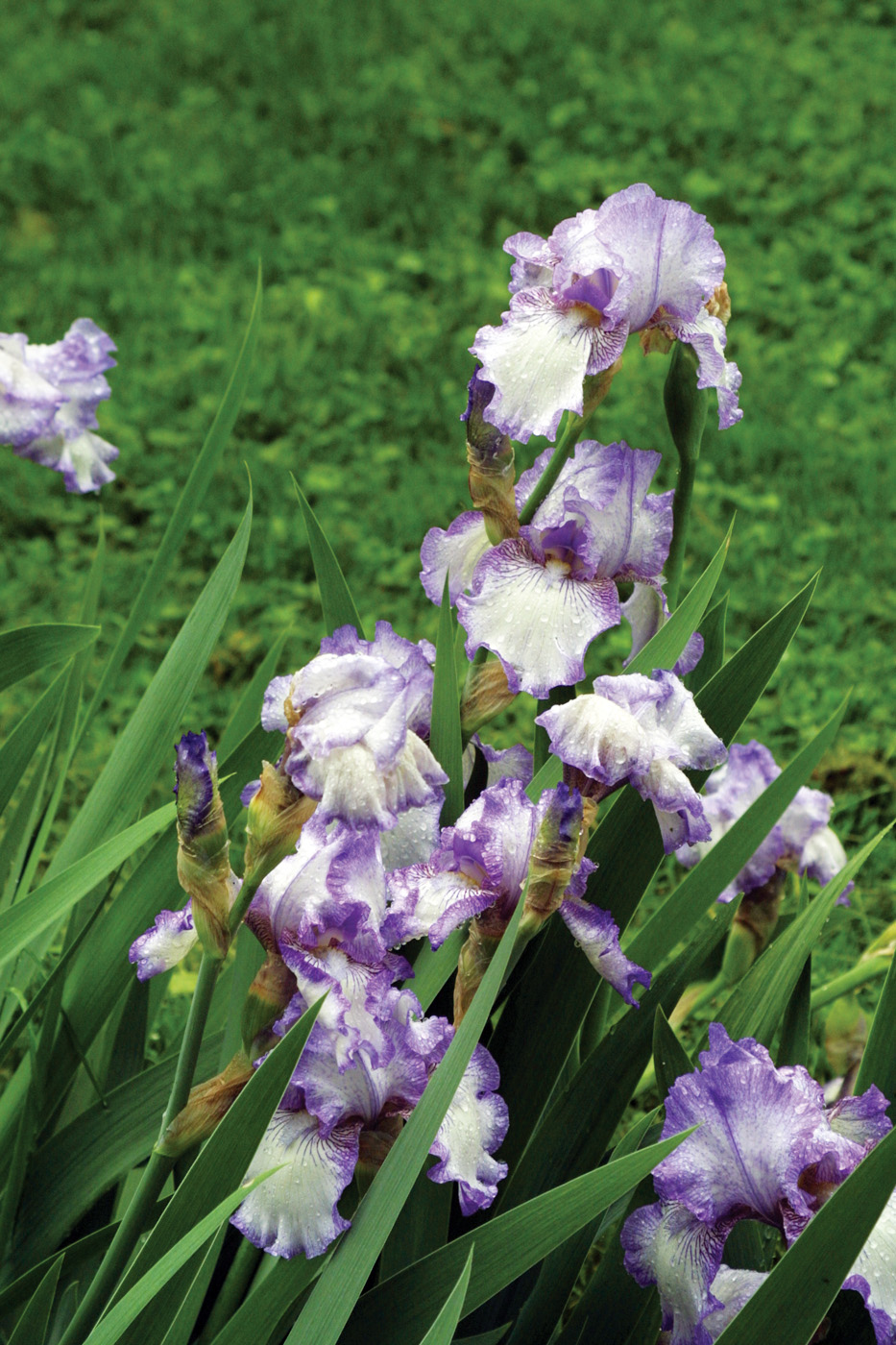
‘Karine’ has shell pink petals that darken toward the interior. This selection differs from ‘Prince of Orange’ and ‘Royal Wedding’ with its single blooms that give it a more elegant shape, and its lack of black markings at the base of the petals. This poppy is a little more compact, reaching 28 inches tall when flowering, but the shorter height makes the stems less likely to flop or get damaged in stormy weather. Pair ‘Karine’ with bearded irises (Iris × germanica cvs., Zones 3–9) to reinforce the beauty of its blousy flowers.

Moroccan poppy offers a perennial presence in warmer zones

Papaver atlanticum 'Flore Pleno'
Moroccan poppy  Photo by gapphotos.com/Mark Bolton

P. atlanticum

  • Zones: 5–9
  • Size: 1 to 2 feet tall and 1 foot wide
  • Conditions: Full sun to partial shade; well-drained soil
  • Native range: Algeria, Morocco, and Tunisia

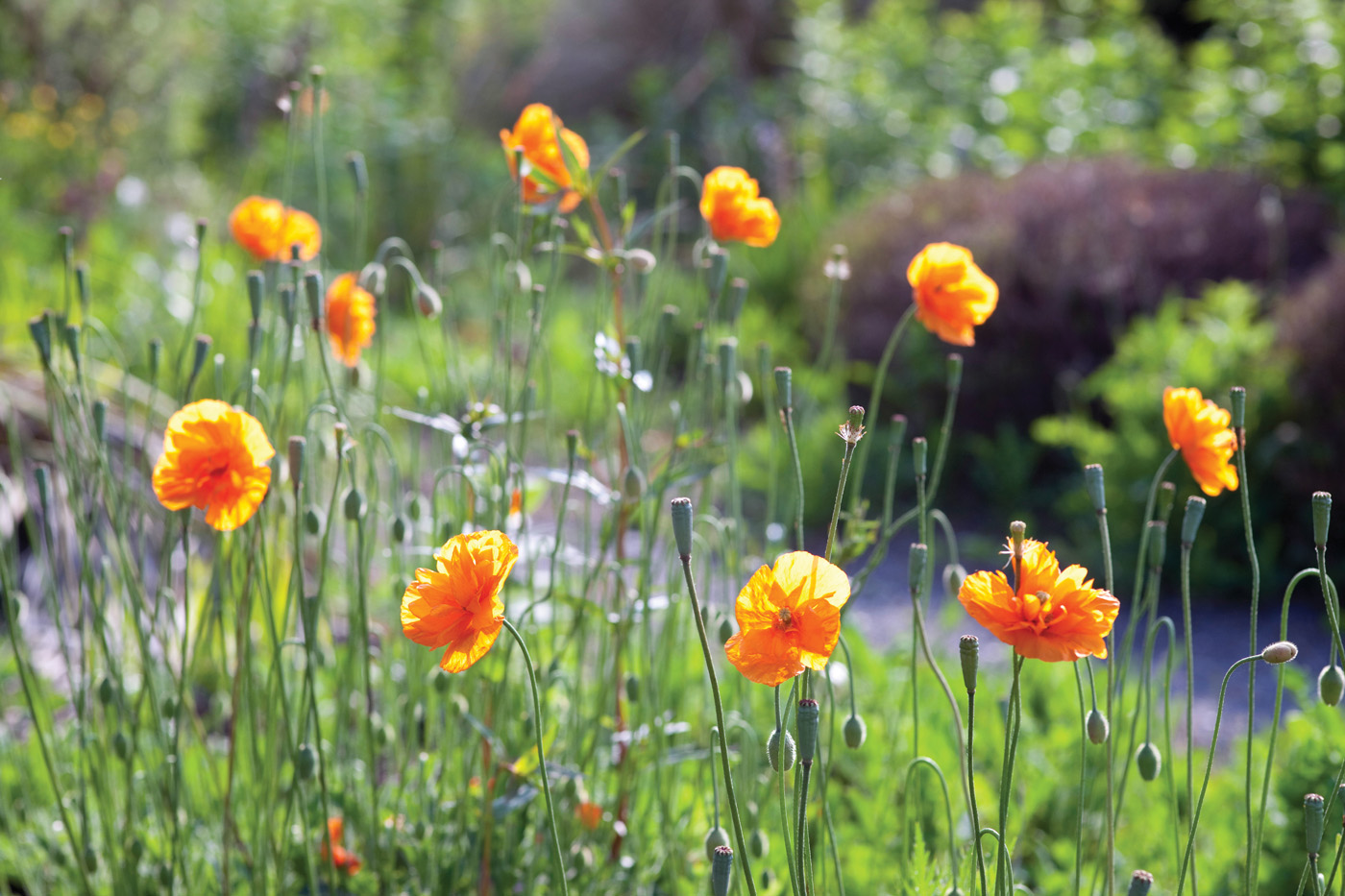
Moroccan poppy is a short-lived perennial that persists year after year by seeding itself around. Flowering begins in May, and blooms continue to emerge sporadically throughout summer. This is a delicate species with thinner coral petals that, when sited well, are backlit, emitting a vibrant glow.

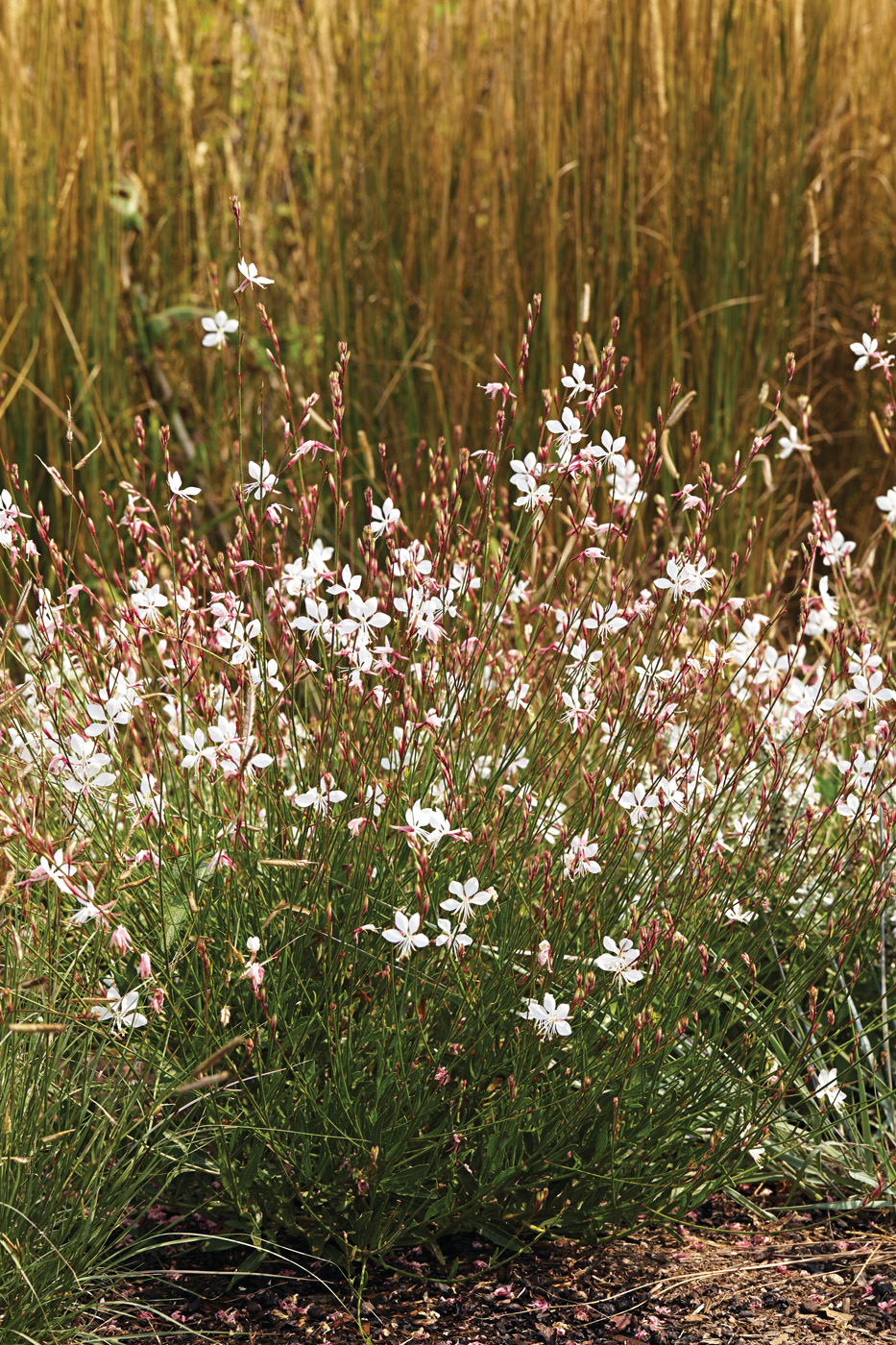
It will self-sow in areas with sharp drainage, like crevices and along the edge of pathways. In typical garden soil, it will need to be occasionally reseeded. This species is best used as a connecting thread, polka-dotted throughout the garden. Try growing it alongside other airy perennials that appreciate the same dry conditions, like white gaura (Oenothera lindheimeri and cvs., Zones 5–8).

Best Companion Plants for Perennial Poppy Varieties

Penstemon digitalis 'Husker Red' Amsonia hubrichtii Iris 'Earl of Essex' 'Whirlling Butterflies' photo by Jack Coyier
‘Royal Wedding’ Oriental poppy companion plant: ‘Husker Red’ penstemon ‘Prince of Orange’ Oriental poppy companion plant: Threadleaf bluestar ‘Karine’ Oriental poppy companion plant: Bearded iris Moroccan poppy companion plant: White gaura

Read More: All About Growing Poppies


Hardworking annual poppy varieties offer a wide range of colors and forms


Breadseed poppies have been cultivated for a long time, with the first written reference to them dating to around 3400 BCE. Yes, these plants produce opioids that are used in pharmaceuticals, but they also produce the poppy seeds that we eat and are wonderful garden plants. They are annuals, but the seeds are hardy and will self-sow if conditions are right.

The seed heads of ‘Bowling Ball’ breadseed poppy are even more impressive than its pretty flowers

Papaver somniferum Poppy Bowling Ball
‘Bowling Ball’ breadseed poppy  Photo courtesy of Select Seeds, Co.

P. somniferum ‘Bowling Ball

  • Zones: Annual
  • Size: 3 to 4 feet tall and 1 foot wide
  • Conditions: Full sun; well-drained soil
  • Native range: Eastern Mediterranean

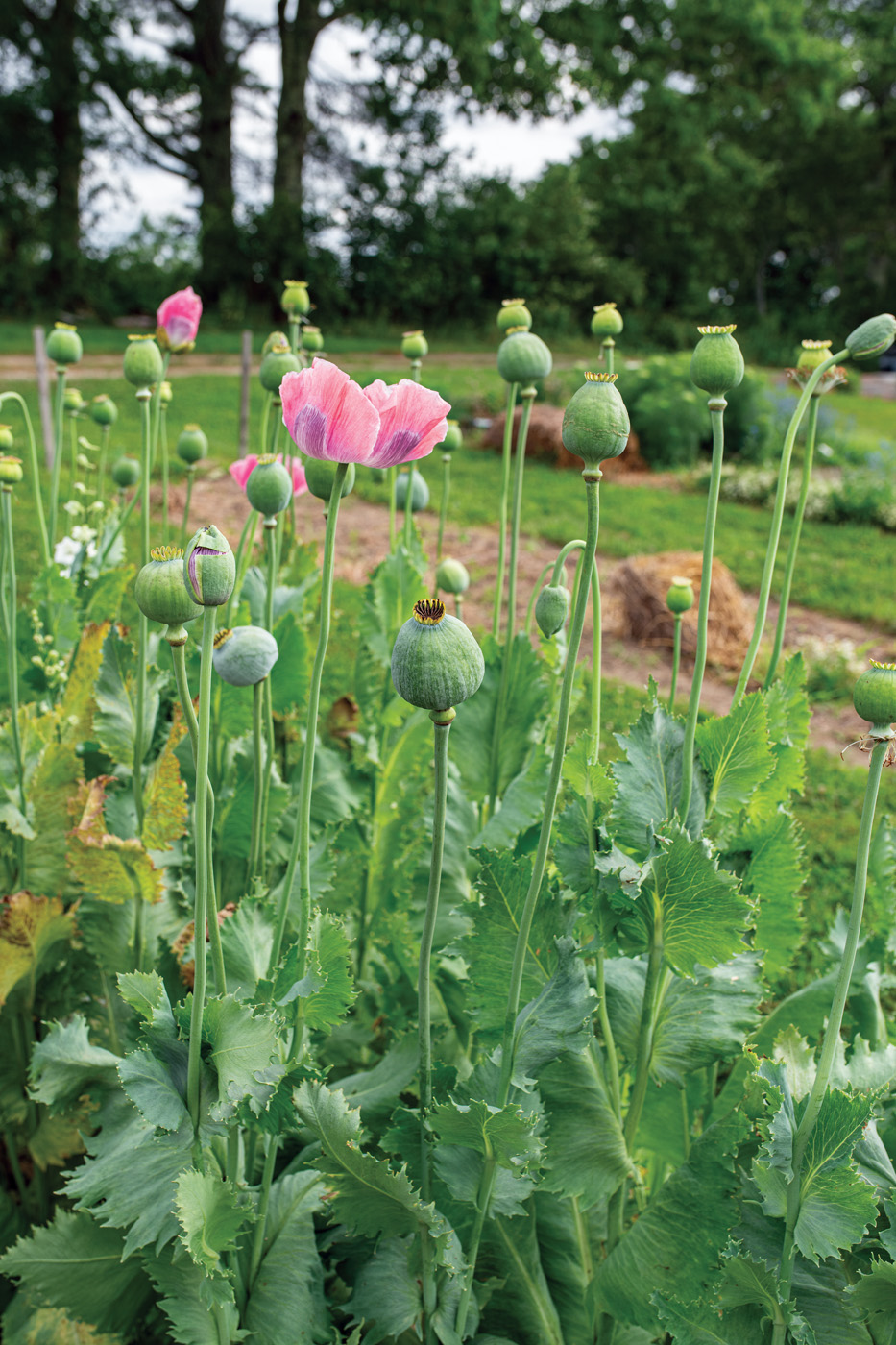
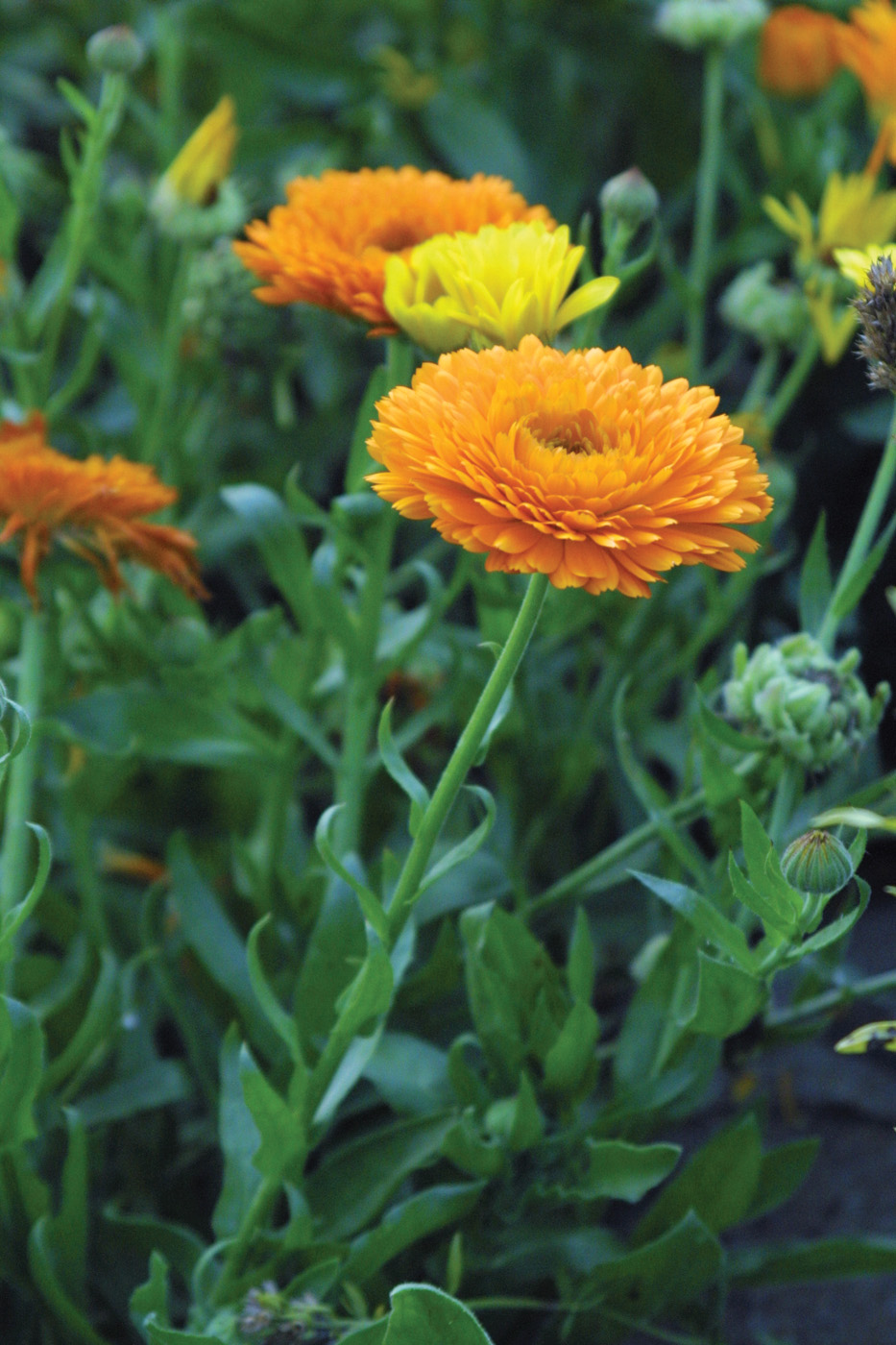
‘Bowling Ball’ breadseed poppy, from the QIS® series, has leaves that are a soft green-blue and sculpturally wrap themselves around the stems. This selection is grown for its huge ornamental seedpods, which can get up to 2½ inches wide and persist in the garden or in a vase for many weeks after flowering. The preceding blooms are also showy, with fruit punch pink petals that fade to purple and white at the base. Grow this plant alongside other ornamental edibles like calendula (Calendula officinalis and cvs., annual). While you can grow breadseed poppies for ornamental purposes in the United States, it is illegal to do so in Canada.

‘Amazing Grey’ corn poppy stands out with its unusual blooms

Papaver rhoeas Amazing Grey photo by millettephotomedia.com
‘Amazing Grey’ corn poppy  Photo by millettephotomedia.com

P. rhoeas ‘Amazing Grey’

  • Zones: Annual
  • Size: 2 to 2½ feet tall and 1 foot wide
  • Conditions: Full sun; rich, well-drained soil
  • Native range: Europe, northern Africa, and western Asia

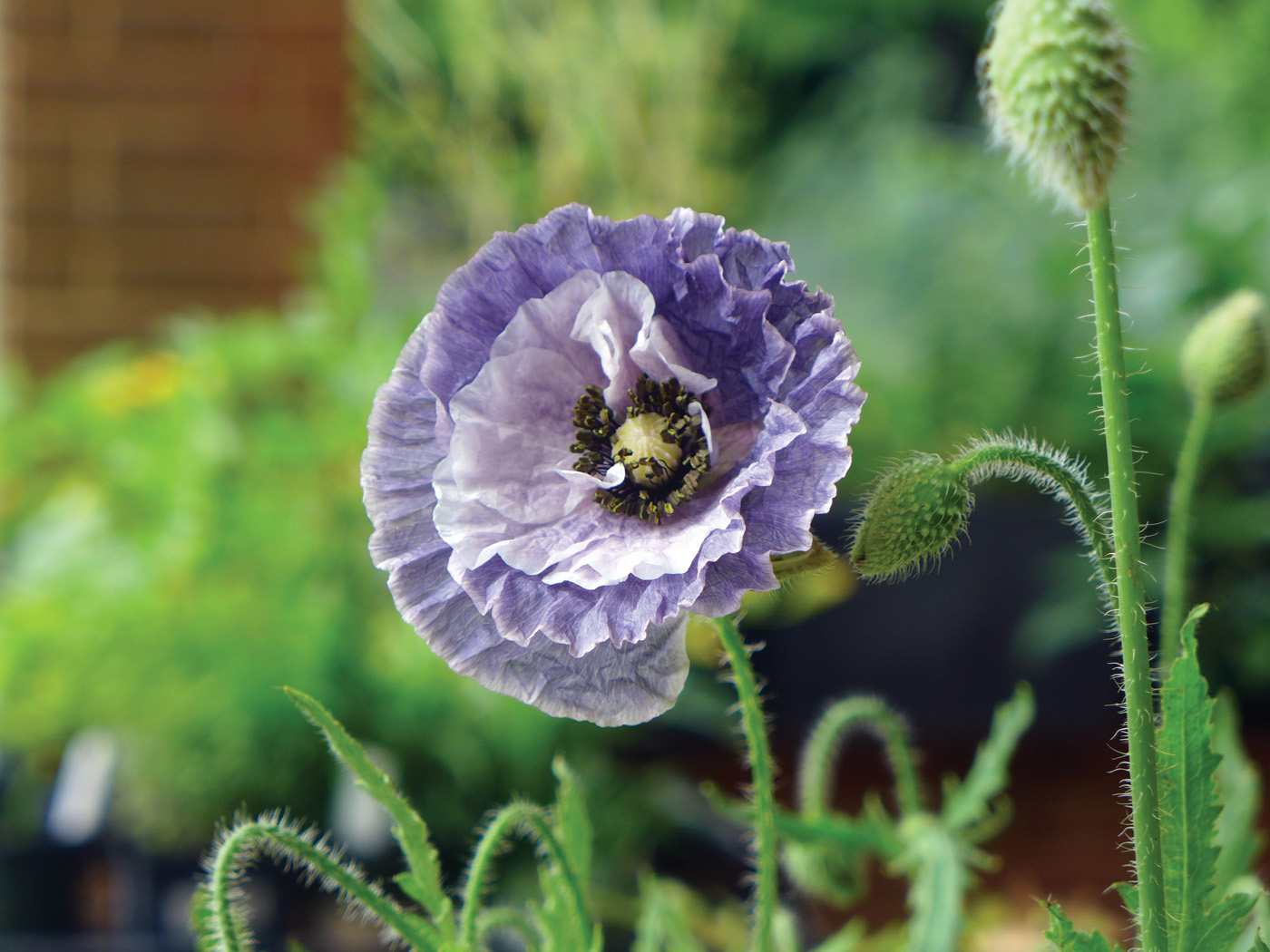
Corn poppies are plentiful throughout their native range, adding eye-catching swaths of red to fields and meadows, and along transportation corridors. ‘Amazing Grey’ corn poppy differs from the straight species greatly; instead of the typical cadmium red flowers, this selection features 3-inch-wide blooms in shades of lavender, powder pink, mauve, and gray.

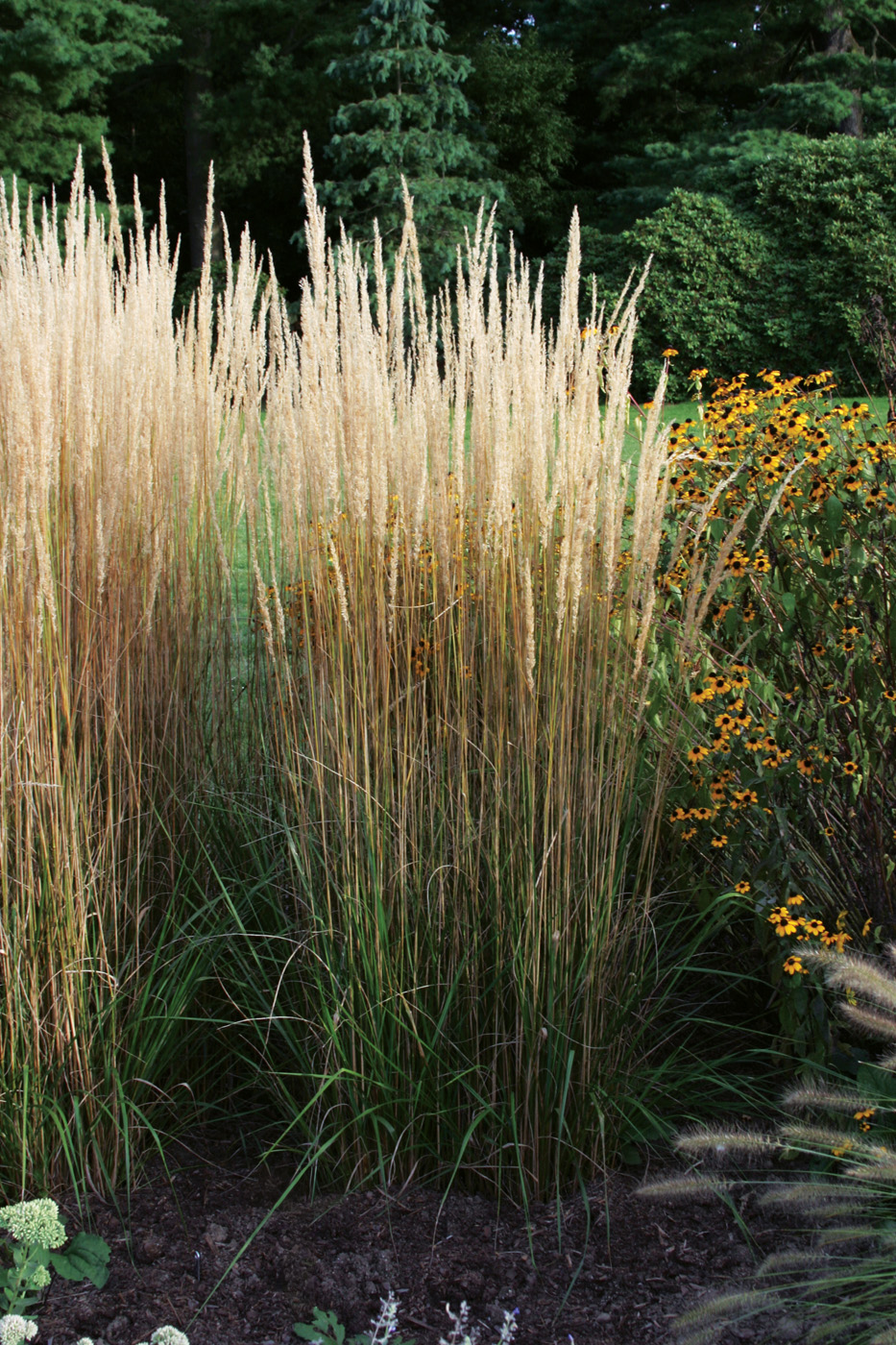
They can be either single or semidouble and will bloom throughout spring and into early summer, typically from mid-April through early June. Flowering can be prolonged by deadheading. This species dislikes root disturbance, so direct-sow the seeds outdoors or allow it to seed naturally. Try pairing it with cool-season grasses like feather reed grass (Calamagrostis × acutiflora and cvs., Zones 5–9) to emulate its native habitat.

‘Champagne Bubbles’ Icelandic poppy showcases all the colors of this unique species

Champagne.Bubbles iceland poppies
‘Champagne Bubbles’  Photo courtesy of New York Botanical Garden

Oreomecon nudicaulis ‘Champagne Bubbles’ syn. Papaver nudicaule ‘Champagne Bubbles’

  • Zones: 4–8
  • Size: 18 inches tall and 10 inches wide
  • Conditions: Full sun; rich, well-drained soil
  • Native range: Northeastern Asia and northwestern North America

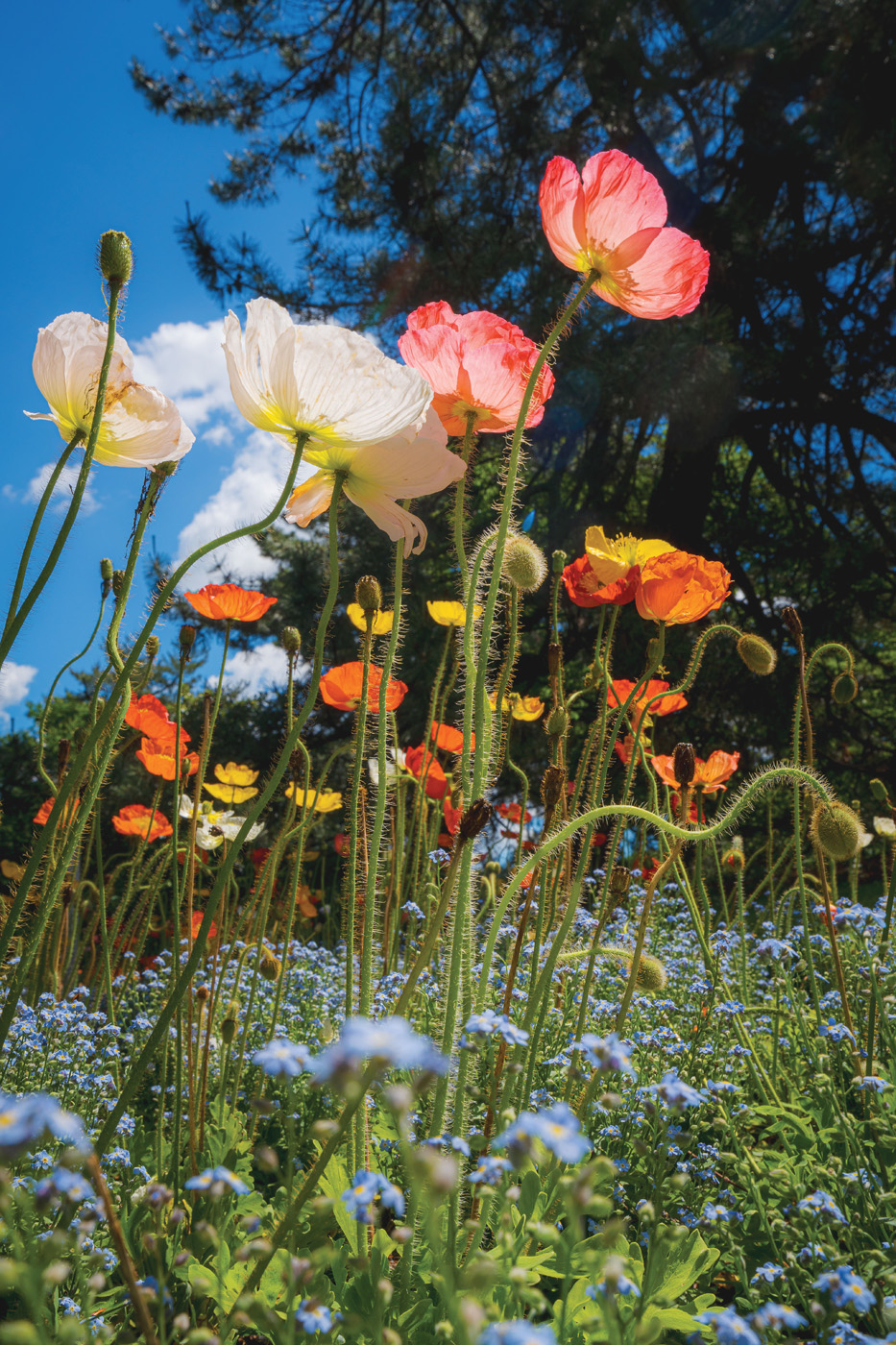
Icelandic poppies (confusingly not native to Iceland) were recently reclassified into the Oreomecon genus, along with several other Papaver species. They are technically short-lived perennials, but are most commonly grown as spring annuals because they do not thrive in hot and humid conditions. The show begins with large flower buds atop twisted stems that open in April, continuing until summer kicks in, typically in mid- to late June.

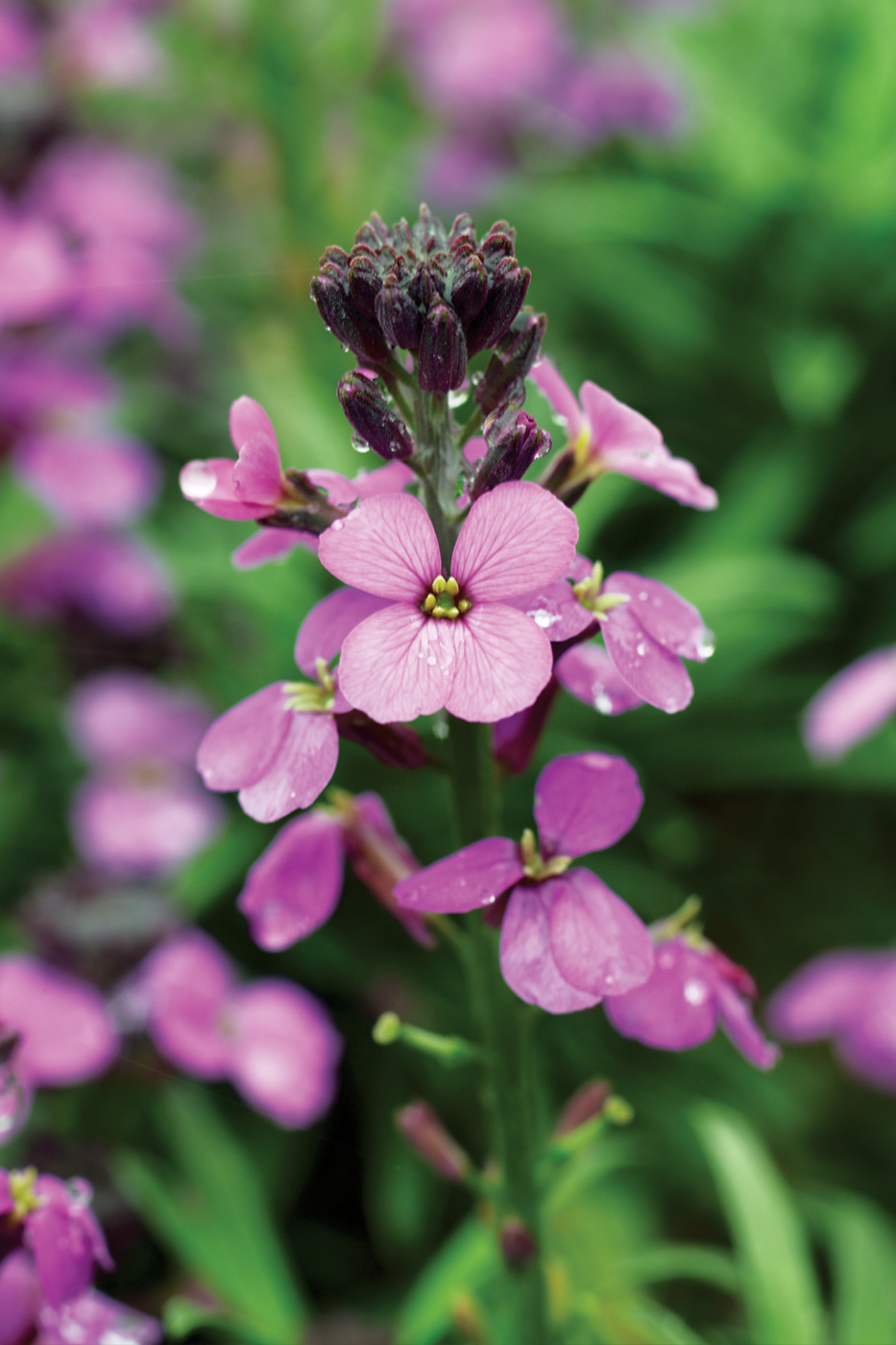
‘Champagne Bubbles’ is a series of cultivars that showcases the full flower color range of the species, with single blooms from scarlet to gold, orange to white, and pink to peach. Gardeners can order individual colors, but there is magic in the mixes that many suppliers offer. The blooms are large—up to 4 inches wide. They have a subtle citrus fragrance and make good cut flowers. You can extend the flowering season by deadheading. Grow ‘Champagne Bubbles’ alongside spring-flowering bulbs or other spring-bedding plants like wallflowers (Erysimum spp. and cvs., Zones 3–9).

‘Ladybird’ scarlet poppy’s stark black and red flowers jump out of the landscape

red and black blooms of Ladybird scarlet poppy
Ladybird scarlet poppy  Photo courtesy of New York Botanical Garden

P. commutatum and cvs.

  • Zones: Annual
  • Size: 12 to 18 inches tall and 8 to 10 inches wide
  • Conditions: Full sun; rich, well-drained soil
  • Native range: The Caucasus, Iran, and Turkey

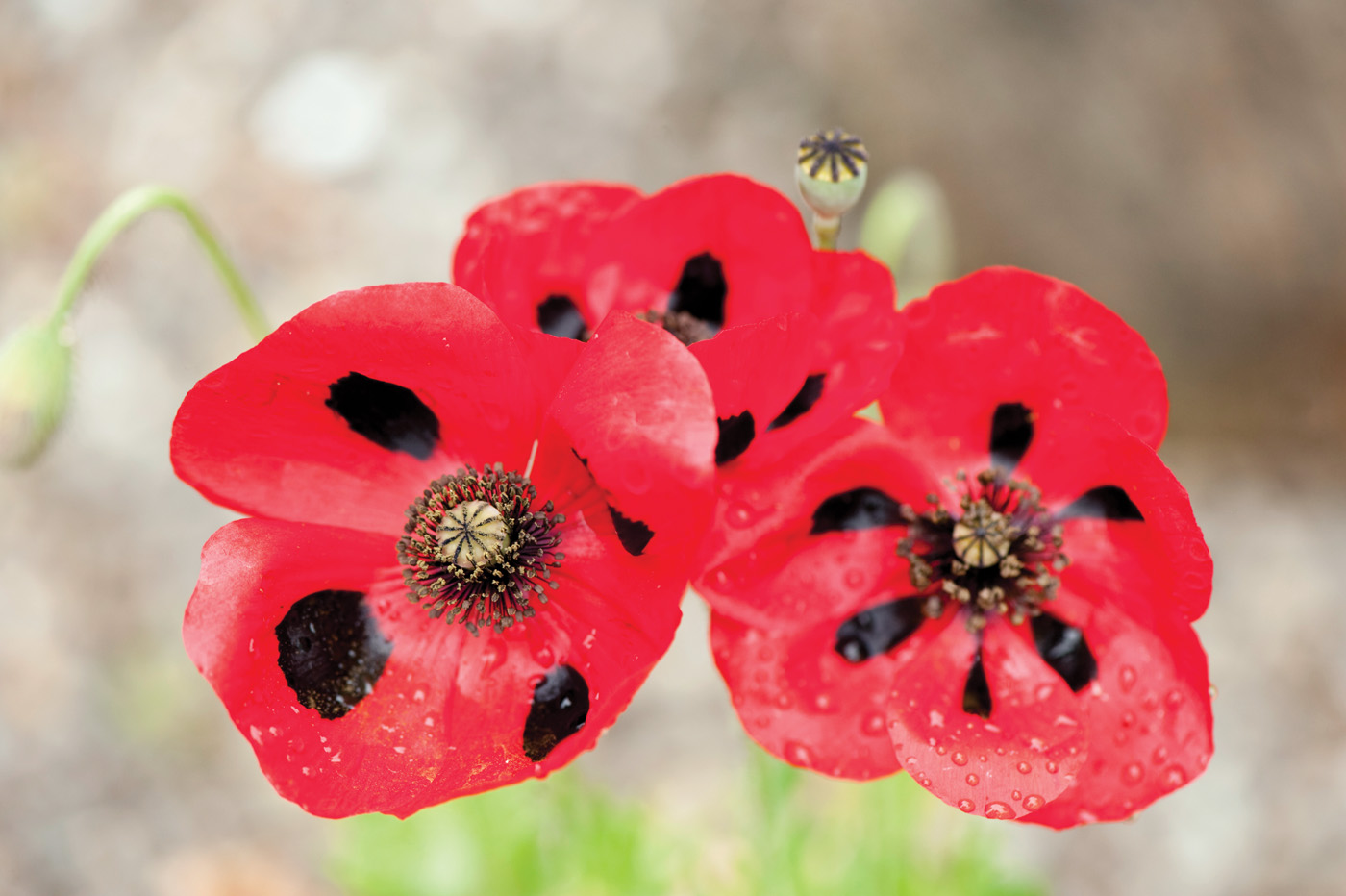
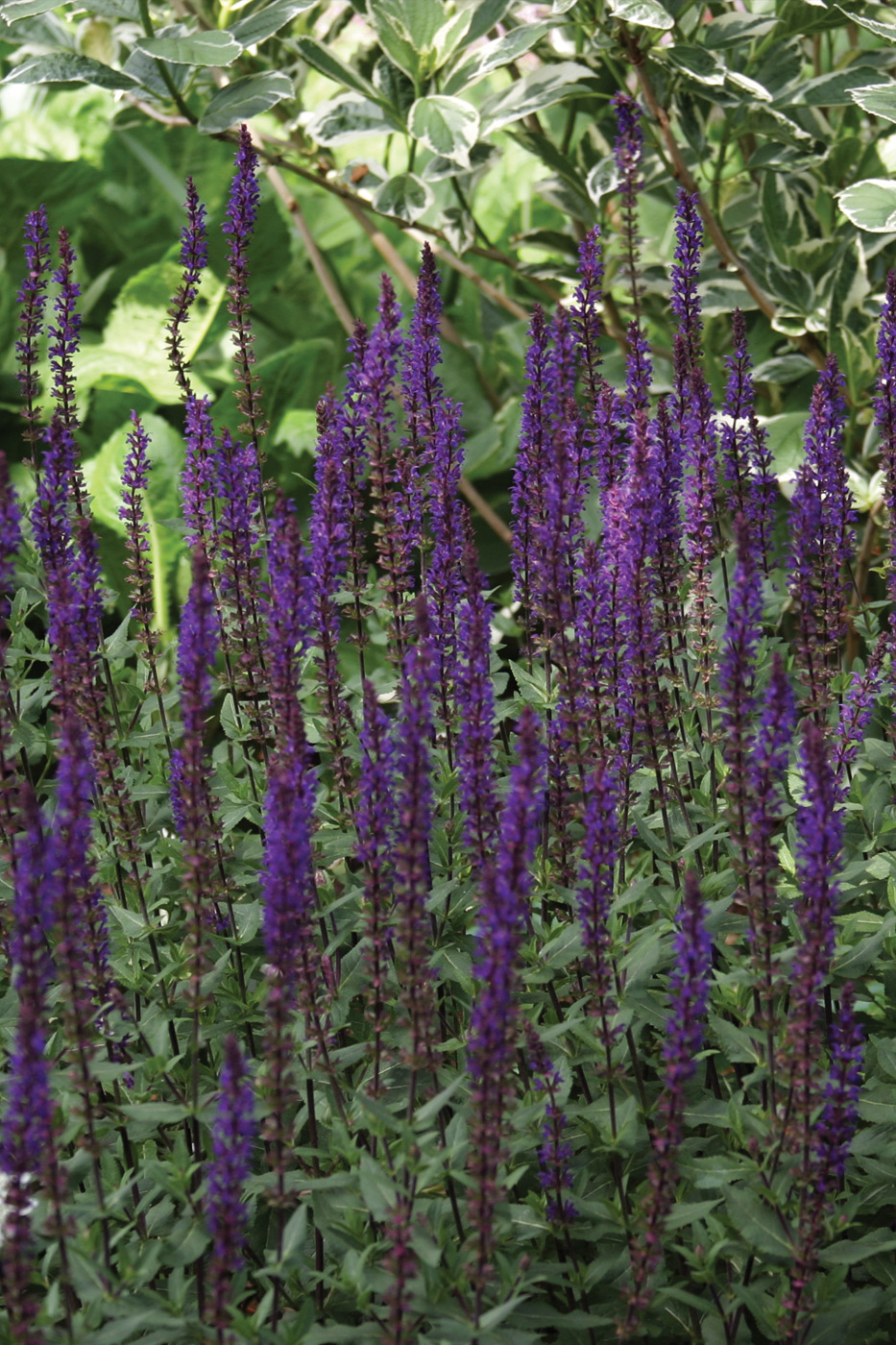
Scarlet poppies distinguish themselves from other species with their graphic flowers. Blooms begin in mid-spring and continue until early summer, typically from May through June. They are bowl-shaped, about 2 inches across, and have vibrant red petals with large, square black splotches at the base. ‘Ladybird’ scarlet poppy is most commonly available in the trade and is very similar to the species. Scarlet poppies are less likely to self-sow, so when deadheading, collect seed to keep the population going. They complement other vibrant late-spring bloomers like woodland sage (Salvia nemorosa and cvs., Zones 5–9).

Best Companion Plants for Annual Poppy Varieties

Pot marigolds Calamagrostis x acutiflora 'Karl Foerster' wallflower Salvia Caradonna
‘Bowling Ball’ breadseed poppy companion plant: Calendula ‘Amazing Grey’ corn poppy companion plant: Feather reed grass ‘Champagne Bubbles’ Icelandic poppy companion plant: Wallflower ‘Ladybird’ scarlet poppy companion plant: Woodland sage

How to grow poppies from seed

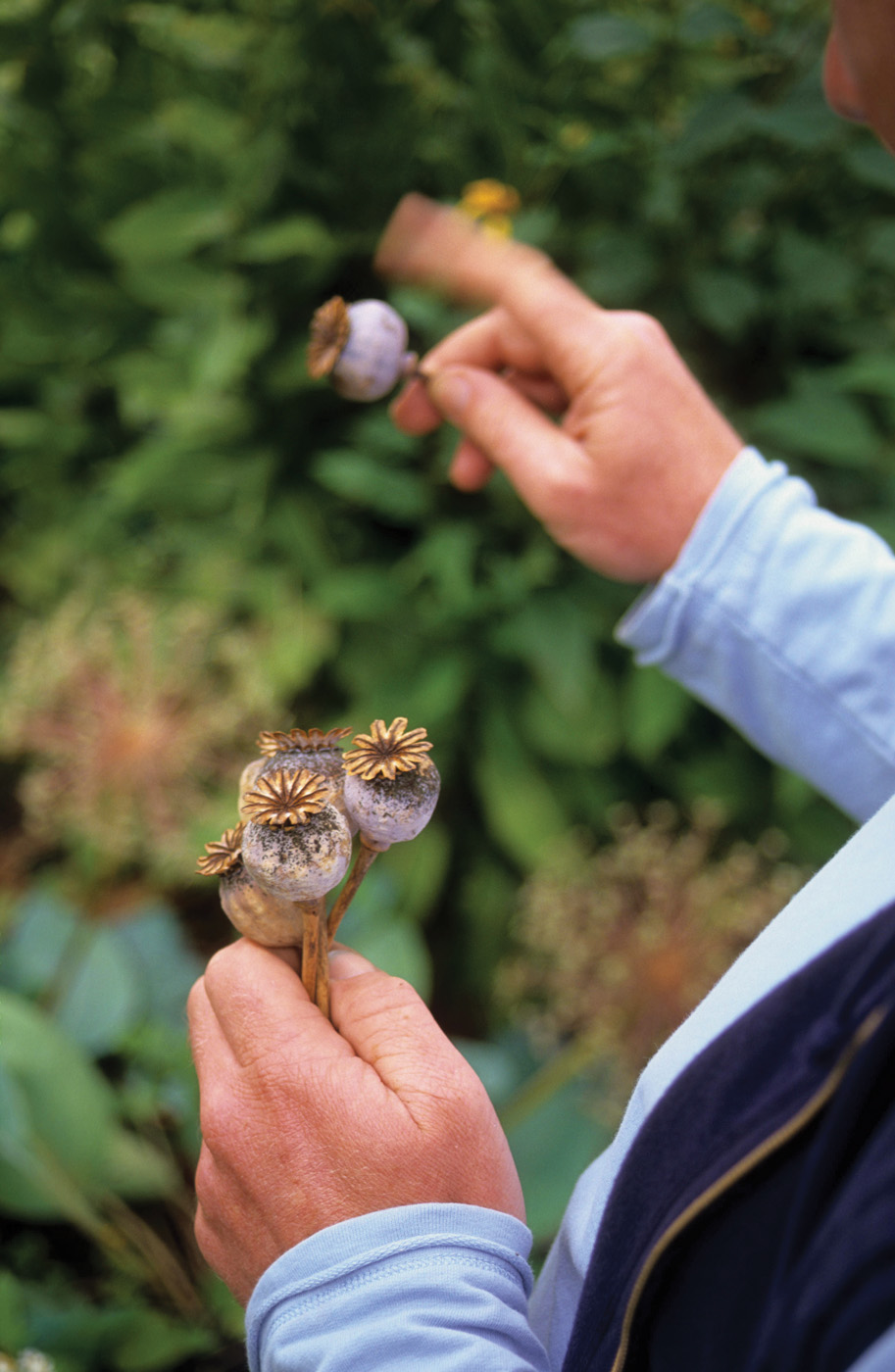
While you can find some poppies available for purchase online as bareroot plants, many are only available in seed form. Even if established, they will need to be replenished to be a permanent part of the garden. Knowing how to collect and start seed is crucial in maintaining a poppy show for years to come. Luckily, the process is fairly straightforward.

Harvesting and storing seed

Poppy seeds inside the flowering plant
Poppy seeds inside the flowering plant in a crop

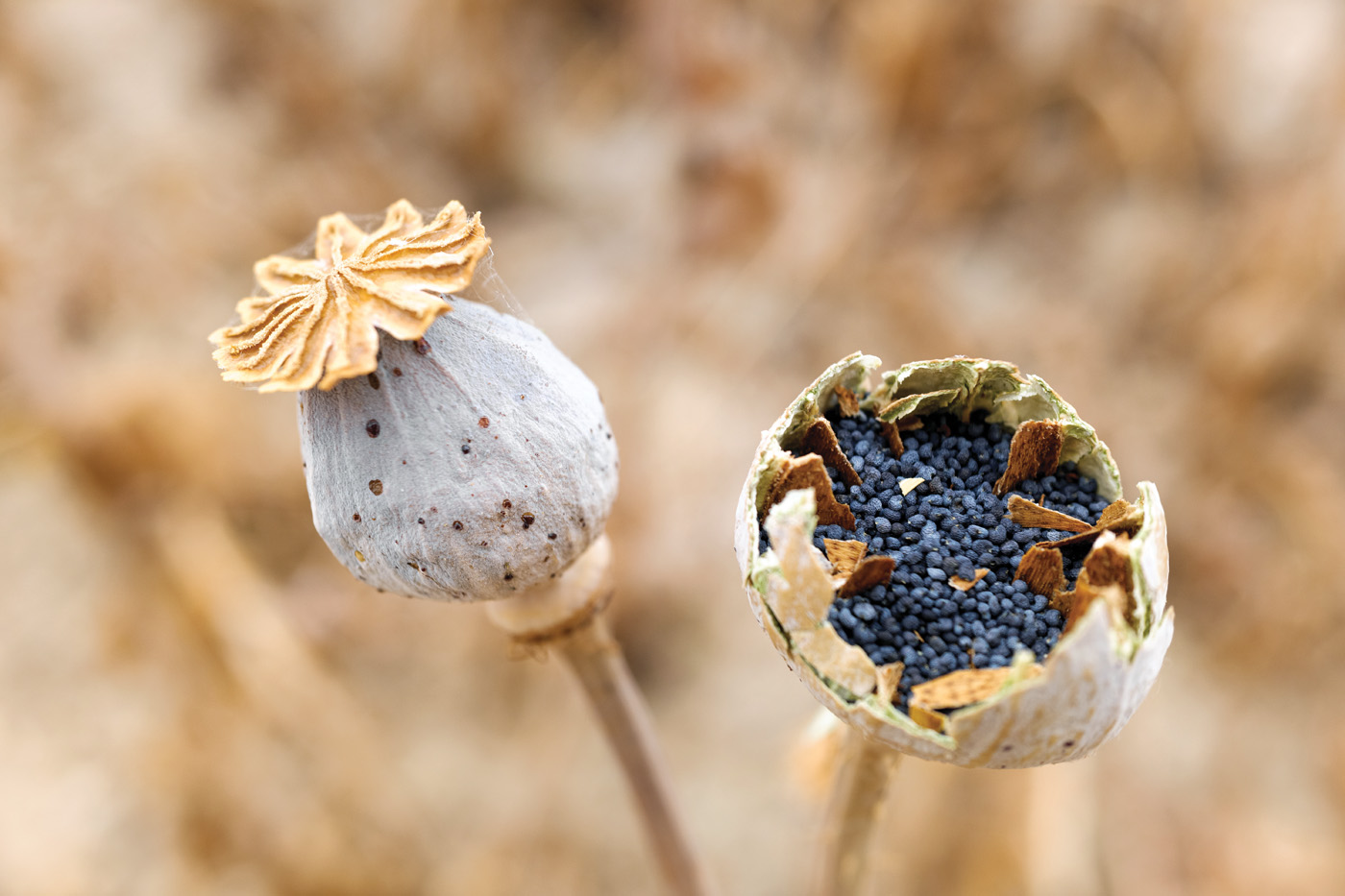
Poppy flowers develop into capsules that contain fine seeds. Collect the pods as they begin to mature, placing them into a paper bag to fully dry and dehisce. Label and store in a cool, dry place until they are ready to use. For some species, the seed is perfectly hardy and will germinate on its own in spring. To achieve this, just leave some seedpods standing in the garden and allow them to scatter naturally.

Starting poppy seeds indoors

Sowing poppy seeds indoors
Sowing Poppy Z-Scape seeds in a small tray

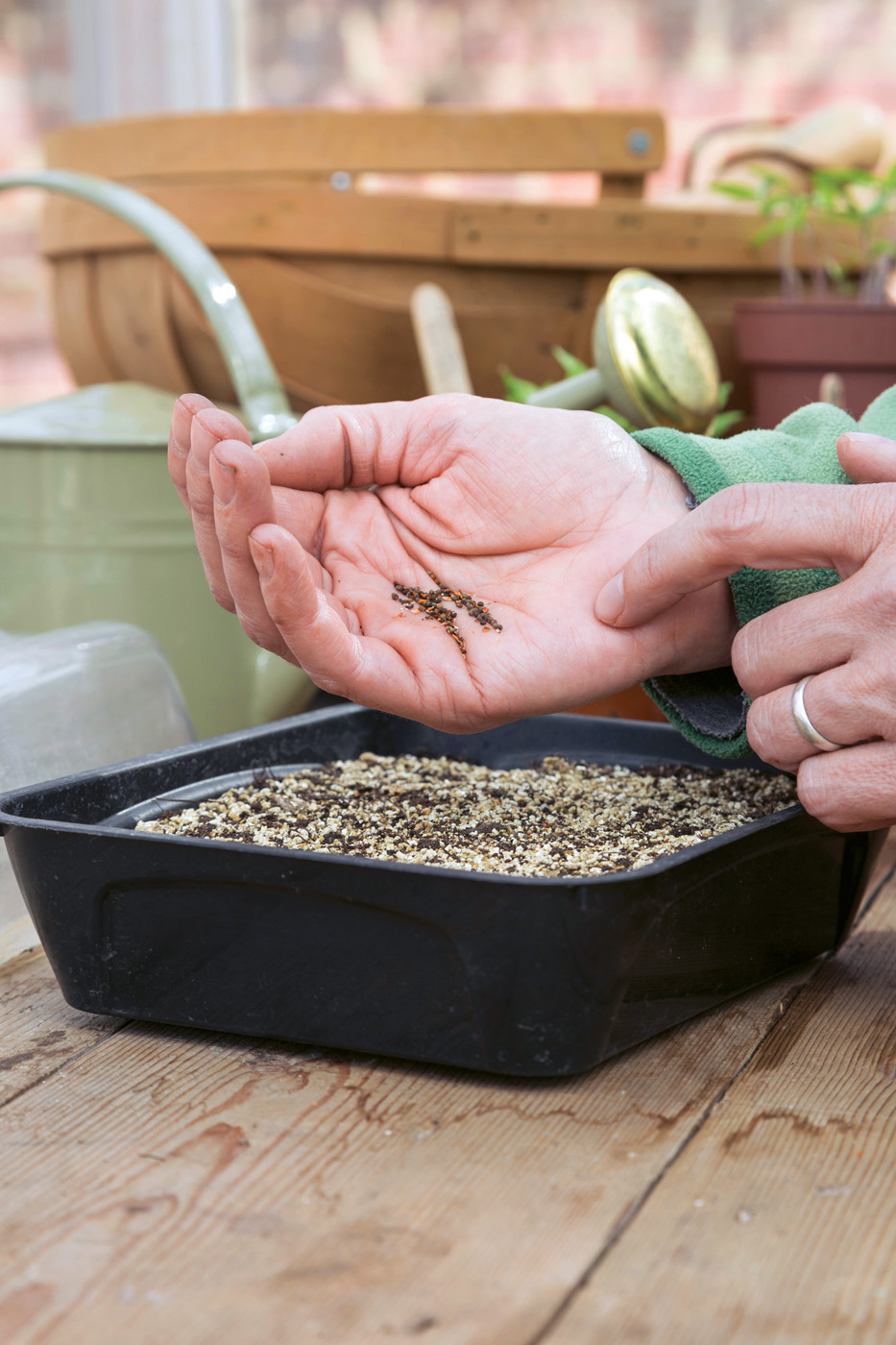
Sow poppy seeds into a standard seed-starting mix, adding in extra grit or perlite if the media is too heavy. Do not cover seeds with soil, as they often need light to germinate. Bottom water to avoid the seedlings damping off. Seeds should generally be sown about six to eight weeks before planting out and can go into the garden once nighttime temperatures are mostly above 40°F. This can change slightly for different species, so follow the instructions on the seed packets.

Direct-sowing poppy seeds in the garden

Scattering seeds from Papaver somniferum

Poppies generally dislike root disturbance and take some time to recover from transplanting; because of this, direct-sow whenever possible. The timeline of direct-sowing should mimic when the plants would naturally disperse their seeds. For poppies, this would be anywhere from late fall through early spring. Since many poppy species are disturbance adapted, germination will improve if the soil in the immediate area is scratched up.

Tess Kuracina is the director of living collections and curator of herbaceous plants at the New York Botanical Garden.


PLANT SOURCES

The following mail-order sources may offer some of the plants featured in this article: